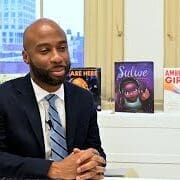
Caribbean Immigrant Kamar Samuels Could Lead NYC Schools

News Americas, NEW YORK, NY, Dec. 31, 2025: Incoming New York City Mayor Zohran Mamdani has reportedly tapped a Caribbean immigrant educator to lead the nation’s largest public school system with Kamar Samuels slated to be named officially as New York City’s next schools chancellor.

Caribbean immigrant Kamar Samuels is slated to be NYC’s next School’s Chancellor.

Samuels will oversee a system serving more than one million students and managing a budget exceeding US$40 billion. Here are seven key things to know about him:

1. Jamaican Roots

Kamar Samuels was born in the Caribbean nation of Jamaica and attended Jamaica College in St. Andrew before migrating to the United States.

2. Strong Academic Foundation

In the U.S., Samuels earned a degree in accounting from Baruch College, City University of New York (CUNY). He later completed a Master of Science in Education in childhood education at Lehman College, CUNY.

3. Experience Beyond Education

Before entering public education full-time, Samuels worked as a finance manager with the National Basketball Association, (NBA), gaining experience in large-scale organizational and fiscal management.

4. From Classroom to Principal

Samuels entered education through the NYC Teaching Fellows program, teaching elementary school in the Bronx for five years. He later moved into school operations, serving as a business manager and data specialist at Gun Hill Road School before becoming principal of the Bronx Writing Academy (PS 323) through the New Leaders for New Schools residency program. While leading PS 323, Samuels implemented reforms including staggered teacher start times, adjusted class lengths, and expanded digital learning through a city-funded technology initiative, according to Chalkbeat.

5. Two Decades in NYC Public Education

Samuels brings more than 20 years of experience across classroom teaching, school leadership, and district-level administration, with a strong emphasis on data-driven decision-making and improving outcomes in urban schools.

6. District-Level Leadership

He served as deputy superintendent of Brooklyn’s District 13 for two years before becoming superintendent in 2019. Currently a Manhattan superintendent, Samuels has promoted racial diversity through school mergers and emphasized the value of an “international education” to help students develop a global perspective. “We here in New York especially are seeing even today why it’s important to understand what’s happening in the rest of the world,” he has said.

7. Deep Diaspora Engagement

Samuels previously served as education chair and later president of JAMPACT, a diaspora-led organization supporting early childhood education in Jamaica. In 2008, he stated that the goal was for Jamaica’s basic schools to become “model early childhood institutions.”

ICED Guyana-Born Former School Superintendent Gets March 2026 Court Date

News Americas, NEW YORK, NY, Weds. Dec. 31, 2025: The federal criminal case against Guyana-born, former school superintendent, Ian Roberts, will move into the spring of 2026, as a U.S. court has set a new trial date of March 2, 2026, following a defense request for additional preparation time.

Court filings show Roberts’ legal team sought a continuance, citing the volume of evidence involved in the case and the need for more time to review discovery materials. Federal prosecutors agreed to the delay, pushing the trial from its original December 1st date. Roberts has pleaded not guilty to all charges and has until February 2, 2026, to enter any additional plea.

ICE arrested Guyanese national serving as Des Moines Public Schools Superintendent; prior weapons charges and in possession of loaded handgun at time of arrest

A Case At The Intersection Of Immigration And Public Trust

Roberts has been in custody since September 26th, when he was arrested by Iowa State Police and transferred to US Immigration and Customs Enforcement, (ICE) custody. Federal authorities allege that Roberts falsely claimed U.S. citizenship when he was hired by the Des Moines Public Schools and later illegally possessed four firearms while lacking lawful immigration status.

ICE has said Roberts entered the United States from Guyana in 1999 on a student visa, but later lost legal authorization to work. According to the agency, a final order of removal was issued by an immigration court in May 2024, months before his arrest.

The case has drawn attention not only because of the criminal charges, but also because Roberts rose to the top of public school systems in two U.S. states while allegedly lacking legal status—raising questions about hiring oversight, credential verification, and institutional safeguards.

From Superintendent To Federal Defendant

Roberts was appointed superintendent of the Des Moines Public Schools in July 2023, following three years in the same role at the Millcreek Township School District. His tenure came to an abrupt halt after federal authorities disclosed details of his immigration history and criminal allegations.

School boards in both districts have since faced scrutiny over how Roberts’ background and eligibility were vetted. In Pennsylvania, the Millcreek School Board has publicly acknowledged reviewing potential legal action related to the matter, while education officials in Iowa have faced questions from parents and lawmakers.

Defense Seeks Time Amid “Voluminous” Discovery

In court filings, Roberts’ attorney described the discovery process as extensive, noting that while the charges themselves are not complex, the defense requires significant time to prepare. The filing states that Roberts has not yet had sufficient opportunity to review the materials provided by prosecutors.

The court agreed, granting the delay and setting a new timeline that keeps Roberts in custody as the case proceeds.

Broader Implications For Immigrant Professionals

The case has resonated beyond Iowa and Pennsylvania, particularly within immigrant and Caribbean diaspora communities, where it has sparked debate about immigration enforcement, professional licensing, and how long-term residents can still face sudden detention and removal.

Advocates note that Roberts’ situation highlights the precarious position of non-citizens, even those who have built careers in public institutions, as immigration enforcement increasingly intersects with criminal proceedings.

What Comes Next

As the March 2026 trial date approaches, Roberts remains in ICE custody while federal prosecutors pursue the case. Legal observers say the outcome could have implications not only for Roberts, but also for how public institutions evaluate credentials and immigration status in senior-level hires.

For now, the case continues to underscore the far-reaching consequences of immigration enforcement—extending well beyond borders and into classrooms, communities, and public trust.

As Jamaica PM Bemoaned Images Of Desperate Jamaicans, His Government Routinely Fed Just 1 In 4

By Zahra Burton

News Americas, KINGSTON, Jamaica, Tues. Dec. 30, 2025: Since Hurricane Melissa made landfall in Jamaica on Oct. 28, the government has only provided food packages routinely to a quarter of the more than 600,000 persons that it says are in need.

A group of hurricane victims on Dec. 13 that had come down to the main road from their community in the hill of Grass Piece district in Culloden, Westmoreland pleading for help. (18º North image)

That’s according to an analysis by 18º North based on disclosures by the Office of Disaster Preparedness and Emergency Management (ODPEM) — the state entity leading the relief effort —that about 396,000 packages had been disbursed as of its Dec. 24 posting, and each package is supposed to serve four people and last, at most, five days.

The situation has been particularly paltry over the last two weeks heading into Christmas.

For one day last week, ODPEM, which falls under the Office of the Prime Minister, reported delivering as few as 625 packages to 74 communities, and despite queries, it hasn’t explained why.

READ THE FULL STORY BY SUBSCRIBING TO 18º North‘s SUBSTACK

Petition Calling For Deportation Of Trinidad-Born Rapper Nicki Minaj Draws Over 45,000 Signatures

News Americas, NEW YORK, NY, Sun. Dec. 28, 2025: A controversial petition circulating on Change.org is calling for the deportation of Trinidad-Born Rapper Nicki Minaj, born Onika Tanya Maraj.

FLASHBACK – Erika Kirk interviews surprise guest Nicki Minaj on the final day of Turning Point USA’s annual AmericaFest conference at the Phoenix Convention Center on December 21, 2025 in Phoenix, Arizona. Minaj spoke about her frustrations with California Governor Gavin Newsom, and about why she has embraced the conservative movement. (Photo by Caylo Seals/Getty Images)

The petition has sparked debate online, drawing more than 45,000 signatures as of press time today. The petition, created by an individual identified only as “Pedonika Minaj,” urges U.S. authorities to deport the artist back to her homeland, citing what the petitioner characterizes as ongoing online harassment, controversial public behavior and concerns related to Minaj’s personal associations.

While the petition makes sweeping claims about Minaj’s conduct and mental state, no medical or legal authority has substantiated those assertions. Immigration experts note that U.S. deportation proceedings are governed by federal law and require clear statutory grounds – such as criminal convictions or immigration violations – not online petitions or public opinion.

Still, the campaign’s rapid growth highlights the increasingly blurred line between celebrity culture, social media disputes and immigration rhetoric.

Celebrity, Speech, And Immigration As A Talking Point

The petition alleges that Minaj’s social media activity has targeted other public figures and private individuals, framing the issue as one of public safety and accountability. Minaj, who was born in Saint James, Port of Spain, Trinidad and Tobago and who became a U.S. citizen years ago, has not publicly responded to the petition.

Legal analysts point out that U.S. citizens cannot be deported, regardless of public controversy, and that calls for deportation – particularly when directed at immigrants or naturalized citizens – often reflect broader societal tensions rather than enforceable legal pathways.

“This kind of petition says more about online outrage culture than immigration law,” one immigration attorney told News Americas Now, noting that deportation is frequently misused as a rhetorical threat in digital disputes.

A Familiar Pattern In Online Culture

The petition also reignites discussion about how immigrant and diaspora figures are disproportionately targeted in calls for removal or exile during public controversies – especially when race, nationality, or accent become part of the narrative.

Advocates warn that normalizing deportation as a response to objectionable speech or behavior risks reinforcing harmful stereotypes and undermining due process.

What Happens Next

Despite its growing number of signatures, the petition carries no legal authority. Change.org petitions are designed to signal public sentiment, not to initiate government action.

For now, the campaign stands as another example of how social media conflicts can escalate into broader political and cultural flashpoints—particularly when immigration status, celebrity influence, and public accountability collide.

BACKLASH

The backlash against Minaj, who is married to comes as the rapper appeared at Turning Point USA’s four-day AmericaFest 2026 summit.

On the final day of the conservative conference, the rapper, 43, joined Charlie Kirk’s widow, Erika Kirk, to speak about her newfound admiration for President Donald Trump and Vice President JD Vance.

Her remarks led to significant fan backlash, and as of Wednesday last week, her Instagram account now reads: “Sorry, this page isn’t available.” A number of followers, however, pointed out that the “Beez in the Trap” artist had previously quit Instagram, doing so in October. Minaj’s X account remains active.

It came on the heels of her publicly backing President Donald Trump’s allegations that Christians face persecution in Nigeria.

“In Nigeria, Christians are being targeted,” Minaj said at an event organized by the US at the UN, adding: “Churches have been burned, families have been torn apart… simply because of how they pray.”

Analysts say that jihadists and other armed groups have waged campaigns of violence that affect all communities in the West African nation, regardless of background or belief.

Minaj has been open about coming to the United States as an undocumented child. In an emotional social media post in 2018, she called out the separation of families at the border during Trump’s first administration.

“I came to this country as an illegal immigrant. I can’t imagine the horror of being in a strange place & having my parents stripped away from me at the age of 5,” she reportedly wrote in the caption of a photo showing young children separated from their parents at the border being detained.

“This is so scary to me. Please stop this,” she wrote. “Can you try to imagine the terror & panic these kids feel right now? Not knowing if their parents are dead or alive, if they’ll ever see them again.”

New Caribbean Music Drops For Carnival 2026 Season

BY NAN ET EDITOR

News Americas, NEW YORK, NY, Fri. Dec. 26, 2025: Carnival 2026 may still be months away, but the road has already started with new Caribbean music. From soca anthems built for trucks and fetes to melodic reflections and riddim-driven collaborations, a wave of new music is landing early – and loudly.

Leading the charge is Bunji Garlin, who returns with “Still A Road Man,” released in both main and acoustic versions. The single, produced under Bad Beagle and exclusively licensed to Diaspora Sound, blends Bunji’s signature grit with reflective lyrics that reaffirm his place as a Carnival mainstay heading into 2026.

Also setting the tone is Nailah Blackman with “Origins,” a polished soca release produced by Stemz and Johann “Madman” Seaton. The track leans into heritage, rhythm, and identity, pairing contemporary soca energy with strong visual storytelling in its official music video.

Veteran energy meets fresh chemistry on “Come Back,” a collaboration between Erphaan Alves and Sheriff, released under Soca Global Entertainment. The track keeps the tempo high while tapping into themes of return and connection that resonate deeply with Carnival audiences.

LISTEN TO IT HERE

Meanwhile, Carnival heavyweight Machel Montano links up with Skinny Fabulous and breakout duo Lil Natty & Thunda on “Pull D Pin,” part of the Monkey Business Riddim. Produced by King Bubba FM, Dwaingerous, and Montano himself, the track delivers high-octane soca crafted for mass movement and crowd eruption.

STREAM NOW

Another standout collaboration comes from Mical Teja and Patrice Roberts on “Capital.” The song blends smooth vocals with modern soca production, while its visuals add cinematic polish to an already radio-ready release.

The Heritage Riddim also arrives as a defining Carnival 2026 project, featuring tracks like Olatunji’s “She Tempo” and “Body Talking” by Chromatics. Produced by Body Roc and Shot Master J, the riddim leans into cultural pride while keeping the energy primed for the road.

LISTEN NOW

Adding melodic balance to the season’s soundscape is Omaiah Hall with “Foreva,” a 2026 soca release produced by SupaYouth Entertainment. The track combines live instrumentation with animated visuals, offering a softer but emotionally resonant Carnival entry.

Rounding out the early drops are https://youtu.be/meea0yyW_RAHealing by Tish Official featuring Evolution The Band, and Come Down by M1 aka Menace, Slammer Cutter, and Stemz — both releases signaling that Carnival 2026 will offer depth alongside bacchanal.

With months still to go, the message is clear: the Carnival 2026 soundtrack is already taking shape — and the road is officially open.

How Caribbean Citizenship Programs Are Helping Families Plan A Better Future

News Americas, NEW YORK, NY, Weds. Dec. 24, 2025: Have you ever thought about settling in a place where life feels calm, systems feel clear, and planning feels manageable?  Many families think about this today while looking at stable options for travel, residence, and long-term security.  Caribbean nations continue to share positive updates around Caribbean Citizenship Programs, and these updates are creating interest because they focus on clarity, comfort, and family support.

Why Caribbean Immigration Updates Are Important Right Now

Caribbean governments are actively sharing official information related to citizenship and residency. These updates help people understand available options without confusion. The focus remains on transparency and smooth processes, which makes planning easier. Just like people prefer clear rules while choosing online services such as slot online platforms, applicants also value clarity when it comes to immigration decisions.

Family-Friendly Structures Gaining Attention

Many citizenship and residency programs in the Caribbean allow applicants to include family members. Spouses and children can often be added under one application. This approach helps families move forward together and plan their future as one unit. It gives peace of mind and keeps things organized.

Clear Guidelines Shared Openly

Authorities provide clear instructions about eligibility, documents, and timelines. This helps applicants prepare properly without stress. When information is shared openly, people feel more confident and relaxed while applying.

Citizenship By Investment Programs In The Caribbean

Citizenship by investment programs continue to receive positive attention. These programs allow individuals and families to apply for citizenship through approved contributions that support national development.

Contribution Options That Support Growth

Applicants can choose contribution paths that support public projects and development plans. These contributions help improve infrastructure and community services. It creates a balanced system where both applicants and countries benefit.

Processing Systems Improving Steadily

Recent updates highlight better application handling and organized review processes. Digital systems help keep applications structured and easy to track. Applicants appreciate knowing the status of their application at every stage, similar to how users prefer smooth and reliable platforms like slot gacor for easy access and clarity.

Transparency And Compliance Remain Strong

Caribbean governments clearly explain verification steps and legal checks. This transparency helps maintain trust and ensures that programs follow international standards.

Citizenship By Descent Options Gaining Interest

Citizenship by descent is another area where Caribbean countries continue to share helpful updates. This option is available for people with parents or grandparents connected to specific Caribbean nations.

A Meaningful Way To Reconnect With Family Roots

Many individuals living abroad are choosing this option to reconnect with their heritage. Governments provide clear guidance on required documents such as birth records and family certificates. This structured approach makes the process comfortable and respectful.

Supportive Guidance For Overseas Applicants

Clear instructions help applicants apply from outside the region without difficulty. This support reduces confusion and helps families complete applications smoothly.

Residency Pathways Across The Caribbean

Residency programs are also part of recent immigration updates. These options are designed for professionals, retirees, and individuals who want long-term living arrangements.

Residency Options For Professionals

Some residency programs support individuals who plan to work or run businesses in the region. Clear income and document guidelines help professionals plan properly before moving.

Comfortable Living Options For Retirees

Residency programs for retirees focus on stability and comfort. Caribbean countries highlight lifestyle benefits and supportive environments, making these programs attractive for long-term living.

Flexible Options For Modern Work Styles

Residency updates also reflect changing work patterns. Clear rules allow people to live in the Caribbean while working remotely. This balance supports both personal comfort and legal clarity.

How These Updates Support Applicants

Official immigration updates help applicants make informed decisions. Clear information supports better planning and removes unnecessary confusion.

Confidence Through Official Communication

When governments share verified details, applicants feel assured. This trust helps them take the next step calmly.

Better Planning For Families

Clear timelines and requirements help families manage finances and plans properly. Knowing what to expect makes the process smoother.

Building Long-Term Trust With The Region

Regular updates show commitment to transparency. This strengthens trust between applicants and Caribbean nations.

Benefits For Caribbean Nations

These programs also support national development and global connections.

Supporting Economic And Social Growth

New residents and citizens contribute to the local economy and community activities. This helps strengthen local systems.

Encouraging Cultural Exchange

Applicants bring diverse experiences and ideas, which add value to local communities and social interactions.

Strengthening Global Relationships

Well-structured immigration programs improve the region’s international standing and cooperation.

Conclusion

In the end, Caribbean citizenship and immigration updates offer clear and positive options for families planning their future. These programs focus on transparency, family inclusion, and long-term stability. With official guidance and structured systems, people can move forward with confidence and comfort. For many, this feels reassuring, practical, and well-organized, much like having clear instructions before making any important life decision.

From Port-Au-Prince To Harlem: How A Haitian Immigrant Handbag Maker Became A Viral Fashion Phenomenon

News Americas, NEW YORK, NY, Tues. Dec. 23, 2025: In a moment when Haitian immigrants are often discussed through the lens of crisis, deportation, or policy debates, Pierre Laborde, a Harlem-based Haitian born designer, is quietly rewriting that narrative – one handcrafted handbag at a time.

Haitian immigrant bag marker Pierre Laborde whose bags have gone viral featured in NY Times

Laborde, a Haitian immigrant and self-taught luxury bag maker, has become an unlikely viral sensation, drawing long lines, sold-out drops, and social media frenzy for his vividly colored, meticulously crafted handbags. Recently featured by The New York Times, Laborde’s story is not just about fashion – it is about Caribbean creativity, immigrant perseverance, and the power of cultural craft in the diaspora.

A Haitian Creative Journey Rooted In Craft

Born and raised in Port-au-Prince, Laborde immigrated to New York shortly after finishing high school, carrying with him a deep love for fashion shaped by Haiti’s tradition of tailoring and personal style. Long before TikTok and viral drops, he was altering fabrics, experimenting with color, and imagining bags that stood apart from mass-produced luxury.

“In Haiti, all my clothes were tailor-made,” Laborde has said, noting that fashion was always personal, expressive, and intentional. That philosophy now defines his handbags — bold, tactile pieces that resist trends and mass replication.

Years Of Quiet Hustle Before The Spotlight

For nearly a decade, Laborde sold his bags at the Grand Bazaar on Manhattan’s Upper West Side, often enduring weeks with few or no sales. He balanced odd jobs, studied fashion design one class at a time at the Fashion Institute of Technology, and turned his Harlem apartment into both workshop and showroom.

There were moments, he admits, when continuing felt impossible.

But persistence – a familiar trait in Caribbean immigrant stories – carried him forward.

A Viral Moment Meets Community Demand

Everything changed when a TikTok video urging viewers to “blow this man’s brand up” circulated late last year. Without major marketing, investors, or fashion-house backing, Laborde’s work found its audience organically. Shoppers began lining up hours early. Drops sold out in minutes. Crowd control systems had to be introduced to keep things orderly.

His bags, now priced between $295 and $1,200, remain handmade, limited, and deeply personal – each reflecting a commitment to craftsmanship rather than scale.

More Than Fashion: A Diaspora Success Story

What makes Laborde’s rise particularly significant is its timing. Haitian immigrants in the U.S. are currently facing heightened scrutiny, the loss of legal protections, and widespread misinformation. Against that backdrop, his success challenges narrow narratives and highlights the economic, cultural, and creative contributions Haitians bring to American life.

His story echoes a broader Caribbean truth: that migration is not merely movement born of hardship, but also a transfer of skill, vision, and cultural capital.

Redefining Luxury Through Caribbean Hands

Laborde’s handbags are not produced in factories or driven by seasonal trends. They are shaped by lived experience, patience, and artistic integrity – values deeply rooted in Caribbean making traditions.

As customers continue to applaud him at market tables and online drops sell out within minutes, Laborde remains grounded.

“There were times I went home with zero dollars,” he has reflected. “So this is overwhelming.”

For many in the Caribbean Diaspora, it is also affirming – a reminder that behind viral moments are years of unseen labor, and behind every “overnight success” is a long immigrant journey worth telling.

Why Guyana Has Become a Core Growth Engine For Massy Group

By Keith Bernard

News Americas, NEW YORK, NY, Mon. Dec. 22, 2025: On December 18th, 2025, Massy Group released its Management Discussion and Analysis of its Fiscal 2025 operations, which I performed a quick analysis focusing on its Guyana business.

Guyana’s growing importance to Massy Holdings Limited became unmistakable in FY2025, marking a clear progression from its already positive performance in FY2024. While Guyana had been recognized as a high-growth market in the prior year, FY2025 demonstrated that this growth is no longer merely potential but a material contributor to Group results. Strong economic expansion translated into higher consumer demand, improved volumes, and rising profitability, particularly within Integrated Retail and Gas Products. The delivery of double-digit profit growth in gas operations and solid retail performance highlights how Guyana has moved beyond incremental gains seen in FY2024 to become a dependable driver of earnings.

Equally important is the strategic shift that occurred in FY2025. Where FY2024 was characterized by consolidation and groundwork, FY2025 reflected decisive investment in capacity, including new distribution infrastructure to support rapidly expanding demand. Improved governance, forecasting, and working-capital discipline further strengthened cash generation and operational predictability.

In conclusion, taken together, these developments underscore Guyana’s transition from a promising growth story in FY2024 to a central pillar of Massy’s earnings momentum and future expansion strategy in FY2025 – an evolution that deserves broader attention as a case study in how targeted investment and disciplined execution can unlock sustained economic value.

EDITOR’S NOTE: Keith Bernard is a Guyanese-born, NYC-based analyst and a frequent contributor to News Americas. 

New Caribbean Artist Rising: Lylo Gold Breaks Genre Boxes

By Madelyn Herrera

News Americas, NEW YORK, NY, Mon. Dec. 22, 2025: When Lylo Gold released her debut album ‘Lylo Land,’ she entered the industry at a moment when Black and Caribbean artists were still being boxed into genres that often reflect race more than sound. The London-based artist, who has Jamaican and African roots, is using the project to challenge how her music is categorized and heard.

Caribbean roots artist Lylo Gold

Breaking Genre Boundaries

As an artist with a Caribbean background, she feels like her music is at risk of being put into a box where she can only delve into one sound. She doesn’t want to be defined by one label or genre just because of her roots.

When I asked her if her sound was influenced by her background, she answered: “Whether or not it’s R&B or it’s reggae or it’s hip-hop, it doesn’t really matter because the essence and the spirit of the music is you.”

“Wherever I am, my Black heritage, my African heritage, my Caribbean heritage and all the people that came before me will always exist in everything I do. From the way that I sing, to the way that I write, to the way that I look at the world,” Gold added.

Black music has evolved in hundreds of ways over centuries. It has always been about blending, bending, and reinventing sound to reflect lived experience and history. From ska and lover’s rock to soul, funk and hip-hop, Caribbean and African diasporic artists have shaped nearly every major genre of modern music.

Gold refuses to accept a label assigned to her because she is Black. Her stance is part of a much longer story in which Black artists have pushed modern music forward in countless ways.

“It’s weird that you need to know when the artist is Black instead of simply acknowledging that the music is Black,” she says. “I think that’s the issue I have with the way African Caribbean music is portrayed.”

For Gold, the problem lies in how Black and African Caribbean music is often pigeonholed into being Afrobeat or reggae, when in truth, all of it belongs to a broader Black musical heritage.

When I asked her why she thinks this is an issue in the music industry, her response was clear: “The categorization of our music is really lazy.”

The mislabeling of Black artists might seem minor in the grand scheme, but that is exactly the problem. Lylo explains, “It’s just a way of limiting the culture to whatever people are comfortable with. And people are comfortable with Black artists making R&B.”

Questions around categorization resurfaced publicly following Beyoncé’s historic wins for Cowboy Carter in 2025. Shortly afterward, the Recording Academy announced changes to its country album categories, introducing distinctions such as Best Contemporary Country Album and Best Traditional Country Album. While the Academy did not explicitly link the decision to Beyoncé’s success, the timing sparked widespread debate within the industry about who is allowed to occupy certain genres and how boundaries are enforced.

Reflecting on that moment, Gold points to a familiar pattern. She notes that when Black artists reach levels of commercial or critical success traditionally dominated by white artists, the standards often shift. “Every time Black people enter that realm,” she says, “it feels like the goalpost moves.”

Lylo’s perspective is informed by years of academic study and deep engagement with music history. During her university years, where she specialized in music, she began to recognize how deeply Caribbean and African cultures are embedded across global genres. From Korean pop and Japanese pop to reggaeton and hip-hop, many contemporary sounds trace their roots back to Jamaican and African musical traditions.

She points to artists like Jimi Hendrix and Big Mama Thornton who have shaped rock and roll. Because music has blended so much today with genres like trap and soul mixing freely, Gold believes that categorizing music is no longer as important as it once was.

Lylo Land And Her Legacy

Lylo Gold is not just critiquing the past and present, she’s creating with her own voice. Her latest release Lylo Land tells a story of heartbreak, healing and self-love. The songs on this album are a blend of influences from across genres, tied together by a distinctive story and theme.

“I was obsessed with how the songs flow and tell a story. It’s about acceptance, growth, and choosing to love again,” she says.

Her music also carries a sense of spirituality, as she believes we are all touched by music in some way. “Everything matters,” she says. “Sometimes I write songs I think are cringe, but I trust that authenticity and vulnerability, because it touches people.”

Her song ‘With You’ celebrates choosing someone and choosing love, which feels refreshing in a landscape where many artists focus on toxic relationships. “It’s so nice to delve into the idea of love. And I think Black girls need to delve into it. So much of our music is toxic love,” she says.

Beyond romantic love, Gold also turns inward. In her song ‘Found Love,’ she explores self-love, a message she hopes resonates with all women, but especially with Black women, as a Black woman herself.

She says, “I am allowed to be a person like everybody else instead of it always being, ‘she’s a strong Black woman.’

I am strong when I need to be strong and I am also lovable when I need to be lovable and soft and emotional and all these other things. Why are we only allowed to have three characteristics?”

Gold allows her fans to feel and resonate with her music however they want. She says, “My job as an artist isn’t to police or decide what people should feel.”

That sense of freedom is at the heart of everything she is creating. She is not just redefining Caribbean sound, she is expanding it, pushing it forward and refusing to let the industry decide where she belongs.

Future Projects

Now that her album Lylo Land is out, she is focused on her next big project beyond the music scene. She is also involved with Hype and Genius, a social enterprise focused on providing resources for emerging creators.

The organization runs programs and music camps and after securing new funding, it plans to invest one hundred thousand pounds into sixty UK artists over the next two years. The aim is to offer paid opportunities, community employment and industry-led masterclasses for artists who often lack access to these spaces.

And when asked about her future in music, Gold says, “I want to make a reggae project. I want to make R&B projects. I want to continue to write all of the things that I do, because all of those exist within who I am. And I just think there is no limit.”

As she moves into this next phase, her focus remains on exploring the full range of her sound and the cultural influences that shape it. Where that leads her is still unfolding, but she is clear on one thing: the music she wants to make will not be confined to the categories the industry has relied on for decades.

Check out her music HERE

Let Caribbean Leadership Shine

By Dr. Isaac Newton

News Americas, New York, NY, Thurs. Dec. 18, 2025: The recent decision by President Donald Trump to impose U.S. visa restrictions on Antigua and Barbuda and Dominica should not be read as an ending, but as a diagnostic moment. Power has a way of speaking in policy rather than poetry, and when it does, small states are forced to interpret the subtext. The question is not whether the Caribbean has been treated fairly, but whether Caribbean leadership is prepared to respond with clarity rather than reflex.

FLASHBACK – US Secretary of Defense Pete Hegseth arrives for a meeting with House leadership on the military strikes against drug boats in the Caribbean, on Capitol Hill in Washington, DC, December 16, 2025. (Photo by SAUL LOEB / AFP via Getty Images)

Visa restrictions are not moral judgments. They are administrative signals shaped by data, trust, and institutional confidence. The real work therefore sits closer to home than to Washington. Leadership must focus on tightening governance systems, aligning regulatory practices, strengthening verification processes, and communicating seriousness through action rather than press statements. International confidence is rarely negotiated in crisis; it is accumulated through quiet consistency.

The vulnerability exposed here is not size but fragmentation. When responses are uncoordinated and reforms are delayed, small states appear uncertain even when they are capable. The global environment rewards countries that plan ahead, manage risk deliberately, and engage partners with preparation instead of protest. Strategic leadership requires foresight, not improvisation.

The Caribbean holds tangible strengths: location that matters, people who adapt quickly, and histories that have sharpened judgment. What remains is the disciplined translation of these assets into durable institutions and credible public administration. Modern sovereignty is not performed. It is practiced daily through reliability, competence, and measured decision-making.

This moment offers a choice. Remain trapped in explanation, or move decisively into reform. Travel restrictions may slow movement, but they do not define destiny. The Caribbean’s future will be shaped by leaders who think beyond reaction, govern beyond excuses, and build systems that work regardless of external pressure. Leadership, when it is deliberate and grounded, becomes its own form of access.

Editor’s Note: Dr. Isaac Newton is a strategist and scholar trained at Harvard, Princeton, and Columbia. He advises governments and international institutions on governance, transformation, and global justice, helping nations and organizations turn vision into sustainable progress.