
Why Our Dreams Sometimes Know Us Better Than We Do
By Ron Cheong
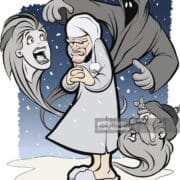
News Americas, TORONTO, Canada, Tues. Dec. 9, 2205: With Christmas fast approaching, thoughts inevitably turn to ‘A Christmas Carol,’ Charles Dickens’ timeless tale of Ebenezer Scrooge, a man so tightly wound that even his dreams staged an intervention.
Behind the ghosts, the moral uplift, and the supernatural theatrics lies something very down-to-earth: a man being forced to sit through the psychological cinema of his own unconscious. Scrooge didn’t get spirits – he got dreams with a production budget.
So, in the spirit of the season, we take a lighter look at the dream world Dickens so wisely tapped into, where forgotten memories, repressed feelings, and questionable late-night snacks all come together in a show that nobody bought tickets for.
The Nightly Movies No One Asked For
Whether we like it or not, we all operate a small, unregulated cinema in our heads. Every night the projector snaps on and we’re shown a private screening:
a thriller,
a romantic comedy (starring people we’d never cast),
or an anxiety-fuelled disaster film directed by leftover curry.
Sigmund Freud, Victorian psychology’s biggest Dickens fan, believed dreams were windows into the unconscious. And while many of his original theories have since been gently retired, one idea still resonates:
Still, the old idea lingers: our dreams often know things about us that our daytime selves politely ignore.
And thank heavens they do, because without dreams we’d have no idea what our minds get up to when left unsupervised. Dreams are basically the office Christmas party version of the mind: louder, stranger, and someone always ends up dancing with unresolved trauma.
Once consciousness clocks out for the night, the unconscious grabs the keys and announces:
“Right then. Time to unpack your emotional baggage. But let’s do it in costume.”
What follows is our cheerful, seasonal walk through the Dickensian theatre inside all of us—minus the ghosts, plus more questionable symbolism.
The Grocery-List Dreams: A.K.A. Brain Maintenance
Some dreams are incredibly practical:
the leg-cramp emergency broadcast,
the “where’s the toilet?” scavenger hunt,
and the famous “what demon possessed me to eat spicy food at midnight?” drama.
These are the Scrooge-before-redemption dreams: blunt, cranky, and strictly task-oriented.
The Universal Classics: Humanity’s Shared Embarrassments
Then come the classics:
falling,
flying,
showing up to work naked except for confidence you do not possess.
Dickens taught us that the human condition is universal. Dreams confirm this by reminding us that everyone, everywhere, occasionally imagines themselves accidentally attending a meeting in their underpants.
When Dreams Hit A Little Too Close To Home
Then there are those dreams -the sticky, symbolic ones where your childhood home, your boss, your ex, and a giraffe all merge into one confusing emotional metaphor.
These are the dreams that force you, over your morning coffee, to mutter:
“What exactly is my brain trying to tell me, and why did it choose interpretive chaos as the medium?”
Modern psychologists would say: because you ignored it during the day. Dreams are emotional customer service—and they work night shifts.
How Our Inner Scrooges Shape Our Dreams
Just like Dickens’ ghosts tailored their messages to Scrooge, our dreams reflect our personality styles – some gentle, some dramatic, some in full Broadway regalia.
1. The Well-Adjusted Dreamer: Christmas Spirit Lite
If you’re generally optimistic, your dreams tend to be more “gentle nudge” than “haunting.”
A dream of missing the train =
Pardon me, maybe lighten your schedule? Kind regards, Your Brain.
A forgotten exam =
A small reminder that you need a break. Warmly, The Subconscious.
These dreamers get the Ghost of Christmas Past with a cup of tea and a kindly tone.
2. The Timid or Anxious Dreamer: Christmas Drama Edition
For the worriers, the unconscious does not hold back.
Missing the train becomes:
THE ENTIRE RAILWAY NETWORK HAS COLLAPSED AND IT’S YOUR FAULT.
Forgetting the exam becomes:
You’re writing it in the wrong century, with the wrong people, in a towel.
These dreamers get all three Dickensian ghosts at once, each carrying a clipboard.
3. The Narcissist: A Full Scrooge-Before-Redemption Production
Meet “Victor” a modern Scrooge minus the self-awareness.
By day:
He radiates confidence, avoids introspection, and posts heroic quotes about misunderstood brilliance.
By night:
The unconscious stages symbolic catastrophes:
He wins awards – but no one claps.
He gives a grand speech – but his microphone dies.
He enters a room – but the room sighs.
These dreams aren’t punishing him – just giving his ego the performance review it refuses to schedule.
But like pre-conversion Scrooge, Victor wakes up annoyed and blames the bed, the pillow, or society at large.
How Dreams Smuggle In the Truth
Dreams use symbolism because it’s the only way the unconscious can slip difficult truths past security.
Annoyed with someone? They show up in your dream disguised as a hybrid of:
your boss,
your mother,
and someone who once cut you off in traffic.
Avoiding a problem? It shows up as a symbolic plot twist so bizarre even Dickens would say, “Alright, that’s a bit much.”
Everyone’s dream symbols are unique – a private dictionary the ghosts of past, present, and future all share.
Why Talking Helps (Scrooge Could Have Used Therapy)
Freud called it the “talking cure.”
Dickens called it “three supernatural visits and a moral reckoning.”
Whether through a therapist, a friend, or a long reflective walk, acknowledging what a dream hints at often provides the relief we didn’t know we needed.
Scrooge did it with ghosts.
We can do it with fewer nightgowns and less fog.
Final Word: Don’t Wait for Three Ghosts
Dreams don’t always hold grand revelations. Sometimes they’re just housekeeping. But they do highlight the parts of ourselves we ignore during daylight hours.
Well-adjusted people get gentle seasonal reminders.
Timid people get Dickensian drama.
Narcissists get full musical productions – though they rarely give them good reviews.
If there’s a lesson, it’s this:
Pay attention to your inner life now, so your dreams won’t have to stage a Christmas-themed intervention later.
Scrooge waited for ghosts.
You don’t have to.
EDITOR’S NOTE: Ron Cheong, born in Guyana, is a community activist and dedicated volunteer with an extensive international background in banking. Now residing in Toronto, Canada, he is a fellow of the Institute of Canadian Bankers and holds a Bachelor of Science degree from the University of Toronto. His comments are his own and does not reflect those of News Americas or its parent company, ICN.