When Skills Matter More Than Passports: A Caribbean Reckoning

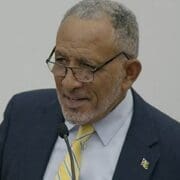
By Dr. Isaac Newton

News Americas, NY, NY, Fri. Jan. 30, 2026: What happens when the world starts paying for what you can do, but your country keeps asking where you studied? As the old Caribbean saying reminds us, what yuh have in yuh hand is better than what yuh eye see. Yet across the region, we keep searching beyond our shores for value while overlooking the talent already in our grasp.

A World That No Longer Waits

The global economy has changed its rhythm. Work no longer sits still in offices or waits politely for permission. It moves fast, follows skill, and rewards action. Artificial intelligence has sharpened this reality, favoring those who can learn quickly, adapt confidently, and solve real problems. While the world races ahead, much of the Caribbean remains tied to an older script, one that assumes degrees lead naturally to jobs and that progress arrives through planning alone. As migration routes tighten and competition intensifies, this mismatch is no longer manageable. It is costly and deeply personal.

The Talent We Walk Past Every Day

The Caribbean’s most painful weakness is not scarcity of ability, but scarcity of belief. Too many capable people are seen only after they leave. Local competence is questioned, while foreign credentials are trusted without hesitation. Young people learn early that promise must wait and initiative must be approved. Leaving, then, becomes less about ambition and more about survival. Over time, this quiet pattern teaches a damaging lesson. Excellence is something you import, not something you grow.

Why Schooling Cannot Carry the Future Alone

Education still matters, but it cannot be expected to do everything. Skills now develop in motion, shaped by digital tools, real world problems, and constant experimentation. Learning is no longer a phase of life. It is the work itself. The economies that succeed are those that clear a straight path from ability to opportunity. Without access to capital, platforms, mentorship, and fair rules, even the most educated citizens are left circling the edges of possibility.

Talent Goes Where Life Works

People do not migrate because they dislike home. They migrate because systems make staying too hard. Talent moves toward places that respect time, reward effort, and reduce friction. This is why talk of brain gain has not delivered change. Attraction requires design. It means welcoming returning nationals with seriousness, inviting skilled newcomers with clarity, enabling remote work, and allowing talent to move freely across the region. A growing population of skilled contributors is not a threat to small states. It is how small states grow.

Artificial Intelligence and the Small Place Advantage

Artificial intelligence has quietly shifted the balance of power. It allows individuals in small places to compete in large markets. It makes it possible to export services without exporting people. This gives the Caribbean a rare opening. But AI does not rescue broken systems. It amplifies them. Where local talent is ignored, AI speeds departure. Where contribution is trusted, it multiplies impact and reach.

Choosing What We Value

The future of the Caribbean will be shaped less by who leaves and more by who is welcomed, trusted, and empowered. Progress begins when skill is recognized, effort is rewarded, and opportunity is accessible. When people feel seen, they stay. When they are taken seriously, they return. And when excellence is expected at home, it attracts excellence from elsewhere. The world is moving quickly and without apology. The question is no longer whether Caribbean people can succeed globally. It is whether the Caribbean is ready to choose its own.

EDITOR’S NOTE: Dr. Isaac Newton is an international strategist trained at Harvard, Princeton, and Columbia. He advises governments and global institutions on governance and development, helping leaders turn ideas into practical and lasting results.

RELATED: The Caribbean’s Moment Of Choice In A Shifting World

Donald Trump And The False Assumption Of Coherence

By Ron Cheong

News Americas, Toronto, Canada, Thurs. Jan. 29, 2026: Donald Trump’s political approach has not been defined by a consistent commitment to long-term institutional stewardship – either domestically or internationally. To assume otherwise risks attributing to him a degree of altruism or strategic coherence that his record does not clearly support.

Mark Carney’s responsibility, by contrast, is narrowly defined: to safeguard Canada’s interests. That is what he has sought to do. Faced with erratic threats, the use of tariffs as leverage, and diminishing regard for rules-based cooperation, Canada’s choices have narrowed: acquiesce and absorb repeated shocks, or chart a more deliberate course grounded in clarity, discipline, and resolve.

It would be reassuring to believe that these challenges will fade with a change in U.S. leadership. But Trump is better understood not as an aberration, but as a prominent manifestation of a broader American political current – one increasingly skeptical of alliances, resistant to external constraints, and prepared to deploy economic power coercively. That current is unlikely to vanish overnight. Expectations of a simple return to earlier norms therefore risk confusing nostalgia with strategy.

Binding Agreements Strained — Treaties Treated as Contingent

Recent years have underscored a difficult reality for Canada:

Agreements, even when formally ratified, can be reinterpreted or disregarded.

Treaty commitments may be suspended through executive action.

Stability can erode not because rules cease to exist, but because one party signals that compliance is optional.

The central question is no longer whether the United States will formally withdraw from the USMCA, but whether its conduct increasingly resembles partial disengagement – through tariffs, contested justifications, and the politicization of border administration.

In practice, many Canadian businesses and policymakers already operate on that assumption.

Tariffs are no longer confined to conventional trade disputes; they have become instruments of political signaling. The long-standing belief that economic interdependence would reliably constrain political behavior appears less certain. In some cases, political imperatives now drive economic decisions.

A Watershed Moment in the Global Order

For decades, the United States benefited from an international system reinforced by reserve-currency status, deep capital markets, and broad geopolitical trust. There are growing indications that aspects of that system are being reassessed.

What is unfolding is not collapse, but adjustment. Some countries have chosen to diversify reserve holdings, including through increased domestic custody of gold. Gold prices reflect this broader uncertainty. Holdings of U.S. Treasuries are being reduced incrementally – not in panic, but as part of longer-term risk management. Few actors seek a disorderly outcome that would undermine assets they still hold.

This is how systemic change often appears: gradual rather than dramatic, cautious rather than declarative.

The Limits of Negotiating with a Bully

There has been a persistent belief that Trump could be effectively constrained through negotiation alone. Experience has called that assumption into question.

When tariff threats were linked to geopolitical demand such as pressure surrounding Greenland several countries declined to comply, responding instead through coordinated diplomatic resistance. Figures such as Carney emphasized collective resolve rather than bilateral concession.

Subsequent U.S. messaging shifted, with references to prospective frameworks lacking clear institutional endorsement. Observers differed on interpretation, but the episode reinforced a recurring pattern: pressure applied, resistance encountered, narrative adjusted.

History suggests that coercive bargaining rarely stabilizes relationships. Concessions offered under pressure often invite further demands. Durable outcomes, by contrast, tend to emerge from clear limits combined with consistent engagement.

History’s Warning

Historical analogy should be used with care, but certain lessons recur.

In 1938, Neville Chamberlain returned from Munich asserting that concessions would secure peace. Within months, further territorial expansion followed, culminating in a broader European war.

Appeasement, in retrospect, did not preserve stability.
It weakened deterrence.

Contemporary disputes – whether involving Panama, Colombia, Greenland, Venezuela, Iran, or even close partners such as Canada, differ profoundly in context and scale. Yet the underlying logic of pressure and response remains familiar.

Canada as a Trading Nation

Canada is fundamentally a trading nation. Beyond exporting goods, it depends on durable commercial relationships and deeply integrated supply chains.

For many years, Canadians assumed that the U.S. relationship, unequal but fundamentally pragmatic, rested on shared economic self-interest. Highly integrated economies, it was believed, would avoid actions that imposed disproportionate harm on themselves.

That assumption now warrants re-examination.

The Risks of Escalatory Economic Threats

Threats of sweeping tariffs, such as a hypothetical across-the-board increase tied to Canada’s pursuit of diversified trade, would carry serious risks for both economies.

Such measures could disrupt housing, automotive manufacturing, energy markets, and cross-border supply chains with unusual speed and severity.

Canada is not a great power. But it is a capable one: resource-rich, institutionally stable, and deeply embedded in global markets. Treating it as economically subordinate would not only strain bilateral relations; it would undermine shared economic resilience.

What Middle Powers Must Do

So what course remains for Canada?

The one middle powers have historically taken under pressure.

Stay calm.
Stay strategic.
Stay firm.

Avoid panic.
Avoid theatrics.
Avoid reflexive concession.

There is a difference between compromise and capitulation. Between diplomacy and dependency. Between reducing risk and institutionalizing vulnerability.

Geography is immutable. The United States will remain Canada’s closest neighbor and largest trading partner. Abrupt disengagement is neither realistic nor desirable.

But neither can Canada accept a condition of recurring economic coercion – where each political cycle introduces renewed uncertainty.

That is not partnership.
It is not stability.
It is not free trade.

Canada cannot control the direction of U.S. domestic politics. But it can reduce its exposure to their volatility. Success will not be measured in rhetoric or applause, but in whether Canada becomes, over time, more resilient – harder to pressure, harder to isolate, harder to threaten economically. That is stability.
Not submission.

EDITOR’S NOTE: Ron Cheong, born in Guyana, is a community activist and dedicated volunteer with an extensive international background in banking. Now residing in Toronto, Canada, he is a fellow of the Institute of Canadian Bankers and holds a Bachelor of Science degree from the University of Toronto. His comments are his own and do not reflect those of News Americas or its parent company, ICN.

RELATED: Taking The Sign Out Of The Window – Mark Carney’s Illuminating Leadership: The Path For Middle Powers

St. Vincent and Grenadines New Government Lays Out New Budget

News Americas, KINGSTOWN, St. Vincent and the Grenadines, Jan. 29, 2026: St. Vincent and the Grenadines Prime Minister, Dr. Godwin Friday, has laid out his first national budget since taking office – and the figures reveal both ambition and constraint as his administration grapples with rising debt costs, disaster recovery, and tight revenue growth.

Prime Minister Dr. Godwin Friday has laid out his first national budget since taking office — and the figures reveal both ambition and constraint as his administration grapples with rising debt costs, disaster recovery, and tight revenue growth.

Presenting the 2026 Estimates of Revenue and Expenditure, Friday announced a US$703 million fiscal package, a modest 2% increase over last year’s approved budget, signaling continuity rather than expansion in public spending.

The budget is expected to be financed largely through US$336 million in current revenue and US$362 million in capital receipts, reflecting continued reliance on project-based funding and external inflows rather than organic revenue growth.

A Budget Under Pressure

Recurrent spending for 2026 – excluding debt amortization and sinking fund contributions – is projected at approximately US$374 million, leaving a current deficit of about US$39 million.

“That deficit is not new,” Friday told Parliament, acknowledging that successive administrations have run deficit budgets. “Our challenge is to shrink those deficits over time.”

Revenue projections are slightly weaker this year, driven largely by a sharp 40% drop in non-tax revenue, after the government confirmed there will be no repeat of World Bank reimbursements tied to Hurricane Beryl cleanup under the BERRY Project.

Last year’s budget benefited from a one-off US$7.4 million retroactive reimbursement. That cushion disappears in 2026.

Where the Money Comes From

Tax revenue is projected to reach approximately US$282 million, up marginally by less than 1%. Growth is expected mainly from:

Taxes on international trade, rising by about US$1.7 million

Income and profit taxes, climbing roughly 6.5% to US$48 million

Non-tax revenue is forecast at US$53 million, driven largely by government goods and services, expected to generate US$44 million.

Debt Is the Quiet Risk

The most striking pressure point in the budget is debt servicing.

Total recurrent expenditure – including amortization and sinking fund contributions – rises to US$484 million, a 13.7% increase over last year.

Debt amortization alone jumps to US$100 million, up nearly 26%, while sinking fund contributions climb to US$9.3 million. “Amortization is worrying,” Friday admitted — a rare note of candor that underscores the long-term fiscal challenge facing the small island economy.

Wages, Pensions, And Transfers

Public sector compensation increases by US$14.5 million, reflecting wage obligations and staffing costs. Pension payments rise modestly to US$34.6 million, including:

US$29 million for civil service pensions

US$5.6 million in government contributions to the National Insurance Services, (NIS)

Transfers for training, grants, and regional obligations rise by about US$10 million, adding further strain to recurrent spending.

Capital Spending Gets Tighter – And More Targeted

Capital spending for 2026 is set at US$213 million, a 17% reduction from last year, reflecting a more restrained public investment program.

Still, key ministries will see significant allocations:

Transport & Works: US$42.7 million

Education & Vocational Training: US$23.5 million

Higher Education, Grenadines Affairs, Ports & Airports: US$29 million

Finance & Economic Planning: US$70 million

Housing & Informal Settlements: Nearly US$15 million

The focus, Friday said, will be on roads, sea defenses, schools, clinics, and public buildings, with an emphasis on resilience and essential services rather than large new initiatives.

The Bigger Picture

Friday’s first budget is less about bold expansion than fiscal navigation – balancing debt obligations, disaster recovery, and public expectations in a constrained economic environment.

The message is clear: the new government inherits limited fiscal space, rising debt costs, and fewer one-off supports – and the hard choices are just beginning.

RELATED: What Now After Davos

Trinidad-Born Rapper Nicki Minaj  Signals Citizenship Move

News Americas, NEW YORK, NY, Jan. 29, 2026: Trinidad and Tobago-born rapper Nicki Minaj says she has received a special U.S. immigration “gold card” from President Donald Trump, signaling what she described as a fast-tracked path toward U.S. citizenship.

Minaj made the disclosure on Wednesday, hours after appearing alongside Trump at a U.S. Treasury Department summit promoting the administration’s new child investment initiative known as “Trump Accounts.” Posting on X, the rapper shared an image of a gold-colored immigration card bearing Trump’s likeness, captioned simply: “Welp.”

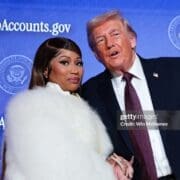
Musician Nicki Minaj (L) joins U.S. President Donald Trump on stage as he delivers remarks during the Treasury Department’s Trump Accounts Summit at Andrew W. Mellon Auditorium on January 28, 2026 in Washington, DC. “Trump Accounts” are a portion of recently passed tax and spending legislation where the federal government will deposit $1,000 into investment accounts for every child born between 2025 and 2028 once parents sign their children up while filing their income taxes.  (Photo by Win McNamee/Getty Images)

She later wrote that she was “finalizing that citizenship paperwork as we speak as per MY wonderful, gracious, charming President,” adding that while the card typically costs up to US$1 million under the program, she received it at no charge.

The so-called “gold card” was created under a September executive order and is designed to offer an alternative pathway to citizenship for highly skilled or high-profile foreign nationals. The White House has not yet commented on Minaj’s specific case.

Born Onika Maraj in Trinidad and Tobago, Minaj has previously spoken openly about her immigration history. In a 2018 social media post, she said she entered the United States as an undocumented child at the age of five, criticizing family separations at the border during Trump’s first term.

At Wednesday’s Treasury event in Washington, Minaj appeared onstage with Trump and businessman Kevin O’Leary, at times holding the president’s hand while he praised her publicly. Trump told the audience he believed Minaj planned to donate significant sums to Trump Accounts on behalf of her fans, though no formal details were provided.

While addressing the crowd, Minaj described herself as “probably the president’s No. 1 fan,” adding that criticism of her political stance has only strengthened her support.

Trump, for his part, praised the rapper, acknowledging that her endorsement has not been without backlash. “She took a little heat because her community isn’t necessarily a Trump fan,” he said. “But I just think she’s great.”

Minaj’s appearance and comments mark a notable political turn for one of the most internationally recognized artists of Caribbean descent, placing immigration, celebrity influence, and U.S. policy squarely at the center of a widening national debate.

RELATED: From Undocumented Immigrant To Trump’s “Number One Fan” – Nicki Minaj Embraces MAGA Spotlight

From Undocumented Immigrant To Trump’s “Number One Fan” – Nicki Minaj Embraces MAGA Spotlight

By NAN ET EDITOR

News Americas, Washington, D.C., Jan. 28, 2026: Trinidad and Tobago–born rapper Nicki Minaj is now publicly embracing former President Donald Trump – calling herself his “No. 1 fan” and dismissing criticism of her political turn as motivation rather than deterrence.

“I will say that I am probably the president’s No. 1 fan,” Minaj told the crowd Wednesday at a U.S. Treasury Department–hosted summit in Washington, D.C., marking the launch of so-called “Trump Accounts,” a new tax-advantaged savings program for children.

US President Donald Trump (R) greets Trinidadian rapper and singer-songwriter Nicki Minaj during an event on ‘Trump Accounts’ at the Andrew W. Mellon Auditorium in Washington, DC, on January 28, 2026. (Photo by Brendan SMIALOWSKI / AFP via Getty Images)

“And that’s not going to change,” the 43-year-old performer added.

Minaj, born Onika Maraj, said backlash over her support has only strengthened her resolve. “The hate or what people have to say does not affect me at all. It actually motivates me to support him more,” she said. “We’re not going to let them get away with bullying him and smear campaigns.”

Her remarks came just ahead of Trump’s own speech at the event, where she claimed divine protection over the former president. “He has a lot of force behind him, and God is protecting him,” she said.

A Sharp Turn From 2020

Nicki Minaj laughs during remarks by U.S. President Donald Trump at the Treasury Department’s Trump Accounts Summit with U.S. Treasury Secretary Scott Bessent (L) at the Andrew W. Mellon Auditorium on January 28, 2026 in Washington, DC. (Photo by Win McNamee/Getty Images)

Minaj’s endorsement marks a striking reversal from her public stance during Trump’s first term. In 2020, she said she would not “jump on the Donald Trump bandwagon,” and had previously spoken openly about coming to the United States as an undocumented child.

In a widely shared 2018 post, Minaj criticized family separations at the U.S.-Mexico border, writing that she herself entered the country without legal status as a child.

“I came to this country as an illegal immigrant,” she wrote at the time. “I can’t imagine the horror of being in a strange place & having my parents stripped away from me at the age of 5.”

She urged authorities then to stop the practice, calling it “so scary” and pleading for compassion toward children detained at the border.

Rising MAGA Visibility

Nicki Minaj (L) joins U.S. President Donald Trump on stage as he delivers remarks during the Treasury Department’s Trump Accounts Summit at Andrew W. Mellon Auditorium on January 28, 2026 in Washington, DC. (Photo by Win McNamee/Getty Images)

Minaj’s appearance at the Treasury summit is part of a broader pattern of increasingly visible alignment with conservative causes. She recently appeared at Turning Point USA’s AmericaFest and has spoken favorably of Trump during interviews and public events – a shift that has drawn both praise and backlash, including online calls for her deportation.

“I have the utmost respect and admiration for our president,” Minaj said at a recent event. “He’s given so many people hope.”

The rapper has also drawn attention for public feuds, including a recent clash with former CNN host Don Lemon, whom she criticized on social media.

Some have suggested her embrace of the president is to help her brother and husband, who have faced legal challenges, obtain a pardon. Her husband, Kenneth Petty previously served four years in prison as a Level 2 sex offender after he was found guilty of raping a 16-year-old girl, whom he held at knifepoint, in 1994.

Her brother, Jelani Maraj, has also faced legal issues. In 2017, Maraj, then 38, was convicted of raping an 11-year-old girl at his Long Island residence. Maraj said the accusations were invented by the victim’s mother to go after Minaj’s family’s fortune. He was sentenced to 25 years to life in 2020.

What Are “Trump Accounts”?

The summit focused on the launch of Trump Accounts, a provision included in last year’s tax legislation. The program provides a $1,000 government contribution for U.S.-citizen newborns, invested in stock market index funds and accessible when the child turns 18 for approved uses such as education, home purchases, or starting a business.

Parents can contribute additional funds annually, with employers, relatives, and philanthropic organizations also allowed to participate. The accounts are managed by private financial firms and are subject to taxes upon withdrawal.

Trump argued the initiative would give children “real assets and a shot at financial freedom,” while critics say it favors families with the means to contribute and does little to address early childhood poverty.

Minaj did not address those criticisms directly but praised the initiative as expanding opportunity for future generations.

RELATED: Has Nicki Minaj Gone Full MAGA?

Families Sue U.S. Government Over Caribbean Killings — Arguing There Was No War

News Americas, NEW YORK, NY, Jan. 28, 2026: The families of two Trinidad and Tobago nationals killed last year during a U.S. military strike in Caribbean waters have filed a wrongful death lawsuit against the United States government, arguing the Caribbean killings were unlawful because no armed conflict existed.

MV-22 Osprey aircraft are parked on the tarmac at Mercedita Airport in Ponce, Puerto Rico, on January 15, 2026. (Photo by Ricardo ARDUENGO / AFP via Getty Images)

The suit, filed yesterday in federal court in Massachusetts, is being brought by the mother of Chad Joseph, 26, and the sister of Rishi Samaroo, 41, who were among six people killed on October 14, 2025, when a U.S. missile struck a boat Washington alleged was transporting drugs.

The case is being pursued under the Death on the High Seas Act, which allows civil claims for wrongful deaths occurring in international waters, and the Alien Tort Statute, which permits foreign nationals to seek redress in U.S. courts for violations of international law. At least 125 people have been killed in these strikes since September 2025.

Legal advocates describe the lawsuit as the first of its kind brought against the Trump administration over its expanded use of military force in anti-narcotics operations in the Caribbean. At the time of the strike, U.S. officials said the operation targeted “narco-terrorists” linked to drug trafficking networks allegedly operating between Venezuela and the United States. However, the lawsuit contends that no evidence has been publicly produced to support claims that the victims were affiliated with drug cartels or terrorist organizations.

Instead, the plaintiffs argue that Joseph and Samaroo were civilians who were traveling by boat after engaging in fishing and agricultural work in Venezuela.

“There was no armed conflict,” the lawsuit states. “As such, the laws of war do not apply. These were wrongful deaths and extrajudicial killings carried out without legal justification.”

The Trump administration has previously told members of Congress that the United States is engaged in a non-international armed conflict with transnational drug cartels, using that position to justify the use of lethal military force. The lawsuit directly challenges that claim, asserting that treating alleged drug trafficking as a battlefield conflict erodes international law and due process protections.

The families are being represented by the American Civil Liberties Union, (ACLU) and the Center for Constitutional Rights, (CCR). They are seeking punitive damages, to be determined at trial.

“These were lawless killings in cold blood,” said CCR Legal Director Baher Azmy. “The United States cannot declare a war where none exists and then execute people without trial.”

“The Trump administration’s boat strikes are the heinous acts of people who claim they can abuse their power with impunity around the world,” said Brett Max Kaufman, senior counsel at the ACLU. “In seeking justice for the senseless killing of their loved ones, our clients are bravely demanding accountability for their devastating losses and standing up against the administration’s assault on the rule of law.”

In a statement, Samaroo’s sister said her brother had served time for a past crime and was attempting to rebuild his life.

“Rishi used to call our family almost every day, and then one day he disappeared, and we never heard from him again,” said Sallycar Korasingh, Rishi Samaroo’s sister. “Rishi was a hardworking man who paid his debt to society and was just trying to get back on his feet again and to make a decent living in Venezuela to help provide for his family. If the U.S. government believed Rishi had done anything wrong, it should have arrested, charged, and detained him, not murdered him. They must be held accountable.”

“Chad was a loving and caring son who was always there for me, for his wife and children, and for our whole family. I miss him terribly. We all do,” said Joseph’s mother, Lenore Burnley. “We know this lawsuit won’t bring Chad back to us, but we’re trusting God to carry us through this, and we hope that speaking out will help get us some truth and closure.”

Prior to his murder, Joseph lived with his wife and their three children in Las Cuevas, Trinidad. To support his family, he often traveled to Venezuela to fish and for farmwork. On October 12, he called his wife to let her know that he had found a boat ride home from Venezuela and would see her in a couple of days. On October 14, his wife and Ms. Burnley saw social media reports of a boat strike; fearing that the boat was his, they repeatedly called him, but got no reply. His family has not heard from him since.

Samaroo was born in El Soccorro, Trinidad, where his elderly father, eight younger siblings, and two of his three sons still reside. His elderly mother lives nearby in San Juan. In 2024, he was released early on parole after serving a 15-year sentence for his participation in a homicide. Following his release, Mr. Samaroo moved to Las Cuevas, where he fished and worked in construction to support himself and his family. In August 2025, he let his family know that he was working on a farm in Venezuela, taking care of goats and cows and making cheese. He would call his family almost every day when he was in Venezuela, and in an Oct. 12 call with Ms. Korasingh, he told her he was returning home to Trinidad and would see her in a few days because their mother had fallen ill, and he wanted to help take care of her. That was the last time Ms. Korasingh or anyone else in the family heard from him.

The lawsuit also comes amid growing scrutiny of U.S. military strikes in Caribbean and eastern Pacific waters, which human rights groups say have resulted in more than 100 deaths since late 2025.

“Using military force to kill Chad and Rishi violates the most elementary principles of international law,” said Jonathan Hafetz, a Professor at Seton Hall Law School. “People may not simply be gunned down by the government, and the Trump administration’s claims to the contrary risk making America a pariah state.”

Trinidad and Tobago’s government has previously expressed support for aggressive anti-drug operations, though questions remain about the legality and oversight of foreign military actions in the region.

President Trump and Secretary of Defense Pete Hegseth have publicly boasted about and published videos of the strikes – including the strike that killed Mr. Joseph and Mr. Samaroo. However, the strikes’ victims have remained largely anonymous, seen only as specks on a screen. The Trinidadian Foreign Minister Sean Sobers told a local news outlet after the strike that “the government has no information linking Joseph or Samaroo to illegal activities.”

The U.S. State Department and Department of Defense have not yet publicly responded to the lawsuit.

Has Nicki Minaj Gone Full MAGA?

News Americas, NEW YORK, NY, Weds. Jan. 28, 2026: Trinidad-born rapper Nicki Minaj seems to be now officially MAGA.

Minaj is set to appear alongside the U.S. President at a U.S. Treasury Department summit today to mark the launch of a new tax-advantaged savings program known as “Trump Accounts,” underscoring the growing involvement of high-profile celebrities in the administration’s economic messaging.

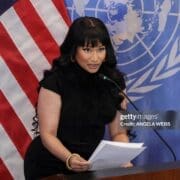
FLASHBACK – Trinidadian-US rapper Nicki Minaj speaks during the panel discussion “Combatting Religious Violence and the Killing of Christians in Nigeria” at the US Mission to the United Nations in New York City, on November 18, 2025. (Photo by ANGELA WEISS / AFP) (Photo by ANGELA WEISS/AFP via Getty Images)

The summit, to be held in Washington, D.C., will also feature Shark Tank investor and actor Kevin O’Leary, actress and wife of RFK, Jr., Cheryl Hines, and Treasury Secretary Scott Bessent. According to The Hollywood Reporter, Trump and Bessent are both scheduled to deliver remarks, and the event will be streamed live on X.

“Trump Accounts” are a newly created form of tax-advantaged individual retirement account for children, allowing contributions from parents, guardians, employers, and other donors. The accounts were established under last year’s “One Big Beautiful Bill Act” and are being promoted by the administration as a tool to expand long-term financial opportunity for American families.

While specific details of the summit agenda have not been publicly disclosed, the Treasury Department said the event will include policy briefings and expert discussions outlining how the accounts function, their projected economic impact, and the administration’s broader economic priorities.

Additional participants expected to attend include conservative influencer Isabel Brown, political consultant Alex Bruesewitz, U.S. Senator Ted Cruz, technology executive Michael Dell, and White House Press Secretary Karoline Leavitt.

The event represents a notably high-profile rollout for a Treasury Department initiative, reflecting an effort to boost public awareness of the program. Treasury Secretary Bessent previously indicated in a radio interview that a national television commercial promoting Trump Accounts is planned to air during next month’s Super Bowl, shortly after the national anthem.

Minaj’s participation comes amid her increasingly public expressions of political alignment including at a speech at the US mission to the UN and at Turning Point USA’s AmericaFest, where she voiced admiration for Trump during an onstage interview. That let to a petition to have her deported.

“I have the utmost respect and admiration for our president,” Minaj said at the event. “He’s given so many people hope.”

Minaj recently clashed with former CNN host Don Lemon, who she attacked with homophobic tweets on X.

Born in Trinidad and Tobago and raised in the United States, Minaj is one of the most internationally recognized artists of Caribbean descent. Minaj has been open about coming to the United States as an undocumented child. In an emotional social media post in 2018, she called out the separation of families at the border during Trump’s first administration.

“I came to this country as an illegal immigrant. I can’t imagine the horror of being in a strange place & having my parents stripped away from me at the age of 5,” she reportedly wrote in the caption of a photo showing young children separated from their parents at the border being detained.

“This is so scary to me. Please stop this,” she wrote. “Can you try to imagine the terror & panic these kids feel right now? Not knowing if their parents are dead or alive, if they’ll ever see them again.”

You’ve Likely Heard His Drums Your Whole Life — Sly Dunbar Is Gone

By NAN ET EDITOR

News Americas, KINGSTON, Jamaica, Jan. 26, 2026: You may not know his face. You may not even know his name. But if you’ve listened to reggae, dancehall, hip-hop, pop, or rock over the last half-century, you have almost certainly heard his drums.

Lowell Fillmore “Sly” Dunbar, the legendary Jamaican drummer and one-half of the groundbreaking rhythm duo Sly and Robbie, has died at the age of 73. His wife, Thelma Dunbar, confirmed his passing after finding him unresponsive at their home early Monday morning, January 26th. His death marks the loss of one of the most influential musicians Jamaica ever produced and comes on the heels of the passing recently of Third World co-founder, Cat Coore.

Born on May 10, 1952, in Kingston, Dunbar began drumming as a teenager, quickly earning a reputation for precision, versatility, and innovation. By age 15, he was already performing professionally, first with The Yardbrooms and later with the Ansell Collins–led band Skin, Flesh & Bones. His earliest recordings came through collaborations with Dave and Ansell Collins, laying the foundation for a career that would reshape global music.

Dunbar’s life changed in 1972 when he met bassist Robbie Shakespeare. Their partnership became one of the most prolific and influential rhythm sections in modern music. Together, they formed the duo Sly & Robbie, often referred to as the “Riddim Twins,” whose sound would define reggae and dancehall while crossing seamlessly into rock, pop, and hip-hop.

Working closely with producer Bunny Lee and the Aggrovators, Sly and Robbie helped drive Jamaica’s golden era of roots reggae before pushing the genre forward with digital rhythms and experimental production in the late 1970s and 1980s. Their influence reached far beyond the Caribbean. The duo recorded and performed with artists including Peter Tosh, Grace Jones, Bob Dylan, Mick Jagger, and countless others.

In 1980, the pair launched Taxi Records, a label that became a powerhouse of Jamaican music. Taxi Records introduced and elevated artists such as Black Uhuru, Ini Kamoze, Beenie Man, Red Dragon, and Chaka Demus and Pliers, shaping the sound of dancehall for a new generation while keeping reggae globally relevant.

Dunbar’s drumming style was unmistakable – crisp, inventive, and deeply musical. He blended traditional Caribbean rhythms with funk, rock, and electronic influences, creating grooves that were both complex and accessible. His credits spanned from Junior Murvin’s Police and Thieves to Bob Marley’s Punky Reggae Party, as well as Bob Dylan’s albums Infidels and Empire Burlesque. Few drummers in history have left fingerprints across so many genres.

His longtime musical partner Robbie Shakespeare passed away in December 2021, making Dunbar’s death especially poignant for fans who saw the duo as inseparable. Together, they redefined what a rhythm section could be — not just backing musicians, but architects of sound.

Dunbar’s contributions did not go unrecognized. He was awarded Jamaica’s Order of Distinction and received the Musgrave Gold Medal in 2015 for his outstanding service to music. He also received a Lifetime Achievement Award from the University of Minnesota in May 2025, further underscoring the global reach of his work. Dunbar was set to be honored at Reggae Genealogy on Feb. 7th in Fort Lauderdale.

The Jamaican entertainment industry is again in mourning, following the loss of yet another cultural giant. But Sly Dunbar’s death does not silence his legacy. His rhythms live on in the music that still fills dance floors, radio stations, films, and playlists around the world.

You may not have known his name before today. But you’ve likely heard his drums your whole life — and you always will.

LISTEN TO HIS EHYTHMS HERE

US Revokes Visas Of Two Members Of Haiti’s Presidential Council

News Americas, NEW YORK, NY, Sun. Jan. 26, 2026: The U.S. Department of State has imposed visa restrictions and revocations on two members of Haiti’s Transitional Presidential Council, (TPC), and their immediate family members, citing alleged involvement in the operations of gangs and other criminal organizations. The move underscores a blunt message: political authority entangled with gang power will no longer be tolerated.

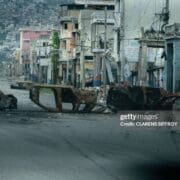
A police vehicle drives around cars burned by armed gangs and used as a barricade during clashes last week with Haitian security forces on a deserted street in the city center, seen from an armored police vehicle during a patrol, in Port-au-Prince on January 16, 2026. An operation on January 14 by the Haitian National Police, conducted jointly with the army, the Gang Repression Force (FRG) and a mercenary unit, took place in the stronghold of Jimmy Chérizier, known as “Barbecue,” leader of the “Viv Ansanm” gang, in one of his residences in the Delmas 6 district, 6km (4 miles) west of downtown Port-au-Prince, although he was absent at the time of the operation. (Photo by Clarens SIFFROY / AFP via Getty Images)

“These actions are being taken due to the TPC members’ involvement in the operation of gangs and other criminal organizations in Haiti,” said State Department spokesman Thomas Pigott, pointing specifically to interference with Haiti’s efforts to combat gangs designated by the U.S. as Foreign Terrorist Organizations (FTOs).

No names were officially released. No evidence was detailed. But the timing – and the context – spoke loudly.

Power, Pressure, and a Fracturing Council

Over the past 24 hours, some council members have reportedly attempted to use their votes as leverage against Prime Minister Alix Didier Fils-Aimé, while a well-known gang figure posted a TikTok video voicing support for the council. The overlap between political maneuvering and gang signaling has become harder to dismiss.

The security situation on the ground continues to deteriorate. On Sunday afternoon, two Brazil-bound charter planes were hit by gunfire as they approached Toussaint Louverture International Airport from Croix-des-Bouquets, east of Port-au-Prince. No injuries were reported – but the message was unmistakable. Armed gangs, already controlling large swaths of the capital, are expanding their reach.

The visa action brings the number of TPC figures who have lost U.S. visas or green cards in the past two months to at least three. Previously, the State Department revoked the visa of former central bank governor and council member Fritz Alphonse Jean, who confirmed he was barred from entering the United States after an alleged attempt in November to remove Prime Minister Fils-Aimé. Jean has denied accusations of gang ties.

Washington Signals the End of Patience

The legal authority for the move – INA 212(a)(3)(C) – allows the U.S. to bar entry to individuals whose presence could have “potentially serious adverse foreign policy consequences.” In practical terms, it is a diplomatic red card.

Tensions within Haiti’s transitional leadership have been escalating since November. With the council’s mandate set to expire on Feb. 7, and no elected president in place, five of the council’s seven voting members recently voted to remove Fils-Aimé and install a new government. The Trump administration has described that move as illegal and warned of consequences.

On Friday, Jan. 23rd, U.S. Secretary of State Marco Rubio personally called Fils-Aimé to reaffirm U.S. support and to underscore that the council’s authority ends on Feb. 7, according to U.S. officials.

“We are the ones who appointed Didier Fils-Aimé,” council member Leslie Voltaire said at a press conference, insisting the council has the right to replace him. Washington disagrees.

A Country Running Out of Time

Haiti’s crisis extends far beyond political infighting. Armed gangs now dominate much of the country, hollowing out the state’s ability to govern and deliver basic services. Presidential elections have not been held in nearly a decade. Humanitarian needs have reached unprecedented levels, with millions struggling to meet daily necessities.

“Violence has intensified and expanded geographically, exacerbating food insecurity and instability, as transitional governance arrangements near expiry and overdue elections remain urgent,” said UN Secretary-General António Guterres in his latest report on the UN’s political mission, BINUH.

More than one in ten Haitians have been displaced by violence. Migration pressures are rising. Regional stability is increasingly at risk.

The Signal Behind the Sanctions

This is not just about visas. It is about legitimacy.

The U.S. move reframes Haiti’s crisis in stark terms: the problem is no longer only gangs versus the state – it is the blurring of lines between the two. By targeting senior political figures, Washington is signaling that stability cannot be built on compromised authority.

“The Haitian people have had enough with gang violence, destruction, and political infighting,” the State Department said, adding that the Trump administration “will pursue accountability for those who continue to destabilize Haiti and the region.”

Elections are tentatively projected for early 2027. Whether Haiti reaches that moment with functioning institutions – or slides deeper into fragmentation – may depend on whether this line drawn by Washington holds.

RELATED: Get Ready To Shell Out More In Immigration Fees

Taking The Sign Out Of The Window – Mark Carney’s Illuminating Leadership: The Path For Middle Powers

 By Ron Cheong

News Americas, TORONTO, Canada, Sat. Jan. 24, 2026: There are moments in global affairs when a speech does more than fill a time slot. It draws a line. It clarifies the stakes. It names the reality that polite diplomacy often tries to soften with euphemisms. Prime Minister Mark Carney’s address at the World Economic Forum in Davos, Switzerland, was one of those moments – brilliant not because it was flamboyant, but because it was uncommonly clear.

Canadian Prime Minister Mark Carney delivers a speech at the World Economic Forum Annual Meeting held in Davos, Switzerland on January 20, 2026. (Photo by Harun Ozalp/Anadolu via Getty Images)

In an era of strategic confusion – where too many leaders speak in foggy generalities, as if ambiguity itself were a form of wisdom – Carney spoke with the precision of someone who understands that history is not a backdrop. It is a force. And right now, history is moving again.

The Old Order Is Not Coming Back

The central insight of his remarks was as sobering as it was necessary: the old order is not returning. Not because we failed to wish hard enough, but because the conditions that sustained it have changed. The world is hardening into blocs, fortresses, and transactional power politics. In such a world, the countries that suffer most are not always the weakest states in absolute terms, but those in the middle – nations that built prosperity through stability, trade, law, and predictable rules.

Carney’s speech was, in effect, a call to these nations: stop waiting for someone else to restore yesterday’s international system. Stop acting as though compliance will buy safety. And above all, stop mistaking nostalgia for strategy.

Thucydides Returns: Power Without Apology

Thucydides saw this logic long before modern institutions, before treaties and summits and declarations. His cold aphorism remains the skeleton key to power politics: “The strong do what they can, and the weak suffer what they must.”

Faced with that grim truth, there is a strong temptation for countries to go along to get along – to accommodate, to avoid trouble, to hope that obedience will purchase protection.

But as Carney warned, it won’t.

This Isn’t A Passing Storm

What we are seeing is not merely about tariffs or territory or rhetoric. It is the return of a worldview: that might makes right, that alliances are optional, that agreements are disposable, that weakness is an invitation, and that smaller countries exist mainly to be leaned on.

This is not a temporary fever. Donald Trump has now been elected twice, and his support remains unwavering among at least a third of the American electorate despite everything that has transpired. That alone shatters the comforting fantasy that the “Trump era” was simply a passing disruption.

Even when Trump is gone, similar politicians – perhaps smoother, perhaps younger, perhaps even more disciplined – will move into the breach. The political demand for strongman certainty is not evaporating; it is being normalized.

The Task Of The Middle Powers

Carney’s Davos speech rejected the illusion that middle countries can survive by staying quiet and staying small. Instead, he offered a more demanding and more hopeful alternative: the middle powers must act together.

Because, as the blunt modern paraphrase puts it: if we’re not at the table, we’re on the menu.

This was the heart of his argument: multilateralism cannot survive on habit. It must be defended through action.

“Geometric Cooperation:” Alliances That Flex And Multiply

Carney described the need for a multilateral alliance built not as a single rigid bloc, but through “geometric” cooperationflexible, overlapping coalitions of middle powers working together across trade, security, energy, technology, climate resilience, and supply chains.

Not one alliance to rule them all, but a latticework of partnerships that makes coercion harder and cooperation easier.

This is not naive idealism. It is realism for a fractured world.

The Power Of The Powerless – And The Courage To Refuse

Carney’s argument carried the moral undertone of a powerful political idea from the late Cold War: the power of the powerless. Even those without tanks and empires possess leverage – if they coordinate, if they speak plainly, if they refuse to internalize the psychology of fear.

It is not powerlessness that destroys nations. It is resignation.

And resignation often begins quietly – with a sign in the window.

The Sign In The Window

In the communist world, one of the sharpest jokes about survival under dysfunction was the idea that the system endured with a sign in the window – something like: “Workers of the world unite” orWe have everything.” Or perhaps, more honestly: Pretend.

Pretend the shelves are full.
Pretend the numbers are real.
Pretend the system is working.

Carney’s message, in essence, was that middle powers must stop pretending.

Stop pretending the rules-based order will automatically repair itself.
Stop pretending bad faith actors will return to good faith.
Stop pretending silence today will spare you trouble tomorrow.

Trouble does not respect silence. It interprets it.

The New Strongman Script

What made the speech particularly striking was the contrast between Carney’s steady clarity and the carnival-mirror rhetoric now common in parts of global politics.

We hear punishment economics dressed up as patriotism: “Instead of raising taxes on domestic producers, we’re lowering them and raising tariffs on foreign nations to pay for the damage that they’ve caused.”

We hear oil-fueled triumphalism: “Every major oil company is coming in with us. It’s amazing. It’s a beautiful thing to say…”

And then there is the language of domination, spoken without embarrassment: “We probably won’t get anything unless I decide to use excessive strength and force where we would be, frankly, unstoppable.”

Or territorial appetite served with legalistic flourish: “All we’re asking for is to get Greenland… because you need the ownership to defend it. You can’t defend it on a lease.”

Even allies are not spared. Gratitude is demanded like tribute: “I watched their Prime Minister yesterday. He wasn’t so grateful… Canada lives because of the United States. Remember that Mark [Carney], the next time you make your statements.”

This is not diplomacy. It is a hierarchy, spoken aloud.

Canada’s Quiet Strength

Carney did not respond with panic, nor with theatrical outrage, nor with the weak comfort of “this too shall pass.” He responded with the calm firmness of a country that knows what it is, and what it stands for.

Canada Is A Pluralistic Society That Works.

Our public square is loud, diverse, and free.
Canadians remain committed to sustainability.
We are stable and reliable in a world that is anything but.
A partner that builds relationships for the long term.

Taking The Sign Out Of The Window

Then came the line that gave the speech its title-worthy force: we are taking the sign out of the window.

No more pretending the old order will return.
No more living off inherited stability.
No more hoping that compliance will buy safety.

The message was not defeatist – it was liberating. Because once you accept that the old order is gone, you can stop mourning and start building.

As Carney put it: We know the old order is not coming back. We shouldn’t mourn it. Nostalgia is not a strategy.” And then came the turn from realism to resolve: from fracture, we can build something “bigger, better, stronger, more just.”

Building The Table

This is the task of the middle powers: the countries with the most to lose from a world of fortresses, and the most to gain from genuine cooperation.

Davos has heard countless speeches about “shared values” and “global partnership.” Many were sincere. Some were hollow. Carney’s stood out because it treated the world as it is – not as we wish it were – and still insisted that agency remains.

Thucydides was right about the strong and the weak.
But Carney reminded us of the third category: the capable – nations strong enough to matter, if only they act together.

The middle powers do not need to beg for a seat at the table.
They need to build the table.

EDITOR’S NOTE: Ron Cheong, born in Guyana, is a community activist and dedicated volunteer with an extensive international background in banking. Now residing in Toronto, Canada, he is a fellow of the Institute of Canadian Bankers and holds a Bachelor of Science degree from the University of Toronto. His comments are his own and do not reflect those of News Americas or its parent company, ICN.
RELATED: Against The Odds: A Guyana Born Centenarian And Current Health Care