Guyana: Extradition Case Against Nazar, Azruddin Mohamed Adjourned After Late Prosecution Disclosure

News Americas, GEORGETOWN, Guyana, Thurs. Jan. 8, 2025: Extradition proceedings involving businessman Nazar Mohamed and his son, Guyana’s presumed opposition leader, Azruddin Mohamed of the WIN Party, were adjourned on Thursday after the prosecution introduced a document that had not been previously reviewed by the defence.

Nasar Mohammed, l. and WIN Party leader, Azruddin Mohamed, r.

Presiding Magistrate Judy Latchman made it clear that the court would not tolerate unnecessary delays, stating pointedly, “This is not a game of chess; there will be no jumping,” as she emphasized the need for the matter to proceed efficiently.

During the hearing, lead prosecutor Terrence Williams informed the court that the prosecution was disclosing a statement from Foreign Affairs and International Cooperation Minister Hugh Todd, which he said formed part of the state’s case.

Defence attorneys objected to the late disclosure, arguing that they had not been given sufficient time to review the new material or obtain instructions from their clients. They told the court that the statement was reportedly emailed by Glenn Hanoman on Wednesday, January 8, at approximately 1:00 p.m., and requested that the extradition proceedings either be halted or adjourned.

In response, Williams assured the court that no further documents were anticipated beyond those already disclosed, adding that the prosecution would comply with its duty to disclose should any new material arise.

Magistrate Latchman, however, ruled that the court would not permit any additional disclosures going forward. She acknowledged, nevertheless, that the defence must be afforded adequate time to consider the newly introduced document before the case proceeds.

As a result, the extradition matter has been adjourned and is scheduled to resume on February 5, 2026.

The extradition proceedings stem from a request by United States authorities and are being conducted under Guyana’s Fugitive Offenders Act, with both Nazar and Azruddin Mohamed currently on bail pending the outcome of the committal hearing.

U.S. Withdraws From International Organizations Including In The Caribbean and Latin American

News Americas, NEW YORK, NY, Jan. 8, 2026: In a sweeping move that marks a significant shift in U.S. engagement with multilateral institutions, the US withdraws from international organizations, conventions, and treaties – including several focused on the Caribbean and Latin America — saying continued participation no longer serves American interests.

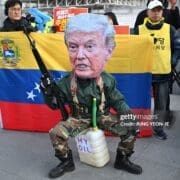
Donald Trump withdraws from several global organizations as protests globally denounce the US attack on Venezuela and the seizure of Venezuelan leader Nicolas Maduro, including front of the US embassy in Seoul on January 5, 2026. (Photo by Jung Yeon-je / AFP via Getty Images)

Announced in a presidential memorandum dated Jan. 7, 2026, the US President directed all U.S. executive agencies to immediately begin the process of exiting the listed bodies, which the administration says operate “contrary to the interests of the United States.”

The decision follows a year-long review of U.S. memberships in international organizations and treaties that began under Executive Order 14199 in 2025. Agencies were tasked with assessing whether continued involvement advances national security, economic priorities, or U.S. sovereignty.

Regional Entities Affected

Among the entities on the withdrawal list is the United Nations Economic and Social Council (ECOSOC) – Economic Commission for Latin America and the Caribbean (ECLAC), a key forum for regional economic cooperation and research.

ECLAC, which brings together governments across Latin America and the Caribbean to promote sustainable development, data-sharing and economic policy coordination, has historically served as a platform for addressing issues ranging from trade and infrastructure to poverty reduction — areas closely tied to Caribbean and Latin American interests.

In another blow to regional cooperation frameworks, the U.S. also plans to pull out of the Pan American Institute of Geography and History, a body dedicated to scientific and cultural research in the Western Hemisphere.

The US also pulled out of the Permanent Forum on the Global Forum on Migration and Development; People of African Descent; Office of the Special Adviser on Africa; the  International Trade Centre and UN Economic and Social Council (ECOSOC) — Economic Commission for Africa.

These withdrawals underscore the Trump administration’s broader repositioning on international engagement. Officials maintain that these organizations often focus on “globalist” agendas and climate, labor, or social policies that they believe conflict with U.S. priorities. Secretary of State Marco Rubio has framed the exits as an effort to protect U.S. sovereignty and ensure taxpayer dollars are spent where they best benefit American citizens.

Controversial Pullbacks From Old Allies

The move expands on a trend of disengagement from global institutions in recent years, including the U.S. exit from the World Health Organization, UNESCO, the U.N. Human Rights Council and the formal withdrawal from the Paris climate agreement in past administrations.

Among other major bodies the U.S. is leaving are:

U.N. Framework Convention on Climate Change (UNFCCC), the backbone of global climate action

U.N. Population Fund (UNFPA)

Global Counterterrorism Forum

International Renewable Energy Agency

Global Forum on Migration and Development
— though the administration said it may continue to cooperate “where interests align.”

Reactions and Regional Implications

Critics — including human rights advocates, climate experts, and foreign policy scholars — say the withdrawal could weaken U.S. influence in the hemisphere, isolate partners on issues like disaster response or migration, and cede ground to nations like China that continue robust engagement with regional institutions.

For Caribbean and Latin American nations, the change raises questions about future cooperation in economic planning, trade forums, climate adaptation efforts, and data-driven policy development — especially at a time when many in the region are grappling with climate vulnerability, economic recovery, and migration challenges.

What’s Next

The memorandum instructs departments to begin implementing the withdrawals “as soon as possible,” though legal and procedural timelines vary by organization. For United Nations bodies, U.S. participation and funding will phase out according to treaty obligations and applicable law.

Observers say this represents a notable recalibration of U.S. foreign policy that could reshape diplomatic and development engagement across the Caribbean and Latin America in 2026 and beyond.

RELATED: What The U.S.’ 2025 Narco Report Said About Drug Trafficking In The Caribbean

The Top 10 Caribbean Passports For 2026

News Americas, NEW YORK, NY, Jan. 8, 2026: As global mobility becomes a strategic asset for investors, business leaders, and internationally mobile professionals, some Caribbean passports remain standout performers – offering a mix of travel access, tax efficiency, dual citizenship options, and personal freedom. The 2026 Nomad Passport Index (NPI), released this week by global citizenship consultancy Nomad Capitalist, ranks 199 citizenships using five weighted factors that go beyond visa-free travel to include taxation, global perception, dual citizenship acceptance and personal freedom.

While European and Middle Eastern jurisdictions dominate the global top 10 globally, with Malta in first place, followed by Greece, Ireland, and Romania near the top — several Caribbean nations continue to represent valuable passport options for those seeking international flexibility and economic opportunity.

Top 10 Caribbean Passport Rankings (2026)

Nomad Capitalist does not publish a dedicated Caribbean subset, but based on their overall 199-country index and broader passport strength data, Caribbean passports typically score solidly when evaluated alongside global benchmarks. Here’s the approximate ranking of Caribbean passports based on their relative strengths within the index and other global passport indices:

Caribbean PassportGlobal Mobility Rank (Visa-free) – Nomad CapitalistBarbados1st regionally (45th globally)St. Kitts and Nevis2nd (50th globally)Bahamas3rd (52nd globally)Saint Vincent & Grenadines4th (55th globally)Trinidad & Tobago4th (58th globally)Antigua & Barbuda5th (60th)Grenada6th (62nd globally)Saint Lucia7th (64th globally)Dominica8th (69th globally)Belize and Jamaica9th (101st globally)Guyana 10th (104th globally)

Caribbean passports have never featured in the global top 10 but their relative strength globally remains notable because:

Caribbean nations do not tax citizens on worldwide income, unlike the U.S., boosting tax efficiency scores.

Many Caribbean islands permit dual citizenship, making them attractive for global citizens.

Several, such as St. Kitts & Nevis, Dominica, Antigua & Barbuda and Grenada, offer Citizenship-By-Investment, (CBI), programs that rank well in investor criteria.

Why Caribbean Passports Matter More Than Ever

As geopolitical uncertainty grows, passports from small but strategic nations — especially Caribbean states with established CBI programs — offer more than travel perks. They are tools for wealth protection, lifestyle diversification, and global business access, particularly for entrepreneurs and investors seeking options beyond traditional Western powers.

The Caribbean’s growing role in the global mobility landscape reflects its synergy of tax-friendly citizenship frameworks, visa flexibility, and strong diaspora networks, making its passports a valuable consideration in the modern era of global citizenship planning.

Over the last 10 years, Anglo-Saxon giants like the United States, United Kingdom, Canada, and Australia never broke into the elite tier, remaining above average but failing to finish in the top five. The U.S. is currently stuck in 43rd under the weight of citizenship‑based taxation, while the U.K. has slipped to 35th as its non‑domicile regime has disappeared.

Investors and entrepreneurs are more likely to consider the United Arab Emirates and core European Union passports – headlined by Malta this year. The decade ends with a clear “barbell” strategy, as global citizens pair blue‑chip lifestyle passports with one or more efficiency passports or residencies, rather than chasing a single perfect passport.

The NPI was designed to educate aspiring global citizens about the true value of the world’s citizenships. While most indices – and most people – think of a passport only in terms of travel privileges, Nomad Capitalist recognizes that citizens of different countries deal with various requirements to pay taxes, comply with regulations, live freely, and avoid scrutiny when traveling. The NPI speaks to those seeking personal freedom and financial prosperity in a changing world by more deeply analyzing the true value of each passport.

Founded by Andrew Henderson, the original “Nomad Capitalist,” the boutique consulting firm supports over 150 high- and ultra-high-net-worth individuals each year, primarily from the United States. Since 2012, Nomad Capitalist has guided more than 1,500 clients – including numerous celebrities – from over 100 countries in obtaining second passports and citizenships, strategically relocating and building offshore wealth, and exploring pathways to legally reduce their tax burdens. 

“Over the last decade, the Nomad Passport Index has empowered the world’s entrepreneurs and investors with the best possible information, so they can find the best possible passports for global citizenship,” said Khatia Gelbakhiani, Chief Growth Officer at Nomad Capitalist. “In 2026, Malta catapulted to the top of the list because of its favorable tax climate, dual citizenship offerings, and robust civil liberties. Year after year, it has become clear that Western countries like the United States and the United Kingdom are lagging behind, as global citizens pursue the barbell strategy and weigh a wide range of attractive alternatives like Malta. Our research shows that holding multiple citizenships and residencies is no longer a luxury; it is a necessity for success in the modern world. The most successful global citizens will go where they are treated best, and Nomad Capitalist will continue to support them every step of the way.”

RELATED: Best Caribbean Passports – 2025