

New Caribbean Music This Week: New Soca Tunes Set The Tone For Carnival 2026

News Americas, NEW YORK, NY, Fri. Jan. 9, 2026: As the countdown to Carnival in Trinidad and Tobago intensifies and the 2026 season begins to take shape, Caribbean artists in the soca genre are rolling out fresh releases aimed at fetes, airwaves, and global playlists. But several reggae singer have also dropped new tunes this week. From veteran icons to next-generation voices, here’s a look at the New Caribbean Music that has dropped this week.

SOCA

Check out Certified Sampson and more new soca and reggae music this week.

Certified Sampson & Sekon Sta – “EUPHORIA” (Soca 2026)

Certified Sampson teams up with producer Sekon Sta on “EUPHORIA,” a high-energy Soca 2026 release built for the heart of Carnival season. The track blends driving rhythms with celebratory melodies, capturing the euphoria of fete culture while delivering a polished, modern soca sound.

Written by Nesta Boxill and produced by Sekon Sta, EUPHORIA is released under Sekon Sta Production, under exclusive license to Diaspora Sound, and positions itself as an early contender for Carnival 2026 playlists.

Check it out HERE

Machel Montano & Super Blue – “Carnival Birthday” (Soca 2026)

Two generations of soca royalty collide as Machel Montano teams up with Super Blue for “Carnival Birthday,” a high-energy celebration built for road march season. Produced by Kernal Roberts, Azikiwe Kellar, and Montano himself, the track blends classic Carnival spirit with modern polish, sampling Lil Kerry’s “Bury All” for added nostalgia.

STREAM NOW

Lyrikal x Rebel Muzik x Kyle Peters – “Heart In It (Today)”

Trinidad and Tobago soca standout Lyrikal returns with “Heart In It (Today),” a high-tempo Soca 2026 release driven by live instrumentation and an infectious Carnival-ready groove. Clocking in at 160 BPM, the track blends raw energy with musical finesse, reinforcing Lyrikal’s reputation for performance-forward soca built for the road and the stage.

Written by Devon “Lyrikal” Martin, Kyle Peters, Anderson Bedasi, and Iba Fitzgerald, the song is produced by Kyle Peters and Rebel Muzik, with additional production by Lunatix Productions. Live guitars are handled by Peters, while background vocals from Cleavon Childs (Grenada) and Keoné Osbourne (Trinidad) add depth and texture. The track is mixed and mastered by Precision Productions, delivering a crisp, high-impact sound designed for peak Carnival moments.

Voice -“Cyah Behave” (Soca)

STREAM NOW: https://voice.ffm.to/cyahbehave

Voice delivers a sharp, rhythm-driven soca cut with “Cyah Behave,” produced by Mega Mick, Dwayne Mendes, and Lunatix Productions. The track balances playful bravado with polished musicianship, anchored by live percussion and crisp mixing from Precision Productions.

Major Lazer – “GOAT” (Bouyon Mixes) feat. America Foster & Bunji Garlin

Major Lazer returns with bouyon-heavy remix packs of “GOAT,” blending Dominican bouyon, power soca, and big-room EDM. Featuring Bunji Garlin and rising artist America Foster, the track is engineered for peak Carnival moments, with remix production by Precision Productions and Dadamanufakture.

STREAM NOW

MadLypso – “Panorama” (feat. Kes, Patrice Roberts & more)

MadLypso assembles a who’s-who of soca stars for “Panorama,” a collaborative anthem featuring Kes, Patrice Roberts, Kerwin Du Bois, Lady Lava, Jimmy October, Mical Teja, Lyrikal, and more. Produced and written by MadLypso, the track captures the collective energy of modern soca culture. Listen below.

Erphaan Alves — “SWAY” (Soca)

Produced by Supa and mastered by Brooklyn Decent, “SWAY” showcases Erphaan Alves’ melodic approach to soca, blending smooth vocals with contemporary Caribbean production.

Listen Now

Reggae Releases

Various Artists -“Remember Those Days Riddim” (Super Haze Records / Nah Lef Ya Muzik)

The “Remember Those Days Riddim” brings together Sizzla Kalonji, Vershon, Reemus K, Fire Chaz, and Norrie G. Produced between Japan and Jamaica, the project blends conscious lyrics, family connections, and uplifting themes rooted in reggae tradition.

LISTEN

Inner Circle – “Stay Strong”

Inner Circle delivers a powerful anthem of resilience with “Stay Strong,” released in support of Jamaica’s recovery from Hurricane Melissa. The track doubles as the theme song for the Stay Strong Jamaica Hurricane Relief Benefit Concert. Check it out now.

Intence – VOYAGE (Album)

Jamaican dancehall artist Intence launches his debut album VOYAGE via VP Records. The 16-track project reflects his upbringing in Papine, Kingston, and includes collaborations with Tarrus Riley, Jah Cure, and Bad Boy Timz. The release continues Intence’s New Year’s Day tradition and follows his 2025 EP Sólo Chicas.

LISTEN NOW

Bottom Line

With Carnival 2026 on the horizon, Caribbean music is moving fast – and loud. From soca road anthems to conscious reggae and genre-blending global releases, this week’s drops underscore the region’s continued influence on the world’s soundscape.
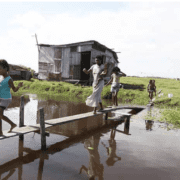
Oil-Rich CARICOM Nation Guyana Still Faces High Poverty Levels, Data Shows

By NAN Business Editor

News Americas, NEW YORK, NY: Guyana is making global headlines for its oil riches with investors rushing to the South American CARICOM shores and global media lavishing praise on it as the Caribbean’s newest economic success story. Massive offshore oil discoveries have transformed the small South American nation into one of the world’s fastest-growing economies, with billions of dollars in projected revenues and global investor attention. Yet, new regional poverty data highlights a sobering reality: Guyana remains the only CARICOM member identified among countries with the highest poverty incidence in Latin America and the Caribbean.

The contrast underscores a growing concern across the region – that rapid economic growth, even fueled by oil wealth, does not automatically translate into improved living conditions for the majority of citizens.

A Wealth Boom That Hasn’t Reached Everyone

According to recent regional poverty analysis by Jillie Chang, David K. Evans, and Carolina Rivas Herrera and the Center For Global Development, using harmonized household surveys, more than half of Guyana’s population lives below the poverty line, with over 30 percent classified as extremely poor. These figures place Guyana alongside some of the poorest countries in the hemisphere, despite its oil-driven economic surge.

Much of the country’s poverty remains concentrated in rural and hinterland communities, where Indigenous populations are disproportionately affected. Limited access to infrastructure, education, healthcare, and formal employment continues to constrain opportunities – even as national GDP figures soar. Afro-descendants make up 3% of the population in poverty, while Indigenous people are not specifically mentioned in the extreme poverty group.

Households with children are more likely to be poor, with 35% of the population in extreme poverty being aged 0–15 years. ​The elderly (65+ years) make up 6% of the extreme poor population.The extreme poor in Guyana are more likely to work in agriculture compared to the non-poor.

Poor households in Guyana have an average of 4 members, while non-poor households have 3 members. ​

25% of household members in extreme poverty are aged 0–14 years, 68% are aged 15–64 years, and 7% are aged 65+ years.

32% of the population in extreme poverty has access to sewerage connected to the network.

83% of the extreme poor have access to electricity.

79% of the extreme poor have access to piped water.

79% of the extreme poor have mobile phones, but only 1% have computers.

Economists note that this disconnect is not uncommon in resource-rich countries, particularly those undergoing rapid transitions.

“Oil wealth tends to be capital-intensive, not labor-intensive,” one regional development analyst explained. “That means GDP can grow dramatically while everyday livelihoods change very slowly.”

Growth Vs. Living Standards

Guyana’s economy has expanded at record-breaking rates in recent years, driven primarily by offshore petroleum production. Government revenues have increased sharply, and the country has attracted new international partnerships.

However, poverty data suggests that economic growth alone has not yet reshaped household incomes in a meaningful way for much of the population. Many Guyanese continue to rely on informal work, agriculture, and subsistence activities — sectors that have not benefited directly from oil extraction.

Urban areas, including Georgetown, have seen rising costs of living, further straining low-income households. Housing affordability, food prices, and transportation costs have increased faster than wages for many workers.

Structural Challenges Remain

Several long-standing factors contribute to Guyana’s high poverty levels:

Geographic inequality: Remote interior regions face higher poverty rates than coastal and urban areas.

Limited job creation: Oil revenues have not yet translated into widespread employment opportunities.

Education and skills gaps: Many communities lack access to training aligned with emerging industries.

Social protection gaps: Not all poor households are covered by cash transfers or targeted assistance programs.

The data also shows that poverty in Guyana is often chronic, meaning families remain poor for many years rather than experiencing temporary hardship. This makes upward mobility especially difficult.

Why This Matters For The Caribbean

Guyana’s experience carries broader implications for CARICOM and other resource-rich developing nations. It challenges the assumption that natural resource wealth alone can lift populations out of poverty without deliberate, inclusive policy choices.

As Guyana continues to expand its oil production, regional and international observers are watching closely to see whether revenues will be channeled into:

Education and workforce development

Rural infrastructure and connectivity

Healthcare and social services

Diversification beyond oil

The choices made now will shape whether Guyana’s oil boom becomes a foundation for shared prosperity — or another example of growth without equity.

A Defining Moment

Guyana stands at a critical crossroads. With unprecedented revenues flowing in, the country has a rare opportunity to reduce poverty, close inequality gaps, and build long-term resilience.

The data is clear: economic growth alone is not enough. For Guyana, turning oil wealth into lasting social progress will require intentional investment, transparency, and policies that prioritize people – not just production.

As the only CARICOM nation currently flagged for such high poverty levels, Guyana’s next chapter may become one of the most important development stories in the Caribbean.