
The Caribbean’s Moment Of Choice In A Shifting World

By Dr. Isaac Newton

News Americas, NEW YORK, NY, Thurs. Jan. 15, 2026: Professor C. Justin Robinson’s, ‘An Existential Moment for the Caribbean,’ is a timely and important response to the challenges facing the region in today’s changing world. One of its greatest strengths is that it speaks honestly about how power really works. Instead of relying on polite diplomatic language, the article explains power as it is used in practice.

By placing current United States foreign policy within a long history of dominance, racial inequality, and unequal economic relationships, Robinson shows why small Caribbean states are especially vulnerable when global politics move toward one-sided decision-making. His warning is clear: a country can lose real control not only through war, but through economic pressure, security dependence, and powerful international institutions. This message is uncomfortable, but it is also realistic and necessary.

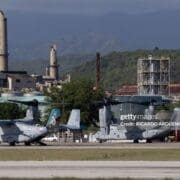
MV-22 Osprey aircraft are parked on the tarmac at Mercedita Airport in Ponce, Puerto Rico, on January 15, 2026. (Photo by Ricardo ARDUENGO / AFP via Getty Images)

However, the article may place too much emphasis on the idea that American power will remain dominant forever. The belief that the United States can continue to control global outcomes without serious pushback overlooks how quickly power can change. History offers many lessons. The British Empire once believed it would last indefinitely, but it weakened because of economic strain and changing global alliances. The Soviet Union appeared militarily strong, yet internal economic and technological problems eventually led to its collapse. These examples show that power based mainly on force often fails to recognize resistance, innovation, and long-term change.

The article also gives limited attention to how the nature of power itself has evolved. Military strength alone no longer guarantees control in a world shaped by cyber warfare, artificial intelligence, global finance, and supply chains. Countries like China, along with other technologically advanced middle-level powers, are not simply reacting to U.S. decisions.

They are actively shaping new global rules through trade networks, development loans, and digital infrastructure. At the same time, political division within the United States makes it harder to maintain clear and consistent long-term strategies. New technologies also reduce the gap between powerful nations and smaller ones. Together, these trends suggest a world that is unstable and changing, rather than one controlled by a single dominant power.

For the Caribbean, the years ahead will require careful thinking, not just survival. The region’s future cannot depend on passively following powerful allies or relying on old relationships. Caribbean nations must make deliberate choices. This means building partnerships with a wider range of countries, strengthening regional cooperation, and improving diplomatic skill. Governments must move beyond reacting to global events and instead plan strategically across economic, security, and technological areas.

Regional institutions should be strengthened so Caribbean states negotiate together rather than alone. Investment in education, digital skills, and economic resilience is no longer optional; it is essential to real independence in the modern world. The Caribbean must also use its shared voice to influence global rules, not just accept them. This is a moment of decision. With unity and foresight, the region can turn global uncertainty into opportunity. Without them, its future will be shaped by others.
EDITOR’S NOTE: Dr. Isaac Newton is a strategist and scholar trained at Harvard, Princeton, and Columbia. He advises governments and international institutions on governance, transformation, and global justice, helping nations and organizations turn vision into sustainable progress.

RELATED: The Caribbean And Strategic Diplomacy In A Constrained World

When Immigration Policy Meets Tourism Economies: The Caribbean’s New Reality

By Felicia J. Persaud

News Americas, NEW YORK, NY, Thurs. Jan. 15, 2026: It is no secret that the Donald Trump administration’s foreign policy toward the Caribbean and the Americas has increasingly relied on threat, intimidation, and fear rather than partnership or diplomacy in the past 11 plus months.

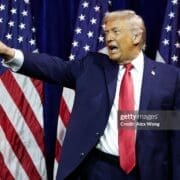
U.S. President Donald Trump departs after speaking during a House Republican retreat at The John F. Kennedy Center for the Performing Arts on January 06, 2026 in Washington, DC. House Republicans will discuss their 2026 legislative agenda at the meeting. (Photo by Alex Wong/Getty Images)

Over the past year, the region has witnessed a troubling escalation: an expanded U.S. military presence in the Caribbean, deadly maritime incidents in the Caribbean sea that reportedly left more than 100 people dead, pressure on governments to host radar and military installations, a fracture of CARICOM  unity by the pitting on some against others; and most destabilizing – the dramatic seizure of the sovereign head of state of Venezuela – with military flights departing from Caribbean nations.

This shocking global event also shutdown the Caribbean airspace, grounding flights and sowing chaos among travelers and tourists. The full economic toll remains unknown, but the disruption to tourism-dependent economies was immediate.

Even before that crisis, the administration had moved to apply direct economic pressure. In a January 2026 proclamation titled “Restricting and Limiting the Entry of Foreign Nationals to Protect the Security of the United States,” the U.S. partially suspended visa issuance to nationals of Antigua and Barbuda and Dominica.

Both countries were targeted over their Citizenship by Investment, (CBI) programs – often called “golden passport” schemes – through which foreign nationals can acquire citizenship in exchange for investments typically ranging from $200,000 to $250,000. The Trump administration argued that such programs were “susceptible to abuse,” allowing individuals to conceal identities or evade travel and financial restrictions.

Then, on January 6th, news emerged that both Antigua and Barbuda and Dominica had agreed to receive asylum seekers turned away by the United States.

The demographic and economic context makes this shift extraordinary. Antigua has a population of roughly 80,000-90,000 people across just under 170 square miles, with unemployment estimates ranging from 8% to over 15%. Dominica, home to about 73,000 people on 290 square miles, has faced unemployment hovering around 13%.

Both nations depend heavily on tourism and CBI revenues, with U.S. visitors forming the backbone of their tourism markets. Against that backdrop, both governments appear to have acceded to Washington’s request – widely viewed as an attempt to ease or reverse the partial visa restrictions.

Details remain vague. Dominica’s Prime Minister Roosevelt Skerrit has not disclosed how many asylum seekers the country would accept, from where, or how they would be housed.

Antigua and Barbuda’s Prime Minister Gaston Browne described his country’s agreement as a “non-binding” memorandum to accept “non-criminal refugees,” stressing that no quotas were set and that the arrangement could be terminated at any time. He insisted it was “not a concession,” but a “measured diplomatic gesture,” while simultaneously confirming talks to restore normal U.S. visa processing.

The U.S. State Department has refused to clarify whether the asylum agreements were tied to visa suspensions.

Guyana, the new oil rich South American CARICOM country, with a population of less than 1 million and a poverty rate of over 50 percent, is also reportedly negotiating take in third country nationals who are either refugees or non-felons, much to the dismay of many Guyanese. 

Under the planned agreement, the United States will stand the costs of the relocation of the persons. A “third country deportation” refers to the act of removing a non-citizen from a country to a country other than their country of origin, essentially sending them to a “third” country, often done under agreements between nations where the third country is considered “safe” and obligated to accept the individual, particularly in the context of asylum seekers; this is sometimes referred to as a “safe third country” deportation.

Since Guyana is not on the visa suspension list, one can only guess as to what the administration is threatening Guyana and its leaders with. A March 2025 OSAC update noted that “There have been isolated reports of government corruption, which administration officials investigated.”

But it added: “There remains a widespread public perception of corruption involving officials at all levels, including the police and judiciary.”

St. Kitts and Nevis Prime Minister Terrance Drew, the current head of CARICOM, also this week said that his government has agreed to accept a very small number of third-country nationals from the U.S. as long as they are citizens of the 15-member Caribbean Community known as CARICOM, and are not sexual predators, have no violent backgrounds and are not Haitians.

St. Kitts & Nevis too has a citizenship by investment program and depends on US tourists.

Despite all this bending and twisting, the US announced come Jan. 21st, it will pause issuing permanent visas to nationals of Antigua & Barbuda, St. Kitts & Nevis, Dominica as well as the Bahamas, Barbados, Belize, Cuba, Dominica, Grenada, Haiti, Jamaica, Saint Lucia, and Saint Vincent and the Grenadines. Guyana and Trinidad and Tobago are notably excluded. Nationals of Antigua and Barbuda and Dominica, seeking a US visa to visit will also have to pay a bond come Jan. 21st.

Grenada, meanwhile, offers a cautionary tale. After refusing a U.S. request to host military radar installations, Prime Minister Dickon Mitchell warned after the US actions in Venezuela, that this was “pushing the region into more instability.” Shortly afterward, the U.S. raised its travel advisory level for Grenada, citing crime – an economic blow for a country reliant on tourism and its own CBI program.

The message from Washington is unmistakable: comply, or face economic consequences. This is not partnership. It is the resurrection of the big-stick policy under a new name – the Donroe Doctrine, to quote Donald Trump.

As Caribbean nations are quietly nudged – or pushed with a big stick – from economies built on tourism towards becoming holding zones for displaced people, the entire region must confront an uncomfortable question: Is the Caribbean being forced to trade tourists for asylees simply to survive? If so, the cost will not only be economic – but moral, political, and generational.

Felicia J. Persaud is the founder and publisher of  NewsAmericasNow.com, the only daily syndicated newswire and digital platform dedicated exclusively to Caribbean Diaspora and Black immigrant news across the Americas.

RELATED: U.S. To Freeze Immigrant Visa Processing For Multiple Caribbean Nations
Get Ready To Shell Out More In Immigration Fees In 2026