Caribbean American Congresswoman Shirley Chisholm’s Legacy Lives On In Brooklyn’s Little Haiti

NEWS Americas, NY, NY, Tues. Feb. 10, 2026: The legacy of the late Caribbean American trailblazer Shirley Chisholm is taking physical form once again in Brooklyn, as city leaders this week announced the opening of the Shirley Chisholm Recreation Center in East Flatbush, Brooklyn, NY, a historic investment in community wellness, youth development, and public space in the heart of Little Haiti.

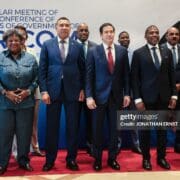
FLASHBACK – Then Caribbean American Congresswoman Shirley Chisholm, after losing her bid for Democratic presidential nomination, endorses Senator George McGovern as she speaks from podium at Democratic National Convention.

Unveiled by New York City Mayor Zohran Mamdani, the new center is the first Parks recreation center built in more than a decade, the first ever in Central Brooklyn, and now the largest recreation center in the borough. City officials estimate it will serve more than 41,000 New Yorkers living within a 15-minute walk or transit ride of the facility.

Named in honor of Chisholm – the first Black and Caribbean American woman elected to the U.S. Congress and the first Black and Caribbean American woman to seek a major party’s presidential nomination – the center stands as a modern tribute to her lifelong commitment to equity, access, and community empowerment. Chisholm, whose parents immigrated from Barbados and Guyana, represented Brooklyn in Congress from 1969 to 1983 and famously ran “Unbought and Unbossed.”

“This center will soon be alive with possibility,” Mayor Mamdani said at the opening. “Shirley Chisholm believed politics should be accountable to everyday people. This space is a living tribute to her legacy — proving that when we invest in affordable, accessible public spaces, we build a city that works for all.”

Spanning approximately 74,000 square feet, the Shirley Chisholm Recreation Center offers far more than traditional gym facilities. It includes a competition-size six-lane swimming pool with full accessibility features, a walking track, a regulation gymnasium for basketball, volleyball and pickleball, cardio and weight rooms, and dedicated spin and exercise studios.

Beyond fitness, the center emphasizes education, creativity, and youth engagement – pillars that echo Chisholm’s own priorities. Amenities include a teaching kitchen, an afterschool program space with an outdoor play area, a supervised teens-only zone, and the Dr. Roy A. Hastick Sr. Media Lab, named after the late Grenadian-born founder of the Caribbean American Chamber of Industry and Commerce, (CAACI), complete with a mixing room for audio-visual production, podcasting, and digital storytelling.

NYC Parks Commissioner Tricia Shimamura called the center a long-overdue investment in Central Brooklyn. “Over 41,000 New Yorkers now have an affordable space to exercise, learn, and connect,” she said. “This is exactly the kind of community infrastructure Shirley Chisholm fought for.”

Membership is free for New Yorkers 24 and under, with discounted rates for all ages. The center officially opens to the public today, Tuesday, February 10, and for its first week, all New Yorkers are invited to enjoy one free day of access to explore the facility before registering for membership. Guided tours, demonstrations, and sign-up events will also be held throughout the opening week.

Local elected officials praised the project as both a practical resource and a symbolic victory. Council Member Farah Louis noted that the center represents years of advocacy and a $141 million investment in a community long underserved by recreational infrastructure. State Senator Kevin Parker called it “a statement about what our communities deserve.”

As Brooklyn marks Black History Month and reflects on a century of Black political progress, the opening of the Shirley Chisholm Recreation Center offers more than brick and mortar. It delivers a tangible reminder that Chisholm’s legacy – rooted in Caribbean migration, courage, and public service — continues to shape the future of the communities she fought to uplift.

In East Flatbush, her name now anchors a space designed not just to serve, but to empower – a living embodiment of “Unbought and Unbossed.”

ABOUT CHISHOLM

Shirley Anita Chisholm (1924–2005) was a groundbreaking U.S. politician who made history in 1968 as the first Black woman elected to Congress, representing Brooklyn for seven terms (1969–1983). Born in New York to Caribbean immigrant parents from Barbados and Guyana, Chisholm spent part of her childhood in Barbados and carried the West Indian heritage throughout her life and public service.

In 1972, she shattered another barrier as the first Black candidate to seek a major-party presidential nomination and the first woman to run for the Democratic nomination, campaigning under her iconic motto, “Unbought and Unbossed.” Known for fearless advocacy, she took resolute stands against economic, social, and political injustice, championing civil rights, women’s rights, education, and anti-poverty programs. In 2015, she was posthumously awarded the Presidential Medal of Freedom, cementing her legacy as a Caribbean-rooted American pioneer.

RELATED: Black Caribbean Immigrants In US Black History

DEI Rollbacks Cast A Long Shadow As Super Bowl 2026 Ads Showcase Diversity — With Limits

By Felicia J. Persaud

By News Americas, NEW YORK, NY, Feb. 2026: More than a year after the Trump administration moved aggressively to dismantle diversity, equity, and inclusion (DEI) initiatives across federal agencies and publicly criticized corporate and cultural efforts tied to racial equity, the Super Bowl 2026 ads unfolded as a revealing moment in America’s ongoing debate over representation, culture, and belonging.

An advertisement for the Super Bowl LX Halftime show featuring Bad Bunny is seen in the Super Bowl LX Media Center at the Moscone Center on February 04, 2026 in San Francisco, California. (Photo by Chris Graythen/Getty Images)

On the surface, Super Bowl 2026 reflected progress. According to new data from market research firm Zappi, 68% of national Super Bowl advertisements visibly featured multiple racial or ethnic groups, a notable increase from 57% the previous year. In more than a quarter of the ads, characters from historically underrepresented communities were not just present, but central to the narrative – speaking, driving the action, or occupying the visual center of the story.

Yet, beneath those gains, familiar limitations remained.

Celebrity casting in Super Bowl commercials continued to skew overwhelmingly white. Of the 103 celebrities appearing in ads this year, at least 60 were white, according to counts by industry publication ADWEEK. Meanwhile, LGBTQ+ representation declined for the second consecutive year, with just five ads explicitly featuring LGBTQ talent — all of whom were already publicly out celebrities — and no transgender representation for the third straight year.

The contrast illustrated a broader tension playing out across American institutions: representation is expanding, but cautiously, even as political pressure mounts against DEI frameworks.

That pressure has been particularly pronounced since Donald Trump returned to office as President, pledging to eliminate what he has called “woke ideology” from government and public life. Over the past year, his administration has rolled back DEI programs, challenged diversity-based hiring initiatives, and supported efforts to limit the teaching of Black history and race-related topics in public institutions.

Against that backdrop, the Super Bowl – long viewed as both a commercial showcase and cultural barometer — became an unintended mirror of the moment.

Several of the most effective ads this year leaned into multicultural storytelling. Campaigns from Dove, Rocket Mortgage, the NFL, Volkswagen, Toyota, and Novo Nordisk ranked 8% above average in sales impact, according to Zappi, reinforcing research that inclusive representation resonates with broad audiences. Rocket Mortgage’s “America Needs Neighbors,” for example, depicted a Latino family and a white family building community, while Levi’s featured a diverse cast that included K-pop star Rosé and rapper Doechii.

Still, the reliance on white celebrity faces for marquee roles suggested that brands remain cautious, balancing inclusion with perceived commercial safety.

Beyond advertising, the Super Bowl’s cultural reach extended onto the field and the halftime stage.

Players with immigrant and Caribbean roots featured prominently in the game, reflecting demographic realities often absent from political discourse. The half-time show, headlined by Puerto Rican superstar Bad Bunny, placed Spanish-language music and Latin and Caribbean culture at the center of one of the most-watched broadcasts in the world – a moment that sparked both celebration and backlash.

For supporters, the performance reflected an America that is multilingual, multicultural, and shaped by immigration. For critics, it became another flashpoint in debates over national identity and cultural change.

Industry observers note that this dual reaction is not new, but it is increasingly visible. “Brands are responding to a society that is more diverse than ever, while navigating a political climate that is openly skeptical of diversity efforts,” said one advertising analyst familiar with the Zappi research. “The Super Bowl shows both impulses at once.”

The decline in LGBTQ+ visibility further underscored that progress is uneven. GLAAD reported that while some brands continue to feature queer talent, many appear to be pulling back amid heightened political scrutiny and social backlash.

Taken together, Super Bowl 2026 did not signal a reversal of diversity, but neither did it mark a decisive break from old patterns. Instead, it offered a snapshot of a country negotiating who is seen, who is centered, and how far representation is allowed to go during moments of mass cultural attention.

In a year defined by DEI retrenchment at the policy level, the Super Bowl showed that diversity has not disappeared from American storytelling – but it is advancing carefully, selectively, and under pressure.

For millions watching, the message was mixed but unmistakable: America’s cultural reality continues to push forward, even as the political debate over that reality intensifies.

Felicia J. Persaud is the founder and publisher of  NewsAmericasNow.com, the only daily syndicated newswire and digital platform dedicated exclusively to Caribbean Diaspora and Black immigrant news

RELATED: From Borders To The Big Game: How Immigrants Defined Super Bowl LX

Voices Of The Super Bowl: When Language Makes Us Uncomfortable

By Nyan Reynolds

News Americas, NEW YORK, NY, Mon. Feb. 9, 2026: On Super Bowl night, something happened that had very little to do with football and everything to do with who we think belongs to this nation.

Bad Bunny performs during halftime. The New England Patriots and Seattle Seahawks played in Super Bowl LX at Levi’s Stadium on February 8, 2026. (Photo by Stan Grossfeld/The Boston Globe via Getty Images)

When Bad Bunny took the halftime stage and performed in Spanish, a familiar reaction rippled across the country. Some viewers were angry. Others were dismissive. Many questioned whether a Spanish-speaking artist from the Caribbean could “represent America.” The frustration was not subtle. It centered on language. On discomfort. On a belief that English, in one narrow form, is the only acceptable voice on America’s biggest stage.

That reaction made me think about home.

My daughter is Dominican. Her maternal family is Dominican, and her great-grandmother has never spoken a word of English to me. I do not speak Spanish; I was born in Jamaica. Yet for over a decade, every time I have seen her great-grandmother, she has greeted me warmly in Spanish. I never understood the words, and I never cared, because it never mattered. Not once did it make me feel unwelcome. Not once did it make me feel excluded. We smiled. We embraced. We understood one another without translation.

Language did not divide us. It connected us.

And yet, in this country, language often becomes a line of separation.

Across America, especially for those of us from the Caribbean, language carries history, rhythm, and identity. We arrive with accents, speech patterns, and expressions shaped by our islands and our ancestors. We bring Jamaican patois, Trinidadian cadence, Bajan lilt, Dominican Spanish, Haitian Creole. We bring voices that sound different from what many Americans are used to hearing.

Too often, the response is blunt and dismissive: Speak English. This is America.

What’s rarely acknowledged is that many are speaking English. Jamaican patois, for example, is rooted in English. It is English shaped by survival, resistance, and culture. It is not broken language. It is living language. When it is mocked or rejected, it is not because it lacks structure. It is because it makes some people uncomfortable.

That discomfort says more about the listener than the speaker.

I moved from Jamaica straight into an American high school. I learned early how the way I spoke shaped how people perceived me. Over time, my accent softened. Some people now say they don’t hear one at all. Others say it’s faint but still there. That lingering uncertainty, where are you from? How do you belong? It never really disappears.

Language does that. It becomes shorthand for assumptions.

That’s why the reaction to Bad Bunny matters. Puerto Rico is part of America. Spanish has been spoken on this land long before the NFL existed. Yet here we were, watching people debate whether they would mute their televisions, change channels, or boycott an event altogether because the performance did not sound like the America they were used to hearing.

What many missed is that asking Bad Bunny to perform in English would have stripped the performance of its authenticity. Spanish is his language. It is how his music breathes. Asking him to change that is not inclusion, it is erasure.

I do not listen to Bad Bunny’s music. But my daughter does. Her family does. And that matters too. Representation is not about pleasing everyone. It is about acknowledging who is already here.

The irony is hard to ignore. Many of the same people upset about a Spanish-language performance would gladly pull out a translation app if they traveled overseas. Closed captions exist. Translation tools exist. Curiosity exists when we choose to use it. Yet within our own borders, we sometimes refuse the same openness we expect from others abroad.

This is how progress stalls. Not through hostility alone, but through selective empathy.

Language is how people are seen. How they are heard. How they are understood. When we dismiss someone’s language, we are not just rejecting words, we are rejecting identity.

Sixteen years ago, had I closed my heart because I didn’t understand Spanish. I would have missed a welcome that required no translation at all. That moment taught me something simple but enduring: understanding begins with listening, not control.

If the Super Bowl taught us anything beyond football, it is that America is still negotiating its many voices. We can cling to one sound and call it unity, or we can listen fully, openly, and recognize that the chorus has always been bigger than we imagined.

The question is not whether language belongs on America’s biggest stage.

The question is whether we are willing to grow enough to hear it.

EDITOR’S NOTE: Nyan Reynolds is a U.S. Army veteran and published author whose novels and cultural works draw from his Jamaican heritage, military service, and life experiences. His writing blends storytelling, resilience, and heritage to inspire readers.  

RELATED: A Love Letter To Black Women And Children – Black History Month 2026

Sinners, Vampires, Nicki Minaj & Trump

By Felicia J. Persaud

News Americas, NEW YORK, NY, Sat. Feb. 7, 2026: In ‘Sinners,’ director Ryan Coogler uses vampirism as more than a horror spectacle. The film’s vampire mythology operates as a layered metaphor – one that probes white supremacy, cultural extraction and the seductive dangers of assimilation, particularly for those navigating proximity to power, while remaining marked as “other.”

Musician Nicki Minaj (L) joins U.S. President Donald Trump on stage as he delivers remarks during the Treasury Department’s Trump Accounts Summit at Andrew W. Mellon Auditorium on January 28, 2026 in Washington, DC. “Trump Accounts” are a portion of recently passed tax and spending legislation where the federal government will deposit $1,000 into investment accounts for every child born between 2025 and 2028 once parents sign their children up while filing their income taxes.  (Photo by Win McNamee/Getty Images)

At the center of this metaphor is Mary, a white-passing woman in the Jim Crow South who becomes a vampire. Her transformation reflects a grim bargain: escape the immediate violence inflicted on Black women by aligning with the very system that feeds on the Black community. Passing offers protection, but only at the cost of becoming complicit – no longer prey, but predator.

That metaphor came rushing back to me last week while watching Trinidad and Tobago-born immigrant and rapper, Nicki Minaj, publicly embrace MAGA politics, declaring herself the president’s “number one fan.” The image was jarring to me as a Caribbean immigrant – not simply because of partisan alignment, but because it came days after Alex Pretti was killed in a snowy Minneapolis street and weeks after Renee Good was shot dead by federal immigration agents protesting immigrant raids.

Minaj was once a self-described undocumented immigrant. In a widely shared 2018 post, she condemned family separations at the U.S.-Mexico border, writing that she herself entered the United States without legal status as a child.

“I can’t imagine the horror of being in a strange place & having my parents stripped away from me at the age of 5,” she wrote at the time, pleading for compassion toward detained children during the first Trump administration.

That voice now feels distant.

What happened between 2018 and 2026? How does someone move from public empathy for immigrant children to smiling alongside a political movement that is actively dismantling constitutional protections, terrorizing immigrant communities, and normalizing state violence?

The answer may lie in power – and who it ultimately serves.

Under the Trump administration, wealth has become a fast track to immunity. The so-called “Trump Gold Card” offers U.S. residency to foreign nationals willing to pay a $15,000 DHS processing fee and contribute $1 million. A forthcoming Platinum version reportedly raises that price to $5 million, granting extended U.S. stays without taxation on foreign income. The message is blunt: borders harden for the vulnerable, but dissolve for the wealthy.

Minaj, now a green card holder, does not appear to need such a program but who knows?. Her enthusiastic claim that she was given a Trump gold card and is now applying for US citizenship aligns with a movement built on exclusion. It raises a deeper question: when proximity to power offers safety, does solidarity become optional?

Reports that Minaj has pledged hundreds of thousands of dollars to support Trump-backed tax-advantaged investment accounts for newborns – framed as generosity toward her fans – only complicate the picture. Charity does not cancel complicity. Philanthropy does not absolve political harm.

In ‘Sinners,’ vampirism represents the loss of cultural memory and moral grounding. Survival is promised, but at the price of self-erasure. The vampire no longer remembers who they were – or who they once stood with.

Minaj’s political transformation mirrors that arc. An immigrant woman, born in the Caribbean region, who once spoke as a child of migration, now appears willing to overlook policies designed to erase Black history, criminalize black, brown, and white bodies, and redefine belonging through wealth.

That is the danger Coogler warns us about. Not monsters in the shadows, but assimilation so complete, it forgets its origins – and feeds on those left behind.

In ‘Sinners,’ the vampire’s greatest weapon is not violence, but amnesia. It forgets where it came from, who it once stood beside, and who is still being hunted. That kind of forgetting may offer comfort and protection, but history shows it is never consequence-free.

The warning for Nicki Minaj – and for those in Black and Brown communities trading solidarity for status – is simple: wealth may buy access, and loyalty may buy time, but neither buys exemption. Systems built on exclusion eventually consume everyone they decide does not belong.

Felicia J. Persaud is the founder and publisher of  NewsAmericasNow.com, the only daily syndicated newswire and digital platform dedicated exclusively to Caribbean Diaspora and Black immigrant news across the Americas.

YOU MAY ALSO LIKE: Is ICE Becoming America’s Tonton Macoutes?

The Moss Center Presents Jamaican Jazz Legend Dr. Monty Alexander For A Powerful Black History Month Celebration

News Americas, CUTLER BAY, FL, Feb. 6, 2026: This Black History Month, The Moss Center in Miami brings a living legend to its main stage as world-renowned, Jamaican-born pianist, Dr. Monty Alexander, C.D., O.J., headlines an unforgettable evening of music, culture, and legacy on Saturday, February 21, 2026, from 8:00 – 9:30 p.m.

Titled ‘Monty Alexander: Jamaica To Jazz,’ the concert traces the electrifying journey of Jamaican music into global jazz – told through the hands of one of its original architects. From early ska sessions in Kingston’s first recording studios to international jazz stages alongside the greats, Alexander’s story is the story of Caribbean sound shaping the world. The moment is especially poignant as Alexander reflects on the legacy of Jamaica’s musical giants and the fragility of an era shaped by pioneers such as Jimmy Cliff, Third World co-founder Stephen “Cat” Coore, and legendary drummer Sly Dunbar, whom he has recorded with in the past.

A Pioneer Who Helped Shape Modern Music

Born on June 6, 1944, in Kingston, Jamaica, Alexander’s musical journey began early. By the age of four, he was playing Christmas carols by ear, and by 14, he was performing in local clubs. As a teenager in late-1950s Jamaica, Alexander played in the island’s earliest recording studios and took part in the formative sessions that sparked ska – the rhythmic foundation that would later give rise to reggae.

At just 16, he already had recordings on the Jamaican hit parade before making the leap to the United States. He landed in Miami in 1962 and by 1963, at only 19, had moved to New York City, where he was soon captivating audiences at Jilly’s, the legendary club owned by Frank Sinatra’s close confidant, Jilly Rizzo. This led to a collaboration with Sinatra and later Tony Bennett, Ray Brown, Milt Jackson, Wes Montgomery, Dizzy Gillespie, Miles Davis and Sonny Rollins. Sinatra eventually encouraged Alexander to join him in New York and his career took off. 

For Alexander, jazz and Jamaican music are inseparable – intertwined in a signature sound that is joyful, improvisational, and steeped in history. During the Miami performance, he will use the opportunity to share personal stories from his journey as a pioneer of Jamaican music, offering audiences rare insight into the moments that shaped his extraordinary career.

A Legacy Beyond Compare

With more than 75 albums and performances at virtually every major jazz festival and venue worldwide, Alexander is widely regarded as one of the greatest pianists of all time. He was named the fifth greatest jazz pianist in ‘The Fifty Greatest Jazz Piano Players of All Time’ (Hal Leonard Publishing).

His honors include:

Commander in the Order of Distinction (C.D.) – Jamaica, 2000.

Order of Jamaica (O.J.) – 2022, for sterling global contributions to Jamaican music and jazz.

Honorary Doctorate (DLitt) – University of the West Indies, 2018.

Music With A Mission: Hurricane Melissa Relief

During the performance, the Global Empowerment Mission, (GEM), will collect monetary donations to support Hurricane Melissa relief efforts in Jamaica. Guests are encouraged to visit the GEM table in the lobby. The Moss Center will also collect canned goods and hygiene items, including:

Canned: protein, vegetables, fruits, beans.

Hygiene: toothbrushes, toothpaste, deodorant, feminine hygiene products, toilet paper, wet wipes.

GEM’s Caribbean team, based in Kingston, has already deployed over one million pounds of emergency aid across the island and remains committed to long-term recovery.

Ticket Information

Ticket Prices: $35 – $65 or $80 VIP (includes premium table seating + complimentary wine, beer, or soft drink).

Get Tickets: https://tickets-smdcac.miamidade.gov/TheatreManager/1/login?event=2649 or by calling the Box Office: 786-573-5300

Discounts available for seniors, students, and groups and free parking is available on site.

All patrons, including infants, require a ticket; no outside food or beverages and no strollers are permitted inside the auditorium

Stay Connected With Monty

Keep up with Monty and his journey across stages worldwide:

Facebook: facebook.com/officialmontyalexander

Twitter/X: @_MontyAlexander

Instagram: @monty.alexander

YouTube & Official Website: montyalexander.com

YOU MAY ALSO LIKE: Oliver Samuels And CBS Star Zay Harding To Lead Explosive Easter Revival Of The Rope and The Cross

Former Turks and Caicos Premier Michael Misick Found Guilty In $20M Corruption Case

News Americas, PROVIDENCIALES, Turks and Caicos Islands, Fri. Feb. 6, 2026: Former Turks and Caicos Islands Premier, Michael Misick, his brother and attorney Chalmers Misick, and former government minister McAllister Hanchell, also known as “Piper,” were found guilty this week on multiple corruption-related charges following a long-running investigation involving more than US$20 million in alleged bribes, fraudulent land deals, and money laundering.

The verdicts were delivered by Judge Rajendra Narine during a four-hour hearing in a packed and silent Supreme Court, where the judge presided without a jury.

When asked by the court whether they wished to address the court prior to sentencing, the defendants declined, indicating they would speak through their legal representatives. While sentencing was adjourned to a later date, the judge indicated his intention to remand the defendants in custody pending sentencing.

Details of the Convictions

The charges included:

Bribery

Conspiracy to defraud the Crown and the Government of the Turks and Caicos Islands

Violations of the Proceeds of Crime Ordinance

Misick was found guilty on three counts of bribery relating to land transactions involving Beaches, Salt Cay, and West Caicos.

Hanchell was convicted on two counts of bribery connected to land deals at Salt Cay and West Caicos.

Chalmers Misick was convicted on four counts of money laundering.

Millions in Corrupt Payments

The court heard evidence that the corruption scheme involved:

Approximately US$14.2 million linked to Salt Cay transactions

US$4.7 million tied to West Caicos

Around US$2 million connected to Beaches-related dealings

Prosecutor Andrew Mitchell, KC, told the court that the defendants accepted unlawful payments and other inducements from developers in exchange for favorable government decisions involving Crown land at Salt Cay, West Caicos, and properties associated with the Beaches resort group.

Sentencing Set for May

Sentencing arguments are scheduled for May 4, 2026, at which time the court is expected to determine the length of prison sentences to be imposed.

The case represents one of the most significant corruption prosecutions in the history of the Turks and Caicos Islands and follows years of investigation into alleged abuses of power involving public land and high-level government officials.

Michael Misick, the former Premier of the Turks and Caicos Islands, was previously married to American actress LisaRaye McCoy from April 2006 until their highly publicized divorce in 2008, according to publicly available records. His first wife was attorney Yvette Marcelin. In 2013, Misick became engaged to Tatjana van de Merwe, whom he later married in 2018.

YOU MAY ALSO LIKE: From Common Cause To Collective Strength: The Caribbean Charts Its Future

Oliver Samuels And CBS Star Zay Harding To Lead Explosive Easter Revival Of The Rope and The Cross

News Americas, NEW YORK, NY, Fri. February 5, 2026: Jamaican acting icon Oliver Samuels and CBS television star Zay Harding will headline the cast of The Rope and The Cross, the groundbreaking religious epic by legendary Jamaican playwright Easton Lee, returning to the New York stage for a one-night-only Gala Easter Sunday performance on April 5.

Jamaican acting icons David Heron and Oliver Samuels. Photo courtesy of Karl O’Brian Williams.

The special presentation will take place at the Jamaica Performing Arts Center, (JPAC), in Queens at 7 p.m., following a complimentary Caribbean Cuisine Easter Reception hosted by The Door Restaurant at 5:30 p.m.

Presented as an exclusive staged reading concert performance, the event is produced and directed by BroadwayWorld Award winner David Heron, in special arrangement with the estate of the late playwright.

A Radical Caribbean Reimagining of the Passion Story

Set across rural Jamaica and ancient Jerusalem, The Rope and The Cross shatters traditional depictions of Christ’s passion. Lee’s visionary work reimagines Jesus and Judas as modern-day Jamaican men – young, defiant, and determined to dismantle injustice and inequality.

As state power closes in through deception and manipulation, the two rebels discover a brutal truth: entrenched systems will stop at nothing to silence change. The result is a searing political and spiritual drama that remains as urgent today as when it premiered in Jamaica in 1979.

Legend Meets Leading Man

Samuels, a three-time Actor Boy Award winner, takes on the role of The Shepherd Narrator, guiding audiences through the story across time and place. With a career spanning more than 60 stage productions, Samuels’ film credits include The Mighty Quinn opposite Denzel Washington and Great Moments in Aviation with Vanessa Redgrave. He recently completed the U.S. premiere tour of Di Prodigal Pickney.

Harding – best known as host of CBS’s The Visioneers With Zay Harding, now in its second season with record-breaking 2025 ratings — portrays High Priest Annas, a calculating power broker whose actions help seal the tragic fate of Jesus and Judas.

His acting credits include American Horror Story, Mistresses, and Hawaii Five-O, as well as stage roles including Camelot at American Conservatory Theater.

Honoring Caribbean Theatre Legacy

For Heron, the production continues a mission to preserve and elevate Caribbean theatre on the global stage.

“Two years ago, we presented the American premiere of Alwin Bully’s McBee at JPAC,” Heron said. “With The Rope and The Cross, we are once again honoring a master whose voice still speaks powerfully. Easton Lee captured the rebellious spirit of Jamaica during the era of Prime Minister Michael Manley and drew striking parallels to resistance in biblical Israel. That tension — ancient and modern — makes this play timeless.”

He added, “Oliver and Zay will be seen in ways audiences have never experienced them before. This is not just theatre — it’s a cultural event.”

Event Details

The Rope and The Cross
Easter Sunday, April 5, 2026
Jamaica Performing Arts Center (JPAC), Queens, NY
Complimentary Easter Reception: 5:30 p.m.
Performance: 7:00 p.m.

Tickets on sale: Tuesday, February 10
Tickets: theropeandthecross.eventbrite.com
Early Easter Special pricing through: February 24
Box Office: 646-533-7021

A Love Letter To Black Women And Children – Black History Month 2026

By Nyan Reynolds

News Americas, NEW YORK, NY, Thurs. Feb. 5, 2026: There are writers who explain the world, and then there are writers who teach you how to survive inside it. For me, James Baldwin has always been the latter. His words did not merely interpret history. They warned us. They prepared us. They loved us fiercely enough to tell the truth.

A Love Letter to Black Women and Children – Black History Month 2026

Baldwin gave language to a generation that had been told its suffering was imaginary and its dignity negotiable. Because of voices like his, I can walk my communities and drink water where fountains once had barriers. I can enter stores without being forced to wait in lines of humiliation. I can sit in restaurants and be served as a human being. These are not small victories. They are moral inheritances.

Yet, there is a part of Baldwin’s story that still demands to be told, especially during Black History Month in 2026. Baldwin did not only write about laws and protests. He wrote about Black children. About their right to grow up without being spiritually crushed by a society that refuses to see them as innocent. One of his most profound offerings was his 1962 essay, My Dungeon Shook, a letter to his nephew written on the hundredth anniversary of emancipation.

In that letter, Baldwin confessed: “I have drafted this letter five times and torn it up five times.” He could not escape the face of his nephew, which was also the face of his brother, and the face of his father, and the face of every Black boy shaped by fear before he ever learned joy. Baldwin described the boy as tough, dark, vulnerable, and moody, sounding truculent so that no one would think he was soft. Baldwin knew the armor Black boys are forced to wear. He knew how early it was given to them.

He also knew what happens when society convinces a man that he is what it says he is. Baldwin wrote of his own father, defeated long before death, because at the bottom of his heart he believed the lie that certain people told about him. That belief made him bitter. Holy in pain. Rigid in sorrow.

Baldwin’s letter was never meant to be sealed in history. It was meant to be read again and again by Black mothers and Black children whenever the world tried to tell them who they were.

And here we are, in 2026, still needing that letter.

The names alone testify that Baldwin’s warning was not outdated. Amadou Diallo. Sean Bell. Tamir Rice. Eric Garner. Michael Brown. Alton Sterling. Philando Castile. Breonna Taylor. George Floyd. Elijah McClain. These are not simply victims of incidents. They are chapters in an unfinished American sentence. They are reminders that the description Baldwin gave, tough, dark, vulnerable, moody, still clings to Black bodies in the eyes of systems built on fear.

Many of these men and women died in the arms of institutions that saw them not as children, not as sons or daughters, but as threats. Just as Baldwin feared, so many families did not get to see their loved ones grow old. Their lives were interrupted by the same lie Baldwin named more than sixty years ago.

What Do We Have In 2026?

We have a moral struggle that never concluded. We have progress that looks impressive from a distance but fragile up close. We have Black people in leadership, Black people with wealth, Black people with education. These are real achievements. But opportunity does not equal safety. Opportunity does not equal justice. Opportunity does not erase fear.

Progress is not a cover for what happens beneath the surface.

This is where this love letter must be written, not to deny growth, but to refuse the lie that growth means arrival. This letter is to Black women and Black children, because Baldwin always understood that the burden of history sits heavily on their bodies first.

To the Black woman, mother, aunt, grandmother, sister, who raises a child in a world that promises equality but practices suspicion, this letter says: your love is revolutionary. Your fear is not weakness. It is awareness shaped by history. You carry knowledge that textbooks avoid and politicians dilute. You know that a glittering society can still cast deadly shadows.

It is horrifying to admit that after all the sacrifices made, after marches, after laws, after speeches, there is still a chance that your son may not reach adulthood, that your daughter may be seen as a threat rather than a child. The structures that once blocked Baldwin, Medgar Evers, and so many others have not vanished. They have learned to wear professional language and neutral uniforms.

Some will ask, what is it that Black people are doing to move forward? They say opportunities exist now. They say the doors are open. But opening doors does not mean the house is safe. A seat at the table does not mean the knives are gone. Opportunity without justice is simply another test of endurance.

This is why Baldwin still speaks. His letter screams into Black History Month because it reminds us that history is not a museum. It is a mirror.

We must be honest with our children about the world they inherit. Not to frighten them, but to fortify them. Baldwin did not write to make his nephew despair. He wrote to make himself awake. He told him that the world would try to define him, but that he must not accept the definition. That love was the key, but not sentimental love. A disciplined love. A love that tells the truth.

This love letter in 2026 says to Black women: hug your children fiercely but also teach them what the world hides beneath its shine. Teach them that their lives matter even when the news does not show it. Teach them that fear is learned, but dignity is chosen. Teach them that their ancestors survived systems that were far more explicit in their cruelty, and that survival itself is an inheritance.

It is not enough to celebrate Black excellence while ignoring Black grief. It is not enough to parade progress while counting funerals. Black History Month cannot only be a gallery of triumph. It must also be a classroom of warning.

Elijah McClain was on his way home listening to music. Tamir Rice was playing. Eric Garner said he could not breathe. George Floyd called for his mother. These moments reveal not only tragedy but vulnerability. They reveal how quickly innocence is erased when Black skin enters the equation. Baldwin warned that Black children would be forced to grow up too soon. He warned that they would be asked to be strong before being allowed to be young.

This letter says: let us not pretend the danger is gone. Let us not confuse representation with redemption. Let us not treat history as something that happened instead of something that continues.

To Black children, this letter says: you are not what fear says you are. You are not the story written about you by strangers. You are the story written by your ancestors who endured chains and still sang. You are the story written by mothers who held babies while laws denied their humanity. You are the story Baldwin tried to protect when he wrote to his nephew.

Your softness is not weakness; your joy is not naïveté. Your vulnerability is not a liability. It is proof that the world has not yet broken you.

But you must know the truth. You must learn the shadows as well as the light. Not because you are doomed, but because you are deserving of clarity. Baldwin believed that the greatest crime was not hatred alone, but the lie; the lie that tells a child they are inferior; the lie that tells a nation it is innocent.

This is why this love letter must be scathing and tender at once. It must accuse injustice while embracing hope. It must say plainly that the journey continues and that pretending otherwise is itself a betrayal of those who died believing in something better.

Black History Month in 2026 is not just a commemoration. It is a conversation with Baldwin’s ghost. It is a question he asked long ago: can America afford to be honest with itself? Can it look at the names on death certificates and admit that emancipation did not end the struggle for dignity?

For the Black woman who wakes up every day and sends her child into a world she cannot fully protect them from, this letter says: you are not alone in your fear. History stands with you. Baldwin stands with you. Every ancestor who prayed in silence stands with you.

Read Baldwin

Read Baldwin to your children. Not because he is famous, but because he is faithful to the truth. Remind them that they are loved deeply and warned honestly. Remind them that their existence is not an apology. Remind them that their lives are not experiments in tolerance.

Progress is real, but it is not complete. Representation is visible, but it is not immunity. Justice is spoken of, but it is not guaranteed.

This is the moral responsibility Baldwin gave us. To refuse despair. To refuse denial; to refuse the lie that time alone heals injustice. Healing requires courage. It requires memory. It requires love strong enough to confront cruelty without becoming it.

So, this love letter to Black women and children in Black History Month 2026 says simply this: the journey continues, but so does your worth. Hug your children and teach them the truth. Teach them that the past speaks not to chain them, but to guide them. Teach them that Baldwin’s letter was not an ending, but a beginning.

And when the world feels glittering and safe, remind them of the shadows, not to frighten them, but to sharpen their vision. Because survival is not the final goal. Freedom of spirit is.

Baldwin once wrote that love takes off the masks that we fear we cannot live without and know we cannot live within. This letter takes off the mask of comfort and reveals the work that remains. It tells Black women and children that their lives are sacred in a society that still struggles to admit it.

Black History Month 2026

Black History Month is not only about what we were. It is about what we refuse to become. It is about choosing dignity over denial, memory over myth, and love over fear.

And so, this letter ends where Baldwin began, with a child’s face. A face that carries the past and the future at once. A face that must be protected not only by laws, but by truth. A face that deserves to grow old in a country brave enough to see it fully.

That is the unfinished promise. That is the work; that is the love.

EDITOR’S NOTE: Nyan Reynolds is a U.S. Army veteran and published author whose novels and cultural works draw from his Jamaican heritage, military service, and life experiences. His writing blends storytelling, resilience, and heritage to inspire readers.  

RELATED: The Mahogany That Built Britain And Bankrupted the Caribbean

From Common Cause To Collective Strength: The Caribbean Charts Its Future

By Ron Cheong

News Americas, TORONTO, Canada, Thurs. Feb. 5, 2026: In 1940, Britain’s survival rested not on isolation but on solidarity. Winston Churchill’s defiance of fascism depended on what he called the “Empire beyond the seas” – allies who shared both the burden and the risk of survival. The Caribbean answered that call.

Eighty-five years later, Caribbean leaders have reached a darker conclusion. As St. Kitts and Nevis Prime Minister Dr. Terrance Drew recently put it: “None will come to save us. We must save ourselves.” That shift in mindset reflects a growing concern among West Indians, both in the Caribbean and across the diaspora – that the United Kingdom, under Prime Minister Keir Starmer, is prioritizing a transactional relationship with Donald Trump over the security, dignity, and rights of Commonwealth citizens.

A Diaspora Under Threat

For Caribbean people abroad, Trump’s return to power is not an abstract geopolitical development. It is a direct threat.

“America First” policies include mass deportations, aggressive immigration enforcement, and investigations into Caribbean Citizenship-by-Investment (CBI) programmes – initiatives that many small island economies rely on for survival. Proposed global tariffs and the possibility of a remittance tax pose existential risks to economies deeply dependent on U.S. trade, tourism, and financial flows.

Starmer’s reluctance to confront these policies has reinforced a dangerous perception: that Caribbean nations have become expendable collateral in the pursuit of a UK-U.S. trade deal.

This passivity extends beyond the Caribbean. The UK government failed to forcefully challenge American threats against Denmark and Canada, which stood staunchly with the UK in WW II punching far above its weight. 

This approach by the Starmer government has undermined the very principles of sovereignty and mutual respect the Commonwealth claims to uphold: Working together for prosperity, democracy and peace.  The reticence even extended to matters of the UK’s own standing – for months Starmer avoided public criticism as Trump attacked the Mayor of London, derided British immigration policy, and launched a US$10 billion lawsuit against the BBC.

While he has recently hardened his tone eventually pushing back on tariffs and on Greenland, and in a rare rebuke denounced Trump’s disparaging comments about NATO’s soldiers who served in Afghanistan: “we never needed them – we have never really asked anything of them – they stayed a little back, a little off the front lines;” critics within his own party and among international allies argue that the damage is already done. Early silence, especially in the face of repeated insults, has compromised Britain’s standing.

The Crocodile Analogy and the Loss of Solidarity

Churchill famously warned that appeasement meant “feeding the crocodile, hoping it will eat you last.” Starmer appears to have embraced precisely that logic.

This approach is a sharp departure from the solidarity of the 1940s, when the West Indies played a vital role in resisting authoritarianism. Thousands of Caribbean men and women served in the British armed forces, while the region supplied strategic resources essential to the war effort.

Today, that historical bond appears diminished. The UK’s reluctance to defend Caribbean nations against modern forms of economic coercion – tariffs, financial restrictions, and diplomatic intimidation, feels like a betrayal of shared sacrifice.

By prioritizing the prospect of a UK-U.S. trade agreement over the long-term interests of Commonwealth allies, Starmer risks sacrificing smaller nations in the hope of buying time with Trump. History suggests that crocodiles are rarely satisfied.

CARICOM Charting a New Course

In the absence of clear UK leadership, CARICOM nations are recalibrating.

Many Caribbean leaders now view Britain’s posture toward Washington as subservience rather than solidarity. As a result, the region is pursuing more assertive, independent diplomacy – engaging directly with the United States while diversifying partnerships with Canada and emerging economies in the Global South.

Rather than sheltering behind a weakened Commonwealth, the Caribbean is building its own regional defenses. In late 2025, Barbados, Belize, Dominica, and St. Vincent and the Grenadines launched a landmark agreement allowing full free movement of people – a bold attempt to stem brain drain and build resilience against external economic shocks.

Barbados Prime Minister Mia Mottley has emerged as a moral and strategic leader, insisting that the Caribbean must no longer be treated as a pawn in great-power rivalry. Bypassing London entirely, she has appealed directly to Trump for tariff exemptions and face-to-face talks, reminding him bluntly that the Caribbean “is not the enemy” and poses no threat to the U.S. economy.

This is not the action of isolated states, but a coordinated CARICOM strategy – one born of necessity rather than choice.

Why Appeasement Never Works with Trump

The logic behind Starmer’s early caution is familiar: avoid provocation, secure goodwill, and preserve space for negotiation. But experience suggests this strategy is fundamentally flawed when dealing with Trump.

Trump routinely interprets deference as weakness. The White House has reportedly dismissed Starmer’s government as feeble for failing to offer more vocal support on issues such as Venezuela. He has a long record of humiliating allies for domestic political gain, regardless of previous diplomatic courtesies.

Moreover, Trump views international relations through an intensely transactional lens. He assumes allies are exploiting the United States, making long-term goodwill difficult, if not impossible, to secure through politeness alone. His willingness to disregard personally negotiated agreements, including the USMCA, should give pause to anyone banking on appeasement to deliver a stable trade deal.

A Commonwealth Under Strain – Where Leadership Counts

The Commonwealth was meant to represent continuity – a transformation from empire to partnership, from domination to mutual respect. But partnerships cannot survive on nostalgia alone.

If the UK chooses silence when its allies are threatened, those allies will inevitably seek security elsewhere. The Caribbean’s shift from common cause to self-preservation is not an act of disloyalty; it is a rational response to abandonment.

The UK is in a unique position to stand in strength with others.  The Commonwealth of Nations is an association of 56 independent countries, with nearly one-third of the world’s population or 2.7 billion people, that has coverage spanning strategic areas of the globe including Africa, Asia, the Americas, the Artic, the Caribbean, and Oceania; and containing Middle Powers like India, Canada, Australia, South Africa, Malaysia, Nigeria, Singapore and New Zealand.

Starmer still has a choice. He can rediscover the principle that Britain’s strength has always rested on standing with others, not bowing to bullies. Or he can continue feeding the crocodile and hope the teeth close last.

The Caribbean, having learned the lesson early, cannot wait around to find out.

EDITOR’S NOTE: Ron Cheong, born in Guyana, is a community activist and dedicated volunteer with an extensive international background in banking. Now residing in Toronto, Canada, he is a fellow of the Institute of Canadian Bankers and holds a Bachelor of Science degree from the University of Toronto. His comments are his own and do not reflect those of News Americas or its parent company, ICN.

RELATED: Donald Trump And The False Assumption Of Coherence

Haitian American Congresswoman Salutes TPS Ruling As Little Haiti Prays

News Americas, FORT LAUDERDALE, FL, Weds. Feb. 4, 2026: Haitians in Miami’s Little Haiti gathered in prayer Tuesday night, giving thanks after a federal judge blocked the termination of Temporary Protected Status, (TPS),for Haitians – a move hailed by Haitian American leaders as a critical lifeline for immigrant families.

Haitian American Congresswoman, Sheila Cherfilus-McCormick, praised the ruling, which halts the potential removal of more than 350,000 Haitians living and working in the United States.

“This is a major win for South Florida and for our strong immigrant communities,” Cherfilus-McCormick said in a statement. “This decision confirms what we all know to be true: our nation cannot be at its greatest without Haitian immigrants, who contribute close to $3.4 billion annually to our economy.”

People attend a candlelight vigil for Haitians living in the US under the Temporary Protected Status (TPS) immigration program in Miami, Florida on February 3, 2026. Late on February 2, federal judge Ana C. Reyes of the Federal District Court in Washington, blocked the Trump administration from ending TPS for an estimated 350,000 Haitian immigrants. The status, which offers protection from deportation and work authorization, was set to expire on Feb. 3. (Photo by Giorgio Viera / AFP via Getty Images)

At the prayer vigil held at the Little Haiti Cultural Complex, a small but emotional crowd lit candles and prayed for stability, protection, and the opportunity to continue building their lives in the United States.

The ruling allows more than 350,000 Haitian immigrants nationwide — including an estimated 158,000 in Florida — to remain in the country and continue working, at least temporarily. For many families, the decision brought a measure of relief, tempered by ongoing uncertainty about the future.

“The past five years, what Haiti’s been dealing with — we are not ready,” said Fabiola Barthelemy, a Haitian American who has lived in the U.S. for decades, speaking to CBS News. “The crisis is real. Children are being raped and gangs are still active. Sending people back is like a death sentence to me.”

Although Barthelemy is a U.S. citizen, many members of her family are not. Her daughter, Elizabeth Barthelemy, said the prospect of her relatives being forced to return to Haiti is devastating.

“It would make me feel mad, frustrated, sad and depressed,” she told CBS Miami. “My cousins are like my family. I would go with them.”

Community leaders and elected officials echoed those concerns, stressing that TPS recipients are law-abiding, contributing members of society — not criminals.

On Monday, U.S. District Judge Ana Reyes temporarily blocked the Trump administration’s move to end TPS for Haitians nationwide.

Local officials say the decision offers critical breathing room but does not guarantee a permanent solution.

As of Tuesday night, the U.S. Citizenship and Immigration Services website had not yet been updated to reflect the ruling and continued to list TPS protections for Haitians as ending on Feb. 3rd.

RELATED: US Terminates Somalians Temporary Protected Status