Oliver Samuels And CBS Star Zay Harding To Lead Explosive Easter Revival Of The Rope and The Cross

News Americas, NEW YORK, NY, Fri. February 5, 2026: Jamaican acting icon Oliver Samuels and CBS television star Zay Harding will headline the cast of The Rope and The Cross, the groundbreaking religious epic by legendary Jamaican playwright Easton Lee, returning to the New York stage for a one-night-only Gala Easter Sunday performance on April 5.

Jamaican acting icons David Heron and Oliver Samuels. Photo courtesy of Karl O’Brian Williams.

The special presentation will take place at the Jamaica Performing Arts Center, (JPAC), in Queens at 7 p.m., following a complimentary Caribbean Cuisine Easter Reception hosted by The Door Restaurant at 5:30 p.m.

Presented as an exclusive staged reading concert performance, the event is produced and directed by BroadwayWorld Award winner David Heron, in special arrangement with the estate of the late playwright.

A Radical Caribbean Reimagining of the Passion Story

Set across rural Jamaica and ancient Jerusalem, The Rope and The Cross shatters traditional depictions of Christ’s passion. Lee’s visionary work reimagines Jesus and Judas as modern-day Jamaican men – young, defiant, and determined to dismantle injustice and inequality.

As state power closes in through deception and manipulation, the two rebels discover a brutal truth: entrenched systems will stop at nothing to silence change. The result is a searing political and spiritual drama that remains as urgent today as when it premiered in Jamaica in 1979.

Legend Meets Leading Man

Samuels, a three-time Actor Boy Award winner, takes on the role of The Shepherd Narrator, guiding audiences through the story across time and place. With a career spanning more than 60 stage productions, Samuels’ film credits include The Mighty Quinn opposite Denzel Washington and Great Moments in Aviation with Vanessa Redgrave. He recently completed the U.S. premiere tour of Di Prodigal Pickney.

Harding – best known as host of CBS’s The Visioneers With Zay Harding, now in its second season with record-breaking 2025 ratings — portrays High Priest Annas, a calculating power broker whose actions help seal the tragic fate of Jesus and Judas.

His acting credits include American Horror Story, Mistresses, and Hawaii Five-O, as well as stage roles including Camelot at American Conservatory Theater.

Honoring Caribbean Theatre Legacy

For Heron, the production continues a mission to preserve and elevate Caribbean theatre on the global stage.

“Two years ago, we presented the American premiere of Alwin Bully’s McBee at JPAC,” Heron said. “With The Rope and The Cross, we are once again honoring a master whose voice still speaks powerfully. Easton Lee captured the rebellious spirit of Jamaica during the era of Prime Minister Michael Manley and drew striking parallels to resistance in biblical Israel. That tension — ancient and modern — makes this play timeless.”

He added, “Oliver and Zay will be seen in ways audiences have never experienced them before. This is not just theatre — it’s a cultural event.”

Event Details

The Rope and The Cross
Easter Sunday, April 5, 2026
Jamaica Performing Arts Center (JPAC), Queens, NY
Complimentary Easter Reception: 5:30 p.m.
Performance: 7:00 p.m.

Tickets on sale: Tuesday, February 10
Tickets: theropeandthecross.eventbrite.com
Early Easter Special pricing through: February 24
Box Office: 646-533-7021

A Love Letter To Black Women And Children – Black History Month 2026

By Nyan Reynolds

News Americas, NEW YORK, NY, Thurs. Feb. 5, 2026: There are writers who explain the world, and then there are writers who teach you how to survive inside it. For me, James Baldwin has always been the latter. His words did not merely interpret history. They warned us. They prepared us. They loved us fiercely enough to tell the truth.

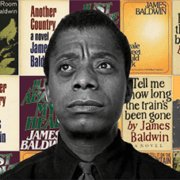
A Love Letter to Black Women and Children – Black History Month 2026

Baldwin gave language to a generation that had been told its suffering was imaginary and its dignity negotiable. Because of voices like his, I can walk my communities and drink water where fountains once had barriers. I can enter stores without being forced to wait in lines of humiliation. I can sit in restaurants and be served as a human being. These are not small victories. They are moral inheritances.

Yet, there is a part of Baldwin’s story that still demands to be told, especially during Black History Month in 2026. Baldwin did not only write about laws and protests. He wrote about Black children. About their right to grow up without being spiritually crushed by a society that refuses to see them as innocent. One of his most profound offerings was his 1962 essay, My Dungeon Shook, a letter to his nephew written on the hundredth anniversary of emancipation.

In that letter, Baldwin confessed: “I have drafted this letter five times and torn it up five times.” He could not escape the face of his nephew, which was also the face of his brother, and the face of his father, and the face of every Black boy shaped by fear before he ever learned joy. Baldwin described the boy as tough, dark, vulnerable, and moody, sounding truculent so that no one would think he was soft. Baldwin knew the armor Black boys are forced to wear. He knew how early it was given to them.

He also knew what happens when society convinces a man that he is what it says he is. Baldwin wrote of his own father, defeated long before death, because at the bottom of his heart he believed the lie that certain people told about him. That belief made him bitter. Holy in pain. Rigid in sorrow.

Baldwin’s letter was never meant to be sealed in history. It was meant to be read again and again by Black mothers and Black children whenever the world tried to tell them who they were.

And here we are, in 2026, still needing that letter.

The names alone testify that Baldwin’s warning was not outdated. Amadou Diallo. Sean Bell. Tamir Rice. Eric Garner. Michael Brown. Alton Sterling. Philando Castile. Breonna Taylor. George Floyd. Elijah McClain. These are not simply victims of incidents. They are chapters in an unfinished American sentence. They are reminders that the description Baldwin gave, tough, dark, vulnerable, moody, still clings to Black bodies in the eyes of systems built on fear.

Many of these men and women died in the arms of institutions that saw them not as children, not as sons or daughters, but as threats. Just as Baldwin feared, so many families did not get to see their loved ones grow old. Their lives were interrupted by the same lie Baldwin named more than sixty years ago.

What Do We Have In 2026?

We have a moral struggle that never concluded. We have progress that looks impressive from a distance but fragile up close. We have Black people in leadership, Black people with wealth, Black people with education. These are real achievements. But opportunity does not equal safety. Opportunity does not equal justice. Opportunity does not erase fear.

Progress is not a cover for what happens beneath the surface.

This is where this love letter must be written, not to deny growth, but to refuse the lie that growth means arrival. This letter is to Black women and Black children, because Baldwin always understood that the burden of history sits heavily on their bodies first.

To the Black woman, mother, aunt, grandmother, sister, who raises a child in a world that promises equality but practices suspicion, this letter says: your love is revolutionary. Your fear is not weakness. It is awareness shaped by history. You carry knowledge that textbooks avoid and politicians dilute. You know that a glittering society can still cast deadly shadows.

It is horrifying to admit that after all the sacrifices made, after marches, after laws, after speeches, there is still a chance that your son may not reach adulthood, that your daughter may be seen as a threat rather than a child. The structures that once blocked Baldwin, Medgar Evers, and so many others have not vanished. They have learned to wear professional language and neutral uniforms.

Some will ask, what is it that Black people are doing to move forward? They say opportunities exist now. They say the doors are open. But opening doors does not mean the house is safe. A seat at the table does not mean the knives are gone. Opportunity without justice is simply another test of endurance.

This is why Baldwin still speaks. His letter screams into Black History Month because it reminds us that history is not a museum. It is a mirror.

We must be honest with our children about the world they inherit. Not to frighten them, but to fortify them. Baldwin did not write to make his nephew despair. He wrote to make himself awake. He told him that the world would try to define him, but that he must not accept the definition. That love was the key, but not sentimental love. A disciplined love. A love that tells the truth.

This love letter in 2026 says to Black women: hug your children fiercely but also teach them what the world hides beneath its shine. Teach them that their lives matter even when the news does not show it. Teach them that fear is learned, but dignity is chosen. Teach them that their ancestors survived systems that were far more explicit in their cruelty, and that survival itself is an inheritance.

It is not enough to celebrate Black excellence while ignoring Black grief. It is not enough to parade progress while counting funerals. Black History Month cannot only be a gallery of triumph. It must also be a classroom of warning.

Elijah McClain was on his way home listening to music. Tamir Rice was playing. Eric Garner said he could not breathe. George Floyd called for his mother. These moments reveal not only tragedy but vulnerability. They reveal how quickly innocence is erased when Black skin enters the equation. Baldwin warned that Black children would be forced to grow up too soon. He warned that they would be asked to be strong before being allowed to be young.

This letter says: let us not pretend the danger is gone. Let us not confuse representation with redemption. Let us not treat history as something that happened instead of something that continues.

To Black children, this letter says: you are not what fear says you are. You are not the story written about you by strangers. You are the story written by your ancestors who endured chains and still sang. You are the story written by mothers who held babies while laws denied their humanity. You are the story Baldwin tried to protect when he wrote to his nephew.

Your softness is not weakness; your joy is not naïveté. Your vulnerability is not a liability. It is proof that the world has not yet broken you.

But you must know the truth. You must learn the shadows as well as the light. Not because you are doomed, but because you are deserving of clarity. Baldwin believed that the greatest crime was not hatred alone, but the lie; the lie that tells a child they are inferior; the lie that tells a nation it is innocent.

This is why this love letter must be scathing and tender at once. It must accuse injustice while embracing hope. It must say plainly that the journey continues and that pretending otherwise is itself a betrayal of those who died believing in something better.

Black History Month in 2026 is not just a commemoration. It is a conversation with Baldwin’s ghost. It is a question he asked long ago: can America afford to be honest with itself? Can it look at the names on death certificates and admit that emancipation did not end the struggle for dignity?

For the Black woman who wakes up every day and sends her child into a world she cannot fully protect them from, this letter says: you are not alone in your fear. History stands with you. Baldwin stands with you. Every ancestor who prayed in silence stands with you.

Read Baldwin

Read Baldwin to your children. Not because he is famous, but because he is faithful to the truth. Remind them that they are loved deeply and warned honestly. Remind them that their existence is not an apology. Remind them that their lives are not experiments in tolerance.

Progress is real, but it is not complete. Representation is visible, but it is not immunity. Justice is spoken of, but it is not guaranteed.

This is the moral responsibility Baldwin gave us. To refuse despair. To refuse denial; to refuse the lie that time alone heals injustice. Healing requires courage. It requires memory. It requires love strong enough to confront cruelty without becoming it.

So, this love letter to Black women and children in Black History Month 2026 says simply this: the journey continues, but so does your worth. Hug your children and teach them the truth. Teach them that the past speaks not to chain them, but to guide them. Teach them that Baldwin’s letter was not an ending, but a beginning.

And when the world feels glittering and safe, remind them of the shadows, not to frighten them, but to sharpen their vision. Because survival is not the final goal. Freedom of spirit is.

Baldwin once wrote that love takes off the masks that we fear we cannot live without and know we cannot live within. This letter takes off the mask of comfort and reveals the work that remains. It tells Black women and children that their lives are sacred in a society that still struggles to admit it.

Black History Month 2026

Black History Month is not only about what we were. It is about what we refuse to become. It is about choosing dignity over denial, memory over myth, and love over fear.

And so, this letter ends where Baldwin began, with a child’s face. A face that carries the past and the future at once. A face that must be protected not only by laws, but by truth. A face that deserves to grow old in a country brave enough to see it fully.

That is the unfinished promise. That is the work; that is the love.

EDITOR’S NOTE: Nyan Reynolds is a U.S. Army veteran and published author whose novels and cultural works draw from his Jamaican heritage, military service, and life experiences. His writing blends storytelling, resilience, and heritage to inspire readers.  

RELATED: The Mahogany That Built Britain And Bankrupted the Caribbean

From Common Cause To Collective Strength: The Caribbean Charts Its Future

By Ron Cheong

News Americas, TORONTO, Canada, Thurs. Feb. 5, 2026: In 1940, Britain’s survival rested not on isolation but on solidarity. Winston Churchill’s defiance of fascism depended on what he called the “Empire beyond the seas” – allies who shared both the burden and the risk of survival. The Caribbean answered that call.

Eighty-five years later, Caribbean leaders have reached a darker conclusion. As St. Kitts and Nevis Prime Minister Dr. Terrance Drew recently put it: “None will come to save us. We must save ourselves.” That shift in mindset reflects a growing concern among West Indians, both in the Caribbean and across the diaspora – that the United Kingdom, under Prime Minister Keir Starmer, is prioritizing a transactional relationship with Donald Trump over the security, dignity, and rights of Commonwealth citizens.

A Diaspora Under Threat

For Caribbean people abroad, Trump’s return to power is not an abstract geopolitical development. It is a direct threat.

“America First” policies include mass deportations, aggressive immigration enforcement, and investigations into Caribbean Citizenship-by-Investment (CBI) programmes – initiatives that many small island economies rely on for survival. Proposed global tariffs and the possibility of a remittance tax pose existential risks to economies deeply dependent on U.S. trade, tourism, and financial flows.

Starmer’s reluctance to confront these policies has reinforced a dangerous perception: that Caribbean nations have become expendable collateral in the pursuit of a UK-U.S. trade deal.

This passivity extends beyond the Caribbean. The UK government failed to forcefully challenge American threats against Denmark and Canada, which stood staunchly with the UK in WW II punching far above its weight. 

This approach by the Starmer government has undermined the very principles of sovereignty and mutual respect the Commonwealth claims to uphold: Working together for prosperity, democracy and peace.  The reticence even extended to matters of the UK’s own standing – for months Starmer avoided public criticism as Trump attacked the Mayor of London, derided British immigration policy, and launched a US$10 billion lawsuit against the BBC.

While he has recently hardened his tone eventually pushing back on tariffs and on Greenland, and in a rare rebuke denounced Trump’s disparaging comments about NATO’s soldiers who served in Afghanistan: “we never needed them – we have never really asked anything of them – they stayed a little back, a little off the front lines;” critics within his own party and among international allies argue that the damage is already done. Early silence, especially in the face of repeated insults, has compromised Britain’s standing.

The Crocodile Analogy and the Loss of Solidarity

Churchill famously warned that appeasement meant “feeding the crocodile, hoping it will eat you last.” Starmer appears to have embraced precisely that logic.

This approach is a sharp departure from the solidarity of the 1940s, when the West Indies played a vital role in resisting authoritarianism. Thousands of Caribbean men and women served in the British armed forces, while the region supplied strategic resources essential to the war effort.

Today, that historical bond appears diminished. The UK’s reluctance to defend Caribbean nations against modern forms of economic coercion – tariffs, financial restrictions, and diplomatic intimidation, feels like a betrayal of shared sacrifice.

By prioritizing the prospect of a UK-U.S. trade agreement over the long-term interests of Commonwealth allies, Starmer risks sacrificing smaller nations in the hope of buying time with Trump. History suggests that crocodiles are rarely satisfied.

CARICOM Charting a New Course

In the absence of clear UK leadership, CARICOM nations are recalibrating.

Many Caribbean leaders now view Britain’s posture toward Washington as subservience rather than solidarity. As a result, the region is pursuing more assertive, independent diplomacy – engaging directly with the United States while diversifying partnerships with Canada and emerging economies in the Global South.

Rather than sheltering behind a weakened Commonwealth, the Caribbean is building its own regional defenses. In late 2025, Barbados, Belize, Dominica, and St. Vincent and the Grenadines launched a landmark agreement allowing full free movement of people – a bold attempt to stem brain drain and build resilience against external economic shocks.

Barbados Prime Minister Mia Mottley has emerged as a moral and strategic leader, insisting that the Caribbean must no longer be treated as a pawn in great-power rivalry. Bypassing London entirely, she has appealed directly to Trump for tariff exemptions and face-to-face talks, reminding him bluntly that the Caribbean “is not the enemy” and poses no threat to the U.S. economy.

This is not the action of isolated states, but a coordinated CARICOM strategy – one born of necessity rather than choice.

Why Appeasement Never Works with Trump

The logic behind Starmer’s early caution is familiar: avoid provocation, secure goodwill, and preserve space for negotiation. But experience suggests this strategy is fundamentally flawed when dealing with Trump.

Trump routinely interprets deference as weakness. The White House has reportedly dismissed Starmer’s government as feeble for failing to offer more vocal support on issues such as Venezuela. He has a long record of humiliating allies for domestic political gain, regardless of previous diplomatic courtesies.

Moreover, Trump views international relations through an intensely transactional lens. He assumes allies are exploiting the United States, making long-term goodwill difficult, if not impossible, to secure through politeness alone. His willingness to disregard personally negotiated agreements, including the USMCA, should give pause to anyone banking on appeasement to deliver a stable trade deal.

A Commonwealth Under Strain – Where Leadership Counts

The Commonwealth was meant to represent continuity – a transformation from empire to partnership, from domination to mutual respect. But partnerships cannot survive on nostalgia alone.

If the UK chooses silence when its allies are threatened, those allies will inevitably seek security elsewhere. The Caribbean’s shift from common cause to self-preservation is not an act of disloyalty; it is a rational response to abandonment.

The UK is in a unique position to stand in strength with others.  The Commonwealth of Nations is an association of 56 independent countries, with nearly one-third of the world’s population or 2.7 billion people, that has coverage spanning strategic areas of the globe including Africa, Asia, the Americas, the Artic, the Caribbean, and Oceania; and containing Middle Powers like India, Canada, Australia, South Africa, Malaysia, Nigeria, Singapore and New Zealand.

Starmer still has a choice. He can rediscover the principle that Britain’s strength has always rested on standing with others, not bowing to bullies. Or he can continue feeding the crocodile and hope the teeth close last.

The Caribbean, having learned the lesson early, cannot wait around to find out.

EDITOR’S NOTE: Ron Cheong, born in Guyana, is a community activist and dedicated volunteer with an extensive international background in banking. Now residing in Toronto, Canada, he is a fellow of the Institute of Canadian Bankers and holds a Bachelor of Science degree from the University of Toronto. His comments are his own and do not reflect those of News Americas or its parent company, ICN.

RELATED: Donald Trump And The False Assumption Of Coherence