
Caribbean American Congresswoman Shirley Chisholm’s Legacy Lives On In Brooklyn’s Little Haiti

NEWS Americas, NY, NY, Tues. Feb. 10, 2026: The legacy of the late Caribbean American trailblazer Shirley Chisholm is taking physical form once again in Brooklyn, as city leaders this week announced the opening of the Shirley Chisholm Recreation Center in East Flatbush, Brooklyn, NY, a historic investment in community wellness, youth development, and public space in the heart of Little Haiti.

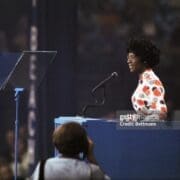
FLASHBACK – Then Caribbean American Congresswoman Shirley Chisholm, after losing her bid for Democratic presidential nomination, endorses Senator George McGovern as she speaks from podium at Democratic National Convention.

Unveiled by New York City Mayor Zohran Mamdani, the new center is the first Parks recreation center built in more than a decade, the first ever in Central Brooklyn, and now the largest recreation center in the borough. City officials estimate it will serve more than 41,000 New Yorkers living within a 15-minute walk or transit ride of the facility.

Named in honor of Chisholm – the first Black and Caribbean American woman elected to the U.S. Congress and the first Black and Caribbean American woman to seek a major party’s presidential nomination – the center stands as a modern tribute to her lifelong commitment to equity, access, and community empowerment. Chisholm, whose parents immigrated from Barbados and Guyana, represented Brooklyn in Congress from 1969 to 1983 and famously ran “Unbought and Unbossed.”

“This center will soon be alive with possibility,” Mayor Mamdani said at the opening. “Shirley Chisholm believed politics should be accountable to everyday people. This space is a living tribute to her legacy — proving that when we invest in affordable, accessible public spaces, we build a city that works for all.”

Spanning approximately 74,000 square feet, the Shirley Chisholm Recreation Center offers far more than traditional gym facilities. It includes a competition-size six-lane swimming pool with full accessibility features, a walking track, a regulation gymnasium for basketball, volleyball and pickleball, cardio and weight rooms, and dedicated spin and exercise studios.

Beyond fitness, the center emphasizes education, creativity, and youth engagement – pillars that echo Chisholm’s own priorities. Amenities include a teaching kitchen, an afterschool program space with an outdoor play area, a supervised teens-only zone, and the Dr. Roy A. Hastick Sr. Media Lab, named after the late Grenadian-born founder of the Caribbean American Chamber of Industry and Commerce, (CAACI), complete with a mixing room for audio-visual production, podcasting, and digital storytelling.

NYC Parks Commissioner Tricia Shimamura called the center a long-overdue investment in Central Brooklyn. “Over 41,000 New Yorkers now have an affordable space to exercise, learn, and connect,” she said. “This is exactly the kind of community infrastructure Shirley Chisholm fought for.”

Membership is free for New Yorkers 24 and under, with discounted rates for all ages. The center officially opens to the public today, Tuesday, February 10, and for its first week, all New Yorkers are invited to enjoy one free day of access to explore the facility before registering for membership. Guided tours, demonstrations, and sign-up events will also be held throughout the opening week.

Local elected officials praised the project as both a practical resource and a symbolic victory. Council Member Farah Louis noted that the center represents years of advocacy and a $141 million investment in a community long underserved by recreational infrastructure. State Senator Kevin Parker called it “a statement about what our communities deserve.”

As Brooklyn marks Black History Month and reflects on a century of Black political progress, the opening of the Shirley Chisholm Recreation Center offers more than brick and mortar. It delivers a tangible reminder that Chisholm’s legacy – rooted in Caribbean migration, courage, and public service — continues to shape the future of the communities she fought to uplift.

In East Flatbush, her name now anchors a space designed not just to serve, but to empower – a living embodiment of “Unbought and Unbossed.”

ABOUT CHISHOLM

Shirley Anita Chisholm (1924–2005) was a groundbreaking U.S. politician who made history in 1968 as the first Black woman elected to Congress, representing Brooklyn for seven terms (1969–1983). Born in New York to Caribbean immigrant parents from Barbados and Guyana, Chisholm spent part of her childhood in Barbados and carried the West Indian heritage throughout her life and public service.

In 1972, she shattered another barrier as the first Black candidate to seek a major-party presidential nomination and the first woman to run for the Democratic nomination, campaigning under her iconic motto, “Unbought and Unbossed.” Known for fearless advocacy, she took resolute stands against economic, social, and political injustice, championing civil rights, women’s rights, education, and anti-poverty programs. In 2015, she was posthumously awarded the Presidential Medal of Freedom, cementing her legacy as a Caribbean-rooted American pioneer.

RELATED: Black Caribbean Immigrants In US Black History

DEI Rollbacks Cast A Long Shadow As Super Bowl 2026 Ads Showcase Diversity — With Limits

By Felicia J. Persaud

By News Americas, NEW YORK, NY, Feb. 2026: More than a year after the Trump administration moved aggressively to dismantle diversity, equity, and inclusion (DEI) initiatives across federal agencies and publicly criticized corporate and cultural efforts tied to racial equity, the Super Bowl 2026 ads unfolded as a revealing moment in America’s ongoing debate over representation, culture, and belonging.

An advertisement for the Super Bowl LX Halftime show featuring Bad Bunny is seen in the Super Bowl LX Media Center at the Moscone Center on February 04, 2026 in San Francisco, California. (Photo by Chris Graythen/Getty Images)

On the surface, Super Bowl 2026 reflected progress. According to new data from market research firm Zappi, 68% of national Super Bowl advertisements visibly featured multiple racial or ethnic groups, a notable increase from 57% the previous year. In more than a quarter of the ads, characters from historically underrepresented communities were not just present, but central to the narrative – speaking, driving the action, or occupying the visual center of the story.

Yet, beneath those gains, familiar limitations remained.

Celebrity casting in Super Bowl commercials continued to skew overwhelmingly white. Of the 103 celebrities appearing in ads this year, at least 60 were white, according to counts by industry publication ADWEEK. Meanwhile, LGBTQ+ representation declined for the second consecutive year, with just five ads explicitly featuring LGBTQ talent — all of whom were already publicly out celebrities — and no transgender representation for the third straight year.

The contrast illustrated a broader tension playing out across American institutions: representation is expanding, but cautiously, even as political pressure mounts against DEI frameworks.

That pressure has been particularly pronounced since Donald Trump returned to office as President, pledging to eliminate what he has called “woke ideology” from government and public life. Over the past year, his administration has rolled back DEI programs, challenged diversity-based hiring initiatives, and supported efforts to limit the teaching of Black history and race-related topics in public institutions.

Against that backdrop, the Super Bowl – long viewed as both a commercial showcase and cultural barometer — became an unintended mirror of the moment.

Several of the most effective ads this year leaned into multicultural storytelling. Campaigns from Dove, Rocket Mortgage, the NFL, Volkswagen, Toyota, and Novo Nordisk ranked 8% above average in sales impact, according to Zappi, reinforcing research that inclusive representation resonates with broad audiences. Rocket Mortgage’s “America Needs Neighbors,” for example, depicted a Latino family and a white family building community, while Levi’s featured a diverse cast that included K-pop star Rosé and rapper Doechii.

Still, the reliance on white celebrity faces for marquee roles suggested that brands remain cautious, balancing inclusion with perceived commercial safety.

Beyond advertising, the Super Bowl’s cultural reach extended onto the field and the halftime stage.

Players with immigrant and Caribbean roots featured prominently in the game, reflecting demographic realities often absent from political discourse. The half-time show, headlined by Puerto Rican superstar Bad Bunny, placed Spanish-language music and Latin and Caribbean culture at the center of one of the most-watched broadcasts in the world – a moment that sparked both celebration and backlash.

For supporters, the performance reflected an America that is multilingual, multicultural, and shaped by immigration. For critics, it became another flashpoint in debates over national identity and cultural change.

Industry observers note that this dual reaction is not new, but it is increasingly visible. “Brands are responding to a society that is more diverse than ever, while navigating a political climate that is openly skeptical of diversity efforts,” said one advertising analyst familiar with the Zappi research. “The Super Bowl shows both impulses at once.”

The decline in LGBTQ+ visibility further underscored that progress is uneven. GLAAD reported that while some brands continue to feature queer talent, many appear to be pulling back amid heightened political scrutiny and social backlash.

Taken together, Super Bowl 2026 did not signal a reversal of diversity, but neither did it mark a decisive break from old patterns. Instead, it offered a snapshot of a country negotiating who is seen, who is centered, and how far representation is allowed to go during moments of mass cultural attention.

In a year defined by DEI retrenchment at the policy level, the Super Bowl showed that diversity has not disappeared from American storytelling – but it is advancing carefully, selectively, and under pressure.

For millions watching, the message was mixed but unmistakable: America’s cultural reality continues to push forward, even as the political debate over that reality intensifies.

Felicia J. Persaud is the founder and publisher of  NewsAmericasNow.com, the only daily syndicated newswire and digital platform dedicated exclusively to Caribbean Diaspora and Black immigrant news

RELATED: From Borders To The Big Game: How Immigrants Defined Super Bowl LX