
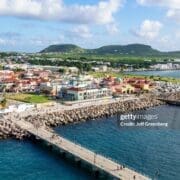
Beyond Words, Beyond Fear: What Caribbean People Expect From CARICOM In Basseterre
By Dr. Isaac Newton
News Americas, NEW YORK, NY, Fri. Feb. 20, 2026: How will the Caribbean secure a future where our children, our workers, and our communities thrive within the region instead of seeking opportunity elsewhere? On February 24, 2026, the Fiftieth Regular Meeting of CARICOM Heads of Government will convene in Basseterre, St Kitts and Nevis. Citizens across the region are seeking commitments that translate into stronger families, resilient economies, and improved daily lives.
In every island, a teacher in Kingston wonders if she can continue educating her students without leaving for employment abroad. A nurse in Bridgetown faces a similar choice. A fisherman in St. Lucia worries that his livelihood will be lost to environmental decline. Immigration systems must provide certainty and fairness. Leaders should implement structured labour mobility agreements, expand professional and student visa pathways, and establish a permanent migration review council that publishes regular reports. Citizens require frameworks they can rely on and opportunities they can plan for with confidence.
Security demands transparency and accountability. Criminal networks exploit maritime corridors and digital systems, leaving small states to bear the social and economic consequences. Cooperation must rest on enforceable protocols and shared responsibility. Investment in coast guard capacity, forensic expertise, and judicial institutions is essential to protect citizens and reinforce governance.
Climate change poses immediate risks to homes, food supply, and water systems across the Caribbean. Hurricanes and rising seas place enormous pressure on national budgets and livelihoods. Governments must secure reliable climate financing, simplify access to concessional funds, and establish joint platforms for renewable energy, resilient water systems, and adaptive agriculture. Engagement with Haiti and Cuba is critical, and any approach involving Venezuela must protect regional stability while preserving sovereignty. Citizenship by Investment programmes must operate under strict oversight and transparency to ensure schools, hospitals, and infrastructure reach communities that need them most.
Economic transformation must be deliberate, measurable, and inclusive. The Orange, Blue, and Green economies present concrete opportunities. A Caribbean Creative Innovation Fund can support cultural enterprises that preserve heritage and generate revenue. A Blue Economy Accelerator can scale sustainable fisheries and maritime technologies. A Green Infrastructure Pact can deploy energy, water, and agricultural systems built for climate resilience. Connecting research institutions, private capital, and local communities ensures that each initiative generates employment, strengthens supply chains, and produces outcomes that are verifiable and lasting.
Integration should empower citizens directly. Mobility for students, entrepreneurs, and creators should be seamless, fostering collaboration, skills development, and knowledge sharing. Caribbean identity can be strengthened through four guiding pillars: peace, public health, paradise, and prosperity. Peace reflects political stability and respect for sovereignty. Public health emphasizes resilient healthcare systems and preparedness for crises. Paradise embodies environmental stewardship, cultural richness, and the beauty of our islands. Prosperity represents innovation, economic opportunity, and inclusive growth. These pillars attract investment, nurture talent, and reinforce cohesion across the region.
Citizens are observing progress carefully. Success will be evident in enforceable policies, implemented projects, and tangible results. Basseterre is an opportunity to demonstrate that the Caribbean can act with precision, implement with focus, and deliver improvements that transform communities.
As Caribbean folklore reminds us, “One hand cannot clap alone, but many hands can lift a mountain.” Meaningful progress requires governments, communities, and citizens to act with purpose, responsibility, and unity.
EDITOR’S NOTE: Dr. Isaac Newton is a globally experienced thought leader, Harvard, Princeton, and Columbia-trained strategist, and advocate for social justice and leadership excellence. With over thirty years of experience bridging cultural, economic, and ideological divides, he translates strategy into measurable results. His work spans governance, economic development, and public policy, consistently delivering initiatives that create employment, strengthen institutions, and advance sustainable growth across the Caribbean.