
IDB Growth Forecast: How Each Caribbean Economy Is Expected To Perform in 2026

By NAN Staff Writer

News Americas, NEW YORK, NY, Wed. Mar. 4, 2026: Caribbean economies are expected to continue expanding in 2026, although growth across the region will remain uneven, according to the latest Latin American and Caribbean Macroeconomic Report from the Inter-American Development Bank (IDB).

The report says overall economic growth in Latin America and the Caribbean is projected at about 2.1% in 2026, reflecting modest expansion amid global economic uncertainty, high debt levels, and persistent structural challenges. The analysis underscores the resilience of the region’s economies and finds that accelerating inclusive growth will demand sound macroeconomic frameworks and bold structural reforms, alongside efforts to harness opportunities in technology and commodities, amid growing global risks. The projection reflects a gradual slowdown compared to the region’s 2.2% growth in 2025.

Within the Caribbean, however, growth trajectories vary widely depending on energy production, tourism recovery and infrastructure investment.

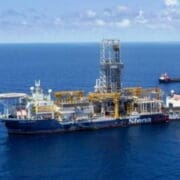
Oil-producing Guyana remains the region’s fastest-growing economy by a wide margin, while most tourism-driven island economies are expected to expand at moderate rates between two and four percent.

Caribbean GDP Growth Forecasts For 2026

Based on the IDB macroeconomic outlook and regional projections, the expected growth outlook for Caribbean economies includes:

Energy-Driven Economies

Guyana: 10–12% growth, driven by continued offshore oil production expansion.

Trinidad and Tobago: 2–2.5%, supported by energy exports and industrial production.

Suriname: 2–3%, with expected recovery tied to mining and energy investments.

Tourism-Dependent Economies

Dominican Republic: 4–5% growth, supported by tourism and construction.

Bahamas: 1.8–2% expansion as tourism stabilizes.

Barbados: about 3% growth, driven by tourism and services.

Jamaica: about 2–2.1%, reflecting moderate tourism recovery and fiscal discipline.

Belize: around 2–2.5%.

Eastern Caribbean Economies

Grenada: 3–4%.

Saint Lucia: 3–4%.

Saint Vincent and the Grenadines: about 4%.

Antigua and Barbuda: 3–4%.

Dominica: about 3–4%, supported by reconstruction projects.

Saint Kitts and Nevis: roughly 2–3%.

Fragile Economy

Haiti: growth remains negative or near zero due to ongoing political instability and economic disruption.

Tourism and Energy Driving Growth

The IDB report notes that tourism recovery and energy production are the two biggest drivers of Caribbean growth.

Tourism-dependent economies across the region continue to benefit from strong visitor demand from the United States and Europe, while energy exporters such as Guyana and Trinidad and Tobago are benefiting from global energy markets.

At the same time, the bank warns that most Caribbean economies still face structural constraints, including small domestic markets, vulnerability to climate shocks, high debt levels and dependence on a limited number of industries.

Growth Remains Modest for Most Islands

Despite pockets of strong performance, the IDB cautions that long-term growth potential in many Caribbean economies remains around 1–2%, highlighting the need for greater productivity, investment and economic diversification.

The report recommends strengthening institutions, expanding regional integration and improving fiscal management to support sustainable growth.

For the Caribbean, the challenge is clear: maintaining economic resilience while building more diversified and competitive economies capable of sustaining growth beyond tourism and commodities.

The report concludes that policies promoting stronger competition, improved skills formation, deeper regional integration, and the development of more sophisticated regional value chains can significantly boost productivity – and should remain at the center of Latin America and the Caribbean’s policy agendas.

“Latin America and the Caribbean navigated global uncertainty with resilience, supported by fiscal and monetary frameworks that have helped contain inflation and sustain macroeconomic stability,” said Laura Alfaro Maykall, IDB chief economist and economic counselor. “Looking ahead, countries have to accelerate productivity-led growth, strengthen public finances, and seize new opportunities from digitalization, artificial intelligence, and the energy to raise living standards and build more resilient and inclusive economies.” 

RELATED: Oil-Rich CARICOM Nation Guyana Still Faces High Poverty Levels, Data Shows

US Seeks Forfeiture Of Oil Tanker Flying False Guyana Flag

By NAN Staff Writer

News Americas, WASHINGTON, D.C., Wed. Mar. 4, 2026: The United States government is seeking the forfeiture of a crude oil tanker seized on the high seas in December 2025 that authorities say was falsely flying the flag of Guyana while transporting millions of barrels of Venezuelan oil linked to sanctioned networks.

The U.S. Department of Justice said a civil complaint has been filed in the U.S. District Court for the District of Columbia seeking to seize the Motor Tanker Skipper and its cargo of approximately 1.8 million barrels of crude oil supplied by Petróleos de Venezuela, S.A. (PdVSA).

A group of Iranian men prays in an area that is targeted in U.S.-Israeli attacks in Tehran, Iran, on March 4, 2026. (Photo by Morteza Nikoubazl/NurPhoto via Getty Images)

According to the complaint, the vessel was intercepted by U.S. authorities on December 10, 2025, after it was determined the ship was falsely claiming Guyana’s flag, effectively rendering it stateless under international maritime law.

The tanker and its cargo are being targeted for forfeiture because prosecutors allege the operation helped generate revenue and influence for Iran’s Islamic Revolutionary Guard Corps, including its Qods Force, which the United States has designated a foreign terrorist organization.

US Officials Cite Sanctions Enforcement

U.S. Attorney General Pam Bondi said the case demonstrates Washington’s determination to disrupt financial flows to hostile regimes.

“Under President Trump’s leadership, the era of secretly bankrolling regimes that pose clear threats to the United States is over,” Bondi said. “This Department of Justice will deploy every legal authority at our disposal to dismantle operations that defy our laws and fuel chaos across the globe.”

FBI Director Kash Patel said the complaint highlights the agency’s efforts to enforce sanctions and disrupt global networks used to fund militant groups.

“The FBI, working alongside our interagency partners, will continue aggressively identifying, disrupting, and dismantling the financial networks used by foreign adversaries to fund terrorist organizations and destabilize international security,” Patel said.

  “We will aggressively enforce U.S. sanctions against Iran and relentlessly pursue ghost fleet vessels whose illicit oil shipments have served as revenue sources for the IRGC and its terrorist proxies,” said U.S. Attorney Jeanine Ferris Pirro for the District of Columbia. “With the continued seizures and forfeitures of tankers and related profits, we are sending a clear message that there will be no safe harbor for sanctions evasion – and that we will deny Iran the ability to fund terrorism through its shadowy maritime networks.”

Assistant Attorney General A. Tysen Duva added that the case is part of broader efforts to stop millions of dollars from flowing to designated terrorist organizations.

Alleged Global Oil Smuggling Network

According to the DOJ, the forfeiture complaint alleges a scheme dating back to at least 2021 involving the shipment and sale of petroleum products to benefit the IRGC.

Investigators say the Skipper transported crude oil originating in both Iran and Venezuela, using ship-to-ship transfers and other deceptive maritime practices to move cargo around the world.

Authorities say the tanker most recently loaded approximately 1.8 million barrels of Venezuelan crude oil in November 2025 at the José Terminal in Venezuela.

Shipping documents cited in the complaint show that about 1.1 million barrels of the cargo were scheduled for delivery to Cubametales, a Cuban state-run oil importer that has been under U.S. sanctions since 2019.

However, U.S. officials say the vessel changed course before reaching Cuba and was intercepted on the high seas in the Caribbean.

Part of Broader Oil Enforcement Campaign

The seizure of the Skipper is part of a wider U.S. effort to disrupt sanctioned oil trade linked to Venezuela and Iran.

Officials allege the tanker had been operating as part of a so-called “shadow fleet” used to evade sanctions by falsifying locations, changing vessel identities and flying false national flags.

If a federal judge approves the forfeiture request, the U.S. government could take ownership of the tanker and its oil cargo, potentially selling the crude and redirecting the proceeds.

The case remains pending before the court.

RELATED: Caribbean Watch: Anticipation and Uncertainty Ahead of High-Profile Talks With Washington