
Is Haiti Becoming The Caribbean’s First Drone War Zone?

News Americas, NEW YORK, NY, Tues. Mar. 10, 2026: Haiti’s escalating security crisis may be entering a troubling new phase: the growing use of explosive drones in densely populated neighborhoods. A new report from Human Rights Watch warns that armed quadcopter drones used in security operations have killed more than 1,200 people in Haiti since 2025, raising serious concerns about civilian casualties and potential extrajudicial killings.

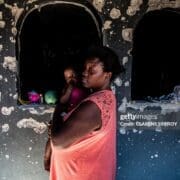
FLASHBACK – Vanessa, 28, poses for a portrait with her son as they return to their home, destroyed by armed gangs in 2024, in the Solino neighborhood of Port-au-Prince, Haiti, on March 3, 2026. Haiti’s presidential transitional council, which has run the impoverished Caribbean nation for nearly two years, on February 7, 2026, handed power to US-backed Prime Minister Alix Didier Fils-Aime, after failing to rein in rampant gang violence. Rubio said in February he was upbeat about progress in setting up a new UN-blessed force to suppress Haiti’s powerful gangs and voiced hope that the country will finally hold elections this year for the first time in a decade. (Photo by Clarens SIFFROY / AFP via Getty Images)

According to the report, Haitian security forces and private contractors working with them have conducted at least 141 drone strike operations between March 1, 2025, and January 21, 2026, killing 1,243 people and injuring 738 others. Among the dead are at least 43 adults who were reportedly not members of criminal groups and 17 children, highlighting the dangers of deploying explosive drones in densely populated urban areas.

“Dozens of ordinary people, including many children, have been killed and injured in these lethal drone operations,” said Juanita Goebertus, Americas director at Human Rights Watch. “Haitian authorities should urgently rein in the security forces and private contractors working for them before more children die.”

Human Rights Watch says the attacks have been carried out using quadcopter drones armed with explosives, capable of maneuvering between buildings while transmitting live video feeds to operators controlling the strikes remotely.

The United Nations Integrated Office in Haiti attributes the drone operations to a specialized “Task Force” created by Prime Minister Alix Didier Fils-Aimé, reportedly operating with support from Vectus Global, a private military company. The U.S. ambassador to Haiti has confirmed that the U.S. State Department issued a license allowing Vectus Global to export defense services to Haiti.

Neither the Haitian government, the Haitian National Police, nor Vectus Global responded to requests for comment from Human Rights Watch regarding the strikes.

The report notes that the number of drone attacks has surged in recent months, with 57 operations reported between November and January 21, nearly double the 29 reported from August through October. More than 40 percent of reported killings occurred between December 1 and January 21, suggesting a sharp escalation in the use of drone warfare-style tactics in the capital.

One of the deadliest incidents occurred on September 20, 2025, in the Simon Pelé neighborhood of Port-au-Prince, where a drone carrying an explosive detonated near the “Nan Pak” recreation complex during a gathering organized by a local criminal group.

Human Rights Watch found that 10 people who were not members of criminal groups — including nine children between the ages of 3 and 12 – were killed in the blast.

Witnesses described scenes of chaos as families rushed to help the wounded.

“I heard the sound of the explosion,” said a woman who lost both her husband and her three-year-old daughter in the strike. “My husband and daughter were together at the place where my husband makes his crafts.… There was panic, and I wanted to go and see what had happened.”

Another mother said her six-year-old daughter had been playing near the complex when the drone exploded.

“When I arrived near the vendor, I heard an explosion. It was chaos, people were mutilated, there were noises everywhere,” she said. “It was full of children. Many people were dead.”

Doctors who treated victims reported severe blast injuries, including traumatic amputations, complex fractures, and fragmentation wounds caused by the explosion.

Human Rights Watch researchers also reviewed videos circulating on social media showing drones striking vehicles, buildings, and individuals in Port-au-Prince neighborhoods including Martissant and Village de Dieu. In several cases, the footage did not appear to show targets engaged in violent acts at the time of the strike.

Residents say the drones have become a constant source of fear.

“I live with this fear, this anxiety, all the time,” said a shopkeeper living in Martissant, one of the neighborhoods affected by the strikes. “I pray that the drones will no longer be in our area.” The woman fled the explosion but returned to the scene a few minutes later, where she found her cousin dead. She said that she had been unable to recover the body because she would have had to pay criminal groups for the remains. 

She stated that she had not seen or heard any sign of a threat before the explosion. “I was on the phone with my cousin when the explosion happened, so I knew that her [truck] had been hit, but I don’t know why they hit that [truck],” she said.

While Haitian authorities have argued that the operations are necessary to combat heavily armed criminal groups controlling large parts of the capital, human rights advocates warn that explosive drones are difficult to use safely in crowded urban environments.

Human Rights Watch said the strikes may violate international human rights law, which requires that lethal force in law enforcement operations be used only when strictly unavoidable to protect life.

“Restoring security in Haiti is essential,” Goebertus said. “But unlawful attacks with armed drones are adding a new layer of abuses to the violence that has devastated communities for years.”

The organization is calling on Haitian authorities to halt the use of explosive drones in populated areas, investigate alleged unlawful killings, and ensure accountability for any violations of international law.

As Haiti struggles to contain gang violence and restore stability, the report raises a stark question: whether the country’s security strategy is turning parts of its capital into something resembling a drone battlefield – a development with profound implications for civilian safety and the future of law enforcement in the Caribbean.

Empowering Half The World: Why Women And Girls Must Lead The Future Of The Commonwealth

By Dr. Isaac Newton

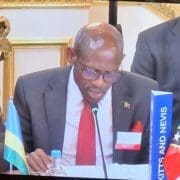
News Americas, NEW YORK, NY, Tues. Mar. 10, 2026: At the opening of the first interactive retreat session of the Commonwealth Foreign Affairs Ministers Meeting (CFAMM), Dr. Denzil L. Douglas, the Minister of Foreign Affairs, International Trade, Industry, Commerce and Consumer Affairs, Economic Development and Investment of Saint Kitts and Nevis, paid tribute, honor and recognition to the women and girls of the Federation and across the world. Addressing colleagues from across the Commonwealth of Nations, he reminded the gathering that the progress of nations is closely tied to how deliberately societies cultivate the potential of their women and girls. His remarks placed their contributions not at the margins of development but at the center of global progress.

At the opening of the first interactive retreat session of the Commonwealth Foreign Affairs Ministers Meeting (CFAMM), Dr. Denzil L. Douglas

Across the Caribbean and throughout the Commonwealth, women quietly sustain the reality of daily life. They guide families through uncertainty, shape the minds of future leaders in classrooms, build enterprises that energize local economies, and strengthen the social fabric of communities. In small island states such as Saint Kitts and Nevis, the steady influence of women is visible in every sector from education and healthcare to entrepreneurship and public service. Yet the pathways to leadership and opportunity remain narrower than they should be, leaving much of this talent underutilized.

It was within this context that Dr. Douglas offered a powerful reflection to the ministers gathered. “We must never sell our multilateral organisation short by failing to more greatly empower our women and girls of the Commonwealth.” His statement carried a simple but profound logic. When international institutions overlook the abilities, ideas, and leadership of women, they weaken the very cooperation they seek to strengthen. Multilateralism reaches its full purpose only when the voices shaping global decisions mirror the diversity of the people those decisions affect.

The Caribbean already offers compelling illustrations of what becomes possible when women are given room to lead. Women entrepreneurs are designing new economic possibilities in tourism, technology, and agriculture. Women educators are nurturing critical thinkers and innovators whose ideas will shape the next generation. Women in governance are bringing thoughtful perspectives to policy discussions that influence the direction of national development. Each advancement expands the horizon for young girls who are watching closely and learning what leadership can look like.

The message that emerges from the Commonwealth dialogue is not abstract. It is practical and immediate. Nations that invest in the education, confidence, and leadership opportunities of women and girls expand their own capacity to solve problems and imagine new futures. The recognition offered by Dr. Douglas at the CFAMM retreat signals a commitment that extends beyond words. When women and girls are equipped to participate fully in shaping their societies, the possibilities for the Commonwealth and for the world widen in ways that benefit everyone.

EDITOR’S NOTE: Dr. Isaac Newton is a globally experienced thought leader, Harvard, Princeton, and Columbia-trained strategist, and advocate for social justice and leadership excellence. With over thirty years of experience bridging cultural, economic, and ideological divides, he translates strategy into measurable results. His work spans governance, economic development, and public policy, consistently delivering initiatives that create employment, strengthen institutions, and advance sustainable growth across the Caribbean.

RELATED: Governing Trust: The ECCB, Public Confidence, And The High Cost Of Silence

Rihanna’s Fenty Beauty To Launch In Guyana

News Americas, NY, NY, Tues. Mar. 10, 2026: When Rihanna launched Fenty Beauty in 2017, she did more than introduce another celebrity cosmetics line – she reshaped the global beauty industry by putting diversity at the center of product design. Nearly a decade later, that same vision is now returning to the Caribbean in a deeply symbolic way.

FLASHBACK – Rihanna arriving at Selfridges for her Fenty Hair launch party on September 16, 2024 in London, England. (Photo by Neil Mockford/GC Images)

On March 28, 2026, Fenty Beauty and Fenty Skin will officially launch in another CARICOM country – this time Guyana, marking one of the most culturally meaningful expansions yet for Rihanna’s global beauty empire.

The brand will debut exclusively at Glamour Beauty in Movietowne Mall in Guyana, bringing the internationally celebrated cosmetics line to a country that holds personal significance for the billionaire entrepreneur.

Rihanna’s mother, Monica Braithwaite, is Guyanese, while her late father was Barbadian. The singer herself was born in Barbados – a blend of Caribbean identities that has shaped her global brand story.

“I am so excited to FINALLY bring Fenty Beauty, Skin and Fragrance brands to the Caribbean,” said Rihanna. “I know the community has been waiting a long time and we can’t wait for you to experience the brand and try the products in a place that’s near and dear to my heart.”

More Than A Beauty Launch

The arrival of Fenty Beauty in Guyana reflects a broader shift in how Caribbean heritage influences global industries. For decades, Caribbean consumers were primarily recipients of international brands rather than drivers of them. Rihanna changed that narrative.

With products designed for every skin tone and cultural background, Fenty Beauty quickly became one of the most disruptive forces in cosmetics history, forcing major brands worldwide to expand their shade ranges and rethink representation.

Now, bringing the brand deeper into the Caribbean represents a full-circle moment: a global product shaped by Caribbean identity returning to Caribbean consumers.

Among the products expected to debut in Guyana are Fenty’s signature items, including:

Pro Filt’r Soft Matte Longwear Foundation, known for its 50 inclusive shades
Gloss Bomb Universal Lip Luminizer, a high-shine cult favorite
Hydra Vizor Invisible Moisturizer SPF 30, designed to blend seamlessly across skin tones
Fenty Treatz Hydrating Lip Oils, infused with nourishing fruit oils

Caribbean Influence Meets Economic Growth

The timing of the expansion also intersects with Guyana’s rapidly growing economy, fueled by its emerging oil industry and expanding middle class.

As international brands increasingly recognize Guyana’s rising consumer market, Rihanna’s decision to launch there reinforces the country’s growing presence in the Caribbean retail landscape. For many Guyanese consumers, however, the moment is less about luxury cosmetics and more about cultural recognition.

Fenty Beauty’s philosophy – that beauty should reflect the diversity of the world – resonates strongly across Caribbean societies long overlooked by global beauty standards.

A Moment Of Pride For The Region

The launch also comes amid a tense moment for the singer after a Florida woman was arrested this week following gunfire outside Rihanna’s Los Angeles-area home. Authorities confirmed the singer was inside at the time but unharmed. Ivana Lisette Ortiz, of Florida, has now been booked for attempted murder. Bail has been set at more than $10 million. Ortiz’ criminal record from Florida shows several incidents of domestic violence dating back to 2023. The 35-year-old was arrested on Sunday, March 8, 2026, after shots rang out outside Rihanna’s Beverly Glen property.

Despite the unsettling incident, Rihanna’s brand expansion continues to move forward, reinforcing her role not only as a global pop icon but as one of the Caribbean diaspora’s most powerful entrepreneurs.

With Fenty Beauty now officially arriving in Guyana, the message is clear: Caribbean influence in global culture is no longer peripheral. It is leading.