
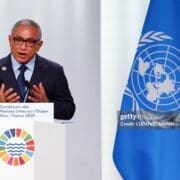
Belize Advances National Eye Health With Launch of WHO SPECS 2030 Initiative

News Americas, BELIZE CITY, Belize, March 11, 2026: Belize has taken a significant step toward ensuring that every person in the country has access to quality, affordable eye care, with the official launch of the World Health Organization (WHO) SPECS 2030 initiative.

The national launch and planning workshop brought together representatives from the Ministry of Health and Wellness (MOHW), the Ministry of Foreign Affairs, Foreign Trade, Education, Culture, Science and Technology, the Belize Council for the Visually Impaired (BCVI), the OneSight EssilorLuxottica Foundation, the World Health Organization and the Pan American Health Organization (PAHO). Participants convened to assess the current state of eye health services in Belize, identify gaps, and chart a clear path forward.

“With the launch of the WHO SPECS 2030 initiative, Belize advances in its commitment to ensuring that every citizen can access quality eye care. Preventable vision impairment should not limit a child’s learning, a person’s ability to work, or an individual’s quality of life. Through its adoption, we are reinforcing our national vision for a stronger, more equitable health system that leaves no one behind,” said Hon. Kevin Bernard, Minister for Health and Wellness.

WHO’s SPECS 2030 initiative provides countries with a structured approach to strengthening refractive error services across five areas:

Services — improving access to refractive services

Personnel — building the capacity of personnel to provide refractive services

Education — promoting public awareness about eye health

Cost — reducing the cost of eyeglasses and services

Surveillance — strengthening data collection and research

For Belize, the initiative translates into three clear priorities at the country level.

First, convening all relevant eye health stakeholders — across the public and private sectors — to agree on national priorities and key areas of action. Second, developing a SPECS 2030 integration plan with measurable targets that can be embedded within Belize’s broader health and eye care strategies. Third, establishing a monitoring and evaluation framework to track progress, review data regularly, and improve services over time.

“Belize is demonstrating how global frameworks like WHO SPECS 2030 can be translated into practical, country-led action. The Foundation’s role in this effort is to support technical implementation — from strengthening refractive services to building local capacity and improving service delivery models. We are proud to stand alongside Belize as it advances a more integrated and accessible eye care system,” said Daniele Cangemi, Head of the OneSight EssilorLuxottica Foundation, Latin America.

Progress will be measured against a defined set of indicators, reported every three to five years through the WHO Global Status Report. These include the reach of school eye health programmes for early detection, the availability of refractive services within the public health system, the size and scope of the eye care workforce, and the degree to which costs are covered through health insurance or other financial protection mechanisms. At the impact level, Belize will track effective cataract surgical coverage and effective refractive error coverage through population-based surveys and health system data.

“The Ministry of Foreign Affairs, Foreign Trade, Education, Culture, Science and Technology welcomes the WHO SPECS 2030 initiative from the BCVI and MOHW in collaboration with PAHO and the OneSight EssilorLuxottica Foundation. We are committed to strengthening our partnership and collaboration with BCVI and the MOHW as we work together to prevent avoidable blindness and expand support services through existing Primary Care and Rehabilitation Programs for children who are blind. The Ministry congratulates and applauds BCVI for its ongoing dedication and commitment to Belize’s visually impaired community,” commented Hon. Francis Fonseca, Minister of Foreign Affairs, Foreign Trade, Education, Culture, Science and Technology.

BCVI, working alongside MOHW, the OneSight EssilorLuxottica Foundation and the initiative’s national and international partners, will lead coordination and follow-up to ensure that commitments made at the workshop translate into meaningful progress on the ground.

The launch of SPECS 2030 reflects Belize’s commitment to universal health coverage and to a future where no Belizean loses the ability to learn, work, or thrive because of a vision condition that could have been corrected.

About the OneSight EssilorLuxottica Foundation
The OneSight EssilorLuxottica Foundation is a registered charitable organization dedicated to eliminating uncorrected poor vision within a generation. As part of EssilorLuxottica’s commitment to universal vision care, the Foundation works to expand access for millions in underserved communities worldwide. It is also the Global Collaborating Partner of the World Health Organization’s SPECS 2030 initiative, which focuses on refractive error, myopia prevention, and improving access to vision care in low-resource settings.

Find out more at: onesight.essilorluxottica.com

About the Belize Council for the Visually Impaired
The Belize Council for the Visually Impaired (BCVI) is a national, non-profit organization dedicated to the prevention of blindness and the provision of comprehensive eye care services.

Established in 1981, BCVI works in partnership with the Ministry of Health & Wellness to deliver accessible, affordable, and high-quality eye care across the country.

Through a network of clinics and outreach programmes, BCVI provides services including eye examinations, refractive error services treatment of eye diseases and rehabilitation support for those who are irreversibly blind.

Special initiatives focus on children, persons with diabetes, and underserved communities, ensuring that no Belizean is left behind in accessing essential eye care and support for independent living.

BCVI collaborates with local and international partners to strengthen Belize’s eye health system and advance equitable access to services for all.

For more information, visit: www.bcvi.org

Global Praise, Quiet Ballots: The Barbados Leadership Paradox

By Dr. Isaac Newton

News Americas, NEW YORK, NY, Weds. Mar. 11, 2026: In Barbados a striking democratic paradox has emerged. A government holds every seat in Parliament while most voters stayed home.

In the 2026 general election, PM Mia Mottley and the Barbados Labour Party secured all thirty seats in Parliament for the third consecutive time. It is an extraordinary consolidation of political authority. Yet the deeper democratic signal lies not in the scale of the victory but in the silence surrounding it. Voter turnout fell to roughly thirty seven percent of registered voters.

FLASHBACK – Barbados’ Prime Minister Mia Mottley looks on upon arrival at the Earthshot Prize 2025 awards ceremony at the Museum of Tomorrow in Rio de Janeiro, Brazil, on November 5, 2025. (Photo by Daniel RAMALHO / AFP) (Photo by DANIEL RAMALHO/AFP via Getty Images)

The result is simple and unsettling. Parliamentary power has expanded while civic participation has contracted.

Elections measure power. Turnout measures belief. When citizens withdraw from the ballot box in large numbers, the absence itself becomes a form of political expression.

Internationally, Mia Mottley commands considerable respect. Her advocacy on climate justice, economic fairness, and the vulnerabilities of small island states has earned global recognition from institutions such as TIME. She has become one of the Caribbean’s most visible and persuasive voices in global diplomacy.

Yet global prestige and domestic democratic energy do not always rise together.

Barbados may in fact illustrate a broader regional pattern. Across parts of the Caribbean, electoral victories have grown more decisive even as public participation becomes more fragile. When political outcomes appear predictable, citizens sometimes respond not with resistance but with withdrawal.

Silence is one of the least examined signals in modern politics. It rarely attracts headlines, yet it often reveals the health of democratic life more clearly than electoral margins.

For Caribbean leadership, the lesson is strategic as much as political. Authority can secure parliamentary seats, but legitimacy depends upon citizens who still believe their participation matters. Governments can command institutions, but democratic vitality requires engagement that cannot be legislated or assumed.

Barbados therefore offers more than a national political story. It offers a quiet warning about the evolving character of democracy in small states and beyond.

A government can fill every seat in Parliament. Only citizens can fill a democracy.

Editor’s Note: Dr. Isaac Newton is a globally experienced strategist trained at Harvard, Princeton, and Columbia, with more than three decades of work across governance, economic development, and public policy in the Caribbean. His leadership initiatives focus on strengthening institutions, generating employment, and advancing sustainable regional growth.

RELATED: Is Barbados PM Mia Mottley’s Clean Sweep Victory Bitter Sweet Or Honey Sweet?

The Caribbean’s Question For Washington: Where Is the Economic Offer?

By Felicia J. Persaud

News Americas, NEW YORK, NY, Weds. Mar. 11, 2026: As Washington rolled out its new hemispheric security doctrine on March 7th, a quiet but consequential question is emerging across the Caribbean: where is the economic offer?

At the March 7th “Shield of the Americas” summit in Doral, Florida, U.S. President Donald Trump gathered just three from the Caribbean – two from the 15 member CARICOM community – and a few other hand-picked leaders from Latin America – to launch what the White House described as the Americas Counter Cartel Coalition, part of a broader geo-political framework for the Americas that some officials have begun referring to as the Donroe Doctrine.

U.S. President Donald Trump waits to greet dignitaries as he hosts “The Shield of the Americas Summit ,“ a gathering with heads of state and government officials from 12 countries in the Americas at the Trump National Doral Golf Club on March 7, 2026 in Doral, Florida. The White House describes the gathering as a landmark summit aimed at reshaping regional alliances and reinforcing U.S. influence in the Western Hemisphere. (Photo by Roberto Schmidt/Getty Images)

The initiative places heavy emphasis on security cooperation, intelligence sharing, and military coordination to combat drug cartels and transnational criminal networks operating across the hemisphere. The summit’s declaration focused on disrupting these networks and strengthening regional security partnerships.

Few Caribbean governments dispute the seriousness of organized crime or the need for coordinated responses to trafficking and violence. The region has long faced the spillover effects of narcotics routes, human trafficking networks, and arms flows that destabilize communities. But security alone rarely defines stability for small states.

For Caribbean economies, long-term stability depends not only on policing borders or confronting criminal organizations but also on functioning healthcare systems, reliable infrastructure, investment flows, and economic opportunity. And it is here that a gap in the emerging doctrine becomes visible.

For decades, the Caribbean has navigated relationships with multiple international partners that support different aspects of development. The United States remains the region’s largest tourism market and a vital source of remittances and foreign investment. China has emerged as a significant financier of infrastructure projects. Cuba has long provided medical cooperation that supports public health systems in several Caribbean states.

Recent geo-political pressure has encouraged some governments to distance themselves from both Beijing and Havana. Yet, replacing those relationships is not a simple exercise.

Chinese financing has played an increasingly visible role in Caribbean development. Between 2005 and 2024, Chinese investment supported major infrastructure projects across the region, including more than $6 billion in Jamaica, roughly $3 billion in Guyana, $2.28 billion in Trinidad and Tobago, and about $1 billion in Antigua and Barbuda. These investments, often tied to China’s Belt and Road Initiative, have funded highways, ports, energy infrastructure, stadiums, and telecommunications networks.

Such projects have helped address infrastructure gaps that Western lenders have often approached with extreme caution, with many viewing the Caribbean as a “wild west” and not a great place to invest.

Meanwhile, Cuban medical missions have for decades provided thousands of doctors and nurses across the Caribbean. In several smaller states, Cuban professionals staff hospitals, operate rural clinics, and deliver specialized services that local healthcare systems struggle to maintain on their own. Now the region is also being asked to terminate these missions or face Washington’s wrath as the administration tightens the economic noose on Cuba.

If regional governments are asked to reduce cooperation with these partners, the practical question becomes unavoidable: what replaces those contributions? Security partnerships can disrupt criminal networks. They cannot build and staff hospitals, finance highways, or train doctors.

If Washington seeks to counter China’s economic influence and reshape hemispheric alliances, where is the announcement of a large-scale development initiative for the Caribbean?

A dedicated U.S.-backed investment facility for infrastructure, energy transition, and climate resilience could provide a compelling economic alternative while strengthening long-term stability in the region. Small island states face mounting pressures from climate vulnerability, rising debt burdens, and limited domestic markets. Addressing these challenges requires sustained access to capital.

Without a credible development strategy, security initiatives alone may struggle to reshape the region’s economic partnerships. Ironically, the Chinese Embassy in the U.S. posted a video mocking the security alliance ‘Shield of the Americas’ on social media on the 10th. 

The Caribbean’s diplomatic history has long been defined by pragmatic balance. Governments across the region have cultivated relationships with multiple global partners while seeking to preserve their sovereignty and development options.

That balancing act continues today.

Caribbean leaders understand the importance of working with Washington on security matters. The United States remains the hemisphere’s largest economic power and an indispensable partner in trade, tourism, and finance. But for the region’s small states, alliances cannot be built solely around military coordination or cartel suppression.

True stability in the Caribbean rests on broader foundations: resilient economies, functioning public institutions, and opportunities for the region’s young populations.

Great powers often compete through strategy. Small states respond through investment.

If the Donroe Doctrine is to shape a new era of hemispheric relations, Caribbean governments need to ask a simple question that extends beyond security partnerships: Where is the economic vision that accompanies the doctrine?

Because in the Caribbean, stability will ultimately be built not by missiles or patrol boats alone, but by hospitals that remain open, infrastructure that supports growth, and economies that offer people a future worth investing in and staying for.

EDITOR’S NOTE: Felicia J. Persaud is CEO of Invest Caribbean and AI Capital Exchange and founder of NewsAmericasNow.com.