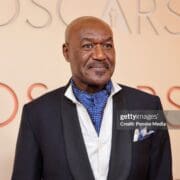

Bad Mindedness And Brain Gain In The Caribbean

By Dr. Isaac Newton

News Americas, NEW YORK, NY, Mon. March. 16, 2026: Caribbean talent or a brain gain, is shaping the world, yet our islands struggle to welcome it home. Borders to North America and Europe are tightening as global challenges multiply. Economies wobble, insecurity rises, and climate change reshapes daily life. For small island states, talent is more than a resource. It drives innovation, strengthens culture, and anchors resilient communities. Bringing returning homegrown talent home restores ambition, fuels economic diversity, and strengthens the social fabric essential for sustained progress. The opportunity is obvious, yet political, cultural, and structural obstacles often dilute its impact.

Barriers That Undermine Brain Gain

Returning homegrown talent often faces skepticism instead of support. Local expertise is judged more harshly than foreign investment, even when it could spark new industries. Trust is inconsistent, and merit is too often overshadowed by perception.

A subtle but persistent insecurity exists in leadership circles. Outsiders are often prioritized over natives. Defensive attitudes arise from fear rather than strategy. This mindset stifles risk-taking, suppresses innovation, and limits meaningful engagement with returning homegrown talent. It communicates that recognition abroad carries more weight than achievement at home.

Structural barriers intensify the problem. Policies and systems frequently move resources outward rather than nurturing domestic potential. Bureaucracy, fragmented incentives, and unclear pathways for reintegration leave returning homegrown talent navigating a landscape that can feel more hostile than the one they left. Without deliberate change, talk of brain gain remains hollow, masking the scarcity of real opportunities.

Reframing Talent Repatriation

Caribbean nations must build systems that elevate, integrate, and empower returning homegrown talent. Incentives should offer clear career pathways, funding support, and institutional backing that reward measurable impact and innovation. Contribution at home must be as viable and rewarding as success abroad.

Cultural narratives must shift to celebrate homegrown expertise. Returning homegrown talent should be seen as agents of transformation rather than objects of doubt. Technology-enabled platforms can connect them with domestic enterprises before they physically return, smoothing the transition and reducing friction. Leaders must foster openness, remove gatekeeping, and create spaces where bold ideas are judged on merit rather than origin. Alignment of policy, culture, and mindset sends a clear message: home is both welcoming and strategically fertile.

The Imperative for Action

Small Caribbean states cannot rely on chance returns or symbolic gestures. Without a critical mass of returning homegrown talent, innovation remains fragmented, and growth stalls in reactive cycles. A deliberate, psychologically informed, and structurally supported approach to brain gain can reshape national futures, linking diaspora networks with domestic ambition to generate lasting prosperity.

The responsibility is clear. Bad mindedness must be confronted. Opportunities must be redesigned. Governance and policy must act with intention. These measures transform talk into action, empowering the Caribbean to write its own development story with returning homegrown talent that is recognized, trusted, and ready to lead. Otherwise, the conversation about brain gain risks remaining an echo, admired in theory but absent in practice.


EDITOR’S NOTE: Dr. Isaac Newton is a leadership strategist, educator, and public speaker specializing in governance, institutional transformation, and ethical leadership. Trained at Harvard, Princeton, and Columbia, Dr. Newton brings a multidisciplinary perspective to leadership development across the public, private, academic, and faith-based sectors. He is the coauthor of Steps to Good Governance, exploring practical frameworks for accountability, transparency, and institutional effectiveness. Dr. Newton has designed and delivered seminars for corporate boards, educators, public officials, and community leaders throughout the Caribbean and internationally. His work integrates insights from leadership research, psychology, public policy, and faith-informed ethics to equip leaders to guide organizations through uncertainty with clarity, courage, and measurable impact.

RELATED: Leadership: The Lighthouse Principle – Leading People When The Map Keeps Changing

U.S. Gun Pipeline To Caribbean Exposed As Teacher Sentenced For Trafficking Weapons To Trinidad

News Americas, MIAMI, FL, Mon. March 16, 2026: A Florida high school teacher has been sentenced to more than a year in prison after admitting she helped purchase firearms that were ultimately smuggled into Trinidad and Tobago, highlighting growing concerns about the role of U.S. gun trafficking networks fueling crime across the Caribbean.

Shannon Nicole Samlalsingh, 47, was sentenced to one year and one day in federal prison after pleading guilty to conspiracy to make false statements to a firearm dealer, according to the U.S. Department of Justice.

U.S. District Judge William F. Jung also ordered Samlalsingh to forfeit the firearms she purchased as part of the scheme.

Federal prosecutors say Samlalsingh, who at the time was a Hillsborough County high school teacher in Tampa, purchased multiple weapons on behalf of a Trinidad-based transnational criminal organization.

Court documents show she falsely claimed on federal firearms purchase forms that the weapons were for her personal use. Instead, investigators say the guns were handed over to members of the criminal network and later smuggled into Trinidad and Tobago.

The case sheds light on the illegal flow of U.S. firearms into Caribbean nations, a growing regional security concern.

Authorities in Trinidad and Tobago intercepted part of the weapons shipment in April 2022 at Piarco International Airport. Customs officials discovered an alarming cache of weapons hidden inside two punching bags in a shipment arriving from the United States.

The seizure included:

• Eleven 9mm pistols
• Two .38 caliber revolvers
• A semi-automatic shotgun
• Multiple AR-15 components and magazines
• Hundreds of rounds of ammunition

Investigators determined that four of the seized pistols had been purchased directly by Samlalsingh.

The case was investigated by Homeland Security Investigations, (HSI) and the U.S. Bureau of Alcohol, Tobacco, Firearms, and Explosives (ATF), with assistance from the Trinidad and Tobago Police Service, U.S. Citizenship and Immigration Services, and other law enforcement agencies.

The prosecution comes at a time when Caribbean governments are intensifying calls for stronger cooperation with the United States to combat the flow of illegal weapons and narcotics through regional transshipment corridors.

In Trinidad and Tobago, authorities have been grappling with rising concerns over arms trafficking linked to organized crime networks.

US RADAR REMOVED

Those concerns have also shaped broader regional security cooperation with Washington.

Last year, the United States deployed a military-grade radar system at ANR Robinson International Airport in Tobago aimed at helping local authorities detect drug trafficking flights and maritime smuggling routes, particularly those connected to Venezuela.

The radar, which used drone and satellite technology to monitor regional airspace, was part of a broader effort to strengthen surveillance across the southern Caribbean.

However, recent reports indicate the system has now been dismantled, with a U.S. military aircraft expected to transport the equipment out of Tobago.

The removal comes amid shifting regional security dynamics following the U.S. military’s detention of Venezuelan leader Nicolás Maduro earlier this year on drug-related charges.

Despite the radar’s removal, Trinidad and Tobago officials have continued to press Washington for increased security support.

Speaking at the Americas Counter Cartel Conference in Miami, Defence Minister Wayne Sturge called for additional U.S. assets to help Caribbean nations combat organized crime networks operating in the region.

“If we are to deliver effectively as the security anchor in the southern Caribbean, we require assets that would equip us with the capability to disrupt the cartels in the transshipment corridors,” Sturge said.

Cases like Samlalsingh’s illustrate the complex challenge Caribbean governments face – confronting criminal networks that rely heavily on weapons purchased legally in the United States before being trafficked south.

Security experts say the case underscores the need for stronger monitoring of firearms purchases and enhanced cooperation between U.S. and Caribbean law enforcement agencies to disrupt the illicit pipeline feeding regional crime.

RELATED: Doctor’s Graphic Testimony Reveals Brutality Of Haiti President’s Assassination

Leadership: The Lighthouse Principle – Leading People When The Map Keeps Changing

By Dr. Isaac Newton 

News Americas, NEW YORK, NY, Mar. 15, 2026: In many organizations the most talented people are also the quietest in the room. Not because they lack ideas, but because they have learned a silent rule of survival. In tightly controlled systems initiative creates risk, while compliance creates safety. Leaders ask for innovation, yet design processes that punish deviation. The result is a growing empowerment gap inside modern institutions. Brilliant people are hired for their intelligence and then managed as if they cannot be trusted to think. At a moment of unprecedented economic and technological change, this contradiction has become one of the most serious barriers to institutional transformation.

The central leadership challenge of this era is therefore not simply efficiency. It is learning how to lead in the midst of uncertainty without suffocating the intelligence of the people within the organization. Many leaders respond to uncertainty by tightening control over processes. They attempt to script activity, monitor every step, and standardize decisions. The intention is understandable. Control feels like safety. Yet leadership research has long warned that excessive supervision diminishes initiative, a concern raised decades ago by management thinkers such as Peter Drucker, who argued that leaders must manage for results rather than activity. In volatile environments, the more leaders attempt to control processes, the more slowly organizations adapt.

Directional leadership offers a different path. It begins with a simple but powerful shift. Instead of controlling every process, leaders clarify the outcome that must be achieved and allow capable people to determine how to achieve it. The leader’s authority is not weakened by this approach. It is concentrated. Direction replaces supervision as the primary work of leadership. One might think of this as the Lighthouse Principle. In dense fog a ship captain does not attempt to control every wave or current. The captain fixes attention on the lighthouse that marks the destination and trusts the crew to navigate the waters.

This model rests on three instruments of directional leadership. The first is destination. Leaders must define success in language that is precise enough for everyone to see it clearly. A school leader, for example, might replace a long strategic document with one decisive aim. By the end of the academic year every third grade student will read confidently at grade level. Teachers, tutors, and parents suddenly share a common horizon. In business the same clarity might appear as a commitment that customer response time will fall from two days to six hours within six months. When the destination is unmistakable, teams begin organizing their creativity around the result rather than waiting for instructions about procedure.

The second instrument is ownership, which closes the empowerment gap. Micromanagement rarely begins with arrogance. It usually begins with anxiety. Leaders feel personally responsible for results and therefore tighten their grip on how work is performed. Yet the paradox is striking. The tighter the control over activity, the weaker the sense of responsibility among the people doing the work. Directional leaders reverse this pattern by placing authority where knowledge resides. Imagine a hospital administrator who tells the emergency department staff that every patient must be stabilized or seen by a physician within ten minutes of arrival. The professionals closest to the work redesign triage flow, adjust communication practices, and refine patient intake procedures. Trust releases ingenuity that supervision alone cannot produce.

The third instrument is evidence. Many institutions suffer from what might be called process addiction. They measure meetings held, reports filed, and hours worked while the deeper question remains unanswered. Did the outcome improve. Directional leadership insists on measuring results that matter to the mission. A community organization focused on youth safety may stop counting workshops and begin tracking whether participating students remain in school and avoid arrest for an entire year. A sales organization may shift attention away from the number of calls made and focus instead on customer retention and long term partnerships. When outcomes become the standard, teams search for smarter paths rather than merely completing assigned tasks.

These three disciplines are especially powerful in an age of constant disruption. Artificial intelligence is reshaping industries. Economic shocks move quickly across global markets. Social expectations evolve rapidly. In such conditions rigid processes break easily. Clear direction, however, travels well across uncertainty. A defined destination acts like a lighthouse in the fog. Ownership transforms employees into navigators capable of adjusting the route. Evidence shows whether the ship is moving toward its harbor.

Leaders who fail to close the empowerment gap will face a quiet exodus of talent. Their most capable people will not argue loudly. They will simply migrate to institutions where their intelligence is trusted. The organizations that thrive in the coming decade will not be those that design the most elaborate procedures. They will be those that define the clearest destinations, entrust responsibility to capable people, and measure the results that truly matter. When that happens something remarkable occurs inside institutions. Energy returns, initiative rises, and the collective intelligence of the organization begins to move with purpose toward transformation.

Editor’s Note: Dr. Isaac Newton is a leadership strategist, educator, and public speaker specializing in governance, institutional transformation, and ethical leadership. Trained at Harvard, Princeton, and Columbia, Dr. Newton brings a multidisciplinary perspective to leadership development across the public, private, academic, and faith based sectors. He is the coauthor of Steps to Good Governance, a work that explores practical frameworks for accountability, transparency, and institutional effectiveness. Dr. Newton has designed and delivered seminars for corporate boards, educators, public officials, and community leaders throughout the Caribbean and internationally. His work integrates insights from leadership research, psychology, public policy, and faith informed ethics to equip leaders to guide organizations through uncertainty with clarity, courage, and measurable impact.

RELATED: The Caribbean – Democracy At Home, Continuity Abroad

Caribbean Roots Actors Miss Out On Wins At Oscars 2026

News Americas, LOS ANGELES, CA, Mon. Mar. 16, 2026: Two actors with Caribbean roots – veteran British-Jamaican performer Delroy Lindo and Harlem-born actress Teyana Taylor – fell short of taking home Oscars at the 2026 Academy Awards despite strong nominations that highlighted the growing influence of Caribbean diaspora talent in Hollywood.

The awards ceremony, hosted by Conan O’Brien and broadcast Sunday, March 15 on ABC, saw Lindo nominated for Best Supporting Actor and Taylor nominated for Best Supporting Actress.

(L-R) Damiri Lindo and guest, Nashormeh N. R. Lindo and UK Caribbean roots actor Delroy Lindo attend the 98th Annual Academy Awards at the Dolby Theatre in Hollywood, California on March 15, 2026. (Photo by Frederic J. Brown / AFP via Getty Images)

However, the awards ultimately went to Sean Penn for Best Supporting Actor and Amy Madigan for Best Supporting Actress. Penn did not attend the ceremony to collect his award, while Taylor was seen applauding Madigan from the audience.

Both Caribbean-rooted nominees had arrived at the Oscars with significant momentum. Lindo, 73, attended the ceremony with his family, while Taylor turned heads on the red carpet with a standout fashion moment before the ceremony began.

Caribbean roots actress Teyana Taylor attends the 98th Oscars at Dolby Theatre on March 15, 2026 in Hollywood, California. (Photo by Mike Coppola/Getty Images)

For many across the Caribbean diaspora, the nominations themselves were historic, particularly for Lindo, whose decades-long career has shaped modern Black cinema.

Born in Lewisham, London, to Jamaican parents who were part of the Windrush generation, Lindo’s journey reflects a broader Caribbean diaspora story. After moving to Canada as a teenager, he later relocated to the United States where he trained at the American Conservatory Theater and built a career spanning film, television, and stage.

Lindo earned his first Academy Award nomination for his performance as Delta Slim in the genre-blending vampire thriller “Sinners,” directed by Ryan Coogler. Critics widely praised his portrayal of a Mississippi blues musician whose music anchors a juke joint that becomes the center of supernatural conflict.

The film itself was a major success, earning 16 Oscar nominations – the most ever for a single film – while also posting a 97 percent critics score and 96 percent audience rating on Rotten Tomatoes. Globally, the film earned roughly $368 million at the box office.

For Lindo, the nomination marked long-overdue recognition for a career that has often been celebrated by critics but overlooked by major awards bodies.

He has previously drawn awards-season attention for iconic performances, including his role as West Indian Archie in Spike Lee’s “Malcolm X” and his acclaimed performance in “Da 5 Bloods.”

Lindo has acknowledged that past awards snubs were disappointing but said he tries not to define his career by recognition alone.

“To have been working as an actor for the length of time that I have… the fact that audiences still apparently find what I’m doing interesting — that’s not a given,” he said in a recent interview.

TAYLOR

Meanwhile, Taylor’s nomination reflected a different but equally powerful diaspora story.

Born in Harlem to a Trinidadian father and an African American mother, Taylor has built a multi-dimensional career as a singer, dancer, actress and creative director.

Her role as Perfidia in Paul Thomas Anderson’s film “One Battle After Another” earned critical acclaim and followed her historic Golden Globe win earlier this year for Best Supporting Actress – making her only the second Black performer of Caribbean heritage to win a Golden Globe after Bahamian-roots film legend Sidney Poitier.

Taylor’s performance was praised for its emotional depth and vulnerability, helping redefine how Black women are portrayed on screen.

Though she did not take home the Oscar, her nomination continues a broader trend of Caribbean-descended talent gaining recognition across the global entertainment industry.

For Caribbean audiences and diaspora communities around the world, the moment remains significant. Both Lindo and Taylor represent generations of Caribbean influence in global culture – from the Windrush legacy in Britain to the Caribbean-shaped communities of New York.

While the Oscars did not deliver victories this year, the nominations themselves reinforced the growing visibility and impact of Caribbean-rooted artists at the highest levels of international cinema.

RELATED: Teyana Taylor Makes Golden Globe History As Second Caribbean-Rooted Black Winner