Taye Diggs To Star In New Lifetime Romance Filmed In Nevis – Birthplace Of Hamilton

News Americas, NEW YORK, NY, Thurs. March 19, 2026: Award-winning actor Taye Diggs is set to star in a new Lifetime romantic drama filmed in the Caribbean, putting the spotlight on the island of Nevis, the birthplace of the US’s first Secretary of the Treasury and a US founding father, Alexander Hamilton, as a must-watch destination for global audiences.

L-R: Troy Brookins, Taye Diggs, Honourable Mark Brantley, Premier of the island of Nevis, Heather Hemmens, Autumn Federici, Sharon Brantley, Shelby Stone, Jake Helgren. (Photo Credit: Nevis Film Commission)

The film, Terry McMillan Presents: Paradise with You, is scheduled to premiere in Fall 2026 as part of Lifetime’s popular Love of a Lifetime slate. Filmed entirely on location in Nevis, the production showcases the island’s secluded beaches, historic estates, and lush volcanic landscapes – bringing its signature Caribbean charm to screens across North America.

A Star-Driven Caribbean Love Story

In Paradise with You, Diggs plays Carter, an NFL superstar on the brink of retirement who escapes to the tranquil island of Nevis in search of peace and clarity.

There, he meets Simone, played by Heather Hemmens, an interior designer rebuilding her life after betrayal. What begins as a seemingly effortless island romance soon takes an unexpected turn when the pair discover they are competing for ownership of the same coveted estate.

The film also stars Cynthia Bailey, alongside Troy Brookins and Q Stenline (SwagBoyQ), and marks the fourth collaboration between bestselling author Terry McMillan and Diggs.

Nevis Takes Center Stage

Beyond the star power, the film places Nevis firmly in the global spotlight as a premier Caribbean filming destination. The production was facilitated by the Nevis Film Commission with support from the Nevis Tourism Authority, highlighting the island’s growing appeal to international filmmakers.

“Nevis has always been a place where romance, history, and natural beauty come together in a way that feels both timeless and deeply personal,” said Andia Ravariere, CEO of the Nevis Tourism Authority.

Caribbean’s Rising Film Destination

Nevis Film Commissioner Pamela Martin said the island offers a unique combination of scenic beauty and production efficiency. “Nevis offers filmmakers a rare combination of breathtaking natural scenery, historic architecture, and an intimate island setting,” Martin said, noting the commission’s streamlined support for productions.

The island has already hosted projects such as A Week in Paradise and Christmas in the Caribbean, and continues to attract global productions seeking authentic Caribbean backdrops.

Driving Tourism Through Storytelling

With Paradise with You, Nevis is leveraging film and television as a powerful tool to boost tourism and global visibility. The island – known for its unspoiled landscapes, lack of high-rise developments, and rich history – is positioning itself as both a romantic escape and a cinematic destination. As audiences tune in this fall, Nevis may well become the Caribbean’s next must-visit hotspot.

RELATED: Caribbean Roots Actors Miss Out On Wins At Oscars 2026

The Cuba Dilemma: The Caribbean Thriving Beyond Diplomatic Trauma

By Dr. Isaac Newton

There are moments in history when power no longer feels compelled to explain itself. Cuba has entered such a moment. An entire society is being strained through the steady constriction of the systems that sustain ordinary life. Electricity fails, water access weakens, and hospitals operate under mounting pressure. The process is controlled, yet its consequences are expansive and deeply human.

For the Caribbean, this is not a distant concern. It is a revealing episode unfolding within the region’s immediate environment. It shows how influence is exercised when restraint is optional and when consequence is unevenly distributed.

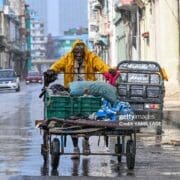
A man pushes a cart on a street in Havana on March 17, 2026. Cuba scrambled on March 17, 2026, to restore power after a nationwide blackout that hit the communist-run island just as US President Donald Trump proclaimed he will “take” it over. (Photo by YAMIL LAGE / AFP via Getty Images)

The question facing Caribbean leadership is no longer abstract. What secures the position of small states when power proceeds without justification?

Diplomatic Trauma and the Limits of Assumption

Caribbean diplomacy has long been shaped by a disciplined belief that international order offers protection. Institutions such as the United Nations and the commitments expressed in the UN Charter were intended to ensure that sovereignty would not depend on size.

Cuba reveals the limits of that assumption.

The United Nations General Assembly has expressed its position with clarity and consistency. The language is firm. The outcome remains unchanged.

International law continues to define legitimacy with precision. It no longer guarantees restraint with certainty.

This moment exposes what may be described as diplomatic trauma. It is the inherited expectation that fairness, once articulated, will eventually shape outcomes. That expectation was formed in a different era. It now operates in a system that no longer consistently responds to it.

The Emotional Climate of Decision Making

Leaders across the Caribbean are making decisions within a climate shaped by competing internal pressures.

Fear reflects the real possibility of economic disruption. Anger arises from the visible erosion of sovereign respect. Anxiety emerges from structural exposure. Hope persists, even as evidence becomes more complex.

These forces influence judgment. When left unexamined, they narrow strategic options. When understood, they can be ordered into disciplined thinking.

Leadership in this moment requires composure. It calls for decisions that are informed by reality rather than driven by reaction.

Beyond Simplified Alignment

Public discourse often reduces the present situation to a limited set of choices. One path emphasizes alignment in order to preserve stability. Another emphasizes resistance in order to defend principle.

Each carries consequence. Alignment can gradually weaken independent positioning. Resistance can invite concentrated pressure within an uneven system.

A more effective posture requires movement across contexts. It allows leaders to engage differently depending on circumstance while remaining anchored in a clear sense of purpose.

Power no longer requires consensus to act. It requires only capacity. Small states must therefore respond with flexibility rather than rigidity.

Strategic Dispersion as Regional Practice

The Caribbean has traditionally sought strength through a unified voice. In the current environment, resilience depends on a more adaptive approach.

Strategic dispersion offers such an approach. It allows states to act with coordinated intent while avoiding uniform exposure.

Some governments may maintain close operational relationships with major powers. Others may assert principled positions within multilateral forums. Others may continue practical engagement with Cuba in areas that support essential systems.

This pattern reflects deliberate variation guided by shared awareness. It distributes risk while preserving agency. It allows the region to act without concentrating vulnerability.

Small states are not ignored because they lack voice. They are often overlooked because they remain interruptible. Strategic dispersion reduces that exposure.

Reframing the Field of Action

The way a problem is defined determines how it can be addressed.

When Cuba is approached primarily as a political issue, responses are shaped by alignment and opposition. That setting limits the scope for practical engagement.

When the situation is understood as a disruption of the systems that sustain civilian life, a different set of responses becomes available. Attention shifts to hospitals, water access, and the continuity of essential services.

Engagement through organizations such as the International Committee of the Red Cross enables action within this frame. It centers human need while allowing for measured response.

This shift does not resolve the underlying conflict. It expands the range of what can be done within it.

Structural Exposure and Strategic Response

Cuba’s experience highlights a broader regional condition. Caribbean economies remain deeply dependent on external sources for energy, food, and trade. These dependencies are structural. They create points of sensitivity that can be influenced with precision.

Dependence is no longer only an economic condition. It has become a strategic liability.

Reducing this exposure requires sustained investment in energy diversification, regional food systems, and advanced human capital. It requires partnerships that expand options rather than reinforce concentration.

Engagement with countries such as Brazil and Mexico can support this process. The objective is not separation from the global system. It is the ability to function when that system applies pressure.

From Advocacy to Capability

The Caribbean has established a strong record of principled advocacy. Its voice on issues of sovereignty and fairness remains clear.

In the present environment, advocacy must be matched by capability.

This requires the design of systems that can absorb disruption, the cultivation of relationships that do not depend on a single axis, and the development of policies that anticipate constraint.

Principle retains its importance. It must now be reinforced by execution.

Leadership Without Illusion

This moment places a demanding responsibility on leadership.

Leaders must interpret the system as it operates, not as it is described. They must communicate with clarity while preserving room to act. They must guide institutions through uncertainty without allowing uncertainty to define outcomes.

Silence carries consequence. It signals acceptance, whether intended or not.

Clarity creates space for agency.

Reading the Signal

Cuba is not an isolated disruption. It is a signal of how the current order behaves under strain.

The Caribbean now faces a defining task. It must align its principles with practical capacity. It must act with precision within a system that does not always reward fairness.

Small states are not defined solely by their constraints. They are defined by how they organize within them.

Power has changed its language.

The Caribbean must now change its strategy.

Editor’s Note: Dr. Isaac Newton is a leadership strategist, educator, and public speaker specializing in governance, institutional transformation, and ethical leadership. Trained at Harvard, Princeton, and Columbia, Dr. Newton brings a multidisciplinary perspective to leadership development across the public, private, academic, and faith-informed sectors. He is the coauthor of Steps to Good Governance, a work exploring practical frameworks for accountability, transparency, and institutional effectiveness. Dr. Newton has designed and delivered seminars for corporate boards, educators, public officials, and community leaders throughout the Caribbean and internationally. His work integrates insights from leadership research, psychology, public policy, and ethics to equip leaders to guide institutions through uncertainty with clarity, courage, and measurable impact.


RELATED: Cuba Says It Regrets Jamaica’s Decision To End Medical Cooperation Amid U.S. Pressure

The Imperative Of South-South Cooperation For Developing Countries

By Deodat Maharaj

News Americas, Gebze, Türkiye, Weds. March. 18, 2026:  Multilateralism as we know it is going through a seismic shift. Old alliances are being tested with clearly defined spheres of influence emerging. Whilst this represents a shock to the established world order, most wealthy countries will continue to fare well, though arguably with diminished geopolitical influence. However, the poorest and most vulnerable countries, like the Least Developed Countries, (LDCs), and Small Islands Developing States, (SIDS), risk becoming even more marginalized.  The question arises, how can this group of countries navigate this increasingly complex and fast-changing global setting?

To start with, there must be a clear recognition in the foreign policies of these countries that it is not an “either-or” option. Of course, traditional alliances must be consolidated. Trade and investment data confirm that regions like the Caribbean must continue to engage with the United States, which provides significant investment and remains a lucrative export market. Geographical proximity also leaves no other option. Similarly,  countries in Asia continue to see increasing trade and investment links with China, and this relationship will become stronger in the coming years

However, for both economic and diplomatic reasons, developing countries – especially LDCs and SIDS – must leverage additional options by building new global partnerships. A natural partner in this endeavor is the Global South. We are already seeing some efforts toward greater connections in the Global South. Africa provides a good example, given its efforts at regional integration via Agenda 2063 and the establishment of the African Continental Free Trade Area. However, even these efforts must be accelerated, with systematic efforts also made to foster cross-regional collaboration across the Global South.  

Leveraging South-South Solutions For Transformation.

It goes without saying that the benefit could be immense in leveraging South-South solutions for transformation at the national level. Indeed, some of the most innovative and scalable development solutions are emerging from the Global South itself, proving that developing countries are not just recipients, but also providers of knowledge and cutting-edge, relevant technology.  

South-South Cooperation offers solutions born from similar development contexts. Whether in digital public infrastructure, agricultural technology, renewable energy, or health innovation, countries across the Global South have developed practical, cost-effective, and scalable approaches that respond directly to local realities. For example, Nepal has become a regional pioneer in telemedicine, expanding access to healthcare in remote mountainous communities through digital health platforms that connect rural clinics with urban specialists. Bangladesh’s Solar Home System, widely recognized as a case study for off-grid electrification, provides clean energy to over 20 million people. India’s digital public infrastructure has enabled hundreds of millions of to access financial services. Rwanda has pioneered the use of drone technology to deliver medical supplies to remote areas.

These all represent low-cost, high-impact practical solutions that are generating transformation in countries across the Global South. With high debt burdens and acute fiscal constraints, developing countries can ill afford high-cost and unsustainable development solutions. These examples illustrate how innovation emerging from the Global South can offer scalable solutions to shared development challenges, and when shared across borders through South-South collaboration, they become powerful drivers of collective progress. This peer-based exchange reduces the gap between policy design and implementation. It accelerates learning, and most importantly, it reinforces ownership – a cornerstone of sustainable development.

South-South Cooperation As A Multiplier

Science, Technology, and Innovation have become, over the years, fundamental drivers of structural transformation. However, many LDCs face systemic barriers: fragmented innovation ecosystems, limited research infrastructure, insufficient digital skills, and weak links between academia, government and the private sector. At the same time, new innovation hubs, digital start-ups and technology partnerships are emerging across the Global South, providing valuable lessons on replication for other developing countries.

Regional and global technology networks, joint research initiatives, digital skills partnerships, and innovation training programmes can help these countries accelerate their development trajectory.  Collaboration among universities, innovation hubs, and policymakers across the Global South can foster ecosystems that no country can build alone.

Institutions such as the United Nations Technology Bank  act as a “connector” — linking LDCs with centers of excellence in the Global South, facilitating peer learning, and supporting platforms where innovation can travel across borders, such as  connecting African innovation hubs with Asian digital expertise

Re-Thinking Foreign Policy With  A Focus On The Global South

As noted at the beginning, it is important to consolidate established foreign policy partnerships. However, now more than ever, it is an imperative for LDCs and SIDS to build strong partnerships in the Global South. In addition to leveraging knowledge and development solutions, these partnerships or coalitions will help amplify shared concerns and issues by speaking with one voice on the international stage. This is especially vital for LDCs and SIDS, which are either too poor or too small to have a strong voice when speaking individually. Collectively, they are indeed stronger. Hence, the need for new partnerships and alliances in these trying and complex times.

In essence, strengthening South-South Cooperation unlocks new pathways toward inclusive development – pathways defined not by dependency but by partnership.

EDITOR’S NOTE: Deodat Maharaj, a national of Trinidad and Tobago, is the Managing Director of the United Nations Technology Bank for the Least Developed Countries and can be reached at: deodat.maharaj@un.org

RELATED: Rethinking Foreign Policy – The Case for Tech Diplomacy

Caribbean Nationals From Three Caribbean Countries Now Face $15,000 U.S. Visa Bond Requirement

News Americas, NEW YORK, NY, Weds. March 18, 2026: Nationals from three Caribbean countries – Antigua and Barbuda, Dominica, and Grenada – along with those from 47 other mostly African nations – will now be required to post a visa bond of up to $15,000 before receiving U.S. visitor visas for business or tourism, under an expanded policy by the U.S. State Department set to take effect April 2nd.

Caribbean Nationals From Antigua, Dominica and Grenada Face $15,000 U.S. Visa Bond Requirement.

The move is part of a broader expansion of the U.S. visa bond program, which will now apply to 50 countries globally, targeting nations identified as having higher rates of visa overstays.

Under the policy, applicants for B1 (business) and B2 (tourism) visas may be required to pay a refundable bond ranging from $5,000 to $15,000, depending on the discretion of consular officers. The bond is returned if the visa holder complies with all terms of their stay and leaves the United States on time.

Caribbean Impact

While the policy spans multiple regions, its implications for the Caribbean are significant. Antigua and Barbuda and Dominica were already included in the program, while Grenada is among 12 newly added countries under the latest expansion.

For citizens of these small island nations, the financial requirement could pose a substantial barrier to travel, particularly for tourism, family visits, and small business engagements in the United States.

U.S. Rationale: Overstays and Enforcement

U.S. officials say the program is designed to curb visa overstays – a longstanding concern in immigration enforcement.

According to the State Department, the bond requirement has already shown results, with approximately 97% of bonded travelers complying with visa terms and returning home on time.

The government also argues the program reduces taxpayer costs, noting that removing individuals who overstay visas can cost more than $18,000 per case, while the bond system serves as a financial incentive for compliance.

Criticism and Concerns

However, critics say the policy risks disproportionately affecting travelers from smaller and developing nations, including those in the Caribbean.

The upfront cost – even if refundable – may be out of reach for many applicants, effectively limiting access to U.S. travel and business opportunities.

Immigration advocates also argue that such measures could deepen inequalities in global mobility, particularly for diaspora-connected communities that rely on travel between the Caribbean and the United States.

A Growing Trend in U.S. Immigration Policy

The visa bond requirement is part of a broader tightening of U.S. immigration policies aimed at reducing unauthorized stays and strengthening compliance mechanisms.

Officials have indicated that additional countries could be added to the program in the future based on “immigration risk factors,” signaling that the policy may continue to expand.

What It Means for the Region

For Caribbean nationals, particularly from Antigua, Dominica, and Grenada, the new requirement introduces a new layer of financial and procedural complexity to U.S. travel.

For governments and regional leaders, it also raises broader questions about mobility, economic ties, and the evolving dynamics of U.S.-Caribbean relations in an increasingly restrictive global immigration environment.

ALL COUNTRIES

The new countries included in the visa bond program are Cambodia, Ethiopia, Georgia, Grenada, Lesotho, Mauritius, Mongolia, Mozambique, Nicaragua, Papua New Guinea, Seychelles, and Tunisia.

These countries join 38 nations that are already included in the visa bond program. Those countries are Algeria, Angola, Antigua and Barbuda, Bangladesh, Benin, Bhutan, Botswana, Burundi, Cabo Verde, Central African Republic, Cote d’Ivoire, Cuba, Djibouti, Dominica, Fiji, Gabon, The Gambia, Guinea, Guinea Bissau, Kyrgyzstan, Malawi, Mauritania, Namibia, Nepal, Nigeria, Sao Tome and Principe, Senegal, Tajikistan, Tanzania, Togo, Tonga, Turkmenistan, Tuvalu, Uganda, Vanuatu, Venezuela, Zambia, and Zimbabwe.

RELATED: 11 Immigrants Now Dead In ICE Custody In 2026 As Questions Mount Over Care and Release Practices