
Actress CCH Pounder To Lead Cross Continental Forum Expansion To South Africa With UMEDA And Pambili Media Partnership  

News Americas, TORONTO, Canada, Fri. Mar. 20, 2026: Award-winning actress, CCH Pounder, is helping to spearhead the expansion of the Cross Continental Forum (CCF), an international co-production platform connecting producers across Africa and the global diaspora, as the initiative moves its 2026 edition to KwaZulu-Natal, South Africa.

CCH Pounder, Award Winning Actor, and CCF Steering Group Member.

“Creation, to me, is our most powerful act of connection. Expanding the Cross Continental Forum to South Africa allows us to turn shared heritage into shared enterprise – creatively, economically and strategically,” commented CCH Pounder, Award Winning Actor, and CCF Steering Group Member.

A Gateway For Global Collaboration

The move is being made in partnership with UMEDA, the economic development agency for the Pietermaritzburg Midlands, and South African production company Pambili Media. The partnership reflects growing interest in building stronger co-production links between Africa, the Caribbean and Diaspora markets as demand increases for globally relevant stories and talent.

“KwaZulu-Natal is ready to engage the global screen economy in new ways. Partnering with the Cross Continental Forum connects our region’s creative industries with international producers, while positioning the Midlands as a gateway for collaboration between Africa and the global marketplace,” stated Michael Newton, CEO of UMEDA.

CCF’s 2026 theme Bridging Markets, Building Futures focuses on strengthening Black authorship and Global South leadership in international co-productions, so that producers enter partnerships as originating partners and rights holders, and creative control and intellectual property remain rooted in the communities where the stories begin.

“For us at Pambili Media, this partnership is about creating the conditions for meaningful collaboration – where projects can be developed locally while building the international relationships they need to travel globally,” said Sydney Masina, partner at Pambili Media.

“Creating strong business connections between Africa and the Diaspora will be the great success story of the 21st Century, one that will be increasingly rewarding and profitable as we move forward,” US-based Pambili partner Steven Adams, who has a long history of working between Africa and the United States

Launched by CaribbeanTales Media Group in 2024, the Cross Continental Forum brings together film and television producers from Africa, the Caribbean, Canada, Europe, and the Americas with potential co-production partners.

After two successful editions in Barbados, the 2026 program will begin with an in-person gathering in the Pietermaritzburg Midlands, KwaZulu-Natal, from July 20-26, presented in partnership with UMEDA and Pambili Media. The program will then continue during the Toronto International Film Festival Market (Sept. 8 – 13), followed by four weeks of virtual labs and curated B2B matchmaking sessions.

Driving South South Collaboration

With the recent co-production agreement signed between South Africa and Nigeria, and the continued growth of the African Continental Free Trade Area, (AfCFTA), cross-regional collaboration in the creative industries is entering a transformative phase. 

The AfCFTA connects 55 African Union nations, forming the world’s largest free trade area by membership.

“We’re witnessing the potential of the AfCFTA to come to life through creative industry partnerships. South Africa’s dynamic screen industry, combined with its co-production infrastructure, positions it as a strategic gateway for South–South collaboration and creative entrepreneurship,” said Dr. Keith Nurse, Cultural Industries Specialist, Chair of CaribbeanTales Worldwide Distribution. 

“The Cross Continental Forum was designed from the outset to move between locations across the Global South.  It is part of a long-term effort to build sustainable co-production pipelines linking African, Caribbean, and diaspora producers to the global screen marketplace,” said Frances-Anne Solomon, Founder and CEO, CaribbeanTales Media Group.

Applications are now open to Black producers and producers of Global Majority descent from Canada, the Caribbean, Africa, the U.K., Europe, and South/Latin America. 

Applications close April 15, with a limited number of bursaries available.

About The Cross Continental Forum

The Cross Continental Forum, established by CaribbeanTales Media Group, is a co-production accelerator connecting Black and Global Majority producers across Africa, the Caribbean, Europe, Canada and the Americas. The hybrid program provides mentorship, training and industry connections designed to support sustainable and equitable global partnerships.

For more information and to apply before April 15, 2026, visit:  www.decolonisingcoproduction.com/apply/

Caribbean Tourism Reinvestment: Sandals’ $200M Jamaica Upgrade Signals Long-Term Confidence

By Nan Business Editor

News Americas, NEW YORK, NY, Fri. March 20, 2026: The Caribbean’s and Jamaica’s tourism sector is seeing a major vote of confidence, as Sandals Resorts International moves forward with a $200 million reinvestment across three flagship properties, signaling long-term optimism in the island’s hospitality industry.

The sweeping upgrade – part of what the company is calling its “Sandals 2.0” transformation – will reshape Sandals Montego Bay, Sandals Royal Caribbean, and Sandals South Coast, all of which have remained closed since Hurricane Melissa struck in October 2025.

Caribbean Tourism Reinvestment Accelerates: Sandals’ $200M Jamaica Upgrade Signals Long-Term Confidence

A Strategic Rebuild, Not Just Recovery

Originally expected to reopen in May, the resorts will now return later in the year following a decision to expand the scope of renovations.

Sandals South Coast is now set to reopen on November 18th.

Sandals Montego Bay and Sandals Royal Caribbean will reopen on December 18th.

Rather than simply restoring damaged infrastructure, the company is using the downtime to deliver a comprehensive redesign – an approach that reflects a broader shift toward premium tourism experiences and long-term value creation.

“The opportunity to completely reimagine three resorts at this scale… is extraordinarily rare,” said Adam Stewart, Executive Chairman of Sandals Resorts International.

What The $200M Investment Will Deliver

The transformation will include:

Reimagined resort entrances and arrival experiences

New accommodation categories

Redesigned pools and expanded social spaces

Updated lounges and entertainment areas

New and enhanced dining concepts

The upgrades are designed to elevate the guest experience while strengthening Jamaica’s position as a leading Caribbean luxury tourism destination.

Confidence in Jamaica’s Tourism Future

Beyond the physical upgrades, the scale of the investment underscores Sandals’ confidence in Jamaica’s long-term tourism outlook.

Tourism remains a cornerstone of the country’s economy, supporting thousands of jobs and driving foreign exchange earnings. Investments of this magnitude send a strong signal to both international travelers and industry stakeholders that Jamaica remains resilient and globally competitive.

Stewart emphasized that the closures presented a rare opportunity to rethink the properties from the ground up.

“With our doors closed, we were given something we almost never have in hospitality: a true blank canvas, and having that clarity changed everything,” he said. “We spent time walking the properties, speaking with our team and thinking about our guests. At a pivotal moment, it became clear: we shouldn’t simply restore what was there. We should dream bigger. When we welcome our guests back, they’ll see the transformation and they’ll feel exactly why we chose to use this moment to create something worthy of their loyalty.”

Positioning For the Next Phase of Growth

The “Sandals 2.0” initiative reflects a broader trend across the Caribbean, where tourism operators are moving beyond recovery toward modernization, innovation, and premium positioning.

By reinvesting at scale, Sandals is not only rebuilding its properties but also helping to reinforce Jamaica’s brand as a destination that delivers high-quality, immersive, and globally competitive experiences.

As the resorts prepare to reopen later this year, the message is clear:

Jamaica is not just recovering – it is upgrading.

RELATED: Wyndham Grand Barbados Highlights How Caribbean Travelers Can Earn Free Stays Through Wyndham Rewards

The Cultural Shift In Global Finance: Not Copying, Reshaping

By Dr. Isaac Newton

News Americas, NEW YORK, NY, Fri. March 20, 2026: On March 17, 2026, Northern Caribbean University hosted Dr. Marlene Street Forrest for a keynote address that presses leaders to move beyond replication and towards innovation rooted in local realities. Her theme, The Cultural Shift: Not Copying, Reshaping, redefines global finance as a mechanism for social impact, structural opportunity, and sustainable growth. For small nations, where market inefficiencies and global competition often constrain advancement, reshaping systems is both a strategic advantage and a moral necessity.

On March 17, 2026, Northern Caribbean University hosted Dr. Marlene Street Forrest for a keynote address that presses leaders to move beyond replication and towards innovation rooted in local realities. Her theme, The Cultural Shift: Not Copying, Reshaping, redefines finance as a mechanism for social impact, structural opportunity, and sustainable growth.

Remittances as a Foundation for Economic Resilience

One of the most profound indicators of the Caribbean’s economic potential lies in diaspora financial flows. The Inter‑American Development Bank projects remittances to the Caribbean will reach approximately USD 20.9 billion in 2025, growing by 9.2 per cent year over year, with the United States and Canada accounting for more than sixty per cent of all inflows. These transfers are not ancillary; they sustain households, support education, fund entrepreneurial ventures, and provide a form of economic cushioning that formal markets often cannot deliver. In several Caribbean countries, remittances contribute a significant proportion of national income and act as stabilizers during economic shocks. This underscores the importance of designing systems that engage diaspora capital purposefully rather than treating these inflows as isolated financial phenomena. 

Digital Financial Tools as Engines of Growth

Small and medium enterprises are the core drivers of Caribbean economies, yet persistent barriers limit their access to credit, export markets, and scalable networks. Across the region, firms encounter cross‑border payment delays, high transaction costs, and limited digital infrastructure. At the same time, research indicates that digital financial tools can fundamentally change enterprise trajectories. In Jamaica, ninety‑one per cent of SMEs that accept digital payments report that this has led to significant growth in their business operations. These firms also experience time and cost savings, improved supplier relationships, and enhanced ability to engage international customers. Conversely, many SMEs that have not yet adopted digital payments report losing customers regularly because they cannot offer modern payment options. These data demonstrate that digital financial adoption is not an optional accessory but a transformational lever for competitiveness and resilience in the global economy. 

Building Leadership Capacities for Systemic Impact

Innovation without capable leadership remains unrealised potential. Dr. Street Forrest identified five essential capacities for leaders who will reshape Caribbean financial systems. Systems thinking enables leaders to identify leverage points where small interventions can yield outsized improvements. Contextual intelligence ensures policies are matched to cultural and regulatory environments. Governance literacy fosters transparency and accountability that attract investment. Developmental vision converts financial inputs into job creation, enterprise growth, and communal benefits. Leadership in uncertainty equips individuals and institutions to act decisively amid complexity. Together, these capacities form a framework for leaders to convert ideas into functioning systems that empower citizens and attract global participation.

Designing Systems that Reflect Local Purpose

Dr. Street Forrest offered concrete proposals for transformative systems tailored to Caribbean strengths. A regional commodities market, for example, could provide transparent valuation for products such as cacao from Guyana and coffee from Jamaica, giving producers direct access to broader markets and enabling fairer pricing. Another proposal involves community‑backed financing partnerships that match local savings with vetted small businesses needing capital, effectively transforming social trust into productive economic participation. Renewable energy investment platforms can mobilise global capital into projects that strengthen resilience, reduce costs, and create employment. These concepts illustrate how systems designed with local purpose and integrity can unlock latent potential and position the Caribbean as a leader in inclusive economic innovation.

Conclusion

Dr. Marlene Street Forrest’s keynote offers a pragmatic and inspiring blueprint for the future. Replication of external models will not deliver the inclusive prosperity that the Caribbean and its diaspora aspire to achieve. Instead, leaders must design systems that harness diaspora capital, leverage digital transformation, and reflect local realities. This requires a generation of leaders equipped with strategic insight, contextual intelligence, governance proficiency, developmental vision, and the courage to lead in uncertainty. When these capacities converge with innovation, finance becomes not merely a technical discipline but a force for human empowerment, economic inclusion, and sustainable growth. The Caribbean’s future will be defined not by adoption of global templates but by the creativity and conviction of its own leaders to shape systems that elevate communities and earn global respect.

Editor’s Note: Dr. Isaac Newton is a leadership strategist, educator, and public speaker specializing in governance, institutional transformation, and ethical leadership. Trained at Harvard, Princeton, and Columbia, Dr. Newton brings a multidisciplinary perspective to leadership development across the public, private, academic, and faith-informed sectors. He is the coauthor of Steps to Good Governance, a work exploring practical frameworks for accountability, transparency, and institutional effectiveness. Dr. Newton has designed and delivered seminars for corporate boards, educators, public officials, and community leaders throughout the Caribbean and internationally. His work integrates insights from leadership research, psychology, public policy, and ethics to equip leaders to guide institutions through uncertainty with clarity, courage, and measurable impact.

RELATED: The Sound Of A Democracy Thinking: How Silence Speaks In Small States

Guyana Set To Repay Billions In Oil Costs, But Full 50% Profit Still Uncertain – Exxon

By NAN Business Editor

News Americas, NEW YORK, NY, Fri. Mar. 20, 2026: Guyana is on track to fully repay ExxonMobil billions of dollars in oil development costs by the end of 2026, marking a major milestone in the country’s rapidly expanding oil economy.

But even as that financial burden clears, a critical question remains unanswered: When will Guyana actually receive its full 50% share of oil profits?

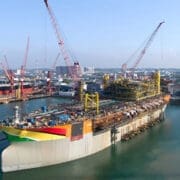
Guyana: Govt. Set To Repay Billions In Oil Costs But Full 50% Profit Still Uncertain Exxon Says

According to ExxonMobil Guyana President Alistair Routledge, the country could wipe out the remaining US$5 billion in recoverable costs this year – faster than originally projected – driven by rising global oil prices and increasing production levels.

Oil Boom Accelerates Cost Recovery

Guyana’s oil production, which began in 2019, has surged to approximately 900,000 barrels per day (bpd) and is expected to climb even higher with new projects coming online. At the same time, global oil prices – now hovering above US$100 per barrel, compared to earlier projections of $60 — are dramatically accelerating revenue flows.

Under the 2016 Production Sharing Agreement (PSA), ExxonMobil is allowed to recover up to 75% of oil revenues each month to cover its expenses before profits are split.

“With the current oil price environment, cost recovery could happen this year instead of 2027,” Routledge said.

That means Guyana, which has so far been receiving a smaller share of revenues – roughly 14.5% into its Natural Resource Fund – could soon see a significant increase in earnings.

The Big Question: When Does Guyana Get 50%?

Despite the positive outlook, ExxonMobil cannot confirm when Guyana will begin consistently receiving its full 50% share of profits, as outlined in the PSA.

Routledge emphasized that the actual percentage depends on multiple factors:

Oil prices

Production volumes

Ongoing project expenditures

“What exactly that percentage is depends on oil price, volume, and spending levels,” he explained.

This uncertainty has reignited debate about whether Guyana is truly maximizing its benefits from one of the most lucrative oil discoveries in recent history.

$40 Billion Already Spent – And More Coming

ExxonMobil has already invested approximately US$40 billion across seven approved offshore projects in the Stabroek Block.

Even as the cost bank shrinks, the company is pushing ahead with additional developments, including:

Longtail (8th project)

Haimara (9th project)

These projects will further boost production and revenues — but also introduce new costs into the system.

Still, Routledge insists that rising production will offset future expenses, ensuring Guyana does not return to accumulating large cost balances.

A High-Stakes Oil Future

Guyana’s rapid transformation into a global oil powerhouse is reshaping not just its economy, but the entire Caribbean energy landscape.

With production expected to exceed 1 million barrels per day in the coming years, the country is poised to become one of the top per capita oil producers in the world.

However, the structure of the PSA continues to draw scrutiny, particularly around:

Cost recovery limits

Profit-sharing timelines

Transparency in financial flows

Boom or Balance?

For now, Guyana stands at a pivotal moment.

On one hand, soaring oil prices and production gains are accelerating revenue and clearing billions in debt to ExxonMobil.

On the other, the timeline for fully realizing its 50% profit share remains uncertain, leaving many to question how much of the oil boom is truly benefiting the country – and when.

As global energy markets shift and new projects come online, the stakes for Guyana have never been higher.

The oil is flowing. The money is growing. But the full payoff is still a waiting game.

RELATED: Exxon Mobil Massive Guyana Expansion – New FPSO to Add 250,000 BPD As Cost Dispute Escalates