
Caribbean Gas Prices Surge As Global Energy Crisis Intensifies
By NAN Business Editor
News Americas, NEW YORK, NY, Mon. April 13, 2026: A global energy shock triggered by the war in the Middle East and no US-Iran peace deal is now driving Caribbean gas prices higher and raising concerns about transportation, travel, and the broader cost of living.
The price hike stems from disruptions to the global liquefied natural gas (LNG) supply chain, including reported damage to infrastructure in Qatar, a key global exporter. The fallout has flipped energy markets from expected oversupply to shortages, pushing prices up by nearly 80 percent.
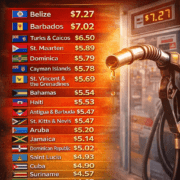
For Caribbean nations heavily dependent on imported fuel, the impact is immediate and severe. Fuel prices across the region are now above $5 per gallon in most countries, with some territories exceeding $7, according to the latest data.
Belize and Barbados currently have the highest prices, at $7.27 and $7.02 per gallon respectively. Other countries facing steep costs include Haiti at $5.53, the Bahamas at $5.54, and Jamaica at $5.14.
Even traditionally lower-cost markets are feeling the pressure. Trinidad and Tobago stands at $4.34, while Suriname is at $4.88 and Cuba at $4.90.
Oil rich Guyana remains the only Caribbean nation where fuel prices are below $4, with consumers paying approximately $3.51 per gallon, reflecting its status as an oil-producing country.
Transport Systems Under Pressure
The surge is already disrupting transportation systems. In St. Kitts and Nevis, fuel prices have reached EC $19.60 per gallon or USD 5.47, pushing the country toward a potential $20 threshold. Ferry operators are beginning to shut down services as operating costs climb.
The MV Mark Twain has announced a temporary suspension of operations from April 15th, joining other vessels already halting service. Operators cite a 35 percent increase in fuel costs as unsustainable. Public frustration is rising as transport options shrink and prices climb.
Air Travel Set To Get More Expensive
The aviation sector is also feeling the strain. Regional carrier, Caribbean Airlines, has already introduced a fuel surcharge of $15 to $25 on tickets purchased from April 10 onward. The move follows a dramatic surge in global jet fuel prices, which have nearly doubled in recent weeks.
Data from the International Air Transport Association shows jet fuel prices rising to $195.19 per barrel, up 96.4 percent from the previous month. Fuel now accounts for about 50 percent of airline operating costs. Industry experts warn that higher ticket prices are inevitable as airlines attempt to offset rising expenses.
Demand Falling As Prices Rise
Globally, high prices are already beginning to reduce demand. Asian markets are cutting LNG imports, with some countries reverting to coal, raising concerns about long-term energy transitions.
For the Caribbean, however, limited alternatives mean consumers and governments have few options but to absorb the rising costs. Some governments, including those in Antigua and the Bahamas, have introduced relief measures such as subsidies and tax adjustments. Others have yet to respond, leaving citizens to bear the full impact.
Growing Economic Pressure
The rising cost of fuel is expected to ripple across Caribbean economies, increasing transportation costs, raising food prices, and putting additional strain on households. As global energy markets remain volatile, the region faces continued uncertainty in the months ahead.