Brooch Diplomacy And Strained Unity: How U.S. Pressure Is Seeding Fractures In CARICOM

By Ron Cheong

News Americas, TORONTO, Canada, Weds. April 29, 2026: CARICOM’s founding promise can be characterized as: One Region, One People, One Future – something it would be helpful to refocus on in moments like this.

The bloc began as a regional integration project grounded in shared history, collective resilience, and a unified diplomatic voice – that is now being tested by a sharper, more transactional global order. At the center of that strain lies a consequential shift: The United States has moved away from partnership toward influence through pressure. That shift is no longer abstract – it is playing out in symbols, alliances, and fractures across the globe including the Caribbean, which is our focus.

Few episodes capture this better than the recent “brooch diplomacy” controversy involving Delcy Rodríguez. Her decision to wear a brooch depicting Venezuela’s claim over Guyana’s Essequibo region during engagements with CARICOM leaders in Barbados and Grenada was more than a symbolic gesture – it was a calculated assertion of territorial ambition in a regional diplomatic space that is supposed to prioritize neutrality and cohesion.

For Guyana, the implications are stark. In the midst of navigating a volatile border controversy with Venezuela, this uncomfortable foray raises the possibility that elements within the CARICOM community could be somewhat open, directly or indirectly, to Venezuelan influence.

But to understand how CARICOM arrived at this moment, one must look beyond the region to Washington.

Pressure Over Partnership

For decades, U.S. – Caribbean relations were built on a mix of development assistance, trade access, and institutional cooperation. While never perfectly balanced, the relationship carried some sense of predictability. That is no longer the case.

Today, U.S. policy toward the Caribbean increasingly emphasizes sanctions, geopolitical alignment, and strategic compliance. Whether through its hardline stance on Cuba, military action in Venezuela, or sweeping tariff regimes, Washington’s posture has become more conditional and less collaborative.

The consequences are cumulative.

The long-running embargo on Cuba, now intensified into a de facto oil blockade, has forced Caribbean states into agonising choices between principle and survival. Cuban medical missions, long a backbone of regional healthcare systems, are now being unwound or restructured under pressure. Even Guyana, once deeply aligned with Havana, had been forced by imperatives of its security and survival to recalibrate this alignment and historical friendship.

In addition, rather than contributing to Guyana’s security, the recent U.S. military intervention in Venezuela, and arrest of Nicolas Maduro, culminated in an unstable paradox. Instead of ushering in a democratic transition led by opposition figures – and greater regional stability, the US chose to let power effectively remain within the existing governing structure, now fronted more prominently by Rodríguez herself.

If anything, this outcome has strengthened a figure who is arguably more diplomatically agile and legally sophisticated than Maduro, enabling Venezuela to engage the region with renewed effectiveness.

Oil, Influence, And Divergence

Energy politics further complicate the picture.

Venezuela’s oil industry remains state-controlled, giving Caracas a powerful tool of foreign policy: the ability to cultivate alliances through preferential energy arrangements. Historically, initiatives like Petrocaribe allowed Venezuela to build goodwill across the Caribbean by supplying oil on concessional terms.

Guyana, by contrast, sits on vast high quality oil reserves but operates within a very different model. Its sector is dominated by foreign firms, most notably ExxonMobil. While this has accelerated production and revenues, it limits Georgetown’s ability to deploy oil as a direct instrument of regional diplomacy. This divergence matters.

Where Venezuela can translate energy into influence, Guyana must rely more heavily on formal alliances – chief among them, its alignment with the United States for security backing against Venezuelan territorial claims. That alignment, however, comes at a cost.

A Hornet’s Nest of Contradictions

Guyana faces tough strategic options. There was little choice other than leaning toward Washington for protection in the face of the Venezuelan threat. But the U.S. influence in the region has not lead to more stabilization as would have been hoped.  Their approach, marked by coercion rather than consensus, has heightened tensions, disrupted economic flows, and placed CARICOM states under competing pressures. It also undermined the ties between some longstanding regional and ideological partners, and Cuba in particular.  

This weakens the very CARICOM unity that Guyana seeks to champion. The “broochgate” episode underscores the dilemma. Georgetown has protested that CARICOM members should not entertain Venezuelan symbolism which challenges its sovereignty.  But even as it did so – the political opposition in Guyana chimed in that: Guyana itself has shown selective solidarity in its actions.

The claim was that Although Cuba is not a CARICOM member it has long had ties with its members.  When Cuba faced intensified U.S. pressure, Guyana’s response was measured, even muted. And when regional states were forced to reconsider Cuban medical cooperation, Georgetown adjusted its position rather than seeking a unified defense. Notwithstanding Guyana has since sent humanitarian rice shipments to Cuba, the point was that these the actions are not consistent with mutual support.

CARICOM At A Crossroads

The deeper issue is not any single incident, but the fragmentation of strategic alignment within CARICOM.

External powers are no longer offering partnership frameworks – they are presenting choices, often framed as zero-sum. The United States demands alignment on security and geopolitics. China offers targeted economic engagement. Venezuela leverages energy diplomacy and regional familiarity. Cuba, despite its constraints, remains a vital social partner.

Each relationship pulls CARICOM states in different directions. Without a coordinated regional strategy, these pressures risk turning CARICOM from a unified bloc into a collection of individually managed relationships – precisely the kind of fragmentation its founders sought to avoid.

The Path Forward

For Guyana, the immediate priority is clear: defend its territorial integrity. But doing so effectively requires more than bilateral security guarantees – it requires regional legitimacy.

That, in turn, demands consistency. Guyana’s call for unwavering CARICOM support on Essequibo, should be supported by the same level of commitment on issues that matter to its community, whether related to Cuba, economic sovereignty, or external pressure.

More broadly, CARICOM must confront a hard truth: the era of comfortable alignment is over. The region is operating in a fluid, contested geopolitical space where influence is increasingly exercised through leverage rather than loyalty.

In that environment, unity is not just an aspiration – it is a necessity. Because if the Caribbean cannot hold a coherent center, others will define it from the outside.

EDITOR’S NOTE: Ron Cheong is a frequent political commentator and columnist whose recent work focuses on international relations, economic resilience, and Caribbean-American affairs. He is a community activist and dedicated volunteer with extensive international banking experience. Now residing in Toronto, Canada, he is a fellow of the Institute of Canadian Bankers and holds a Bachelor of Science degree from the University of Toronto.

RELATED:

CARICOM News: How U.S. And China Are Shaping Caribbean Energy

The Long Siege Of Cuba: CARICOM At Last Begins Pooling Cash For Cuba Relief Supplies

The Long Siege Of Cuba & Caribbean Geopolitics: The Prequel To King Kong And The Island

King Kong And The Island: America’s Moral Collapse And Cuba

Powertranz Partners With 1Money To Enable Stablecoin Payments

News Americas, Hamilton, Bermuda, Weds. April 29, 2026: Powertranz, a leading payment gateway in the Caribbean and Central America, today announced a strategic partnership with 1Money, the first vertically integrated financial stack. The collaboration enables Powertranz clients to settle invoices and pay for Powertranz services using stablecoins, offering a faster, more flexible alternative to traditional international cross-border payment methods.

With over 27 years of experience, Powertranz is at the forefront of payment innovation in the region. This new partnership represents a further step in that journey – one that recognises the growing role of digital assets in the global payments landscape and the evolving expectations of modern merchants.

By integrating 1Money’s platform, Powertranz clients can now settle Powertranz invoices faster and more efficiently than traditional cross-border transactions. The integration eliminates many of the inefficiencies associated with traditional international transfers, including delays and high conversion costs, while remaining fully compliant with applicable regulations. This is the first phase of a wider stablecoin payments strategy.

“At Powertranz, we are committed to giving our clients more choice in how they do business with us. By enabling stablecoin payments for our services, we are making it easier for clients to pay us in a way that is modern, efficient, and aligned with the evolving global payments landscape. We are pleased to be working with 1Money, whose platform is built to support compliant stablecoin and fiat flows with global bank on- and off-ramps.”

— Chris Burns, Powertranz CEO

Key Client Benefits

•  Enhanced flexibility: Stablecoins are now available as an additional payment option, giving clients greater freedom in how they settle invoices with Powertranz.

•  Improved payment efficiency: Stablecoin settlements are faster and more streamlined than traditional methods, particularly for cross-border payments where delays and currency conversion costs have historically posed challenges.

•  Continued innovation: This partnership underscores Powertranz’s commitment to evolving alongside the needs of merchants and the broader global payments ecosystem, ensuring clients always have access to best-in-class solutions.

About Powertranz

Powertranz is a leading payment gateway powering online and in-store payments for merchants across the Caribbean and Central America. With over 25 years of experience, PCI DSS Level-1 certification, and integrations with banks and shopping carts across the region, Powertranz provides secure, multi-currency payment solutions, tokenization services, and fraud management solutions to more than 10,000 businesses – processing more than 60 million transactions annually. Powertranz is headquartered in Hamilton, Bermuda.

Website: www.powertranz.com

About 1Money

1Money is the first vertically integrated, full-stack infrastructure company providing a unified technology layer across the lifecycle of stablecoins and real-world assets (RWAs). The 1Money ecosystem consists of three synergistic pillars:

1Money Network, a patent-pending Layer-1 blockchain purpose-built to be the fastest, cheapest, and most scalable network for compliant stablecoin and RWA transactions

1Money.com, a licensed and regulated orchestration platform that enables users to receive, buy, sell, convert, send, and custody both stablecoins and fiat currencies domestically and globally; and

1Money Issuance, an institutional-grade “Issuance-as-a-Service” solution that allows partners to launch white-labelled stablecoins for their own customers.

Operating through fully regulated entities and holding more U.S. money-transmitter licenses than most major stablecoin competitors, 1Money combines the rigor of traditional finance with the always-on speed and efficiency of Web3. This foundation enables faster settlement, lower costs, and enterprise-grade compliance, making 1Money the trusted infrastructure layer for global money movement.

Website: www.1money.com

YOU MAY ALSO LIKE: One Wallet Across The Caribbean: Rethinking Payments For Growth And Connection

IShowSpeed Draws Over 16 Million Viewers In Caribbean Tour To Date – And Tourist Boards Are Getting A Free Ride

By Staff Reporter | NewsAmericasNow.com

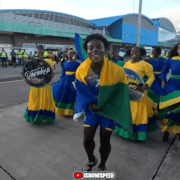
News Americas, NEW YORK, NY, Weds. April 29, 2026: He arrives by Expedia Gulfstream and gets millions watching. IShowSpeed, the American internet phenomenon whose real name is Darren Jason Watkins Jr., has so far racked up more than 16 million cumulative live stream viewers across five Caribbean islands, turning what would have cost governments millions in tourism advertising into a free, real-time global showcase.

The 19-year-old African American streamer kicked off his Caribbean run in Trinidad and Tobago before hitting Grenada, Barbados, St. Lucia, and St. Vincent and the Grenadines yesterday. His highest single-stream viewership so far has come from Trinidad and Tobago at 4.7 million. Even his lowest – 2.9 million from Barbados – rivals the audience of a major cable news broadcast.

Why Caribbean Tourism Boards Should Be Paying Attention

Speed’s visits aren’t scripted tourism campaigns. They are chaotic, unfiltered, deeply human encounters with local culture – and that is precisely why they work. When millions of Gen Z viewers watch him eat doubles in Port of Spain, react to a fish market in Barbados, or get mobbed by fans on a St. Lucia street, they aren’t watching an ad. They’re experiencing a place.

Tourism economists have a term for this: earned media. What Speed is generating for the Caribbean is essentially the same visibility that agencies spend tens of millions of dollars trying to manufacture – delivered organically to a global audience that trusts him.

During a recent Africa tour spanning 20 countries in under a month, Speed gained more than 3.7 million YouTube subscribers and pushed past the 50 million subscriber milestone. The pattern is consistent: he visits, the world watches, and destinations trend.

The Tour Isn’t Over

While no official schedule has been confirmed, the broader Caribbean leg is expected to include Jamaica, the Dominican Republic, the Bahamas, Puerto Rico, Antigua and Barbuda, Dominica, Guadeloupe, Sint Maarten, St. Kitts and Nevis, and the U.S. Virgin Islands.

For islands still on the itinerary, the calculus is straightforward: millions of eyeballs, zero cost, and the kind of youth-market penetration that no tourism board has reliably cracked.

The Bigger Picture

Speed has taken his cameras across Africa, Europe, Asia, South America, and Australia and New Zealand. His Caribbean run follows that same model: arrive with a massive platform, engage authentically with locals, and let the algorithm do the rest.

What is new is the regional concentration. Five islands in rapid succession means the Caribbean as a whole – not just individual destinations – is getting a sustained moment in front of one of the internet’s largest audiences.

For a region that has long struggled to compete with better-funded tourism markets for global attention, Speed’s tour is a reminder that the rules of visibility are changing. And the Caribbean, for once, is on the right side of the algorithm.

ABOUT ISHOWSPEED

Speed, whose real name is Darren Jason Watkins Jr., was born in Ohio. He reportedly became a millionaire by age 16 or 17 – one of the fastest wealth accumulations in streaming history. By the end of 2023, he had firmly established himself as a multi-millionaire, with his net worth growing well beyond early estimates, driven by YouTube ad revenue, brand deals, merchandise, and his massive live-streaming audience. His net worth ranges from $10 million to $30 million.

IShowSpeed’s Caribbean tour is ongoing. NewsAmericasNow.com will continue tracking viewership data and island visits as they are confirmed.