
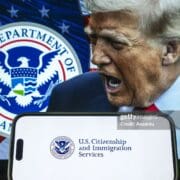
What Caribbean Immigrants Need To Know About The New Green Card Rules
By Staff Reporter | NewsAmericasNow.com
News, Americas, NY, NY, Mon. May 25, 2026: As the US marks another Memorial Day, confusion is again reigning among immigrants. New green card rules from the US Citizenship and Immigration Services now reflect a significant policy shift that could force thousands of Caribbean and other immigrants already living in the United States. It now requires them to leave the country and apply for permanent residency from abroad – upending a decades-long practice that allowed eligible immigrants to apply for a Green Card without leaving US soil.
The new policy memo, announced May 22, 2026, directs USCIS officers to treat adjustment of status – the process by which eligible immigrants apply for permanent residency while remaining in the United States – as an “extraordinary discretionary relief” rather than a routine process available to qualifying applicants.
The change represents one of the most significant shifts in US immigration processing in decades and carries immediate implications for Caribbean nationals on student visas, tourist visas, and certain temporary work visas who had planned to pursue permanent residency without leaving the country.
What Changed And Why It Matters
Under longstanding practice, immigrants who were physically present in the United States and met certain eligibility requirements could file what is known as an I-485 adjustment of status application to obtain a Green Card without returning to their home country. For Caribbean immigrants – many of whom face lengthy consular processing waits and logistical challenges in returning to their home countries – this pathway has been critical.
Under the new policy, as analyzed by immigration law firm Quarles, USCIS officers are now directed to deny adjustment of status applications unless the applicant can demonstrate “unusual or even outstanding equities” – a significantly higher standard than existed under prior practice, where adjustment was treated as relatively routine for eligible applicants.
USCIS said the goal of the new policy is to reduce illegal overstays and reallocate agency resources – characterizing the shift not as a new rule but as enforcement of long-standing immigration law.
Five Things Caribbean Immigrants Need To Know
1. Green Cards Will No Longer Be Routine For Many Applicants
USCIS has directed that adjustment of status is now reserved for “extraordinary circumstances.” Most immigrants on temporary visas — including students, tourists, and some temporary workers – who want a Green Card may now be required to return to their home country to apply through consular processing at a US embassy or consulate abroad, according to the Quarles analysis.
2. Already-Pending Applications Are Also Affected
Critically, as Quarles noted, the new policy memo does not contain a grandfathering provision for applications already filed. This means immigrants who filed I-485 applications before the new policy was announced may still face the heightened scrutiny under the new standard at the time their application is reviewed. Applicants may face additional Requests for Evidence or questions at interviews about why adjustment rather than consular processing is warranted in their case.
3. H-1B And L-1 Workers May Be Less Impacted
The policy memo suggests that immigrants holding H-1B or L-1 work visas – which carry what is known as “dual intent,” meaning the holder can legally seek permanent residency while on a temporary work visa – may face less impact from the new policy. However, as Quarles cautioned, holding a dual-intent visa alone is not sufficient to guarantee approval, as USCIS officers must still weigh all relevant factors on a case-by-case basis.
4. Filing An Application Is Still Permitted
Importantly, as Quarles noted, the new policy does not stop immigrants from filing I-485 applications. The right to file is governed by federal statute and cannot be overridden by a policy memo. However, the standard for approval has been raised significantly — meaning filing does not carry the same expectation of approval it once did.
5. Legal Challenges Are Expected
Given the sweeping scope of the change and its retroactive application to already-pending cases, immigration attorneys say legal challenges in federal courts are almost inevitable. Courts may be asked to address whether the memo’s retroactive application raises due process concerns and whether the policy is consistent with prior congressional and judicial action, according to the Quarles analysis.
What Caribbean Immigrants Should Do Right Now
Immigration attorneys are urging Caribbean nationals with pending or planned Green Card applications to take immediate action:
Consult a licensed immigration attorney immediately – not a notario or immigration consultant
Do not travel outside the United States on Advance Parole without first consulting an attorney, as the new policy raises the stakes for travelers with pending applications
Document your case thoroughly – family ties, length of time in the US, employment history, and good moral character are all relevant factors officers will consider
Do not panic if your application is pending – applications can still be filed and approved, but the standard has changed
The Broader Context
The new USCIS adjustment of status policy follows a series of significant immigration enforcement changes under the Trump administration – including the recent signature rule change that allows USCIS to deny applications with invalid signatures without refund, expanded deportation operations, and new restrictions on asylum processing.
For the Caribbean diaspora in the United States – a community that includes hundreds of thousands of Jamaicans, Trinidadians, Haitians, Guyanese, Barbadians, and others navigating the US immigration system – the cumulative impact of these policy shifts is creating an increasingly complex and high-stakes environment for those seeking permanent residency.