
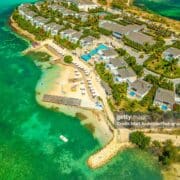
Caribbean Real Estate Is A $1.87 Trillion Market – So Why Are Caribbean Developers Still Getting Rejected For Funding?

By NAN Business Editor | NewsAmericasNow.com

News Americas, NEW YORK, NY, Tues. May 26, 2026: The numbers tell a story of enormous promise. According to Statista’s Caribbean Residential Real Estate Market Outlook, Caribbean real estate will reach $1.87 trillion in market value in 2026, growing at 5.19% annually and is projected to reach $2.28 trillion by 2029.

The report noted “the Residential Real Estate market in the Caribbean is experiencing significant growth and development. Customer preferences are shifting towards more luxurious and high-end properties, and there is a growing trend of international buyers investing in Caribbean real estate. Local special circumstances, such as the region’s natural beauty and favorable climate, contribute to the attractiveness of Caribbean real estate. Underlying macroeconomic factors, including stable economic growth and favorable government policies, further drive the market’s growth. Overall, the Residential Real Estate market in the Caribbean presents a lucrative opportunity for investors and developers alike.”

Record sales figures are being posted across the region. As the 2026 Dominican Republic Real Estate Market Report noted, the Dominican Republic alone sees $30 to $40 billion in annual real estate transaction volume, with foreign buyers accounting for 18 to 22% of coastal purchases. And yet, when Caribbean real estate developers show up to access the capital that should logically follow a $1.87 trillion market — they are being rejected. Consistently. At an alarming rate.

After filtering more than $200 million in deals at AI Capital Exchange – the world’s first AI-powered debt capital platform built specifically for Caribbean and emerging market projects – a troubling pattern has emerged that has nothing to do with the market opportunity and everything to do with project preparation.

The Three Reasons Caribbean Real Estate Projects Keep Getting Rejected

1. Zero Equity Contribution

The most common deal-killer is straightforward: developers are arriving at the table asking for 100% financing with zero equity of their own in the project. Institutional lenders – whether development banks, private equity funds, or debt capital providers – require skin in the game. A project requesting $5 million, $10 million, or $50 million with no equity contribution from the developer is not a fundable deal. It is a wish.

The expectation across most institutional lending frameworks is a minimum of 20 to 30% equity contribution from the project owner before external debt capital is even considered. Caribbean developers consistently arrive below this threshold – often with zero.

2. No Revenue History Or Cash Flow Evidence

The second most common rejection reason is the absence of revenue history or demonstrable cash flow. A vacant lot in Barbados with an architect’s rendering is not a business. A planned resort in Jamaica with no pre-sales, no letters of intent from operators, and no occupancy projections backed by market data is not a fundable project.

Lenders need to see – at minimum – signed offtake agreements, pre-sales data, projected cash flows backed by comparable market evidence, or existing revenue from a phase one development. Caribbean developers overwhelmingly arrive with vision decks instead of financial documentation.

3. The Ask Far Exceeds The Project’s Preparation Stage

The third pattern is perhaps the most revealing. Projects regularly arrive at AI Capital Exchange requesting $10 million, $25 million, or $50 million in debt capital for developments that have not yet secured planning permits, environmental clearances, architectural plans, or land title documentation. The size of the ask signals ambition. The absence of preparation signals risk. And as any institutional lender will confirm, capital does not follow unmitigated risk.

The Broader Context

This is not a Caribbean-specific failure of ambition. Caribbean entrepreneurs and developers are building real projects with real potential in one of the world’s most desirable real estate markets. The failure is one of preparation and education.

As Agritecture reported in January 2026, CARICOM nations currently import approximately 80 to 90% of their food at a cost exceeding $6 billion annually – a dependency driven by the same structural gap between regional potential and regional preparation. The capital access gap in real estate follows the same pattern. The opportunity exists. The market is real. The capital is available. The preparation is not.

What Capital Ready Actually Means

For Caribbean real estate developers seeking institutional debt capital in 2026, capital readiness means arriving with:

A minimum 20 to 30% equity contribution to the project

Clean land title documentation

Secured planning and environmental permits

Completed architectural and engineering plans

Financial projections backed by comparable market data

Pre-sales, letters of intent, or signed operator agreements

A clear exit strategy for the lender

Audited financial statements for the development entity

Projects that arrive with all of these elements are fundable. Projects that arrive without them – regardless of the strength of the underlying opportunity – are not.

The Fix Is Available

AI Capital Exchange offers a free capital readiness assessment at investcaribbeannow.com – a tool designed specifically to help Caribbean developers understand exactly where their project stands before approaching institutional lenders, and what steps are required to close the preparation gap.

As Statista reported, the Caribbean real estate market is real and growing. The global capital looking for Caribbean real estate returns is real. The window between those two realities is preparation – and that gap is closeable.

RELATED: Fund It – Why Vision Alone Is Not Enough

As The World’s Capital Lands In Barbados, AI Capital Exchange Opens The Door

News Americas, NEW YORK, NY, Tues. May 26, 2026: The Caribbean has a capital problem – and this week, the world is paying attention. IDB Invest’s Sustainability Week 2026 opens today in Bridgetown, Barbados – the first time this flagship private investment forum has ever been held in the Caribbean. Prime Minister Mia Mottley, IDB Invest CEO James Scriven, Caribbean Development Bank President Daniel Best, and executives from global banks and financial institutions are all in the room. The message is clear: the Caribbean is open for serious investment.

But here’s what too few people are talking about – the businesses and projects that need to be ready when that capital comes looking. That’s exactly the gap AI Capital Exchange was built to close.

Powered by Invest Caribbean, AI Capital Exchange is the region’s first AI-driven debt capital pre-qualification platform, or the Whale Filter. Before a borrower ever reaches an institutional lender, the platform screens against real lending criteria, identifies gaps, and either connects Bank-Ready borrowers directly to capital – or tells them exactly what they need to fix before they apply.

No more wasted deal flow. No more unqualified applications clogging lender pipelines. Just clean, investment-ready deals.

This week, while the world’s attention is on Caribbean capital, the question is – is your business or project really capital raise and bank-ready? Without this education and knowledge, all the talk shops in the world won’t help, said Felicia J. Persaud, founder of Invest Caribbean and AI Capital Exchange.

Developers and owners can take the Capital Readiness Check and find out in minutes before entering the Exchange.

Loan options include loans for US, Caribbean, and globally in commercial real estate, expansion capital, renewable energy, tech loans, senior debt, bond market capital raise, infrastructure, equipment, healthcare and financial loans. For businesses seeking US commercial real estate financing, AI Capital Exchange’s partner is also now offering no and low-documentation loans up to $1 million nationwide, with an application-only path up to $500,000 – no bank statements or tax returns required. Prequalify at investcaribbeannow.com/ai-capital-exchange/us-puerto-rico-loans.

As Persaud summed it up, “The capital is there – the question is how many are ready to access it.”

RELATED: FUND IT – Raising Capital In Song

Can The Caribbean Be The Next AI Data Center Valley?

By NAN Business Editor | NewsAmericasNow.com

News Americas, NEW YORK, NY, Tues. May 26, 2026: Silicon Valley was once just real estate. Today, a growing body of evidence suggests the Caribbean may be positioning itself as the next major frontier for data center and artificial intelligence infrastructure investment – and the signals are arriving fast.

From a landmark agreement between the Dominican Republic and global tech giants NVIDIA and Google, to the University of the West Indies launching a dedicated AI institute, to a widening gap between the region’s economic weight and its share of global AI investment – the Caribbean’s technology moment appears to be arriving whether the region is ready or not.

The Dominican Republic Moves First

The clearest signal came from Santo Domingo. As Dominican outlet De Ultimo Minuto reported in February 2026, President Luis Abinader announced a series of strategic agreements with global technology companies positioning the Dominican Republic as a regional technology and innovation hub.

Among the most significant, as De Ultimo Minuto reported, was a deal with NVIDIA – the world’s leading artificial intelligence chipmaker – aimed at generating AI capabilities, training human talent, and creating a Center of Excellence in Artificial Intelligence in the country. The agreement places the Dominican Republic alongside a select group of nations with strategic NVIDIA partnerships including the United States, South Korea, Israel, and Singapore.

In a separate agreement reported by De Ultimo Minuto, Google committed to building a world-class data hub in the Dominican Republic, including submarine cables connecting to data centers in the United States – infrastructure that would make the country Google’s gateway to the broader Latin American and Caribbean region. The combined investment package, as reported by De Ultimo Minuto, exceeds $600 million.

UWI Launches Caribbean’s First AI Institute

Simultaneously, the University of the West Indies made a landmark move of its own. As Barbados Today reported on May 8, 2026, UWI launched the Institute for Intelligent Systems Governance and Human-Centered Technology – known as I-INSIGHT – backed by a $5 million investment from Sagicor Financial Corporation.

The institute’s first operational arm, the Sagicor UWI AI and Financial Services Hub, is set to begin its rollout in August 2026 across all UWI campuses, Barbados Today reported. As St. Vincent’s Searchlight newspaper reported on May 15, 2026, UWI Vice-Chancellor Professor Sir Hilary Beckles presented his annual report under the theme “Future-Proofing UWI: Leading the Digital Revolution,” describing the 2024-2025 academic year as a turning point. The university has also launched a One-UWI AI Research Cluster and finalized a regional AI policy framework, Searchlight reported.

The institute’s stated mission – as quoted by Barbados Today – is a refusal to be a region that imports tourism platforms that don’t understand Caribbean reality, agricultural tools trained on temperate farms, and compliance systems designed for other jurisdictions.

The Investment Gap That Makes The Opportunity Clear

Despite representing approximately 6.6% of global GDP, Latin America and the Caribbean receive only 1.12% of global AI investment, according to research published by the Portulans Institute in October 2025 – a gap that signals enormous untapped potential rather than fundamental weakness.

That disparity mirrors patterns seen in Southeast Asia before Singapore emerged as a global technology hub, and in the Middle East before the UAE positioned Abu Dhabi and Dubai as AI capitals.

Guyana Leading Regional Growth

The energy infrastructure underpinning any data center ambition is also moving. As the World Bank reported in its 2026 Caribbean Economic Outlook, Guyana’s oil-led GDP growth is projected at 16.3% in 2026 – the highest in the region – generating substantial energy investment across Caribbean markets.

What The Caribbean Has That Others Don’t

Data centers require three fundamental inputs – land, power, and connectivity. The Caribbean is increasingly positioned on all three. The Dominican Republic’s submarine cable infrastructure – as reported by De Ultimo Minuto – directly addresses regional connectivity. Guyana’s energy boom addresses power. And land across less-densely developed island nations remains available at a fraction of the cost of North American and European alternatives.

The Caribbean’s geographic position between North America, South America, Europe, and Africa also makes it a natural connectivity hub for trans-Atlantic data routing – a strategic advantage that has barely been discussed in the context of data center site selection.

The Question Of Capital

The missing piece – as always for the Caribbean – is capital. Infrastructure at the scale of a data center valley requires institutional investment, patient capital, and deal facilitation infrastructure that the region has historically lacked. That gap is precisely what platforms like AI Capital Exchange, which has filtered more than $200 million in Caribbean and emerging market deals, are designed to address – connecting Caribbean infrastructure projects with global institutional lenders increasingly looking beyond saturated Western markets for returns.

The Window Is Open – But Not Forever

The Dominican Republic’s moves with NVIDIA and Google, as reported by De Ultimo Minuto, represent the opening of a window. UWI’s AI institute, as reported by Barbados Today and Searchlight, signals regional academic infrastructure catching up. The investment gap identified by the Portulans Institute signals that capital has not yet flooded in – meaning early movers still have an advantage.

Whether the Caribbean seizes this moment or watches it pass to other emerging regions will depend on decisions being made right now – about infrastructure, capital access, and the political will to position small island economies as technology destinations, not just tourism markets.

RELATED: The Caribbean’s Powerful AI Future

Belize Immigrant With Manslaughter Conviction Listed On ICE Most Wanted Fugitive List

By Staff Reporter | NewsAmericasNow.com

News Americas, WASHINGTON, D.C., Tues. May 26, 2026: US Immigration and Customs Enforcement has listed a Belize national as one of its most wanted fugitives, seeking information on the whereabouts of Santos Moreira, who has evaded removal from the United States since 2010.

According to ICE, Moreira is wanted for removal as a previously removed criminal alien with felony convictions for manslaughter, robbery with a firearm, and possession and purchase of cocaine. He was originally ordered removed by an immigration judge on November 7, 1995, and has been removed from the United States multiple times – most recently on October 14, 2010, according to the agency.

ICE alleges Moreira unlawfully re-entered the United States after his last removal at an unknown place and date without inspection. His last known location was Los Angeles, California. He is described as having dark skin, dark hair and dark eyes, weighing approximately 215 pounds, with a scar on his left arm.

ICE is asking anyone with information about Moreira’s whereabouts to contact their local ICE office or call the national hotline at 1-866-DHS-2-ICE.

RELATED: What Caribbean Immigrants Need To Know About The New Green Card Rules