
What Makes A Caribbean Teacher Unforgettable

By Dr. Isaac Newton

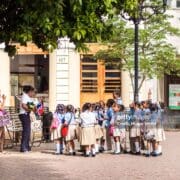
News Americas, NEW YORK, NY, Sat. June 6, 2026: A boy arrived at school each morning with sea salt still clinging to his shoes. Before sunrise, he had already worked beside his grandfather pulling fishing nets from dark water. He often arrived tired. Often late. Most teachers saw a problem. One Caribbean teacher saw a life. She did not begin with punishment. She began with questions. She listened. She learned. She brought fishing boats into mathematics and turned tides into lessons. That boy, once silent at the back of the classroom, began to rise. Years later he said, “She did not teach me numbers. She taught me that I mattered.” Unforgettable teachers begin here. They lead with understanding, they see with recognition, and they remove control and judgment from their teaching practice. Every child enters a classroom with a hidden world that cannot be seen at first glance.

In another village, a girl could barely read aloud. She avoided attention and feared embarrassment. Yet her teacher noticed something others missed. Whenever rhythm entered the room, she changed. He built learning around what awakened her. Words became music. History became voice. Literacy became performance. The same girl who once hid her voice later commanded the room with it. This is not technique alone. It is perception. Caribbean teachers who change lives do one essential thing. They refuse to separate learning from culture. They understand that identity is not a distraction from education. It is the path into it. When children see themselves in what they learn, they do not simply participate. They awaken.

The most powerful teachers see what others overlook. They notice the shy child carrying heaviness. They notice the laughter that hides strain. They notice ability before it is certified. Across generations, adults still recall a sentence that changed them. You are gifted. You can lead. Do not give up. These are not just kind words. They are formative ones. Education is identity formation. Before a child believes in themselves, they often borrow belief from an adult who chose to speak life. This is why unforgettable teachers are careful with language. They understand that words do not disappear. They take root.

In the Caribbean, the teacher is never only confined to a classroom. The unforgettable teacher is present in the life of the community. They greet children by name before the bell rings. They walk into homes after storms have passed. They show up at funerals, graduations, church services, and cricket fields. Their authority is both academic and relational. Teaching here has always been instruction plus stewardship. The teacher shapes achievement and character, success and resilience, learners and citizens.

Great teachers also understand the inner weather of children. They build classrooms where mistakes do not produce shame and questions do not invite ridicule. They understand that silence can signal fear, that anger can signal pain, and that disruption can signal struggle. So they ask differently. Not what is wrong with you, but what has happened to you, and what do you need to succeed. In such classrooms, discipline is firm but humane, and expectations are high but anchored in dignity. Trust becomes the soil where learning grows.

Long after examinations are forgotten, students remember how a teacher made them feel about themselves. They remember the teacher who saw strength in their struggle. Who named potential before it was proven. Who refused to reduce them to their worst moment. Such teachers do more than educate. They shape direction. They influence identity. They alter futures intentionally but permanently. Across the Caribbean today, leaders, builders, parents, artists, and professionals still move through the world driven by one invisible inheritance. At some point, a teacher looked at them and said, without hesitation, you were made for more.
EDITOR’S NOTE: Dr. Isaac Newton is a leadership strategist, governance expert, and author educated at Harvard, Princeton, Columbia, and Oakwood University. He advises leaders and institutions across the Caribbean and beyond on ethical leadership, organizational culture, and transformational change. He is the author of Face Life Squarely, co author of Steps to Good Governance, and co author of the upcoming book Daring to Hope.

RELATED: Guyana – One Destiny, One Future

From Flatbush To The Backdam: The Reality Check Of Moving “Back Home”

By Ron Cheong

News Americas, TORONTO, Canada, Sat. June 6, 2026:  It always happens right around February. You are standing outside in Toronto, London, or New York, shoveling six inches of grey, slushy snow off your driveway while the wind chill threatens to freeze your ears solid. Your back hurts, your boots are wet, and a sudden, desperate thought flashes through your mind: Why am I doing this? How about moving “back home?”

You go inside, log onto the internet, and start browsing real estate listings back home. You see photos of lush green land and wrap-around verandas. You close your eyes and make a solemn vow: “That is it. We are packing up. We are buying a piece of land, building a house, and moving back for good.”

It is the ultimate diaspora dream. We imagine ourselves living a stress-free, Facebook-ready lifestyle. In this dream, we wake up early to the sound of tropical birds chirping, stroll into the backyard to pick the sweetest mangoes from a tree heavy with fruit, and spend our afternoons sipping cold coconut water on the porch while a cool breeze blows away all our foreign anxieties.

It is a beautiful illusion. It is also a complete fantasy.

The reality check begins the exact second you step off the plane. You walk out of the air-conditioned cabin and are immediately hit by a wall of humidity so thick it feels like a punch in the chest. Within three minutes, your neatly pressed shirt is glued to your back.

And then, there are the local residents you forgot to account for: the wildlife.

For reasons unknown to science, local mosquitoes can smell foreign blood from a mile away. To them, a returning diaspora member isn’t a long-lost cousin – you are a walking, talking, five-star buffet. But it’s not just the mosquitoes. You can uncap a two-litre bottle of Coke, walk into the living room for a second, and return to the kitchen to find a lizard has beaten you to it and is happily swimming laps in the last remains of your cola (true story).

Even your daily routine becomes an exercise in survival. You try to dress down, put on your slippers, and blend in like the real local folk that you are. It doesn’t work. The taxi drivers can spot your “foreign walk” from a mile away and will instantly hail you out, doubling the fare before you even open your mouth.

If you try to make a phone call to get something done and launch straight into business, you will be met with icy silence. You forgot the cardinal rule: you must say “Good morning” or “Good afternoon” first, or the conversation is over before it begins.

As for bureaucracy? Forget about it. We get so used to the hyper-speed, automated efficiency of the global North that we forget the golden rule of life back home: things take time. If you need to visit a government office or a bank, prepare for a grueling five-hour lineup. You will need three different forms of identification, a mountain of patience, and a stack of documents requiring numerous official stamps. Everything operates on the relaxed timeline of “just now.”

Even a simple commute can scare you out of your wits. You hop into a minibus, only to find yourself trapped in a speeding rocket ship with music blaring so loud your teeth rattle, praying you make it to your destination in one piece. You look out the window and see a donkey cart or a horse-drawn cart casually moving along the side of the road – a stark contrast to the chaos.

And when the weather turns, it really turns. The heavy tropical rain falls so hard that it feels like “one drop can fill a bucket.” The downpour brings an immediate flood, forcing you to run out and buy heavy-duty mud boots just to cross the street.

Yet, despite the chaos, the illusion never truly dies because the beautiful moments are unmatched.

When that heavy rain hits, you get to lie in bed and listen to the lovely, calming sound of rain dancing on a zinc sheet roof. It is a sound that instantly floods your mind with sweet childhood memories, a comfort you can never buy abroad.

The dream of coconut water actually comes true. You end up drinking gallons of it, so much so that you and the coconut vendor become personal friends. He starts “watching your back” and saving the best ones just for you.

You get to experience real nature. You travel by boat on massive, powerful rivers that make the little creeks they call “rivers” in North America look like puddles. You get to satisfy your deep cravings, eating proper pepper pot, and feeling absolute delight when you see your favorite spot, Shanta’s, is still open and still making the best dhal Puri after all these years.

The cold, distant culture of the North melts away. You find yourself standing in the supermarket line, “gaffing” with the cashier like she is an old childhood friend you haven’t seen in years.

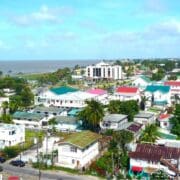
Best of all, you get to escape the madness by sitting on the seawall. You gaze out into the endless ocean, enjoying the cool Atlantic breeze, taking in how things have changed. Today, the seawall is alive with vendors selling ice-cold drinks and smoky, perfect BBQ chicken.

We might complain bitterly about the heat, the lines, and the bugs when we are home. We might fly right back to our heated apartments when the vacation is over. But the very next time the winter slush hits our boots, we will open up those real estate websites all over again. After all, a little bit of flooding and a swimming lizard are a small price to pay for a culture that wraps you up like family.

Dedicated to the resilient diaspora community – the barrel packers, the winter-survivors, and the dreamers. May your suitcases always clear customs safely, your accent never get too foreign, and your longing for home always keep you warm.

EDITOR’S NOTE: Ron Cheong is a frequent political commentator and columnist whose recent work focuses on international relations, economic resilience, and Caribbean-American affairs. He is a community activist and dedicated volunteer with extensive international banking experience. Now residing in Toronto, Canada, he is a fellow of the Institute of Canadian Bankers and holds a Bachelor of Science degree from the University of Toronto.

RELATED: The Archbishop And The Chambermaid: Cuba and The Caribbean’s Impossible Choice

What If The Caribbean Became A Media Hub?     

By Mark Walton

News Americas, NEW YORK, NY, Sun. June 6, 2026: The Caribbean is globally known for sun, sea, and sand – a powerful brand that has driven tourism for decades. But what if the region were also known as a media hub for film, television, and digital content storytelling?

Worldwide spending on film and television production exceeds $250 billion annually, yet the Caribbean captures only a fraction of that value, so small it is difficult to measure. Still, many of the building blocks for a successful screen industry are already in place: talent, production capability, distribution pathways, and audience.

With more than 45 million people in the region, an estimated 25–30 million in the diaspora, and a global audience drawn to its culture, the Caribbean has significant reach. It continues to produce distinctive storytellers while also offering compelling locations for everything from narrative features to reality television.

For many people unfamiliar with the depth and breadth of Caribbean cinema, The Harder They Come and Pirates of the Caribbean are often among the first titles that come to mind when asked to name films associated with the region. While neither fully represents the Caribbean’s rich cinematic legacy, the former demonstrates the enduring global appeal of authentic Caribbean storytelling, while the latter highlights the region’s capacity to support large-scale international production.

In the television realm, The Caribbean has proven its value as a production destination. Long-running productions such as Death in Paradise and Outer Banks have generated significant production activity in Guadeloupe and Barbados, respectively. Yet the region is often used as a backdrop without being identified on screen, limiting the tourism and branding benefits that can accompany production. Despite being filmed in Guadeloupe, Death in Paradise is set on the fictional island of Saint Marie.

Production alone, however, is not enough.

Today’s distribution landscape – spanning theatrical exhibition, broadcast and cable television, streaming platforms, and FAST channels – offers more viable pathways to market than ever before. Social media and platforms like WhatsApp have also created cost-effective tools for global marketing and audience engagement.

The Caribbean already benefits from billions of dollars in annual tourism spending and remittance flows from its diaspora. The challenge is how to better leverage those assets to support a sustainable creative economy.

The ingredients are already there. What is missing is alignment.

Creators continue to leave the region in search of opportunities and financing. Governments have yet to fully embrace the creative sector as an economic development strategy capable of generating employment, exports, tourism, and investment. Investors and industry leaders remain underexposed to the region’s potential. Each is moving forward, but too often separately.

Countries like India and South Korea have shown what is possible when policy, industry, and talent align. Parasite, Squid Game, and the South Indian blockbuster RRR are not accidents. They are the result of long-term investments in talent development, infrastructure, financing, distribution, and international market engagement.

If the question is how to bring these pieces together for the Caribbean screen industry, that conversation is already underway.

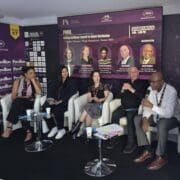
One recent effort took shape on May 16, 2026, during the second Caribbean Day at the Marché du Film at the Cannes Film Festival. Presented in collaboration with Pavillon Afronova and sponsored by the British Virgin Islands Film Commission, the initiative expanded its focus from visibility for Caribbean filmmakers to a broader discussion of long-term industry development.

Across a full day of panels, networking, and a screening of The Rhythm of Jamaican Art, distributors, filmmakers, festival programmers, government representatives, media executives, and creators explored how the Caribbean can compete more effectively in the global marketplace.

No single event will transform the Caribbean screen sector overnight. Yet, throughout the day, several themes consistently emerged: stronger connections between the region and its diaspora; deeper engagement with international industry partners; greater collaboration across Caribbean territories; and clearer pathways to global audiences for Caribbean stories, talent, and production capabilities.

The growing importance of regional and diaspora networking was evident in the participation of members of ODOS; a Trinidad and Tobago-based virtual creative community built largely through WhatsApp. Their presence illustrated how digital tools can connect creators across the Caribbean, Europe, and North America, helping to bridge geographic boundaries and foster collaboration.

The Caribbean has already demonstrated its ability to produce compelling stories, cultivate creative talent, and provide world-class production locations. The goal is not to replicate Hollywood, Bollywood, or South Korea’s screen sector. Instead, it is to build a Caribbean model – one that leverages the region’s culture, diaspora, and entrepreneurial spirit while aligning creators, industry leaders, investors, and governments around a shared vision for growth.

It’s industry-building time.

EDITOR’S NOTE: Mark Walton is an Associate Professor of Media Management at Parsons | The New School and regularly advises media companies, government agencies, and independent creators on distribution and business strategy. He is a first-generation Caribbean American with family roots in Barbados and Trinidad. This article was inspired by discussions held during the Marché du Film at the 2026 Cannes Film Festival. The views expressed are those of the author.

YOU MAY ALSO LIKE: Africa, The Global South & The Guyana-Venezuela Case

The $936 Billion Wall: Bridge Loans And Caribbean and Latin American Developers

By News Americas Business Editor

New Americas, MIAMI, FL, Sun. June 7, 2026: A financial reckoning is underway in global commercial real estate markets, and Caribbean and Latin American developers are feeling the pressure. More than $936 billion in U.S. commercial real estate loans, including Bridge Loans, are scheduled to mature in 2026, according to PeerSense, a commercial lending research platform – and that number does not account for the mounting debt pressures facing property owners across Latin America and the Caribbean, where local banks have been steadily pulling back from mid-market lending for years.

The result: a growing class of qualified developers and business owners who own significant assets but cannot access the capital they need to move their projects forward.

“Bridge loans close in two to four weeks,” according to PeerSense’s 2026 commercial lending data. “Conventional lenders take 60 to 90 days. Their credit committees are designed for stabilized, income-producing assets – not for the reality of today’s development landscape.”

That reality is particularly acute in the Caribbean and Latin America, where developers frequently own land and commercial assets free and clear but face what industry observers call a “documentation mismatch” – their wealth does not conform to the templates demanded by traditional lenders.

Bridge financing – short-term capital typically structured for 12 to 36 months – has emerged as the primary solution. According to Global Mortgage Group, the underwriting for these instruments centers on property value and a viable exit strategy rather than a borrower’s personal income, employment history, or domestic credit profile.

Current bridge loan rates in 2026 run between 8 and 14.5 percent depending on leverage, according to PeerSense’s lending index, which rose 112 percent year over year – its highest level since 2018.

For Caribbean and Latin American developers, the window is now. Resort developers who purchased prime beach land in cash, industrial park operators in Mexico and Central America, and commercial property owners in São Paulo, Panama City, and Santiago are among the profiles that financial platforms say are most actively seeking bridge capital in 2026.

AI Capital Exchange, a Miami-based AI-powered debt pre-qualification platform powered by Invest Caribbean, says it is seeing growing demand from exactly this borrower profile across the region.

“The borrowers are there. The assets are there. The equity is there. What’s missing is the connection to the right lender – fast enough to make the deal work,” said Felicia J. Persaud, Founder and CEO of AI Capital Exchange. “Bridge financing doesn’t have to take months. We can tell a borrower in under 30 minutes whether they qualify and which institutional lender is the right match for their project.”

The platform, which has filtered more than $205 million in global deal flow since January 2026, operates what it calls the Whale Filter – an AI pre-qualification engine that screens borrowers against real institutional lender criteria before any lender time is spent reviewing a file.

For developers navigating the 2026 maturity wall, the message from the market is clear: bridge financing is no longer a last resort. It is the primary tool — and accessing it faster may be the difference between a project that closes and one that doesn’t.

To check loan eligibility, visit: www.investcaribbeannow.com/capital-readiness-check or pre-qualify now.

RELATED: A Historic Billion-Dollar Caribbean Banking Deal: Who Is Really Behind The Biggest Bank Deal In Caribbean History?