
Dream Weekend 2026
A historic move for the festival—after 16 iconic years in Negril, Dream Weekend is relocating to Montego Bay for a new chapter.

A historic move for the festival—after 16 iconic years in Negril, Dream Weekend is relocating to Montego Bay for a new chapter.

Morgan Heritage has officially launched the website for this incredible festival designed to bridge and celebrate the cultural connection between West Africa and the Caribbean.
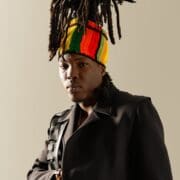
Blvk H3ro continues his global rise, marking his first-ever performances in these two countries.

A massive cross-continent summer run bringing authentic roots reggae to Europe.
The tour is shaping up to be a proper continent-wide run.

Ayra Starr isn’t chasing trends on her next project — she’s going inward. The Nigerian superstar sat down with Dotty on Apple Music to open up about what’s fueling her upcoming album *Starr Girl*, and the short version is: real life, her life specifically.

The demand clearly caught someone off guard. DJ Maphorisa and Kabza De Small have been forced to release an additional 5,000 tickets for their Scorpion Kings Live show at FNB Stadium at September 19, 2026, after the original batch sold through faster than most people expected.

The cover art alone tells you something about where Malie Donn’s head is at right now — the young dancehall artist rendered in gold, surrounded by outstretched hands reaching toward him.

News Americas, WASHINGTON, D.C, Thurs. June 25, 2206: The United States Supreme Court today, June 25th, cleared the path for the potential deportation of 350,000 Haitians and 6,100 Syrians – ruling 6-3 along ideological lines that the Trump administration has the legal authority to end Temporary Protected Status for both groups in the highly watched Haiti TPS case.
The decision comes as the Trump administration has moved to terminate TPS for nationals of 13 out of 17 countries that held the designation when President Biden left office – part of what the administration describes as a broader crackdown on immigration.
For the Haitian diaspora – and particularly for the hundreds of thousands of Haitian Americans who have built lives, careers, and families in the United States under TPS protections – the ruling represents one of the most consequential legal setbacks in recent memory.
Writing for the 6-3 majority, Justice Samuel A. Alito Jr. held that federal law prohibits courts from second-guessing an administration’s determination to strip TPS protections. “This text is clear, and its plain meaning is very broad,” Alito wrote, as quoted in the ruling.
The court also rejected claims that the administration’s decision to end TPS for Haitians was driven by racial hostility – a finding that drew a blistering response from the court’s three liberal justices.
Justice Elena Kagan, writing for the three dissenting justices, quoted extensively from President Trump’s own public statements about Haitian immigrants in making the case that race had entered into the administration’s decision.
The dissent cited Trump’s false accusations during the 2024 campaign that Haitians in Springfield, Ohio, ate their neighbors’ pets – a claim that was widely debunked – and his December comments describing Haitian immigrants as undesirable because they come from a “filthy, dirty, disgusting” country.
“The statements fairly shout, in their racial undertones and overtones alike, that race entered into the president’s resolve to remove Haitians from this country,” Kagan wrote, as quoted in the ruling.
The administration’s solicitor general D. John Sauer argued during oral arguments that Trump’s statements were “unilluminating” and referenced poverty and crime rather than race – and that federal law makes clear courts cannot second-guess the government’s TPS decisions regardless of the motivation behind them.
The majority agreed. The dissent did not.
Viles Dorsainvil (R), Executive Director of the Haitian Support Center, and Associate Pastor Brandon Peterson (C) of Greater Grace Temple in Springfield, Ohio, listen to a prayer outside the US Supreme Court in Washington, DC, on March 17, 2026. The US Supreme Court agreed on March 16 to consider the Trump administration’s bid to strip Haitians and Syrians of temporary deportation protections. The Department of Homeland Security (DHS) has announced plans to end so-called Temporary Protected Status (TPS) for some 350,000 Haitians and 6,000 Syrians. (Photo by ROBERTO SCHMIDT / AFP via Getty Images)
Temporary Protected Status was created by Congress with bipartisan support in 1990 to provide temporary legal status to people whose home countries were deemed unsafe because of war, natural disasters, or other crises. The program allows TPS holders to live and work legally in the United States for periods of six to 18 months, with no limit on how many times a country’s designation can be renewed.
For Haiti – a country that has faced a devastating earthquake, political instability, and now widespread gang violence that has rendered parts of the country ungovernable – TPS had been repeatedly extended, becoming effectively permanent for hundreds of thousands of Haitian nationals living in the United States.
The program had similarly been extended repeatedly for Syrians, whose country has been consumed by civil war for over a decade.
The Council on American-Islamic Relations (CAIR), the nation’s largest Muslim civil rights and advocacy organization, today said a U.S. Supreme Court ruling allowing the Trump administration to terminate Temporary Protected Status (TPS) protections for hundreds of thousands of Haitian and Syrian immigrants without any judicial review will harm families, destabilize communities, and place vulnerable individuals at risk.
CAIR also expressed disagreement with a conclusion by non-binding plurality of judges that there was likely insufficient evidence to conclude that racism motivated the TPS termination in violation of the Equal Protection Clause.
The ruling clears the way for the administration to end TPS protections for approximately 350,000 Haitians and more than 6,000 Syrians who have been living and working legally in the United States. TPS was created by Congress to protect people from deportation to countries facing war, natural disasters, or other extraordinary conditions. Haitians first received TPS after the devastating 2010 earthquake, while Syrians were granted TPS in 2012 because of the civil war in their homeland.
Last year, CAIR welcomed a federal court order delaying the Trump administration’s termination of TPS for Syria and warned that forcing Syrians to return prematurely could expose them to danger and family separation.
In a statement, CAIR National Executive Director Nihad Awad said: “Temporary Protected Status was established to ensure that people are not forced to return to countries facing extraordinary and dangerous conditions. Ending these protections for hundreds of thousands of Haitians and thousands of Syrians will tear families apart, disrupt workplaces and communities, and place vulnerable individuals at risk.
“Many TPS holders have lived in our nation for years, raised American children, built businesses, contributed to our economy, and become integral members of their communities. Policies that target these families for deportation because of their race and ethnicity are contrary to our nation’s values.
“Congress should pursue legislative solutions to make clear that courts do indeed have the authority to review TPS termination decisions, to recognize the contributions of TPS recipients, and to protect families from unnecessary hardship and separation.”
The Supreme Court’s ruling clears a legal path for deportations – but the timeline and process remain complex.
The ability of the government to quickly expel TPS holders will depend significantly on whether individuals already have deportation orders pending. In many instances TPS holders have not received such orders – which will allow them some ability to contest their removal from the country through the immigration court system.
Class action lawsuits had been filed by TPS holders – including engineers, students, doctors, and caregivers – who argued they could be killed if forced to return to Syria or Haiti. Lower court judges had sided with the Haitians and Syrians, finding that the homeland security secretary’s process was subject to court review and that her decisions had been preordained rather than based on meaningful analysis of country conditions.
The Supreme Court overruled those findings Thursday. The ruling is also likely to have significant implications for TPS holders from approximately a dozen other countries beyond Haiti and Syria.
Thursday’s ruling arrives as part of a sweeping transformation of American immigration policy under the Trump administration – one that has fallen with particular force on Caribbean communities.
The administration has separately halted the resettlement of refugees and dramatically slowed the consideration of asylum claims. It has proposed tougher rules making work permits harder for immigrants to obtain. It has filed denaturalization cases against naturalized American citizens at an unprecedented pace – targeting 200 cases per month. And it has moved to end TPS for nationals of 13 countries.
The Supreme Court’s ruling Thursday – combined with its separate ruling last year allowing the administration to lift protections for more than 300,000 Venezuelans – signals that the legal architecture supporting humanitarian immigration protections is being dismantled with the blessing of the nation’s highest court.
For the 350,000 Haitians who have lived and worked legally in the United States under TPS – many of whom have been here for years, raised children who are American citizens, built businesses, and contributed to their communities – the ruling poses an existential threat to the lives they have built.
Immigration attorneys are urging Haitian TPS holders to take immediate action:
Consult a licensed immigration attorney – not a notario – about your specific situation and any alternative pathways to legal status.
Do not assume you must leave immediately – the process for actual deportation is complex and TPS holders without pending deportation orders retain some ability to contest removal.
Check whether you or your children qualify for other forms of relief – including US-born children, marriage to US citizens, or other visa categories.
Stay informed – the legal situation is evolving rapidly.

The global music landscape is shifting on its axis, and Portmore, Jamaica is sitting right at the center of the shakeup.

Of all the milestones to drop during a beef-heavy era of his career, this one lands differently for Drake.