Capleton Drops ‘Heights of Fire’ Album June 26 Featuring Damian & Stephen Marley

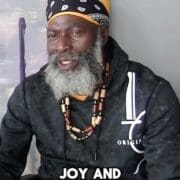
Capleton is calling it himself — go out and get the album. The Fireman announced that *Heights of Fire* is dropping June 26, and he’s already pushing fans toward the preorder with a directness that feels less like marketing and more like a personal call to action.

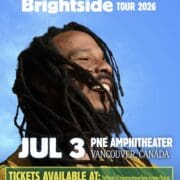
Ziggy Marley to Perform at FIFA Fan Festival in Vancouver on July 3

Ziggy Marley isn’t just showing up to the FIFA Fan Festival in Vancouver — he’s calling it an honor.

Jahmiel Announces New Album ‘Against All Odds’ Due July 10, 2026

Jahmiel just dropped the news his fans have been waiting on — a new album called *Against All Odds*, set to arrive July 10, 2026.

Windfall Tax Or Nation Building? The Question Antigua and Barbuda Must Answer

By Dr. Isaac Newton 

News Americas, NEW YORK, NY, Mon. June 22, 2026: Every generation is confronted by a question that reveals what kind of nation it wishes to become. Antigua and Barbuda’s government now faces one of those questions. Prime Minister Gaston Browne has proposed a windfall tax on exceptionally profitable companies to help fund national development initiatives, including higher education. The debate, however, is not really a question of taxation. The real issue is whether extraordinary wealth created within a society should help create greater opportunities for the people of that society. Before citizens decide whether to support or oppose the proposal, they must first understand what a windfall tax actually is.

Antigua PM Gaston Browne

A windfall tax is an additional tax imposed on profits that are considered unusually high or unexpected. Imagine two farmers. One farmer increases his harvest because he invested in better equipment, worked longer hours, and improved his techniques. The other farmer receives an unusually large harvest because perfect weather conditions produce an exceptional crop. Most people would agree that the first farmer’s success comes primarily from his effort. The second farmer’s success comes partly from circumstances beyond his control. A windfall tax is based on the belief that when companies earn extraordinary profits because of favorable conditions, market advantages, or unusual circumstances, a portion of those gains can be used to advance the public good. The principle is simple. When fortune smiles unusually on a few, society may reasonably ask whether some of that blessing should help the many.

The strongest argument in favor of a windfall tax is fairness. Antigua and Barbuda must continuously invest in education, healthcare, infrastructure, and youth development. These investments require resources. If a nation can raise revenue from exceptionally profitable companies instead of increasing the burden on ordinary workers and struggling families, many citizens see that as fair. Consider a simple example. Suppose a bank earns profits far above its historical average during a particular period. Citizens may reasonably ask whether a small portion of those exceptional profits could help finance scholarships for hundreds of young people who otherwise could not afford higher education. This is where the windfall tax gains its moral force. It attempts to convert concentrated prosperity into shared opportunity. As a nation, we must always remember that wealth has its greatest value when it expands possibilities for others.

Yet fairness is only one part of the story. A wise policy must also pass the test of sustainability. Imagine a family that receives a large inheritance one year. It would be unwise for that family to assume the same inheritance will arrive every year thereafter. Windfall profits are, by definition, exceptional. They may appear one year and disappear the next. If permanent programs become dependent on temporary revenue, future governments may find themselves facing difficult financial choices. This is why economists often warn that unpredictable income should not be treated as permanent income. Revenue may come and go, but obligations remain. The challenge is not collecting the money. The challenge is building a system that remains strong long after the windfall has passed.

The second concern involves investment and economic confidence. Businesses generally do not fear taxes as much as they fear uncertainty. Investors want to know the rules before they commit their capital. If the definition of a windfall is unclear, companies may wonder whether future success will be rewarded or penalized. That uncertainty can discourage investment, expansion, and job creation. This does not mean a windfall tax is inherently wrong. It means the rules must be transparent, objective, and consistently applied. Citizens should evaluate the proposal using four simple questions. Is it fair? Is it transparent? Will it encourage or discourage investment? Will the money be used in a way that produces measurable benefits for future generations? Public policy should never be judged by intentions alone. It must be judged by results.

The better way forward is not to choose between taxation and development. It is to connect them intelligently. A carefully designed excess profits tax could be used during periods of extraordinary profitability, but a significant portion of the revenue should be placed into a protected national education endowment whose investment earnings support future generations. At the same time, tax administration should be strengthened, private sector partnerships expanded, and universities encouraged to develop additional sources of funding. Such an approach transforms temporary gains into permanent opportunity. Ultimately, the debate before Antigua and Barbuda is larger than a tax. It is a question of national vision. The measure of a society is not how much wealth it creates, but what it chooses to do with that wealth. Great nations are not built when money changes hands. Great nations are built when prosperity is transformed into possibility, and possibility is transformed into progress.

EDITOR’S NOTE: Dr. Isaac Newton is a leadership strategist and governance expert specializing in ethical leadership, institutional reform, and transformational change. Educated at Harvard, Princeton, Columbia, and Oakwood University, he advises governments, boards, and institutions across the Caribbean and internationally. He is the co author of Steps to Good Governance and coauthor of the forthcoming books Daring to Hope and When Nations Kneel.

RELATED:

Father’s Day – A FATHER’S FOOTSTEPS IN ROOMS HE WILL NEVER ENTER

What Makes A Caribbean Teacher Unforgettable

Wild ‘N Out Live

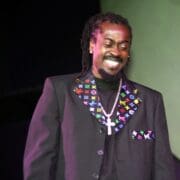
Grammy-winning Beenie Man will headline Wild ‘N Out Live at Barclays Center on June 28, making history as the first Caribbean artist named Team Captain on the platform.

A Taste of Sumfest

Dancehall icons Vybz Kartel and Mavado will share a stage for the first time since 2008 at ‘A Taste of Sumfest’ at Plantation Cove on July 18.

Week.day, Aidonia’s ‘Like How Yuh Feel’ Scores Major Milestones, Surpasses 1 Million Streams

Jahvanie “Week.day” Morrison.

Popular dancehall producer Jahvanie “Week.day” Morrison is celebrating a major win with Aidonia’s Like How Yuh Feel, as the track continues to make an impact across the Caribbean and beyond. 

Father’s Day – A FATHER’S FOOTSTEPS IN ROOMS HE WILL NEVER ENTER

By Isaac Newton

News Americas, NY, NY, Sun. June 20, 2026: Happy Father’s Day. A father enters every room his child will one day walk into. That is fatherhood. He shapes a future he will never fully see, yet his presence continues in how his child speaks, decides, and stands under pressure. A child learns life by watching life lived. What is repeated becomes instruction. What is lived in silence becomes formation. What is done when no one is watching becomes an inheritance.

Provision fills a home, but presence forms a person. A child may forget what is given, yet rarely forgets what is shown. Every father writes himself into the future through behavior. He builds rooms he will never enter, influences conversations he will never hear, and prepares decisions he will never witness. Still, those rooms open, and when they do, something familiar appears first: a tone, a response, a way of standing when life becomes heavy. These patterns are absorbed in daily life and repeated without awareness. This is how fathers remain present after they are gone, in rhythm, repetition, and reflection.

Every father leaves something behind. The issue is what that becomes when life grows larger than childhood. Every child eventually steps into rooms their father will never enter, and in those rooms something always speaks first. That voice is the echo of a life once lived beside theirs. A father continues forward in his child long after he stops walking himself. That is fatherhood: a life that keeps moving after the man has stopped, a voice that keeps speaking after silence, a presence that keeps shaping rooms he will never enter.

The measure of fatherhood is not what is given in a moment, but what endures in movement across time. It is seen in what a child becomes when pressure arrives and no instruction is present, only memory. It is revealed in how they respond when life feels unfamiliar yet strangely known. A father is never only remembered. He is repeated. And in that repetition, he continues to live, quietly shaping futures he will never see.

EDITOR’S NOTE: Dr. Isaac Newton is a leadership strategist and governance expert specializing in ethical leadership, institutional reform, and transformational change. Educated at Harvard, Princeton, Columbia, and Oakwood University, he advises governments, boards, and institutions across the Caribbean and internationally. He is the co-author of Steps to Good Governance and co-author of the forthcoming books Daring to Hope and When Nations Kneel.

RELATED:

Caribbean Dilemma – Growing Older Before Growing Rich

What Makes A Caribbean Teacher Unforgettable

New Caribbean Music – DJ GQ And Mr. Vegas Team Up, Plus New Heat From Sean Paul, Fay-Ann Lyons And More

By ET Editor | NewsAmericasNow.com

News Americas, MIAMI, Fl, Sat. June 20, 2026: It’s summer, and that new Caribbean music is especially in time for Toronto and NY carnivals and Barbados Crop Over.

South Florida king of radio and nightlife DJ GQ and legendary Jamaican dancehall singjay Mr. Vegas have connected on “If We Had More Time,” a smooth, modern reggae record that reveals a more melodic and emotionally driven side of the dancehall icon.

The single is out now on all digital platforms via DJ GQ’s own label, DJ GQ Worldwide, distributed by Tuff Gong International. Centered around nostalgia and love, the track blends a timeless lovers rock feel with polished, contemporary production. Vegas’s instantly memorable hook completes a bright, upbeat earworm built for any summer chill playlist – and one certain to resonate with both core Caribbean listeners and a broader global audience.

“If We Had More Time” serves as the first single off DJ GQ’s upcoming EP, Skank, Rock, Reggae.

“DJ GQ has been representing Caribbean music for years,” Mr. Vegas said. “He doesn’t just play it, he understands it, produces it, and truly feels the vibration. ‘If We Had More Time’ is one of those records with a real vibe.”

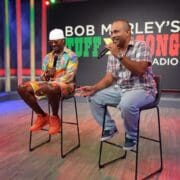
In addition to his hosting and mix duties on iHeartRadio’s Y100 in Miami and Bob Marley’s Tuff Gong Radio on SiriusXM, DJ GQ has rocked stages across the globe alongside Akon, Skip Marley, and DMX – whose ferocious “GQ… let ’em know!” audio stamp can be heard growled across the DJ/producer’s releases.

“For years I’ve been helping tell other artists’ stories through radio and DJing,” DJ GQ said. “Skank Rock Reggae is my opportunity to tell my own.” The Miami-born music industry veteran, who was raised in Jamaica by his Cuban/Chinese and Jamaican parents, continued: “‘If We Had More Time’ with Mr. Vegas is a reminder that time is life’s most valuable currency, and reggae has always been one of the most powerful ways to deliver that message.”

A mainstay on the South Florida club and event scene, DJ GQ keeps a packed calendar – including Saturdays at Easton Rooftop in Fort Lauderdale, July 4th at the City of Coral Springs celebration, his birthday bash on August 15th, Tequila Fest at Mizner Amphitheater on November 7th, Give Miami Day on November 19th, Turkey Fest in Pembroke Pines on November 21st, and Terp Basel in Miami December 4th and 5th.

Listen to “If We Had More Time” here

Sean Paul & Brushy One String – “Burn Dem Down”

Dancehall superstar Sean Paul has linked with one-string guitar virtuoso Brushy One String for “Burn Dem Down,” a track pairing Sean Paul’s signature delivery with Brushy’s raw, stripped-down sound.

Watch the official live music video here

Nailah Blackman – “Bombshell” (WYFL Riddim)

Soca star Nailah Blackman has dropped “Bombshell,” riding the WYFL Riddim with production from DJ Mac, Crash Dummy, Crawba, Tribal Kush and Aicon. The track was pre-mixed by Anson Pro, with final mix and mastering handled by Madmen Productions.

Watch the official music video here

Fay-Ann Lyons – “Hot Gyal DNA”

Soca powerhouse Fay-Ann Lyons has released “Hot Gyal DNA,” produced, mixed and mastered by Yannick Plante of Minor Productionz. The single arrives via Bad Beagle under license to Diaspora Sound.

Stream “Hot Gyal DNA” here

Skinny Fabulous – “Nonsense”

Soca hitmaker Skinny Fabulous has dropped “Nonsense,” produced by Dada Lawrence and Chippy G and mixed and mastered by Parry Jack. The accompanying video was shot and directed by Junior Lee of Precise Lee Films, with distribution through DSM Music Group.

Watch the official music video here

RELATED:

Caribbean Artists Are On 2026 FIFA World Cup Soccer’s Biggest Soundtrack

Nationals From Four Caribbean Countries Among New York City’s Top Ten Immigrant Groups

By Staff Reporter | NewsAmericasNow.com

News Americas, NEW YORK, NY, Thurs. June 18, 2026: Nationals from four Caribbean countries – Jamaica, Guyana, Haiti, and Trinidad and Tobago – remain among New York City’s ten largest immigrant groups, according to the 2026 edition of The Newest New Yorkers, the city’s most comprehensive portrait of its foreign-born residents in over a decade, released this week by Mayor Zohran Mamdani’s administration.

The report, the first update since 2013, found that New York City’s overall immigrant population remains steady at roughly 3.1 million – more than one-third of the city’s residents and 43 percent of its workforce. Within that population, the four Caribbean nations have maintained an unbroken presence in the city’s top ten foreign-born groups for more than three decades, a continuity the report’s authors describe as evidence of the “large footprint of non-Hispanic Caribbean immigrants in the city.”

Jamaica – Third Largest Immigrant Group In The New York City

New York City was home to 162,490 Jamaican immigrants in 2023, making Jamaicans the third largest foreign-born group in the city overall – a ranking Jamaica has held continuously since 1990, even as its population declined nearly 6 percent over the past decade.

The geography of Jamaican settlement has shifted. A decade ago, Jamaican immigrants were heavily concentrated in Brooklyn. Today they are spread relatively evenly across Brooklyn, Queens, and the Bronx, and the report projects that if current trends continue, Queens will overtake Brooklyn as home to the city’s largest Jamaican population within the next decade.

East Flatbush in Central Brooklyn remains the largest single Jamaican enclave, home to 16,722 Jamaican-born residents – about 10 percent of the citywide total. Canarsie, Flatbush, and Crown Heights each have more than 5,000 Jamaican residents. Southeastern Queens has emerged as an equally significant center, with Springfield Gardens and St. Albans each home to roughly 9,000 Jamaican immigrants.

Guyana – Nearly Half Of All US Guyanese Live In New York City

Guyana’s relationship with New York is unlike that of almost any other immigrant group in the report. Nearly one-half of every Guyanese immigrant living anywhere in the United States has chosen to make New York City their home – the highest such concentration of any country among the city’s top 20 foreign-born groups.

New York’s 129,004 Guyanese immigrants rank as the city’s fifth largest foreign-born group, a position unchanged over the past decade despite a population decline of roughly 6 percent. Fifty-nine percent of that population – 76,698 people – live in Queens.

South Ozone Park stands as the center of Guyanese New York, home to 22,791 Guyanese-born residents in an area long known informally as “Little Guyana,” with a section of Liberty Avenue carrying the name itself. Nearby Richmond Hill, Baisley Park, Queens Village, St. Albans, and South Jamaica form a continuous corridor of Guyanese settlement stretching from Central Brooklyn into Southeastern Queens.

Haiti And Trinidad And Tobago – A Smaller But Resilient Presence

Haiti’s New York-born population stood at 84,120 in 2023, ranking eighth among the city’s foreign-born groups, while Trinidad and Tobago’s population of 69,332 ranked tenth. Both nations have seen their New York populations decline modestly over the past decade — Haiti by roughly 3 percent and Trinidad and Tobago by nearly 14 percent – even as both have held an unbroken position in the city’s top ten immigrant groups for more than three decades.

The report notes that Haitian immigrants have dispersed dramatically beyond New York since 1970, when 72 percent of all Haitian immigrants in the United States lived in the city. By 2023, that share had fallen to under 11 percent, reflecting the growth of Haitian communities in Florida and elsewhere even as New York retains a substantial and historically rooted Haitian population.

The Bigger Picture

Together, Jamaica, Guyana, Haiti, and Trinidad and Tobago accounted for 533,515 New Yorkers as of 2023 – the city’s broader “non-Hispanic Caribbean” population, now representing 17 percent of all foreign-born New Yorkers, down from 19 percent a decade earlier. The decline reflects not a disappearing community but a shifting one, as growth among other immigrant groups, particularly from Asia, has outpaced the Caribbean’s more modest population changes.

“Immigrant New Yorkers are writing the future of this city every day,” Mayor Mamdani said in releasing the report. “From the neighborhoods they have built to the small businesses that have opened, from the languages they speak to the communities they sustain, immigrants make New York the city that it is.”

For the Caribbean diaspora and CARIBID, the data confirms what generations of New Yorkers from these four nations have long understood — that despite shifting numbers and shifting neighborhoods, their place among the city’s defining immigrant communities remains firmly intact.

RELATED:

Jamaican Roots, NBA Glory: How Caribbean DNA Powered The Knicks’ First Championship In 53 Years

Jamaican Olympian Junelle Bromfield Weds Noah Lyles in Cultural Celebration