The MV Barima Predates Guyana’s Independence By 27 Years

By Staff Writer, NewsAmericas Now

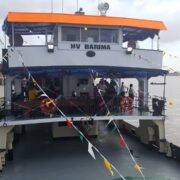
News Americas, NEW YORK, NY, Fri. July 24, 2026: The MV Barima, the ferry that capsized off Guyana’s coast on July 19, killing at least 65 people with dozens more still unaccounted for, was not built for Guyana. It was built for a colony that no longer exists – 27 years before that colony became an independent nation.

Built for a colony that no longer exists

The MV Barima was born on the River Clyde in Port Glasgow, Scotland, at the yard of Ferguson Brothers – a shipbuilder that still operates today as Ferguson Marine. According to the company’s own heritage records, work began on a passenger-cargo vessel named the Pomeroon, which underwent sea trials in January 1936.

The yard then built two sister vessels, the Lady Northcote and the Barima, which were completed in 1939. All three were ordered through the Crown Agents for the Colonies on behalf of the Transport and Harbors Department of British Guiana Railways, built specifically to stitch together a colonial territory by water – decades before Guyana would become an independent nation on May 26, 1966.

The Barima was a twin-screw vessel of modest ambition by design – built to cruise at roughly 8.5 knots, carrying the cargo and passenger loads of a colony whose coastal trade bore little resemblance to a modern independent nation’s. When it capsized on July 18, nearly six decades after Guyana’s independence, the vessel was carrying 179 people and cargo, a load far exceeding what its rigid, nearly 90-year-old hull, engineered under colonial administration, was ever built to safely stabilize.

An echo of the 1970 Christena disaster

The Barima’s capsizing bears an unsettling resemblance to another Caribbean maritime tragedy from a similar era: the MV Christena, the government ferry that disappeared beneath the waters of The Narrows between St. Kitts and Nevis on August 1, 1970, killing 233 people and leaving only 91 survivors — one of the deadliest maritime disasters in Caribbean history. The Christena was smaller than the Barima, at about 66 feet long with a 16-foot beam versus the Barima’s roughly 126 feet, but both were aging government ferries serving as the primary lifeline for isolated island and coastal communities, and both capsized carrying more people than their design and era were ever built to accommodate.

A pattern that predates both disasters

The Christena’s sinking led to a Commission of Inquiry that found the vessel had been dangerously overloaded and improperly loaded with cargo positioned to destabilize it – findings that reshaped maritime safety oversight across the Eastern Caribbean in the years that followed. Guyana has similarly launched an independent Commission of Inquiry into the Barima’s capsizing, with Prime Minister Mark Phillips confirming a full investigation into potential criminal negligence and institutional failures within the country’s maritime administration.

Whether an independent nation, nearly 60 years removed from the colonial administration that ordered the Barima into existence, still relied on that same vessel as recently as this month is itself a question the Commission of Inquiry may have to reckon with – one that goes beyond mechanical failure, to what infrastructure a country inherits at independence, and how long it can go without replacing it.

NewsAmericasNow will continue following the Commission of Inquiry into the MV Barima disaster as it develops.

RELATED: Guyana: The MV Barima Tragedy Puts The Spotlight On A Decades-Old Issue – An Aging Ferry Fleet

Funerals Begin For Guyana Ferry Disaster Victims As Recovery Total Rises To 72 And Vigil Set For NYC

By NAN Staff Writer, NewsAmericas Now

News Americas, GEORGETOWN, Guyana, Fri, July 25, 2026: Families across Guyana have begun burying their dead as the confirmed recovery total from the Guyana ferry disaster, the MV Barima, rose to 72 Thursday night, with 65 victims positively identified, Prime Minister Brigadier (Ret’d) Mark Phillips said in his latest update.

With 179 people confirmed to have been aboard the ferry when it capsized on July 18, and 76 to 77 rescued in the days that followed, roughly 30 people remain unaccounted for as search and recovery operations continue.

Burials begin across the country

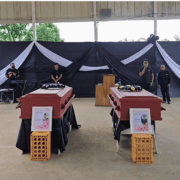
Funerals were held Thursday for several of the identified victims, including Kevin Wilson, laid to rest in East Bank Berbice, and 11-year-old Ronaldo Poon, buried following a service in Wakenaam. Seven-year-old Adans Williams of Bartica was set to be laid to rest today, July 24th. Other victims identified so far include Paul Seepersaud, the MV Barima’s chief engineer; Viviana Sadruddin; Rubina Hernandez; Akeela Rodrigues; Rachel Wells and her three children, Nathaniel Jr., 8, Natalia, 5, and Ezekiel, 3; Bibi Akela Mohamed, 49 and Ravindra Singh, 46.

Survivors describe a traumatic ordeal

Opposition WIN Member of Parliament Deon La Cruz, who traveled to Port Kaituma to meet with survivors and victims’ families, said accounts from survivors were consistent: that the ferry was overloaded, that rescue boats took too long to arrive, and that survivors watched helplessly as others who could not hold on any longer went under. La Cruz said survivors have not yet received a single call from human services or any government representative checking on their well-being, and that many cannot sleep, replaying the sounds of screams and calls for help each time they close their eyes. La Cruz called on the Guyana Minister of Amerindian Affairs, the Minister of Social Services and Minister Collin Croal to urgently dispatch qualified counselors to the affected communities.

Meanwhile, Guyana opposition leader Azruddin Mohamed, who has participated directly in the search along the Pomeroon River from Sunday, said his search teams recovered more than 25 bodies in a single stretch of the operation and renewed his call for Guyana’s Minister of Public Works Juan Edghill to resign. Mohamed reported that at least three additional bodies were recovered today.

US Diaspora response

The tragedy has drawn attention from US officials representing New York’s large Guyanese-American community. Senate Majority Leader Chuck Schumer said in a statement that he is “thinking of the Guyanese American community in New York this week,” adding that his office would do everything it can to help members of the diaspora affected by the disaster during Guyana’s period of national mourning.

In Brooklyn, a candlelight vigil for victims of the MV Barima tragedy is planned for today, Friday, July 24, at 6:30 p.m., at the corner of Church and Utica Avenues in Brooklyn, NY and is open to all Guyanese and friends of Guyana.

How the disaster unfolded

The MV Barima’s manifest listed 133 people – 116 passengers and 17 crew – but investigators later confirmed at least 179 people were actually aboard, with dozens having boarded unofficially and never recorded. The ferry issued a distress call around 10:30 to 11 p.m. on July 18th while traveling through the North Atlantic off the Pomeroon River, roughly seven miles offshore near Iron Punt, an area mariners have long described as one of the most hazardous stretches of the Georgetown-to-Port Kaituma route due to unpredictable currents and sudden wave shifts as the ferry clears the shelter of the Demerara River and Essequibo River mouth. Survivors described a sudden, powerful wave or tide shift striking the vessel in the darkness.

Local fishermen were the first responders in the wee hours of the morning Sunday, followed by the Guyana Defence Force Coast Guard, private vessels and later support boats from ExxonMobil. Passengers and crew remained in the water for hours overnight before rescue reached them.

RELATED: The MV Barima Predates Guyana’s Independence By 27 Years