News Americas, NEW YORK, NY, Mon. August 24, 2026: As we in the Caribbean watch the rapid development of new industries in our region – particularly Guyana’s expanding oil sector and potential manufacturing investments – we would be wise to pay close attention to a historic labor battle now unfolding thousands of miles away at Hyundai Motor Group’s factories in South Korea.
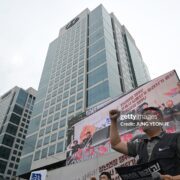
On August 21, 2026, nearly 40,000 workers staged the first nationwide strike in a decade at Hyundai, halting production across all South Korean plants. The trigger was not merely wages, but something more fundamental: the company’s plan to deploy over 25,000 humanoid robots manufactured by Boston Dynamics – robots that Hyundai’s own union believes are designed to replace them.
The economic scale is staggering. A single day of nationwide strikes cost Hyundai $1.66 billion in lost production. But what makes this strike especially relevant to us in the Caribbean is not the dollar figure – it is the workers’ prescient understanding of what automation means for their futures, and their decision to fight for binding protections before the robots arrive.
For decades, our region has been sold a promise: multinational investments will bring jobs and development. Sometimes they do. But we have also seen factories relocate overnight, leaving communities devastated. We have watched as promised employment disappears when companies automate or move operations to cheaper labor markets.
Hyundai’s union understood something crucial: if you wait until the robots are already on the line, you have no leverage. Once automation is embedded in a company’s infrastructure, workers lose their bargaining power entirely. The union made a strategic choice to fight now, while the company still needs their production capacity.
The workers demanded three things that should resonate powerfully with Caribbean labor movements:
First, they demanded job protections specifically written into labor agreements – not vague promises that robots will “work alongside” humans, but binding contractual language preventing automation without worker consent.
Secondly, they demanded profit-sharing—30 percent of net profits distributed to workers – recognizing that if their labor built Hyundai’s wealth, they deserve a stake in the company’s gains, not just wages for hours worked.
Thirdly, they demanded retirement security and higher salaries – protection against the hour-creep that occurs when automation silently erodes available work.
As Guyana develops its oil industry and attracts manufacturing investment, these lessons are not theoretical. Companies will arrive with modern equipment, sophisticated robotics, and automation strategies. They will promise jobs. Some promises will be kept; others will evaporate as technology makes workers redundant.
The Hyundai strike shows that workers who organize early, who demand binding protections, who understand automation’s trajectory, can extract real concessions from even the world’s largest manufacturers. Conversely, workers who accept automation passively—who trust company assurances without contractual guarantees—lose everything when the robots arrive.
The Hyundai workers are not opposed to technology. They are opposed to being replaced without protection, without transition support, without a voice in decisions that fundamentally reshape their working lives. They understand that “progress” should benefit those whose labor created the wealth in the first place.
We in the Caribbean must ask ourselves: as new industries arrive in our region, as automation accelerates, as companies modernize their operations – what will we demand in return? Will we accept jobs without asking for job security? Will we allow our natural resources and industrial capacity to generate wealth that flows elsewhere?
The Hyundai workers found their answer on August 21st. They shut down production to demand that their voices be heard before automation replaces them. It is a lesson worth learning before the robots arrive in our backyards.
EDITOR’S NOTE: Keith Bernard is a Guyanese-born, NYC-based analyst and a frequent contributor to News Americas.