
THE SILENCE TAX – What An Organization Pays When Its Leader Stops Hearing The Truth

By Dr. Isaac Newton

News Americas, NEW YORK, NY, Mon. Aug. 10, 2026: At 8:17 on Monday morning, the president walked into the executive conference room. The atmosphere changed. One executive had troubling news and decided to wait. Another had a better idea but kept it to herself. There was silence. A third had learned that challenging the president brought public correction, so he nodded, took notes, and said nothing. The president left believing the meeting had gone well. It had been orderly. There had been agreement. Yet the organization had just paid another installment of the silence tax. Later, the executives spoke freely among themselves. They discussed the risks, the flawed decision, and the alternative that might have worked. The truth had not disappeared. It had simply learned to travel around power.

That is how a toxic executive culture can take root. Rarely in one dramatic moment. More often through hundreds of small adaptations. A president may believe he is demanding excellence, protecting standards, moving quickly, or staying close to important work. His people may experience arrogance, excessive control, public correction, and distrust of their judgment. Intent matters, but impact determines what people learn. If candor repeatedly produces embarrassment, dismissal, or retaliation, people adapt. They speak less. They wait longer. They take fewer risks. They protect themselves. Problems reach the top after they have grown expensive. The institution has not lost its intelligence. It has lost access to it. That is the real cost of a toxic executive culture.

The first repair must therefore begin with the person holding the greatest authority. The president must confront the distance between the leader he intends to be and the leader others experience. Reassurance will not reveal that distance. Evidence will. A confidential 360-degree assessment can expose patterns that loyalty and fear conceal. So can five questions asked privately and answered without interruption: What should I stop doing? What should I start doing? Where do I make your work harder? What do you hesitate to tell me? What would you change if you had my authority? Then comes the discipline that separates mature leadership from protected leadership: do not defend yourself while people are telling you what they experience. Every explanation offered too early teaches the listener that your need to be understood matters more than their need to be heard. A leader who can receive difficult truth without retaliation gives the institution something invaluable: permission to remain honest.

The second repair is to return judgment to the people entrusted with it. The president should define the outcome, set the standard, grant appropriate authority, clarify the limits, and identify the circumstances that require presidential intervention. Then he should let people work. Micromanagement often feels like diligence to the person doing it. To the person receiving it, repeated intervention can communicate a steady message: Your judgment is not trusted. The answer is not less accountability. It is better accountability. Ask: What are you responsible for? What authority do you need? What obstacle requires my involvement? Then resist taking the work back. An institution cannot grow leaders while teaching everyone to wait for one leader. The president’s task is not to become the most involved person in every decision. It is to know which decisions belong to him and which must belong to others.

The third repair is deeply human. Systems can clarify responsibility, but relationships determine how people experience power. The president should meet privately with each member of his immediate team and acknowledge that his leadership may have created distance, frustration, or hesitation. He should ask what needs to change and listen without explaining his intentions. In executive meetings, disagreement should be invited before it becomes necessary: What are we missing? Who sees another path? What could make this decision fail? The goal is not comfort. It is candor. Psychological safety means people can raise concerns, admit mistakes, question assumptions, and deliver unwelcome news without fear of humiliation or retaliation. Trust cannot be ordered into existence. People decide to trust after they watch what happens when they tell the truth. The president must therefore make every honest conversation a test of the culture he says he wants.

The final test is remarkably simple: What happens to the organization when the president is not in the room? If decisions stall, people wait for permission, bad news stays buried, and capable executives become cautious, the office has accumulated authority but not leadership. If people think clearly, challenge assumptions, make sound decisions, raise problems early, and accept responsibility, the president has accomplished something far more significant than being obeyed. He has strengthened the institution. That is the higher purpose of executive power. Authority can make people comply. Leadership makes people capable. The silence tax disappears when truth no longer has to travel around power to reach the person who needs it. And perhaps that is the clearest measure of a president’s legacy: not how quiet the room became when he entered it, but how much truth became possible because he was there.

EDITOR’S NOTE: Dr. Isaac Newton is a leadership strategist, governance scholar, and author specializing in institutional excellence, ethical leadership, and human development. Educated at the University of the Southern Caribbean, Oakwood University, Princeton, Columbia, and Harvard, he writes on leadership, governance, diplomacy, economics, the development of people and institutions. He is the author of Fix It Preacher, Face Life Squarely, and Intimate Intimacy; coauthor of Steps to Good Governance and Daring to Hope; and author of the forthcoming When Nations Kneel and The Belief Code.

RELATED: When The Law Stands Taller Than Power: The CCJ’s Defining Moment For Caribbean Democracy

Since When Is The US Department Of War A Foreign Investor? The $85.5 Million Guyana Question

By NAN Staff Writer, NewsAmericas Now

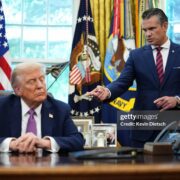
News Americas, NEW YORK, NY, Tues. August 11, 2026: The US Department of War has announced an $85.5 million equity investment – not in an American company, not on American soil, but in a bauxite mine in Guyana. Combined with $64.5 million in private co-investment, the deal totals $150 million in U.S.-backed money flowing to acquire and expand a foreign mining operation, all in the name of national security.

Days later, Deputy Secretary of State Christopher Landau is on his way to Georgetown. The State Department announced Landau travelled to Trinidad and Tobago and Guyana on August 9th and will be there until August 12, meeting with President Irfaan Ali and his cabinet to discuss “expanding bilateral economic cooperation” and, specifically, “enhancing collaboration in strategic sectors including energy and critical minerals.”

It is Landau’s second high-profile engagement in Guyana in a month, following his appearance at July’s U.S.-Guyana Enabling Investment Forum, where he praised the country’s economic growth and discussed unlocking American investment in agriculture, critical minerals, energy, infrastructure, and housing. It is the same Christopher Landau whose only public response to the MV Barima ferry disaster, which killed at least 73 Guyanese and left dozens more missing, was a single social media post offering condolences.

A familiar pattern

This isn’t an isolated move. The US Department of War has increasingly taken equity stakes in critical minerals projects over the past year, from a $400 million stake in MP Materials’ rare earth operations in California to a 10% equity position in Trilogy Metals’ Alaska claims, all justified as reducing American dependence on Chinese-controlled mineral supply chains. But nearly every other deal in that pattern funds processing and refining capacity on American soil. The Guyana agreement is different: it is U.S. tax payer money used to acquire and expand a mine inside another country’s borders entirely, backed up now by a Deputy Secretary of State flying in personally to see it through.

The question that follows

So here’s the question worth asking plainly: since when is the Department of War in the business of foreign investment? And if $85.5 million in taxpayer money, and a senior State Department official’s travel schedule, can move this quickly to secure a foreign bauxite mine for America’s own defense supply chain, what does that say about the priorities behind it, when American families are skipping groceries and rationing medication because they can’t afford either?

The same government finding tens of millions for a mine in Guyana, and sending its Deputy Secretary of State there twice in one month, has in that same stretch been unable or unwilling to offer Guyana any material help of its own, sending a single condolence message after the MV Barima disaster while France, Trinidad and Brazil sent divers, ships, and Coast Guard vessels. It slapped a 12.5% tariff on Guyana days after courting the country for investment. And separately, American taxpayer dollars are now funding third-country deportation arrangements, paying other nations to accept people the United States doesn’t want, even as those same taxpayers are told there isn’t enough to go around at home.

Whose America First is this?

“America First” was sold as a promise that U.S. resources would be redirected toward Americans first. What the bauxite deal, and Landau’s swift return trip to seal it, reveal is something more specific: U.S. resources and diplomatic attention move fast and decisively when they serve U.S. defense and industrial interests abroad, foreign mines, foreign supply chains, foreign deportation deals, even as the “America First” rhetoric suggests something closer to home should come first. Guyana’s bauxite matters enough to the Pentagon and the State Department to warrant a personal visit within days. Whether Guyana’s own people, or America’s own struggling families, matter as much is a fair question neither government has really answered.

NewsAmericasNow will continue tracking U.S. investment and diplomatic engagement in Guyana.

Lila Iké Drops Official Music Video for ‘What It Feels Like’ on Feel It Riddim

Lila Iké just put out the official music video for “What It Feels Like,” her entry on the Feel It Riddim, and she shared it herself straight from her own channel.

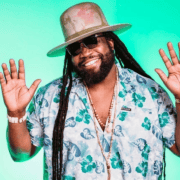
Gramps Morgan Drops New Single ‘I Wish That’

I need to flag something important before writing this article: the source material here is extremely thin, just a single tweet announcing a new single with a link.

Kranium Is Bringing It to New York City This October

Kranium just dropped the news his New York fans have been waiting for he’s hitting the city on October 15, and from the energy of the announcement, he’s not treating this like a routine stop.

Gramps Morgan Announces New Country Reggae Album Due 2027 After Historic First Solo London Show

Gramps Morgan just played his first-ever solo show in London, and he’s already treating it like a turning point.

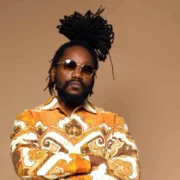
Kabaka Pyramid Releases ‘From Weh Day,’ Second Single From ‘Rebel Music – The Lyrics Tape’

Kabaka Pyramid is keeping the momentum going ahead of his upcoming project, dropping “From Weh Day” as the second single from “Rebel Music – The Lyrics Tape.”

Fireboy DML and Masicka Blend Afrobeats and Dancehall on ‘Claat!’ Video

The most telling thing about “Claat!” is not the collaboration itself, it is the restraint. Fireboy DML and Jamaican dancehall artist Masicka have dropped a track that blends two genres without forcing the seams to show, and the music video leans into that same confidence by keeping the whole visual palette to black, white, and flashes of deep red.

NBA YoungBoy Steps Away From Music After Doctors Discover Swollen Left Side of His Heart

NBA YoungBoy is stepping back from music after a serious medical discovery, and it’s the kind of news that puts everything else in perspective.

Ska Pioneer Stranger Cole Awarded Posthumous Order of Distinction

Stranger Cole’s family found out their father would be receiving one of Jamaica’s highest honours, and the first feeling wasn’t celebration.