
US$1 Billion Oil Revenue A Month: Why Are Guyanese Still Struggling?
By Darsh Khusial
News Americas, NY, NY, Tues. Sept. 22, 2026: Imagine that you recently received a promotion and suddenly began earning 12 times your previous salary. You would probably make sure that your family could afford nutritious meals for breakfast, lunch, and dinner. You might decide to upgrade to a home with a garden where you could grow vegetables. You might even install proper floodlights so that your yard is well lit at night. When Guyana discovered oil in commercial quantities in May 2015, Guyanese hoped it would transform the country and improve their standard of living. Using production data from July 2026, Guyana is estimated to have produced about 27.5 million barrels of oil that month.
At an average Brent crude price of US$83.74 per barrel in July, the value of that production would have been approximately US$2.3 billion. Based on recent government statements, Guyana’s share has been estimated at 39.8% of oil revenues, plus a 2% royalty. On that basis, Guyana would have received roughly US$961 million from July’s production.
The average Brent crude price rose to approximately US$91 per barrel in August, although we do not yet have the final production figures for that month. With Brent prices now hovering above US$100 per barrel, let us assume that Guyana could receive approximately US$1 billion per month for the remainder of the year. For the purpose of this discussion, we will even ignore estimates that the spot price of Brent crude – the price paid for a barrel delivered today rather than at some future date – could be between US$120 and US$150.
To put US$1 billion per month into perspective, Guyana’s entire national budget in 2015 was approximately US$1 billion. That budget had to support the whole country, including education, healthcare, infrastructure, roads, public-sector salaries, and other government services. Now, approaching 12 years since the discovery of oil, Guyana can potentially receive from oil in a single month roughly what the entire country once relied upon for an entire year.
With such an extraordinary increase in national income, one would reasonably expect Guyana to be able to ensure that its people can at least afford to feed themselves properly. It has been reported that 58.5% of Guyanese live on US$6.85 per day or less. If we assume that Guyana has a population of approximately one million people, that would mean roughly 585,000 people are living at or below that level.
If the country is now receiving approximately US$1 billion per month from oil, that amount is equivalent to about US$57 per day for every one of those 585,000 citizens. Surely, even 1/3 that amount is enough to ensure a nutritious meal, 3 times a day, for each of those 585,000 living below the poverty line.
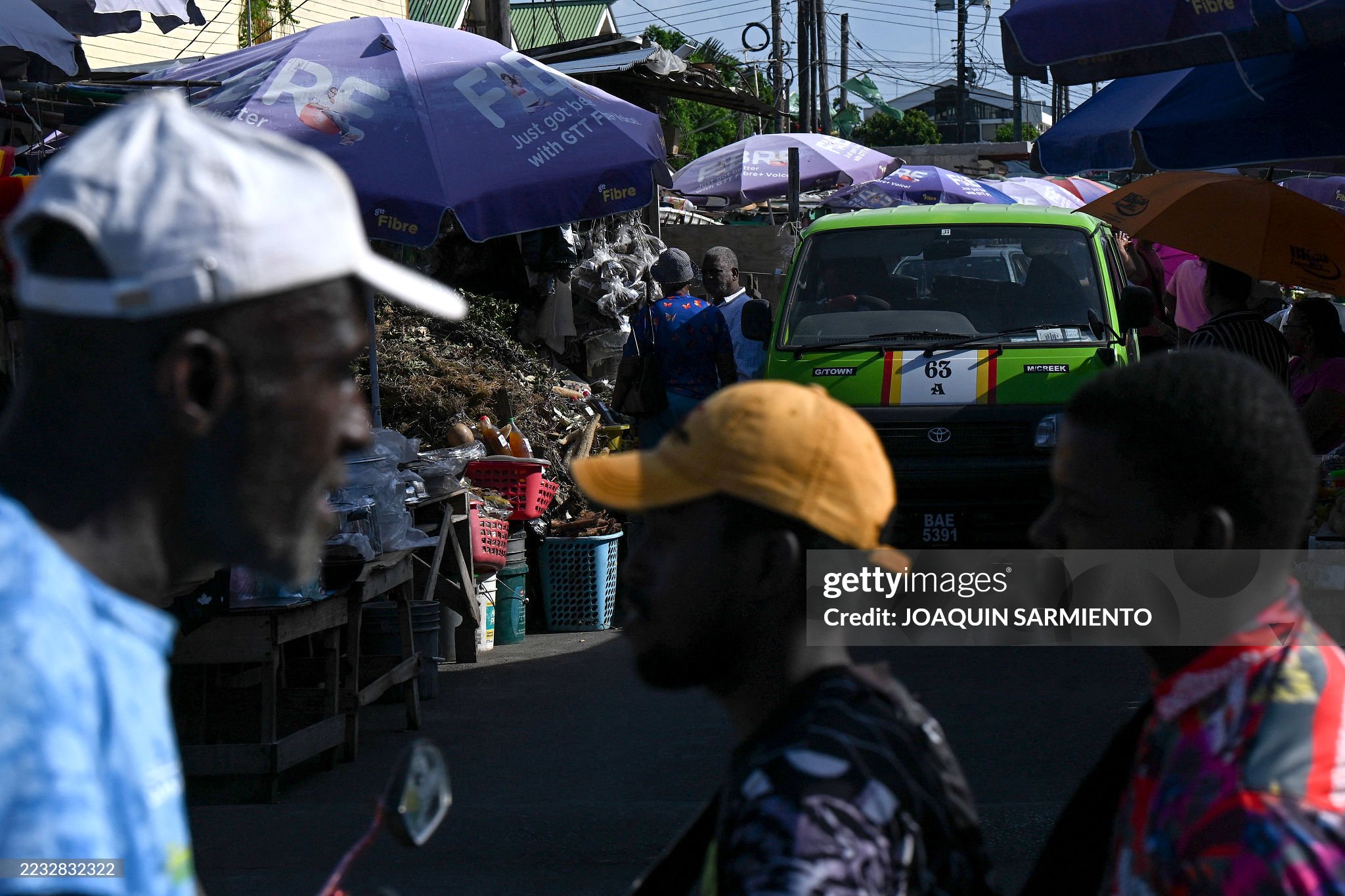
This raises an obvious question: if so many Guyanese still struggle to afford basic necessities such as food, where is all this new wealth going? It is difficult to argue that the money is being fully reflected in improvements to everyday life when citizens continue to experience frequent blackouts and teachers continue to raise concerns about receiving wages sufficient to maintain a decent standard of living while educating the nation’s children.
One possible warning sign is the allegation reported in sections of the media that some government officials have acquired property or accumulated assets that appear difficult to reconcile with their official salaries. Such allegations deserve proper scrutiny, evidence, and accountability. The deeper concern is that those entrusted with managing Guyana’s newfound wealth may be losing touch with the everyday reality faced by ordinary citizens.
What began in 2015 as a moment of enormous hope now raises serious questions about whether Guyana is beginning to experience the symptoms of the so-called “resource curse.” Ultimately, Guyana’s oil wealth belongs to the country and should be managed for the benefit of its people. Citizens elect politicians to serve the public interest – not to enrich themselves or allow the country’s natural-resource wealth to be squandered or misused.
If Guyana can now earn in one month what it once needed an entire year to generate, Guyanese are entitled to ask a very simple question: where is the money going, and why are so many people still struggling to meet their most basic needs?
EDITOR’S NOTE: Darsh Khusial is an executive of the Oil and Gas Governance Network (OGGN) Other executive members include Kenrick Hunte, Joe Persaud and Mike Persaud.
RELATED: Where Did US$604 Million In Guyana Oil Revenues Go In First Half Of 2026?