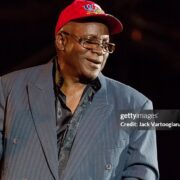
The Mighty Sparrow Is No More: The Calypso Legend’s Final Chapter

By News Americas Now ET Editor

News Americas, NY, NY, Sun. Sept. 27, 2026: For seven decades, Slinger Francisco, aka The Mighty Sparrow, gave the Caribbean its sharpest wit – songs about power, politics, sex and everyday island life, delivered with a grin that made even his most biting lines feel like a party.

The Mighty Sparrow did not simply sing calypso. He became one of its defining voices, from the moment “Jean and Dinah” helped propel him to his first Calypso King title in 1956 to a catalogue that would eventually stretch across hundreds of recordings and reshape how the world heard Trinidad and Tobago.

But according to his family, Sparrow’s final chapter was not written in calypso at all. Before his death Sunday, Sept. 27, 2026, in New York at the age of 91, the man born in Grand Roy, Grenada, and raised into legend in Trinidad had, in his family’s words, “made his election sure by giving his heart to the Most High, Jesus Christ,” and was baptized into the Seventh-day Adventist faith.

It is a quiet coda for a man whose art was rarely quiet. The performer who spent a lifetime commenting on the world around him spent his final days turning inward. He passed away peacefully in New York after a brief illness, surrounded by loved ones.

His daughter, Karen Francisco, announced his death on behalf of the family. “It is with great sadness that we announce the passing of Trinidad and Tobago’s Calypso icon, Slinger Francisco, known to the world as ‘The Mighty Sparrow,’” she said.

The family also revealed that in his final days Sparrow was baptized into the Seventh-day Adventist faith, a deeply personal spiritual turn at the close of an extraordinarily public life. He is remembered by his family as “a husband, father, grandfather, great-grandfather, life partner and friend.”

BORN

The Mighty Sparrow (Hayden Roger Celestin image)

Born in 1935 in Grand Roy, Grenada, Francisco was still an infant when his family relocated to Trinidad, the island whose Carnival culture and calypso tents would shape the rest of his life. He took the name “Sparrow” for a quickness — of wit, tongue and instinct — that would become inseparable from his performances. By the time he broke through in the 1950s with songs such as “Jean and Dinah,” he had already announced himself as one of the sharpest voices calypso had produced.

What followed was one of the most decorated careers in Caribbean music history. Sparrow became an eight-time Calypso Monarch and a multiple Road March champion, titles that helped cement his reputation as the “Calypso King of the World.” His catalogue crossed decades and moods – from the social commentary of songs like “Slave,” to the playful mischief of “Melda (Obeah Wedding)” and “Congo Man,” Carnival favorites including “Dan Is The Man” and “Saltfish,” and the romance, satire and double entendre that kept audiences listening from Port of Spain to New York and London.

Alongside contemporaries such as Lord Kitchener, Sparrow helped carry calypso from a regional art form onto the world stage, opening doors for generations of Caribbean performers who followed. Trinidad and Tobago recognized his contribution with some of the country’s highest honors, including the Order of the Republic of Trinidad and Tobago and the Chaconia Medal. He was also awarded an OBE.

TRIBUTES

Mighty Sparrow attends the 2024 Caribbean Music Awards at Kings Theatre on August 29, 2024 in Brooklyn, New York. (Photo by Marleen Moise/Getty Images)

Tributes began pouring in across the Caribbean following news of his death. Trinidadian politician Stuart Young described Sparrow as “a true legend” and praised the lasting contribution his music made to Caribbean cultural life. Arrangements for a public celebration of his life are expected to be announced in the coming days. For seventy years, The Mighty Sparrow gave the Caribbean its soundtrack and its conscience, set to a calypso beat. And after a lifetime spent singing about the Caribbean and all its contradictions, his family says Sparrow’s final declaration was one of faith.

SONGS

His many songs included:

Again
Ah Fraid Pussy Bite Me
And I Love Her So
Bendwood Dick
Bongo
Boogie Beat
Calypso Boogaloo
Calypso Twist
Can’t You See You’re Meant For Me
Carnival Woman
Carlton Peeping at Me
Chinese Love Affair
Congo Man
Corbeau Sheltering Rain
Country Girl
Dan Is the Man (In the Van)
Dead or Alive
Dear Sparrow
Doh Drop the Tempo
Don’t Go Joe
Dorothy
Dragon Dance
Drunk and Disorderly
Du Yemi, Du
English Diplomacy
Eve
Federation
Good Citizen
Gu Nu Gu
Gun Slingers
Harry & Mama
Harry in the Piggery
Hello People
How You Jamming So
Idi Amin
If
I Love You So
I Should Have Told You
Jack Palance
Jane
Jean and Dinah
Jean Marrabunta
Jemma on the Ferris Wheel
Jook For Jook
Kennedy & Khrushchev
King Kong
Let Me Try Again
Life Down in Hell
Lion and Donkey (Rematch)
Love African Style
Mad Bomber
Madam Dracula
Mae Mae (May May)
Mama Dis Is Mas
Mango Vert
Man Like to Feel
Margie
Maria
Mas in Caracas
Mas in Madison Square Gardens
Memories
Miss Mary
Miss Tourist
Miss Universe
Monica Dou Dou
More Cock
Mother’s Love
Mother-in-Law
Mr. Herbert
Mr. Walker
My Pussin’
My Way
New York Blackout
No Kind of Man at All
No Money No Love
No More Rocking and Rolling
No, Doctor, No (Situation in Trinidad)
Obeah Wedding
Only a Fool
Oriental Touch
Our Model Nation
Pan Man
Papa Rat
Pay as You Earn
Paye
Popularity Contest
Postcard to Sparrow
Rain-O-Rama
Rastamania
Reply to Melody
Robbery With V
Rope
Rose
Royal Jail
Russian Satellite
Sa Sa Yea
Sad Sweet Dreamer
Sailor Man
Saltfish
Same Time, Same Place
Sell the Pussy
Short Little Shorts
Simpson (The Funeral Agency Man)
Sixty Million French Men
Sixty Seven
Soca Man
Sparrow Come Back Home
Sparrow Dead
Sparrow Dread
Sparrow Versus Melody Picong
Sparrow Water de Garden
Stella
Steering Wheel
Stupid Married Man
Ten to One Is Murder
Teresa
The Hustle
The Old Man & the Donkey
The Pan Tuner
The Road
The Slave
Tobago Girl
Tribute to Spree Simon
Trinidad Carnival
Unhappy Me
Village Ram
Well Spoken Moppers
Whole Night We Jamming
Who She Go Cry For
Willie Dead
Wood in the Fire
You’re Mine

Should Guyana Look To Sweden’s Microgrid Revolution To Finally End Its Blackout Crisis?

By Felicia J. Persaud

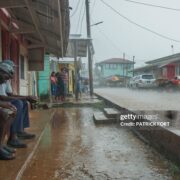
News Americas, NEW YORK, NY, Sun. Sept. 27, 2026: Guyanese continue to live with a maddening contradiction: a country now producing nearly 1% of the world’s oil, sitting on more per-capita oil wealth than almost any nation on earth, still cannot keep the lights on reliably in Guyana. Blackouts, load-shedding, and an aging, overstretched grid have been a fact of life in Guyana for generations – long before Exxon’s discovery, and stubbornly persistent since. In fact, since I was a little girl growing up there.

So a story out of an unlikely place – Lund, Sweden, population under 135,000 – is worth Georgetown’s full attention.

Swedish entrepreneur Jonas Birgersson, once known as “Broadband Jesus” for his role pioneering residential fiber Internet, is now applying that same networking logic to electricity. Instead of one giant, centralized grid vulnerable to a single point of failure, his company ViaEuropa is building networks of small, local “microgrids” — each capable of generating, storing, and sharing power independently, and linked together the way routers share data across the internet. If one node goes down, the rest of the network keeps running.

The model is already live in an apartment and commercial complex in Lund, generating solar power, storing it in batteries, and sharing it among tenants since April 2025. Birgersson’s team is now retrofitting a 1960s-era public housing project – 10 buildings, 278 apartments – with the same architecture, using old incinerator rooms to house storage batteries and burying cable between buildings.

The pitch, in Birgersson’s words: “Many. Small. Cheap. Digitally orchestrated.” Cheaper to build, easier to expand a piece at a time, and dramatically more resilient than a single sprawling grid — the kind of grid that, as the Times reported, nearly took down all of Europe’s power system in 2021 after a single substation failure in Croatia, and that left millions of Ukrainians without power after Russia attacked centralized infrastructure.

That resilience argument should land hard in Guyana, where the national grid has long been blamed for cascading, system-wide outages triggered by single points of failure – not unlike the very vulnerabilities decentralization is designed to eliminate.

Here is the question I think Georgetown needs to be asking: with billions in oil revenue now flowing and a $100 million Exxon-funded workforce and infrastructure commitment already on the table, why is Guyana still leaning almost entirely on a traditional, centralized grid model to solve a blackout crisis that traditional grids have failed to solve for 50 years?

Decentralized microgrid technology is no longer theoretical. The European Union’s own Grid Action Plan is pushing member states toward networks that are “more digitalized, decentralized and flexible.” NATO’s research arm is studying decentralization as a resilience and security strategy. A EU-funded research consortium – SAFEr GRID – is actively testing whether linked networks of small, independent grids can work at national scale.

Guyana doesn’t need to wait for Europe to finish proving the concept. With its oil wealth, its small and geographically dispersed population centers, and a grid that has never delivered consistent reliability even in the capital, Guyana is arguably a more natural candidate for this kind of leapfrog than a dense, already-built-out European economy. This is the same leapfrogging logic that let parts of the Caribbean and the developing world skip landline telephone infrastructure entirely and go straight to mobile.

The government doesn’t need to abandon its existing grid investments overnight. But it does need to ask, seriously and publicly: should a portion of Guyana’s oil revenue – the same revenue economists are already debating whether Guyana is getting a fair share of – be directed toward piloting decentralized microgrid projects in Georgetown, in the hinterland communities the national grid has never reliably reached, and in the new housing developments rising across the country?

Guyana has the money. It has the need. The only question left is whether it has the political will to try something other than what has already failed for half a century.

Editor’s Note: Felicia J. Persaud is the founder of Invest Caribbean, AI Capital Exchange and publisher of News Americas Now. Her work spans journalism, communications, entrepreneurship and access to capital.

The Meaning Behind Mr. Vegas’s “Heads High”: Lyrics and Story Explained

The Meaning Behind Mr. Vegas’s “Heads High”: Lyrics and Story Explained

The meaning of “Heads High” has two layers. Mr. Vegas’s 1998 dancehall hit tells young women to keep their dignity.[#item_full_content

The Meaning Behind Bounty Killer’s “Look Into My Eyes”: Lyrics & Story Explained

The Meaning Behind Bounty Killer’s “Look Into My Eyes”: Lyrics & Story Explained

The meaning of Bounty Killer’s “Look Into My Eyes” comes down to one idea: it asks comfortable listeners to face the poor people they fear.[#item_full_content

The Meaning Behind Elephant Man’s “Pon de River, Pon de Bank”: Lyrics and Story Explained

The Meaning Behind Elephant Man’s “Pon de River, Pon de Bank”: Lyrics and Story Explained

The “pon de river, pon de bank” meaning comes from Jamaican Patois and a dancehall dance.[#item_full_content

Watch Us: How Small Caribbean States Can Build Resilience And Growth

By Dr. Isaac Newton

News Americas, NY, NY, Sun. Sept, 27, 2026: In 2000, Lester Bird, then Prime Minister of Antigua and Barbuda, stood before the United Nations and said: “Surprise me.” He had heard the promises. He wanted to see the results. He wanted a child born in poverty to find a real chance, a small country to have its voice heard, and a world that spoke about fairness to practice it. Then he made the challenge larger: “Surprise small countries like mine. Surprise us.” Twenty six years later, those words still have work to do. The world must answer them. But the Caribbean states must answer them too. Watch us.

Consider what life on a small island can demand. One hurricane can rip roofs from houses, shut schools, break roads and leave a business owner counting losses before the sun rises. A war thousands of miles away can make groceries and fuel more expensive at home. Higher interest rates can squeeze a national budget. A weak tourist season can reach the taxi driver, hotel worker, farmer and shopkeeper before the statistics appear in a report. The Caribbean Development Bank estimates that the region will need US$65.2 billion between 2024 and 2033 to meet existing policy goals and avoid economic stagnation. The amount could rise sharply when stronger infrastructure, climate protection and financial reserves are added.  These are not distant problems. They show up at the checkout counter, in the classroom, at the fuel pump and around the Cabinet table.

Still, small is a fact about land. It is not a fact about people. A few islands have given the world writers, musicians, athletes, teachers, scientists, entrepreneurs, pastors and diplomats whose influence travels far beyond the shoreline. Our people have learned to do much with little. That lesson now needs to shape the way we build our countries. Grow more of our food. Make energy less expensive and more dependable. Give children schools that prepare them for the work ahead. Help local companies find customers beyond the region. Give young people reasons to build here rather than believing that success begins at an airport departure gate. And when several islands face the same problem, stop paying separately for the same answer.

That is where Bird’s challenge reaches both the world and ourselves. To wealthy countries, development banks and investors, the Caribbean can still say: Surprise us. Make it easier to finance a seawall before the sea breaks the road. Help strengthen a hospital before the next storm tests it. Give Caribbean businesses fair access to larger markets. Share technology that can lower the cost of power, food and communication. Judge a country by the risks it faces as well as the income it reports. The United Nations has already moved in this direction through its Multidimensional Vulnerability Index, which looks beyond income to a country’s exposure to outside shocks and its ability to withstand them.  But our answer cannot end with what the world owes us. Surprise them. Spend public money as if it belongs to the people, because it does. Finish the road after announcing it. Repair the school before building another platform for speeches. Train people for jobs that actually exist. Make regional agreements produce cheaper power, faster travel, larger markets or better services. Let citizens see where their money went and what it achieved.

And that is where Watch Us begins. Watch the farmer who finds a better way to grow food. Watch the fisherman who reaches a market beyond his island. Watch the young programmer who builds a company from a bedroom and sells its work across the ocean. Watch two governments share a service instead of building two expensive ones. Watch a school turn a bright child into a skilled adult. Watch a public official finish what was promised. Watch a taxpayer ask where the money went and receive an answer. Watch small countries test ideas, learn quickly and help one another improve. The world has a responsibility to give us a fair chance. We have a responsibility to show what we can do with it. Bird asked the world to surprise him. The challenge remains. But the Caribbean has something to say now: Surprise us, world. We will do our part. Then watch us.

EDITOR’S NOTE: Dr. Isaac Newton is a leadership strategist, governance scholar, and author specializing in institutional excellence, ethical leadership, and human development. Educated at the University of the Southern Caribbean, Oakwood University, Princeton, Columbia, and Harvard, he writes on leadership, governance, and the development of people and institutions. He is the author of Fix It Preacher, Face Life Squarely, and Intimate Intimacy; and coauthor of Steps to Good Governance, Daring to Hope, When Nations Kneel, and The Belief Code.

Cardi B Parts Ways With Full Stop Management After Four Years

Cardi B Parts Ways With Full Stop Management After Four Years

Cardi B is heading into her third album without the team that helped her finally land her second one.[#item_full_content

Remy Ma Revives Nicki Minaj Feud on New EP ‘Alimony’

Remy Ma Revives Nicki Minaj Feud on New EP ‘Alimony’

Remy Ma isn’t holding out for a reconciliation, and she isn’t pretending one is on the way.[#item_full_content

Blueface Sued for Allegedly Streaming Chrisean Rock’s PPV Boxing Debut Without Authorization

Blueface Sued for Allegedly Streaming Chrisean Rock’s PPV Boxing Debut Without Authorization

Blueface didn’t just tune in to Chrisean Rock’s professional boxing debut. According to a new federal lawsuit, he broadcast the whole thing live to tens of thousands of people and told them not to bother paying for it.[#item_full_content

Capleton Points Fans to ‘Heights of Fire’ on Shazam

Capleton Points Fans to ‘Heights of Fire’ on Shazam

Capleton didn’t bother with a long caption. His latest Instagram post is a disc emoji, three flames, the words “Heights Of Fire,” and a link that sends fans straight to Shazam.[#item_full_content