The 30 Greatest Dancehall Riddims of All Time

The best dancehall riddims are not merely backing tracks. They are the architectural blueprints of an entire musical culture, shared canvases on which generations of deejays and singers have competed, collaborated, and created some of the most enduring recordings in popular music history.

No Word On Raising Sunken Guyana MV Barima As Crew Remains Jailed

By Staff Writer, NewsAmericas Now

News Americas, GEORGETOWN, Guyana, Weds. Sept. 8, 2026: More than three weeks after international bids were sought to salvage the sunken Guyana MV Barima, there is still no public update on when, or whether, the ferry will be raised, even as the vessel’s captain and two crew members were ordered to remain jailed on murder charges tied to the disaster Monday.

Vessel Captain Kevin Price, Chief Mate Rondell Roberts and Goods Superintendent Delon Granderson were further remanded to prison yesterday, Sept. 7th, after state prosecutors confirmed full disclosure of evidence had been handed to the defense, according to Kaieteur News. The men appeared virtually before Magistrate Ravindra Mohabir at the Charity Magistrate’s Court, which granted the defense until September 14th to review the evidence, with formal committal proceedings now scheduled to begin November 16th.

The three are jointly charged with 72 counts of murder in connection with the July 18 sinking that killed at least 72 people, with more than 30 others still missing and presumed dead. Price and Granderson are represented by attorney Dexter Smartt, alongside a legal team that includes Dexter Todd. Attorney Everton Lammy-Singh represents Roberts.

THE FERRY

The ferry capsized the night of July 18th en route to Port Kaituma, Region One from Georgetown, killing 73 people, including children. Seventy-six people survived. At least 30 people remain unaccounted for at sea, their bodies never recovered, with the sunken vessel itself still resting on the ocean floor with no comments from the Guyana People’s Progressive Party/Civic government on when the vessel could be raised or who the winning bidder is.

Jailed while the boat sits unrecovered

Price, Roberts and Granderson, all employees of Guyana’s Transport and Harbours Department, have now spent over 7 weeks in custody while the wreck that could hold answers, and the remains of missing passengers, remains unraised. Price broke down in tears during an earlier court appearance, alleging the government-assigned vessel was unseaworthy. “I ain’t deserve this, father God… I ain’t deserve this,” he told reporters, claiming the ferry lacked a functional anchor, radar, search and rescue transponders, and an Emergency Position-Indicating Radio Beacon, and that its inflatable life rafts had been expired since 2022.

Defense lawyers, legal commentators, and the political opposition have criticized the decision to file murder charges before the search for the missing has concluded and before the international Commission of Inquiry has begun its work. Police have maintained the charges followed legal advice from Director of Public Prosecutions Shalimar Ali-Hack, who has said her recommendation was based on the evidence presented, relevant principles of law, and case law authorities drawn from the United Kingdom, Commonwealth jurisdictions, and the European Court of Human Rights, along with public policy considerations.

Government authorities have continued to deny claims that the ferry was overloaded, even as survivors and grieving relatives maintain otherwise. Price has said a maritime inspection failed to write off the vessel despite its condition.

A Commission of Inquiry, established on July 30, 2026, with a five-member international commission and chaired by Justice Godfrey Phillip Smith, issued a public call for evidence this month as the team began preparatory work and invited public submissions regarding the July 18, 2026, maritime disaster.

NewsAmericasNow will continue following the MV Barima case and any developments on the vessel’s salvage.

YOU MAY ALSO LIKE: One Month After MV Barima Sank, Search Operations Have Ended, No Salvage Contractor Named, And Questions Remain

King Charles Absent As Jamaica Delivers $10 Billion Reparations Petition, UK PM Rejects Payment

By Staff Writer, NewsAmericas Now

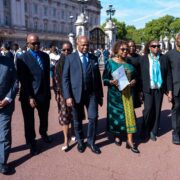
News Americas, LONDON, UK, Tues. Sep. 8, 2026: A Jamaican delegation led by Culture Minister Olivia Grange delivered a historic reparations petition to Buckingham Palace on Monday, but King Charles was not present to receive it, and the British government used the occasion to flatly reject any prospect of paying reparations.

The petition asks the King to refer three questions to the Judicial Committee of the Privy Council, the final court of appeal for Jamaica and several other Commonwealth nations: whether the enslavement of Africans in Jamaica was legal under English law at the time, whether it violated international law, and whether the UK holds a legal obligation to provide compensation for slavery’s harms. The Jamaican delegation is seeking $10 billion in reparations, and organizers say it marks the first time a Commonwealth country has pursued this specific legal route. It came on Africa‑CARICOM Day 2026.

King Charles was in Scotland at the time and was not at the palace when the petition was delivered. Graham Smith, CEO of the anti-monarchy campaign group Republic, criticized the absence: “Once again Charles ducks for cover when the issue of slavery and empire is raised.”

The petition came as King Charles is set to tour several Caribbean countries this October.

CARICOM or the Caribbean Community has spent this year pressing its case for reparations with real momentum. Every CARICOM member state backed a United Nations resolution in March recognizing the transatlantic slave trade and racialized chattel enslavement of Africans as humanity’s gravest crime. In July, regional leaders approved a revised Ten-Point Plan for Reparatory Justice, renewing demands that European nations formally account for slavery, colonialism and Indigenous genocide.

There is just one detail complicating the moral clarity of that demand: eight of CARICOM’s own member states still have the British monarch as their head of state.

Who still answers to the Crown

A man holds a flag calling for reparations in Windrush square during the commemoration.. Fifth anniversary of remembering those who have been impacted by the Windrush scandal which saw people from the Caribbean treated like illegal immigrants by the Home Office despite arriving in Britain legally. (Photo by Thabo Jaiyesimi/SOPA Images/LightRocket via Getty Images)

Antigua and Barbuda, The Bahamas, Belize, Grenada, Jamaica, St. Kitts and Nevis, St. Lucia, and St. Vincent and the Grenadines remain Commonwealth realms, meaning King Charles III, not a president or a citizen of their own nations, sits constitutionally atop their governments. Guyana, Trinidad and Tobago, and Dominica removed the monarch decades ago, in the 1970s. Barbados was the most recent to go, becoming a republic in November 2021.

The contradiction is sharpest in the two countries that have been loudest on reparations. Jamaica’s government has said publicly, repeatedly, that it intends to remove the King as head of state. Foreign Minister Alando Terrelonge told reporters the country remained “hopeful” it would complete the constitutional reforms and referendum needed to do so, a target that has already slipped past its original 2025 deadline. Antigua and Barbuda’s Prime Minister Gaston Browne has likewise pledged a referendum on becoming a republic, calling it “the final step to complete that circle of independence.”

Neither has happened yet.

ANDY BURNHAM

Within hours, Prime Minister Andy Burnham’s spokesperson reiterated the government’s position. “The UK does not and will not pay reparations,” the spokesperson said, while separately describing slavery as “abhorrent.” Successive British governments have refused to engage in reparations discussions, even while acknowledging the country significantly benefited from the slave trade; no UK government has ever formally apologized for Britain’s role in sustaining it.

GRANGE

Despite the King’s absence and the government’s rejection, Grange told Reuters she remained “encouraged” by the process. She is separately seeking the return of Caribbean artefacts held in British museums. The petition comes a month after a United Nations committee concluded that countries are legally obligated to consider slavery reparations, warning that racial discrimination cannot be addressed without “a full commitment to review and redress the ongoing harms and consequences of the trafficking of enslaved Africans and racialised slavery.”

NewsAmericasNow will continue tracking developments in the Caribbean’s reparations movement.

RELATED: 

As Africa And The Caribbean Demand Reparations, A New Book Shows The British Crown Was The Architect – Not Just A Bystander

The Illegal Slave Trafficker’s Son Who Became The World’s First Guyana Born Black International Footballer

The Guns We Surrender, The Guns We Miss – A Smarter Firearm Policy For Small States

By Dr. Isaac Newton

News Americas, NEW YORK, NY, Tues. Sept. 8, 2026: A gun is surrendered at a police station. Somewhere, a family may breathe easier. Somewhere else, another family may still be waiting for answers. That single act can remove guns from circulation, but it can also erase an opportunity to discover where the weapon came from, who possessed it, and whether it was used to take a life. Small states should welcome voluntary surrender, but they must design it with eyes wide open. One gun recovered is progress. One crime concealed is a failure.

There is a legitimate place for a carefully designed surrender program. It can bring illegal firearms out of hiding and give people a lawful path to put them down. But surrender must never become immunity from accountability for serious crime. Every firearm should be secured, documented, traced, and forensically examined before disposal. A person may receive protection for unlawful possession covered by the program, but that protection should never become a shield against evidence of murder, robbery, trafficking, or another serious offense. Give people a safe way to surrender a weapon. Never give criminals a safe way to erase a crime.

THE PROGRAM

The program should have a clear beginning and an unmistakable end. During the surrender window, government can offer carefully regulated incentives for voluntary compliance. Every weapon becomes an intelligence opportunity: its serial number, condition, ammunition, provenance, and forensic history may help investigators understand what is moving through the country. After the window closes, enforcement should become stronger, not softer. Police, customs, immigration, and regional partners should use the intelligence gathered to identify trafficking routes, repeat offenders, and weapons that remain in circulation. Surrender should open the door to stronger security, not close the book on it.

Success must also be measured honestly. Count the weapons recovered, but then ask what happened because they were recovered. How many were linked to crimes? How many were traced? How many trafficking networks were disrupted? Did weapons return to the streets? Did shootings decline? If 500 old guns disappear while 600 new ones enter through trafficking, the country has collected weapons without reducing the danger. The real scoreboard is lives protected, crimes prevented, networks disrupted, and public trust strengthened.

For a small island state, every life matters and every public dollar must produce public safety. The best policy joins compassion with accountability: give people a safe path to surrender a weapon; give investigators every lawful opportunity to find the truth; give traffickers nowhere to hide; and give communities confidence that the law protects them. A gun should leave the street without taking the truth with it. Collect the weapon. Preserve the evidence. Close the loophole. Protect the people.

EDITOR’S NOTE: Dr. Isaac Newton is a leadership strategist, governance scholar, and author specializing in institutional excellence, ethical leadership, and human development. Educated at the University of the Southern Caribbean, Oakwood University, Princeton, Columbia, and Harvard, he writes on leadership, governance, and the development of people and institutions. He is the author of Fix It Preacher, Face Life Squarely, and Intimate Intimacy; coauthor of Steps to Good Governance, Daring to Hope, When Nations Kneel, and The Belief Code.

YOU MAY ALSO LIKE: Caribbean Commentary – Pastors Who Matter

Nickapella teams up with Jahmiel to drop ‘Don’t Worry’

Music has always had the power to inspire. That’s why Nickapella believes that his latest collaboration, “Don’t Worry” featuring Jahmiel is a powerful reminder of music’s ability to inspire and banish doubt.

Lil Durk Trial: Prosecutors Push Shared-Blame Rule Ahead of Closing Arguments

The most telling detail in the latest Lil Durk court filing is not about what he did on August 19, 2022.

NYC Mayor Zohran Mamdani Shares Favorite Dancehall and Reggae Songs Ahead of West Indian Day Parade

When New York City’s mayor starts name-dropping Charly Black at a press conference and talking about “whining,” you know something different is happening at City Hall.

Attorney Bradford Cohen Recounts Speaking to Lil Durk One Day Before Arrest

Bradford Cohen, the Florida criminal defense attorney who has represented Lil Wayne, Kodak Black, Drake, Rod Wave, and Travis Scott, says he had a conversation with Lil Durk just one day before Durk was taken into custody.

Kodak Black Reportedly Finishes His Meal Before Arrest

Kodak Black has never been one to let outside circumstances interrupt a good meal. According to reports, when police came to arrest the Florida rapper, he made them wait while he finished eating his chicken box before agreeing to go with them.

Popcaan Confirms He’s Working on Sixth Studio Album

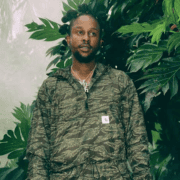
Popcaan just let it slip on Instagram that he’s deep in the process of working on a brand new album.