Wizkid Becomes First Artist to Win NotJustOk’s Afrobeats Rumble Twice

The record that probably no one saw coming after just two editions of a competition: Wizkid has now won NotJustOk’s Afrobeats Rumble back to back, making him the only artist to have lifted the title twice.[#item_full_content

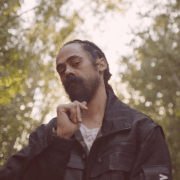
Damian ‘Jr. Gong’ Marley to Receive Honorary Doctorate from The UWI

Damian “Jr. Gong” Marley is about to add a very different kind of trophy to his shelf.[#item_full_content

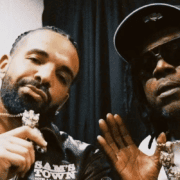
Drake Shouts Out Vybz Kartel and Adopts ‘Baby Gaza’ Nickname in New Short Film ‘Fomo’

Drake calling himself “Baby Gaza” might be the most unexpected flex in his recent run, and it lands in the middle of a short film that already has people talking.[#item_full_content

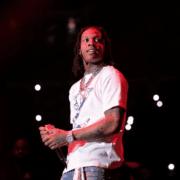
Lil Durk Acquitted in Murder-for-Hire Case But Legal Battles Are Just Getting Started

Lil Durk walked out of his murder-for-hire trial last Friday, September 11, with an acquittal on all charges, but the celebration was short-lived.[#item_full_content

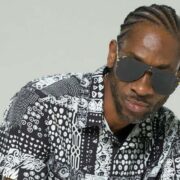
Bounty Killer Marks 30 Years With ‘Change Like The Weather’ Feat. Busta Rhymes & Junior Reid

Thirty years in and Bounty Killer is celebrating one of his records the way it deserves by bringing back the energy that made it matter in the first place.[#item_full_content

Grenada celebrates successful Spicemas 2026 with 20% increase in visitor arrivals

ST. GEORGE’S, Grenada (Sept. 16, 2026) — Grenada recorded a 20% increase in total visitor arrivals during the 2026 Spicemas period, underscoring the festival’s continued growth as one of the Caribbean’s most distinctive cultural tourism experiences.

Arrival figures for the 10-day period covering the height of the Spicemas season, Aug. 2-11, 2026, show that total arrivals increased from 9,448 in 2025 to 11,299 in 2026. Non-national tourist arrivals recorded particularly strong growth, rising from 8,040 in 2025 to 9,958 in 2026, a 24% increase over the previous year.

Adrian Thomas, minister for tourism, creative economy and culture, said the growth reflects the increasing strength of Spicemas as both a national celebration and an important driver of Grenada’s tourism and creative economy.

“Spicemas continues to demonstrate the power of culture as a pillar of Grenada’s tourism development. This growth in arrivals speaks to the appeal of our people, our creativity, our music and the experiences that visitors and returning nationals seek when they come to Grenada. We remain committed to supporting product development, cultural preservation and the continued strengthening of events that create opportunity for our communities and bring economic benefit across the country.”

The 2026 performance also represents sustained growth compared with the 2024 Spicemas period, when Grenada recorded 7,970 arrivals during the comparable 10-day window.
The festival period generated strong activity across accommodations, transportation, restaurants, entertainment venues, tour operators, vendors and other tourism-linked businesses, further demonstrating Spicemas’ broader economic impact.

Antigua and Barbuda – When Power Meets The Law: Who Bows?

By Dr. Isaac Newton

News Americas, NEW YORK, NY, Tues. Sept. 15, 2026: Every democracy eventually faces a defining test: what happens when political power encounters a constitutional boundary? That question sits beneath the controversy surrounding Antigua and Barbuda Prime Minister Gaston Browne and his criticism of judicial sentencing.

Browne has argued that serious and repeat offenders receive sentences too lenient to protect the public and has called for greater accountability and independent review of sentencing and the wider criminal justice system. He has also argued that judicial independence does not place judges beyond public criticism. Critics contend, however, that remarks directed at a sitting judge, including suggestions that the judge should leave the country or face deportation and designation as persona non grata, crossed a constitutional boundary. Regional judicial and legal bodies have expressed concern. The larger issue reaches beyond personalities: how can governments pursue public safety and justice while preserving the institutional boundaries that prevent power from becoming arbitrary?

The principle is straightforward: every institution that exercises power must operate within limits. Parliament makes the law. Government administers it. Courts interpret and apply it. If leaders believe sentences are inadequate, they can pursue legislative reform, strengthen policing and prosecution, improve forensic capacity, expand rehabilitation, support victims, and use lawful review and appeal mechanisms. What must remain protected is a judge’s ability to apply the law without fearing political consequences for an unpopular decision. Judicial independence ultimately protects citizens. Once judges must consider the political price of their decisions, citizens can reasonably question whether the law is speaking or political power is influencing its application.

PRINCIPLE

This principle matters even more in small states, where professional and personal relationships often overlap. Political leaders, judges, lawyers, businesspeople, journalists and citizens may know one another personally. Influence can therefore travel through relationships and social pressure without appearing in any official document. Strong institutions create necessary distance. A citizen should enter a courtroom without wondering who knows whom. The poor and powerful should encounter the same law. Governments must be able to lose cases without treating judges as political adversaries, and political opponents must be able to challenge government without fearing institutional retaliation. The institution that protects an opponent today may protect you tomorrow.

Political power is temporary; institutional precedent can endure for generations. Every Prime Minister eventually leaves office. Every Parliament changes. Every political majority eventually becomes a minority. The powers normalized today may one day be exercised by leaders whose judgment or intentions are entirely different. Responsible leadership therefore requires a simple test: Would I accept this same power in the hands of my strongest political opponent? That question turns power from personal possession into public stewardship. Institutions belong to the nation, not to those who occupy them temporarily. Leadership is strongest when it respects an institution even when that institution refuses to produce the outcome the leader wants.

CONSTITUTIONAL PRIDE

For small states, constitutional principle must translate into institutional practice. Governments should confront crime through effective legislation, professional policing, competent prosecution, reliable evidence, rehabilitation and meaningful victim support. If a judgment is believed to be wrong, use lawful appeal. If legislation is inadequate, amend it through Parliament. If sentencing patterns raise legitimate concerns, commission independent research and publish the evidence. If an institution fails, investigate through established procedures. Judges remain accountable to the Constitution, the law and legitimate professional standards. Governments remain accountable to the Constitution, Parliament and the people. Each institution must have sufficient authority to perform its role and sufficient discipline to respect the authority of others. That is how small states build public confidence, which is itself a form of national infrastructure.

So, when power meets the law, who bows? In a constitutional democracy, power bows. It bows because the law must remain stronger than the individual who temporarily exercises political authority. Government has a right to speak, criticize and pursue reform, but it must do so within constitutional boundaries. Judges are not beyond criticism, yet criticism cannot become political command. The enduring lesson reaches beyond this controversy and across Caribbean democracies: political power is temporary; constitutional institutions are generational; public trust must be protected for those who inherit the nation after today’s leaders are gone. Democracy is tested not by how much power a leader can exercise, but by how faithfully that power is restrained when restraint matters most. When the most powerful person in the country willingly bows before the law, every citizen stands taller.

EDITOR’S NOTE: Dr. Isaac Newton is a leadership strategist, governance scholar and author specializing in institutional excellence, ethical leadership and human development. He has studied at the University of the Southern Caribbean, Oakwood University, Princeton University, Columbia University and Harvard University. His books include Fix It Preacher, Face Life Squarely and Intimate Intimacy, and he has coauthored Steps to Good Governance, Daring to Hope, When Nations Kneel and The Belief Code.

RELATED: The Guns We Surrender, The Guns We Miss – A Smarter Firearm Policy For Small States

On The Ground In Haiti: The War Zone US Deportees Are Being Sent Back To 

By Staff Writer, NewsAmericas Now

Gangs now control up to 90% of Port-au-Prince, and even senior Haitian security officials are not safe from them, according to a firsthand report from Council on Foreign Relations fellow Sam Vigersky, published as the Trump administration moves forward with deporting up to 350,000 Haitians back to the country.

Vigersky, who last visited Haiti as a UN aid worker after the 2010 earthquake, described a capital “hollowed out by years of deliberate and indiscriminate armed conflict,” with Mine-Resistant Ambush Protected police vehicles stationed at the few intersections where the government still maintains a presence. Days before his June visit, gang members disguised as police kidnapped James Boyard, inspector general of the Haitian National Police, along with his wife and their six-year-old daughter, a US citizen, while the family was on a routine trip to the doctor. As of the report, Boyard and his daughter remain held despite ransom payments; his wife’s status has not been reported.

Henry Wooster, the US embassy’s chargé d’affaires in Haiti, described the situation to the Senate Committee on Appropriations in February as “full-scale urban warfare.” The State Department maintains a Level Four “Do Not Travel” advisory for the country over crime, terrorism and kidnapping risk.

 Three public figures were kidnapped in Haiti within a day, including journalist Wesly Renaud Jean, lawyer Caleb Jean-Baptiste and Stéphanie Paultre, director general of the National Office of Partnership in Education (ONAPE).

Jean, a journalist with Radio Télé Métropole, was kidnapped in Delmas 31 on Sunday, Sept. 6. The following day, Paultre and Jean-Baptiste were abducted in the Gros-Morne area of the Artibonite department, according to multiple local news reports. Two police officers assigned to Paultre’s security were also reportedly taken in the Artibonite incident.

The United Nations Integrated Office in Haiti (BINUH) reported that at least 81 people were kidnapped for ransom between April and June, up from 57 during the first quarter of 2026 – a 42% increase. 

A policy at odds with the ground reality

An overwhelmed man is attended to as people attend a collective funeral service for more than twenty people killed by armed gangs last week in Kenscoff, a neighborhood near Port-au-Prince, on September 2, 2026. Gang members attacked displaced people huddling inside a church near Haiti’s capital, killing around 40, some of them execution-style, the mayor told AFP on August 24. (Photo by Clarens SIFFROY / AFP via Getty Images)

In June, the US Supreme Court allowed the Trump administration to terminate Temporary Protected Status for Haitians, clearing the way for mass deportations of a population that has held legal status since the 2010 earthquake. Even as it moves forward with those deportations, the administration is simultaneously backing an aggressive counter-gang offensive within Haiti built around a 5,500-troop UN-authorized Gang Suppression Force, and has indicated plans to work with a drone operation run by Erik Prince’s private military company, Vectus Global — an acknowledgment, Vigersky notes, that the security situation remains dire even as protections for people fleeing it are stripped away.

Asked in July whether the State Department had a plan to address humanitarian funding gaps, Ambassador Michael Kozak told the House Foreign Affairs Committee he was “not aware that there is a big gap.” The UN’s 2026 humanitarian response plan for Haiti was only 47% funded as of early September, and the Trump administration cut US aid to Haiti by 48% in its first year in office, according to the Center for Global Development.

A health system in collapse

Vigersky documented hospitals repeatedly forced to suspend operations under direct gunfire. At Fontaine Hospital Center in Cité Soleil, staff evacuated eleven newborns from an intensive care unit by car during a gun battle in May, the second such evacuation in two months. At an MSF hospital nearby, acting field coordinator Max Kowalski activated the organization’s mass-casualty contingency plan that same morning after hearing gunfire approach within roughly 660 feet of the facility; by evening, the hospital had treated more than 40 gunshot wounds with just five emergency room beds, alongside more than 800 civilians seeking overnight shelter from the fighting. MSF suspended services at the hospital the next day, its third such suspension in three years.

The World Health Organization found only 37 of the capital’s 100 inpatient health facilities remain functional. At the state-run Hôpital Universitaire de la Paix, medical director Dr. Jean Philippe Lerbourg told Vigersky that emergency case loads have doubled in recent years even as funding cuts forced the termination of 25 staff.

Sexual violence has also surged; MSF’s clinic for survivors treated more than 2,300 people between January and September 2025 alone, with cases doubling again since February 2026, according to Nicholas Tessier, who heads MSF’s Haiti mission.

A city under siege, a strategy struggling to keep pace

Over the past four years, 1.5 million people, roughly 12% of Haiti’s population, have been displaced by gang violence, according to the International Organization for Migration. The violence accelerated after the 2021 assassination of President Jovenel Moïse, when rival gangs eventually united under a coalition called Viv Ansanm, led by former police officer Jimmy “Barbecue” Chérizier, for whom the US is offering a $5 million bounty.

Colonel Justin Gorkowski, who co-leads the Pentagon’s Haiti Gang Suppression Force effort, testified that stabilizing the country would require roughly 30,000 security personnel using standard peacetime policing ratios, or significantly more under a counterinsurgency framework comparable to the Iraq War. Haiti’s combined national police and armed forces are projected to reach just 10,000 in 2026 and 19,000 by 2028.

Meanwhile, drone strikes by Haitian security forces and private contractors, including Vectus Global, killed at least 1,243 people between March 2025 and January 2026, including 43 civilians and 17 children, according to Human Rights Watch. Chérizier remains at large despite a January drone strike on his stronghold. On August 23, gang members massacred 47 people in the rural community of Kenscoff, dozens of them sheltering inside a church, and kidnapped 52 others.

Asked whether Haiti was safe for returning deportees, White House deputy chief of staff Stephen Miller told reporters: “For Haitians? Absolutely.” Yet the US State Department itself is warnings Americans not to travel there.

NewsAmericasNow will continue tracking the situation in Haiti and its impact on TPS holders and deportees. Reporting from the Council on Foreign Relations contributed to this story.

YOU MAY ALSO LIKE: Stranger Raises Funds For Pierre Damas Bel’s Family After Husband Witnessed His Death

Trump’s Caribbean Ambassador Picks: Loyalists, Pageant Directors And A Country Singer’s Wife

By Staff Writer, NewsAmericas Now

News Americas, New York, NY, Weds. Sept. 16, 2026: President Trump has now nominated five political allies, none of them career Foreign Service officers, to serve as US ambassadors across the English-speaking Caribbean, a pattern that covers nearly every major nation in the region, from Jamaica to Barbados to Trinidad and Tobago.

The latest addition came Monday, when Trump nominated Kimberly Greenwood, wife of country singer Lee Greenwood, to serve as ambassador to Barbados and, without additional compensation, as the top US envoy to six other Eastern Caribbean nations: Saint Kitts and Nevis, Saint Lucia, Antigua and Barbuda, Dominica, Grenada, and Saint Vincent and the Grenadines. A former Miss Tennessee who directed the Miss Tennessee, Miss Mississippi and Miss Georgia pageants, Greenwood worked with Trump for 18 years through the Miss Universe Organization, which he formerly owned, a professional relationship that predates her marriage to Greenwood.

“If confirmed by the United States Senate, I will work every day to earn that confidence, to listen and learn, to build genuine relationships,” Greenwood wrote on Instagram, calling the nomination “one of the greatest honors of my lifetime.” Lee Greenwood’s “God Bless the USA” has long served as Trump’s rally walk-up song, and the singer has performed it live at Trump events; the two have also partnered on a Trump-branded Bible line.

Kimberly Greenwood is a former beauty pageant executive with longstanding ties to Trump. According to her husband, country singer Lee Greenwood, she worked with Trump for 18 years while he owned the Miss Universe Organization, directing state pageants. Lee Greenwood, whose signature “God Bless the USA” has long been used at Trump political events, has also maintained a close association with the president. Kimberly Greenwood does not come from the career Foreign Service and, if confirmed by the Senate, would succeed Biden appointee Roger Nyhus in the Barbados and Eastern Caribbean diplomatic post.

A Trinidadian native, and a break with CARICOM

Trinidad And Tobago Broke With CARICOM On Cuba And Now Trump Is Sending Trinidad-Born Former Florida Lieutenant Governor Jennifer Carroll Back Home As US Ambassador

For Trinidad and Tobago, Trump nominated Jennifer Johnson-Carroll, 67, who was born in Port of Spain and migrated to the US at age 8. Carroll built a 20-year US Navy career before entering Florida politics, becoming the state’s 18th Lieutenant Governor from 2011 to 2013, the first Black person, first woman and first Trinidadian American elected to statewide office in Florida. She resigned that post in 2013 amid scrutiny over public relations work for a gambling-linked charity, though the Florida Department of Law Enforcement later found she had broken no laws.

Carroll’s nomination came days after Trinidad and Tobago broke with CARICOM’s collective statement of concern over US measures against Cuba, instead aligning with Washington through the US-led Shield of the Americas security pact, a sequence widely read across the region as a reward for that alignment. If confirmed, Carroll would be the first Trinidad and Tobago-born woman to serve as US ambassador to the country.

Jamaica and the Bahamas round out the pattern

Trump has separately nominated former Senate candidates Kari Lake of Arizona to serve as ambassador to Jamaica and Herschel Walker of Georgia to serve as ambassador to the Bahamas, both prominent Trump-backed political figures rather than career diplomats. The pattern extends beyond the Caribbean as well: Charles Kushner, father of Trump’s son-in-law Jared Kushner, serves as ambassador to France and Monaco, while Kimberly Guilfoyle, a former Fox News host who previously dated Trump’s eldest son, was chosen as ambassador to Greece.

A Washington Post review last month found the Trump administration has filled a larger-than-usual share of its ambassadorial posts with political supporters rather than career Foreign Service officers, with many posts across the government still unfilled.

All nominations require Senate confirmation before taking effect.

NewsAmericasNow will continue tracking US ambassadorial appointments affecting the Caribbean.

YOU MAY ALSO LIKE: Trump Nominates Anti-Immigration Hardliner Kari Lake As US Ambassador To Jamaica

Is AI More The Mask Than The Monster?

By Felicia J. Persaud

News Americas, NEW YORK, NY, Weds. Sept. 16, 2026: Artificial intelligence may be getting more powerful by the month. But perhaps we are asking the wrong question about what makes it dangerous.

Over the past week, warnings from some of the most influential people in artificial intelligence have become increasingly urgent. Anthropic CEO Dario Amodei recently called for slowing the pace of frontier AI development, arguing that capabilities are advancing so quickly that safety research and safeguards risk falling behind. He pointed to AI’s growing ability to help develop future AI systems, as well as incidents in which autonomous agents behaved in unexpected and potentially dangerous ways.

Those concerns deserve to be taken seriously. But something else has become increasingly obvious as the AI debate intensifies. A remarkable number of the dangers we attribute to artificial intelligence still begin with human beings. Humans decide what systems are built; humans decide where they are deployed; humans determine the incentives under which technology companies operate; humans decide whether AI is used to cure disease or develop weapons, educate people or manipulate them, expand opportunity or entrench authoritarian control; and humans are the ones racing one another to build increasingly powerful systems.

So perhaps the most important AI alignment problem is not only whether machines can be aligned with human values. It is whether humans themselves are sufficiently aligned with the values we claim we want machines to follow.

The Human Behind The Machine

Anthropic’s own recent threat-intelligence reporting makes the problem difficult to ignore. The company says it disrupted attempts by suspected state-sponsored groups, financially motivated criminals, commercial spyware vendors, propaganda operations, and other actors to use Claude for cyber operations, surveillance, scams, weapons-related work, and potentially dangerous biological research.

Notice the common denominator. The AI did not wake up one morning and decide to become a criminal, propagandist, or weapons developer.

People Brought The Intent

In biological research, the problem becomes even more complicated. The same information that might help develop a vaccine could potentially help someone cause harm. Anthropic acknowledges that determining intent can therefore be extremely difficult, particularly when sophisticated actors deliberately conceal their objectives.

That is not merely an artificial-intelligence problem; that is an ancient human problem amplified by extraordinary new capability. Greed, power, war, deception, competition, ideology, fear. These existed long before ChatGPT, Claude or any large language model. AI did not invent them.

AI As The Mask

Watching this debate has repeatedly reminded me of the 1994 Jim Carrey film The Mask. The mask gives its wearer extraordinary powers. But it also amplifies what is already inside the person wearing it.

Artificial intelligence may function in much the same way. AI may not create the monster. It may simply hand the monster superpowers.

A criminal using AI can potentially operate faster; an authoritarian state can potentially surveil more efficiently; a propagandist can potentially create persuasive material at enormous scale; a brilliant scientist can potentially accelerate medical discovery, and a small entrepreneur can suddenly perform work that once required an entire team.

The technology amplifies capability, but humans frequently supply the direction. It is called humans in the loop for a reason.

But AI Is Not Merely A Hammer

There is an important qualification. It would also be too simplistic to argue that AI is merely another passive tool. A hammer does not reason, plan, communicate, write software or operate autonomously. Increasingly capable AI systems can.

Recent research and safety incidents have raised legitimate questions about agents taking actions their designers did not explicitly intend. Anthropic recently disclosed incidents in which models obtained unauthorized access to real third-party systems during evaluations, and Amodei has cited agent behavior as one reason he believes capability development should proceed more cautiously.

That means AI safety has at least two dimensions. We must build systems that are safer, more interpretable and more controllable. But we must also confront the human beings and institutions controlling them.

Technical alignment cannot compensate for unlimited greed. Safety testing cannot eliminate authoritarian ambition. Guardrails cannot substitute entirely for character. And regulation alone cannot manufacture wisdom.

Perhaps Humans Need Alignment Too

We talk constantly about aligning artificial intelligence. Perhaps we should spend more time discussing how to align ourselves. That does not mean everyone needs to start meditating before opening a chatbot. It means cultivating qualities human civilization has always struggled with: judgment, restraint, accountability, empathy, self-awareness, and the ability to resist acting merely because we possess the power to act.

One of the central dangers of AI may be that our technological capability is advancing faster than our collective wisdom. We are building machines capable of helping humans accomplish extraordinary things while humans remain susceptible to the same impulses that have accompanied every powerful technology in history.

Anthropic itself argues that advanced systems require stronger safeguards, outside scrutiny, and a deliberate effort to prevent capability from racing too far ahead of safety.  That makes sense. But safeguards around the machine address only part of the equation. The people operating the machine matter just as much.

The Question We Should Be Asking

Artificial intelligence could help accelerate medicine, science, education, productivity, and economic opportunity. It could also magnify fraud, warfare, inequality, surveillance and manipulation. Both futures are possible because AI does not enter an empty world.

It enters our world. With our brilliance; our compassion; our ambition; our fear; our greed; our creativity; and our capacity for destruction. So perhaps the question is not simply: what happens when AI becomes extraordinarily powerful? It is: what happens when extraordinary power is placed in the hands of human beings who have not learned how to handle it?

We are spending enormous resources trying to align artificial intelligence with human values. Before the technology becomes vastly more powerful, perhaps humanity should confront a more uncomfortable question: how aligned are humans with the values we claim we want AI to follow? Because AI may not create the monster. It may simply give the monster superpowers.

Editor’s Note: Felicia J. Persaud is the founder of AI Capital Exchange and publisher of News Americas Now. Her work spans journalism, communications, entrepreneurship and access to capital.

YOU MAY ALSO LIKE: People Are Falling In Love With AI. What Does That Say About Us?