The Day The Money Stops – Antigua and Barbuda’s Test of Economic Foresight

By Dr. Isaac Newton

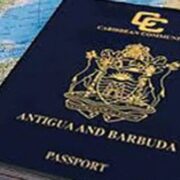
News Americas Now, NY, NY, Mon. Oct. 26, 2026: On June 25, 2026, the European Commission formally asked Antigua and Barbuda to phase out its Citizenship by Investment Programme (CIP) by June 1, 2028. Prime Minister Gaston Browne has since raised the prospect of suspending the programme as early as November 12 to protect visa-free access to Europe. The country now faces an urgent economic question. Has CIP revenue built an economy capable of sustaining itself, or has dependence on that income grown faster than the development of alternatives? The programme has helped finance public services, infrastructure, and disaster recovery. Those contributions matter. So does the need to prepare for a future in which this revenue may decline sharply or disappear.

The government should publish a clear account of CIP revenue, how it has been spent, and what lasting economic value it has created. It should disclose how much the public finances depend on these receipts, which essential services they support, and how an abrupt suspension would affect the national budget. It should also explain the safeguards and contingency plans already in place. International policies change. Investment flows fluctuate. Sound economic management anticipates these risks and prepares alternatives before they become emergencies. The true measure of revenue is not simply what it pays for today, but what it enables a country to sustain tomorrow.

PLAN TO BROADEN THE ECONOMIC BASE

Antigua and Barbuda needs a funded, measurable plan to broaden its economic base. Tourism remains important, but renewable energy, the blue economy, digital services, agriculture, and locally owned businesses also offer opportunities. Each requires investment, skilled workers, reliable infrastructure, and access to markets. The government should establish clear targets, assign responsibility, publish annual results, and identify the sectors most capable of generating sustainable employment and income. Young people and small businesses must have meaningful opportunities to participate. Regional cooperation can strengthen Caribbean negotiations with Europe, but each country must also take responsibility for its own economic future. Diversification succeeds through sustained investment and execution, not announcements alone.

The government must protect Antigua and Barbuda’s international standing through credible safeguards, sound administration, and sustained diplomacy. It must also prepare for a future in which CIP revenue shrinks or disappears. That means securing alternative income, protecting essential services, and investing in industries that create lasting value. Citizens deserve transparent decisions, measurable progress, and an honest account of the results. A generation’s prosperity depends on more than the wealth its leaders collect. It depends on the foundations they leave behind. Antigua and Barbuda must turn today’s revenue into tomorrow’s opportunity so that future generations inherit an economy capable of sustaining their ambitions, protecting their dignity, and expanding their choices.

EDITOR’S NOTE: Dr. Isaac Newton is a leadership strategist, governance scholar, and author specializing in institutional excellence, ethical leadership, and human development. Educated at the University of the Southern Caribbean, Oakwood University, Princeton, Columbia, and Harvard, he writes on leadership, governance, and the development of people and institutions. He is the author of Fix It Preacher, Face Life Squarely, and Intimate Intimacy, and co-author of Steps to Good Governance, Daring to Hope, When Nations Kneel, and The Belief Code.

RELATED: Caribbean Leaders Must Lead Without Leaving A Scandal Behind

King Charles Set For Caribbean Visit As Calls For Reparations Grow

By News Americas Now Staff Writer

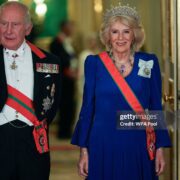
News Americas Now, New York, NY, Mon. Oct. 26, 2026: King Charles III begins his Caribbean tour tomorrow, Oct. 27th, built around community, conservation, youth, business, and Commonwealth partnership. But another subject will follow him from The Bahamas to Guyana and on to Antigua and Barbuda: slavery, reparations, and the Caribbean’s unresolved demand that Britain confront the consequences of an empire built in part on enslaved African labor.

The King’s Autumn Tour begins October 27 and runs through November 4, according to Buckingham Palace. He will visit The Bahamas and Guyana before joining Queen Camilla in Antigua and Barbuda, where they will attend the Commonwealth Heads of Government Meeting, CHOGM 2026. The Palace says the program will highlight environmental sustainability, biodiversity, community resilience, youth engagement, and the Commonwealth.

REPARATIONS

Yet behind the ceremonial receptions, youth rallies, conservation visits and business engagements is a growing reparations movement that appears determined not to let Britain’s colonial past remain outside the official conversation. Prof. Hilary Beckles, chairman of the CARICOM Reparations Commission, has publicly appealed to Charles to support serious reparations talks when Commonwealth leaders gather in Antigua and Barbuda. Beckles has framed the appeal personally, asking Charles to consider the historic enrichment of the royal family through slavery and to help move the Commonwealth toward what he described as a greater commitment to human justice.

Guyana is also preparing to raise the issue. King Charles arrives there on October 29, 26 years after his last visit as Prince of Wales. His itinerary includes meetings with President Irfaan Ali, Indigenous leaders, environmental advocates and businesses, as well as engagements focused on biodiversity and Guyana’s long-standing conservation agenda.

Charles has deep environmental ties to Guyana. As Prince of Wales, he supported the country’s efforts to preserve its forests and has been associated with the Iwokrama rainforest conservation project for more than two decades. But Guyanese reparations advocates are asking him to address another part of Britain’s relationship with the region.

Eric Phillips, head of Guyana’s reparations committee and vice-chair of the CARICOM Reparations Commission, has called for an apology and urged the King to advance a serious conversation on reparatory justice. The demand places a difficult historical question alongside the tour’s emphasis on partnership and a shared Commonwealth future.

JAMAICA TAKES THE QUESTION TO THE PRIVY COUNCIL

Perhaps the most consequential development, however, comes from a Caribbean country the King is not visiting on this tour. Jamaica has taken its reparations campaign directly to the British legal establishment. In September, Jamaica submitted a landmark petition to King Charles asking him to refer three legal questions concerning slavery to the Judicial Committee of the Privy Council. Charles subsequently referred the petition, and Jamaica says a hearing is provisionally scheduled for the week of March 8, 2027.

The questions go to the heart of Britain’s colonial relationship with Jamaica: whether the forced transportation of Africans to the island was lawful under English law; whether the enslavement of Africans constituted a crime against humanity; and whether Britain has a legal obligation to provide restitution for slavery and its continuing consequences.

It comes as Professor Brooke Newman, in The Crown’s Silence: The Hidden History of the British Monarchy and Slavery in the Americas,  shows that the British monarchy was not merely a passive beneficiary of the transatlantic slave trade. It was an active architect, investor, and financial beneficiary.

Drawing on records from the Royal African Company, the South Sea Company, the Royal Navy, and colonial officials, Newman demolishes Britain’s long-standing defense that colonial slavery was strictly the work of private enterprises – establishing instead that the Crown designed, funded, enforced, and profited from the Caribbean slave system across multiple monarchies spanning nearly 250 years.

“It is time to place the British Crown at the center of our analysis of the transatlantic slave trade, its legacies, and the pursuit of reparatory justice for slavery – where it belongs,” Newman writes.

A Privy Council opinion would not automatically force the British government to pay reparations. But Jamaican officials believe the process could influence future negotiations and potentially establish an important legal precedent for other Caribbean nations pursuing reparatory justice. The British government has continued to reject calls to pay reparations. King Charles, meanwhile, has expressed sorrow over slavery and has supported research into the monarchy’s historical links to the slave trade, but he has not issued a formal royal apology.

That distinction is becoming increasingly difficult to ignore in the Caribbean.

CHOGM – AND THE QUESTION THAT WILL NOT GO AWAY

The royal tour ends in Antigua and Barbuda, where Commonwealth leaders will gather from November 1–4 under the theme, “Accelerating Partnerships and Investment for a Prosperous Commonwealth.” The summit is expected to focus on climate resilience, trade, innovation, equality and sustainable development.

Reparations campaigners say the historical debt created by slavery belongs inside that conversation. Antigua and Barbuda’s reparations commission is preparing activities around CHOGM, including the launch of a “Global Reparations Caravan” on November 3. Caribbean advocates have also signaled that reparatory justice will be raised throughout the summit, even without a dedicated official session on the issue.

The tension is difficult to miss. The King will arrive speaking about partnership, resilience, sustainability and a shared Commonwealth future at the very moment Caribbean governments and activists are asking Britain to reckon more directly with how the modern Commonwealth was shaped. Jamaica is asking Britain’s Privy Council to examine whether slavery itself gives rise to a legal obligation for restitution. Guyanese advocates are calling for an apology. CARICOM reparations leaders are pressing for structured negotiations. And King Charles will be standing in the middle of it.

The ceremonies will take place. The speeches will be delivered. The photographs will show handshakes, flags, gardens, and smiling crowds. But beneath them sits a question that centuries have not erased: can Britain and the Caribbean truly talk about a shared future without settling the unfinished business of their past?

RELATED: News Americas Now publisher Felicia J. Persaud discusses the King’s visit and the call for reparations this week.

ICN Founder Felicia J. Persaud Featured In New Book On Notable Guyanese Women Business Leaders

News Americas Now, FORT LAUDERDALE, FL, Mon. October 26, 2026: News Americas Now and ICN’s founder and publisher, Felicia J. Persaud, is among 127 women profiled in a new book documenting the achievements and contributions of Guyanese women in business, entrepreneurship, and leadership.

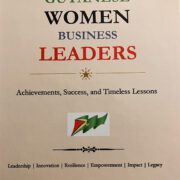
Notable Guyanese Women Business Leaders: Achievements, Success, and Timeless Lessons, by Canada-based author Lal Balkaran, profiles women whose careers span business, finance, communications, public service, hospitality, education, healthcare, and other sectors in Guyana and across the diaspora. Persaud’s profile begins on page 272 under the heading “Building Global Visibility, Capital Access, and Caribbean Influence.”

The profile traces her journey from Georgetown, Guyana, to the United States and her career across media, entrepreneurship, investment advocacy and diaspora engagement. It highlights her founding of the ICN Group and her work across News Americas Now, Invest Caribbean, Hard Beat Communications and other ventures focused on Caribbean visibility, business development and global market access.

News Americas Now and ICN founder Felicia J. Persaud is among 127 women profiled in a new book celebrating notable Guyanese women business leaders and entrepreneurs.

The book also notes Persaud’s long-running advocacy for Caribbean representation in the United States, including her founding of CARIB ID, an initiative launched in 2008 to press for greater recognition of Caribbean ancestry in U.S. Census data. Her profile describes communications and visibility as a recurring theme throughout her career, including the creation of platforms aimed at giving Caribbean businesses, entrepreneurs, and communities greater access to global audiences.

Balkaran’s 430-page book brings together profiles of women from several generations, including historic pioneers as well as contemporary executives, entrepreneurs and professionals. Among those listed are women recognized for breaking barriers in banking, accounting, business ownership, public service, media, hospitality, and corporate leadership. The publication describes itself as a record of leadership, innovation, resilience, empowerment, impact and legacy among Guyanese women.

Persaud said being included among so many accomplished Guyanese women carries particular meaning because of the journey that began in Guyana and continued across the wider Caribbean diaspora. “This recognition is especially meaningful because Guyana is where my story began,” Persaud said. “Whatever I have built internationally has always remained connected to the Caribbean, its people and the belief that our stories, businesses and ideas deserve a place on the global stage.”

Balkaran is an award-winning author and internal audit professional whose published work includes books and articles on Guyana, business and related subjects.

ICE Sends Guyanese Accused In 2015 Georgetown Murder Packing

By News Americas Now Staff Writer

News Americas Now, NY, NY, Tues. Oct. 27, 2026: A Guyanese man wanted in connection with a 2015 murder in Georgetown has been deported from the United States and is now before the courts in Guyana.

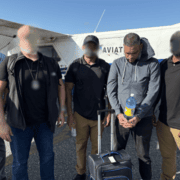
Kanand Ojha, 45, was removed from the U.S. on September 18th after being arrested in New York by members of the U.S. Marshals Service New York/New Jersey Regional Fugitive Task Force. Ojha had been wanted by Guyanese authorities in connection with the killing of Noel “Nephi” Luther, a gay sex worker who was shot in Georgetown in July 2015. Following his return to Guyana, Ojha was charged with murder and remanded to prison.

According to U.S. Immigration and Customs Enforcement, (US ICE) Ojha entered the United States legally through John F. Kennedy International Airport in July 2015, but his lawful status was later revoked after authorities became aware of an outstanding arrest warrant in Guyana.

ICE said Ojha was arrested in Queens on September 8, 2025, during an operation involving the U.S. Marshals Service, ICE Enforcement and Removal Operations and Homeland Security Investigations. ICE Enforcement and Removal Operations New York City Field Office Director Kenneth Genalo said the removal resulted from cooperation between U.S. and Guyanese law enforcement agencies.

“New Yorkers are safer today because this accused murderer is no longer free to roam our neighborhoods,” Genalo said in the ICE statement.

THE ALLEGATION

Guyanese authorities allege that Luther was fatally shot during a confrontation in Georgetown in July 2015. A wanted bulletin for Ojha was later issued as investigators continued to pursue the case. Another man linked to the killing, Ron “Andel” Forde, pleaded guilty to the lesser offence of manslaughter and was sentenced to 20 years in prison in 2017.

After being returned to Guyana, Ojha appeared before Chief Magistrate Judy Latchman at the Georgetown Magistrates’ Court, where the murder charge was read to him. He was not required to enter a plea and was remanded to prison.

The case is now back before the Guyanese justice system more than a decade after Luther’s death. The charge against Ojha remains an allegation, and he is presumed innocent unless and until proven guilty.