St. Kitts And Nevis: When A Prime Minister Says, ‘I Saw God’: Where Does Faith End And Power Begin?

By Dr. Isaac Newton

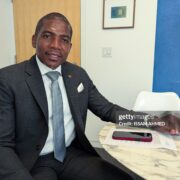
News Americas Now, Thurs. Oct. 29, 2026: When a prime minister says he saw God during a medical crisis, a personal testimony enters public debate. St. Kitts and Nevis Prime Minister Dr. Terrance Drew’s reported account of seeing God during his stroke has sparked discussion about faith, healing, and political leadership. His account deserves neither blind acceptance nor ridicule. Everyone has the right to interpret suffering through faith. Public leaders, however, have an additional responsibility to the people they serve. They may share their beliefs, but citizens retain the right to examine their implications.

Faith and medicine can coexist. A person may believe God helped him survive an illness while receiving medical treatment and rehabilitation. Medical care neither confirms nor disproves a spiritual experience. Science investigates the body through evidence. Faith helps people interpret suffering, survival, and life’s purpose. Tension arises when personal conviction demands unquestioning acceptance or honest inquiry is treated as an attack on God. Sincerity deserves respect, but it does not guarantee accuracy. Mature faith makes room for humility, reason, and honest discussion.

POLITICAL STAKES

The political stakes are significant. Religion can inspire compassion, courage, and service. It can also shield political leaders from scrutiny when loyalty to a politician becomes confused with loyalty to God. Democracy cannot function well when leaders acquire sacred status and citizens feel guilty for questioning them. No elected official should stand beyond public examination. Citizens may be unable to verify another person’s spiritual experience, but they can evaluate decisions, examine evidence, and demand accountability.

Dr. Drew’s continued medical treatment neither validates nor invalidates his testimony. His account also provides no basis for speculation about his mental health, though mental illness is real. The central concern is political, not diagnostic. How does the testimony influence public judgment? Does it encourage greater compassion and service, or does it make legitimate criticism more difficult? These are fair questions about the relationship between personal faith and public power.

The value of faith in leadership is best measured by the conduct it inspires. Does it deepen honesty, humility, and compassion? Does it strengthen a leader’s willingness to listen, serve, and accept correction? These questions have particular significance across the Caribbean, where religious conviction and political loyalty can reinforce one another. Citizens need not settle the spiritual meaning of a leader’s experience to assess the quality of his public service.

A claimed encounter with heaven grants no immunity from accountability on earth. If a leader believes God has spared his life, that conviction should deepen his obligation to serve the people. It should never diminish their right to question his decisions. Faith may guide a leader’s conscience. Public accountability must govern the exercise of his power.

EDITOR’S NOTE: Dr. Isaac Newton is a leadership strategist, governance scholar, and author specializing in institutional excellence, ethical leadership, and human development. Educated at the University of the Southern Caribbean, Oakwood University, Princeton, Columbia, and Harvard, he writes on leadership, governance, and institutional development. He is the author of Fix It Preacher, Face Life Squarely, and Intimate Intimacy, and co-author of Steps to Good Governance, Daring to Hope, When Nations Kneel, and The Belief Code.

RELATED: The Day The Money Stops – Antigua and Barbuda’s Test of Economic Foresight
Guyana President’s Calls For Reparations Ring Hollow Without Oil Renegotiation

By Darsh Khusial

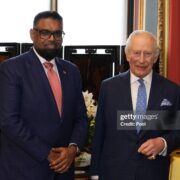
News Americas Now, NY, NY, Thurs. Oct. 29, 2026: An article in The Sunday Telegraph states: “In Guyana, President Irfaan Ali has been a loud and leading voice in the slave-trade reparations campaign.” The article also reports that the Caribbean is calling for US$24 trillion in reparations for slavery. That amounts to approximately US$3.4 million per person across the English-speaking Caribbean states, with their combined population of roughly seven million.

Britain currently has a public debt of approximately US$4 trillion, or about US$57,000 per person, based on a population of 70 million. The country faces financial difficulties, and many of its citizens worry about paying their heating bills this coming winter. Britain is therefore in no financial position to pay US$24 trillion to compensate for the wrongs of its past.

On February 26, 2020, Guyanese Critic asked Irfaan Ali: “The oil contract [2016 Stabroek PSA]. Do you agree with the $55 billion signed away, um, Global Witness report, and will you revisit the oil contract?”

Ali responded: “We have made it very clear that we can never agree. How can… how can… I don’t think any Guyanese agree with this. No Guyanese. Except the government that is defending it. We can… we… we have made it very clear that we have to go towards, we’re
looking at these contracts, renegotiating these contracts, looking at, uh, contract management, and all of these things. Everything we have to re-look at, because we have to ensure that our country does not get, uh, the wrong end of the stick.”

A recording of the exchange is available through OGGN. Global Witness based its estimate of US$55 billion in forgone revenue on reserves of 7.9 billion barrels and an oil price of US$65 per barrel. The announced reserves now stand at 11 billion barrels, while oil futures prices are around US$115 per barrel, with spot prices approximately US$20 higher.

The reserves estimate was last updated in April 2022, as OGGN has noted. An estimated 21 discoveries have been made since then, representing an increase of roughly 70% in the number of discoveries since the 11-billion-barrel figure was announced. An increase in discoveries does not necessarily translate into a proportional increase in recoverable reserves. Nevertheless, applying the reasoning behind the Global Witness estimate to higher reserves and prices suggests that Guyana could be giving up more than US$100 billion-approximately US$100,000 per Guyanese citizen. One would therefore expect Ali to be redoubling his efforts to renegotiate the oil contract. Instead, he continues to falsely parrot “sanctity of contract” as a reason it cannot be renegotiated, an argument this OGGN commentary challenges.

The gap between Ali’s earlier promises and his current position on renegotiation undermines confidence in his statements about reparations for slavery. He spoke of ensuring that Guyana did not get the “wrong end of the stick,” yet his approach to the oil contract
appears inconsistent with that commitment.

These are two distinct questions, and pursuing reparations need not prevent a government from seeking better oil terms. But the contrast matters: one issue depends on a distant government agreeing to an extraordinary payment, while the other concerns decisions
Guyana’s own leaders can press for now. Public commitments should be judged not only by the causes leaders champion abroad, but also by the actions they take to protect their country’s interests at home.

Given Britain’s economic strains, Ali should devote at least as much effort to renegotiating the oil contract as he does to advocating for reparations. At least US$3 billion worth of oil is now being extracted every month, and that figure is expected to rise in 2027. The financial stakes for Guyana are immediate and substantial.

Furthermore, if Ali is serious about standing up for the Caribbean, he should push for a parent-company guarantee to cover liabilitiesfrom an oil spill. A major spill could impose devastating costs on Guyana and neighboring Caribbean countries. Instead, Ali appears to be siding with the oil companies rather than ensuring that Guyana and the wider Caribbean have adequate financial protection in the event of such a disaster.

EDITOR’S NOTE: Darsh Khusial writes about governance and public policy in Guyana, with a focus on the oil and gas sector. This commentary is submitted on behalf of OGGN.

RELATED: President Ali Claims Guyana’s Oil Share Is 39.8%, But BOG Data Suggests Less Than 30%

Bunny Wailer’s “Fig Tree” Gets Fresh Roots With Blvk H3ro and Cen’c Love

The late reggae legend Bunny Wailer’s “Fig Tree” is bearing fresh fruit—and his daughter is helping bring in the harvest.[#item_full_content]  

The Best Dancehall Songs of 2025: 12 Tracks That Ran the Year

Some years in dancehall belong to one riddim. Others belong to one voice. 2025 belonged to a lot of things at once.[#item_full_content]  

The Best Dancehall Songs of 2024

Some years in dancehall drift by. 2024 roared. Vybz Kartel walked out of prison and straight onto the charts, Squash came back from the wilderness with the biggest record in Jamaica, and the shared riddim returned to the centre of the culture.[#item_full_content]  

The Best Dancehall Songs of 2023

Some years in dancehall drift by on a handful of street bangers. 2023 was not one of those years.[#item_full_content]  

Jay-Z and J. Cole Back Lil Durk’s Latest Bid for Pretrial Release

Lil Durk is offering to give up every dollar he might ever earn if it means waiting for trial at home.[#item_full_content]  

Gov. Kathy Hochul Responds After Nicki Minaj Calls Her ‘Evil’

Eight years ago, Nicki Minaj was in Kathy Hochul’s corner, backing her 2018 run for lieutenant governor.[#item_full_content]  

Rah Ali Accuses Nicki Minaj of Orchestrating False $30 Million Theft Claims in Open Letter

Rah Ali says she has receipts, and not the kind anyone wants to see. In a new open letter, the former Love and Hip Hop personality claims she holds “actual proof” that Nicki Minaj intends to destroy what she is building, pointing to things the rapper allegedly wrote and said to her directly.[#item_full_content]  

Jay-Z Will Headline the Super Bowl Halftime Show at SoFi Stadium

Seven years ago, Jay-Z told Roger Goodell that if their partnership was about getting him on the Super Bowl stage, they could end the conversation right there.[#item_full_content]