SOTIC 2026 begins in Guyana

The Caribbean Tourism Organization’s (CTO) State of the Tourism Industry Conference (SOTIC) 2026 is officially underway in Georgetown, Guyana, welcoming tourism leaders, industry partners, researchers, media, students and other stakeholders from across the Caribbean and beyond.

The conference, which runs through Oct. 9 under the theme “Tourism Futures: Smart, Sustainable and Inclusive,” opens with a full day of activity.

On tap today is the Future Leaders Forum, “From the Classroom to the Caribbean: Conversations with Tourism Leaders,” which takes place from 10-11:30 a.m. The afternoon schedule includes the Cruise Master Class, “Maximizing Destination Value Through Cruise Tourism,” from 1-4 p.m., alongside CTO’s Board of Directors Meeting from 1:30-4:30 p.m.

The opening day sets the tone for a week of discussions, learning and networking focused on the issues shaping Caribbean tourism, including airlift and access, competitiveness, tourism intelligence, technology, investment, sustainability and destination development.

A warm welcome to everyone who has traveled to Guyana for SOTIC 2026 and the conversations ahead. For conference information, visit sotic.onecaribbean.org, and follow CTO across its social media channels for updates throughout the week.

When Your Head Is On The Line: The Courage To Hold Caribbean Leaders Accountable

By Dr. Isaac Newton

News Americas, NEW YORK, NY. Mon. Oct. 5, 2026: For more than 35 years, I have worked with leaders, power, and organizations across the private and public square. I have met good people who saw serious Caribbean governance problems, understood the danger, and still could not bring themselves to speak. They feared losing a job, a contract, an appointment, a relationship, or their place in the community. On small islands, that fear can be especially sharp. Power is close. Relationships overlap. Yesterday’s disagreement may meet you at today’s supermarket.

These people were not indifferent. They were counting the cost of courage. Yet, leaders and institutions must count another cost: the cost of silence. When people who know something is wrong feel safer saying nothing, the problem rarely remains contained. It grows, spreads, and eventually sends the bill to everyone.

Accountability begins with courage, but courage requires discipline. Check the facts. Name the issue. Identify the evidence. Respect the person. Challenge the decision. If a leader made the decision, say so. If the decision violates a policy, principle, law, fiduciary duty, or stated commitment, identify it. If the evidence is incomplete, say that too.

Nathan did not hide behind general language when he confronted King David. He said, “Thou art the man.” Isaiah called for a voice that would “cry aloud” and “spare not.” These are not invitations to reckless accusation. They remind us that truth loses its power when fear forces it into vague language.

The same standard belongs in the boardroom, the sanctuary, and the halls of government. A director may need to challenge a chief executive. A church member may need to confront a pastor. A public servant may need to question a minister. Respect for office does not require surrender of conscience. Loyalty does not require cooperation with error.

When the stakes are high, accountability must be brave and fair. Start with the record. Verify before speaking. Separate fact from assumption. Put serious concerns in writing. Use proper channels when they can genuinely address the problem. Ask questions before making accusations. Give the leader a fair opportunity to respond. Document decisions, dates, evidence, policies, and consequences.

If internal processes fail and serious risk remains, seek independent counsel and use legitimate oversight.

Never trade truth for drama. Never turn criticism into character assassination. Never use confidentiality to hide wrongdoing or loyalty to excuse it. The strongest critic gives leadership a clear path to correction:

Here is what happened.
Here is the evidence.
Here is the standard.
Here is the risk.
Here is what should happen now.

That is dissent at its best. It does not seek to embarrass power. It gives power an opportunity to correct itself before the damage becomes harder to repair.

This is the test of a healthy institution: Can people tell the truth when the truth is inconvenient?

Business needs employees who can warn leaders before mistakes become crises. The church needs people who can confront error before it wounds lives or damages its witness. Government needs citizens and public servants who can question decisions before public consequences become irreversible.

Good leaders should welcome people who can say, “You are wrong.” Good institutions should protect the legitimate voice that says it. Accountability is not meant to destroy leaders. It protects the mission, the institution, and the people the leader was entrusted to serve.

On a small island, silence may protect one person today while exposing an entire institution tomorrow. Count both costs.

Speak truthfully.
Speak fairly.
Speak with evidence.
Speak while correction is still possible.

Because when the cost of speaking is high, the cost of silence must also be counted.

EDITOR’S NOTE: Dr. Isaac Newton is a leadership strategist, governance scholar, and author specializing in institutional excellence, ethical leadership, and human development. Educated at the University of the Southern Caribbean, Oakwood University, Princeton, Columbia, and Harvard, he writes on leadership, governance, and the development of people and institutions. He is the author of Fix It Preacher, Face Life Squarely, and Intimate Intimacy, and coauthor of Steps to Good Governance, Daring to Hope, When Nations Kneel, and The Belief Code.


RELATED: The Sparrow Who Gave The Caribbean A Voice

Barrick’s Pueblo Viejo Mine Completes 59th Participatory Environmental Monitoring Exercise

News Americas, SANCHEZ RAMIREZ, Dominican Republic, Oct. 05, 2026: Barrick’s Pueblo Viejo mine in the Dominican Republic has completed its 59th Participatory Environmental Monitoring exercise, marking more than a decade of quarterly monitoring that brings together communities, academics, journalists, community leaders, authorities, and other stakeholders to observe and take part directly in environmental monitoring around the operation.

In addition to extensive monitoring networks, the Participatory Environmental Monitoring program is part of Barrick’s approach to responsible mining at Pueblo Viejo, and is recognized as a best practice for building trust among stakeholders through technical knowledge, transparency, and social dialogue.

Launched in 2012, the program gives stakeholders an open forum to learn about and participate in the monitoring of key environmental parameters, including water and air quality, and noise levels, in the areas surrounding the mine. From the outset, it has offered a regular opportunity for stakeholders to engage directly with technical teams, and see first-hand how environmental conditions are monitored.

Upon taking ownership of the site, Barrick immediately undertook extensive remediation efforts and implemented strong environmental safeguards, including voluntary public water monitoring by independent third parties. These verifications have consistently shown that water quality not only meets standards but has improved since Pueblo Viejo remediated the surrounding areas.

A distinctive feature of the program is the participation of the Instituto Tecnológico de Santo Domingo (INTEC) as an independent third party since 2021.

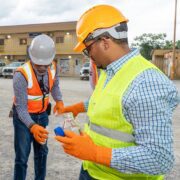
During each monitoring session, participants accompany technical teams into the field to observe and collect samples, including sampling points where treated water from the operation is discharged, nearby rivers, and other water bodies. The samples are then analyzed at independent laboratories. Participants also take part in monitoring air quality and noise levels around the operation.

The field-based approach lets participants see environmental monitoring in action, understand the parameters being assessed, and put their questions directly to technical specialists. The program is open to a broad range of stakeholders, including representatives of neighboring communities, academic institutions, social and community organizations, government agencies, and media.

INTEC’s involvement adds an independent academic perspective to the process. The university collects and analyzes environmental samples, helping generate independent technical information, and strengthening national scientific capacity in environmental monitoring.

“Monitoring results confirm that water quality meets applicable standards, and, in the case of the Margajita stream, show improvement in water quality along the watercourse and at its entry into the Yuna River,” said Carlos Sánchez Alegre, Sustainability and Permitting Lead at Barrick Pueblo Viejo. “Long-term monitoring allows us to demonstrate the evolution of these water bodies through data, and strengthen an environmental management approach that is transparent and evidence based. At Barrick, we are committed to being good corporate citizens, and conscientious and responsible caretakers of the environment.”

The 59th exercise continues a program that has run every three months since 2012. By giving stakeholders direct access to monitoring activities and incorporating independent academic oversight, the program has become a sustained platform for transparency, dialogue, and environmental awareness around the operation.

About Barrick Mining Corporation

Barrick is a leading global mining, exploration, and development company. With one of the largest portfolios of world-class and long-life gold and copper assets in the industry, Barrick’s operations and projects span 17 countries and five continents. Barrick is also the largest gold producer in the United States. We create real, long-term value for all stakeholders through responsible mining, strong partnerships, and a disciplined approach to growth. Barrick shares trade on the New York Stock Exchange under the symbol ‘B’ and on the Toronto Stock Exchange under the symbol ‘ABX’.

RELATED: Latitude Air Ambulance Statement on Heartbeat 104 Medevac

The Meaning Behind Super Cat’s “Ghetto Red Hot”: Lyrics & Story Explained

The meaning of “Ghetto Red Hot” comes from its central question. Super Cat asks where his critics are when the ghetto “run hot,” meaning when the community is in crisis and families are struggling to feed themselves.[#item_full_content]  

The Meaning Behind Yellowman’s “Zungguzungguguzungguzeng”: Lyrics & Story Explained

In a 2018 interview with The Gleaner, Yellowman described the title as flexible. “It can mean anything, you know.”[#item_full_content]  

The Meaning Behind Eek-A-Mouse’s “Wa-Do-Dem”: Lyrics and Story Explained

“Wa-Do-Dem” is a Jamaican Patois phrase. Eek-A-Mouse gave his own translation in a 1982 interview with the UK music paper Sounds.[#item_full_content]  

The Meaning Behind Barrington Levy’s “Murderer”: Lyrics and Story Explained

If you’ve searched for the meaning of “Murderer,” the short answer is that Barrington Levy’s 1984 dancehall song warns listeners about violent people who pass themselves off as respectable.[#item_full_content]  

The Meaning Behind Barrington Levy’s “Here I Come”: Lyrics & Story Explained

The meaning of “Here I Come” surprises many listeners. Barrington Levy’s dancehall classic, often called “Broader Than Broadway,” tells a story about a young mother who doesn’t want the duties of raising a child.[#item_full_content]  

Rihanna Reportedly Wants an Infidelity Clause Before Marrying A$AP Rocky

Half of everything. That’s what A$AP Rocky would reportedly have to give up if he ever cheated on Rihanna, according to a claim now making the rounds about the couple and their long running marriage question.[#item_full_content]  

Protoje Teases ‘Monumental’ Zilla x Diggy Collaboration for 2026

Protoje isn’t giving much away, and that seems to be the point. In a new Instagram post, the Jamaican artist announced “ZILLA x DIGGY with a monumental collaboration for 2026 and Beyond,” then added a short creed: “Love over hate and good over evil.”[#item_full_content]