“There is no rival.” That’s how Vybz Kartel shut down the chatter about bad blood with Popcaan, and he managed to slip in news of a December album and a bigger, flashier tour with Mavado in the same conversation.
https://www.temponetworks.com/wp-content/uploads/2018/05/TEMPO-Logo-RGB-copy-300x300.png00Dannyhttps://www.temponetworks.com/wp-content/uploads/2018/05/TEMPO-Logo-RGB-copy-300x300.pngDanny2026-11-21 14:14:362026-11-21 14:14:36Vybz Kartel Dismisses Popcaan Feud Rumours, Announces Album ‘The Sun’ and Teases 2027 Mavado Tour
A yawning emoji and a lettuce emoji. That was Shenseea’s apparent answer to Spice, who had just publicly given her 24 hours to explain what she has actually done for dancehall culture.
https://www.temponetworks.com/wp-content/uploads/2018/05/TEMPO-Logo-RGB-copy-300x300.png00Dannyhttps://www.temponetworks.com/wp-content/uploads/2018/05/TEMPO-Logo-RGB-copy-300x300.pngDanny2026-11-21 14:14:362026-11-21 14:14:36Spice Calls Out Shenseea Over ‘Queen of Dancehall’ Claim, Shenseea Answers With a Yawn
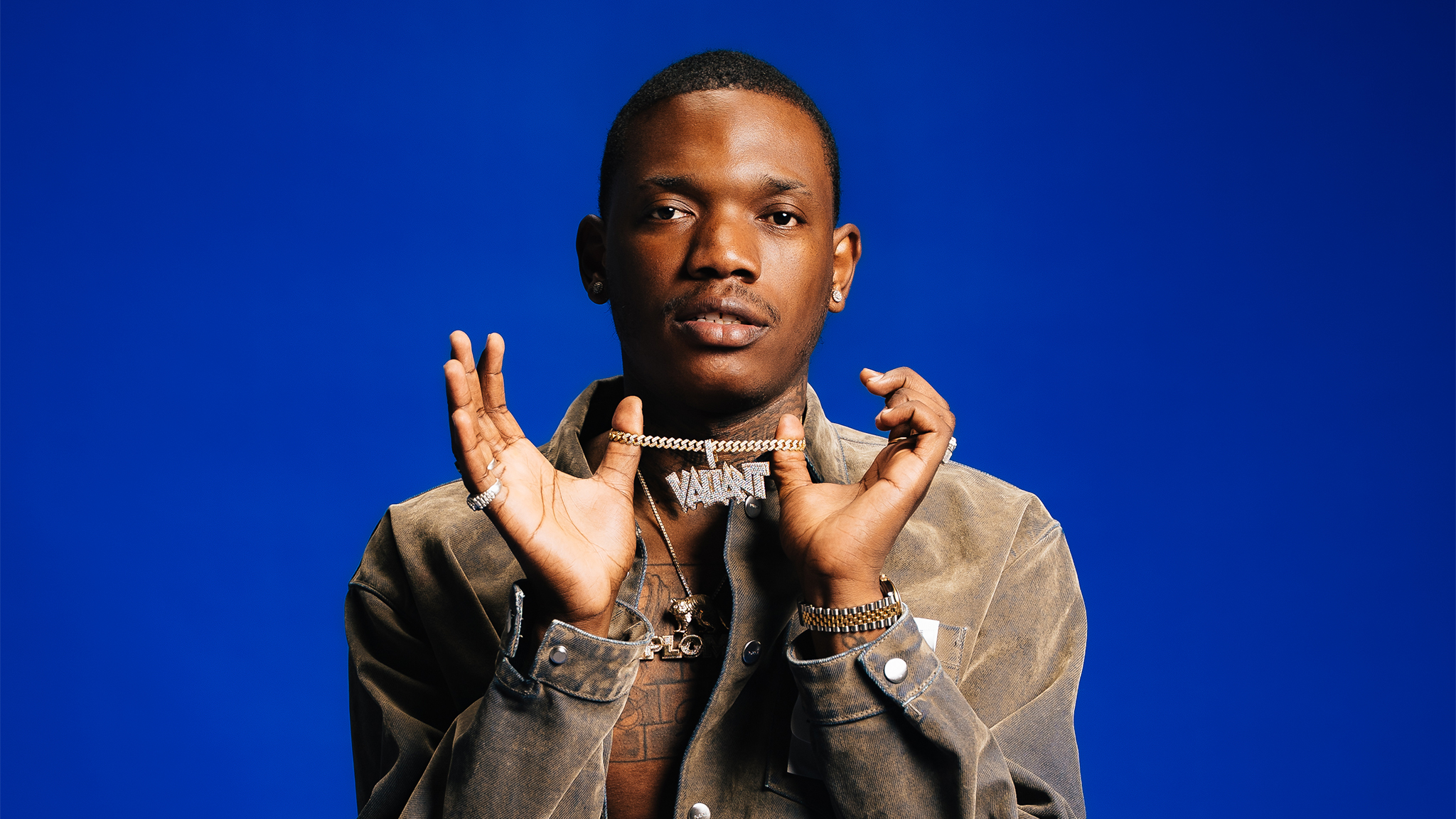
[[{“value”:”Valiant didn’t bother with a slow rollout for his latest single. He announced it on Instagram in all caps: “BLESS ME ACCOUNT OUT NOW ON ALL MEDIA PLATFORMS ‼️”
There was no countdown, no cryptic teasers, and no long caption about what the record means to him.”}]]
https://www.temponetworks.com/wp-content/uploads/2018/05/TEMPO-Logo-RGB-copy-300x300.png00Dannyhttps://www.temponetworks.com/wp-content/uploads/2018/05/TEMPO-Logo-RGB-copy-300x300.pngDanny2026-11-21 14:14:362026-11-21 14:14:36Valiant Drops ‘Bless Me Account’ Single
Cecile is heading to Nairobi, and she’s bringing a show title built to get a reaction.
https://www.temponetworks.com/wp-content/uploads/2018/05/TEMPO-Logo-RGB-copy-300x300.png00Dannyhttps://www.temponetworks.com/wp-content/uploads/2018/05/TEMPO-Logo-RGB-copy-300x300.pngDanny2026-11-21 14:14:352026-11-21 14:14:35Cecile Announces ‘My Baby Father and I – Kriss Darlin II’ Show in Nairobi
Spice wants everyone to stop looking at the drama and start looking at the tracklist. In a Facebook post aimed squarely at her fans, the dancehall star told her “Besties” not to get distracted, because she has an all-female album arriving December 4th.
https://www.temponetworks.com/wp-content/uploads/2018/05/TEMPO-Logo-RGB-copy-300x300.png00Dannyhttps://www.temponetworks.com/wp-content/uploads/2018/05/TEMPO-Logo-RGB-copy-300x300.pngDanny2026-11-21 14:14:352026-11-21 14:14:35Spice Sets December 4 Release for All-Female Album
News Americas Now, LONDON, England, Thurs. Nov. 19, 2026: Karen Loderick-Peace may be going viral for one of the sharpest reads of The Real Housewives of London reunion, but behind the clip is a much bigger story – one that began in the Jamaican countryside and eventually led to fashion, family, property ownership and a place among Britain’s high-profile social circles.
During the Season 2 reunion, Loderick-Peace found herself in a heated exchange with fellow cast member Amanda Cronin over their homes and lifestyles. “I’m from Jamaica, a little girl from the countryside. And I came to England at 25 years old. And I own five properties,” Loderick-Peace, 50, said during the now widely shared exchange.
It was the kind of line made for social media. But it also offered a glimpse into the journey behind the television personality now commanding attention far beyond the Housewives franchise.
From Jamaica To London
Karen Loderick-Peace attends The Princess Grace Foundation Lunch at Claridge’s Hotel on April 10, 2026 in London, England. (Photo by Dave Benett/Getty Images)
Loderick-Peace was born and raised in Jamaica and has spoken publicly about her connection to the island and her childhood there. She has recalled her mother’s home overlooking the sea and the sense of peace and belonging she still associates with Jamaica.
Her interest in fashion began early. According to information from her fashion brand, Becuz, she began creating her own designs at age 16 before eventually moving to the United Kingdom in her twenties to study at the London College of Fashion. Loderick-Peace has said she moved to England at 25 – a fact she highlighted during the reunion as she reflected on how far she had come.
Fashion, Family And A New Chapter
After settling in Britain, Loderick-Peace married businessman Jeremy Peace, who later became chairman and owner of West Bromwich Albion Football Club. The couple has three children – two daughters and a son – and Loderick-Peace spent years focused primarily on raising her family before returning more fully to her own creative ambitions.
That ambition eventually led to Becuz, the luxury womenswear brand she founded and now leads. The label describes its aesthetic as colorful, expressive and confidence-driven, with sequins, dresses and statement pieces inspired in part by carnival and travel. Loderick-Peace serves as founder, CEO and creative director of the brand. Her experience as a mother also helped shape the brand’s focus on combining statement fashion with comfort.
Five Properties – And A Viral Comeback
The reunion exchange that sent Loderick-Peace viral centered heavily on property. She said she owns five homes, including properties in Chelsea and Belgravia in London, two in Jersey and another in Staffordshire.
During the exchange, she contrasted her own property portfolio with Cronin’s and made clear that her Jamaican beginnings were central to the point she was making. That combination – Caribbean roots, wealth, confrontation and a memorable delivery – helped propel the clip across social media.
Reality Television Rise
Loderick-Peace’s television profile did not begin with The Real Housewives of London. She appeared on The Real Housewives of Jersey in 2021 and later on The Real Housewives of Cheshire, before becoming a cast member on the London franchise.
Her husband and two daughters have appeared in support of her on the show, while her son has largely stayed out of the spotlight. The latest reunion moment, however, appears to have introduced her to an even wider audience.
More Than A Viral Moment
For Caribbean viewers, Loderick-Peace’s popularity carries another layer. Her story is not simply one of reality television glamour or a well-timed comeback. It is also a diaspora story – a Jamaican woman who left the island in her twenties, pursued fashion in London as an immigrant, raised a family, built a business, accumulated property and eventually entered one of Britain’s most visible reality-TV franchises.
And in the middle of a heated reunion exchange, she distilled that journey into a sentence millions could immediately understand: A little girl from the Jamaican countryside came to England — and built a life of her own.
https://www.temponetworks.com/wp-content/uploads/2026/11/karen-loderick-peace-background-vD4TQb.jpg13992048Dannyhttps://www.temponetworks.com/wp-content/uploads/2018/05/TEMPO-Logo-RGB-copy-300x300.pngDanny2026-11-21 12:14:552026-11-21 12:14:55Karen Loderick-Peace: From Jamaica To Belgravia And Housewives Fame
News Americas Now, MIAMI, FL, Fri. Nov. 20, 2026: A Cuban man who had lived in the United States since he was two years old says he is going days without food and has at times lacked drinking water for weeks after the U.S. deported him – not to Cuba, but to South Sudan.
Enrique Arias Hierro, 48, is one of several immigrants deported by the Trump administration to the East African nation despite having no connection to the country. Arias Hierro told New York Times columnist Nicholas Kristof, who recently located and interviewed five deportees being held in Juba, that conditions inside the government-controlled residence where they are confined are dire.
“I don’t know if I can tell you without being killed, but it’s horrible here,” Arias Hierro said during an interview monitored by South Sudanese guards and a diplomat. He said there are times when the men receive no food for two or three days and described extended periods without potable water.
“Sometimes there’s no water for a month,” he said, adding that at one point they went two and a half months without drinking water and relied on nonpotable supplies.
From Cuba To America – Then South Sudan
Arias Hierro was born in Cuba but said he had lived in the United States since 1980, when he was approximately two years old. He has a criminal record, as do several of the other men sent to South Sudan. South Sudan has said the deportees completed their criminal sentences in the United States before they were removed. The Trump administration has defended the deportations, describing the men in highly critical terms and arguing that their home countries would not accept them.
But rather than being deported to Cuba, Arias Hierro was sent thousands of miles away to South Sudan – a country the U.S. State Department itself warns Americans not to visit. He is now effectively confined there with no clear path out.
The South Sudanese government describes the building where the men are held as a “safe house.” But according to the deportees, they are not permitted to leave, do not have their own phones and have extremely limited contact with relatives or attorneys. They also told Kristof that electricity and toilets frequently fail and that food and water shortages have caused substantial weight loss among some of the men.
Another Cuban Says He Was Punished After Asking For Water
A second Cuban deportee, José Manuel Rodríguez-Quiñones, also described severe conditions. Rodríguez-Quiñones said he once asked for clean water and was punished by being locked inside his room for three days.
“I didn’t eat for three days,” he said. The other deportees confirmed his account, according to Kristof. The men said they are typically provided approximately three liters of water every two days – for drinking, washing and flushing toilets. South Sudan disputes their description of the conditions.
Its government told The New York Times that the men are provided with food, clean water, sanitation, clothing, medical care and other necessities. It also said South Sudan is paying the costs of accommodating the deportees and that the United States had not provided funding for their care. The deportees acknowledged that they had not been beaten and said some had received medical treatment. But they maintained that access to adequate food and clean water remained a serious problem.
Cuba Has Not Taken Them Back
Arias Hierro and Rodríguez-Quiñones both told Kristof they would return to Cuba if the Cuban government would accept them. According to the report, Cuba has so far refused.
Arias Hierro said he had lived in America since 1980, while Rodríguez-Quiñones said he arrived in the United States in 1995. South Sudan has managed to return three other deportees to Mexico, Laos and Vietnam, but the two Cubans remain stranded. Three of the five men interviewed said they have U.S.-citizen children.
Their days, according to the report, are largely spent exercising and listening to a radio — one of their only connections to the outside world.
Third-Country Deportations Under Scrutiny
The case is part of the Trump administration’s broader use of so-called third-country deportations — removing immigrants to nations other than their countries of citizenship. More than 500 immigrants have reportedly been deported to African nations with which they had no previous connection.
Human Rights Watch has criticized the practice, arguing that third-country deportations can violate international human rights protections and use suffering as a migration deterrent. The U.S. Supreme Court previously allowed deportations to South Sudan to proceed, but fast-track hearings are scheduled for December on legal challenges involving third-country removals and protections against torture.
For Arias Hierro, however, the legal and political debate is happening thousands of miles away. His request is much more immediate. “Have the U.S. pay for food and water and basic things humans should have,” he said.
For a Cuban man who spent virtually his entire life in America, deportation has not meant being returned home. It has meant being sent to a country he had no connection to – with no clear indication of when, or how, he will ever leave.
https://www.temponetworks.com/wp-content/uploads/2026/11/a-cuban-man-who-lived-in-the-u.s.-since-age-two-says-he-is-going-days-without-food-after-being-deported-to-south-sudan-a-country-he-had-no-connection-to-izi2eb.png194233Dannyhttps://www.temponetworks.com/wp-content/uploads/2018/05/TEMPO-Logo-RGB-copy-300x300.pngDanny2026-11-21 11:14:552026-11-21 11:14:55Cuban Man Deported To South Sudan Says He Is Starving
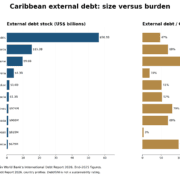
News Americas Now, MIAMI, FL, Fri. Nov. 20, 2026: Ever wondered how Caribbean debt stacks up by country? Ten Caribbean countries profiled in the World Bank’s International Debt Report 2026 owed a combined US$91.7 billion in external debt at the end of 2025 – but the countries with the largest debt loads are not necessarily the ones under the greatest repayment pressure.
The Dominican Republic dominates the ranking, owing US$56.3 billion, followed by Jamaica at US$15.3 billion and Suriname at US$9.6 billion. Guyana ranked fourth at US$4.3 billion, while Belize owed US$1.6 billion per an analysis by Invest Caribbean.
The remaining five were St. Lucia at US$1.3 billion; St. Vincent and the Grenadines at US$974.4 million; Grenada at US$905.8 million; Haiti at US$827.5 million; and Dominica at US$678.6 million.
The US$91.7 billion figure is a News Americas calculation based on the ten country profiles. It is not the total external debt of the entire Caribbean, since several countries — including Antigua and Barbuda, The Bahamas, Barbados, St. Kitts and Nevis and Trinidad and Tobago — are not individually profiled in the report. Cuba and non-sovereign Caribbean territories are also absent.
Who Owes The Most
Caribbean Debt Tops US$91.7 Billion Across 10 Countries
Ranked by total external debt stock, the ten countries are:
Dominican Republic — US$56.3 billion
Jamaica — US$15.3 billion
Suriname — US$9.6 billion
Guyana — US$4.3 billion
Belize — US$1.6 billion
St. Lucia — US$1.3 billion
St. Vincent and the Grenadines — US$974.4 million
Grenada — US$905.8 million
Haiti — US$827.5 million
Dominica — US$678.6 million.
But the ranking by size tells only part of the story. A country can owe less in absolute dollars while carrying a much heavier burden relative to the size of its economy or its ability to service that debt.
Jamaica And Suriname Face The Heaviest Repayment Pressure
Jamaica ranked second in total external debt, but its debt-service-to-exports ratio reached 54 percent, the highest of the ten countries profiled. Suriname followed at 44 percent, despite ranking third by total debt stock.
That ratio compares annual principal and interest payments with earnings from exports of goods, services and primary income. It is not a measure of how much of each export dollar is literally used to pay debt, but it provides a useful gauge of external repayment pressure.
Suriname also stood out for the sharpest rise in debt among the ten. Its external debt increased 37.2 percent to about US$9.6 billion, while its external debt-to-GNI ratio reached 228 percent. Jamaica’s debt stock, by contrast, rose only 1.8 percent, but its repayment burden remained high. Its debt-service-to-GNI ratio reached 18 percent.
Guyana Shows The Opposite Pattern
Guyana provides a sharp contrast. Its external debt increased 16.3 percent to US$4.3 billion, yet its debt-service-to-exports ratio was only 3 percent, and debt service relative to GNI was also 3 percent. Its external debt-to-GNI ratio stood at 19 percent. That means Guyana’s debt stock was rising, but the burden indicators in the World Bank profile remained among the lowest in the group.
Who Holds The Debt?
The data also reveal major differences in who Caribbean governments owe. The Dominican Republic, Jamaica and Suriname rely heavily on private creditors such as bondholders and commercial banks.
Private creditors hold about 77 percent of the Dominican Republic’s public and publicly guaranteed external debt, about 52 percent of Jamaica’s and about 42 percent of Suriname’s. By contrast, multilateral lenders dominate in several smaller Caribbean states. They hold most of the public external debt in Dominica, Haiti, St. Vincent and the Grenadines and Guyana.
Among the major named creditors are the Inter-American Development Bank, Caribbean Development Bank and World Bank’s International Development Association. The report also shows China as the largest named bilateral creditor to Guyana, Suriname and Jamaica, while Venezuela continues to appear on the balance sheets of Belize, Grenada and Haiti.
Smaller Countries Can Still Carry Heavy Debt Burdens
Debt size alone can also obscure risk among smaller economies. Dominica ranked last in the ten-country list by total external debt, at US$678.6 million, but that debt was equivalent to 96 percent of GNI.
St. Vincent and the Grenadines had external debt equal to 79 percent of GNI, while Grenada and Jamaica were each at 68 percent. Suriname remained the clear outlier at 228 percent.
Haiti’s Debt Fell
Haiti was the only one of the ten countries whose external debt declined in 2025. Its debt fell 12.7 percent to US$827.5 million, well below its 2015 level of US$2.24 billion. However, the World Bank profile does not explain the decline, and a lower debt stock should not automatically be interpreted as a sign of economic strength.
Debt Size Is Not The Same As Debt Stress
The clearest takeaway from the World Bank data is that headline debt numbers do not tell the full story. The Dominican Republic owes the most by far, but Jamaica and Suriname face heavier repayment pressure relative to export earnings.
Guyana’s debt is rising quickly, but its burden ratios remain comparatively low. And some of the smallest economies carry debt that is large relative to their national income. The numbers show that when it comes to Caribbean debt, the better question is not simply who owes the most – but who is under the most pressure to pay it back.
https://www.temponetworks.com/wp-content/uploads/2026/11/invest_caribbean_debt_comparison_chart-SHrwQg.png14402560Dannyhttps://www.temponetworks.com/wp-content/uploads/2018/05/TEMPO-Logo-RGB-copy-300x300.pngDanny2026-11-21 11:14:342026-11-21 11:14:34Caribbean Debt Tops US$91.7 Billion Across 10 Countries
International reggae music star Wyclef Jean and Tom “Panic” Jones have spent nearly three years getting to One Night in Kingston.
https://www.temponetworks.com/wp-content/uploads/2018/05/TEMPO-Logo-RGB-copy-300x300.png00Dannyhttps://www.temponetworks.com/wp-content/uploads/2018/05/TEMPO-Logo-RGB-copy-300x300.pngDanny2026-11-21 03:14:372026-11-21 03:14:37Wyclef Jean and Tom ‘Panic’ Jones shake up reggae music industry with ‘One Night in Kingston’
Bonaire’s Jake Kelkboom named Caribbean Chef of the Year as culinary teams from 14 destinations compete in Barbados
BRIDGETOWN, Barbados (Nov. 20, 2026) — Barbados captured the Caribbean National Team of the Year title and three major individual awards at the Caribbean Hotel and Tourism Association’s (CHTA) Taste of the Caribbean 2026 competition, which concluded Thursday.
The four-day culinary and mixology competition, held Nov. 16-19 at Wyndham Grand Barbados Sam Lord’s Castle, brought together chefs and bartenders from 14 Caribbean destinations to showcase their skills, creativity and interpretations of Caribbean cuisine.
While Barbados dominated the team and several individual categories, Bonaire’s Jake Kelkboom claimed one of the competition’s most prestigious honors, Caribbean Chef of the Year.
Barbados’ Ivan Edey was named Caribbean Bartender of the Year, and fellow Barbadians Avion Caine and Johnathan Belle earned the titles of Caribbean Pastry Chef of the Year and Caribbean Junior Chef of the Year, respectively.
The competition featured teams from Anguilla, Antigua and Barbuda, Barbados, Belize, Bonaire, Curaçao, Grenada, Jamaica, St. Kitts and Nevis, St. Lucia, St. Maarten/St. Martin, St. Vincent and the Grenadines, Trinidad and Tobago and the U.S. Virgin Islands.
This year’s event introduced new beef and seafood competitions, along with a Best Vodka Drink category, expanding opportunities for participants to demonstrate their culinary and mixology expertise.
Jamaica’s Matthew Bancroft won the inaugural Beef Competition, while Jean-Pierre Tuitt of Antigua and Barbuda took top honors in the new Seafood Competition.
Bancroft also received the Best Use of Certified Angus Beef award, presented by Certified Angus Beef. Barbados’ D’sean Miller won Best Use of Watermelon, presented by the National Watermelon Promotion Board, while Curaçao’s Rensley de Jongh earned Best Use of U.S. Pork in Contemporary Caribbean Cuisine, presented by the U.S. Meat Export Federation.
Belize’s Harry Canto received the Hans Schenk Commemorative Award for Most Innovative Dish Utilizing Indigenous Ingredients, recognizing creativity in the use of locally sourced and traditional Caribbean ingredients.
In the beverage categories, Barbados’ Edey added the Best Nonalcoholic Drink award to his Bartender of the Year title, while Jamaica’s Gossett Brown won Best Rum Drink.
Trinidad and Tobago’s Ronaldo Auguste collected two awards, winning Best Vodka Drink and Best Mystery Bar Drink.
Grenada’s Jadell Dominique received the Josue Merced-Reyes Spirit of the Competition Award. Taste of the Caribbean, one of the region’s leading culinary and mixology competitions, was held alongside CHTA’s Caribbean Hospitality Industry Exchange Forum (CHIEF). Together, the events brought together hospitality professionals, food and beverage talent, and industry stakeholders for professional development, knowledge sharing and a celebration of Caribbean excellence.
https://www.temponetworks.com/wp-content/uploads/2018/05/TEMPO-Logo-RGB-copy-300x300.png00Dannyhttps://www.temponetworks.com/wp-content/uploads/2018/05/TEMPO-Logo-RGB-copy-300x300.pngDanny2026-11-21 02:14:392026-11-21 02:14:39Barbados takes top honors at Taste of the Caribbean 2026