
Guyana Case Against MV Barima Captain And Crew Adjourned To September 7th

By NAN Staff Writer, NewsAmericas Now

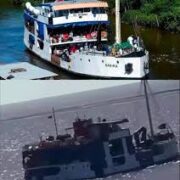
News Americas, GEORGETOWN, Guyana, Mon. Aug. 3, 2026: The murder case against the captain and two crew members of the MV Barima has been adjourned to September 7th, after a Guyanese magistrate ruled the Charity Magistrate’s Court’s limited sitting schedule left no earlier date available for the prosecution to complete disclosure to the defense.

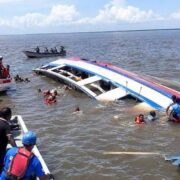
Captain Kevin “KP” Price, 40, Chief Mate Rondell Dwayne Roberts, 42, and Goods Superintendent Delon Granderson, 33, appeared by Zoom before Magistrate Ravindra Mohabir at the Charity Magistrate’s Court. The three are jointly charged with 72 counts of murder in connection with the July 18 sinking that killed at least 72 people, with more than 30 others still missing and presumed dead.

Prosecutor Mandel Moore told the court he now holds a fiat, the formal written authorization required to prosecute the matter, and confirmed partial disclosure had already been provided to the defense. Moore requested an adjournment to August 31 to complete full disclosure, but the magistrate noted the Charity Magistrate’s Court only sits on Mondays, pushing the next available date to September 7.

Price and Granderson are represented by attorney Dexter Smartt, alongside a legal team that includes Dexter Todd. Attorney Everton Lammy-Singh represents Roberts.

A charge that continues to draw criticism

Defense lawyers, legal commentators, and the political opposition have criticized the decision to file murder charges before the search for the missing has concluded and before the international Commission of Inquiry has begun its work. Police have maintained the charges followed legal advice from Director of Public Prosecutions Shalimar Ali-Hack, who has said her recommendation was based on the evidence presented, relevant principles of law, and case law authorities drawn from the United Kingdom, Commonwealth jurisdictions, and the European Court of Human Rights, along with public policy considerations.

Protesters rally for the accused

On Sunday night, family members, friends, and residents gathered outside Roberts’ home in Grove, East Bank Demerara, in a solidarity protest arguing the murder charges were used to shield senior government officials from accountability. Demonstrators carried placards reading “Transparency and accountability,” “Free Rondell, Dellon and Kevin,” and “Justice for these three men. Families need closure.”

One protester voiced support for the government’s decision to proceed with salvaging the MV Barima rather than converting the wreck site, roughly nine miles offshore, into a memorial, arguing physical evidence from the vessel itself is needed before the case, and the broader investigation, can move forward.

The opposition WIN party has called for a protest on Tuesday, August 4, at 9:00 a.m. in front of Watooka House, Linden.

NewsAmericasNow will continue following the case as it proceeds toward its September 7 hearing.

RELATED: Could MV Barima Victims Sue The Guyana Government For Negligence? Here’s What The Law Says
Guyana Is Leaving Millions On The Table With Exxon While It Searches For A Company To Salvage The MV Barima

By NAN Business Editor, News Americas

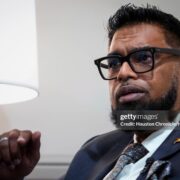
News Americas, WASHINGTON, D.C., Mon. Aug. 3, 2026: As Guyana’s Maritime Administration Department scrambles to find a qualified contractor to pull the MV Barima from the ocean floor, the government is sitting on a separate, far larger unresolved account: millions of dollars in disputed ExxonMobil cost-oil audits that the International Monetary Fund says Guyana needs to stop letting drag on.

The contrast is hard to ignore. On one hand, a government asking marine salvage companies to submit proposals limited to ten pages, on a deadline more than three weeks out, just to recover a ferry that killed at least 73 people and left 30 more missing and presumed dead. On the other, a government that has allowed a years-long dispute over Exxon’s own cost accounting to sit unresolved, even as the IMF’s latest Article IV mission all but pleaded with Guyanese officials to move faster.

The Exxon money still on the table

An audit conducted by IHS Markit, covering the period 1999 to 2017, found $214.4 million in Exxon-claimed costs that were either ineligible for cost recovery or lacked adequate supporting documentation. A second audit, covering a later period and carried out by SGS in partnership with Martindale Consultants and Guyanese firms Ramdihal and Haynes, Eclisar Financial and Vitality Accounting and Consultancy, remains under review.

In its Staff Concluding Statement released Friday, the IMF urged Guyana to resolve both disputes “in a timely manner,” including through arbitration where necessary, citing “important fiscal and governance implications.” The Fund also called on Guyana to keep strengthening its capacity to audit its own rapidly expanding oil and gas sector, and separately pushed for stronger public procurement practices as government spending continues to climb.

That is real money potentially owed to a country that just weeks ago couldn’t get a $12.7 million replacement ferry into service after three years, and is now asking private companies to volunteer for the job of recovering the vessel that killed dozens because the government’s own agencies weren’t positioned to do it themselves.

The salvage search, under pressure

MARAD’s Expression of Interest notice, issued Saturday, came only after intensifying pressure: swelling protests from civil society activists, University of Guyana students, and the political opposition, following the swearing-in of the five-member international Commission of Inquiry. Opposition Leader Azruddin Mohamed credited the reversal directly to public pressure. “The Government has finally buckled under the pressure of the people,” he said. “This is a victory for every citizen who refused to remain silent.”

But Mohamed also flagged what the August 14 deadline actually means: it is only the deadline for companies to submit proposals, not for the salvage itself to begin. At that pace, he warned, the vessel may not actually be recovered until sometime in September, nearly two months after it went down.

Contractors are being asked to detail how they’ll protect forensic evidence for the Commission’s investigation while working in near-zero visibility, strong currents, and 13 to 15 meters of water, some 28 nautical miles off Guyana’s coast. French military divers who assisted in the earlier search and recovery effort had already reported zero visibility and a maze of ropes and hammocks trapped inside the sunken vessel.

The same pattern, different ledger

Whether it’s a multimillion-dollar oil dispute or a $12.7 million ferry sitting idle for three years, the through-line is the same: money and resources Guyana has access to, or is owed, not being pursued or deployed with urgency, while ordinary Guyanese, and now grieving families, pay the price of the delay. The IMF’s own language, that these audits carry “important fiscal and governance implications,” could just as easily describe the government’s handling of its own maritime infrastructure over the past three years.

NewsAmericasNow will continue tracking both the salvage operation and Guyana’s response to the IMF’s findings.

RELATED: The Guyana Ferry Disaster Is The Caribbean’s Worst Since 1970

When The Church Speaks: The Transformational Power Of Communications

By Dr. Isaac Newton

News Americas, NEW YORK, NY, Sun. August 2, 2026: When the Church speaks, people listen. Do they encounter clarity or confusion, hope or hesitation, Christ or merely activity through that voice? In Scripture, the herald did not create the message. The herald prepared people to recognize the arrival of the King. That sacred responsibility remains essential today and speaks directly to the work of the Communications Director. The role extends far beyond announcing events, recording worship services, managing digital platforms, or producing publications. Christian communication is part of the Church’s witness. “Faith comes by hearing” (Romans 10:17), reminding us that words have the power to shape belief, strengthen trust, and awaken transformation. Every message leaves a mark. It teaches people what matters, reveals what the Church values, and influences how communities understand God’s mission.

The Communications Director stands at one of the most influential intersections in the life of the Church: the place where mission becomes message, vision becomes understanding, and truth becomes lived experience. Research in leadership, journalism, and organizational communication demonstrates that trust grows through accuracy, transparency, consistency, and genuine listening. The Church operates within the same human reality. Every sermon summary, testimony, photograph, interview, podcast, website update, crisis response, and digital message contributes to the public witness of God’s people. Success cannot be reduced to engagement numbers, audience size, or online visibility. The deeper measure is transformation. Faith grows stronger. Families discover hope. Young people find belonging. Communities encounter the character of Christ through a Church that communicates with wisdom, humility, and conviction.

Across the Caribbean, where churches have historically been woven into the social and spiritual fabric of communities, communication has unique significance. The Church is not speaking into an empty space. It is speaking into homes, villages, cities, schools, workplaces, and a global Caribbean diaspora connected across continents. A generation shaped by digital culture is searching for authenticity, meaning, and belonging. This moment requires Communications Directors who understand that communication is not simply the delivery of information. It shapes identity, builds trust, and forms community. They must discover stories that reveal God’s activity rather than simply report programmes. They must listen carefully to members, visitors, young adults, and communities because listening often reveals what statistics cannot see. They must embrace artificial intelligence, emerging technologies, and digital innovation with wisdom, ensuring that tools serve the mission and never replace the message.

The herald’s responsibility was never merely to announce that a King was coming. The herald prepared people to recognize the King when He arrived. That is the sacred calling of Christian communication. The Communications Director helps the Church speak with a voice that reflects the character of Christ: truthful enough to build trust, compassionate enough to heal, courageous enough to stand for conviction, and hopeful enough to inspire faith. A Church’s enduring witness is not measured by the announcements it publishes, the magazines it prints, the videos it uploads, or the size of its online following. Its true measure is found in the lives drawn closer to Christ, the confidence strengthened in God’s Word, and the hope awakened in human hearts. The Church does not communicate because it merely has something to say. The Church communicates because it has Someone to reveal. When its voice reflects God’s character, communication becomes more than a ministry tool. It becomes an instrument of transformation.

EDITOR’S NOTE: Dr. Isaac Newton is a leadership strategist, governance scholar, and author specializing in institutional excellence, ethical leadership, and human development. Educated at the University of the Southern Caribbean, Oakwood University, Princeton, Columbia, and Harvard, he writes on leadership, governance, and the development of people and institutions. He is the author of Fix It Preacher, Face Life Squarely, and Intimate Intimacy; coauthor of Steps to Good Governance and Daring to Hope; and coauthor of the forthcoming works When Nations Kneel and The Belief Code.

RELATED: The Caribbean And The Law of Multiplication

When The Law Stands Taller Than Power: The CCJ’s Defining Moment For Caribbean Democracy

By Dr. Isaac Newton

News Americas, NEW YORK, NY, Sun. Aug. 2, 2026: Some judgments settle disputes. Others leave a mark on history. The Caribbean Court of Justice’s (CCJ) decision in the Azruddin Mohamed and Nasar Mohamed extradition matter belongs to the second category because its significance reaches far beyond the individuals before the Court. At its core, the ruling speaks to one of democracy’s oldest and most important commitments: power must answer to law. The CCJ did not decide guilt or innocence, and it did not determine the final destination of the extradition request. It addressed a more fundamental issue: whether the legal process had begun lawfully. The Court’s answer was decisive. The process may continue because the rule of law must move forward with independence, consistency, and integrity.

The brilliance of the judgment lies in its clarity about the roles of public institutions. The Court recognized that each institution has a specific responsibility in protecting justice. The government may begin an extradition process when the law allows it, but the courts must ultimately decide whether the evidence and legal requirements justify the next step. This separation is not a barrier to justice; it is the safeguard that makes justice trustworthy. It prevents political authority from becoming unlimited power and ensures that every person, regardless of status or influence, remains within the reach of the law.

The Court’s handling of claims of bias offers one of the most important lessons from the case. In matters involving political figures, public attention can become intense and emotions can become powerful. Yet the justice system cannot be guided by speculation, pressure, or popularity. The CCJ reaffirmed a timeless judicial principle: serious claims require serious proof. Public confidence is not created when courts deliver the outcomes people expect. It is created when courts demonstrate independence, apply consistent standards, and explain their reasoning with honesty and discipline. The credibility of justice is built in difficult moments, not comfortable ones.

For Guyana and the wider Caribbean, this decision carries significance beyond one extradition proceeding. Small states often navigate extraordinary challenges where politics, international relationships, economic interests, and public accountability intersect. In such moments, the strength of a nation is revealed by the character of its institutions. A democracy matures when its courts can examine powerful people, when governments can act within legal boundaries, and when citizens can trust that the same rules apply across society. The CCJ has reinforced a regional message of lasting importance: public office may bring responsibility, but it cannot create exemption from lawful scrutiny.

Decades from now, the details of this controversy may fade, but the principle affirmed by the Court will remain. Great institutions are not defined by the absence of difficult cases; they are defined by the courage to handle difficult cases with fairness and principle. The CCJ’s judgment is therefore more than a legal decision. It is a statement about the kind of Caribbean society that future generations deserve: one where justice is not shaped by wealth, position, or political power, but guided by truth, evidence, and law. The true legacy of this moment will not be measured by the individuals who stood at the center of the controversy, but by the enduring strength of the principle it affirmed: in a free society, no name is greater than the law, no position is higher than accountability, and no institution has a greater duty than to protect justice itself.

EDITOR’S NOTE: Dr. Isaac Newton is a leadership strategist, governance scholar, and author specializing in institutional excellence, ethical leadership, and human development. Educated at the University of the Southern Caribbean, Oakwood University, Princeton, Columbia, and Harvard, he writes on leadership, governance, and the development of people and institutions. He is the author of Fix It Preacher, Face Life Squarely, and Intimate Intimacy; coauthor of Steps to Good Governance and Daring to Hope; and coauthor of the forthcoming works When Nations Kneel and The Belief Code.

RELATED: Drama As Diplomacy And Power In The Age Of Spectacle

Squash’s Prison Sentence Reduced Again, Release Now Set for November

Squash

Incarcerated dancehall artiste Squash has received another reduction in his U.S. prison sentence, bringing his projected release date forward to November 26, 2026.

Could MV Barima Victims Sue The Guyana Government For Negligence? Here’s What The Law Says

By NAN Staff Writer, NewsAmericas Now

News Americas, GEORGETOWN, Guyana, Tues. July 28, 2026: As many Guyanese continue to bury the dead from the Guyana MV Barima disaster and investigators examine manifest discrepancies, a wharf project three years behind schedule, and a $12.7 million replacement ferry that never sailed the route, a legal question is emerging alongside the grief: can the families of victims sue the government for negligence?

Under Guyanese law, the answer is yes – the mechanism already exists.

The State Can Be Sued

Guyana’s State Liability and Proceedings Act, Chapter 6:05, waives the government’s traditional immunity from lawsuits in cases of negligence. Section 3 of the Act establishes the “liability of the State in tort,” while Section 9 grants the public a “right to sue the State” directly. The law is modeled on the United Kingdom’s Crown Proceedings Act of 1947, which made governments legally responsible for the negligent acts of their own agents and employees carrying out official duties.

In practice, this means the Transport and Harbours Department, and by extension the government itself, is not shielded from a negligence claim simply because the Barima was a government-operated vessel.

No American-style “class action,” but a Guyanese equivalent exists

Guyana does not use the term “class action” in its legal system. Instead, its Civil Procedure Rules, adopted in 2016 and modeled on the rules of England and Wales, allow for what is known as a representative proceeding. Under this rule, claimants who share “the same interest” in a legal matter can have one or more of their number bring, or continue, a claim on behalf of the entire group. Any judgment reached is binding on every person represented, whether or not they were individually named in the suit – functionally similar to a US class action, filed under different rules and a different name.

What a claim would need to prove

A negligence claim, whether brought individually or as a representative proceeding, would need to establish that the government owed passengers a duty of care, breached that duty, and that the breach directly caused the deaths and injuries.

Much of the evidentiary groundwork for such a claim is already public record, generated largely by government officials themselves. Public Works Minister Juan Edghill has confirmed that state-owned vessels like the MV Barima do not carry commercial insurance, meaning the government automatically assumes direct responsibility for operational losses and liability. He has also publicly acknowledged that the Port Kaituma wharf meant to receive the Ma Lisha, the newer vessel purchased specifically to replace the MV Barima, failed due to structural problems after the surrounding soil shifted. Guyanese authorities have separately confirmed that at least 35 passengers rescued from the Barima were not listed on its official manifest. The vessel’s captain and first engineer, both currently in custody, tested positive for cannabis after the disaster.

What remains unclear

Whether any procedural hurdles apply, such as a required notice period before suing the Attorney General, potential caps on damages, or statutory defenses tied to acts carried out under government authority, will now be up to Guyanese attorneys to assess in detail against the Act’s full text. But Attorney-at-law Darren Wade has argued that ultimate responsibility for the vessel rests with the State.

“The Barima is a national ferry, and the responsibility and accountability for its condition ultimately rest with the Government. Full stop,” stated Wade in a social media post.

NewsAmericasNow will continue following the investigation into the MV Barima disaster.

The Guyana Commission Of Inquiry Must Not Take The Place Of Immediate Reforms

By Albert Baldeo

News Americas, NEW YORK, NY, Tues. July 28, 2026: Here we go again Guyana. Subservience and intellectual concession to others. Asking others for solutions for problems we already have the answers to, lying right before our eyes. Let’s not be hypocrites. We are, once again, the unwanted focus of the world’s attention with the MV Barima Disaster, the biggest disaster in the Caribbean since 1970.

And before any of you falsely accuse me of being “unpatriotic” or “biased for any political party,” let me tell you that I hold no brief for any political party, or anyone. I am griping only as a patriotic Guyanese-American who cherishes progress and prosperity for ALL Guyanese and am concerned about this ferry tragedy that cost us more than 100 lives. And I was elected, inter alia, as the Diaspora Leader in NY, USA, and as a voice for the people, and would be remiss if I did not articulate their concerns.

While a Commission of Inquiry (COI)is understood, we must implement IMMEDIATE safety checks and fitness certifications for every aircraft, helicopter, passenger vessel, minibus, and all other vehicles, confirming air, sea, land & other travel worthiness to prevent the alarming expansion of tragedies in our native land.

We demand that the investigation also focus on why, inter alia, the replacement vessel, purchased from India at a cost of US$12.7 million, and which arrived in Guyana in April 2023. It was dedicated only to “party cruises for the higher-ups,” did not replace the eighty-seven-year-old M.V. Barima-which, for generations, has been the lifeline of the North-West District, carrying passengers, produce, fuel and goods between Georgetown and Port Kaituma- and whether discrimination of the indigenous Amerindians played a part in this.

OVERSIGHT

Many are afraid to speak up in Guyana, so we have to be their voice-or this cycle of recurring failures, deaths, injustice and tragedy will continue to plague Guyana. I have also convened a Leadership, Oversight, Reform, Accountability Committee, with jurisdiction in both Guyana and the Diaspora, to ensure this is done NOW. 

The crew, passengers, rescue personnel, soldiers, divers, health workers, volunteers, and residents of the river communities who assisted in the rescue and recovery efforts must be consulted, and reforms and systems must be implemented immediately across the board.

The President and Cabinet must convene in an informal, public setting and flesh out all credible information. Not many of these hinterland folks will testify before a COI, for fear of retribution, liability, and possible incrimination. We must also be reminded that the Coroners Act Chapter 4:03 mandates that there be judicial inquiries to answer five core questions on these unnatural deaths: who the deceased are, and how, when, where, and under what circumstances they died.

The Guyanese people cannot wait on any Commission to “recommend legislative, regulatory, institutional and operational reforms to strengthen maritime safety, improve emergency preparedness and reduce the likelihood of similar tragedies in the future.” We owe it to our citizens and others to do so now!

We already know also about the “full circumstances surrounding the disaster, including the causes of the capsizing; reviewing the loading of the vessel, passenger boarding procedures, and onboard conditions; and examining the search, rescue and recovery operations to assess the adequacy, coordination and effectiveness of the response by all agencies involved.” We can take public and judicial notice of information that emerged contemporaneously after the tragedy and let our conscience be our guide.

The other terms of the Commission to “also evaluate compliance with maritime laws and operating procedures, determine whether any negligence, misconduct or dereliction of duty contributed to the tragedy, inspect the vessel’s maintenance history and seaworthiness, assess the influence of weather and other environmental factors, examine the qualifications and conduct of the captain and crew, and scrutinize passenger management, including the vessel’s manifest, possible overcrowding, cargo stowage, and the availability and use of life-saving equipment,” are also moot. Everyone knows what happened.

We don’t need armchair pontificators and post-mortems to divert from taking immediate action, reforms, and genuine resolve to take the place of government’s immediate responsibilities-from top to bottom. Certainly, not another whitewash of our fundamental and constitutional right to travel, work, leisure, exist, and other rights, all of which have been impacted by this tragedy. This tragedy deserves nothing less.

EDITOR’S NOTE: Albert Baldeo is a Guyana-born, Queens-based Community Leader.

RELATED: Could MV Barima Victims Sue The Guyana Government For Negligence? Here’s What The Law Says
Queen Ifrica-Derrick Morgan libel lawsuit set for Supreme Court battle on December 11

The long-running legal battle between ska legend Derrick Morgan and his daughter, reggae singer Queen Ifrica, has gathered momentum after a Supreme Court judge ordered that the matter be fast-tracked, setting a pre-trial hearing for December 11.

The Caribbean And The Law of Multiplication

By Dr. Isaac Newton

News Americas, NEW YORK, NY, Sun. July 26, 2026: The Caribbean’s greatest challenge has never been a shortage of intelligence. It has been a shortage of institutions capable of recognizing brilliance, trusting excellence, and multiplying leadership. This is the Law of Multiplication: institutions ultimately become whatever they choose to multiply. Those that multiply wisdom outlive their founders. Those that multiply character outlast their crises. Those that multiply leaders outlast their generations. Those that multiply power eventually discover that power cannot preserve itself.

This law explains far more than the Caribbean’s struggles. It explains the rise and decline of civilizations, governments, universities, businesses, churches, and families. Institutional decay rarely begins with shrinking budgets, declining membership, or external opposition. It begins when stewardship silently gives way to self-preservation. Familiarity starts outranking competence. Proximity overshadows perspective. Preservation displaces progress. Loyalty becomes more valuable than learning. Questions become unwelcome because they threaten certainty. Excellence is admired from a distance yet resisted when it arrives close enough to reshape established patterns. At that moment, institutions stop preparing for tomorrow and begin negotiating with yesterday.

The tragedy is not that gifted people are scarce. They never have been. Across the Caribbean, each generation produces visionary educators, principled pastors, courageous entrepreneurs, gifted scholars, creative artists, thoughtful public servants, and innovative professionals. Yet too often, the region celebrates excellence after others have already recognized its value. The challenge has never been discovering talent. It has been cultivating cultures mature enough to recognize excellence before it becomes famous, courageous enough to trust it before it becomes popular, and generous enough to release it before it becomes indispensable. Great institutions are distinguished less by the talent they attract than by the futures they create through the talent they faithfully steward.

Nowhere is this principle more consequential than within communities of faith. Scripture never portrays leadership as ownership. It portrays leadership as stewardship. Moses prepared Joshua. Elijah prepared Elisha. Jesus formed disciples who transformed the world. Paul invested deeply in Timothy and Titus. The Kingdom advanced because faithful leaders refused to confuse stewardship with possession. God never entrusted authority as a private privilege. He entrusted it as a sacred responsibility. Whenever elections become more sacred than justice, silence more comfortable than courage, and influence more valuable than integrity, the church slowly begins to resemble the culture it was commissioned to transform instead of the Kingdom it was called to reveal.

ILLUSION

The most dangerous illusion in leadership is the belief that significance grows by becoming indispensable. The opposite is true. Leadership reaches its highest expression when institutions become stronger because of a leader rather than weaker without one. Lasting influence is measured not by dependence but by development, not by followers gathered but by leaders formed. The finest legacy is not remembrance. It is replacement. Institutions flourish when those who come next are wiser, stronger, and better prepared than those who came before.

Renewal therefore requires more than structural reform. It demands moral imagination and institutional courage. Healthy organizations cultivate cultures where character outranks charisma, evidence outranks opinion, mentoring outranks gatekeeping, truth outranks comfort, and succession outranks self-preservation. Transparent evaluation becomes routine. Lifelong learning becomes expected. Independent accountability becomes normal. Emerging leaders are identified long before vacancies appear. Such institutions do not merely adapt to change. They become trusted authors of it.

No constitution can repeal this law. No election can suspend it. No tradition can permanently outlive it. Institutions may postpone its consequences for a season, but none has ever escaped them. History patiently waits until multiplication stops. Decline then becomes only a matter of time.

The defining question for the Caribbean is therefore neither political nor economic. It is civilizational. What will we choose to multiply? Power or wisdom? Positions or people? Titles or trust? Preservation or stewardship?

History has never granted permanence to power. It has reserved permanence for wisdom faithfully multiplied. Long after offices are vacated, elections forgotten, and names fade from memory, institutions will bear the imprint of what they chose to cultivate. The Caribbean’s enduring legacy will not be determined by the authority it accumulated, but by the wisdom it multiplied into generations yet to come.

EDITOR’S NOTE: Dr. Isaac Newton is a leadership strategist, governance scholar, and author specializing in institutional excellence, ethical leadership, and human development. Educated at the University of the Southern Caribbean, Oakwood University, Princeton, Columbia, and Harvard, he writes on leadership, governance, and the development of people and institutions. He is the author of Fix It Preacher, Face Life Squarely, and Intimate Intimacy; coauthor of Steps to Good Governance and Daring to Hope; and coauthor of the forthcoming works When Nations Kneel and The Belief Code.

RELATED: The Questions That Build Centuries: Five Questions Every University President Must Answer Before Taking Office

The Guyana President Himself Said A New Ferry Beat The One That Just Killed 73 People. It Never Sailed The Route.

By NAN Staff Writer, NewsAmericas Now

News Americas, GEORGETOWN, Guyana, Mon. July 27, 2026: On April 23, 2023, President Irfaan Ali stood at Georgetown’s GuySuCo Sugar Terminal and personally commissioned a new $2.5 billion (US$12.7 million) ferry, the MV Ma Lisha, telling the country it would replace the aging MV Barima on the Port Kaituma route. The Ma Lisha, he said, could make the 24-hour MV Barima journey in just 15 hours, while saving the Transport and Harbor Department the roughly G$12 million a month it was spending to keep the almost 90-year-old, pre-independence vessel running.

More than three years later, the Ma Lisha has still never sailed to Port Kaituma. The MV Barima was still running that exact route on July 19, when it capsized off the Essequibo coast, killing at least 73 people, with 30 more still unaccounted for.

Money moved. The ferry didn’t.

The reason, according to Guyana Public Works Minister Juan Edghill, is a newly built wharf at Port Kaituma developed structural problems after the surrounding soil shifted, forcing sections to be rebuilt. Construction on that wharf began in January 2023 – the same month the Ma Lisha was flagged to Guyana – at a cost of $1.4 billion, with an original completion target of April 2024. It remains unfinished today.

That hasn’t been for lack of budget. Guyana’s 2024 budget allocated G$2.9 billion for the Ma Lisha’s final loan payment and the wharf’s completion. In March 2026, the government issued a G$440 million tender to rehabilitate three vessels – G$199.3 million earmarked for the Ma Lisha itself, and another G$124.5 million for further work on the MV Barima, the very ship it was meant to retire. River transportation funding climbed from G$9.9 billion in the 2025 budget to G$11.2 billion in 2026. Yet according to at least one analysis, no line item in that spending was ever earmarked to actually retire the MV Barima outright.

A member of the opposition, APNU party, MP David Patterson has called the wharf project “a clear example of mismanagement… so poorly designed it required major corrective works.”

A demand two decades in the making

Port Kaituma residents began publicly calling for a newer, faster vessel as early as 2010. By 2015, officials under the previous administration were already acknowledging the fleet serving the North-West District was aging and needed urgent attention. The Ma Lisha’s 2023 commissioning was supposed to be the answer.

Instead, the ship the president called faster, cheaper, and safer has spent three years sailing to Kumaka – a different route altogether -while the vessel it was bought to replace kept making the Port Kaituma run, until it didn’t.

NewsAmericasNow will continue tracking the investigation into the MV Barima disaster and the status of the Port Kaituma wharf project.

RELATED: Where Is The US Support For The Guyana Ferry Disaster?