
A Love Letter To Black Women And Children – Black History Month 2026

By Nyan Reynolds

News Americas, NEW YORK, NY, Thurs. Feb. 5, 2026: There are writers who explain the world, and then there are writers who teach you how to survive inside it. For me, James Baldwin has always been the latter. His words did not merely interpret history. They warned us. They prepared us. They loved us fiercely enough to tell the truth.

A Love Letter to Black Women and Children – Black History Month 2026

Baldwin gave language to a generation that had been told its suffering was imaginary and its dignity negotiable. Because of voices like his, I can walk my communities and drink water where fountains once had barriers. I can enter stores without being forced to wait in lines of humiliation. I can sit in restaurants and be served as a human being. These are not small victories. They are moral inheritances.

Yet, there is a part of Baldwin’s story that still demands to be told, especially during Black History Month in 2026. Baldwin did not only write about laws and protests. He wrote about Black children. About their right to grow up without being spiritually crushed by a society that refuses to see them as innocent. One of his most profound offerings was his 1962 essay, My Dungeon Shook, a letter to his nephew written on the hundredth anniversary of emancipation.

In that letter, Baldwin confessed: “I have drafted this letter five times and torn it up five times.” He could not escape the face of his nephew, which was also the face of his brother, and the face of his father, and the face of every Black boy shaped by fear before he ever learned joy. Baldwin described the boy as tough, dark, vulnerable, and moody, sounding truculent so that no one would think he was soft. Baldwin knew the armor Black boys are forced to wear. He knew how early it was given to them.

He also knew what happens when society convinces a man that he is what it says he is. Baldwin wrote of his own father, defeated long before death, because at the bottom of his heart he believed the lie that certain people told about him. That belief made him bitter. Holy in pain. Rigid in sorrow.

Baldwin’s letter was never meant to be sealed in history. It was meant to be read again and again by Black mothers and Black children whenever the world tried to tell them who they were.

And here we are, in 2026, still needing that letter.

The names alone testify that Baldwin’s warning was not outdated. Amadou Diallo. Sean Bell. Tamir Rice. Eric Garner. Michael Brown. Alton Sterling. Philando Castile. Breonna Taylor. George Floyd. Elijah McClain. These are not simply victims of incidents. They are chapters in an unfinished American sentence. They are reminders that the description Baldwin gave, tough, dark, vulnerable, moody, still clings to Black bodies in the eyes of systems built on fear.

Many of these men and women died in the arms of institutions that saw them not as children, not as sons or daughters, but as threats. Just as Baldwin feared, so many families did not get to see their loved ones grow old. Their lives were interrupted by the same lie Baldwin named more than sixty years ago.

What Do We Have In 2026?

We have a moral struggle that never concluded. We have progress that looks impressive from a distance but fragile up close. We have Black people in leadership, Black people with wealth, Black people with education. These are real achievements. But opportunity does not equal safety. Opportunity does not equal justice. Opportunity does not erase fear.

Progress is not a cover for what happens beneath the surface.

This is where this love letter must be written, not to deny growth, but to refuse the lie that growth means arrival. This letter is to Black women and Black children, because Baldwin always understood that the burden of history sits heavily on their bodies first.

To the Black woman, mother, aunt, grandmother, sister, who raises a child in a world that promises equality but practices suspicion, this letter says: your love is revolutionary. Your fear is not weakness. It is awareness shaped by history. You carry knowledge that textbooks avoid and politicians dilute. You know that a glittering society can still cast deadly shadows.

It is horrifying to admit that after all the sacrifices made, after marches, after laws, after speeches, there is still a chance that your son may not reach adulthood, that your daughter may be seen as a threat rather than a child. The structures that once blocked Baldwin, Medgar Evers, and so many others have not vanished. They have learned to wear professional language and neutral uniforms.

Some will ask, what is it that Black people are doing to move forward? They say opportunities exist now. They say the doors are open. But opening doors does not mean the house is safe. A seat at the table does not mean the knives are gone. Opportunity without justice is simply another test of endurance.

This is why Baldwin still speaks. His letter screams into Black History Month because it reminds us that history is not a museum. It is a mirror.

We must be honest with our children about the world they inherit. Not to frighten them, but to fortify them. Baldwin did not write to make his nephew despair. He wrote to make himself awake. He told him that the world would try to define him, but that he must not accept the definition. That love was the key, but not sentimental love. A disciplined love. A love that tells the truth.

This love letter in 2026 says to Black women: hug your children fiercely but also teach them what the world hides beneath its shine. Teach them that their lives matter even when the news does not show it. Teach them that fear is learned, but dignity is chosen. Teach them that their ancestors survived systems that were far more explicit in their cruelty, and that survival itself is an inheritance.

It is not enough to celebrate Black excellence while ignoring Black grief. It is not enough to parade progress while counting funerals. Black History Month cannot only be a gallery of triumph. It must also be a classroom of warning.

Elijah McClain was on his way home listening to music. Tamir Rice was playing. Eric Garner said he could not breathe. George Floyd called for his mother. These moments reveal not only tragedy but vulnerability. They reveal how quickly innocence is erased when Black skin enters the equation. Baldwin warned that Black children would be forced to grow up too soon. He warned that they would be asked to be strong before being allowed to be young.

This letter says: let us not pretend the danger is gone. Let us not confuse representation with redemption. Let us not treat history as something that happened instead of something that continues.

To Black children, this letter says: you are not what fear says you are. You are not the story written about you by strangers. You are the story written by your ancestors who endured chains and still sang. You are the story written by mothers who held babies while laws denied their humanity. You are the story Baldwin tried to protect when he wrote to his nephew.

Your softness is not weakness; your joy is not naïveté. Your vulnerability is not a liability. It is proof that the world has not yet broken you.

But you must know the truth. You must learn the shadows as well as the light. Not because you are doomed, but because you are deserving of clarity. Baldwin believed that the greatest crime was not hatred alone, but the lie; the lie that tells a child they are inferior; the lie that tells a nation it is innocent.

This is why this love letter must be scathing and tender at once. It must accuse injustice while embracing hope. It must say plainly that the journey continues and that pretending otherwise is itself a betrayal of those who died believing in something better.

Black History Month in 2026 is not just a commemoration. It is a conversation with Baldwin’s ghost. It is a question he asked long ago: can America afford to be honest with itself? Can it look at the names on death certificates and admit that emancipation did not end the struggle for dignity?

For the Black woman who wakes up every day and sends her child into a world she cannot fully protect them from, this letter says: you are not alone in your fear. History stands with you. Baldwin stands with you. Every ancestor who prayed in silence stands with you.

Read Baldwin

Read Baldwin to your children. Not because he is famous, but because he is faithful to the truth. Remind them that they are loved deeply and warned honestly. Remind them that their existence is not an apology. Remind them that their lives are not experiments in tolerance.

Progress is real, but it is not complete. Representation is visible, but it is not immunity. Justice is spoken of, but it is not guaranteed.

This is the moral responsibility Baldwin gave us. To refuse despair. To refuse denial; to refuse the lie that time alone heals injustice. Healing requires courage. It requires memory. It requires love strong enough to confront cruelty without becoming it.

So, this love letter to Black women and children in Black History Month 2026 says simply this: the journey continues, but so does your worth. Hug your children and teach them the truth. Teach them that the past speaks not to chain them, but to guide them. Teach them that Baldwin’s letter was not an ending, but a beginning.

And when the world feels glittering and safe, remind them of the shadows, not to frighten them, but to sharpen their vision. Because survival is not the final goal. Freedom of spirit is.

Baldwin once wrote that love takes off the masks that we fear we cannot live without and know we cannot live within. This letter takes off the mask of comfort and reveals the work that remains. It tells Black women and children that their lives are sacred in a society that still struggles to admit it.

Black History Month 2026

Black History Month is not only about what we were. It is about what we refuse to become. It is about choosing dignity over denial, memory over myth, and love over fear.

And so, this letter ends where Baldwin began, with a child’s face. A face that carries the past and the future at once. A face that must be protected not only by laws, but by truth. A face that deserves to grow old in a country brave enough to see it fully.

That is the unfinished promise. That is the work; that is the love.

EDITOR’S NOTE: Nyan Reynolds is a U.S. Army veteran and published author whose novels and cultural works draw from his Jamaican heritage, military service, and life experiences. His writing blends storytelling, resilience, and heritage to inspire readers.  

RELATED: The Mahogany That Built Britain And Bankrupted the Caribbean

From Common Cause To Collective Strength: The Caribbean Charts Its Future

By Ron Cheong

News Americas, TORONTO, Canada, Thurs. Feb. 5, 2026: In 1940, Britain’s survival rested not on isolation but on solidarity. Winston Churchill’s defiance of fascism depended on what he called the “Empire beyond the seas” – allies who shared both the burden and the risk of survival. The Caribbean answered that call.

Eighty-five years later, Caribbean leaders have reached a darker conclusion. As St. Kitts and Nevis Prime Minister Dr. Terrance Drew recently put it: “None will come to save us. We must save ourselves.” That shift in mindset reflects a growing concern among West Indians, both in the Caribbean and across the diaspora – that the United Kingdom, under Prime Minister Keir Starmer, is prioritizing a transactional relationship with Donald Trump over the security, dignity, and rights of Commonwealth citizens.

A Diaspora Under Threat

For Caribbean people abroad, Trump’s return to power is not an abstract geopolitical development. It is a direct threat.

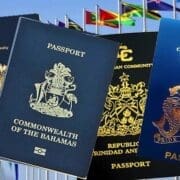
“America First” policies include mass deportations, aggressive immigration enforcement, and investigations into Caribbean Citizenship-by-Investment (CBI) programmes – initiatives that many small island economies rely on for survival. Proposed global tariffs and the possibility of a remittance tax pose existential risks to economies deeply dependent on U.S. trade, tourism, and financial flows.

Starmer’s reluctance to confront these policies has reinforced a dangerous perception: that Caribbean nations have become expendable collateral in the pursuit of a UK-U.S. trade deal.

This passivity extends beyond the Caribbean. The UK government failed to forcefully challenge American threats against Denmark and Canada, which stood staunchly with the UK in WW II punching far above its weight. 

This approach by the Starmer government has undermined the very principles of sovereignty and mutual respect the Commonwealth claims to uphold: Working together for prosperity, democracy and peace.  The reticence even extended to matters of the UK’s own standing – for months Starmer avoided public criticism as Trump attacked the Mayor of London, derided British immigration policy, and launched a US$10 billion lawsuit against the BBC.

While he has recently hardened his tone eventually pushing back on tariffs and on Greenland, and in a rare rebuke denounced Trump’s disparaging comments about NATO’s soldiers who served in Afghanistan: “we never needed them – we have never really asked anything of them – they stayed a little back, a little off the front lines;” critics within his own party and among international allies argue that the damage is already done. Early silence, especially in the face of repeated insults, has compromised Britain’s standing.

The Crocodile Analogy and the Loss of Solidarity

Churchill famously warned that appeasement meant “feeding the crocodile, hoping it will eat you last.” Starmer appears to have embraced precisely that logic.

This approach is a sharp departure from the solidarity of the 1940s, when the West Indies played a vital role in resisting authoritarianism. Thousands of Caribbean men and women served in the British armed forces, while the region supplied strategic resources essential to the war effort.

Today, that historical bond appears diminished. The UK’s reluctance to defend Caribbean nations against modern forms of economic coercion – tariffs, financial restrictions, and diplomatic intimidation, feels like a betrayal of shared sacrifice.

By prioritizing the prospect of a UK-U.S. trade agreement over the long-term interests of Commonwealth allies, Starmer risks sacrificing smaller nations in the hope of buying time with Trump. History suggests that crocodiles are rarely satisfied.

CARICOM Charting a New Course

In the absence of clear UK leadership, CARICOM nations are recalibrating.

Many Caribbean leaders now view Britain’s posture toward Washington as subservience rather than solidarity. As a result, the region is pursuing more assertive, independent diplomacy – engaging directly with the United States while diversifying partnerships with Canada and emerging economies in the Global South.

Rather than sheltering behind a weakened Commonwealth, the Caribbean is building its own regional defenses. In late 2025, Barbados, Belize, Dominica, and St. Vincent and the Grenadines launched a landmark agreement allowing full free movement of people – a bold attempt to stem brain drain and build resilience against external economic shocks.

Barbados Prime Minister Mia Mottley has emerged as a moral and strategic leader, insisting that the Caribbean must no longer be treated as a pawn in great-power rivalry. Bypassing London entirely, she has appealed directly to Trump for tariff exemptions and face-to-face talks, reminding him bluntly that the Caribbean “is not the enemy” and poses no threat to the U.S. economy.

This is not the action of isolated states, but a coordinated CARICOM strategy – one born of necessity rather than choice.

Why Appeasement Never Works with Trump

The logic behind Starmer’s early caution is familiar: avoid provocation, secure goodwill, and preserve space for negotiation. But experience suggests this strategy is fundamentally flawed when dealing with Trump.

Trump routinely interprets deference as weakness. The White House has reportedly dismissed Starmer’s government as feeble for failing to offer more vocal support on issues such as Venezuela. He has a long record of humiliating allies for domestic political gain, regardless of previous diplomatic courtesies.

Moreover, Trump views international relations through an intensely transactional lens. He assumes allies are exploiting the United States, making long-term goodwill difficult, if not impossible, to secure through politeness alone. His willingness to disregard personally negotiated agreements, including the USMCA, should give pause to anyone banking on appeasement to deliver a stable trade deal.

A Commonwealth Under Strain – Where Leadership Counts

The Commonwealth was meant to represent continuity – a transformation from empire to partnership, from domination to mutual respect. But partnerships cannot survive on nostalgia alone.

If the UK chooses silence when its allies are threatened, those allies will inevitably seek security elsewhere. The Caribbean’s shift from common cause to self-preservation is not an act of disloyalty; it is a rational response to abandonment.

The UK is in a unique position to stand in strength with others.  The Commonwealth of Nations is an association of 56 independent countries, with nearly one-third of the world’s population or 2.7 billion people, that has coverage spanning strategic areas of the globe including Africa, Asia, the Americas, the Artic, the Caribbean, and Oceania; and containing Middle Powers like India, Canada, Australia, South Africa, Malaysia, Nigeria, Singapore and New Zealand.

Starmer still has a choice. He can rediscover the principle that Britain’s strength has always rested on standing with others, not bowing to bullies. Or he can continue feeding the crocodile and hope the teeth close last.

The Caribbean, having learned the lesson early, cannot wait around to find out.

EDITOR’S NOTE: Ron Cheong, born in Guyana, is a community activist and dedicated volunteer with an extensive international background in banking. Now residing in Toronto, Canada, he is a fellow of the Institute of Canadian Bankers and holds a Bachelor of Science degree from the University of Toronto. His comments are his own and do not reflect those of News Americas or its parent company, ICN.

RELATED: Donald Trump And The False Assumption Of Coherence

Haitian American Congresswoman Salutes TPS Ruling As Little Haiti Prays

News Americas, FORT LAUDERDALE, FL, Weds. Feb. 4, 2026: Haitians in Miami’s Little Haiti gathered in prayer Tuesday night, giving thanks after a federal judge blocked the termination of Temporary Protected Status, (TPS),for Haitians – a move hailed by Haitian American leaders as a critical lifeline for immigrant families.

Haitian American Congresswoman, Sheila Cherfilus-McCormick, praised the ruling, which halts the potential removal of more than 350,000 Haitians living and working in the United States.

“This is a major win for South Florida and for our strong immigrant communities,” Cherfilus-McCormick said in a statement. “This decision confirms what we all know to be true: our nation cannot be at its greatest without Haitian immigrants, who contribute close to $3.4 billion annually to our economy.”

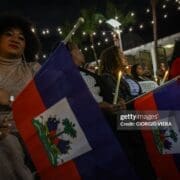
People attend a candlelight vigil for Haitians living in the US under the Temporary Protected Status (TPS) immigration program in Miami, Florida on February 3, 2026. Late on February 2, federal judge Ana C. Reyes of the Federal District Court in Washington, blocked the Trump administration from ending TPS for an estimated 350,000 Haitian immigrants. The status, which offers protection from deportation and work authorization, was set to expire on Feb. 3. (Photo by Giorgio Viera / AFP via Getty Images)

At the prayer vigil held at the Little Haiti Cultural Complex, a small but emotional crowd lit candles and prayed for stability, protection, and the opportunity to continue building their lives in the United States.

The ruling allows more than 350,000 Haitian immigrants nationwide — including an estimated 158,000 in Florida — to remain in the country and continue working, at least temporarily. For many families, the decision brought a measure of relief, tempered by ongoing uncertainty about the future.

“The past five years, what Haiti’s been dealing with — we are not ready,” said Fabiola Barthelemy, a Haitian American who has lived in the U.S. for decades, speaking to CBS News. “The crisis is real. Children are being raped and gangs are still active. Sending people back is like a death sentence to me.”

Although Barthelemy is a U.S. citizen, many members of her family are not. Her daughter, Elizabeth Barthelemy, said the prospect of her relatives being forced to return to Haiti is devastating.

“It would make me feel mad, frustrated, sad and depressed,” she told CBS Miami. “My cousins are like my family. I would go with them.”

Community leaders and elected officials echoed those concerns, stressing that TPS recipients are law-abiding, contributing members of society — not criminals.

On Monday, U.S. District Judge Ana Reyes temporarily blocked the Trump administration’s move to end TPS for Haitians nationwide.

Local officials say the decision offers critical breathing room but does not guarantee a permanent solution.

As of Tuesday night, the U.S. Citizenship and Immigration Services website had not yet been updated to reflect the ruling and continued to list TPS protections for Haitians as ending on Feb. 3rd.

RELATED: US Terminates Somalians Temporary Protected Status

Stella Jean Brings Haiti’s History And Pride To The 2026 Winter Olympics

News Americas, NEW YORK, NY, Weds. Feb. 4, 2026: After crafting the widely praised opening ceremony outfits for Team Haiti at the 2024 Paris Summer Olympics, Haitian-Italian designer Stella Jean is once again partnering with the island nation — this time to design its uniforms for the 2026 Milan–Cortina Winter Olympics.

Haitian-Italian designer Stella Jean is once again partnering with the island nation — this time to design its uniforms for the 2026 Milan–Cortina Winter Olympics.

Team Haiti’s Winter Olympics delegation may be small, but its cultural footprint is anything but. The 2026 team includes just two athletes — Richardson Viano, 23, and Stevenson Savart, 25 — yet Jean is ensuring their uniforms carry the weight of Haitian history, identity, and global presence.

In an interview with the Associated Press, Jean revealed that her original designs featured an image of Toussaint Louverture, the former enslaved general who led the revolution that established the world’s first Black republic in 1804.

“We have a commitment and a responsibility to convey a message,” Jean said. “There are many messages in this uniform. There is a bit of Haiti’s history, there is a representation of one of the fathers of the nation — Toussaint Louverture — a man feared by the most powerful on earth, such as Napoleon.”

However, the International Olympic Committee flagged the image as a violation of Olympic rules prohibiting political, religious, or racial propaganda at Olympic venues, forcing Jean and her team to rework the design.

“Rules are rules and must be respected, and that is what we have done,” Jean explained.

Drawing inspiration from a painting by Haitian artist Edouard Duval-Carrié, which depicts Louverture riding a red horse, Jean collaborated with Italian artisans to reinterpret the imagery without the historical figure. The final uniforms feature a striking red riderless horse set against a tropical backdrop, with the word “Haiti” emblazoned across the top.

Jean also designed a women’s look for Team Haiti, incorporating the traditional Haitian tignon — a headwrap historically imposed on enslaved women to cover their hair, now reclaimed as a symbol of resilience and cultural pride.

“For us, it is important that this horse — his horse, the general’s horse — remains,” Jean said. “It is the symbol of Haiti’s presence at the Olympics. In just a few meters of fabric, we must concentrate history and meaning. This is not about stylistic exercise.”

Haiti’s ambassador to Italy, Gandy Thomas, underscored the broader significance of the moment.

“Haiti’s presence at the Winter Olympics is a symbol — a statement, not a coincidence,” Thomas said. “We may not be a winter country, but we are a nation that refuses to be confined by expectation. Absence is the most dangerous form of erasing.”

Viano, who made history as Haiti’s first-ever Winter Olympian at the 2022 Beijing Games, echoed that sentiment, noting that participation on the global sports stage helps counter persistent negative narratives about the Caribbean nation.

The moment also comes amid heightened global attention on Haitians abroad. Just days before Haiti’s Winter Olympics appearance, a federal judge blocked an effort to end Temporary Protected Status (TPS) for roughly 350,000 Haitian immigrants living in the United States — a decision celebrated across diaspora communities.

Together, Jean’s designs and Team Haiti’s Olympic presence stand as a reminder that representation — on fabric, on snow, and on the world stage — remains a powerful form of resistance.

RELATED: Haitian American Congresswoman Salutes TPS Ruling As Little Haiti Prays

Keznamdi Wins 2026 Reggae Grammy As Caribbean Artists Turn Spotlight on Immigration

By NAN ET EDITOR

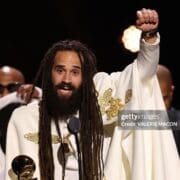
News Americas, New York, NY, Mon. Feb. 2, 2026: Independent Jamaican artist Keznamdi captured the 2026 Grammy Award for Best Reggae Album on Sunday night, edging out genre heavyweights, including Vybz Kartel, in a victory that underscored both reggae’s evolving sound and the growing influence of independent Caribbean artists on the global stage.

Jamaican musician Keznamdi accepts the Grammy for Best Reggae Album for “BLXXD & FYAH” on stage during the 68th Annual Grammy Awards Premiere Ceremony at the Crypto.com Arena in Los Angeles on February 1, 2026. (Photo by VALERIE MACON / AFP via Getty Images)

Keznamdi claimed the honor for BLXXD & FYAH, released independently in August 2025, marking his first Grammy win and his first nomination. The album triumphed over Kartel’s Heart & Soul, Lila Iké’s Treasure Self Love, Jesse Royal’s No Place Like Home, and Mortimer’s From Within.

Keznamdi (Second from left) accepts the Best Reggae Album award for “BLXXD & FYAH” at the 2026 Grammy Awards Pre-Show (Premiere Ceremony) held at the Peacock Theater in Los Angeles, CA, Sunday, Feb. 1, 2026. (Myung J. Chun / Los Angeles Times via Getty Images)

The announcement was made during the Grammy Premiere Ceremony at the Peacock Theater in Los Angeles on Sunday, February 1.

“Reggae music has always been a music weh defend truths and rights, African liberation, and Black man redemption,” Keznamdi said while accepting the award. “We a represent Jamaican culture — dancehall and reggae.”

A Roots-Deep Reggae Journey

Born into music, Keznamdi is the son of Errol and Kerida, lead vocalists of the international reggae band Chakula. He grew up touring globally and recording in a home studio in the St. Andrew hills of Jamaica, where the band produced ten albums.

He recorded his first song at age five and began performing publicly during his mother’s album release tours for her children’s project Save the World, which became a viral hit in Jamaican primary schools. His musical development continued through studies at St. Mary’s College in Northern California, followed by formative years living in Tanzania and completing high school in Ethiopia.

BLXXD & FYAH features collaborations with Kelissa, Mavado, and Masicka, blending roots consciousness with contemporary global production.

A Defining Caribbean Night at the Grammys

Keznamdi’s breakthrough came on a night that proved unusually resonant for Caribbean and diaspora artists across genres — not only in wins, but in message.

Puerto Rico star, Bad Bunny accepts the Best Música Urbana Album onstage during the 68th GRAMMY Awards at Crypto.com Arena on February 1, 2026 in Los Angeles, California. (Photo by Kevin Winter/Getty Images for The Recording Academy)

Puerto Rico–born global superstar Bad Bunny made Grammy history by becoming the first Latin artist to win Album of the Year with a Spanish-language album. During his acceptance speech, Bad Bunny openly criticized aggressive U.S. immigration enforcement.

“Before I say thanks to God, I’m going to say ICE out,” he told the audience, referencing recent civilian deaths amid heightened enforcement actions. He later added, “We’re not animals. We’re not aliens. We are human beings.”

Bad Bunny also won Best Global Music Performance and Best Música Urbana Album, further cementing his dominance on the night.

Cuban-born icon Gloria Estefan won Best Tropical Latin Album for Raíces and used her moment in the press room to call for a return to democratic principles and humanity in immigration policy.

“These values are the reason people want to be here,” Estefan said. “I hope our government listens to our plea for humanity.”

Caribbean Britain and the Windrush Legacy

Caribbean heritage star, Olivia Dean attends the 68th GRAMMY Awards on February 1, 2026 in Los Angeles, California. (Photo by John Shearer/Getty Images for The Recording Academy)

British singer Olivia Dean, who has Jamaican-Guyanese roots, was named Best New Artist for Nice To Each Other. In her speech, Dean invoked her family’s immigrant history, noting that her grandmother was part of the Windrush generation.

“I’m here as the granddaughter of an immigrant,” she said. “I’m a product of bravery. We’re nothing without each other.”

“ICE OUT” Becomes A Cultural Marker

Beyond speeches, visible protest marked the ceremony. Several artists wore pins reading “ICE OUT,” including Kehlani, Billie Eilish, Justin Vernon of Bon Iver, and jazz vocalist Samara Joy.

The coordinated symbolism reflected a broader moment of cultural dissent — driven largely by artists whose identities are shaped by migration, diaspora, and cross-border histories.

More Than An Awards Night

While Keznamdi’s Grammy win marked a personal and professional milestone – and a victory for independent reggae – the night itself signaled something larger. Caribbean artists were not only recognized for their musical excellence; they used one of the world’s biggest cultural platforms to assert their humanity, history, and right to speak.

In a genre born from resistance and survival, Keznamdi’s words echoed long after the trophy was raised — on a night when Caribbean voices didn’t just win, they defined the moment.

RELATED: Lifetime Achievement Honors For Mr. Vegas, Sly Dunbar and Leroy Sibbles At Reggae Genealogy

Nicki Minaj Fuels Online Firestorm After Roast From Trevor Noah At The Grammy’s

News Americas, New York, NY, Mon. Feb. 2, 2026: Trinidad & Tobago-born rapper, Nicki Minaj, ignited a fresh wave of controversy Sunday night after posting a series of cryptic messages on X that appeared to reference conspiracy theories involving “satanic rituals,” hours after South African-born comedian, Trevor Noah, poked fun at her political alignment during the 2026 Grammy Awards.

In a late-night post that did not name any individual, Minaj alleged that an unnamed “favorite artist” was involved in ritualistic violence tied to a satanic cult. The post quickly drew widespread attention, prompting confusion and concern among fans and critics alike.

Minaj did not offer evidence to support the claims, nor did she clarify whom she was referring to. In the comment section, users pressed her to explain, with some urging her to “name names,” while others questioned why she would raise such allegations on one of music’s most high-profile nights.

The timing of the posts appeared significant. Earlier in the evening, Noah referenced Minaj during his opening monologue at the Grammy Awards, noting her recent appearance at the White House and joking that she was “still with Donald Trump discussing very important issues.” The remark drew laughter and applause inside the Crypto.com Arena.

Minaj also tweeted: “Trevor refuses to come out the closet when everyone in the industry knows his boyfriend. Allegedly.”

She then made several posts about Jay-Z‘s relationships, including photos of him with Beyoncé and one of him with Aaliyah, the images sporting text suggesting he pursued them when they were under 18.

“Are y’all understanding that these ppl have been sacrificing children as a way of gaining & maintaining power? If you ever vote DemonCrat again, you’re just as soulless as they are & will perish. Maybe it’s time for me to do some story times — since I was trying to not say what I know — yet they continue to attempt bullying,” she tweeted.

In another tweet, Minaj said she would not be releasing new music until her contract is renegotiated and she updates everyone on “all the sabotage this RICO is finding out about Billboard.”

“Your favorite artist has been practicing rituals in a satanic cult where they take babies from other countries & mutilate & kill them as a form of a blood sacrifice to their God. You see, when your master is satan, you must constantly shed blood. However, the JIG IS UP,” she wrote in another tweet.

Minaj has become increasingly vocal about her support for President Donald Trump in recent months. Just days before the Grammys, she appeared at a U.S. Treasury Department summit promoting the administration’s “Trump Accounts” initiative, where she publicly described herself as “probably the president’s No. 1 fan” and said criticism of her stance only strengthened her support.

“The hate – or what people have to say – it does not affect me at all,” Minaj told the audience at the Washington event. “It actually motivates me to support him more.”

Following Noah’s onstage comments, Minaj did not directly reference the comedian by name in her social media posts. However, the proximity in timing led many observers to interpret the posts as a reaction to the Grammy monologue.

Cultural critics and media analysts cautioned against conflating satire with personal attacks, while also expressing concern about the spread of conspiracy rhetoric by high-profile public figures. Several commentators noted that such claims, when left vague, can fuel online harassment and misinformation without accountability.

As of Monday morning, Minaj had not issued any clarification or retraction.

The episode adds to an increasingly visible pattern of political polarization spilling into entertainment spaces, where celebrity influence, social media, and national politics intersect – often in unpredictable ways.

Donald Trump threatened to sue Noah for making “false and defamatory” comments regarding his relationship with Jeffrey Epstein.

Writing on Truth Social, Trump said: “Noah said, INCORRECTLY about me, that Donald Trump and Bill Clinton spent time on Epstein Island. WRONG!!! I can’t speak for Bill, but I have never been to Epstein Island, nor anywhere close, and until tonight’s false and defamatory statement, have never been accused of being there, not even by the Fake News Media.

“Noah, a total loser, better get his facts straight, and get them straight fast,” he added. “It looks like I’ll be sending my lawyers to sue this poor, pathetic, talentless, dope of an M.C., and suing him for plenty$.”

RELATED: Trinidad-Born Rapper Nicki Minaj  Signals Citizenship Move

When Skills Matter More Than Passports: A Caribbean Reckoning

By Dr. Isaac Newton

News Americas, NY, NY, Fri. Jan. 30, 2026: What happens when the world starts paying for what you can do, but your country keeps asking where you studied? As the old Caribbean saying reminds us, what yuh have in yuh hand is better than what yuh eye see. Yet across the region, we keep searching beyond our shores for value while overlooking the talent already in our grasp.

A World That No Longer Waits

The global economy has changed its rhythm. Work no longer sits still in offices or waits politely for permission. It moves fast, follows skill, and rewards action. Artificial intelligence has sharpened this reality, favoring those who can learn quickly, adapt confidently, and solve real problems. While the world races ahead, much of the Caribbean remains tied to an older script, one that assumes degrees lead naturally to jobs and that progress arrives through planning alone. As migration routes tighten and competition intensifies, this mismatch is no longer manageable. It is costly and deeply personal.

The Talent We Walk Past Every Day

The Caribbean’s most painful weakness is not scarcity of ability, but scarcity of belief. Too many capable people are seen only after they leave. Local competence is questioned, while foreign credentials are trusted without hesitation. Young people learn early that promise must wait and initiative must be approved. Leaving, then, becomes less about ambition and more about survival. Over time, this quiet pattern teaches a damaging lesson. Excellence is something you import, not something you grow.

Why Schooling Cannot Carry the Future Alone

Education still matters, but it cannot be expected to do everything. Skills now develop in motion, shaped by digital tools, real world problems, and constant experimentation. Learning is no longer a phase of life. It is the work itself. The economies that succeed are those that clear a straight path from ability to opportunity. Without access to capital, platforms, mentorship, and fair rules, even the most educated citizens are left circling the edges of possibility.

Talent Goes Where Life Works

People do not migrate because they dislike home. They migrate because systems make staying too hard. Talent moves toward places that respect time, reward effort, and reduce friction. This is why talk of brain gain has not delivered change. Attraction requires design. It means welcoming returning nationals with seriousness, inviting skilled newcomers with clarity, enabling remote work, and allowing talent to move freely across the region. A growing population of skilled contributors is not a threat to small states. It is how small states grow.

Artificial Intelligence and the Small Place Advantage

Artificial intelligence has quietly shifted the balance of power. It allows individuals in small places to compete in large markets. It makes it possible to export services without exporting people. This gives the Caribbean a rare opening. But AI does not rescue broken systems. It amplifies them. Where local talent is ignored, AI speeds departure. Where contribution is trusted, it multiplies impact and reach.

Choosing What We Value

The future of the Caribbean will be shaped less by who leaves and more by who is welcomed, trusted, and empowered. Progress begins when skill is recognized, effort is rewarded, and opportunity is accessible. When people feel seen, they stay. When they are taken seriously, they return. And when excellence is expected at home, it attracts excellence from elsewhere. The world is moving quickly and without apology. The question is no longer whether Caribbean people can succeed globally. It is whether the Caribbean is ready to choose its own.

EDITOR’S NOTE: Dr. Isaac Newton is an international strategist trained at Harvard, Princeton, and Columbia. He advises governments and global institutions on governance and development, helping leaders turn ideas into practical and lasting results.

RELATED: The Caribbean’s Moment Of Choice In A Shifting World

Donald Trump And The False Assumption Of Coherence

By Ron Cheong

News Americas, Toronto, Canada, Thurs. Jan. 29, 2026: Donald Trump’s political approach has not been defined by a consistent commitment to long-term institutional stewardship – either domestically or internationally. To assume otherwise risks attributing to him a degree of altruism or strategic coherence that his record does not clearly support.

Mark Carney’s responsibility, by contrast, is narrowly defined: to safeguard Canada’s interests. That is what he has sought to do. Faced with erratic threats, the use of tariffs as leverage, and diminishing regard for rules-based cooperation, Canada’s choices have narrowed: acquiesce and absorb repeated shocks, or chart a more deliberate course grounded in clarity, discipline, and resolve.

It would be reassuring to believe that these challenges will fade with a change in U.S. leadership. But Trump is better understood not as an aberration, but as a prominent manifestation of a broader American political current – one increasingly skeptical of alliances, resistant to external constraints, and prepared to deploy economic power coercively. That current is unlikely to vanish overnight. Expectations of a simple return to earlier norms therefore risk confusing nostalgia with strategy.

Binding Agreements Strained — Treaties Treated as Contingent

Recent years have underscored a difficult reality for Canada:

Agreements, even when formally ratified, can be reinterpreted or disregarded.

Treaty commitments may be suspended through executive action.

Stability can erode not because rules cease to exist, but because one party signals that compliance is optional.

The central question is no longer whether the United States will formally withdraw from the USMCA, but whether its conduct increasingly resembles partial disengagement – through tariffs, contested justifications, and the politicization of border administration.

In practice, many Canadian businesses and policymakers already operate on that assumption.

Tariffs are no longer confined to conventional trade disputes; they have become instruments of political signaling. The long-standing belief that economic interdependence would reliably constrain political behavior appears less certain. In some cases, political imperatives now drive economic decisions.

A Watershed Moment in the Global Order

For decades, the United States benefited from an international system reinforced by reserve-currency status, deep capital markets, and broad geopolitical trust. There are growing indications that aspects of that system are being reassessed.

What is unfolding is not collapse, but adjustment. Some countries have chosen to diversify reserve holdings, including through increased domestic custody of gold. Gold prices reflect this broader uncertainty. Holdings of U.S. Treasuries are being reduced incrementally – not in panic, but as part of longer-term risk management. Few actors seek a disorderly outcome that would undermine assets they still hold.

This is how systemic change often appears: gradual rather than dramatic, cautious rather than declarative.

The Limits of Negotiating with a Bully

There has been a persistent belief that Trump could be effectively constrained through negotiation alone. Experience has called that assumption into question.

When tariff threats were linked to geopolitical demand such as pressure surrounding Greenland several countries declined to comply, responding instead through coordinated diplomatic resistance. Figures such as Carney emphasized collective resolve rather than bilateral concession.

Subsequent U.S. messaging shifted, with references to prospective frameworks lacking clear institutional endorsement. Observers differed on interpretation, but the episode reinforced a recurring pattern: pressure applied, resistance encountered, narrative adjusted.

History suggests that coercive bargaining rarely stabilizes relationships. Concessions offered under pressure often invite further demands. Durable outcomes, by contrast, tend to emerge from clear limits combined with consistent engagement.

History’s Warning

Historical analogy should be used with care, but certain lessons recur.

In 1938, Neville Chamberlain returned from Munich asserting that concessions would secure peace. Within months, further territorial expansion followed, culminating in a broader European war.

Appeasement, in retrospect, did not preserve stability.
It weakened deterrence.

Contemporary disputes – whether involving Panama, Colombia, Greenland, Venezuela, Iran, or even close partners such as Canada, differ profoundly in context and scale. Yet the underlying logic of pressure and response remains familiar.

Canada as a Trading Nation

Canada is fundamentally a trading nation. Beyond exporting goods, it depends on durable commercial relationships and deeply integrated supply chains.

For many years, Canadians assumed that the U.S. relationship, unequal but fundamentally pragmatic, rested on shared economic self-interest. Highly integrated economies, it was believed, would avoid actions that imposed disproportionate harm on themselves.

That assumption now warrants re-examination.

The Risks of Escalatory Economic Threats

Threats of sweeping tariffs, such as a hypothetical across-the-board increase tied to Canada’s pursuit of diversified trade, would carry serious risks for both economies.

Such measures could disrupt housing, automotive manufacturing, energy markets, and cross-border supply chains with unusual speed and severity.

Canada is not a great power. But it is a capable one: resource-rich, institutionally stable, and deeply embedded in global markets. Treating it as economically subordinate would not only strain bilateral relations; it would undermine shared economic resilience.

What Middle Powers Must Do

So what course remains for Canada?

The one middle powers have historically taken under pressure.

Stay calm.
Stay strategic.
Stay firm.

Avoid panic.
Avoid theatrics.
Avoid reflexive concession.

There is a difference between compromise and capitulation. Between diplomacy and dependency. Between reducing risk and institutionalizing vulnerability.

Geography is immutable. The United States will remain Canada’s closest neighbor and largest trading partner. Abrupt disengagement is neither realistic nor desirable.

But neither can Canada accept a condition of recurring economic coercion – where each political cycle introduces renewed uncertainty.

That is not partnership.
It is not stability.
It is not free trade.

Canada cannot control the direction of U.S. domestic politics. But it can reduce its exposure to their volatility. Success will not be measured in rhetoric or applause, but in whether Canada becomes, over time, more resilient – harder to pressure, harder to isolate, harder to threaten economically. That is stability.
Not submission.

EDITOR’S NOTE: Ron Cheong, born in Guyana, is a community activist and dedicated volunteer with an extensive international background in banking. Now residing in Toronto, Canada, he is a fellow of the Institute of Canadian Bankers and holds a Bachelor of Science degree from the University of Toronto. His comments are his own and do not reflect those of News Americas or its parent company, ICN.

RELATED: Taking The Sign Out Of The Window – Mark Carney’s Illuminating Leadership: The Path For Middle Powers

St. Vincent and Grenadines New Government Lays Out New Budget

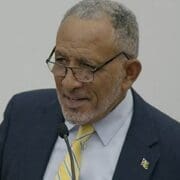
News Americas, KINGSTOWN, St. Vincent and the Grenadines, Jan. 29, 2026: St. Vincent and the Grenadines Prime Minister, Dr. Godwin Friday, has laid out his first national budget since taking office – and the figures reveal both ambition and constraint as his administration grapples with rising debt costs, disaster recovery, and tight revenue growth.

Prime Minister Dr. Godwin Friday has laid out his first national budget since taking office — and the figures reveal both ambition and constraint as his administration grapples with rising debt costs, disaster recovery, and tight revenue growth.

Presenting the 2026 Estimates of Revenue and Expenditure, Friday announced a US$703 million fiscal package, a modest 2% increase over last year’s approved budget, signaling continuity rather than expansion in public spending.

The budget is expected to be financed largely through US$336 million in current revenue and US$362 million in capital receipts, reflecting continued reliance on project-based funding and external inflows rather than organic revenue growth.

A Budget Under Pressure

Recurrent spending for 2026 – excluding debt amortization and sinking fund contributions – is projected at approximately US$374 million, leaving a current deficit of about US$39 million.

“That deficit is not new,” Friday told Parliament, acknowledging that successive administrations have run deficit budgets. “Our challenge is to shrink those deficits over time.”

Revenue projections are slightly weaker this year, driven largely by a sharp 40% drop in non-tax revenue, after the government confirmed there will be no repeat of World Bank reimbursements tied to Hurricane Beryl cleanup under the BERRY Project.

Last year’s budget benefited from a one-off US$7.4 million retroactive reimbursement. That cushion disappears in 2026.

Where the Money Comes From

Tax revenue is projected to reach approximately US$282 million, up marginally by less than 1%. Growth is expected mainly from:

Taxes on international trade, rising by about US$1.7 million

Income and profit taxes, climbing roughly 6.5% to US$48 million

Non-tax revenue is forecast at US$53 million, driven largely by government goods and services, expected to generate US$44 million.

Debt Is the Quiet Risk

The most striking pressure point in the budget is debt servicing.

Total recurrent expenditure – including amortization and sinking fund contributions – rises to US$484 million, a 13.7% increase over last year.

Debt amortization alone jumps to US$100 million, up nearly 26%, while sinking fund contributions climb to US$9.3 million. “Amortization is worrying,” Friday admitted — a rare note of candor that underscores the long-term fiscal challenge facing the small island economy.

Wages, Pensions, And Transfers

Public sector compensation increases by US$14.5 million, reflecting wage obligations and staffing costs. Pension payments rise modestly to US$34.6 million, including:

US$29 million for civil service pensions

US$5.6 million in government contributions to the National Insurance Services, (NIS)

Transfers for training, grants, and regional obligations rise by about US$10 million, adding further strain to recurrent spending.

Capital Spending Gets Tighter – And More Targeted

Capital spending for 2026 is set at US$213 million, a 17% reduction from last year, reflecting a more restrained public investment program.

Still, key ministries will see significant allocations:

Transport & Works: US$42.7 million

Education & Vocational Training: US$23.5 million

Higher Education, Grenadines Affairs, Ports & Airports: US$29 million

Finance & Economic Planning: US$70 million

Housing & Informal Settlements: Nearly US$15 million

The focus, Friday said, will be on roads, sea defenses, schools, clinics, and public buildings, with an emphasis on resilience and essential services rather than large new initiatives.

The Bigger Picture

Friday’s first budget is less about bold expansion than fiscal navigation – balancing debt obligations, disaster recovery, and public expectations in a constrained economic environment.

The message is clear: the new government inherits limited fiscal space, rising debt costs, and fewer one-off supports – and the hard choices are just beginning.

RELATED: What Now After Davos

Trinidad-Born Rapper Nicki Minaj  Signals Citizenship Move

News Americas, NEW YORK, NY, Jan. 29, 2026: Trinidad and Tobago-born rapper Nicki Minaj says she has received a special U.S. immigration “gold card” from President Donald Trump, signaling what she described as a fast-tracked path toward U.S. citizenship.

Minaj made the disclosure on Wednesday, hours after appearing alongside Trump at a U.S. Treasury Department summit promoting the administration’s new child investment initiative known as “Trump Accounts.” Posting on X, the rapper shared an image of a gold-colored immigration card bearing Trump’s likeness, captioned simply: “Welp.”

Musician Nicki Minaj (L) joins U.S. President Donald Trump on stage as he delivers remarks during the Treasury Department’s Trump Accounts Summit at Andrew W. Mellon Auditorium on January 28, 2026 in Washington, DC. “Trump Accounts” are a portion of recently passed tax and spending legislation where the federal government will deposit $1,000 into investment accounts for every child born between 2025 and 2028 once parents sign their children up while filing their income taxes.  (Photo by Win McNamee/Getty Images)

She later wrote that she was “finalizing that citizenship paperwork as we speak as per MY wonderful, gracious, charming President,” adding that while the card typically costs up to US$1 million under the program, she received it at no charge.

The so-called “gold card” was created under a September executive order and is designed to offer an alternative pathway to citizenship for highly skilled or high-profile foreign nationals. The White House has not yet commented on Minaj’s specific case.

Born Onika Maraj in Trinidad and Tobago, Minaj has previously spoken openly about her immigration history. In a 2018 social media post, she said she entered the United States as an undocumented child at the age of five, criticizing family separations at the border during Trump’s first term.

At Wednesday’s Treasury event in Washington, Minaj appeared onstage with Trump and businessman Kevin O’Leary, at times holding the president’s hand while he praised her publicly. Trump told the audience he believed Minaj planned to donate significant sums to Trump Accounts on behalf of her fans, though no formal details were provided.

While addressing the crowd, Minaj described herself as “probably the president’s No. 1 fan,” adding that criticism of her political stance has only strengthened her support.

Trump, for his part, praised the rapper, acknowledging that her endorsement has not been without backlash. “She took a little heat because her community isn’t necessarily a Trump fan,” he said. “But I just think she’s great.”

Minaj’s appearance and comments mark a notable political turn for one of the most internationally recognized artists of Caribbean descent, placing immigration, celebrity influence, and U.S. policy squarely at the center of a widening national debate.

RELATED: From Undocumented Immigrant To Trump’s “Number One Fan” – Nicki Minaj Embraces MAGA Spotlight