
The Caribbean Is Growing — But Only One Country Is Changing The Game

By NAN Business Editor

News Americas, NEW YORK, NY, Fri. Jan. 23, 2026: The Caribbean is entering a new growth cycle, according to the latest regional forecasts from the World Bank. After years of uneven recovery, several economies are projected to expand through 2026 and 2027. Yet, a closer look at the data reveals a striking imbalance: while growth is spreading across the region, only one country is fundamentally reshaping the Caribbean’s economic trajectory: Guyana.

A boat the Demerara river in Georgetown, Guyana (Photo by JOAQUIN SARMIENTO/AFP via Getty Images)

World Bank projections place Guyana far ahead of its regional peers, driven almost entirely by offshore oil production. The country’s economic expansion has pushed regional averages upward, masking far more modest growth elsewhere. In effect, Guyana is not just growing faster — it is redefining what “Caribbean growth” means in global economic conversations.

But headline growth tells only part of the story.

Despite record GDP expansion, Guyana continues to face deep structural challenges. Poverty levels remain above 50 percent, highlighting a critical disconnect between national output and household prosperity. This tension — extraordinary growth alongside persistent deprivation — is emerging as one of the most consequential development questions in the Caribbean today.

Elsewhere in the region, growth remains steady but constrained. Tourism-dependent economies are stabilizing, helped by improved airlift and demand from North America and Europe. Financial services hubs continue to show resilience, while commodity-linked states benefit modestly from higher global prices. Yet none of these economies approach the scale or speed of Guyana’s expansion.

This divergence matters.

For policymakers, it raises difficult questions about regional integration and economic planning. For investors, it reframes how opportunity should be assessed. The Caribbean is no longer moving as a single growth story. It is becoming a region of sharply differentiated trajectories, where sector exposure and policy execution matter more than geography alone.

GUYANA

Guyana’s experience underscores both the promise and the peril of rapid expansion. Oil revenues have the potential to fund transformative investments in infrastructure, healthcare, education, and diversification. At the same time, without disciplined fiscal management and long-term planning, resource-driven growth risks entrenching inequality rather than alleviating it.

That balance — between extraction and inclusion — will define Guyana’s next decade.

“The risk for the Caribbean is mistaking growth for transformation,” said Felicia J. Persaud, CEO of Invest Caribbean. “Guyana’s numbers are extraordinary, but the real test is whether that growth is converted into diversified economic activity, human capital development and opportunities that reach beyond a narrow slice of the economy.”

The World Bank’s projections suggest that while other Caribbean economies are improving, none are positioned to drive regional performance in the same way. This creates a new regional dynamic: Caribbean growth is increasingly concentrated, not collective.

For smaller states, the challenge is staying competitive in a landscape shaped by one dominant outlier. For development partners and lenders, it complicates regional policy approaches that assume uniform conditions. And for investors, it demands sharper analysis — distinguishing between cyclical recovery and structural change.

Growth, after all, is not inherently transformative. It must be managed, distributed, and reinvested.

Guyana’s rise has altered the Caribbean’s economic narrative. The next chapter will be written not by oil alone, but by choices — about governance, diversification, and inclusion. Whether the country becomes a long-term regional anchor or a cautionary tale will depend on how effectively today’s gains are translated into tomorrow’s resilience.

One thing is already clear: the Caribbean is growing again. But only one country is truly changing the game — and the consequences will be felt well beyond its borders.

Top Forecasted Caribbean Economies

Ranked by GDP Growth (Highest → Lowest)

RankCountry2026 Growth (%)2027 Growth (%)World Bank–Cited Drivers1Guyana19.621.9Oil production, investment2Dominican Republic4.54.5Tourism, domestic demand3Suriname3.53.7Investment recovery4Jamaica-2.33.7Post-contraction rebound5Grenada3.33.0Tourism, services6Dominica3.02.9Public investment, tourism7St. Vincent & the Grenadines2.92.7Tourism, reconstruction8Trinidad & Tobago0.32.5Energy sector recovery9Haiti2.02.5Fragile stabilization10St. Lucia2.02.1Tourism recovery11Barbados2.02.0Tourism-led stabilization12Belize2.42.2Agriculture, tourism13Bahamas2.11.8Tourism normalization

RELATED: Oil-Rich CARICOM Nation Guyana Still Faces High Poverty Levels, Data Shows

Caribbean Roots Shine As Delroy Lindo Earns First Oscar Nomination For Sinners

By NAN ET EDITOR

News Americas, NEW YORK, NY, Fri. Jan. 23, 2026: After decades of commanding performances that shaped modern Black cinema, Caribbean roots, British-born actor Delroy Lindo has finally crossed a milestone many believe was long overdue: his first Academy Award nomination.

British Caribbean actor Delroy Lindo attends the 83rd annual Golden Globe Awards at the Beverly Hilton hotel in Beverly Hills, California, on January 11, 2026. (Photo by Michael Tran / AFP via Getty Images) /

The London-born, Jamaican-rooted actor, 73, earned a Best Supporting Actor nomination at the 98th Academy Awards for his role as Delta Slim in Sinners, the genre-blending vampire thriller directed by Ryan Coogler. The nod marks a long-awaited recognition for an artist whose career has been consistently lauded by critics, yet repeatedly overlooked by awards bodies.

Delroy Lindo, l., Ryan Coogler (C) and cast and crew of “Sinners” accept the Cinematic and Box Office Achievement award onstage during the 83rd Annual Golden Globe Awards at The Beverly Hilton on January 11, 2026 in Beverly Hills, California. (Photo by Kevork Djansezian/CBS via Getty Images)

For Caribbean audiences and the global diaspora, Lindo’s nomination resonates far beyond Hollywood. Born in Lewisham, London, to Jamaican parents who were part of the Windrush generation, Lindo’s life mirrors a transatlantic Caribbean journey – moving from the UK to Canada as a teenager, then to the United States, where he trained at the American Conservatory Theater and forged a career that would span stage, film, and television.

His mother was a nurse who struggled as an outsider in England but instilled a strong sense of heritage in her son, while his father held various jobs, contributing to the family’s cultural background. Lindo has said in the past that he felt like an outsider as the only Black child in his school, but was inspired to act after a school play. He deeply connects with his Jamaican roots, viewing his parents’ emphasis on presentation as a key part of his heritage, a theme echoed in his work.

Delroy Lindo accepts Best Supporting Actor for “Sinners” onstage during the 2026 Annual Movies for Grownups Awards with AARP at Beverly Wilshire, A Four Seasons Hotel on January 10, 2026 in Beverly Hills, California. (Photo by Michael Kovac/Getty Images for AARP)

Lindo has previously found himself in awards-season conversations for iconic roles, including West Indian Archie in Spike Lee’s Malcolm X and his searing performance in Da 5 Bloods. But when nominations failed to materialize, he deliberately resisted expectation. “I try not to buy into that,” he told Entertainment Weekly last year, reflecting on past snubs. Still, he admitted that the absence of recognition was painful. “I was profoundly disappointed, frankly.”

That disappointment did not derail him. Instead, Lindo kept working – on his own terms.

In Sinners, he delivers a performance critics describe as hypnotic. Playing Delta Slim, a Mississippi bluesman whose music anchors a juke joint that becomes the target of supernatural forces, Lindo brings gravitas, restraint, and lived-in wisdom to the screen. Coogler has praised the performance as “incredible,” noting what Lindo brought to the role every single day on set.

Audiences agreed. Sinners boasts a 97% critical rating and 96% audience score on Rotten Tomatoes, and its global box office haul of approximately $368 million made it one of the year’s most successful original films. The movie shattered awards records with 16 Oscar nominations, becoming the most-nominated film in Academy history.

For Lindo, the recognition arrives not as validation, but as affirmation. “To have been working as an actor for the length of time that I have… the fact that audiences still apparently find what I’m doing interesting – that’s not a given,” he said. “I don’t take any of it for granted.”

His Caribbean roots continue to inform his creative direction. Lindo has long spoken about the influence of his Jamaican heritage and the Windrush experience, which he is now exploring in a forthcoming memoir scheduled for release in 2027. He is also developing and directing a feature film set in Jamaica’s Blue Mountains, centered on spirituality, healing, and the power of community – themes deeply rooted in Caribbean culture.

Lindo exclusively told E! News that his son Damiri was the one to tell him he received his first-ever Oscar nomination for the 2026 ceremony. “I was in bed,” he recalled to E!. “My phone rang. It was my son. I picked it up and said, ‘Hey man,’ and he said, ‘Dad, dad, you got it. You got that s–t.’” 

“It means the world because he’s seen it all,” Lindo was quoted as saying. “He’s seen it away from the red carpet. He’s seen both sides of it. So, along with my wife, they have the internal and the external perspective on this journey. It felt completely right on to receive this news from my son.”

Lindo  faces off against Jacob Elordi (Frankenstein), Stellan Skarsgård (Sentimental Value), Benicio Del Toro (One Battle After Another) and Sean Penn (One Battle After Another) in his category.

But, however, it turns out, Lindo told E!: “It’s just incredibly joyful and affirming. Affirming that audiences inside and outside of the industry have responded to this work so fully, and the fact that the work has touched people, I believe, in the depth of their humanity. I don’t have the words to explain how gratifying and affirming that feels. It’s extraordinary.”

For many in the Caribbean diaspora, the moment already carries meaning: a son of Jamaican immigrants, whose artistry endured decades of industry blind spots, finally standing where history says he always belonged.

The Academy Awards, hosted by Conan O’Brien, air Sunday, March 15, 2026, on ABC.

RELATED: Teyana Taylor Makes Golden Globe History As Second Caribbean-Rooted Black Winner

Who Speaks After Babatunde: The Work That Did Not End

By Nyan Reynolds

News Americas, NEW YORK, NY, Thurs. Jan. 22, 2026: “Unno nuh tired fi pressure poor people? Well, Babatunde have a message fi you.” Those words, spoken by Babatunde, open the song ‘Anytime,’ by Bounty Killer, setting the tone for a message that confronts power, accountability, and social pressure head on.

Former Jamaican Radio Host Winston Babatunde Witter.

When I was younger, there was a Jamaican man whose voice carried a kind of authority that could not be ignored. It was not authority rooted in position or power, but authority shaped by conviction. He called himself Babatunde, a name that sounded exactly like what he represented. Strength. Presence. Purpose. His given name was Winston “Babatunde” Witter, but to the people who tuned in daily, Babatunde was far more than a radio host. He was a conscience that refused to sleep.

Babatunde hosted a daily talk show in Jamaica at a time when speaking openly about social conditions was not without consequence. He addressed issues that made those in power uncomfortable. Not because discomfort was the goal, but because truth, when spoken plainly, has a way of disrupting comfort. In many ways, he was the voice for the voiceless. When others were silent out of fear of social isolation, political retaliation, or threats to life and property, he chose to speak. He was the exception in moments when exceptions mattered.

His voice was raspy, weathered, and unmistakable. It was the kind of voice that demanded attention even before the message landed. When Babatunde spoke, people listened, not because they were entertained, but because they were being addressed. He sounded like a parent who was not afraid to scold you when you were wrong, but who cared deeply about teaching you how to do better. There was discipline in his words, but also love. Correction without contempt. Urgency without chaos.

As the years have passed, I find myself thinking often about men like him. About what it means to stand up consistently for what is right. About what happens to a society when those voices begin to disappear. History has taught us repeatedly that progress is not self sustaining. It requires vigilance. The moment we take our foot off the pedal, momentum does not simply slow. It begins to erode. Like an engine that has lost steam, the loss may not feel immediate, but over time the power fades. Eventually, the significance of the mission becomes harder to connect to the urgency that once drove it.

Today, as I look around and listen within our society, I sit with uncomfortable questions. Where are the voices for the homeless. Where are the voices for the underserved. Where are the voices for starving children. Where are the voices for those who wake up each morning on concrete and call the streets home. Who is willing to speak for them without condition, without branding, without expectation of applause.

I ask these questions not as an outsider, but as someone who has lived between worlds. I was educated here. I have lived here for many years. I understand the language of progress, of opportunity, of achievement. I also understand how easily those narratives can obscure what remains unresolved. As a writer, I find myself constantly questioning where we are today and whether we have confused improvement with completion.

There is a growing tendency in our society to declare the race over. We are told that progress has been made, therefore urgency is no longer required. That we no longer need voices that push, challenge, or unsettle. That running slower is acceptable because we will still cross the finish line. But life does not work that way. When effort slows, problems do not disappear. They accumulate. Neglect compounds quietly until it becomes impossible to ignore.

I fear that many of the glaring issues we see today are the result of this slow accumulation. Not because people stopped caring entirely, but because they were convinced that caring loudly was no longer necessary. That silence could now be mistaken for peace. That comfort was evidence of justice.

One of the most dangerous narratives of our time is the belief that social issues are now purely individual problems rather than collective responsibilities. Poverty is framed as a personal failure. Homelessness is treated as a choice. Inequality is dismissed as outdated rhetoric. These conclusions are rarely reached through deep engagement. They are the product of surface level observation. And surface level observation has never been sufficient to diagnose systemic reality.

Babatunde did not operate at the surface. He walked within communities. He listened to people whose stories rarely made headlines. He understood that lived experience reveals truths statistics alone cannot capture. When he sensed something was wrong, he did not wait for validation from institutions or approval from those in power. He trusted his discernment. He picked up the microphone and said plainly that something was wrong.

There is a difference between being politically charged and being substantively grounded. Some voices are loud but empty, fueled more by outrage than understanding. Others speak with restraint, but their words carry weight because they are informed by observation, empathy, and accountability. Babatunde belonged to the latter. He was not interested in spectacle. He was interested in responsibility.

He inspired people to speak. To call into radio shows and share their lived realities. To pick up pens and pencils and name what mattered. He reminded them that silence was not neutrality. Silence was often complicity. Through his work, people learned that using one’s voice was not about attention, but about stewardship.

Today, writers, broadcasters, and communicators face a different kind of resistance. Not always direct threats, but dismissal. There is a subtle pressure to move on, to stop asking difficult questions, to accept that certain conversations are no longer necessary. People are quick to say that equality exists everywhere now. That freedom has been achieved. That social issues are relics of the past. These statements are often delivered with confidence, as if repetition alone makes them true.

But confidence without examination is not wisdom. If one is willing to dig beneath the surface, to listen carefully, to observe honestly, it becomes clear that the race is far from over. Progress has occurred, yes, but progress does not negate responsibility. It increases it. The more we know, the more accountable we become.

The lesson from Babatunde’s life is not that everyone must shout. It is that everyone must be willing to speak when substance demands it. There is a difference between noise and conviction. Between performance and purpose. He understood that moral clarity requires restraint as much as it requires courage.

This article is not written to romanticize the past. It is written to acknowledge legacy. To give credit to a man who carried the voice of the people with integrity. Winston Witter took his bow years ago, but his absence leaves a question that time alone cannot answer.

Where do we go from here.

Because voices like his do not automatically replace themselves. They must be taken up intentionally. They must be carried by individuals willing to listen deeply, speak carefully, and act courageously even when it is inconvenient. The mantle does not disappear when a life ends. It waits.

Time has a way of making people forget. That is not cruelty. It is human nature. But forgetting does not erase responsibility. If anything, it makes remembrance an act of leadership. To remember voices like Babatunde is to recommit to the values they embodied. Moral consistency. Intellectual honesty. Courage rooted in care.

We live in an era saturated with communication and yet, it is starving for conscience. Platforms are abundant, but conviction is scarce. Everyone has a microphone, but few are willing to use it responsibly. Babatunde reminds us that voice without purpose is just sound. Purpose without voice is unfinished work.

The question before us is not whether society needs voices for the voiceless. The evidence answers that clearly. The question is whether we are willing to become them. Not for recognition. Not for legacy. But because silence has consequences.

The race continues. The work remains. The voice of the core is still needed.

EDITOR’S NOTE: Nyan Reynolds is a U.S. Army veteran and published author whose novels and cultural works draw from his Jamaican heritage, military service and life experiences. His writing blends storytelling, resilience and heritage to inspire readers.  

The Caribbean’s Middle Class Is Being Built —And Broken — At The Same Time

By NAN Business Editor

News Americas, NEW YORK, NY, Fri. Jan. 22, 2026: The Caribbean is doing two contradictory things at once: expanding its middle class while quietly undermining it.

People purchase fruit from a stand on November 05, 2025, in Port of Spain, Trinidad and Tobago. Reports indicate that the United States military is expanding its presence in the Caribbean as speculation continues about possible strikes against targets inside Venezuela. The Port of Spain is approximately 7 miles from the coast of Venezuela at its closest point (Photo by Joe Raedle/Getty Images)

That paradox sits at the heart of the Inter-American Development Bank (IDB)’s latest edition of the Caribbean Economics Quarterly, “How Are External Forces Impacting Trade, Growth, and Investment in the Caribbean?,” which examines how taxes, social spending, and public policy shape income distribution across the region.

The report’s core finding is deceptively simple: government intervention matters — but it is no longer enough.

According to the IDB, fiscal policy in the Caribbean has historically reduced poverty and inequality, but its impact is weakening. The study states plainly that “fiscal policy continues to play a significant role in reducing inequality and poverty”, yet warns that “the redistributive power of the state has diminished over time.”

That erosion is where the middle class becomes vulnerable.

Building the Middle Class – On Paper

Across much of the Caribbean, social transfers, public-sector employment, and subsidized services have helped lift millions out of poverty. Education access has improved. Health outcomes have stabilized. Basic consumption has expanded. In technical terms, the IDB’s authors note that “market income inequality in the Caribbean is high, but disposable income inequality is substantially lower after taxes and transfers.” That gap is the space where governments have historically operated – using redistribution to create stability.

This is how the Caribbean middle class was built: not through private-sector wage growth alone, but through state buffering. But buffers are only effective if they expand with costs. And that is where the system is cracking.

Breaking the Middle Class – In Reality

The report flags a growing disconnect between income security and cost-of-living pressure. While households may technically remain above the poverty line, they are increasingly exposed to shocks. The IDB cautions that “many households that are not poor remain highly vulnerable to falling back into poverty.” This vulnerability is most pronounced among middle-income earners who depend on fixed wages while absorbing rising food prices, housing costs, energy bills, and transport expenses.

In other words: the middle class exists – but it is fragile.

Tourism-dependent economies are especially exposed. The report highlights that employment-linked income is sensitive to external shocks, noting that “household income volatility remains a key risk factor, particularly in tourism-based economies.” That volatility turns the middle class into a revolving door rather than a destination.

The Policy Trap

Here is the structural problem the IDB surfaces, without spelling it out bluntly: Caribbean governments are being asked to do more redistribution with fewer resources.

Public debt is high. Fiscal space is tight. Social spending is increasingly targeted toward the poorest — leaving the middle class paying taxes without proportional protection. The study observes that “tax systems in the Caribbean rely heavily on indirect taxation,” which disproportionately affects middle-income households through consumption taxes rather than wealth or income taxes.

This creates a squeeze:

The poor receive targeted support;
The wealthy insulate themselves.
The middle absorbs the shock;
The result is political tension, declining trust, and social stagnation.

What the IDB Is Really Saying

Stripped of technical language, the IDB’s message is clear: redistribution alone cannot sustain a middle class without growth, productivity, and wage expansion. The report emphasizes that fiscal tools must be paired with labor market reform, productivity gains, and economic diversification, warning that “without sustained growth, redistribution becomes increasingly constrained.”

That is the quiet warning policymakers cannot afford to ignore.

The Takeaway

The Caribbean middle class is not disappearing – but it is thinning. It is being built statistically, through transfers and policy design, while being broken structurally by cost pressures, weak wage growth, and economic volatility.

The IDB’s CEQ report does not call this a crisis. But the data points in that direction. A middle class that cannot absorb shocks is not a middle class — it is a pause between poverty spells.

And that is the business story Caribbean leaders now have to confront.

RELATED: Oil-Rich CARICOM Nation Guyana Still Faces High Poverty Levels, Data Shows

CARICOM’s Animal Farm? – Why The Caribbean Is United in Rhetoric, Divided In Reality

By Keith Bernard

News Americas, NEW YORK, NY, Weds. Jan. 21, 2026: For years, Caribbean leaders have insisted that CARICOM is a unified bloc – one region, one people, one destiny. Yet the region continues to function less like a cohesive community and more like a heterogeneous animal farm, where each member state is a different creature with its own instincts, vulnerabilities, and survival strategies.

An aerial view shows the US SLake Erie (front), a US Navy Ticonderoga-class guided-missile cruiser, and the USS Iwo Jima, a US Navy Wasp-class amphibious assault ship, docked at the port of Ponce, Puerto Rico, on January 15, 2026. (Photo by Ricardo ARDUENGO / AFP via Getty Images)

The recent decision by the United States to pause immigrant visa processing for selected CARICOM states is a perfect illustration of this unevenness. On a truly homogeneous farm, external actors would treat all animals the same. But Washington’s selective restrictions exposed the uncomfortable truth: some CARICOM members are seen as low‑risk partners, others as high‑risk; some are treated with diplomatic leniency, others with suspicion.

The region’s response was equally fragmented – some governments protested loudly, others remained silent, and a few quietly calculated how the pause might shift migration flows in their favor. A homogeneous bloc would have spoken with one voice; instead, each animal reacted according to its own fears and interests.

These disparities run deeper than immigration policy. They shape trade negotiations, climate diplomacy, security cooperation, and even the pace of economic reform. Larger economies push for liberalization that suits their scale; smaller ones cling to protective measures to avoid being trampled. Resource‑rich states speak confidently about regional energy security, while import‑dependent ones worry about exposure. Political stability varies widely, as do fiscal capacities and institutional strength. To pretend these differences do not exist is to ignore the very anatomy of the farm.

This is why CARICOM so often moves in fits and starts. A homogeneous animal farm could march in one direction because its creatures share the same instincts. But a heterogeneous one pulls in multiple directions, each animal tugging toward its own feeding trough. Integration becomes less about unity and more about managing asymmetry – balancing the ambitions of the strong with the anxieties of the weak.

None of this means CARICOM is unworkable. It simply means the region must abandon the comforting fiction of uniformity. Real progress requires acknowledging the heterogeneity of the farm: different capacities, different vulnerabilities, different political economies. Only then can institutions be designed to reflect reality rather than rhetoric.

Until that honesty emerges, CARICOM will continue to resemble Orwell’s farm – full of noble slogans, but governed by the quiet truth that some animals are always more equal than others.

EDITOR’S NOTE: Keith Bernard is a Guyanese-born, NYC-based analyst and a frequent contributor to News Americas. 

RELATED: Venezuela’s Crisis Is A Warning: When Ideology Replaces Governance, Nations Fail

The UWI Toronto Benefit Awards Announces This Year’s Honorees

News, Americas, Toronto, ON, January 21, 2026: The highly anticipated University of the West Indies, (UWI), Toronto Benefit Awards is proud to announce its 2026 honorees for the 17th annual evening of recognition in support of scholarships for students in the Caribbean. The prestigious event will take place on Saturday, April 25, 2026, at The Ritz-Carlton Hotel, 181 Wellington Street West, Toronto, beginning at 5:30 p.m. EST.

L to R: Ayesha Curry, Tonya Williams, The Honourable Marci Ien, The Honourable Justice McLeod, Sam Ibrahim

Hosted by The University of the West Indies (UWI) – consistently ranked among the world’s top universities – this year’s theme, Unlocking Brilliance, reflects UWI’s enduring commitment to nurturing talent, leadership, and opportunity across the Caribbean and its global diaspora.

“This is a powerful night of purpose and pride,” says Dr. Donette Chin-Loy Chang, Patron of the UWI Toronto Benefit Awards. “For 16 years, Canadians have supported the cause of ensuring that students in the Caribbean are afforded the chance to fulfill their dreams of education.  We have met the moment, built bridges of hope, and lit the way.  This year, with great fervour, we will ‘unlock the brilliance of students’ whilst celebrating once again leaders who, by their works, have demonstrated the results of how unlocking potential transforms communities.  Now more than ever, with several existential threats worldwide, we must stand firm in unity in the belief that education will change the world.”

A signature event on Toronto’s social and philanthropic calendar, the UWI Toronto Benefit Awards attracts a distinguished audience of corporate executives, cultural leaders, public figures, and community champions united by a shared commitment to giving back.

2026 UWI Toronto Benefit Awards Honourees

• Luminary Award: Mrs. Ayesha Curry– Renowned entrepreneur, philanthropist, and wellness advocate whose work centres on community upliftment, cultural empowerment, and purpose-driven leadership.

• Luminary Award: Ms. Tonya Williams, O.C. – Award-winning actress, producer, and founder of initiatives supporting diversity in media and film and has been a driving force for inclusion and cultural representation.

• G. Raymond Chang Award: Mr. Sam Ibrahim – Esteemed business leader and philanthropist recognized for his dedication to community advancement and social impact initiatives.

• Chancellor’s Award:
Black Opportunity Fund – A transformative organization investing in economic, educational, and leadership opportunities for Black communities.
Lifelong Leadership Institute – A pioneering institution committed to leadership development and lifelong learning.

• Vice-Chancellor’s Award:
The Honourable Marci Ien – Former Member of Parliament and award-winning broadcaster, recognized for her advocacy, public service, and community leadership.
The Honourable Justice Donald F. McLeod – Distinguished jurist recognized for decades of service to justice, equity, and civic leadership.

• Patron’s Award: Sagicor – Honoured for its longstanding commitment to education, community investment, and scholarship support.

Mrs. Elizabeth Buchanan-Hind, Chair of the UWI Toronto Benefit Awards noted, “In addition to its core mission of funding scholarships for Caribbean students, a portion of the proceeds from the 2026 UWI Toronto Benefit Awards will be directed toward Hurricane Melissa relief efforts, supporting recovery and rebuilding initiatives in affected Jamaican communities.”

The UWI Toronto Benefit Awards has awarded more than 1,000 scholarships to Caribbean students to date. The event continues to play a vital role in ensuring access to higher education while responding to the evolving needs of the region.

Media Availability: 6:00 p.m. – 6:30 p.m. (Honourees, Patrons, and select VIPs)
Red Carpet Cocktail Hour: 5:30 p.m. – 7:00 p.m.
Dinner, Awards Program & Entertainment: 7:00 p.m. – 10:00 p.m.
After Party: 10:00 p.m. – Midnight

Website | Instagram |

About The University of the West Indies
The University of the West Indies has been a driving force in Caribbean development for more than 75 years, producing global leaders across medicine, law, science, culture, business, and public service. Today, UWI is an internationally respected institution with nearly 50,000 students across five campuses and global centres worldwide, consistently ranked among the world’s top universities for impact, innovation, and excellence.

Why This Caribbean Territory’s Crypto Bet Isn’t About Bitcoin

By NAN Business Editor

News Americas, DAVOS, Switzerland, Weds. Jan. 21, 2026: While global headlines frame one Caribbean territory’s latest move as a bold “crypto bet,” the island’s real play is far more pragmatic – and far more Caribbean.

The Government of Bermuda has announced its plans to transform Bermuda into the world’s first fully on-chain national economy with support from Circle and Coinbase.

Bermuda, a British overseas territory, isn’t chasing crypto culture. It’s trying to escape the quiet tax that small island economies pay every day: punitive banking costs, slow cross-border payments, and shrinking merchant margins.

At the World Economic Forum this week, Bermuda announced plans to become the world’s first fully on-chain national economy, partnering with Circle and Coinbase. But beneath the buzzwords lies a familiar Caribbean problem – and a strategic response other territories are watching closely.

The Hidden Cost Of Being an Island Economy

For decades, Caribbean jurisdictions have been lumped into “high-risk” banking categories, regardless of compliance strength. The result:

Higher merchant fees

Delayed settlements

Limited access to international payment processors

and constant de-risking pressure on local banks

For small and medium-sized businesses, especially in tourism and services, traditional payment rails quietly drain revenue. Bermuda’s move to an on-chain economy using USDC isn’t about replacing the dollar -— it’s about accessing it more efficiently.

With stablecoin payments, Bermudian merchants can accept fast, dollar-denominated transactions without the layers of correspondent banking fees that have long punished island economies simply for being islands.

Why This Matters Beyond Bermuda

What makes Bermuda different isn’t the technology – it’s the groundwork.

The territory has spent nearly a decade building regulatory credibility, becoming one of the first jurisdictions globally to implement a comprehensive digital asset framework under its Digital Asset Business Act in 2018. Circle and Coinbase were early licensees, growing alongside the island’s regulated ecosystem. That regulatory maturity is why Bermuda can experiment at a national scale while many Caribbean governments remain stuck between fear of de-risking and fear of innovation.

The recent USDC airdrop at the Bermuda Digital Finance Forum – 100 USDC to every attendee for use at local merchants – wasn’t a gimmick. It was a live stress test of whether digital finance could circulate value locally, not siphon it offshore.

A Caribbean Test Case For The Future of Money

Premier David Burt has framed the initiative as a collaboration between government, regulators, and industry – a model that reflects Bermuda’s long-standing approach to financial services. “Bermuda has always believed that responsible innovation is best achieved through partnership between government, regulators, and industry,” said Premier Burt. “With the support of Circle and Coinbase, two of the world’s most trusted digital finance companies, we are accelerating our vision to enable digital finance at the national level. This initiative is about creating opportunity, lowering costs, and ensuring Bermudians benefit from the future of finance.”

“Bermuda has been a global pioneer in digital asset regulation and continues to demonstrate what responsible blockchain innovation looks like at a national scale,” said Circle Co-Founder, Chairman, and CEO, Jeremy Allaire. “We are proud to deepen our engagement as Bermuda empowers people and businesses with USDC and onchain infrastructure.”

“Coinbase has long believed that open financial systems can drive economic freedom,” said Coinbase CEO Brian Armstrong. “Bermuda’s leadership shows what is possible when clear rules are paired with strong public-private collaboration. We are excited to support Bermuda’s transition toward an onchain economy that empowers local businesses, consumers, and institutions.”

If successful, Bermuda’s experiment could offer a blueprint for other Caribbean territories grappling with the same structural constraints but lacking Bermuda’s regulatory head start. The real question isn’t whether crypto works. It’s whether on-chain finance can finally level a global system that has never been fair to small island economies.

For the Caribbean, Bermuda’s bet may signal not a leap into the future – but a long-overdue correction of the past.

RELATED: What Did The U.S. Shutdown Of Caribbean Airspace Really Cost The Region?

From ‘Shottas’ To ‘Cool Runnings’ – Caribbean Movies Gen Z Is Rediscovering

News Americas, FORT LAUDERDALE, Fl: Generation Z – generally defined as people born between 1997 and 2012 – spend a significant amount of time on digital platforms. Social media and video-based apps are central to how this generation consumes culture, with YouTube, TikTok, and Instagram ranking among their most-used platforms (Pew Research Center). That pattern has created a new pathway for older films, including Caribbean movies released decades before Gen Z was born.

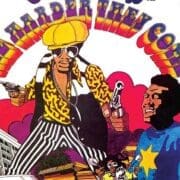
Gen Z is rediscovering classic Caribbean movies like Shottas, Cool Runnings, and The Harder They Come through streaming, TikTok, and music-driven digital culture.

Titles from the 1970s through the early 2000s are reaching younger audiences through streaming platforms, social video, and soundtrack-driven discovery. In many cases, these films were originally watched by Gen Z’s parents or older relatives, especially within Caribbean and diaspora households. Today, they are being encountered independently, through digital circulation rather than family viewing.

Digital Discovery And Generational Distance

One of the most visible examples is Shottas. The film circulates widely on TikTok and Instagram, where short clips tied to dancehall tracks appear under hashtags related to Jamaican culture and early-2000s aesthetics, such as #Shottas. These clips often omit context, allowing music, fashion, and setting to communicate tone quickly. Viewers encountering the film for the first time frequently comment that they discovered it through social media rather than through family viewing or traditional broadcast.

By contrast, Cool Runnings reaches Gen Z primarily through streaming. Since its inclusion on Disney+, the film has appeared in reaction videos, ranking lists, and commentary threads on YouTube and TikTok. Gen Z viewers are more likely than older cohorts to engage with films through reactions and short commentary rather than full reviews, according to Nielsen. Cool Runnings benefits from this pattern because its pacing, humor, and soundtrack translate well into short clips.

Music As A Bridge Between Eras

Soundtracks play a central role in rediscovery. ‘The Harder They Come’ continues to surface because its music remains widely streamed. Jimmy Cliff’s title track appears in film edits, playlists, and recommendation threads on platforms such as Letterboxd, where younger users often note encountering the music before the film itself. This mirrors broader findings from Spotify and Apple Music, which show Gen Z frequently discovering older media through soundtrack-driven exploration.

Dancehall Queen (1997) has gained renewed visibility among Gen Z viewers through fashion- and performance-focused clips shared on Instagram Reels and TikTok. Short excerpts featuring Audrey Reid’s dancehall performances circulate as references for styling, movement, and stage presence, often detached from the film’s broader storyline. The visual elements of these scenes – custom outfits, bold color choices, body-focused silhouettes, and competitive presentation – align closely with contemporary dancehall-inspired music videos.

This continuity is frequently noted in discussions comparing the film’s imagery to modern productions such as Major Lazer’s ‘Watch Out For This,’ (Bumaye), which draws on similar dancehall fashion codes, performance framing, and crowd dynamics. For younger viewers, Dancehall Queen functions as a visual reference point, offering a clear line between 1990s Jamaican dancehall culture and its ongoing influence on global music video aesthetics.

Rockers continues to circulate because it offers direct access to late-1970s Jamaican music culture at work. Performance and sound system scenes featuring artists such as Jacob Miller and Burning Spear are frequently shared on YouTube and referenced in reggae-focused forums, where viewers often describe them as archival footage rather than traditional cinema.

The film documents how musicians rehearsed, performed, dressed, and moved through everyday spaces, with minimal separation between the music and the environment that produced it. For Gen Z audiences accustomed to behind-the-scenes content and documentary-style visuals, Rockers reads more like a record of process than a scripted narrative.

Why These Films Circulate Now

These films persist because they translate efficiently into short-form viewing. Their music establishes place and tone within seconds. Their visuals are legible without extensive explanation. Many of the most-shared clips are under 2 minutes, aligning with Gen Z’s dominant viewing habits.

There is also a secondary effect. For second-generation Caribbean viewers, these rediscoveries often prompt conversations at home about films their parents watched when they were first released. For viewers without a Caribbean background, the films function as entry points into a broader cultural archive encountered through music and visual media.

This is the space Reggae Genealogy Music Festival occupies. Through ‘Lights. Camera. Reggae,’ the festival examines how Jamaican music has shaped film, television, and global pop culture across decades, connecting archival work with present-day circulation. Hosted by Island SPACE Caribbean Museum, Reggae Genealogy builds on the museum’s mission to preserve, interpret, and present Caribbean cultural history in ways that remain accessible to new audiences. As younger viewers continue to encounter these films through modern platforms, initiatives like Reggae Genealogy provide a framework for understanding where the work came from, how it traveled, and why it still holds relevance today.

Learn more about Reggae Genealogy: Lights. Camera. Reggae, coming to Plantation, Florida, on Saturday, February 7, 2026, at reggaegenealogy.org.

RELATED: Teyana Taylor Makes Golden Globe History As Second Caribbean-Rooted Black Winner

Former Jamaican Ambassador Curtis A. Ward To Be Remembered In Maryland

News Americas, WASHINGTON, D.C., Tues. Jan. 20, 2026: A memorial service to celebrate the life of former Jamaican ambassador to the United Nations, Curtis A. Ward, will be on Saturday, January 24, 2026, in Silver Spring, Maryland.

Late Jamaican AMBASSADOR CURTIS WARD

Ambassador Ward, who made Montgomery County his home, passed away on January 11 at the age of 76. He was widely respected as a diplomat, attorney, academic, and tireless advocate for Caribbean diaspora communities in the United States.

Ward served as Jamaica’s deputy permanent representative to the United Nations and represented the country on the UN Security Council from January 1, 2000, to December 31, 2001. During his diplomatic career, he traveled to more than 30 countries on behalf of the UN Counter-Terrorism Committee, engaging with heads of government and senior officials on counter-terrorism capacity building and international security cooperation.

In 2023, Wes Moore, Governor of Maryland, appointed Ward as chair of the Maryland Caribbean Community Council. In that role, Ward received a Governor’s Citation for his work elevating the contributions of Caribbean immigrants and their descendants across the state.

Montgomery County Council at-large member Laurie-Anne Sayles described Ward as a source of inspiration. In a statement, she said he encouraged her “to believe in the transformative power of public service and in the enduring strength of our island’s motto, Out of Many, One People.”

BORN

Born and raised in Treasure Beach on Jamaica’s south coast, Ward later moved to Washington, D.C., where he earned a Bachelor of Arts in Economics from Howard University. He went on to receive his Juris Doctor degree from Howard University School of Law and a Master of Laws from Georgetown University Law Center.

Ward practiced immigration and business law in Washington, D.C., for nearly two decades, operating his own firm and working with the Law Offices of Gabriel J. Christian and Associates. He was admitted to the District of Columbia Bar in 1978 and to the U.S. District Court for the District of Columbia in 1980.

Beyond law and diplomacy, Ward was deeply engaged in academia. He served as an adjunct professor in the Homeland Security Graduate Program at the University of the District of Columbia and as an adjunct professorial lecturer at George Washington University Elliott School of International Affairs. He also guest-lectured internationally, including in Jamaica, Germany, the United Kingdom, and Ghana.

An international consultant, Ward advised organizations including the UN Counter-Terrorism Committee, the Economic Community of West African States (ECOWAS), and multiple governments and non-governmental organizations. He also founded The Ward Report, through which he wrote extensively on Caribbean and global policy issues.

Ward served as chairman of the Caribbean Research and Policy Center, a Washington-based think tank, and remained active in leadership roles throughout Jamaican and Caribbean diaspora communities nationwide.

“Curtis Ward worked passionately to ensure that the Caribbean community in Montgomery County was seen, heard, and represented,” said Venice Mundlee-Harvey, past chair of the Montgomery County Caribbean American Advisory Group. “His legacy of service and leadership will not be forgotten.”

A memorial Mass will be held on Saturday, January 24, at St. Andrew Apostle Catholic Church, located at 11600 Kemp Mill Road, Silver Spring, Maryland.

YOU MAY LIKE: Another Of Third World’s Defining Sounds Has Gone Silent – Stephen “Cat” Coore Dead At 69

Another Of Third World’s Defining Sounds Has Gone Silent – Stephen “Cat” Coore Dead At 69

News Americas, New YORK, NY, Mon. Jan. 19, 2026: Reggae has lost one of its most accomplished architects with the death of Stephen “Cat” Coore, co-founder, guitarist, cellist, and musical director of Third World, who passed away on Sunday, Jan. 18, 2026, at the age of 69. He was one of the two surviving members of the original Third World Band.

Coore’s family confirmed the sudden passing of the celebrated musician, who was widely regarded as one of Jamaica’s most innovative instrumentalists and arrangers. According to reports, he died following a seizure and pneumonia. A husband, father, grandfather, and cultural ambassador, Coore helped shape a sound that carried reggae beyond its traditional borders and onto the global stage.

FLASHBACK – “Cat” Coore and Third World perform at Celebrate Brooklyn! at Prospect Park Bandshell on August 7, 2015 in the Brooklyn borough of New York City. (Photo by Al Pereira/WireImage)

Born April 6, 1956, Coore was trained in classical music but grounded in Jamaica’s rich musical traditions. That rare combination would become central to Third World’s identity. As a founding member, he played a defining role in blending reggae with soul, funk, pop, jazz, and rock – a fusion that distinguished the band from its peers and broadened reggae’s international appeal.

FLASH-BACK: Stephen “Cat” Coore of Third World performs at Cadence Bank Amphitheatre at Chastain Park on August 18, 2024 in Atlanta, Georgia. (Photo by Julia Beverly/Getty Images)

Formed in the early 1970s, Third World emerged during a pivotal era in Jamaican music. The band quickly earned recognition for its musical sophistication, instrumental depth, and crossover sensibility. Under Coore’s musical direction, Third World produced a catalogue of enduring hits, including Now That We’ve Found Love, 96 Degrees in the Shade, Try Jah Love, and Rhythm of Life. These songs helped position the group as one of Jamaica’s longest-running and most successful bands internationally.

FLASHBACK – Guitarist Stephen “Cat” Coore of reggae group Third World performs at the Agora Ballroom on November 14, 1980 in Atlanta, Georgia. (Photo by Tom Hill/Getty Images)

Coore’s musicianship was central to that success. Equally adept on guitar and cello, he brought melodic complexity and structural discipline to Third World’s arrangements. His background allowed the band to experiment without losing reggae’s rhythmic core – a balance that proved crucial to its longevity.

Third World toured extensively across Europe, North America, Africa, and the Caribbean, sharing stages with some of the world’s most influential artists and introducing reggae-fusion to new audiences. The band supported The Jackson 5 during their historic visit to Jamaica and later collaborated with global figures including Stevie Wonder, further cementing their international stature.

FLASHBACK – Stephen ‘Cat’ Coore of Third World performing at Reggae Sunsplash, Selhurst Park, Crystal Palace, London, UK on 29 July 1985. (Photo by David Corio/Redferns)

In recognition of his contribution to Jamaican culture and the creative arts, Coore was awarded the Order of Distinction, (OD) by the Government of Jamaica in 2005 -one of the nation’s highest honors. He was nominated nine times for a Grammy but never won.

Coore’s passing marks another significant chapter in the gradual loss of Third World’s original architects. Over the past decade, the band has mourned the deaths of several foundational members who helped define its sound and direction. Lead vocalist William “Bunny Rugs” Clarke, whose voice became synonymous with the group’s global success, died in 2014. Keyboardist Michael “Ibo” Cooper, a founding member and early creative force, passed away in 2023. Percussionist Irvin “Carrot” Jarrett, part of the band’s formative years, died in 2018.

CAT CORE IS PERFORMING AT BELLYUP LIVE

Together, these musicians shaped a sound that was both unmistakably Jamaican and universally accessible – a rare achievement that allowed Third World to transcend genre and generation.

Despite lineup changes over the decades, Third World remained active, recording and performing well into the 21st century. The group received multiple Grammy nominations, lifetime achievement awards, and international recognition for its enduring influence on reggae and global popular music.

Stephen “Cat” Coore is survived by his wife Lisa; his children Shiah, Kanna, Stephen, and Ashley; his grandchildren; and a wide circle of family, bandmates, colleagues, and admirers across the world.

As tributes continue to pour in from Jamaica and the global music community, Coore’s legacy endures – not only in the songs that defined an era, but in the sound that helped carry reggae into the world.

Jamaica’s Prime Minister, Andrew Holness, posted on X that “Cat Coore was a cultural ambassador in the truest sense, representing Jamaica with dignity, excellence, and pride. His contribution to the creative arts enriched our national identity and inspired generations of musicians at home and abroad.”

“May his music continue to live on, reminding us of who we are and the power of Jamaican creativity to unite the world,” he added.

Jamaica’s minister of culture, Olivia ‘Babsy’ Grange, added: “Stephen ‘Cat’ Coore was a unique talent and a true Reggae Ambassador. A pioneering co-founder of Third World and former member of Inner Circle, his music helped carry Jamaica’s sound to the world.”

“To wake up and learn that Stephen Cat Coore, has just made the transition – that is a bitter pill to swallow. RIP,” the band Steel Pulse posted on X.

RELATED: Former Third World Member To Be Laid To Rest