Cuba Mourns 32 Soldiers As U.S.–Caribbean Tensions Deepen

News Americas, NEW YORK, NY, Mon. Jan. 19, 2026: Relatives wept openly last Thursday at Havana’s mass burial of 32 Cuban soldiers killed during the U.S. operation in Venezuela. The killing is being widely interpreted not only as a moment of national mourning, but as a signal of escalating geopolitical tension with potential ripple effects across the Caribbean.

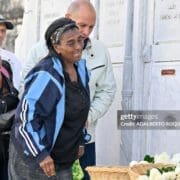
Relatives of some of the 32 Cuban soldiers killed during the US incursion in Venezuela pay respects at their graves during their funeral at Colon cemetery in Havana on January 16, 2026. The capture by US forces of Venezuelan leader Nicolas Maduro on January 3, 2026, and the killing in the operation of 32 Cubans assigned to protect him represent a major blow for the island’s revered intelligence services, experts say. (Photo by ADALBERTO ROQUE / AFP via Getty Images)

The soldiers’ bodies were returned to Cuba in small boxes. They were assigned to Venezuelan President Nicolás Maduro’s security detail under bilateral protection agreements and were killed during the January 3rd U.S. raid that resulted in Maduro’s capture. Their deaths mark one of the most serious direct losses for Cuba’s security apparatus in decades and underscore the expanding regional footprint of U.S. enforcement actions in Latin America.

Relatives of the 32 Cuban soldiers killed during the US incursion in Venezuela attend their funeral at Colon cemetery in Havana on January 16, 2026. The capture by US forces of Venezuelan leader Nicolas Maduro on January 3, 2026, and the killing in the operation of 32 Cubans assigned to protect him represent a major blow for the island’s revered intelligence services, experts say. (Photo by ADALBERTO ROQUE / AFP via Getty Images)

While Cuban authorities framed the funeral as an act of honor and resistance, analysts say the scale of the ceremony reflects broader concern in Havana over Cuba’s vulnerability amid renewed U.S. pressure. The presence of President Miguel Díaz-Canel, former leader Raúl Castro, and senior military officials highlighted the political weight attached to the losses.

Relatives of some of the 32 Cuban soldiers killed during the US incursion in Venezuela pay respects at their graves during their funeral at Colon cemetery in Havana on January 16, 2026. The capture by US forces of Venezuelan leader Nicolas Maduro on January 3, 2026, and the killing in the operation of 32 Cubans assigned to protect him represent a major blow for the island’s revered intelligence services, experts say. (Photo by ADALBERTO ROQUE / AFP via Getty Images)

The episode has also reignited debate over the role of Caribbean and Latin American states in U.S. security operations, particularly as Washington intensifies efforts against governments it deems hostile. The deaths of Cuban personnel operating outside their borders raise questions about how far regional alliances can stretch before becoming flashpoints for wider conflict.

At the same time, the timing of the funerals – coming just as Washington announced humanitarian aid to Cuba following Hurricane Melissa – has fueled diplomatic friction. Cuban officials accused the U.S. of using aid as leverage, while U.S. officials rejected claims of politicization, insisting assistance would be delivered through independent channels.

Cuban soldiers carry the remains of some of the 32 Cuban soldiers killed during the US incursion in Venezuela during their funeral at Colon cemetery in Havana on January 16, 2026. The capture by US forces of Venezuelan leader Nicolas Maduro on January 3, 2026, and the killing in the operation of 32 Cubans assigned to protect him represent a major blow for the island’s revered intelligence services, experts say. (Photo by ADALBERTO ROQUE / AFP via Getty Images)

For many observers, the juxtaposition of military confrontation and humanitarian outreach illustrates a contradictory U.S. posture that is reshaping relations across the Caribbean basin. As public demonstrations unfold in Havana and rhetoric hardens on both sides, regional governments are watching closely, aware that today’s Venezuela operation could set precedents affecting security, sovereignty, and diplomacy throughout the Caribbean.
RELATED: Drama As Diplomacy And Power In The Age Of Spectacle

Drama As Diplomacy And Power In The Age Of Spectacle

By Dr. Isaac Newton

News Americas, NEW YORK, NY, Mon. Jan. 19, 2026: A single image can ignite a movement. A short video can topple governments. A carefully staged event can shift public opinion across continents before most of us even notice. Power is no longer only armies, laws, or treaties. Power is performed. Power is felt. In the age of spectacle, it is often orchestrated long before it is negotiated.

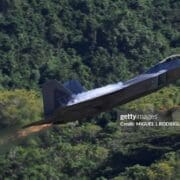
A US Air Force F22-Raptor takes off from José Aponte de la Torre Airport, formerly Roosevelt Roads Naval Station, in Ceiba, Puerto Rico, on January 4, 2026. US President Donald Trump threatened Sunday that Venezuela’s new leader will pay a “big price” if she does not cooperate with the United States, after US forces seized and jailed her former boss Nicolas Maduro. If interim president Delcy Rodriguez “doesn’t do what’s right, she is going to pay a very big price, probably bigger than Maduro,” Trump told The Atlantic in a telephone interview. (Photo by Miguel J. Rodriguez Carrillo / AFP via Getty Images)

For nations in Africa, Latin America, and the Caribbean, this is real. Public opinion can be moved, policies influenced, and leaders cornered without a single formal discussion. Chaos can be designed. Drama can be weaponized. Understanding the performance of power is as vital as understanding its rules.

Small nations face a particular challenge. They cannot always outshine great powers in spectacle, but they can choose when and how to respond. Silence becomes strategy. Timing becomes leverage. Coordination with neighbors, reliance on treaties, and measured messaging turn restraint into influence. Leaders who resist the urge to react to every viral moment transform composure into power.

Citizens face a similar battlefield. Every post, tweet, and trending video competes for attention. Separating what matters from what provokes is essential. Slow down. Question. Reflect. Think beyond the scroll. Democracy thrives not only on protest or outrage but on informed, grounded, and clear-minded participation.

Some nations are already showing the way. Barbados and Jamaica amplify their voices in climate negotiations by speaking together through CARICOM. Rwanda and Ghana use regional media and digital diplomacy to ensure their perspectives on trade and security are heard. Soon, ministries may deploy teams to monitor viral events, plan measured responses, and coordinate regional messaging. Citizens can join media literacy campaigns, fact-checking initiatives, and civic forums. Together, disciplined leadership and an informed public turn attention into real influence.

Seeing through the spectacle is itself a form of power. Small nations and engaged citizens who blend vigilance with restraint, insight with action, and principle with flexibility do more than survive. They shape the stage on which global drama unfolds. In a world where chaos is designed and drama is diplomacy, clarity, focus, and patience are the new instruments of influence.

Will you watch the spectacle unfold, or will you step onto the stage with eyes wide open and shape its story?

Editor’s Note: Dr. Isaac Newton is a strategist trained at Harvard, Princeton, and Columbia. He advises governments and international institutions on governance, transformation, and global justice, helping nations turn vision into lasting progress.

RELATED: The Caribbean’s Moment Of Choice In A Shifting World

When Immigration Policy Meets Tourism Economies: The Caribbean’s New Reality

The Caribbean’s Moment Of Choice In A Shifting World

By Dr. Isaac Newton

News Americas, NEW YORK, NY, Thurs. Jan. 15, 2026: Professor C. Justin Robinson’s, ‘An Existential Moment for the Caribbean,’ is a timely and important response to the challenges facing the region in today’s changing world. One of its greatest strengths is that it speaks honestly about how power really works. Instead of relying on polite diplomatic language, the article explains power as it is used in practice.

By placing current United States foreign policy within a long history of dominance, racial inequality, and unequal economic relationships, Robinson shows why small Caribbean states are especially vulnerable when global politics move toward one-sided decision-making. His warning is clear: a country can lose real control not only through war, but through economic pressure, security dependence, and powerful international institutions. This message is uncomfortable, but it is also realistic and necessary.

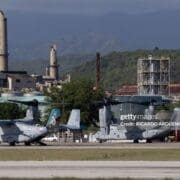
MV-22 Osprey aircraft are parked on the tarmac at Mercedita Airport in Ponce, Puerto Rico, on January 15, 2026. (Photo by Ricardo ARDUENGO / AFP via Getty Images)

However, the article may place too much emphasis on the idea that American power will remain dominant forever. The belief that the United States can continue to control global outcomes without serious pushback overlooks how quickly power can change. History offers many lessons. The British Empire once believed it would last indefinitely, but it weakened because of economic strain and changing global alliances. The Soviet Union appeared militarily strong, yet internal economic and technological problems eventually led to its collapse. These examples show that power based mainly on force often fails to recognize resistance, innovation, and long-term change.

The article also gives limited attention to how the nature of power itself has evolved. Military strength alone no longer guarantees control in a world shaped by cyber warfare, artificial intelligence, global finance, and supply chains. Countries like China, along with other technologically advanced middle-level powers, are not simply reacting to U.S. decisions.

They are actively shaping new global rules through trade networks, development loans, and digital infrastructure. At the same time, political division within the United States makes it harder to maintain clear and consistent long-term strategies. New technologies also reduce the gap between powerful nations and smaller ones. Together, these trends suggest a world that is unstable and changing, rather than one controlled by a single dominant power.

For the Caribbean, the years ahead will require careful thinking, not just survival. The region’s future cannot depend on passively following powerful allies or relying on old relationships. Caribbean nations must make deliberate choices. This means building partnerships with a wider range of countries, strengthening regional cooperation, and improving diplomatic skill. Governments must move beyond reacting to global events and instead plan strategically across economic, security, and technological areas.

Regional institutions should be strengthened so Caribbean states negotiate together rather than alone. Investment in education, digital skills, and economic resilience is no longer optional; it is essential to real independence in the modern world. The Caribbean must also use its shared voice to influence global rules, not just accept them. This is a moment of decision. With unity and foresight, the region can turn global uncertainty into opportunity. Without them, its future will be shaped by others.

EDITOR’S NOTE: Dr. Isaac Newton is a strategist and scholar trained at Harvard, Princeton, and Columbia. He advises governments and international institutions on governance, transformation, and global justice, helping nations and organizations turn vision into sustainable progress.

RELATED: The Caribbean And Strategic Diplomacy In A Constrained World

When Immigration Policy Meets Tourism Economies: The Caribbean’s New Reality

By Felicia J. Persaud

News Americas, NEW YORK, NY, Thurs. Jan. 15, 2026: It is no secret that the Donald Trump administration’s foreign policy toward the Caribbean and the Americas has increasingly relied on threat, intimidation, and fear rather than partnership or diplomacy in the past 11 plus months.

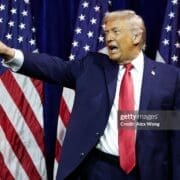
U.S. President Donald Trump departs after speaking during a House Republican retreat at The John F. Kennedy Center for the Performing Arts on January 06, 2026 in Washington, DC. House Republicans will discuss their 2026 legislative agenda at the meeting. (Photo by Alex Wong/Getty Images)

Over the past year, the region has witnessed a troubling escalation: an expanded U.S. military presence in the Caribbean, deadly maritime incidents in the Caribbean sea that reportedly left more than 100 people dead, pressure on governments to host radar and military installations, a fracture of CARICOM  unity by the pitting on some against others; and most destabilizing – the dramatic seizure of the sovereign head of state of Venezuela – with military flights departing from Caribbean nations.

This shocking global event also shutdown the Caribbean airspace, grounding flights and sowing chaos among travelers and tourists. The full economic toll remains unknown, but the disruption to tourism-dependent economies was immediate.

Even before that crisis, the administration had moved to apply direct economic pressure. In a January 2026 proclamation titled “Restricting and Limiting the Entry of Foreign Nationals to Protect the Security of the United States,” the U.S. partially suspended visa issuance to nationals of Antigua and Barbuda and Dominica.

Both countries were targeted over their Citizenship by Investment, (CBI) programs – often called “golden passport” schemes – through which foreign nationals can acquire citizenship in exchange for investments typically ranging from $200,000 to $250,000. The Trump administration argued that such programs were “susceptible to abuse,” allowing individuals to conceal identities or evade travel and financial restrictions.

Then, on January 6th, news emerged that both Antigua and Barbuda and Dominica had agreed to receive asylum seekers turned away by the United States.

The demographic and economic context makes this shift extraordinary. Antigua has a population of roughly 80,000-90,000 people across just under 170 square miles, with unemployment estimates ranging from 8% to over 15%. Dominica, home to about 73,000 people on 290 square miles, has faced unemployment hovering around 13%.

Both nations depend heavily on tourism and CBI revenues, with U.S. visitors forming the backbone of their tourism markets. Against that backdrop, both governments appear to have acceded to Washington’s request – widely viewed as an attempt to ease or reverse the partial visa restrictions.

Details remain vague. Dominica’s Prime Minister Roosevelt Skerrit has not disclosed how many asylum seekers the country would accept, from where, or how they would be housed.

Antigua and Barbuda’s Prime Minister Gaston Browne described his country’s agreement as a “non-binding” memorandum to accept “non-criminal refugees,” stressing that no quotas were set and that the arrangement could be terminated at any time. He insisted it was “not a concession,” but a “measured diplomatic gesture,” while simultaneously confirming talks to restore normal U.S. visa processing.

The U.S. State Department has refused to clarify whether the asylum agreements were tied to visa suspensions.

Guyana, the new oil rich South American CARICOM country, with a population of less than 1 million and a poverty rate of over 50 percent, is also reportedly negotiating take in third country nationals who are either refugees or non-felons, much to the dismay of many Guyanese. 

Under the planned agreement, the United States will stand the costs of the relocation of the persons. A “third country deportation” refers to the act of removing a non-citizen from a country to a country other than their country of origin, essentially sending them to a “third” country, often done under agreements between nations where the third country is considered “safe” and obligated to accept the individual, particularly in the context of asylum seekers; this is sometimes referred to as a “safe third country” deportation.

Since Guyana is not on the visa suspension list, one can only guess as to what the administration is threatening Guyana and its leaders with. A March 2025 OSAC update noted that “There have been isolated reports of government corruption, which administration officials investigated.”

But it added: “There remains a widespread public perception of corruption involving officials at all levels, including the police and judiciary.”

St. Kitts and Nevis Prime Minister Terrance Drew, the current head of CARICOM, also this week said that his government has agreed to accept a very small number of third-country nationals from the U.S. as long as they are citizens of the 15-member Caribbean Community known as CARICOM, and are not sexual predators, have no violent backgrounds and are not Haitians.

St. Kitts & Nevis too has a citizenship by investment program and depends on US tourists.

Despite all this bending and twisting, the US announced come Jan. 21st, it will pause issuing permanent visas to nationals of Antigua & Barbuda, St. Kitts & Nevis, Dominica as well as the Bahamas, Barbados, Belize, Cuba, Dominica, Grenada, Haiti, Jamaica, Saint Lucia, and Saint Vincent and the Grenadines. Guyana and Trinidad and Tobago are notably excluded. Nationals of Antigua and Barbuda and Dominica, seeking a US visa to visit will also have to pay a bond come Jan. 21st.

Grenada, meanwhile, offers a cautionary tale. After refusing a U.S. request to host military radar installations, Prime Minister Dickon Mitchell warned after the US actions in Venezuela, that this was “pushing the region into more instability.” Shortly afterward, the U.S. raised its travel advisory level for Grenada, citing crime – an economic blow for a country reliant on tourism and its own CBI program.

The message from Washington is unmistakable: comply, or face economic consequences. This is not partnership. It is the resurrection of the big-stick policy under a new name – the Donroe Doctrine, to quote Donald Trump.

As Caribbean nations are quietly nudged – or pushed with a big stick – from economies built on tourism towards becoming holding zones for displaced people, the entire region must confront an uncomfortable question: Is the Caribbean being forced to trade tourists for asylees simply to survive? If so, the cost will not only be economic – but moral, political, and generational.

Felicia J. Persaud is the founder and publisher of  NewsAmericasNow.com, the only daily syndicated newswire and digital platform dedicated exclusively to Caribbean Diaspora and Black immigrant news across the Americas.

RELATED: U.S. To Freeze Immigrant Visa Processing For Multiple Caribbean Nations
Get Ready To Shell Out More In Immigration Fees In 2026

U.S. To Freeze Immigrant Visa Processing For Multiple Caribbean Nations

By Felicia J. Persaud

News Americas, NEW YORK, NY, Weds. Jan. 14, 2026: The Trump administration has ordered an immediate suspension of immigrant visa processing for nationals from 75 countries, including multiple Caribbean nations, in what U.S. officials describe as a move to prevent immigrants deemed likely to become a “public charge” from settling in the United States.

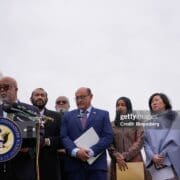
The announcement came as Representative Bennie Thompson, a Democrat from Mississippi, second left, spoke during a news conference on a fatal shooting in Minneapolis by an Immigration and Customs Enforcement (ICE) agent, outside the US Capitol in Washington, DC, US, on Wednesday, Jan. 14, 2026.Minnesota officials are suing over the “unprecedented surge” of US immigration authorities in the state, taking the Trump administration to court days after a federal agent shot and killed a Minneapolis woman. Photographer: Kent Nishimura/Bloomberg via Getty Images

According to the U.S. State Department, the pause will take effect January 21, 2026, and will remain in place indefinitely while immigration screening and vetting procedures are reassessed.

Caribbean countries affected by the suspension include Antigua and Barbuda, the Bahamas, Barbados, Belize, Cuba, Dominica, Grenada, Haiti, Jamaica, Saint Kitts and Nevis, Saint Lucia, and Saint Vincent and the Grenadines.

The policy applies only to U.S. immigrant visas, which are issued to foreign nationals seeking to live permanently in the United States. It does not apply to non-immigrant visas such as tourist, student, temporary worker, or major event-related visas, including those connected to the upcoming World Cup.

State Department Cites “Public Charge” Concerns

In a statement, State Department officials said immigrants from countries on the list were found to access U.S. public benefits “at unacceptable rates,” prompting the freeze.

A State Department memo, first reported by Fox News Digital, instructs consular officers to refuse immigrant visas under existing law while the department conducts a broader reassessment of immigration processing standards.

“The Trump administration is bringing an end to the abuse of America’s immigration system by those who would extract wealth from the American people,” said State Department Principal Deputy Spokesperson Tommy Pigott. “The State Department will use its long-standing authority to deem ineligible potential immigrants who would become a public charge on the United States.”

The department reiterated its position in a post on X, stating that the pause would remain in effect “until the U.S. can ensure that new immigrants will not extract wealth from the American people.”

What This Means for Caribbean Families

The U.S. decision to freeze immigrant visa processing will have immediate and longer-term consequences for Caribbean families with relatives seeking to live permanently in the United States.

Who Is Affected

Caribbean nationals from those countries approved or applying for U.S. immigrant visas (green cards).

Family-based applicants, including spouses, parents, and adult children of U.S. citizens or permanent residents.

Diversity visa (green card lottery) winners from affected Caribbean countries.

Who Is NOT Affected

Tourists (B1/B2 visas).

Students (F and M visas).

Temporary workers (H, O, P visas).

Short-term travel, including major event visas such as World Cup travel.

Caribbean nationals already inside the U.S. with lawful permanent residence.

Immediate Impact

Immigrant visa interviews may be canceled or refused starting Jan. 21.

Approved cases may be placed on hold while screening rules are reassessed.

Families already separated could face longer wait times with no clear end date.

Financial and Emotional Strain

Families who have paid filing fees, medical exams, and legal costs may face indefinite delays.

Elderly parents, caregivers, and dependents relying on reunification may be left in limbo.

Households planning relocation, schooling, or medical care may have to put plans on hold.

No Timeline for Resumption

The State Department has not announced how long the freeze will last.

Processing will resume only after a review of immigration screening procedures.

No country-specific exemptions have been announced.

What Families Can Do Now

Monitor official State Department and embassy notices.

Avoid travel or relocation plans based on pending immigrant visas.

Consult accredited immigration attorneys before taking further steps.

Do not submit new fees unless directed by U.S. consular officials.

Broader List Includes Latin America, Africa, and the Middle East

Beyond the Caribbean, the list of affected countries includes Somalia, Afghanistan, Brazil, Egypt, Iran, Iraq, Nigeria, Russia, Thailand, Yemen, and dozens of others across Latin America, Africa, Asia, and the Middle East.

The move represents a significant escalation in the Trump administration’s immigration crackdown, which has already included expanded deportations, visa restrictions, and heightened scrutiny of immigration applications.

Public Benefits Access Already Limited

Federal law already restricts most new immigrants’ access to public benefits. For example, many lawful permanent residents face a five-year waiting period before becoming eligible for programs such as food stamps, non-emergency Medicaid, and the Children’s Health Insurance Program, (CHIP).

Despite those limits, administration officials argue the suspension is necessary to protect U.S. taxpayers while screening standards are reviewed.

The State Department has not provided a timeline for when the reassessment will be completed or when immigrant visa processing for affected countries may resume.

RELATED: Caribbean Nationals From These Countries Face New U.S. Visa Bond Requirement Come Jan. 21

Get Ready To Shell Out More In Immigration Fees In 2026

The Caribbean And Strategic Diplomacy In A Constrained World

By Dr. Isaac Newton

News Americas, NEW YORK, NY, Weds. Jan. 14, 2026: The world is not waiting. It moves in waves, some visible, others hidden beneath the surface of politics, trade and power. It calls for diplomacy. For nations like ours in the Caribbean, small in size but large in aspiration, the challenge is urgent. But how do we navigate forces larger than ourselves without being swept aside?

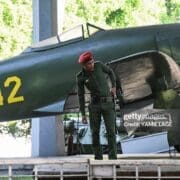
A guard stands in front of an airplane at the Revolution Museum, which is dedicated to preserving the history and legacy of the Cuban Revolution, in Havana on January 13, 2026. (Photo by YAMIL LAGE / AFP via Getty Images)

We cannot simply react. Too often, our diplomacy waits for crises to arrive before we respond. Influence is not given. It is earned through foresight, courage, and careful, deliberate action. Restraint is wise, yet hesitation can be costly. The question is not whether we act, but how, and how wisely.

To shape our future, we must think boldly and imaginatively. We must ask ourselves the questions that matter most, not just to survive, but to thrive.

Five Questions for Reflection, Imagination, and Collective Action

1. How do we turn strategic restraint into genuine leverage without overextending or compromising our principles?
2. When does caution protect us, and when does it quietly allow opportunity to slip away?
3. Can we dare to imagine possibilities that stretch beyond our current size and limitations, or do we resign ourselves to the inevitable?
4. How do we anticipate global shifts before they arrive, instead of being forced to follow after the fact?
5. What concrete, collective actions can we take today to secure relevance, influence, and resilience for tomorrow?

These questions are not mindless musings. They demand deep reflection and courage. They demand imagination grounded in reality. They demand that we act with both discipline and vision. The future belongs not to those who wait, but to those who see, decide, and move.

Diplomacy is not a formality or a distant office duty. It is a daily practice of insight, creativity, and influence. It is the quiet work that shapes the world while others simply react. Nations that embrace it will set the course of history. Those who hesitate will follow it.

Editor’s Note: Dr. Isaac Newton is a strategist and scholar trained at Harvard, Princeton, and Columbia. He advises governments and international institutions on governance, transformation, and global justice, helping nations and organizations turn vision into sustainable progress.

RELATED: Two Visions, One Day: The Stark Contrast Between Donald Trump And Dr. King

Hollow Projected Confidence No Substitute For Societies’ Self Discipline & Competent Realistic Governance

By Ron Cheong

News Americas, TORONTO, Canada, Weds. Jan. 14, 2026: The eye of the inclement local turbulent weather seems to have largely run it course and is sputtering and grasping at straws now.   And so this is a good time to revisit some ancient wisdom which describes what we have seen, the reasons underlying it and age old frailties that foster it. Democracy is built on freedom, equality and collective decision-making – yet again and again it often elevates leaders who are unprepared, incompetent, or dangerously unfit for governance.

This is not a new paradox. More than 2,400 years ago, Plato warned that democracy contains the seeds of its own decay, not because people are evil, but because human desire, left undisciplined, overwhelms judgment. What feels like a uniquely modern crisis – celebrity leaders, emotional politics, social-media outrage, and the triumph of confidence over competence – is in fact the fulfillment of a pattern Plato described with unsettling precision.

How Democracy Decays From Within

In ‘The Republic,’ Plato outlines democracy’s lifecycle. It begins nobly, animated by a passion for freedom and equality. Over time, however, freedom becomes excess. Restraint is dismissed as oppression, expertise as elitism, and discipline as weakness.

 Citizens increasingly value pleasure, impulse, and self-expression over responsibility and wisdom. In such a climate, the distinction between qualified leadership and theatrical confidence erodes. The masses, Plato argued, come to prefer those who entertain them, flatter their desires, and promise immediate gratification over those who understand the complexities of governance.

This is not corruption imposed from above; it is decay generated from within. When citizens lose their internal discipline – the ability to delay gratification, tolerate complexity, and submit to reasoned authority- democracy becomes vulnerable to manipulation. Politics turns emotional. Serious debate gives way to spectacle. Popularity replaces competence.

The Rise Of The Demagogue

Plato warned that democratic excess naturally gives rise to the demagogue: a figure who presents himself as the pure embodiment of the people’s will. He attacks institutions, experts, and rivals as enemies of “the people,” while offering simplistic solutions to complex problems. He promises everything and demands nothing – except loyalty.

The contemporary parallels are hard to ignore. In Guyana, where the self-promoted richest man in the country, openly lacking any knowledge of governance, captured 16 of the Official Opposition’s 29 seats in the last election by projecting confidence and making promises untethered from reality. His appeal was not policy or competence, but certainty – certainty that reflected his followers’ desires back to them.

In this case fortunately, wealth was not the Teflon coating he used it would be.  He overestimated his pull on voters – other realities and hard facts stepped in and pre-empted what Plato’s saw as the aspiring demagogue’s ultimate and most dangerous stage: when the demagogue convinces his followers that he alone can solve their problems.

Chaos As A Political Strategy

Plato’s insight goes further. The demagogue, he argued, does not reduce chaos – he intensifies it. Disorder becomes a tool. Constant crisis exhausts the public, erodes attention, and weakens the capacity for independent judgment. Over time, citizens become overwhelmed by complexity and contradiction. Freedom, once cherished, begins to feel like a burden.

It is at this point – when the electorate is emotionally drained and intellectually fatigued – that democracy quietly surrenders itself. The people do not lose their freedom by force; they give it away. They trade deliberation for devotion, criticism for loyalty, and shared responsibility for the comforting belief that someone else will carry the weight of decision-making.

Plato warned that once this transition occurs, followers become incapable of separating themselves from the leader, regardless of what he does. His failures are reinterpreted as virtues. His abuses become necessary evils. Opposition is no longer disagreement but betrayal.

Why the Crowd Clings

This is the most uncomfortable part of Plato’s argument: societies fail not simply because of bad leaders, but because citizens lose the internal discipline required for self-government. An electorate can be “uneducated” not in the formal sense, but in the deeper sense of being unwilling to think, question, and restrain its own desires. Leaders who promise instant solutions flourish precisely because they absolve followers of responsibility.

When people surrender judgment, they also surrender agency. At that stage, abandoning the leader would require confronting their own role in the chaos – a step many find psychologically unbearable. It becomes easier to cling than to reflect.

An Ancient Warning For A Digital Age

Social media, algorithmic amplification, and celebrity politics have not created this problem, but they have accelerated it. Emotional propaganda travels faster than reason. Popularity is measurable, instant, and monetized. Plato could not have imagined platforms or algorithms, but he understood human psychology well enough to predict the outcome: a politics optimized for desire rather than truth.

What truly holds a free society together, Plato believed, is not unlimited freedom but self-restraint-within individuals as much as within institutions. When that restraint erodes, democracy does not collapse in a dramatic coup. It dissolves quietly, willingly, and from within.

Plato’s warning feels uncomfortably modern because it is not about systems alone, but about we ourselves.

EDITOR’S NOTE: Ron Cheong, born in Guyana, is a community activist and dedicated volunteer with an extensive international background in banking. Now residing in Toronto, Canada, he is a fellow of the Institute of Canadian Bankers and holds a Bachelor of Science degree from the University of Toronto. His comments are his own and does not reflect those of News Americas or its parent company, ICN.

RELATED: From Aristotle To Algorithms: Democracy’s Perilous Retreat

Teyana Taylor Makes Golden Globe History As Second Caribbean-Rooted Black Winner

By NAN ET EDITOR

News Americas, LOS ANGELES, CA, Weds. Jan. 14, 2026: When Teyana Taylor accepted the Golden Globe for Best Supporting Actress on Jan. 11, 2026, she joined a very short and historic list. She became only the second Black actor of Caribbean heritage to win a Golden Globe, following the late Bahamian-roots film legend, Sidney Poitier. She also joined an elite group – just 1 of 17 Black actors overall to win a Golden Globe.

US actress Teyana Taylor, who also has Caribbean roots, poses in the press room with the Best Supporting Actress in a Motion Picture award for “One Battle After Another” during the 83rd annual Golden Globe Awards at the Beverly Hilton hotel in Beverly Hills, California, on January 11, 2026. (Photo by Etienne Laurent / AFP via Getty Images)

More than six decades after Poitier broke barriers in Hollywood, Taylor’s win marks a new chapter in Caribbean diaspora representation, connecting generations of Black excellence across film, culture, and geography. Yet, it’s a milestone that largely flew under the radar.

Born in Harlem to a Trinidadian father and an African American mother, Taylor has long embodied a layered cultural identity. While she was raised primarily by her mother in New York City, she has consistently acknowledged both sides of her heritage – an American upbringing shaped by Caribbean lineage, resilience, and influence.

A Caribbean Thread In A Harlem Story

Taylor’s father, Tito Smith, is Trinidadian, connecting her directly to the Caribbean and its diaspora that has shaped New York City for generations. Though she was raised by her mother, Nikki Taylor, in Harlem, that Caribbean lineage has always been part of her personal narrative, even if it has not been foregrounded in mainstream coverage.

In an industry where Caribbean identity is often flattened or overlooked, Taylor’s win stands out as a reminder that Caribbean influence extends far beyond music genres like reggae, soca, or dancehall – it is woven deeply into Black American cultural achievement across film, fashion, and performance.

The Woman Behind the Win

US singer actress Teyana Taylor’s roots extend to the Caribbean. Here she attends the Time100 Next gala at Chelsea Piers in New York City on October 30, 2025. (Photo by CHARLY TRIBALLEAU / AFP) (Photo by CHARLY TRIBALLEAU/AFP via Getty Images)

Much of Taylor’s grounding, she says, comes from her mother, who has served not only as her parent but also as her manager and stylist throughout her career. A former supermodel and television presenter, Taylor raised her daughter as a single mother in Harlem, fostering both creative freedom and discipline.

That mother-daughter partnership has been central to Teyana Taylor’s evolution from teenage dancer to award-winning actress. It is also a story that resonates strongly within Caribbean and diaspora households, where matriarchal strength often plays a defining role in shaping generational success.

From Music Prodigy to Film Powerhouse

Taylor’s rise has never followed a straight line. She entered the industry early – choreographing Beyoncé’s “Ring the Alarm” at just 15, dancing in Jay-Z’s “Blue Magic,” and later becoming a creative force within Kanye West’s artistic universe. Yet, for years, she was undervalued as a singer and boxed into narrow expectations.

Her pivot into film proved transformative.

Her breakout performance in ,A Thousand and One, earned critical acclaim, but it was her role as Perfidia in Paul Thomas Anderson’s ‘One Battle After Another,’ that redefined her public perception. Critics praised her portrayal for its emotional depth, vulnerability, and quiet intensity – qualities that stood in stark contrast to Hollywood’s usual framing of Black women as either hyper-strong or one-dimensional.

At the Golden Globes, Taylor used her acceptance speech to underscore that shift. “To my brown sisters and little brown girls watching tonight,” she said, “our softness is not a liability. Our depth is not too much. Our light does not need permission to shine.”

A Win Bigger Than One Actress

Taylor’s Golden Globe places her alongside a small, powerful group of Black winners that includes Poitier as well as Donald Glover, Halle Berry, Viola Davis, Denzel Washington, Regina King, Morgan Freeman, Mahershala Ali, Whoopi Goldberg, Jamie Foxx, Octavia Spencer, Eddie Murphy, Chadwick Boseman, Sterling K. Brown, Oprah Winfrey and Ryan Coogler.

What makes Taylor’s moment distinct is how it quietly expands that lineage to explicitly include the Caribbean diaspora – a community whose cultural contributions to global Black identity are immense, yet often uncredited in mainstream awards narratives. Her win also arrives at a time when Caribbean-descended artists are increasingly crossing boundaries between music, film, fashion and directing, refusing to be confined to a single lane.

Representation That Doesn’t Ask Permission

Teyana Taylor has never framed herself as a symbol – but symbolism followed her anyway. As a Harlem-born artist with Trinidadian roots, raised by a fiercely independent Black woman, Taylor represents a form of diaspora success that doesn’t rely on erasure or assimilation. Her Golden Globe is not just a personal triumph; it is a marker of visibility for Caribbean-descended talent operating at the highest levels of global entertainment.

In a room where history is often slow to change, her win quietly widened it. And for the Caribbean diaspora watching – from New York to Port of Spain to beyond – it was a reminder that sometimes, representation arrives not with a spotlight, but with a moment that makes history simply by existing.

RELATED: Many African Americans May Have Caribbean Roots, Says U.S. Archivist

Sean Paul To Brings Dancehall Fire To Miami Heat Caribbean Heritage Night

By NAN ET EDITOR

News Americas, NEW YORK, NY, Mon. Jan. 12, 2026: The Miami Heat are turning their home court into a full-blown Caribbean party — and they’re calling in dancehall royalty to do it.

On January 13, 2026, the Heat will celebrate Caribbean Heritage Night at the Kaseya Center, headlined by a show-stopping halftime performance from global Jamaican born dancehall star, Sean Paul. Tip-off against the Phoenix Suns is set for 7:30 p.m., but the energy will be island-high all night long.

FLASHBACK – Sean Paul performs during the 2025 Jamaica Strong Benefit Concert at UBS Arena on December 12, 2025 in Elmont, New York. (Photo by Udo Salters Photography/Getty Images)

Sean Paul Takes Over Halftime

Known for decades of chart-dominating hits and explosive live performances, Sean Paul is set to transform halftime into a dancehall celebration. From international anthems to fan favorites, the Grammy Award-winning Jamaican icon will bring unmistakable Caribbean heat to one of the NBA’s most electric arenas.

For the Miami Heat, the moment underscores South Florida’s deep Caribbean roots — and for fans, it’s a rare fusion of elite basketball and global music culture on the same stage.

Miami Heat + Caribbean Culture = A Miami Moment

The Heat have long embraced the multicultural heartbeat of Miami, and Caribbean Heritage Night is one of the franchise’s most anticipated annual celebrations. This year’s edition leans all the way in, pairing Sean Paul’s star power with a full-arena cultural experience.

Keeping the party flowing is DJ Walshy Fire, who will host the night, spin throughout the game, and cap things off with an exclusive post-game DJ set on the East Plaza after the final buzzer.

Caribbean Pride on the Court

The night’s NBA matchup carries its own cultural weight, spotlighting Jamaican basketball excellence as Norman Powell of the Heat shares the floor with Nick Richards of the Suns. Their presence adds a powerful layer of Caribbean representation to the game itself.

Island Sounds, Food & Festival Energy

From the moment fans arrive, the arena will pulse with Caribbean rhythm. DJ KVass sets the tone on the front plaza, while DJs Nati and Marley keep the concourses alive with island sounds. The Miami Heat Hype Band from Florida Memorial University and the Lauderhill Steel Orchestra add brass, beats, and steelpan flair.

Outside, the towering USVI Moko Jumbies bring carnival spectacle and color, turning the Kaseya Center plaza into a festival scene worthy of Miami’s Caribbean diaspora.

Food is part of the celebration too, with jrk! serving authentic Caribbean flavors alongside special island-inspired concession items throughout the arena.

Giving Back Beyond the Game

Caribbean Heritage Night also carries a purpose beyond entertainment. Portions of promo ticket proceeds will benefit Food for the Poor and support hurricane relief efforts in Jamaica, reinforcing the Miami Heat’s commitment to community impact across borders.

A Night Where Music, Basketball, and Culture Collide

With Sean Paul commanding the halftime spotlight and the Miami Heat hosting one of the NBA’s most vibrant cultural celebrations, Caribbean Heritage Night promises to be more than a game – it’s a Miami moment.

Get tickets HERE

What Did The U.S. Shutdown Of Caribbean Airspace Really Cost The Region?

By News Americas Business Editor

News Americas, NEW YORK, NY, Mon. Jan. 12, 2026: The full economic cost of the brief U.S.-triggered shutdown of Caribbean airspace in early January is still being tallied, but early data indicates that the disruption carried significant financial consequences for airlines, tourism-dependent economies, cargo operations, and individual travelers across the region.

US Army Reserve soldiers take part in a live-fire pistol training exercise at Camp Santiago in Salinas, Puerto Rico, on January 10, 2026. (Photo by Alejandro GRANADILLO / AFP via Getty Images)

The temporary closure, which occurred between January 3 and January 4, 2026, followed a U.S. military operation linked to developments in Venezuela. Aviation authorities moved quickly to restore traffic flows, but the scale of the interruption revealed how economically vulnerable the Caribbean remains to sudden airspace disruptions.

Early Data: Roughly 800 flights affected

Preliminary industry assessments indicate that approximately 800 flights were affected by the shutdown through cancellations, diversions, and extended delays. The impact was concentrated on routes connecting the Caribbean with the United States, as well as intra-regional and transatlantic services that rely on Caribbean airspace as a critical corridor.

Airlines for America, the U.S. airline trade group, provided an early estimate that the disruption resulted in approximately US$65 million in direct losses to airlines. These costs include aircraft grounding, crew displacement, ferrying aircraft back into position, fuel inefficiencies caused by rerouting, and large-scale passenger re-accommodation.

Major carriers including American Airlines, Delta Air Lines, United Airlines, and JetBlue implemented systemwide travel waivers covering flights between January 3rd and January 6th. American Airlines alone added 43 recovery flights in the days following the reopening and deployed its largest aircraft, the Boeing 777-300, to help clear passenger backlogs.

Tourism losses across the region

For tourism-dependent Caribbean economies, the shutdown translated almost immediately into lost revenue. According to early estimates from Cornerstone Economics, the ABC islands – Aruba, Bonaire, and Curaçao – experienced a combined US$18 million loss in tourism revenue linked to canceled flights, delayed arrivals, and shortened stays.

The disruption coincided with a peak travel period, amplifying the economic effect. Hotels reported no-shows and last-minute cancellations, while restaurants, tour operators, taxi services, and attractions lost business that could not be recovered once flights resumed. For small island economies where tourism contributes a large share of GDP and employment, even a single day of disruption can produce disproportionate losses.

Airports across the region were affected unevenly. Data compiled from aviation authorities shows particularly heavy disruption at Puerto Rico’s airports, (approximately 400 flights), followed by the U.S. Virgin Islands, (about 140 flights) and Aruba, (91 flights). At least 15 major airports across the Caribbean basin experienced significant operational impacts.

Passenger costs and personal disruption

Beyond institutional losses, the shutdown imposed substantial costs on travelers. Thousands of passengers were stranded across Caribbean and U.S. airports, often with limited information on when airspace would reopen.

Reports from affected travelers indicate that some families incurred up to US$1,000 per day in unexpected expenses for hotels, meals, transportation, and childcare while waiting for flights to resume. While airlines absorbed rebooking and change fees under waiver policies, many out-of-pocket costs were not recoverable, particularly for travelers without comprehensive travel insurance.

For members of the Caribbean diaspora traveling for holidays, family visits, or medical reasons, the disruption also carried emotional and logistical consequences that extended beyond the immediate financial burden.

The most immediate and visible impact on Barbados was the sudden economic paralysis of its travel sector during a peak holiday weekend. The consequences for air travel were swift. At least 13 inbound flights were cancelled, hitting major international carriers including JetBlue, Delta Air Lines, United Airlines, and KLM.

Cargo and supply chain implications

The shutdown also disrupted air cargo flows, exposing vulnerabilities in Caribbean supply chains. Carriers transporting time-sensitive goods- including pharmaceuticals and medical supplies – reported shipment backlogs as flights were grounded or rerouted.

Puerto Rico, a major hub for pharmaceutical manufacturing and medical isotope production, was among the areas affected. While emergency logistics protocols prevented critical shortages, industry analysts warned that repeated disruptions of this nature could undermine confidence in Caribbean air cargo reliability, particularly for high-value or time-sensitive shipments.

Broader economic risks

The airspace shutdown also highlighted broader structural risks for the region. Analysts at Jefferies noted that instability linked to Venezuela—home to the world’s largest proven oil reserves – introduced additional uncertainty for airline earnings in 2026 due to potential fuel price volatility. Rising fuel costs would further strain airline margins and could lead to reduced service or higher fares for smaller Caribbean destinations.

Economists also point to the longer-term risk of diminished traveler confidence. Even brief disruptions can influence future booking decisions, particularly if travelers perceive Caribbean routes as vulnerable to geopolitical spillover beyond the region’s control.

Losses still being counted

While early estimates provide a sense of scale, economists caution that the true economic cost has not yet been fully captured. Indirect losses – including reduced future bookings, higher insurance and compliance costs, delayed cargo deliveries, and reputational impacts – may ultimately rival or exceed the immediate financial hit recorded in airline and tourism revenue figures.

What is already clear is that the shutdown demonstrated how quickly economic damage can accumulate when Caribbean airspace is disrupted. For a region whose prosperity depends on connectivity, the January 2026 closure underscores that airspace is not merely a transportation issue – it is a critical economic lifeline.

As governments, airlines, and regional institutions continue to assess the fallout, the episode raises unresolved questions about preparedness, consultation, and whether mechanisms exist to mitigate or compensate Caribbean economies when external geopolitical decisions interrupt the region’s connectivity.

RELATED: Caribbean Airspace Closure Trigger Mass Flight Cancellations As Regional Tensions Rise