China – Caribbean Policy: China Deepens Caribbean Engagement With New Policy Pledges

By NAN Business Editor

News Americas, NEW YORK, NY, Mon. Dec. 15, 2025: China has signaled a renewed and expanded commitment to the Caribbean with new China – Caribbean Policy, positioning small island states as strategic partners in its evolving Global South diplomacy, according to its newly released Policy Paper on Latin America and the Caribbean.

Chinese President Xi Jinping (L-2) speaks during a meeting with Dominica’s President Sylvanie Burton (R-2) at the Great Hall of the People on October 14, 2025 in Beijing, China. (Photo by Ichiro Banno – Pool/Getty Images)

While much global attention has focused on China’s ties with major Latin American economies, the policy document makes clear that Caribbean nations are central beneficiaries of Beijing’s long-term development, climate, and infrastructure agenda – particularly in areas where island states face acute vulnerability and capital constraints.

A Strategic Shift Toward Small Island States

China explicitly acknowledges the Caribbean’s unique status as Small Island Developing States, (SIDS), committing to tailor cooperation frameworks that reflect climate exposure, limited fiscal space, and reliance on external trade and tourism.

Rather than a one-size-fits-all approach, the policy outlines support mechanisms designed to accommodate smaller economies, including concessional financing, development assistance without political conditionality, and targeted infrastructure investment.

This positioning signals an effort by China to distinguish its engagement from traditional Western development models, which Caribbean leaders have often criticized as restrictive or slow-moving.

Climate Resilience and Disaster Response Take Center Stage

One of the most consequential pledges for the Caribbean lies in climate adaptation and disaster resilience.

China commits to expanded cooperation in:

Disaster prevention, early warning systems, and post-disaster reconstruction

Climate-resilient infrastructure

Coastal and marine ecosystem protection

Renewable energy development, including solar, wind, and hydropower

For hurricane-prone Caribbean states facing mounting reconstruction costs and insurance gaps, these pledges could translate into tangible relief if executed at scale.

China also signals openness to supporting Caribbean climate initiatives within global frameworks, reinforcing SIDS advocacy on climate finance and loss-and-damage mechanisms.

Infrastructure, Ports and Digital Connectivity

China’s policy reinforces its interest in Caribbean infrastructure — not only roads and utilities, but also ports, logistics, digital networks, and smart city development.

The document highlights cooperation in:

Transportation and port logistics

Telecommunications and digital infrastructure

Energy grids and water systems

Housing and urban development

For Caribbean economies seeking to modernize ports, reduce shipping costs, and improve regional connectivity, Chinese-backed infrastructure could play a transformative role – particularly where traditional financing remains limited.

Trade, Investment and Market Access

On the economic front, China pledges to expand trade with Caribbean nations, especially in:

Agricultural products

Specialty goods

Energy and resource-related exports

Beijing also encourages Caribbean participation in major Chinese trade expos and investment forums, offering potential market access for Caribbean exporters seeking diversification beyond North America and Europe.

Additionally, China expresses interest in expanding financial cooperation, including local currency settlements and partnerships with regional financial institutions – a move that could reduce foreign exchange pressures for Caribbean economies.

Education, Training and People-to-People Exchanges

China’s commitments extend beyond economics into human capital development.

The policy outlines:

Scholarships and training programs for Caribbean students and professionals

Cooperation in vocational education and digital skills

Media, cultural, and academic exchanges

Support for tourism cooperation and two-way travel facilitation

For Caribbean states grappling with skills shortages and youth unemployment, these programs may offer long-term workforce benefits.

Geo-political Implications for the Caribbean

China’s expanded engagement comes as Caribbean nations navigate a shifting global order, balancing longstanding ties with the United States and Europe while exploring South-South partnerships.

By emphasizing sovereignty, non-interference, and unconditional development assistance, China positions itself as an alternative partner at a time when Caribbean governments are seeking greater diplomatic and economic autonomy.

However, the scale and impact of these pledges will depend on implementation — a point regional analysts note will be critical in distinguishing policy ambition from practical outcomes.

What Comes Next

The policy paper signals intent, not timelines. For Caribbean governments, the next phase will involve translating these pledges into:

Project-level agreements

Financing structures

Transparent procurement frameworks

Sustainable debt management

If executed effectively, China’s commitments could reshape Caribbean development pathways over the next decade, particularly in climate resilience, infrastructure modernization, and economic diversification.

For now, the message from Beijing is clear: the Caribbean is no longer peripheral in China’s Global South strategy — it is firmly on the map.

Miss Jamaica Universe Back Home As Recovery Continues

News Americas, NEW YORK, NY, Mon. Dec. 15, 2025: Miss Jamaica Universe 2025, Dr. Gabrielle Henry, is back in Jamaica and is now receiving specialized medical care as she continues her recovery following a serious on-stage accident during the Miss Universe competition in Thailand.

Dr. Henry arrived in Jamaica on Thursday, Dec. 11th, under full medical escort from Bangkok, Thailand, with transportation and care coordinated and funded by the Miss Universe Organization. She had been hospitalized in Thailand after suffering a fall during the evening gown segment of the Miss Universe 2025 preliminary competition on November 19th at IMPACT Muang Thong Thani near Bangkok.

Miss Jamaica Universe fell off the stage at the pageant on Nov. 19, 2025.

According to a statement from the Miss Universe Jamaica Organization and Dr. Henry’s family, the fall resulted in an intracranial hemorrhage with loss of consciousness, a fracture, facial lacerations and other significant injuries. She required intensive care treatment in Bangkok and was unable to participate in the Miss Universe final on November 21st.

The Miss Universe Jamaica Organization confirmed that Dr. Henry continues to make encouraging progress and is expected to be discharged from hospital in the coming days, though she will require around-the-clock specialist supervision as her recovery continues.

Dr. Henry shared her optimism in a message released through the organization, stating that she is “eagerly looking forward to my return home and to seeing everyone in the near future.”

The organization expressed gratitude to the Miss Universe Organization for its unwavering support throughout the ordeal, noting that all medical and living expenses were fully covered and that Dr. Henry bears no responsibility for the incident. Special thanks were extended to Miss Universe President Raul Rocha Cantù, Mario Bucaro, and Maria Jose Unda for their hands-on assistance and constant communication during her hospitalization.

Additional appreciation was expressed to Vradda Rutnin, Honorary Jamaican Consul to Thailand; former Miss Universe Jamaica contestants Aisha and Emily Hall; and international photographer Ricardo St. Cyr for their support during Dr. Henry’s recovery abroad.

The Miss Universe Jamaica Organization also thanked the countless well-wishers in Jamaica and around the world for their prayers and messages of encouragement.

Before competing in Miss Universe, the 28-year-old ophthalmologist at the University Hospital of the West Indies was widely known for her advocacy in education and healthcare. She is the founder of the Her See Me Foundation, which provides educational and economic opportunities for people who are blind or visually impaired.

Organizers say they look forward to welcoming Dr. Henry and her family home and wish her continued healing and restoration as she recovers.

RELATED: Everything To Know About Miss Universe Jamaica 2025 – The Contestant, The Competition & The Viral Fall Seen Around The World

Caribbean Stars Ignite UBS Arena For ‘Jamaica Strong’ Hurricane Relief Concert

By NAN ET EDITOR

News Americas, NY, NY, Sun. Dec. 14, 2025: Some of the Caribbean’s biggest music stars brought fire, soul and unity to Long Island, NY on Friday night, Dec. 12, 2025, as the Jamaica Strong benefit concert transformed UBS Arena into a powerful show of solidarity for hurricane relief efforts.

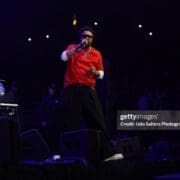
Shaggy performs during the 2025 Jamaica Strong Benefit Concert at UBS Arena on December 12, 2025 in Elmont, New York. (Photo by Udo Salters Photography/Getty Images)

The four-hour fundraising event united reggae, dancehall and soca royalty to support communities devastated by Hurricane Melissa, the strongest storm to hit Jamaica in recorded history. Proceeds from ticket sales and in-arena donations went directly to the Jamaica Official Hurricane Relief & Recovery Fund, with fans around the world also tuning in via YouTube and Amazon livestreams.

Sean Paul performs during the 2025 Jamaica Strong Benefit Concert at UBS Arena on December 12, 2025 in Elmont, New York. (Photo by Udo Salters Photography/Getty Images)

Grammy-winning hitmakers Shaggy and Sean Paul delivered crowd-pleasing, career-spanning medleys, reminding audiences why they remain global ambassadors for Jamaican music. New-generation dancehall standout Teejay had the arena swaying to his breakout hit “Drift,” while reggae legends Marcia Griffiths and Gramps Morgan grounded the night with timeless soul and message-driven performances. Dancehall star I-Octane took things a step further, leaping into the crowd to connect directly with fans.

Kes performs during the 2025 Jamaica Strong Benefit Concert at UBS Arena on December 12, 2025 in Elmont, New York. (Photo by Udo Salters Photography/Getty Images)

As concertgoers filled the arena – which has hosted a string of Caribbean-led, million-dollar-grossing shows in 2025 – the atmosphere reflected more than entertainment. It was a collective act of rebuilding, resilience and regional pride, underscoring the Caribbean’s deep sense of unity in times of crisis.

T.O.K. performs during the 2025 Jamaica Strong Benefit Concert at UBS Arena on December 12, 2025 in Elmont, New York. (Photo by Udo Salters Photography/Getty Images)

First announced on Nov. 12, Jamaica Strong featured an expansive lineup including Chronic Law, T.O.K, Tessanne Chin, Aidonia, Inner Circle, Ky-Mani Marley, Yaksta, Richie Stephens, Mikey Spice, Abby Dallas, Kevin Downswell, Maxi Priest, DeMarco and more. Popular radio personalities DJ Roy, DJ Norie, Dubbmaster Chris and Dahved Levy shared hosting duties throughout the night.

Marcia Griffiths performs during the 2025 Jamaica Strong Benefit Concert at UBS Arena on December 12, 2025 in Elmont, New York. (Photo by Udo Salters Photography/Getty Images)

The emotional weight of the event was amplified by the context. On Oct. 28th, nearly 40 years after Hurricane Gilbert, Hurricane Melissa struck Jamaica with unprecedented force, leaving at least 45 people dead and entire communities displaced. The devastation galvanized artists to act quickly, using their platforms to rally support at home and across the diaspora.

Among the night’s most powerful moments was a moving in-memoriam tribute honoring recently departed Caribbean cultural icons, set to Jimmy Cliff’s “Many Rivers to Cross.” The show closed with every performer returning to the stage to sing “Jamaica, Land We Love,” a stirring finale that captured the spirit of national pride and collective healing.

The concert also served as a prelude to a second relief event, Nice Up Jamaica, led by Yellowman and Johnny Osbourne, scheduled for Tuesday, Dec. 16th.

From high-energy dancehall to roots reggae reverence, Jamaica Strong NYC, proved that when Jamaica hurts, its music -and its people – rise together.

New Caribbean Music This Week: Sean Paul, Anthony B, Machel Montano, Fay-Ann Lyons & More Drop Fresh Releases

BY NAN ET Editor

News Americas, NEW YORK, NY, Fri. Dec. 12, 2025: New Caribbean music continues to surge with purpose, rhythm, and global appeal as several of the region’s most celebrated and emerging artists release new tracks this week, spanning dancehall, reggae, soca, and world music.

Sean Paul

Sean Paul drops new track Faith We A Keep

Leading this week’s releases is Sean Paul, whose new single “Faith We A Keep” dropped today under Dutty Rock Productions, with exclusive licensing to Milk & Honey Records. Inspired by the resilience of the Jamaican people following Hurricane Melissa, the track delivers an uplifting message centered on perseverance, faith, and protection during challenging times. Blending emotional depth with Sean Paul’s signature delivery, the dancehall release is expected to resonate across radio playlists and inspirational programming.

“Faith We A Keep” was produced by Daramola and written by Sean Paul alongside Stephen “Di Genius” McGregor Henriques, Karen Amanda Reifer, and Abraham Olaleye. Recording took place at Paramount Studio and Dutty Rock Studio, with engineering by Kahlil “Tanned Jesus” Vellani and Andre “Suku Ward” Gray. The track is officially released on December 12, 2025.

LISTEN HERE

Anthony B

Veteran reggae and dancehall artist Anthony B also returns this week with his new single “Good Music,” now available on all major streaming platforms. Produced by GRAMMY Award-winning producer J-Vibe, the song delivers classic feel-good roots reggae vibes and marks the second release from Anthony B’s upcoming 2026 album on Ineffable Records. While Anthony B remains globally known for his iconic hit “World A Reggae Music,” his more recent track “Chill Out” from the 2023 album Bread & Butter has emerged as his top-performing digital release to date, signaling sustained audience demand for his sound.

MACHEL MONTANO

Soca fans are also being treated to a high-energy collaboration as Voice, Machel Montano, and litleboy lsbeats767 team up on “Bam Bam,” a track already gaining traction ahead of the 2026 Carnival season. Produced by litleboy lsbeats767, Precision Productions, and Machel Montano, with additional production by Mega Mick, the single blends modern soca with infectious hooks designed for both stage and fete settings.

The song features writing contributions from Aaron St-Louis (Voice), Machel Montano, Art Raoul Travis Philip, Foster Marcel Xavier, and Kasey Phillips, with recording sessions split between Trinidad studios. “Bam Bam” is released under Monk Music and is available on streaming platforms and YouTube.

Fay-Ann Lyons

Meanwhile, Trinidad and Tobago’s soca powerhouse Fay-Ann Lyons teams up with producer GusBus on “Can’t Fling Mud To A Love Song,” a world-soca release blending lyrical reflection with melodic warmth. Written and performed by Lyons, the track is released under Bad Beagle with exclusive licensing to Diaspora Sound, continuing her tradition of pairing social commentary with Caribbean rhythms.

Adding to this week’s diverse offerings is the Guardians Riddim, released by Blackstarr Productionz under Larnox Global Entertainment Ltd, featuring a world and soca-driven soundscape designed for multiple artist interpretations.

Also new is “Earthquake” by YelloStone, released via Jahmari Records / Dimmie Joe Muzik, delivering contemporary Caribbean energy with crossover appeal.

Rounding out the week is rising Jamaican reggae artist Ras-I, who releases “Reggae Mountain (Feel No Way),” a modern take on uplifting roots reggae. The single marks the first release from his upcoming 2026 album on Ineffable Records. Ras-I, who won Best New Reggae Artist at the 2024 Caribbean Music Awards, continues to gain international attention following the selection of his song “Somewhere Wonderful” as the official theme for the Jamaica Tourist Board earlier this year.

Together, this week’s releases reflect the Caribbean music industry’s continued global influence – balancing heritage, innovation, and messages that resonate far beyond the region.

Related Stories

Kes The Band To Headline Jazz At Lincoln Center’s Unity Jazz Festival In 2026

Veteran Gospel Artist Releases New Single Offering Hope To Jamaicans Affected By Hurricane Melissa

The Weight Of A Word: Rethinking “Minority” In America

By Nyan Reynolds

News Americas, NEW YORK, NY, Fri. Dec. 12, 2005: “In our country, we believe there should be no minority and no majority, just people.” – Steve Biko

The South African activist Steve Biko used these words to highlight how language itself can be a tool of division. Though Biko was speaking in the context of apartheid, his words hold relevance in the United States, where the categories of “minority” and “majority” remain central to how race is discussed and understood.

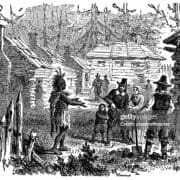
Samoset sagamore of the Abenaki people, greeting the pilgrims of the Plymouth Colony in Massachusetts, USA (circa 17th century). Vintage etching circa 19th century.

Few words in American racial discourse are as common or as unexamined as minority. The term appears in government reports, census categories, school curricula, corporate diversity statements, and daily conversation. Black Americans, along with Latinos, Asians, Indigenous people, and immigrants, are routinely described as “minorities.” The word is so deeply ingrained in the national vocabulary that it often goes unquestioned. Yet its history and social implications reveal a different story. Beneath its surface neutrality, minority operates as a marker of marginalization.

From Numbers To Status

The English word minority originally referred to being smaller in number or lesser in status. In political contexts, it described groups with less representation or less authority, such as a minority party in a legislature. In this setting, the meaning was both numerical and hierarchical: fewer members translated into less influence.

In the United States, this logic made its way into racial discourse. By the early to mid-twentieth century, as government agencies and social scientists studied racial and ethnic groups, “minority” became a shorthand for those outside the white mainstream. The U.S. Census, for example, tracked populations according to racial categories, but policy discussions increasingly referred to these communities collectively as “minorities.” The label appeared in debates on education, employment, and voting rights.

This was more than description. It was categorization. To call Black Americans a minority was not only to note their numbers but also to assign them a social position. It implied less power, less visibility, and less belonging. Over time, the word solidified into a label that carried assumptions of inferiority.

The Social Implications

The implications of this language extend far beyond statistics.

Defining by deficit. To be labeled a minority is to be defined by lack. It frames identity in terms of what is missing, population size, influence, resources, rather than what is present. For Black Americans and Caribbeans individuals, this framing compounds the legacy of slavery, segregation, and systemic exclusion, reinforcing a narrative of limitation.

Masking diversity. The category also obscures difference. By grouping together Black Americans, Latinos, Asians, those of Caribbean decent, Native peoples, and others under one label, the word erases the distinct histories and struggles of each. Black Americans, whose presence in the U.S. is rooted in enslavement and centuries of systemic discrimination, are placed in the same category as immigrant populations with very different experiences. The flattening of identity that results prevents deeper recognition of each community’s unique realities.

Sustaining hierarchy. The persistence of the word minority also reinforces a symbolic hierarchy. Even in places where Black and brown communities form the majority, cities like Detroit, Houston, or Atlanta, they are still labeled minorities. Nationally, demographic projections show that by mid-century, nonwhite populations will collectively outnumber whites, yet the label persists. This demonstrates that minority is less about numbers and more about social status.

Historical Usage In Policy And Education

The institutional use of “minority” has reinforced these implications. Civil rights legislation of the 1960s, while groundbreaking, often used the term “minority groups” to identify those entitled to protection. Affirmative action programs in higher education and employment were designed with “minorities” in mind. These policies addressed real inequities but also embedded the label into the structure of law.

In education, textbooks routinely referred to Black, Latino, and Asian students as minorities. For generations of children, growing up meant encountering a narrative that positioned them as small, lesser, and outside the center of American identity. The repetition of the label in classrooms normalized the idea of difference as deficiency.

In the workplace, “minority hiring” became a standard phrase. While meant to promote inclusion, it often created the impression that employees of color were tokens, exceptions granted space within institutions rather than central contributors. Again, the word framed belonging in terms of scarcity.

The Danger Of Internalization

Perhaps the most damaging effect of the word minority is its internalization. Many Black Americans refer to themselves as minorities without questioning the label. Over time, this acceptance can subtly reinforce a sense of smallness.

Research in social psychology has shown that repeated exposure to deficit-based language can shape self-concept. Children labeled as minorities may come to see themselves as outsiders in their own country. Adults who internalize the term may carry an unspoken sense of limitation, even as they succeed. This is not because they lack confidence or capability, but because the language itself imposes boundaries on how they are imagined.

The damage here is not always visible. It operates quietly, through the drip of repetition, until it feels natural. When people embrace the label for themselves: “I’m a minority in this country,” they may unknowingly reinforce the very hierarchy that the term was designed to describe.

Why The Word Persists

Despite its baggage, the term remains widespread. Bureaucracy plays a role. Government agencies and corporate diversity programs are still organized around categories like “minority representation.” Habit plays another role. Once embedded in textbooks, policies, and popular speech, words are difficult to uproot. Convenience also contributes. “Minority” is a single word that groups together diverse populations, offering an easy shorthand.

But convenience is not harmless. The continued use of minority allows the underlying hierarchy to remain unchallenged. It ensures that entire communities continue to be described, and therefore imagined in terms of what they are not.

Rethinking The Vocabulary

Reconsidering the word is not about semantics for their own sake. It is about disrupting the ways language sustains inequality. Several alternatives have been proposed. “Marginalized groups” highlights the active process of exclusion rather than suggesting an inherent lack. “Communities of color” emphasizes shared experiences of racialization, though it still groups diverse populations together. “Underrepresented populations” draws attention to gaps in visibility and influence.

Some advocates use the phrase “global majority,” noting that people of African, Asian, Indigenous, and Latin descent make up most of the world’s population. This term flips the perspective, reminding us that Black Americans and other groups are not minorities in any global sense.

None of these terms is perfect, but each offers a way of framing identity without reducing communities to symbols of smallness.

Beyond Language

Of course, changing language alone will not dismantle racial inequity. The structural barriers that Black Americans face, economic inequality, disparities in education and healthcare, systemic discrimination—require more than new vocabulary. But words matter because they shape the framework through which these realities are understood. Language is both a mirror and a mold. It reflects existing power structures while also helping to reinforce them.

Questioning the word minority is part of questioning the assumptions that sustain inequality. If Black Americans continue to be labeled as minorities, they are continually positioned at the margins of a society they helped build. Rejecting the term does not solve the problem, but it begins to shift the lens through which the problem is seen.

Conclusion

Steve Biko’s vision that there should be no minority and no majority, just people remains unfinished business in America. The word minority may appear neutral, but its history shows otherwise. For Black Americans, it has been less a description of numbers and more a marker of marginalization. It defines by deficit, erases diversity, sustains hierarchy, and quietly shapes self-perception.

The persistence of the word is a reminder of how deeply systems of inequality are embedded in everyday life. To keep using it uncritically is to accept a worldview where some people are always smaller, lesser, or secondary. To challenge it is to recognize that no group’s worth can be measured by numbers alone.

Reconsidering minority is not about erasing history or denying demographic reality. It is about refusing to let language dictate value. If the United States is to move toward genuine equality, it must begin with the recognition that no community is inherently minor.

EDITOR’S NOTE: Nyan Reynolds is a U.S. Army veteran and published author whose novels and cultural works draw from his Jamaican heritage, military service and life experiences. His writing blends storytelling, resilience and heritage to inspire readers.  

Rethinking Caribbean Diplomacy In A Shifting Global Landscape

By Dr. Isaac Newton

News Americas, NEW YORK, NY, Thurs. Dec. 11, 2025: Caribbean diplomacy must begin with a clear understanding of who we are and what we choose to become. Foreign policy is the outward expression of our identity. It carries our values, voice, and vision into the global arena. Strategy is the quiet discipline of listening beneath the noise of events and sensing change before it arrives. An asset is anything that grows in strength when used with intention. Transformation is the decision to rise into something greater than habit or history. When these ideas converge, foreign policy becomes the compass of national renewal and a foundation for a confident regional posture.

Dr. Denzil Douglas

This vision resonates with the Right Hon. Dr. Denzil L. Douglas, one of the most accomplished statesmen in the modern Caribbean. A former four term Prime Minister and now Minister of Foreign Affairs, Economic Development, International Trade, Investment, and Commerce, he guides national engagement where domestic aspiration meets global possibility. His portfolio demands clarity, discipline, and forward-looking imagination. It is from this vantage that he reminds us, “Foreign policy must not simply describe our world. It must shape the world we wish to enter.”

Norms And Competing Ambitions

The Caribbean operates in a world of shifting alliances, fragile norms, and competing ambitions. Powerful nations speak of rules while bending them and praise sovereignty while ignoring it when convenient. For small island states, this produces both vulnerability and opportunity for those who navigate with insight. Influence no longer depends on size but on resolve, relationships, and resonance. Caribbean diplomacy must move from reaction to deliberate direction, strengthening resilience, economic security, and regional standing.

Diplomacy reaches far beyond negotiating tables. It shapes the price of food, the strength of our borders, the health of our reefs, and the energy that powers our homes. Foreign policy becomes the bridge that determines whether opportunities land on our shores or drift elsewhere. To secure them, Caribbean ministries of foreign affairs must be at the center of national strategy, coordinating systems and sectors with focus and discipline rather than ceremonial visibility.

Looking Outward

Looking outward, partnerships with nations such as Indonesia, Africa, India, Brazil, the Middle East, and other countries with shared needs and compelling interests provide practical paths to renewal. These regions read the sea, the land, and the global economy as teachers rather than boundaries. Shared efforts in marine stewardship, climate resilience, renewable energy, technology transfer, and skills training can lift livelihoods and expand national capacity. These are immediate frontiers where cooperation turns potential into progress. The decade ahead invites the Caribbean to embrace a future powered by clean energy, guided by science, enriched by sustainable oceans, and led by citizens equipped for a complex world. If we meet this moment with clarity and courage, our diplomacy becomes not a mirror of global change but the instrument through which transformation takes flight.

Editor’s Note: Dr. Isaac Newton is a strategist and scholar trained at Harvard, Princeton, and Columbia. He advises governments and international institutions on governance, transformation, and global justice, helping nations and organizations turn vision into sustainable progress.

A Tribute To Potters’ Queen Of Education – Teacher Gen

By Dr. Isaac Newton

News Americas, NEW YORK, NY, Thurs. Dec. 11, 2025: Some lives arrive quietly, yet they leave whole generations glowing. Teacher Gen was such a life. In Potters Village in Antigua, she became our first library, our first lesson, our first understanding of discipline wrapped in devotion. For more than seventy years, she taught us not only how to read and count but how to stand tall in the world.

Her classroom felt like a living garden. Desks opened like fresh soil. Chalk drifted like soft pollen. And we, small and curious, blossomed beneath her care. She could correct you with a look, steady you with a word, or prune you gently with that well-known belt that somehow felt like love disguised as firmness. She knew the balance between shaping and sheltering.

FLASHBACK – Teacher Gen warmly greeted by a community member as schoolchildren stand behind them during a tribute event in Potters Village, Antigua. The gathering reflected her decades of service as a beloved educator whose influence shaped generations.

MEMORY

She remembered every family. She remembered who raised you, who taught them, and how you were expected to carry that legacy forward. Her reminders could sting, yet they settled in the heart like seeds that later broke open into wisdom. Her lessons were not just instruction. They were inheritance.

I spent some of my primary years beneath her watchful eye. Her expectations carved lines of purpose into me. Her affection strengthened me. Even in her later years, when she drifted into brief classroom naps, she still sensed everything. A whisper. A shuffle. A thought of mischief. She woke with your name ready on her lips, as if teaching flowed through her even in rest.

When I became a teacher, I asked her for guidance. She spoke with quiet authority.

“Love the children. Their parents may test you, but do not allow rudeness. You are preparing them for life and for heaven. And go to class prepared. You are shaping destinies.”

I carry those words into every room where learning and leadership meet.

Teacher Gen embodied the mind, the heart, and the hands of true education. Her knowledge was deep. Her compassion was wide. Her influence was lasting. Every Independence poem, every Easter recitation, every Christmas program bore her touch. Our village grew because she planted confidence and character in every child.

Today we stand in the shade of the great tree she became. Her branches reach across generations. Her roots hold our memory steady. We honor more than a teacher. We honor a life of luminous service. She showed us that greatness grows quietly, nurtures patiently, and endures beautifully.

So we celebrate our Queen of Education, whose presence shaped us, whose memory steadies us, and whose legacy will continue to bloom long after us.

Editor’s Note: Dr. Isaac Newton is a strategist and scholar trained at Harvard, Princeton, and Columbia. He advises governments and international institutions on governance, transformation, and global justice, helping nations and organizations turn vision into sustainable progress.

Kes The Band To Headline Jazz At Lincoln Center’s Unity Jazz Festival In 2026

News Americas, NEW YORK, NY, Weds. Dec. 10, 2025: Trinidad and Tobago’s globally acclaimed Kes the Band will kick off 2026 on one of the world’s most prestigious stages, headlining Jazz at Lincoln Center’s highly anticipated Unity Jazz Festival on January 8-9, 2026. The group, led by frontman Kees Dieffenthaller, will bring their signature “Creole Soul” sound – infused with soca, calypso, reggae, and contemporary Caribbean rhythms – to the Rose Theater in Manhattan for an unforgettable celebration of music and culture.

FLASHBACK – Kes the Band frontman Kees Dieffenthaller performs energetically on stage in a white suit, bringing Caribbean “Creole Soul” vibes to a live audience. The performance highlights the dynamic stage presence that Kes will bring to Jazz at Lincoln Center’s Unity Jazz Festival on January 8–9, 2026. (Credit: Bennett Raglin/Getty Images)

The two-night festival marks a major moment for Caribbean representation in international jazz programming, pairing Kes with award-winning Trinidadian trumpeter Etienne Charles, who will join the band for a set that blends jazz improvisation with island energy.

Billed as “winter’s hottest jazz festival,” the Unity Jazz Festival transforms every performance space inside Jazz at Lincoln Center into a multi-stage musical journey. Audiences can choose between exclusive access to the Kes and Friends concerts or explore dozens of performances throughout the halls featuring rising stars, jazz veterans, and global innovators.

Kes & Friends: A Caribbean Explosion At Lincoln Center

Kes will headline two shows:

Thursday, Jan. 8 – Rose Theater

Friday, Jan. 9 – Appel Room

Both concerts are included in the All-Access Pass, which guarantees assigned seating for the Kes performance while providing full access to all festival activity on the selected night.

For Kes, known internationally for hits like “Hello,” “Savannah Grass,” and “Mental Day,” the Lincoln Center appearance represents a fusion of Caribbean soul with the improvisational essence of jazz—a meeting point of cultures and genres in one of the world’s greatest performing arts venues.

Trumpeter Etienne Charles, celebrated for weaving Caribbean folk traditions into contemporary jazz, will join the band for collaborative performances that highlight the region’s vibrant musical heritage.

A Festival That Celebrates The Full Spectrum of Jazz

Beyond the headline show, the Unity Jazz Festival showcases over a dozen artists and ensembles that reflect the evolving landscape of jazz. The Nightly Festival Pass gives attendees access to all festival events – except the Kes concerts, offering a rich lineup featuring:

Tributes to Latin jazz legend Eddie Palmieri

Cellist and composer Tomeka Reid

Jazz-funk visionary DJ Logic

Blues and guitar rising star Solomon Hicks

Saxophonist Erena Terakubo

Pianist and composer Gabriel Chakarji

Percussionist and composer Rajna Swaminathan

Kate Kortum, winner of the 2025 Sarah Vaughan International Jazz Vocal Competition

The festival will also present the Jazz Legacies Fellowship Honors All-Star Concert, featuring over 15 master musicians including George Coleman, Amina Claudine Myers, Akua Dixon, Herlin Riley, and Billy Hart.

With performances unfolding simultaneously across Rose Theater, the Appel Room, and various smaller spaces, Jazz at Lincoln Center promises an immersive experience where audiences can wander, discover new sounds, and engage with jazz in its most expansive, creative form.

A Major Moment For Caribbean Music Globally

For the Caribbean diaspora, the Kes + Etienne Charles collaboration at the Unity Jazz Festival is a milestone – a rare opportunity to see the region’s musical identity spotlighted at one of New York City’s most iconic cultural institutions.

The event underscores Jazz at Lincoln Center’s commitment to showcasing global influences within the jazz tradition, while amplifying Caribbean artistry on a world stage.

Tickets & Access

Festival passes are now available HERE

A Weekend of Music, Movement, and Meaning

From Creole rhythms to improvisational brilliance, the 2026 Unity Jazz Festival promises an exhilarating convergence of cultures—inviting audiences to “find their rhythm” and celebrate the unifying power of music.

Extradition Hearing For US-Indicted Guyanese MP And Next Opposition Leader -Azruddin Mohamed – Set to Resume Next Year

News Americas, GEORGETOWN, Guyana, Weds. Dec. 10, 2025: The extradition proceedings for US-indicted Guyanese MP and next opposition leader, WIN Party founder and businessmen Azruddin Mohamed, and his father, Nazar Mohamed, will continue in the Georgetown Magistrates’ Courts on January 6, 2026, after Principal Magistrate Judy Latchman rejected a defense request to transfer the matter to the High Court.

MP Azruddin Mohamed, second from l., stands with his lawyers outside the Georgetown Magistrates’ Court during his ongoing US extradition proceedings.

The ruling came today during a brief hearing in which the Mohameds’ legal team argued that the extradition request raised constitutional issues that should be determined at the higher court level. They further contended that recent amendments to Guyana’s Fugitive Offenders Act required judicial clarification before the extradition matter could proceed.

Magistrate Latchman disagreed, ruling that the extradition proceedings fall squarely within the jurisdiction of the magistracy and that there was no legal basis to pause or elevate the matter. As a result, the substantive hearing will continue before her court in early 2026.

Bail Conditions Remain in Place

Both Azruddin and Nazar Mohamed remain on $150,000 bail each and must continue to report periodically to the police as required by the court. The father-son duo has been under scrutiny since US authorities issued a sweeping indictment accusing them of participating in a multimillion-dollar gold-smuggling and money-laundering network.

The men are wanted in the United States to face 11 felony charges filed in the US District Court for the Southern District of Florida. The charges include wire fraud, mail fraud, and money laundering, with prosecutors alleging that the gold-export operations of their company, Mohamed’s Enterprises, were used to defraud the US government, falsify documentation, and disguise the origins of gold shipped into the country.

According to US court filings referenced in their indictment, the alleged scheme involved the manipulation of export records and financial transactions designed to sidestep US reporting requirements and funnel illicit proceeds through the American financial system.

Extradition Request Formally Received In October

Guyana formally received the US extradition request on October 30, 2025, following diplomatic communications between Georgetown and Washington. The request was submitted pursuant to the long-standing Extradition Treaty between the United States and the United Kingdom, which continues to apply to Guyana under Section 4(1)(a) of the Fugitive Offenders Act — recently amended by Act No. 10 of 2024.

Those amendments strengthened Guyana’s extradition framework, clarified procedures related to fugitive offenders, and aligned local law more closely with international standards. The Mohameds’ attorneys have argued that these revisions introduce constitutional questions about due process, retroactivity, and judicial power — claims the Magistrate dismissed today.

Background: OFAC Sanctions and US Criminal Probe

This extradition case is the latest development in a series of escalating actions by US authorities against the prominent Guyanese businessmen.

In 2023, the US Treasury Department’s Office of Foreign Assets Control, (OFAC), sanctioned Mohamed’s Enterprises, Azruddin Mohamed, and Nazar Mohamed for alleged involvement in corrupt and transnational criminal activity, restricting their access to the US financial system.

Those sanctions were followed by a federal criminal investigation that culminated in the 2025 indictment announced by the US Attorney’s Office for the Southern District of Florida.

What Happens Next

When the matter resumes on January 6, 2026, the Magistrate’s Court is expected to hear substantive arguments on the applicability of the extradition treaty, the evidentiary submissions from US authorities, and the defense’s position on whether the alleged offenses qualify for extradition under Guyanese law.

Legal observers anticipate a protracted battle, with the Mohameds likely preparing parallel constitutional motions while simultaneously challenging the admissibility and sufficiency of the US evidence.

For now, however, Magistrate Latchman’s ruling ensures that the extradition proceedings will remain on track – and that the high-profile case will continue to unfold in the local courts well into the new year.

Why Our Dreams Sometimes Know Us Better Than We Do

By Ron Cheong

News Americas, TORONTO, Canada, Tues. Dec. 9, 2205:  With Christmas fast approaching, thoughts inevitably turn to ‘A Christmas Carol,’  Charles Dickens’ timeless tale of Ebenezer Scrooge, a man so tightly wound that even his dreams staged an intervention.

Behind the ghosts, the moral uplift, and the supernatural theatrics lies something very down-to-earth: a man being forced to sit through the psychological cinema of his own unconscious. Scrooge didn’t get spirits – he got dreams with a production budget.

So, in the spirit of the season, we take a lighter look at the dream world Dickens so wisely tapped into, where forgotten memories, repressed feelings, and questionable late-night snacks all come together in a show that nobody bought tickets for.

The Nightly Movies No One Asked For

Whether we like it or not, we all operate a small, unregulated cinema in our heads. Every night the projector snaps on and we’re shown a private screening:

a thriller,

a romantic comedy (starring people we’d never cast),

or an anxiety-fuelled disaster film directed by leftover curry.

Sigmund Freud, Victorian psychology’s biggest Dickens fan, believed dreams were windows into the unconscious. And while many of his original theories have since been gently retired, one idea still resonates:

Still, the old idea lingers: our dreams often know things about us that our daytime selves politely ignore.
And thank heavens they do, because without dreams we’d have no idea what our minds get up to when left unsupervised. Dreams are basically the office Christmas party version of the mind: louder, stranger, and someone always ends up dancing with unresolved trauma.

Once consciousness clocks out for the night, the unconscious grabs the keys and announces:
“Right then. Time to unpack your emotional baggage. But let’s do it in costume.”

What follows is our cheerful, seasonal walk through the Dickensian theatre inside all of us—minus the ghosts, plus more questionable symbolism.

The Grocery-List Dreams: A.K.A. Brain Maintenance

Some dreams are incredibly practical:

the leg-cramp emergency broadcast,

the “where’s the toilet?” scavenger hunt,

and the famous “what demon possessed me to eat spicy food at midnight?” drama.

These are the Scrooge-before-redemption dreams: blunt, cranky, and strictly task-oriented.

The Universal Classics: Humanity’s Shared Embarrassments

Then come the classics:

falling,

flying,

showing up to work naked except for confidence you do not possess.

Dickens taught us that the human condition is universal. Dreams confirm this by reminding us that everyone, everywhere, occasionally imagines themselves accidentally attending a meeting in their underpants.

When Dreams Hit A Little Too Close To Home

Then there are those dreams -the sticky, symbolic ones where your childhood home, your boss, your ex, and a giraffe all merge into one confusing emotional metaphor.

These are the dreams that force you, over your morning coffee, to mutter:
“What exactly is my brain trying to tell me, and why did it choose interpretive chaos as the medium?”

Modern psychologists would say: because you ignored it during the day. Dreams are emotional customer service—and they work night shifts.

How Our Inner Scrooges Shape Our Dreams

Just like Dickens’ ghosts tailored their messages to Scrooge, our dreams reflect our personality styles – some gentle, some dramatic, some in full Broadway regalia.

1. The Well-Adjusted Dreamer: Christmas Spirit Lite

If you’re generally optimistic, your dreams tend to be more “gentle nudge” than “haunting.”

A dream of missing the train =
Pardon me, maybe lighten your schedule? Kind regards, Your Brain.

A forgotten exam =
A small reminder that you need a break. Warmly, The Subconscious.

These dreamers get the Ghost of Christmas Past with a cup of tea and a kindly tone.

2. The Timid or Anxious Dreamer: Christmas Drama Edition

For the worriers, the unconscious does not hold back.

Missing the train becomes:
THE ENTIRE RAILWAY NETWORK HAS COLLAPSED AND IT’S YOUR FAULT.

Forgetting the exam becomes:
You’re writing it in the wrong century, with the wrong people, in a towel.

These dreamers get all three Dickensian ghosts at once, each carrying a clipboard.

3. The Narcissist: A Full Scrooge-Before-Redemption Production

Meet “Victor” a modern Scrooge minus the self-awareness.

By day:
He radiates confidence, avoids introspection, and posts heroic quotes about misunderstood brilliance.

By night:
The unconscious stages symbolic catastrophes:

He wins awards – but no one claps.

He gives a grand speech – but his microphone dies.

He enters a room – but the room sighs.

These dreams aren’t punishing him – just giving his ego the performance review it refuses to schedule.

But like pre-conversion Scrooge, Victor wakes up annoyed and blames the bed, the pillow, or society at large.

How Dreams Smuggle In the Truth

Dreams use symbolism because it’s the only way the unconscious can slip difficult truths past security.

Annoyed with someone? They show up in your dream disguised as a hybrid of:

your boss,

your mother,

and someone who once cut you off in traffic.

Avoiding a problem? It shows up as a symbolic plot twist so bizarre even Dickens would say, “Alright, that’s a bit much.”

Everyone’s dream symbols are unique – a private dictionary the ghosts of past, present, and future all share.

Why Talking Helps (Scrooge Could Have Used Therapy)

Freud called it the “talking cure.”
Dickens called it “three supernatural visits and a moral reckoning.”

Whether through a therapist, a friend, or a long reflective walk, acknowledging what a dream hints at often provides the relief we didn’t know we needed.

Scrooge did it with ghosts.
We can do it with fewer nightgowns and less fog.

Final Word: Don’t Wait for Three Ghosts

Dreams don’t always hold grand revelations. Sometimes they’re just housekeeping. But they do highlight the parts of ourselves we ignore during daylight hours.

Well-adjusted people get gentle seasonal reminders.
Timid people get Dickensian drama.
Narcissists get full musical productions – though they rarely give them good reviews.

If there’s a lesson, it’s this:
Pay attention to your inner life now, so your dreams won’t have to stage a Christmas-themed intervention later.
Scrooge waited for ghosts.
You don’t have to.

EDITOR’S NOTE: Ron Cheong, born in Guyana, is a community activist and dedicated volunteer with an extensive international background in banking. Now residing in Toronto, Canada, he is a fellow of the Institute of Canadian Bankers and holds a Bachelor of Science degree from the University of Toronto. His comments are his own and does not reflect those of News Americas or its parent company, ICN.