



News Americas, NEW YORK, NY, Fri. Mar. 27, 2026: The latest political fallout from Washington is no longer confined to Capitol Hill. It has now reached the Caribbean -specifically Guyana – raising deeper questions about power, influence, and the region’s growing role in U.S. geopolitical strategy.
Corey Lewandowski to the right of Kristi Noem in this picture from Guyana. (DPI image)
Corey Lewandowski, a longtime political operative and close aide to former U.S. Homeland Security Secretary Kristi Noem, has been fired from his government role amid mounting controversy over his conduct and broader federal investigations. His departure comes amid intensifying scrutiny over his involvement in Department of Homeland Security, (DHS), operations – and after his presence on a high-profile regional trip that included Guyana triggered backlash.
Kristi Noem, the fired US DHS secretary in Guyana meeting with the country’s president. (DPI image)
Photos and reports of Lewandowski traveling alongside Noem in Guyana – part of a wider multi-country tour across Latin America and the Caribbean – drew attention not only to his unofficial influence within DHS but also to the optics of U.S. political power being projected into the region.
At the same time, the situation has escalated significantly in Washington.
A federal inspector general investigation is now underway into how DHS contracts were handled under Noem’s leadership – including actions tied to Lewandowski. The probe, confirmed in recent reporting, is examining the awarding of hundreds of millions of dollars in contracts, including a controversial $220 million advertising campaign that bypassed traditional procurement processes and sparked bipartisan concern.
That investigation is separate from ongoing congressional scrutiny and follows weeks of political pressure over allegations of mismanagement, favoritism, and potential conflicts of interest.
Lewandowski’s role has been particularly controversial. Operating as a “special government employee,” he was not subject to the same disclosure requirements as full-time officials, yet reportedly exercised significant influence over decision-making – including contracts and personnel.
His exit now marks another chapter in a broader unraveling that has already seen Noem removed from her position as DHS Secretary and reassigned to a new diplomatic role as a U.S. envoy for regional security initiatives.
But beyond Washington, the implications are increasingly regional.
Guyana’s appearance in this unfolding story is not incidental.
As one of the fastest-growing oil economies in the world, Guyana has rapidly become a strategic focal point for global energy, investment, and geopolitical positioning. The presence of senior U.S. officials – and politically connected figures like Lewandowski – underscores how central the country has become in U.S. foreign policy calculations, particularly around energy security, migration, and regional influence. Guyana’s President, Irfaan Ali, issued a statement saying Guyana and the United States have reaffirmed their commitment to strengthening security cooperation, following a meeting between Ali and US Special Envoy and former Homeland Security Secretary Kristi Noem and her delegation.” President Ali presented Special Envoy Noem with a painting by Guyanese artist Dillon Craig, featuring the Canje Pheasant alongside the Harpy Eagle, a symbolic gesture highlighting Guyana’s national identity.
Noem’s broader tour, which included Guyana, Costa Rica, and other nations, was tied to advancing U.S. security initiatives across the hemisphere. But the overlap between official diplomacy and emerging political controversy has blurred the lines between policy and optics.
For the Caribbean, this moment is revealing.
It highlights how the region is no longer on the periphery of global power dynamics, but increasingly embedded within them – sometimes in ways that raise difficult questions about transparency, accountability, and influence.
The unfolding investigations in Washington will determine the legal and political consequences for those involved. But the regional impact is already clear.
The Caribbean – and Guyana in particular – is now part of a larger geopolitical story that extends far beyond its borders.
And as global capital, energy, and political interests continue to converge in the region, the question is no longer whether the Caribbean matters – but how deeply it is already entangled in the shifting architecture of global power.
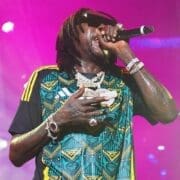


News Americas, NEW YORK, NY, Thurs. Mar. 26, 2026: A high-stakes extradition battle in Guyana has taken a dramatic turn, with the Caribbean Court of Justice, (CCJ) stepping in to temporarily halt proceedings involving Guyana’s new opposition leader, business man Azruddin Mohamed of the We Invest In Nationhood party and his father, Nazar Mohamed.
FLASHBACK – Guyanese businessman Azruddin Mohamed arrives at his swearing in to parliament on Nov. 3rd.
In a significant legal development, the region’s apex court on Tuesday granted a stay of the ongoing extradition process, effectively pausing efforts to surrender the two men to the United States while their latest legal challenge is reviewed.
The decision came during a virtual case management hearing, where attorneys representing both the applicants and the State appeared before the court to outline the next steps in the matter. The stay order immediately suspends proceedings before Magistrate Judy Latchman at the Georgetown Magistrate’s Court, where the extradition case had been advancing.
The ruling marks the latest escalation in a legal saga that has drawn regional and international attention, given the serious nature of the allegations and the involvement of U.S. authorities.
The Mohameds are wanted in the United States on multiple charges, including money laundering, wire fraud, tax evasion and bribery. The accusations are reportedly tied to large-scale gold exports and the alleged evasion of significant revenues.
Guyana authorities acted on the U.S. request in October 2025, arresting the businessmen and initiating extradition proceedings shortly thereafter.
Since then, the case has moved through several levels of the local judicial system, with the Mohameds mounting repeated legal challenges in an effort to block their extradition.
However, both the High Court and the Court of Appeal rejected those challenges, clearing the way for the matter to proceed. In a particularly strong ruling, the Court of Appeal described the case as having “absolutely no merit,” reinforcing the State’s position.
Attorney General Anil Nandlall had signalled just one day earlier that the government was fully prepared to defend those rulings at the CCJ, emphasizing that applicants seeking special leave must meet strict legal thresholds, including demonstrating a reasonable prospect of success.
Despite those hurdles, the Mohameds moved directly to the CCJ, filing for special leave to appeal and naming several State officials as respondents, including Minister of Home Affairs Oneidge Walrond, the Attorney General, and Magistrate Latchman.
Senior Counsel Fyard Hosein and Roysdale Forde are representing the applicants, while Senior Counsel Douglas Mendes is among the attorneys appearing for the State.
The CCJ’s decision to grant a stay does not determine the outcome of the case but signals that the court is prepared to examine the legal arguments before allowing extradition to proceed.
The appeal is expected to be heard next month.
The case has broader implications beyond the courtroom, raising questions about the balance between domestic judicial authority, regional legal oversight, and international cooperation in criminal matters.
For now, the extradition process remains on hold – but the legal and political stakes continue to rise.
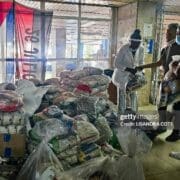
News Americas, TORONTO, Canada, Thurs. March 26, 2026: Reports state that CARICOM governments are preparing to send humanitarian aid to Cuba following a decision announced by Chairman Dr. Terrance Drew at the 50th Regular Meeting of the Conference of Heads of Government in St Kitts and Nevis from 24 to 27 February 2026. Supplies to be purchased in Mexico for transport to Cuba include powdered milk, including baby formula, non-perishables such as beans, wheat flour, rice, canned goods, basic medical supplies, solar panels, batteries, and water tanks.
Aid brought by the Nuestra America flotilla from Mexico is classified at the William Soler Pediatric Cardiocenter in Havana on March 25, 2026. (Photo by Lisandra COTS / AFP via Getty Images)
These reports could not have come soon enough.
The long-running embargo and now naval “oil blockade” have been cruel and unusual punishment against an island and its people. These actions have inflicted severe hardship and has brought near collapse, all in pursuit of self-determination. Furthermore, the suffering has been inflicted by a superpower which is now demonstrating much less moral character than the people it directs its fury against, in the name of high-minded objectives. Whatever the flaws in the Cuban system, Cuba has demonstrated resilience, cohesion, and a people-centered ethic, which the US itself increasingly lacks.
In addition to the above aggression, there has been the military strike on Venezuela without follow through to support democracy there. There is also the war against Iran which is driving up fuel prices, increasing inflationary strain and disrupting tourism-dependent economies in the region. And on top of that, a chaotic, whimsical regime of punitive tariffs against US friend and foe alike.
A woman cares for her daughter at the William Soler Pediatric Cardiocenter a beneficiary of the humanitarian aid brought by the Nuestra America flotilla from Mexico in Havana, on March 24, 2026. (Photo by Yuri CORTEZ / AFP via Getty Images)
Let’s look back and place some context on what is currently amounting to the harshest ever punishment imposed on Cuba.
More than six decades after the United States imposed sweeping sanctions on Cuba, the policy has hardened into one of the longest-running economic sieges in modern history. What began as a Cold War strategy to counter Soviet influence has evolved into a dense web of financial restrictions, diplomatic pressure, and extraterritorial penalties that shape the economic life of a small Caribbean nation of eleven million people.
The historical irony of the embargo is difficult to ignore.
The original policy originated from fears that Cuba had become a Soviet outpost in the Western Hemisphere. Yet in today’s political climate, some of the same voices advocating the toughest measures against Havana express far more conciliatory attitudes toward Vladimir Putin.
Today, the question confronting Washington and the wider world is increasingly stark: has the embargo and current naval blockade become a show of strength whose humanitarian consequences now outweigh any possible strategic purpose? Is the suffering of the people something to gloat over?
The origins of conflict traces back to the Cuban Revolution, when Fidel Castro overthrew the U.S. backed government of Fulgencio Batista, an authoritarian dictatorship, and nationalized major industries, including American-owned businesses.
Washington responded with escalating sanctions, culminating in the full trade embargo imposed by John F. Kennedy in 1962. At the height of the Cold War, the justification seemed straightforward: Cuba had aligned with the Soviet Union and hosted nuclear missiles during the Cuban Missile Crisis, bringing the world to the brink of nuclear war.
But the Soviet Union disappeared more than thirty years ago. The embargo did not.
Instead, it became institutionalized through laws, making it extremely difficult to lift sanctions without congressional approval.
The modern embargo extends far beyond a simple prohibition on U.S.-Cuba trade. Because the United States dominates global finance, sanctions often carry extraterritorial consequences.
Foreign banks risk penalties if they process transactions with Cuba. Shipping companies can face restrictions if they dock at Cuban ports and later attempt to enter the United States. Businesses trading with Cuba may lose access to American markets.
For a small island economy dependent on imports for food, fuel, and industrial inputs, these restrictions have profound effects.
Shortages of fuel, spare parts, and medical equipment have become chronic. Electrical grids struggle to obtain replacement components. Hospitals report difficulty acquiring certain medicines or specialized devices. The result is a fragile economic system increasingly strained by shortages and infrastructure failures.
Today, with the “targeted” naval oil blockade, blackouts across the island have underscored the severity of the crisis – inability to store perishable food, disabling sensitive equipment and emergency hospital care, and decimated its absolutely critical tourism lifeblood. Sanctions have also magnified structural weaknesses by limiting access to credit, technology, and global markets.
Cuba now faces its most serious economic emergency since the early 1990s, when the collapse of Soviet aid plunged the island into deep recession.
Inflation has surged. Migration has reached historic levels, with hundreds of thousands of Cubans leaving the island. Food shortages, power outages, and crumbling infrastructure have become daily realities.
The Cuban government attributes much of the crisis to the tightening of U.S. sanctions in recent years, particularly measures that target shipping, remittances, and access to international banking systems.
Adversaries of Havana say that the government’s own centralized economic system bears responsibility for many inefficiencies. Whatever the case, it has to be acknowledged that sanctions restrict the country’s capacity to recover.
The consequences of U.S.-Cuba tensions extend beyond the island itself. Across the Caribbean, governments navigate a delicate geopolitical balance between security and economic dependence on the United States and practical cooperation with Cuba.
CARICOM has historically long defended engagement with Cuba, viewing the island as an important partner in regional development.
Countries like Jamaica, Barbados, and Guyana maintained longstanding medical and educational cooperation agreements with Havana. Cuban doctors and nurses work in hospitals across the Caribbean, often filling gaps created by shortages of medical professionals.
For many small island states, these programs are not ideological statements but practical necessities. Recruiting doctors to remote or under-resourced regions is difficult, and Cuban medical missions have often provided critical support during crises – from hurricane recovery to public health emergencies.
Yet Washington has increasingly criticized these programs. Officials, including Marco Rubio, argue that the Cuban government exploits medical workers by taking a significant portion of their salaries and restricting their freedom of movement.
And the United States has imposed visa restrictions and other pressures to discourage Caribbean governments from participating in these missions.
For small states navigating economic vulnerability and climate risks, the situation presents a difficult choice: comply with the demands of the region’s largest power or risk losing access to essential healthcare personnel. The immense pressure from the US has had consequences. Jamaica is ending its medical cooperation with Cuba. And Guyana is now hiring Cuban Doctors and Nurses directly. In addition, the Guyana government, which depended on the Cuban medical program for decades and had deep fraternal and ideological kinship with Cuba in the past, has said the Cuban “Status quo cannot remain.”
The geopolitical web surrounding Cuba also includes Venezuela. For years, the government of Hugo Chávez – and later Nicolas Maduro – supplied Cuba with subsidized oil in exchange for Cuban doctors, teachers, and technical advisers.
When Washington imposed severe sanctions on Venezuela’s energy sector, the ripple effects reached Havana. With little oil reaching the country, blackouts now sweep across the island.
The sanctions regimes that targeted Venezuela and Cuba reinforced one another, tightening economic pressure across parts of the Caribbean basin.
The historical irony of the embargo is difficult to ignore.
The original policy originated from fears that Cuba had become a Soviet outpost in the Western Hemisphere. Yet in today’s political climate, some of the same voices advocating the toughest measures against Havana express far more conciliatory attitudes toward Vladimir Putin.
This contradiction raises uncomfortable questions about whether the embargo remains rooted in coherent strategic logic – or whether it has simply become a permanent fixture of domestic politics that has now taken on an even more erratic and punitive nature.
After more than sixty years, the embargo has, at least so far, failed to achieve its central objective: the transformation or collapse of Cuba’s political system, although Cuba may now be nearing exhaustion.
What it has definitely done is prolong an economic standoff that shapes the lives of millions of people and influences the geopolitical dynamics of the Caribbean.
Supporters argue that sanctions remain a legitimate tool for pressuring an authoritarian government. Others counter that the policy punishes ordinary citizens while entrenching political divisions.
As Cuba faces mounting economic strain and the Caribbean navigates competing pressures from larger powers, the question confronting Washington is increasingly unavoidable.
Is the embargo still a strategy – or has it become a tyrannical whim using a long-gone Cold War as a front, and whose human costs now exceed any political or strategic gains?
For Cuba and its Caribbean neighbors, an equitable and humanitarian resolution of this situation may determine whether the region moves toward greater cooperation or has the current incarnation of a conflict that began more than half a century ago hang over their heads as a collective shadow of a regrettable episode in Caribbean history.
Now it appears that CARICOM has at last collectively decided that the community can no longer stand by while a close neighbour endures such suffering – despite potential consequences. They would have long taken humanitarian action if there had been a hurricane or flooding – the human consequences are no different.
Much of the charge seems to have been led by the small island of Barbados and its Prime Minister Mia Mottley. In the face of delays, Barbados last week decided to proceed independently to deliver its donated supplies. And Guyana has now committed to sending a large shipment of rice.
It is hoped that the collective CARICOM actions can be expedited and that the urgently needed supplies reach Cuba, bringing at least some relief to the island and its people before collapse.
EDITOR’S NOTE: Ron Cheong is a frequent political commentator and columnist whose recent work focuses on international relations, economic resilience, and Caribbean-American affairs. He is a community activist and dedicated volunteer with extensive international banking experience. Now residing in Toronto, Canada, he is a fellow of the Institute of Canadian Bankers and holds a Bachelor of Science degree from the University of Toronto.
RELATED:

NEWS AMERICAS, NEW YORK, NY, March 25, 2026: April 2026 belongs to Dr. Monty Alexander. The Grammy-nominated Jamaican-born pianist, widely regarded as one of the greatest jazz musicians alive, is set to deliver two landmark performances this month – first at New York City’s legendary Blue Note Jazz Club for a sold-out Easter weekend run, and then as the headliner of the Jazz Tent at the New Orleans Jazz & Heritage Festival, where Jazz Fest will honor Jamaica in an historic celebration under his banner.
Dr. Monty Alexander, C.D., O.J. (Jazz Baltica image)
Hot off a triumphant reception at Miami’s Moss Center last month, Alexander brings his electrifying “Jamaica to Jazz” concert experience to two of America’s most storied music stages – commanding a full ensemble of up to seven world-class musicians and turning every performance into an unforgettable journey through the soul of Caribbean sound and the art of jazz.
Beginning Thursday, April 2 and running through Easter Sunday, April 5, Alexander takes the Blue Note stage for eight shows across four nights – two each evening at 8:00 PM and 10:30 PM. The Blue Note Jazz Club, at 131 W. 3rd Street in Greenwich Village, is the most celebrated jazz venue in the world, and Alexander’s return there is nothing short of a homecoming.
“Jamaica to Jazz” traces the blazing arc of Jamaican music into the heart of modern jazz – from the early ska sessions of Kingston’s first recording studios to the international stages that made history — told through the hands and voice of the man who helped build it all. From the American Songbook to the blues, from gospel to bebop, from calypso to reggae, every set is a living history lesson delivered with irresistible joy.
Alexander personally introduces each musician from the stage – a signature touch that makes every show feel like an invitation into his world. With as many as seven musicians joining him on stage, the ensemble is an event unto itself.
Venue: Blue Note Jazz Club, 131 W. 3rd St., New York, NY 10012
Dates: Thursday, April 2 – Sunday, April 5, 2026
Shows: 8:00 PM (Doors 6:00 PM) & 10:30 PM (Doors 10:00 PM) nightly
Tickets: bluenotejazz.com/nyc • Phone: 212.475.8592 • $20 minimum per person
Three weeks later, on April 23, Dr. Monty Alexander brings the celebration south – to New Orleans, the other great capital of jazz in the African diaspora – for a performance that is already being called one of the most historically significant moments of Jazz Fest 2026. Alexander headlines the Jazz Tent Stage at 5:45 PM, closing out the day as its marquee act.
But this is more than a headline slot. Jazz Fest 2026 is honoring Jamaica – co-presented under Alexander’s name – in a landmark cultural celebration dubbed “Jamericana.” The Jamaica Tourist Board is actively involved, with representatives confirmed to be on the ground in New Orleans with a full program of Jamaica-themed activities and presentations surrounding the performance. When Alexander sits down at the piano that evening, it will be a moment where Kingston and New Orleans, reggae and jazz, the Caribbean and the American South, converge on one stage.
“Jamericana” is Dr. Alexander’s signature artistic concept: the electrifying fusion of Jamaica’s African-rooted rhythmic tradition with the jazz born in America’s Deep South. At Jazz Fest, the concept reaches its fullest expression – not just music, but a celebration of two cultures, two cities, and one unbroken line of Black musical genius.
Festival: New Orleans Jazz & Heritage Festival 2026
Date: Wednesday, April 23, 2026
Stage: Jazz Tent – Headliner
Time: 5:45 PM
Festival Info: nojazzfest.com/music
Born on June 6, 1944, in Kingston, Jamaica, Monty Alexander was playing Christmas carols by ear at four and performing in local clubs by 14. As a teenager in late-1950s Jamaica, he played in the island’s earliest recording studios – taking part in the foundational ska sessions that would give rise to reggae and reshape global music culture forever.
At just 16, he had recordings on the Jamaican hit parade. By 19, he had made his way to New York City, where he captivated audiences at Jilly’s – the legendary club owned by Frank Sinatra’s close confidant Jilly Rizzo. That connection ignited collaborations with Sinatra, Tony Bennett, Ray Brown, Milt Jackson, Wes Montgomery, Dizzy Gillespie, Miles Davis, and Sonny Rollins.
Today, with more than 75 albums and performances at virtually every major jazz festival and concert hall on earth, Alexander is ranked the fifth greatest jazz pianist of all time in
The Fifty Greatest Jazz Piano Players of All Time (Hal Leonard Publishing). The prestigious Montreux Jazz Festival has presented him 23 times since 1976.
HONORS
Commander in the Order of Distinction (C.D.) – Jamaica, 2000
Order of Jamaica (O.J.) – 2022, for sterling global contributions to Jamaican music and jazz
Honorary Doctorate (DLitt) – University of the West Indies, 2018
Grammy Nomination – One of jazz’s most celebrated recording artists
STAY CONNECTED WITH MONTY
Facebook: facebook.com/officialmontyalexander | Twitter/X: @_MontyAlexander | Instagram: @monty.alexander | montyalexander.com
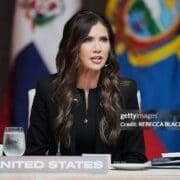
News Americas, NEW YORK, NY, Weds. March 25, 2026: Just weeks after being removed from her role as U.S. Secretary of Homeland Security, Kristi Noem is already back on the international stage – this time making high-level visits to Guyana and Costa Rica that are raising new questions about U.S. strategy in the Caribbean and Central America.
FLASHBACK – Former US Secretary of Homeland Security Kristi Noem delivers remarks during a working lunch at the “Shield of the Americas” Summit at Trump National Doral in Miami, Florida, on March 7, 2026. President Trump is hosting a dozen right-wing leaders from Latin America and the Caribbean to discuss issues facing the region, from organized crime to illegal immigration. The summit also aims to serve Washington by boosting US interests in the region and curbing those from foreign powers like China. (Photo by Rebecca Blackwell / POOL / AFP via Getty Images)
Now serving as a Special Envoy under the Trump administration’s “Shield of the Americas” initiative, Noem’s regional engagements signal a continued and possibly expanded focus on migration control, transnational crime, and security cooperation across key countries in the hemisphere.
In Guyana, Noem is meeting with President Irfaan Ali, senior government and defense officials, and representatives of U.S. energy companies operating in the country. According to U.S. Embassy statements, the discussions are centered on dismantling drug cartels, disrupting firearms trafficking, discouraging illegal immigration, and strengthening regional security.
But it is the timing – and the scope – of these visits that are drawing increased attention.
Noem’s removal from the Department of Homeland Security followed mounting criticism over the administration’s aggressive immigration policies, including mass deportations and controversial third-country agreements. Yet her rapid reemergence in a diplomatic and strategic role suggests continuity, rather than retreat, in Washington’s approach.
Her stop in Costa Rica further underscores this point.
During her visit there, Noem met with President Rodrigo Chaves, President-elect Laura Fernández, and senior officials to advance cooperation on migration enforcement and counter-narcotics efforts. Notably, she was involved in signing a migration cooperation agreement designed to facilitate the transfer of third-country nationals deported from the United States – part of a broader strategy to manage migration flows beyond U.S. borders.
Costa Rica has also joined initiatives aimed at strengthening regional security coordination, including efforts to dismantle criminal networks and enhance border control mechanisms. U.S. officials have framed these partnerships as critical to ensuring stability throughout the hemisphere.
Taken together, the visits to Guyana and Costa Rica point to a coordinated regional push.
Guyana, with its rapidly expanding oil sector and growing geopolitical importance, has become an increasingly strategic partner for the United States. Engagement with U.S. energy companies during Noem’s visit highlights the economic dimension of the relationship, particularly as global energy dynamics continue to shift.
At the same time, Costa Rica represents a key node in migration management efforts, serving as both a transit country and a partner in implementing U.S.-backed deportation and security initiatives.
For analysts, the broader picture is becoming clearer. It is not just about individual country visits but reflects a wider effort by the U.S. to strengthen its influence across the Caribbean and Central America, particularly in areas tied to migration, security, and economic interests.”
The dual-country visit also comes at a time when international scrutiny of U.S. immigration policies remains high. Human rights organizations have raised concerns about deportation practices and the use of third countries to manage migration flows, adding another layer of complexity to these agreements.
For Guyana and Costa Rica, the benefits of closer cooperation with the United States may include enhanced security support, economic partnerships, and increased global visibility. However, these relationships also bring challenges, particularly as governments balance domestic priorities with international commitments.
As Noem continues her regional engagements, one thing is clear: her role – and the policies she represents – remain central to the United States’ evolving strategy in the hemisphere.
What began as a personnel change in Washington is now playing out as a broader geopolitical signal. And for the Caribbean and Central America, the implications are only beginning to unfold.