The Meaning Behind Beenie Man’s “Girls Dem Sugar”: Lyrics and Story Explained

The Meaning Behind Beenie Man’s “Girls Dem Sugar”: Lyrics and Story Explained

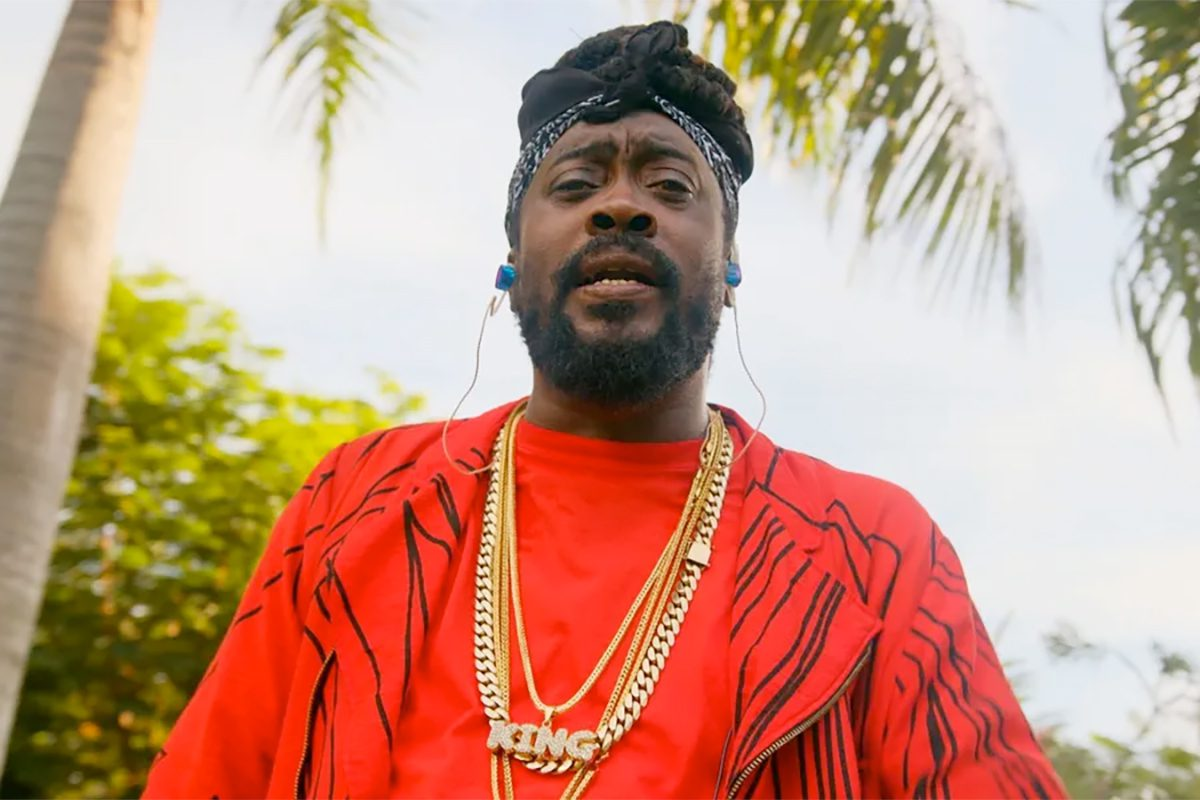
“Girls Dem Sugar” is Beenie Man’s boast that he is the sweetness the women want.

The song is a romantic, flirtatious brag from one of dancehall’s biggest crossover stars.[#item_full_content

The Meaning Behind T.O.K.’s “Footprints”: Lyrics and Story Explained

The Meaning Behind T.O.K.’s “Footprints”: Lyrics and Story Explained

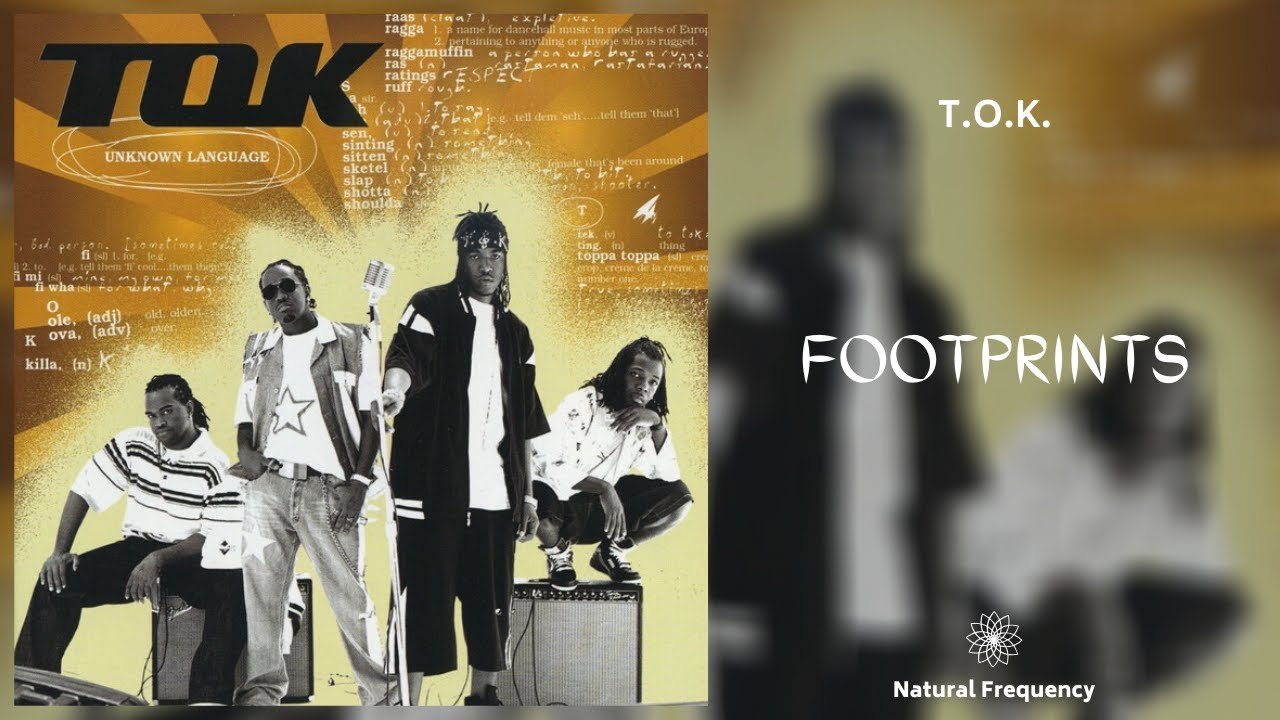
T.O.K.’s “Footprints” is a song about faith when life falls apart. It takes the image from the well-known Christian “Footprints in the Sand” poem, where God carries a person through hard times, and sets it inside stories of violence and poverty.[#item_full_content

Caribbean Leadership: Where Caribbean and African Power Meets Tomorrow

By Dr. Isaac Newton

News Americas, NEW YORK, NY, Sat. Sept. 26, 2026: A boardroom and a Cabinet room serve different purposes, yet both face the same test: Can those entrusted with power see reality clearly enough to make decisions that remain sound after the meeting ends? In the Caribbean and Africa, forces beyond the room can reach a family kitchen, a small business or a national budget with surprising speed. A tariff can raise food prices. A shipping disruption can threaten supplies. Artificial intelligence can reshape work before schools adjust. Climate shocks can expose weak infrastructure. Caribbean leadership begins when these realities enter the room before their consequences do.

That requires leaders to turn global change into local decisions. A new trade barrier should raise questions about food, tourism, exports and foreign exchange. Higher global interest rates should sharpen attention to public debt and business financing. Advances in AI should prompt governments to rethink education and companies to rethink skills. The essential question is not simply what is happening in the world, but what it means here, for our people, our resources and our institutions. Global awareness matters only when it improves a decision.

Good leadership also creates space for uncomfortable truth. A CEO needs a director who can challenge an acquisition. A Cabinet needs an official who can question an attractive forecast. A senior executive must be able to say when a promising policy lacks the people, systems or money needed to deliver it. The youngest person at the table may see a technological risk that experience has missed. Dissent, when grounded in evidence, is not disloyalty. It is an institution’s warning system.

Meetings should protect the time and attention required for judgment. Financial reports, operational updates and routine information can arrive before people enter the room. The meeting should focus on decisions: where to invest, what to stop, which risk has changed, which assumption no longer holds and which opportunity deserves attention. For countries and organizations with limited resources, wasted attention has a real cost. A crowded agenda can conceal the absence of strategy.

Wise leaders also ask what their decisions leave behind. A government can build roads without generating enough productive activity to sustain them. A company can report strong profits while neglecting technology, talent or succession. Every major decision therefore deserves a longer question: What will this look like five years from now? Who will lead it? What capability will remain? What vulnerability will have been reduced? Leadership is measured not only by what gets done during a tenure, but by the condition in which the institution is passed to those who follow.

Resilience demands the same long view. Caribbean and African countries cannot set global interest rates, stop wars, control commodity prices or prevent every disruption. They can strengthen food systems, diversify suppliers, protect digital infrastructure, develop local expertise and preserve financial room for difficult years. Businesses can diversify markets, protect information, develop talent and test their plans against serious disruption. Leaders cannot control every shock. They can decide how prepared their institutions will be when the shock arrives.

Accountability gives decisions their consequence. A consequential meeting should leave four things unmistakably clear: what was decided, who owns it, when it must happen and what evidence will show whether it worked. “We will explore it” leaves the work suspended. “Someone should handle it” leaves ownership unclear. When the same issue returns meeting after meeting, discussion has replaced action. Minutes record what was said. Accountability shows what was done.

The deeper responsibility is to build institutions that can outlast the people who hold power today. Ministers leave. CEOs leave. Board chairs leave. Governments change. Institutions must retain knowledge, develop new leaders, correct mistakes and adapt to changing conditions. A leader who must remain indispensable has created dependence. A leader who develops capable successors has created capacity. The measure of leadership is therefore not how much an institution needs one person, but how well it performs when that person is gone.

The world will not wait for the next Cabinet paper or board meeting. Technology moves overnight. Capital crosses borders. Supply chains shift. Climate events test old assumptions. Effective leaders connect distant signals to local consequences, welcome evidence that challenges them, protect scarce attention, think beyond their tenure, prepare for disruption, assign clear responsibility and strengthen the institution they will eventually leave.

Before the room closes, one question deserves to remain on the table: What are we failing to see today that tomorrow will make impossible to ignore?

That question can change a company. It can redirect a government. In a small Caribbean state or an African nation, it can alter the prospects of a generation. Power occupies a room for a time. Decisions determine what comes after.

EDITOR’S NOTE: Dr. Isaac Newton is a leadership strategist, governance scholar and author specializing in institutional excellence, ethical leadership and human development. Educated at the University of the Southern Caribbean, Oakwood University, Princeton, Columbia and Harvard, he writes on leadership, governance and the development of people and institutions. He is the author of Fix It Preacher, Face Life Squarely and Intimate Intimacy, and coauthor of Steps to Good Governance, Daring to Hope, When Nations Kneel and The Belief Code.

RELATED: Sunshine, Shade, And Shadows: A Caribbean Opportunity To Prepare Who Leads After Us

Nyne X glad to be cleared of firearm charges after Queens court rules illegal search by cops

Nyne X glad to be cleared of firearm charges after Queens court rules illegal search by cops

Clarendon-born reggae and dancehall artiste Nyne X says a Queens, New York, court has cleared him of four firearm possession charges, ending a case that began more than two years ago.His[#item_full_content

Exxon Guyana Chief: “It’s Not Our Job” To Build The Nation – As Company Rakes In Record Profits

By NAN Business Editor

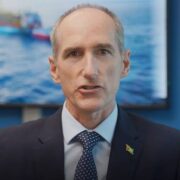
News Americas, NY, NY, Sat. Sept. 26, 2026: The man running ExxonMobil’s operations in Guyana has a message for Guyanese demanding more from the oil giant: don’t look to us. “It’s not our job,” Alistair Routledge, president of Exxon Guyana Limited, said when asked about calls for the company to do more to raise living standards in the country. “They didn’t vote for us. We are not representatives of the people.”

The comment, reported by The New York Times’ Simon Romero and Rebecca F. Elliott, lands at a politically combustible moment. Guyana – a former British colony of roughly 1 million people – has become the fastest-growing economy on earth since Exxon’s 2015 offshore discovery, and the country now produces nearly 1% of the world’s oil. Much of that oil is flowing to Europe, replacing supply lost to the Russia conflict.

But the boom has been just as transformative for Exxon. Guyana’s rapid production ramp-up helped push the company’s global output to its highest level in more than 40 years last year – contributing an estimated 15% of Exxon’s operating income, according to the Times’ reporting.

That imbalance is exactly what critics point to. Thomas Singh, an economist at the University of Guyana, called the arrangement “a terribly bad deal,” noting Guyana’s 14.5% share of revenue from the Exxon-led consortium falls well short of what oil-producing nations like Norway or Brazil collect. Economist Richard Rambarran put the trade-off more pointedly: “It’s often said that Exxon saved Guyana. You could also say that Guyana saved Exxon.”

Routledge has defended the contract terms, telling the Times that Exxon “assumes all the financial risk” and that Guyana’s share is set to rise now that the consortium has recouped its development costs — with revenues expected to double or more from current levels.

Exxon has funded biodiversity research, food-production support, and a $100 million workforce and healthcare initiative in Guyana. But Routledge’s “not our job” framing suggests the company intends to draw a hard line on how much further that goes — even as its Guyana bet also plays into ambitions in Trinidad and Tobago and a possible return to Venezuela, where it lost its assets in a nationalization two decades ago.

The remarks are likely to sharpen an already-tense debate in Guyana over who benefits most from the country’s oil wealth — and how much say a private, foreign operator should have in shaping national development priorities it profits enormously from but was never elected to serve.

RELATED: Guyana Is Rich On Paper But Are Guyanese Feeling The Oil Boom?

The Meaning Behind Beenie Man’s “King of the Dancehall”: Lyrics & Story Explained

The Meaning Behind Beenie Man’s “King of the Dancehall”: Lyrics & Story Explained

The phrase “king of the dancehall meaning” carries real weight in Jamaican music culture, and no single song crystallised the concept more boldly than Beenie Man’s 2004 anthem of the same name.[#item_full_content

The Meaning Behind Beenie Man’s “Who Am I (Sim Simma)”: Lyrics & Story Explained

The Meaning Behind Beenie Man’s “Who Am I (Sim Simma)”: Lyrics & Story Explained

“Who Am I (Sim Simma)” is one of the most recognisable dancehall records ever made, but the meaning of its chorus still confuses casual listeners nearly three decades after its release.[#item_full_content

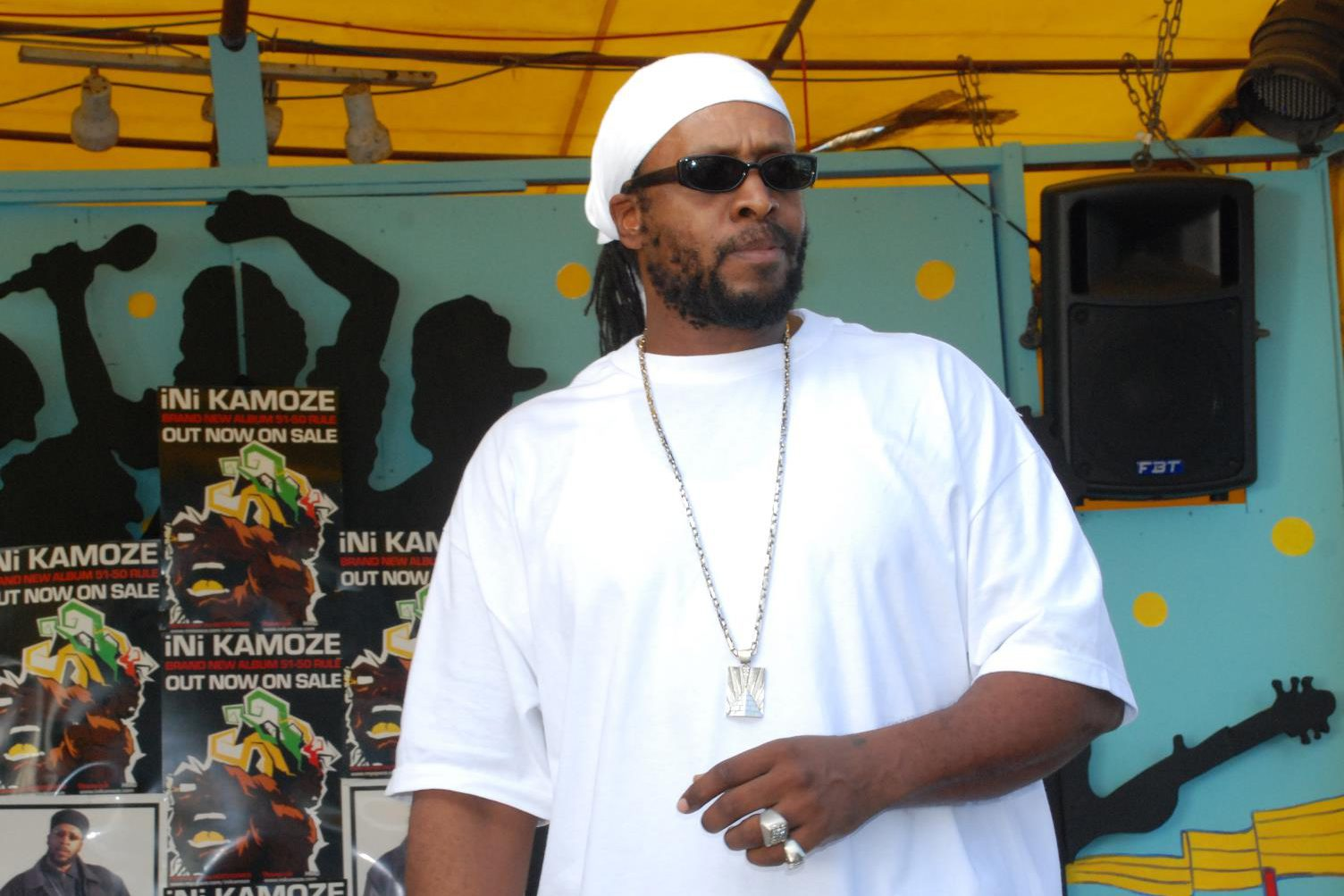
The Meaning Behind Ini Kamoze’s “World a Music”: Lyrics & Story Explained

The Meaning Behind Ini Kamoze’s “World a Music”: Lyrics & Story Explained

“World a Music” is one of the foundational recordings in early dancehall and roots reggae, a song whose meaning runs deeper than its hypnotic groove suggests.[#item_full_content

Valiant Took ‘Time Capsule’ to TVJ Daytime Live and Let the Raw Vocals Do the Talking

Valiant Took ‘Time Capsule’ to TVJ Daytime Live and Let the Raw Vocals Do the Talking

Valiant didn’t walk into TVJ Daytime Live with a polished, over-produced set he showed up with raw vocals and let the new single speak for itself.[#item_full_content

Blvk H3ro Drops ‘Strictly Good Vibes Vol. 1’ Mixtape on October 2nd

Blvk H3ro Drops ‘Strictly Good Vibes Vol. 1’ Mixtape on October 2nd

Blvk H3ro just announced a full capsule project dropping next week, and the way he’s framing it already sets a certain tone.[#item_full_content