
Ferraris In Georgetown, Sewage In The Canals: Guyana Oil Boom Leaves Many Behind
By News Americas Staff Writer
News Americas, NEW YORK, NY, Tues. Sept. 22, 2026: Guyana’s economy grew 33% in the first half of 2026 – the fastest of any economy in the world – driven by a Guyana oil windfall now estimated at $6.5 billion for the year, more than double what was forecast in January. But a New York Times investigation published September 19 finds that the boom sits uneasily alongside raw sewage in Georgetown’s canals, families crammed into flood-prone housing, and lingering fury over a ferry disaster that killed roughly 100 people in July – the country’s deadliest event since the 1978 Jonestown tragedy.
The Times, reporting from Georgetown, described a capital transformed by sudden wealth: Ferraris and Lamborghinis moving through traffic on narrow roads, new steakhouses serving imported Wagyu beef, and international DJs flown in for music festivals. Guyana’s per capita income now stands at roughly $32,000 – higher than every other country in Latin America, including Chile and Uruguay – and the country’s per capita oil reserves are estimated to be the second-highest in the world, after Kuwait, according to the report. Exxon’s oil discovery in these waters more than a decade ago ranks among this century’s most significant finds, catapulting Guyana, a former British colony with 1 million inhabitants, into the world’s fastest-growing economy.
But many ordinary Guyanese say that wealth isn’t reaching them. The Times cited rising inflation, a housing shortage, and “robberies at gunpoint” as common conditions in a capital that “does not feel like it is suddenly turning into an advanced economy,” despite the World Bank classifying Guyana as a high-income country.
The US warns Americans to reconsider travel to Guyana due to crime.
“Violent crime is common, especially at night. Crimes include murder and armed robbery. Local police often lack the resources to respond effectively to serious criminal incidents,” a State Department warning issued on August 26th states.
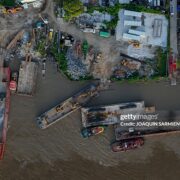
Over 30 remain missing after the MV Barima ferry capsized off Guyana’s coast on July 18th, as officials deny overload claims and the opposition demands answers amid Guyana oil wealth.
That disconnect became a flashpoint after July’s ferry disaster. At vigils and protests following the sinking, demonstrators asked how such a tragedy could happen in the world’s fastest-growing economy – and pointed out that its victims were among those still struggling to get by while government coffers filled with oil revenue.
“We’re sick of hearing about a boom that means nothing to most Guyanese,” Romola Lucas, a lawyer who was arrested and accused of unlawful assembly after demanding accountability from officials over the disaster, told the Times.
Economist Thomas Singh, of the University of Georgetown, told the paper the pace of Georgetown’s redevelopment – with much of the city’s historic wooden architecture being razed for concrete high-rises – compounds the sense of dislocation: “The sheer ugliness of it all is what gets to me.”
Government officials and some business leaders defend the trajectory. Gerry Gouveia Jr., chairman of Guyana’s Private Sector Commission, told the Times that legislation requiring foreign energy companies to hire local businesses and workers, along with a sovereign wealth fund with withdrawal limits, positions Guyana to avoid the “resource curse” that has plagued other oil-rich nations. President Irfaan Ali has said the economic boom will benefit “every household” and that the government is working to shield citizens from inflation. Guyana’s government did not respond to the Times’ request for comment.
The stakes extend beyond Guyana’s borders. The country has become one of Exxon Mobil’s main growth engines as the Trump administration seeks greater U.S. control over Western Hemisphere energy resources, even as Guyana’s territorial dispute with Venezuela over the oil-rich Essequibo region escalates, with a ruling from the International Court of Justice expected by early 2027.
EDITOR’S NOTE: This story draws on reporting by Simon Romero and Rebecca F. Elliott of the New York Times, published September 19, 2026. Read their full investigation at nytimes.com.
RELATED: Where Did US$604 Million In Guyana Oil Revenues Go In First Half Of 2026?