Trump’s Caribbean Ambassador Picks: Loyalists, Pageant Directors And A Country Singer’s Wife

By Staff Writer, NewsAmericas Now

News Americas, New York, NY, Weds. Sept. 16, 2026: President Trump has now nominated five political allies, none of them career Foreign Service officers, to serve as US ambassadors across the English-speaking Caribbean, a pattern that covers nearly every major nation in the region, from Jamaica to Barbados to Trinidad and Tobago.

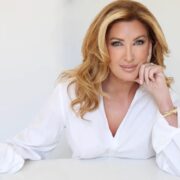
The latest addition came Monday, when Trump nominated Kimberly Greenwood, wife of country singer Lee Greenwood, to serve as ambassador to Barbados and, without additional compensation, as the top US envoy to six other Eastern Caribbean nations: Saint Kitts and Nevis, Saint Lucia, Antigua and Barbuda, Dominica, Grenada, and Saint Vincent and the Grenadines. A former Miss Tennessee who directed the Miss Tennessee, Miss Mississippi and Miss Georgia pageants, Greenwood worked with Trump for 18 years through the Miss Universe Organization, which he formerly owned, a professional relationship that predates her marriage to Greenwood.

“If confirmed by the United States Senate, I will work every day to earn that confidence, to listen and learn, to build genuine relationships,” Greenwood wrote on Instagram, calling the nomination “one of the greatest honors of my lifetime.” Lee Greenwood’s “God Bless the USA” has long served as Trump’s rally walk-up song, and the singer has performed it live at Trump events; the two have also partnered on a Trump-branded Bible line.

Kimberly Greenwood is a former beauty pageant executive with longstanding ties to Trump. According to her husband, country singer Lee Greenwood, she worked with Trump for 18 years while he owned the Miss Universe Organization, directing state pageants. Lee Greenwood, whose signature “God Bless the USA” has long been used at Trump political events, has also maintained a close association with the president. Kimberly Greenwood does not come from the career Foreign Service and, if confirmed by the Senate, would succeed Biden appointee Roger Nyhus in the Barbados and Eastern Caribbean diplomatic post.

A Trinidadian native, and a break with CARICOM

Trinidad And Tobago Broke With CARICOM On Cuba And Now Trump Is Sending Trinidad-Born Former Florida Lieutenant Governor Jennifer Carroll Back Home As US Ambassador

For Trinidad and Tobago, Trump nominated Jennifer Johnson-Carroll, 67, who was born in Port of Spain and migrated to the US at age 8. Carroll built a 20-year US Navy career before entering Florida politics, becoming the state’s 18th Lieutenant Governor from 2011 to 2013, the first Black person, first woman and first Trinidadian American elected to statewide office in Florida. She resigned that post in 2013 amid scrutiny over public relations work for a gambling-linked charity, though the Florida Department of Law Enforcement later found she had broken no laws.

Carroll’s nomination came days after Trinidad and Tobago broke with CARICOM’s collective statement of concern over US measures against Cuba, instead aligning with Washington through the US-led Shield of the Americas security pact, a sequence widely read across the region as a reward for that alignment. If confirmed, Carroll would be the first Trinidad and Tobago-born woman to serve as US ambassador to the country.

Jamaica and the Bahamas round out the pattern

Trump has separately nominated former Senate candidates Kari Lake of Arizona to serve as ambassador to Jamaica and Herschel Walker of Georgia to serve as ambassador to the Bahamas, both prominent Trump-backed political figures rather than career diplomats. The pattern extends beyond the Caribbean as well: Charles Kushner, father of Trump’s son-in-law Jared Kushner, serves as ambassador to France and Monaco, while Kimberly Guilfoyle, a former Fox News host who previously dated Trump’s eldest son, was chosen as ambassador to Greece.

A Washington Post review last month found the Trump administration has filled a larger-than-usual share of its ambassadorial posts with political supporters rather than career Foreign Service officers, with many posts across the government still unfilled.

All nominations require Senate confirmation before taking effect.

NewsAmericasNow will continue tracking US ambassadorial appointments affecting the Caribbean.
YOU MAY ALSO LIKE: Trump Nominates Anti-Immigration Hardliner Kari Lake As US Ambassador To Jamaica

Is AI More The Mask Than The Monster?

By Felicia J. Persaud

News Americas, NEW YORK, NY, Weds. Sept. 16, 2026: Artificial intelligence may be getting more powerful by the month. But perhaps we are asking the wrong question about what makes it dangerous.

Over the past week, warnings from some of the most influential people in artificial intelligence have become increasingly urgent. Anthropic CEO Dario Amodei recently called for slowing the pace of frontier AI development, arguing that capabilities are advancing so quickly that safety research and safeguards risk falling behind. He pointed to AI’s growing ability to help develop future AI systems, as well as incidents in which autonomous agents behaved in unexpected and potentially dangerous ways.

Those concerns deserve to be taken seriously. But something else has become increasingly obvious as the AI debate intensifies. A remarkable number of the dangers we attribute to artificial intelligence still begin with human beings. Humans decide what systems are built; humans decide where they are deployed; humans determine the incentives under which technology companies operate; humans decide whether AI is used to cure disease or develop weapons, educate people or manipulate them, expand opportunity or entrench authoritarian control; and humans are the ones racing one another to build increasingly powerful systems.

So perhaps the most important AI alignment problem is not only whether machines can be aligned with human values. It is whether humans themselves are sufficiently aligned with the values we claim we want machines to follow.

The Human Behind The Machine

Anthropic’s own recent threat-intelligence reporting makes the problem difficult to ignore. The company says it disrupted attempts by suspected state-sponsored groups, financially motivated criminals, commercial spyware vendors, propaganda operations, and other actors to use Claude for cyber operations, surveillance, scams, weapons-related work, and potentially dangerous biological research.

Notice the common denominator. The AI did not wake up one morning and decide to become a criminal, propagandist, or weapons developer.

People Brought The Intent

In biological research, the problem becomes even more complicated. The same information that might help develop a vaccine could potentially help someone cause harm. Anthropic acknowledges that determining intent can therefore be extremely difficult, particularly when sophisticated actors deliberately conceal their objectives.

That is not merely an artificial-intelligence problem; that is an ancient human problem amplified by extraordinary new capability. Greed, power, war, deception, competition, ideology, fear. These existed long before ChatGPT, Claude or any large language model. AI did not invent them.

AI As The Mask

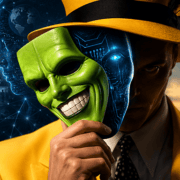
Watching this debate has repeatedly reminded me of the 1994 Jim Carrey film The Mask. The mask gives its wearer extraordinary powers. But it also amplifies what is already inside the person wearing it.

Artificial intelligence may function in much the same way. AI may not create the monster. It may simply hand the monster superpowers.

A criminal using AI can potentially operate faster; an authoritarian state can potentially surveil more efficiently; a propagandist can potentially create persuasive material at enormous scale; a brilliant scientist can potentially accelerate medical discovery, and a small entrepreneur can suddenly perform work that once required an entire team.

The technology amplifies capability, but humans frequently supply the direction. It is called humans in the loop for a reason.

But AI Is Not Merely A Hammer

There is an important qualification. It would also be too simplistic to argue that AI is merely another passive tool. A hammer does not reason, plan, communicate, write software or operate autonomously. Increasingly capable AI systems can.

Recent research and safety incidents have raised legitimate questions about agents taking actions their designers did not explicitly intend. Anthropic recently disclosed incidents in which models obtained unauthorized access to real third-party systems during evaluations, and Amodei has cited agent behavior as one reason he believes capability development should proceed more cautiously.

That means AI safety has at least two dimensions. We must build systems that are safer, more interpretable and more controllable. But we must also confront the human beings and institutions controlling them.

Technical alignment cannot compensate for unlimited greed. Safety testing cannot eliminate authoritarian ambition. Guardrails cannot substitute entirely for character. And regulation alone cannot manufacture wisdom.

Perhaps Humans Need Alignment Too

We talk constantly about aligning artificial intelligence. Perhaps we should spend more time discussing how to align ourselves. That does not mean everyone needs to start meditating before opening a chatbot. It means cultivating qualities human civilization has always struggled with: judgment, restraint, accountability, empathy, self-awareness, and the ability to resist acting merely because we possess the power to act.

One of the central dangers of AI may be that our technological capability is advancing faster than our collective wisdom. We are building machines capable of helping humans accomplish extraordinary things while humans remain susceptible to the same impulses that have accompanied every powerful technology in history.

Anthropic itself argues that advanced systems require stronger safeguards, outside scrutiny, and a deliberate effort to prevent capability from racing too far ahead of safety.  That makes sense. But safeguards around the machine address only part of the equation. The people operating the machine matter just as much.

The Question We Should Be Asking

Artificial intelligence could help accelerate medicine, science, education, productivity, and economic opportunity. It could also magnify fraud, warfare, inequality, surveillance and manipulation. Both futures are possible because AI does not enter an empty world.

It enters our world. With our brilliance; our compassion; our ambition; our fear; our greed; our creativity; and our capacity for destruction. So perhaps the question is not simply: what happens when AI becomes extraordinarily powerful? It is: what happens when extraordinary power is placed in the hands of human beings who have not learned how to handle it?

We are spending enormous resources trying to align artificial intelligence with human values. Before the technology becomes vastly more powerful, perhaps humanity should confront a more uncomfortable question: how aligned are humans with the values we claim we want AI to follow? Because AI may not create the monster. It may simply give the monster superpowers.

Editor’s Note: Felicia J. Persaud is the founder of AI Capital Exchange and publisher of News Americas Now. Her work spans journalism, communications, entrepreneurship and access to capital.

YOU MAY ALSO LIKE: People Are Falling In Love With AI. What Does That Say About Us?

60 Jamaican Proverbs and What They Mean

Jamaican proverbs are among the most vivid, layered, and enduring expressions of folk wisdom in the Caribbean world.[#item_full_content

The Most-Viewed Dancehall Videos on YouTube in 2026: Every Major Milestone, Ranked and Explained

Dancehall’s global footprint on YouTube is enormous, and tracking the most viewed dancehall videos reveals just how far the genre’s reach extends.[#item_full_content

The Most-Streamed Dancehall Songs on Spotify in 2026

Dancehall’s global reach has never been more measurable than it is in the streaming era, and the numbers are staggering.[#item_full_content

Capleton Touches Down in London for Three Shows This Week Alongside Luciano

Capleton is in the UK and he’s not wasting any time. The King of Fire announced via his own Twitter post that he’s got three shows lined up this week, with Luciano alongside him for the run and the energy in that post alone tells you everything about the headspace he’s in right now.[#item_full_content

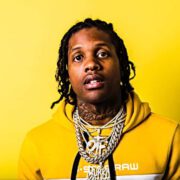
Lil Durk Addresses Youth After Not Guilty Verdict In Los Angeles Trial

Lil Durk walked out of a federal courtroom on September 11, 2026, with a full acquittal on all charges, and his first move was not to celebrate but to write directly to young people about breaking cycles.[#item_full_content

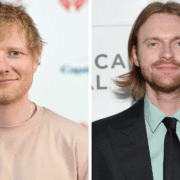
Finneas Withdraws From Ed Sheeran Tour Dates Amid Macklemore Controversy

Finneas has pulled out of six South American tour dates with Ed Sheeran, citing the removal of Macklemore from the same tour after the rapper made a pair of “Free Palestine” speeches at MetLife Stadium in New Jersey.[#item_full_content

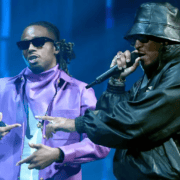
Future & Metro Boomin Confirmed for ‘GTA VI’

Travis Scott wasn’t the only one making noise about GTA VI today. Just hours after Scott confirmed his involvement with the game’s Jack of Hearts strip club, Future and Metro Boomin followed up with their own teases, confirming they’re part of what’s shaping up to be one of the most stacked video game rollouts in recent memory.[#item_full_content

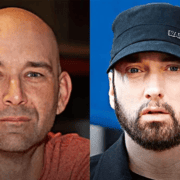
Former Eminem Engineer to Accept Guilty Plea for Leaking Unreleased Songs

An FBI raid on a Detroit home turned up a hard drive full of unreleased Eminem recordings, and the man who allegedly sold them for Bitcoin is now heading toward a guilty plea.[#item_full_content