The Caribbean – Democracy At Home, Continuity Abroad

By Dr. Isaac Newton

News Americas, NEW YORK, NY, Thurs. Mar. 12, 2026: Imagine this: Esther, a nurse in Port of Spain, Trinidad and Tobago, leans forward in quiet attention as the Prime Minister addresses the nation. She speaks of democracy, outlines reforms in Cuba, Venezuela, and Haiti, and urges Caribbean neighbors to embrace civic responsibility and accountability. Esther nods with respect, but her mind drifts to the corridors of her hospital, crowded and understaffed, where patients wait for hours, and policy debates feel like distant echoes. Abroad, the Prime Minister’s words are celebrated by diplomats and the press, but at home, citizens like Esther sense the silence of their influence. This is the paradox of Caribbean leadership: authority lauded across oceans yet questioned in its own streets.

US President Donald Trump poses with Trinidad and Tobago’s Prime Minister Kamla Persad-Bissessar (L) at the beginning of the “Shield of the Americas” Summit at Trump National Doral in Miami, Florida, March 7, 2026. President Trump is hosting a dozen right-wing leaders from Latin America and the Caribbean to discuss issues facing the region, from organized crime to illegal immigration. The summit also aims to serve Washington by boosting US interests in the region and curbing those from foreign powers like China. (Photo by SAUL LOEB / AFP via Getty Images)

Former Prime Minister Basdeo Panday observed that politics has its own moral compass. Power has a way of bending ethical rules. Yet, legitimacy is born only when the path taken matches the goal pursued. For Caribbean leaders, moral coherence is not an abstract ideal. It is the foundation of governance that serves people rather than institutions. It is what transforms authority into trust, and policies into lived improvement.

This tension is woven across the Caribbean. Governments champion democratic reform at home while maintaining ties with Russia, China, and nations in the Middle East, where leadership continuity is guided more by history, culture, and faith than ballots. Wise leadership demands the ability to balance principle with necessity. The strength of sovereignty, regional cohesion, and economic progress depends on leaders who can navigate this landscape with both conscience and courage.

Democracy begins at home. Transparent elections, independent courts, and respect for civil liberties are the roots that allow it to grow. Civic engagement feeds it. Participatory forums, youth councils, and regional accountability networks turn conversation into influence. When citizens see their lives reflected in governance, legitimacy is no longer a promise; it becomes reality. Authority without connection to the people may appear grand but rings hollow.

Leadership is measured both by international acclaim and parliamentary control, but also by the vitality of the people it governs. Offices may be filled with authority, but democracy is animated by participation. Esther’s quiet attention is less disengagement and more of a signal. When leaders act with integrity, align their means with their ends, and listen deeply to their citizens, silence becomes dialogue. Power transforms into shared progress. Governance becomes an instrument of human flourishing, echoing across the Caribbean and beyond.

Editor’s Note: Dr. Isaac Newton is a globally experienced strategist trained at Harvard, Princeton, and Columbia, with more than thirty years of work in governance, economic development, and public policy in the Caribbean. His initiatives strengthen institutions, create employment, and advance sustainable regional growth while embedding ethical leadership into practice.

RELATED: The Majesty Of Reverend Jesse Jackson

From Hip Hop To Hemispheric Politics: Nicki Minaj And Trinidad’s PM Meet At Trump’s Doral Summit

News Americas, MIAMI, FL, Thurs. Mar. 12, 2026: A moment that blended global pop culture with hemispheric diplomacy unfolded in South Florida over the weekend when Trinidad-born superstar Nicki Minaj met Trinidad and Tobago Prime Minister Kamla Persad-Bissessar during a reception following U.S. President Donald Trump’s Shield of the Americas Summit in Doral.

Nicki Minaj meets Trinidad and Tobago Prime Minister Kamla Persad-Bissessar at President Trump’s Shield of the Americas Summit reception in Doral, blending Caribbean culture with hemispheric politics.

The brief meeting between the world-famous rapper and the Caribbean leader quickly went viral after Minaj shared a video and message with her more than 26 million followers on social media.

“She’s in the ‘boys club’ of politics & I’ve been in the ‘boys club’ of Hip Hop,” Minaj wrote on X. “It was such an honour to meet the Prime Minister of my birth country @ President Trump’s Shield of the Americas summit today in Doral, FL.”

The post immediately sparked widespread reactions online, with thousands of fans celebrating the moment as a meeting of two influential Caribbean women who have each navigated male-dominated arenas – global music and national politics.

Prime Minister Persad-Bissessar later reposted Minaj’s message, responding: “Thank you Nicki Minaj for your kind words. Your global success continues to make Trinidad and Tobago proud.”

The encounter took place at a reception following the inaugural Shield of the Americas Summit hosted by President Trump at the Trump National Doral resort near Miami on March 7th.

The summit brought together leaders and representatives from roughly a dozen Latin American and Caribbean countries to launch a new regional initiative aimed at strengthening cooperation against drug cartels, organized crime and other transnational security threats.

Trump used the meeting to formally launch what his administration called the “Shield of the Americas,” a new multinational framework designed to coordinate intelligence sharing, law-enforcement cooperation and potentially military support among participating countries to combat criminal networks operating across the hemisphere.

Among the lone Caribbean leaders attending the summit were Prime Minister Persad-Bissessar, Guyana’s Irfaan Ali and Dominican Republic President Luis Abinader.

Major regional powers including Brazil, Mexico and Colombia were notably absent from the gathering. During his remarks, Trump emphasized a more aggressive approach to combating drug trafficking and organized crime in the region, including expanded military cooperation among partner nations.

But while the summit focused largely on geopolitics, security and regional strategy, the unexpected appearance of Minaj at the reception added a cultural dimension to the gathering. Born in Trinidad and raised in the United States, Minaj, once a Trump critic has now according to her own words, become “his biggest fan.” She is widely considered the best-selling female rapper of all time, with more than 100 million records sold worldwide.

Across social media platforms, many described Minaj and Persad-Bissessar as “two queens” of the Caribbean – one dominating global hip-hop and the other navigating the complex arena of international politics. Others highlighted the symbolism of two Trinidad-born women succeeding in spaces historically dominated by men.

The viral moment may have been brief, but it illustrated how Caribbean culture, diaspora influence and global politics increasingly intersect in unexpected ways.

RELATED: Sinners, Vampires, Nicki Minaj & Trump

Oil, Food And Geopolitics: How Guyana Could Decide CARICOM’s Future

By Ron Cheong

News Americas, TORONTO, Canada, Thurs. Mar. 12, 2026: Half a century after its founding, the Caribbean Community faces perhaps the most consequential moment in its history. The emergence of Guyana as a major oil producer and potential agricultural powerhouse has given the region something it has long lacked – the possibility of real food and energy security. Yet, that opportunity is unfolding amid intensifying geopolitical competition in the Caribbean basin, renewed pressure from external powers, and growing divisions within the region itself. The question confronting CARICOM today is: will the organization finally move toward deeper integration built around Guyana’s economic rise, or will great-power rivalry and regional fragmentation prevent that vision from taking shape?

CARICOM Members in Dark Green and Associate Members in Light Green

Origins And Evolution Of CARICOM

CARICOM was founded in 1973 with the by four states: Barbados, Guyana, Jamaica, and Trinidad and Tobago – replacing the earlier Caribbean Free Trade Association, (CARIFTA). Its founding leaders envisioned a unified community capable of pooling resources, coordinating foreign policy, and amplifying the voice of small states internationally.

Those ambitions, however, were tempered by structural realities. Geography scattered the member states across a wide maritime region with weak transport links. Many economies depended on the same sectors: tourism, small-scale agriculture, and remittances -limiting opportunities for complementary trade. Newly independent governments were reluctant to surrender sovereignty to regional institutions. As a result, while CARICOM expanded to fifteen members and developed mechanisms such as the CARICOM Single Market and Economy, it has often functioned more as a forum for cooperation than a deeply integrated economic union.

The challenge is whether the group of countries can overcome the obstacle and achieve greater integration or succumb to pressure and become more fragmented.

The Optimistic Scenario: Integration And The Rise Of A Caribbean Economic Core

In the most optimistic scenario, CARICOM evolves into a cohesive regional bloc, with Guyana at the center. Offshore oil discoveries have turned Guyana into one of the fastest-growing economies in the world, with production potentially exceeding one million barrels per day. At the same time, its vast freshwater resources and arable land could allow Guyana to supply the region with staple foods – a critical advantage for a region that imports the majority of its food.

If these resources are harnessed collectively that could: stabilize oil and energy costs across CARICOM states, achieve regional food security with expanded agricultural output, and improve trade mobility through infrastructure improvements.

Regional leaders like Mia Mottley have advocated using Guyana’s rise as a foundation for deeper economic cooperation, Stronger supply chains, and collective diplomacy on issues ranging from climate finance to trade. In this scenario, CARICOM transforms from a consultative forum into a more integrated economic and political entity, capable of exercising greater influence globally – much smaller but not unlike the European-style union.

Less Optimistic Scenario: Fragmentation Under Great-Power Pressure

The less favorable trajectory sees CARICOM weakened by geopolitical pressures and internal divisions. The United States has renewed its focus on the region, aiming to counter China’s growing economic footprint and limit the influence of governments aligned with Venezuela and Cuba.

Internal divisions complicate matters. Some states, including Jamaica and Trinidad and Tobago, maintain strong ties with Washington, while others, led by figures like former Prime Minister of St. Vincent Ralph Gonsalves, favoured continued engagement with Venezuela. Territorial disputes, particularly over Venezuela’s claims to the Guyana’s Essequibo region, further strain regional cohesion.

The Complication Of Cuba

An additional and sensitive dimension of Caribbean geopolitics involves the role of Cuba, which had maintained deep relationships with many CARICOM countries for decades.

Since the 1970s, Cuba has provided medical professionals, teachers, disaster relief teams, and scholarships across the Caribbean. Cuban medical brigades have been especially significant in small island states where healthcare capacity is limited. In several CARICOM countries, Cuban doctors have staffed rural clinics and supported hospitals during public health crises and natural disasters.

But US pressure is increasingly causing a divide: some states have reduced engagement with Havana, while others continue cooperation. This divide emerges even as Cuba faces a severe humanitarian crisis, adding moral and diplomatic complexity to CARICOM decision-making. The region is forced to navigate the tension between strategic alignment with Washington and longstanding solidarity with Havana.

U.S. – China Competition And The Caribbean

Over the past two decades, China has expanded its economic presence through loans, infrastructure projects, and construction contracts, building ports, highways, government buildings, and stadiums across the region. For many Caribbean governments, Chinese financing filled an investment gap left by declining Western engagement.

The United States, however, increasingly views these developments through the lens of strategic rivalry. In response, Washington has intensified diplomatic outreach and security cooperation in the Caribbean, seeking to counter Chinese influence and reinforce longstanding economic ties.

For small Caribbean states, this rivalry creates both opportunity and risk. Access to multiple partners can provide valuable investment and development options, but competing pressures also threaten to divide the region and complicate the pursuit of collective policy

Guyana’s Strategic Balancing Act

Between these two futures lies the delicate balancing act facing Guyana.

As the region’s emerging energy powerhouse and a potential agricultural hub, Guyana could serve as the economic anchor for deeper Caribbean integration. But its rapid rise also places it at the center of regional geopolitics. The country must manage close security cooperation with the United States while navigating relations with neighbors that maintain differing diplomatic orientations.

At the same time, Guyana faces direct pressure from Venezuela’s territorial claims, making regional solidarity particularly important for its security.

In this sense, Guyana’s trajectory is inseparable from CARICOM’s broader future. Whether its economic transformation becomes a catalyst for regional integration, or a source of new tensions, will depend on how effectively its growth is woven into a wider Caribbean strategy

The Choice Ahead

Half a century after its founding, CARICOM is at a defining moment. Guyana’s rise offers the region an unprecedented opportunity to secure food and energy independence, strengthen economic resilience, and unify its diplomatic voice. But external pressures – from the US, China, and the legacy of Cuba -Venezuela relations, threaten to fracture the organization.

The Caribbean rarely commands global headlines, but the choices being made today may shape the region for a generation. If Guyana’s rise becomes the foundation for regional integration, CARICOM could finally fulfill the vision of its founders. If not, the Caribbean risks drifting into a patchwork of competing alignments in an era of renewed great-power rivalry. The difference between those futures may depend on whether the region sees Guyana’s transformation as a national windfall – or the cornerstone of a shared Caribbean project.

EDITOR’S NOTE: Ron Cheong is a frequent political commentator and columnist whose recent work focuses on international relations, economic resilience, and Caribbean-American affairs. He is a community activist and dedicated volunteer with extensive international banking experience. Now residing in Toronto, Canada, he is a fellow of the Institute of Canadian Bankers and holds a Bachelor of Science degree from the University of Toronto.

RELATED: The Long Siege Of Cuba & Caribbean Geopolitics: The Prequel To King Kong And The Island

Belize Advances National Eye Health With Launch of WHO SPECS 2030 Initiative

News Americas, BELIZE CITY, Belize, March 11, 2026: Belize has taken a significant step toward ensuring that every person in the country has access to quality, affordable eye care, with the official launch of the World Health Organization (WHO) SPECS 2030 initiative.

The national launch and planning workshop brought together representatives from the Ministry of Health and Wellness (MOHW), the Ministry of Foreign Affairs, Foreign Trade, Education, Culture, Science and Technology, the Belize Council for the Visually Impaired (BCVI), the OneSight EssilorLuxottica Foundation, the World Health Organization and the Pan American Health Organization (PAHO). Participants convened to assess the current state of eye health services in Belize, identify gaps, and chart a clear path forward.

“With the launch of the WHO SPECS 2030 initiative, Belize advances in its commitment to ensuring that every citizen can access quality eye care. Preventable vision impairment should not limit a child’s learning, a person’s ability to work, or an individual’s quality of life. Through its adoption, we are reinforcing our national vision for a stronger, more equitable health system that leaves no one behind,” said Hon. Kevin Bernard, Minister for Health and Wellness.

WHO’s SPECS 2030 initiative provides countries with a structured approach to strengthening refractive error services across five areas:

Services — improving access to refractive services

Personnel — building the capacity of personnel to provide refractive services

Education — promoting public awareness about eye health

Cost — reducing the cost of eyeglasses and services

Surveillance — strengthening data collection and research

For Belize, the initiative translates into three clear priorities at the country level.

First, convening all relevant eye health stakeholders — across the public and private sectors — to agree on national priorities and key areas of action. Second, developing a SPECS 2030 integration plan with measurable targets that can be embedded within Belize’s broader health and eye care strategies. Third, establishing a monitoring and evaluation framework to track progress, review data regularly, and improve services over time.

“Belize is demonstrating how global frameworks like WHO SPECS 2030 can be translated into practical, country-led action. The Foundation’s role in this effort is to support technical implementation — from strengthening refractive services to building local capacity and improving service delivery models. We are proud to stand alongside Belize as it advances a more integrated and accessible eye care system,” said Daniele Cangemi, Head of the OneSight EssilorLuxottica Foundation, Latin America.

Progress will be measured against a defined set of indicators, reported every three to five years through the WHO Global Status Report. These include the reach of school eye health programmes for early detection, the availability of refractive services within the public health system, the size and scope of the eye care workforce, and the degree to which costs are covered through health insurance or other financial protection mechanisms. At the impact level, Belize will track effective cataract surgical coverage and effective refractive error coverage through population-based surveys and health system data.

“The Ministry of Foreign Affairs, Foreign Trade, Education, Culture, Science and Technology welcomes the WHO SPECS 2030 initiative from the BCVI and MOHW in collaboration with PAHO and the OneSight EssilorLuxottica Foundation. We are committed to strengthening our partnership and collaboration with BCVI and the MOHW as we work together to prevent avoidable blindness and expand support services through existing Primary Care and Rehabilitation Programs for children who are blind. The Ministry congratulates and applauds BCVI for its ongoing dedication and commitment to Belize’s visually impaired community,” commented Hon. Francis Fonseca, Minister of Foreign Affairs, Foreign Trade, Education, Culture, Science and Technology.

BCVI, working alongside MOHW, the OneSight EssilorLuxottica Foundation and the initiative’s national and international partners, will lead coordination and follow-up to ensure that commitments made at the workshop translate into meaningful progress on the ground.

The launch of SPECS 2030 reflects Belize’s commitment to universal health coverage and to a future where no Belizean loses the ability to learn, work, or thrive because of a vision condition that could have been corrected.

About the OneSight EssilorLuxottica Foundation
The OneSight EssilorLuxottica Foundation is a registered charitable organization dedicated to eliminating uncorrected poor vision within a generation. As part of EssilorLuxottica’s commitment to universal vision care, the Foundation works to expand access for millions in underserved communities worldwide. It is also the Global Collaborating Partner of the World Health Organization’s SPECS 2030 initiative, which focuses on refractive error, myopia prevention, and improving access to vision care in low-resource settings.

Find out more at: onesight.essilorluxottica.com

About the Belize Council for the Visually Impaired
The Belize Council for the Visually Impaired (BCVI) is a national, non-profit organization dedicated to the prevention of blindness and the provision of comprehensive eye care services.

Established in 1981, BCVI works in partnership with the Ministry of Health & Wellness to deliver accessible, affordable, and high-quality eye care across the country.

Through a network of clinics and outreach programmes, BCVI provides services including eye examinations, refractive error services treatment of eye diseases and rehabilitation support for those who are irreversibly blind.

Special initiatives focus on children, persons with diabetes, and underserved communities, ensuring that no Belizean is left behind in accessing essential eye care and support for independent living.

BCVI collaborates with local and international partners to strengthen Belize’s eye health system and advance equitable access to services for all.

For more information, visit: www.bcvi.org

Global Praise, Quiet Ballots: The Barbados Leadership Paradox

By Dr. Isaac Newton

News Americas, NEW YORK, NY, Weds. Mar. 11, 2026: In Barbados a striking democratic paradox has emerged. A government holds every seat in Parliament while most voters stayed home.

In the 2026 general election, PM Mia Mottley and the Barbados Labour Party secured all thirty seats in Parliament for the third consecutive time. It is an extraordinary consolidation of political authority. Yet the deeper democratic signal lies not in the scale of the victory but in the silence surrounding it. Voter turnout fell to roughly thirty seven percent of registered voters.

FLASHBACK – Barbados’ Prime Minister Mia Mottley looks on upon arrival at the Earthshot Prize 2025 awards ceremony at the Museum of Tomorrow in Rio de Janeiro, Brazil, on November 5, 2025. (Photo by Daniel RAMALHO / AFP) (Photo by DANIEL RAMALHO/AFP via Getty Images)

The result is simple and unsettling. Parliamentary power has expanded while civic participation has contracted.

Elections measure power. Turnout measures belief. When citizens withdraw from the ballot box in large numbers, the absence itself becomes a form of political expression.

Internationally, Mia Mottley commands considerable respect. Her advocacy on climate justice, economic fairness, and the vulnerabilities of small island states has earned global recognition from institutions such as TIME. She has become one of the Caribbean’s most visible and persuasive voices in global diplomacy.

Yet global prestige and domestic democratic energy do not always rise together.

Barbados may in fact illustrate a broader regional pattern. Across parts of the Caribbean, electoral victories have grown more decisive even as public participation becomes more fragile. When political outcomes appear predictable, citizens sometimes respond not with resistance but with withdrawal.

Silence is one of the least examined signals in modern politics. It rarely attracts headlines, yet it often reveals the health of democratic life more clearly than electoral margins.

For Caribbean leadership, the lesson is strategic as much as political. Authority can secure parliamentary seats, but legitimacy depends upon citizens who still believe their participation matters. Governments can command institutions, but democratic vitality requires engagement that cannot be legislated or assumed.

Barbados therefore offers more than a national political story. It offers a quiet warning about the evolving character of democracy in small states and beyond.

A government can fill every seat in Parliament. Only citizens can fill a democracy.

Editor’s Note: Dr. Isaac Newton is a globally experienced strategist trained at Harvard, Princeton, and Columbia, with more than three decades of work across governance, economic development, and public policy in the Caribbean. His leadership initiatives focus on strengthening institutions, generating employment, and advancing sustainable regional growth.

RELATED: Is Barbados PM Mia Mottley’s Clean Sweep Victory Bitter Sweet Or Honey Sweet?

The Caribbean’s Question For Washington: Where Is the Economic Offer?

By Felicia J. Persaud

News Americas, NEW YORK, NY, Weds. Mar. 11, 2026: As Washington rolled out its new hemispheric security doctrine on March 7th, a quiet but consequential question is emerging across the Caribbean: where is the economic offer?

At the March 7th “Shield of the Americas” summit in Doral, Florida, U.S. President Donald Trump gathered just three from the Caribbean – two from the 15 member CARICOM community – and a few other hand-picked leaders from Latin America – to launch what the White House described as the Americas Counter Cartel Coalition, part of a broader geo-political framework for the Americas that some officials have begun referring to as the Donroe Doctrine.

U.S. President Donald Trump waits to greet dignitaries as he hosts “The Shield of the Americas Summit ,“ a gathering with heads of state and government officials from 12 countries in the Americas at the Trump National Doral Golf Club on March 7, 2026 in Doral, Florida. The White House describes the gathering as a landmark summit aimed at reshaping regional alliances and reinforcing U.S. influence in the Western Hemisphere. (Photo by Roberto Schmidt/Getty Images)

The initiative places heavy emphasis on security cooperation, intelligence sharing, and military coordination to combat drug cartels and transnational criminal networks operating across the hemisphere. The summit’s declaration focused on disrupting these networks and strengthening regional security partnerships.

Few Caribbean governments dispute the seriousness of organized crime or the need for coordinated responses to trafficking and violence. The region has long faced the spillover effects of narcotics routes, human trafficking networks, and arms flows that destabilize communities. But security alone rarely defines stability for small states.

For Caribbean economies, long-term stability depends not only on policing borders or confronting criminal organizations but also on functioning healthcare systems, reliable infrastructure, investment flows, and economic opportunity. And it is here that a gap in the emerging doctrine becomes visible.

For decades, the Caribbean has navigated relationships with multiple international partners that support different aspects of development. The United States remains the region’s largest tourism market and a vital source of remittances and foreign investment. China has emerged as a significant financier of infrastructure projects. Cuba has long provided medical cooperation that supports public health systems in several Caribbean states.

Recent geo-political pressure has encouraged some governments to distance themselves from both Beijing and Havana. Yet, replacing those relationships is not a simple exercise.

Chinese financing has played an increasingly visible role in Caribbean development. Between 2005 and 2024, Chinese investment supported major infrastructure projects across the region, including more than $6 billion in Jamaica, roughly $3 billion in Guyana, $2.28 billion in Trinidad and Tobago, and about $1 billion in Antigua and Barbuda. These investments, often tied to China’s Belt and Road Initiative, have funded highways, ports, energy infrastructure, stadiums, and telecommunications networks.

Such projects have helped address infrastructure gaps that Western lenders have often approached with extreme caution, with many viewing the Caribbean as a “wild west” and not a great place to invest.

Meanwhile, Cuban medical missions have for decades provided thousands of doctors and nurses across the Caribbean. In several smaller states, Cuban professionals staff hospitals, operate rural clinics, and deliver specialized services that local healthcare systems struggle to maintain on their own. Now the region is also being asked to terminate these missions or face Washington’s wrath as the administration tightens the economic noose on Cuba.

If regional governments are asked to reduce cooperation with these partners, the practical question becomes unavoidable: what replaces those contributions? Security partnerships can disrupt criminal networks. They cannot build and staff hospitals, finance highways, or train doctors.

If Washington seeks to counter China’s economic influence and reshape hemispheric alliances, where is the announcement of a large-scale development initiative for the Caribbean?

A dedicated U.S.-backed investment facility for infrastructure, energy transition, and climate resilience could provide a compelling economic alternative while strengthening long-term stability in the region. Small island states face mounting pressures from climate vulnerability, rising debt burdens, and limited domestic markets. Addressing these challenges requires sustained access to capital.

Without a credible development strategy, security initiatives alone may struggle to reshape the region’s economic partnerships. Ironically, the Chinese Embassy in the U.S. posted a video mocking the security alliance ‘Shield of the Americas’ on social media on the 10th. 

The Caribbean’s diplomatic history has long been defined by pragmatic balance. Governments across the region have cultivated relationships with multiple global partners while seeking to preserve their sovereignty and development options.

That balancing act continues today.

Caribbean leaders understand the importance of working with Washington on security matters. The United States remains the hemisphere’s largest economic power and an indispensable partner in trade, tourism, and finance. But for the region’s small states, alliances cannot be built solely around military coordination or cartel suppression.

True stability in the Caribbean rests on broader foundations: resilient economies, functioning public institutions, and opportunities for the region’s young populations.

Great powers often compete through strategy. Small states respond through investment.

If the Donroe Doctrine is to shape a new era of hemispheric relations, Caribbean governments need to ask a simple question that extends beyond security partnerships: Where is the economic vision that accompanies the doctrine?

Because in the Caribbean, stability will ultimately be built not by missiles or patrol boats alone, but by hospitals that remain open, infrastructure that supports growth, and economies that offer people a future worth investing in and staying for.

EDITOR’S NOTE: Felicia J. Persaud is CEO of Invest Caribbean and AI Capital Exchange and founder of NewsAmericasNow.com.

Is Haiti Becoming The Caribbean’s First Drone War Zone?

News Americas, NEW YORK, NY, Tues. Mar. 10, 2026: Haiti’s escalating security crisis may be entering a troubling new phase: the growing use of explosive drones in densely populated neighborhoods. A new report from Human Rights Watch warns that armed quadcopter drones used in security operations have killed more than 1,200 people in Haiti since 2025, raising serious concerns about civilian casualties and potential extrajudicial killings.

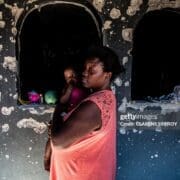
FLASHBACK – Vanessa, 28, poses for a portrait with her son as they return to their home, destroyed by armed gangs in 2024, in the Solino neighborhood of Port-au-Prince, Haiti, on March 3, 2026. Haiti’s presidential transitional council, which has run the impoverished Caribbean nation for nearly two years, on February 7, 2026, handed power to US-backed Prime Minister Alix Didier Fils-Aime, after failing to rein in rampant gang violence. Rubio said in February he was upbeat about progress in setting up a new UN-blessed force to suppress Haiti’s powerful gangs and voiced hope that the country will finally hold elections this year for the first time in a decade. (Photo by Clarens SIFFROY / AFP via Getty Images)

According to the report, Haitian security forces and private contractors working with them have conducted at least 141 drone strike operations between March 1, 2025, and January 21, 2026, killing 1,243 people and injuring 738 others. Among the dead are at least 43 adults who were reportedly not members of criminal groups and 17 children, highlighting the dangers of deploying explosive drones in densely populated urban areas.

“Dozens of ordinary people, including many children, have been killed and injured in these lethal drone operations,” said Juanita Goebertus, Americas director at Human Rights Watch. “Haitian authorities should urgently rein in the security forces and private contractors working for them before more children die.”

Human Rights Watch says the attacks have been carried out using quadcopter drones armed with explosives, capable of maneuvering between buildings while transmitting live video feeds to operators controlling the strikes remotely.

The United Nations Integrated Office in Haiti attributes the drone operations to a specialized “Task Force” created by Prime Minister Alix Didier Fils-Aimé, reportedly operating with support from Vectus Global, a private military company. The U.S. ambassador to Haiti has confirmed that the U.S. State Department issued a license allowing Vectus Global to export defense services to Haiti.

Neither the Haitian government, the Haitian National Police, nor Vectus Global responded to requests for comment from Human Rights Watch regarding the strikes.

The report notes that the number of drone attacks has surged in recent months, with 57 operations reported between November and January 21, nearly double the 29 reported from August through October. More than 40 percent of reported killings occurred between December 1 and January 21, suggesting a sharp escalation in the use of drone warfare-style tactics in the capital.

One of the deadliest incidents occurred on September 20, 2025, in the Simon Pelé neighborhood of Port-au-Prince, where a drone carrying an explosive detonated near the “Nan Pak” recreation complex during a gathering organized by a local criminal group.

Human Rights Watch found that 10 people who were not members of criminal groups — including nine children between the ages of 3 and 12 – were killed in the blast.

Witnesses described scenes of chaos as families rushed to help the wounded.

“I heard the sound of the explosion,” said a woman who lost both her husband and her three-year-old daughter in the strike. “My husband and daughter were together at the place where my husband makes his crafts.… There was panic, and I wanted to go and see what had happened.”

Another mother said her six-year-old daughter had been playing near the complex when the drone exploded.

“When I arrived near the vendor, I heard an explosion. It was chaos, people were mutilated, there were noises everywhere,” she said. “It was full of children. Many people were dead.”

Doctors who treated victims reported severe blast injuries, including traumatic amputations, complex fractures, and fragmentation wounds caused by the explosion.

Human Rights Watch researchers also reviewed videos circulating on social media showing drones striking vehicles, buildings, and individuals in Port-au-Prince neighborhoods including Martissant and Village de Dieu. In several cases, the footage did not appear to show targets engaged in violent acts at the time of the strike.

Residents say the drones have become a constant source of fear.

“I live with this fear, this anxiety, all the time,” said a shopkeeper living in Martissant, one of the neighborhoods affected by the strikes. “I pray that the drones will no longer be in our area.” The woman fled the explosion but returned to the scene a few minutes later, where she found her cousin dead. She said that she had been unable to recover the body because she would have had to pay criminal groups for the remains. 

She stated that she had not seen or heard any sign of a threat before the explosion. “I was on the phone with my cousin when the explosion happened, so I knew that her [truck] had been hit, but I don’t know why they hit that [truck],” she said.

While Haitian authorities have argued that the operations are necessary to combat heavily armed criminal groups controlling large parts of the capital, human rights advocates warn that explosive drones are difficult to use safely in crowded urban environments.

Human Rights Watch said the strikes may violate international human rights law, which requires that lethal force in law enforcement operations be used only when strictly unavoidable to protect life.

“Restoring security in Haiti is essential,” Goebertus said. “But unlawful attacks with armed drones are adding a new layer of abuses to the violence that has devastated communities for years.”

The organization is calling on Haitian authorities to halt the use of explosive drones in populated areas, investigate alleged unlawful killings, and ensure accountability for any violations of international law.

As Haiti struggles to contain gang violence and restore stability, the report raises a stark question: whether the country’s security strategy is turning parts of its capital into something resembling a drone battlefield – a development with profound implications for civilian safety and the future of law enforcement in the Caribbean.

Empowering Half The World: Why Women And Girls Must Lead The Future Of The Commonwealth

By Dr. Isaac Newton

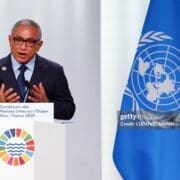
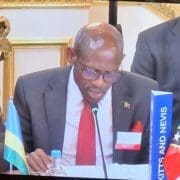
News Americas, NEW YORK, NY, Tues. Mar. 10, 2026: At the opening of the first interactive retreat session of the Commonwealth Foreign Affairs Ministers Meeting (CFAMM), Dr. Denzil L. Douglas, the Minister of Foreign Affairs, International Trade, Industry, Commerce and Consumer Affairs, Economic Development and Investment of Saint Kitts and Nevis, paid tribute, honor and recognition to the women and girls of the Federation and across the world. Addressing colleagues from across the Commonwealth of Nations, he reminded the gathering that the progress of nations is closely tied to how deliberately societies cultivate the potential of their women and girls. His remarks placed their contributions not at the margins of development but at the center of global progress.

At the opening of the first interactive retreat session of the Commonwealth Foreign Affairs Ministers Meeting (CFAMM), Dr. Denzil L. Douglas

Across the Caribbean and throughout the Commonwealth, women quietly sustain the reality of daily life. They guide families through uncertainty, shape the minds of future leaders in classrooms, build enterprises that energize local economies, and strengthen the social fabric of communities. In small island states such as Saint Kitts and Nevis, the steady influence of women is visible in every sector from education and healthcare to entrepreneurship and public service. Yet the pathways to leadership and opportunity remain narrower than they should be, leaving much of this talent underutilized.

It was within this context that Dr. Douglas offered a powerful reflection to the ministers gathered. “We must never sell our multilateral organisation short by failing to more greatly empower our women and girls of the Commonwealth.” His statement carried a simple but profound logic. When international institutions overlook the abilities, ideas, and leadership of women, they weaken the very cooperation they seek to strengthen. Multilateralism reaches its full purpose only when the voices shaping global decisions mirror the diversity of the people those decisions affect.

The Caribbean already offers compelling illustrations of what becomes possible when women are given room to lead. Women entrepreneurs are designing new economic possibilities in tourism, technology, and agriculture. Women educators are nurturing critical thinkers and innovators whose ideas will shape the next generation. Women in governance are bringing thoughtful perspectives to policy discussions that influence the direction of national development. Each advancement expands the horizon for young girls who are watching closely and learning what leadership can look like.

The message that emerges from the Commonwealth dialogue is not abstract. It is practical and immediate. Nations that invest in the education, confidence, and leadership opportunities of women and girls expand their own capacity to solve problems and imagine new futures. The recognition offered by Dr. Douglas at the CFAMM retreat signals a commitment that extends beyond words. When women and girls are equipped to participate fully in shaping their societies, the possibilities for the Commonwealth and for the world widen in ways that benefit everyone.

EDITOR’S NOTE: Dr. Isaac Newton is a globally experienced thought leader, Harvard, Princeton, and Columbia-trained strategist, and advocate for social justice and leadership excellence. With over thirty years of experience bridging cultural, economic, and ideological divides, he translates strategy into measurable results. His work spans governance, economic development, and public policy, consistently delivering initiatives that create employment, strengthen institutions, and advance sustainable growth across the Caribbean.

RELATED: Governing Trust: The ECCB, Public Confidence, And The High Cost Of Silence

Rihanna’s Fenty Beauty To Launch In Guyana

News Americas, NY, NY, Tues. Mar. 10, 2026: When Rihanna launched Fenty Beauty in 2017, she did more than introduce another celebrity cosmetics line – she reshaped the global beauty industry by putting diversity at the center of product design. Nearly a decade later, that same vision is now returning to the Caribbean in a deeply symbolic way.

FLASHBACK – Rihanna arriving at Selfridges for her Fenty Hair launch party on September 16, 2024 in London, England. (Photo by Neil Mockford/GC Images)

On March 28, 2026, Fenty Beauty and Fenty Skin will officially launch in another CARICOM country – this time Guyana, marking one of the most culturally meaningful expansions yet for Rihanna’s global beauty empire.

The brand will debut exclusively at Glamour Beauty in Movietowne Mall in Guyana, bringing the internationally celebrated cosmetics line to a country that holds personal significance for the billionaire entrepreneur.

Rihanna’s mother, Monica Braithwaite, is Guyanese, while her late father was Barbadian. The singer herself was born in Barbados – a blend of Caribbean identities that has shaped her global brand story.

“I am so excited to FINALLY bring Fenty Beauty, Skin and Fragrance brands to the Caribbean,” said Rihanna. “I know the community has been waiting a long time and we can’t wait for you to experience the brand and try the products in a place that’s near and dear to my heart.”

More Than A Beauty Launch

The arrival of Fenty Beauty in Guyana reflects a broader shift in how Caribbean heritage influences global industries. For decades, Caribbean consumers were primarily recipients of international brands rather than drivers of them. Rihanna changed that narrative.

With products designed for every skin tone and cultural background, Fenty Beauty quickly became one of the most disruptive forces in cosmetics history, forcing major brands worldwide to expand their shade ranges and rethink representation.

Now, bringing the brand deeper into the Caribbean represents a full-circle moment: a global product shaped by Caribbean identity returning to Caribbean consumers.

Among the products expected to debut in Guyana are Fenty’s signature items, including:

Pro Filt’r Soft Matte Longwear Foundation, known for its 50 inclusive shades
Gloss Bomb Universal Lip Luminizer, a high-shine cult favorite
Hydra Vizor Invisible Moisturizer SPF 30, designed to blend seamlessly across skin tones
Fenty Treatz Hydrating Lip Oils, infused with nourishing fruit oils

Caribbean Influence Meets Economic Growth

The timing of the expansion also intersects with Guyana’s rapidly growing economy, fueled by its emerging oil industry and expanding middle class.

As international brands increasingly recognize Guyana’s rising consumer market, Rihanna’s decision to launch there reinforces the country’s growing presence in the Caribbean retail landscape. For many Guyanese consumers, however, the moment is less about luxury cosmetics and more about cultural recognition.

Fenty Beauty’s philosophy – that beauty should reflect the diversity of the world – resonates strongly across Caribbean societies long overlooked by global beauty standards.

A Moment Of Pride For The Region

The launch also comes amid a tense moment for the singer after a Florida woman was arrested this week following gunfire outside Rihanna’s Los Angeles-area home. Authorities confirmed the singer was inside at the time but unharmed. Ivana Lisette Ortiz, of Florida, has now been booked for attempted murder. Bail has been set at more than $10 million. Ortiz’ criminal record from Florida shows several incidents of domestic violence dating back to 2023. The 35-year-old was arrested on Sunday, March 8, 2026, after shots rang out outside Rihanna’s Beverly Glen property.

Despite the unsettling incident, Rihanna’s brand expansion continues to move forward, reinforcing her role not only as a global pop icon but as one of the Caribbean diaspora’s most powerful entrepreneurs.

With Fenty Beauty now officially arriving in Guyana, the message is clear: Caribbean influence in global culture is no longer peripheral. It is leading.

Cuba Says It Regrets Jamaica’s Decision To End Medical Cooperation Amid U.S. Pressure

By NAN NEWS EDITOR

News Americas, NEW YORK, NY, Mon. Mar. 9, 2026: Cuba has expressed deep regret over Jamaica’s decision to terminate decades-long medical cooperation between the two Caribbean nations, saying the move reflects pressure from the United States rather than the health needs of the region.

FLASHBACK – In 2010, 140 members of the Henry Reeve International Contingent of Doctors Specialized in Disasters and Serious Epidemics left for Jamaica to join this country’s fight against SARS-CoV-2 virus.

In a statement issued March 6, Cuba’s Ministry of Foreign Affairs said Jamaica’s Foreign Ministry formally notified Cuban officials on March 4 of the unilateral decision to end the bilateral health cooperation agreement that has linked the two countries for decades.

“With this action, the government of Jamaica yields to the pressures of the government of the United States,” the Cuban statement said, adding that Washington “is not concerned about the health needs of the Caribbean brothers.”

The decision will lead to the withdrawal of Cuba’s medical brigade from Jamaica, which currently includes 277 healthcare professionals working across the island.

A Longstanding Caribbean Partnership

Cuba noted that over the past 30 years more than 4,700 Cuban medical collaborators have served in Jamaica, providing healthcare support in hospitals, clinics, and rural communities.

According to Cuban officials, the program has produced significant outcomes:

• More than 8.1 million patients treated
• 74,302 surgeries performed
• 7,170 births attended
• Over 90,000 lives saved

Through the Operation Miracle program, launched in Jamaica in 2010, Cuban doctors also helped restore or improve the vision of nearly 25,000 Jamaicans.

The Cuban government said its medical professionals have also supported disease prevention programs, malaria control, and COVID-19 response efforts across the island.

Regional Ripple Effects

Jamaica’s decision comes as several Caribbean and Latin American governments face mounting U.S. pressure to end or modify medical cooperation agreements with Cuba. In a statement, Jamaica said it has taken the decision after the two sides were unable to “agree on the terms and conditions of a new technical cooperation arrangement, following the expiration of the previous agreement in February 2023.”

Cuban medical professionals have been serving in various public health facilities across the island, and Jamaicans have benefited notably from the eye care programme as well as the general care by nurses and doctors. 

The Government of Jamaica has expressed its sincere appreciation to the Government of Cuba for its significant contribution to the health sector in Jamaica. 

In recent months, countries including Guyana, The Bahamas, Antigua and Barbuda, Honduras, and Guatemala have either ended or phased out similar arrangements.

U.S. officials have argued that Cuba’s medical missions exploit healthcare workers by taking a portion of their salaries and restricting their freedom of movement.

However, many Caribbean governments have long viewed the programs as essential to maintaining healthcare services in small island states where shortages of doctors and specialists are common.

Cuba’s Response

Cuba said its doctors will leave Jamaica “with the satisfaction of a duty fulfilled” but reaffirmed its commitment to solidarity with Caribbean nations.

“The Jamaican people will always be able to count on the selfless cooperation of Cuba,” the statement said.

The departure of the Cuban Medical Brigade could create new pressure on Jamaica’s healthcare system, particularly in rural areas where foreign medical support has historically filled staffing gaps.

For the wider Caribbean, the move highlights the growing geopolitical tension shaping health cooperation across the region. Jamaican American actress, Sheryl Lee Ralph joined the conversation surrounding the discontinuation of the Cuban Medical Brigade program by asking on social media: “Will America now send the doctors so badly needed in Jamaica?.”

RELATED: The Long Siege Of Cuba & Caribbean Geopolitics: The Prequel To King Kong And The Island