
The Long Siege Of Cuba & Caribbean Geopolitics: The Prequel To King Kong And The Island

By Ron Cheong

News Americas, TORONTO, Canada, Mon. Mar. 9, 2026: In a previous piece titled King Kong and The Island, it was argued that the long-running embargo and now naval “oil blockade” was cruel and unusual punishment against an island and its people. These actions have inflicted severe hardship and brought the nation to the brink of collapse, all in pursuit of self-determination.  Furthermore, the suffering has been inflicted by a superpower that is now demonstrating much less moral character than the people it directs its fury against, in the name of high-minded objectives. Whatever the flaws in the Cuban system, Cuba has demonstrated resilience, cohesion, and a people-centered ethic, which the US itself increasingly lacks.

People with portable lights during a blackout in Havana on March 4, 2026. (Photo by Adalberto ROQUE / AFP via Getty Images)

In addition to the above aggression, there has been a military strike on Venezuela without follow-through to support democracy there. There is also the war against Iran, which is driving up fuel prices, increasing inflationary strain, and disrupting tourism-dependent economies in the region.  And on top of that, a chaotic, whimsical regime of punitive tariffs against US friend and foe alike.

Let’s look back and place some context on what is currently amounting to the harshest ever punishment imposed on Cuba.

More than six decades after the United States imposed sweeping sanctions on Cuba, the policy has hardened into one of the longest-running economic sieges in modern history. What began as a Cold War strategy to counter Soviet influence has evolved into a dense web of financial restrictions, diplomatic pressure, and extraterritorial penalties that shape the economic life of a small Caribbean nation of eleven million people.

Today, as Cuba struggles through one of the most severe economic crises since the collapse of the Soviet Union, the question confronting Washington and the wider world is increasingly stark: has the embargo and current naval blockade become a show of strength whose humanitarian consequences now outweigh any possible strategic purpose?  Is the suffering of the people something to gloat over?

Cold War Origins

The origins of conflict traces back to the Cuban Revolution, when Fidel Castro overthrew the U.S. backed government of Fulgencio Batista, an authoritarian dictatorship, and nationalized major industries, including American-owned businesses.

Washington responded with escalating sanctions, culminating in the full trade embargo imposed by John F. Kennedy in 1962. At the height of the Cold War, the justification seemed straightforward: Cuba had aligned with the Soviet Union and hosted nuclear missiles during the Cuban Missile Crisis, bringing the world to the brink of nuclear war.

But the Soviet Union disappeared more than thirty years ago. The embargo did not.

Instead, it became institutionalized through laws, making it extremely difficult to lift sanctions without congressional approval.

A Sanctions System With Global Reach

The modern embargo extends far beyond a simple prohibition on U.S.-Cuba trade. Because the United States dominates global finance, sanctions often carry extraterritorial consequences.

Foreign banks risk penalties if they process transactions with Cuba. Shipping companies can face restrictions if they dock at Cuban ports and later attempt to enter the United States. Businesses trading with Cuba may lose access to American markets.

For a small island economy dependent on imports for food, fuel, and industrial inputs, these restrictions have profound effects.

Shortages of fuel, spare parts, and medical equipment have become chronic. Electrical grids struggle to obtain replacement components. Hospitals report difficulty acquiring certain medicines or specialized devices. The result is a fragile economic system increasingly strained by shortages and infrastructure failures.

Today, with the “targeted” naval oil blockade, blackouts across the island have underscored the severity of the crisis – inability to store perishable food, disabling sensitive equipment and emergency hospital care, and decimated its absolutely critical tourism lifeblood.  Sanctions have also magnified structural weaknesses by limiting access to credit, technology, and global markets.

Cuba On The Brink

Cuba now faces its most serious economic emergency since the early 1990s when the collapse of Soviet aid plunged the island into deep recession.

Inflation has surged. Migration has reached historic levels, with hundreds of thousands of Cubans leaving the island. Food shortages, power outages, and crumbling infrastructure have become daily realities.

The Cuban government attributes much of the crisis to the tightening of U.S. sanctions in recent years, particularly measures that target shipping, remittances, and access to international banking systems.

Adversaries of Havana say that the government’s own centralized economic system bears responsibility for many inefficiencies. Whatever the case, it has to be acknowledged sanctions restrict the country’s capacity to recover.

The Caribbean: A Region Caught In The Middle

The consequences of U.S.-Cuba tensions extend beyond the island itself. Across the Caribbean, governments navigate a delicate geopolitical balance between security and economic dependence on the United States and practical cooperation with Cuba.

CARICOM has historically long defended engagement with Cuba, viewing the island as an important partner in regional development.

Countries like Jamaica, Barbados, and Guyana maintained longstanding medical and educational cooperation agreements with Havana. Cuban doctors and nurses work in hospitals across the Caribbean, often filling gaps created by shortages of medical professionals.

For many small island states, these programs are not ideological statements but practical necessities. Recruiting doctors to remote or under-resourced regions is difficult, and Cuban medical missions have often provided critical support during crises – from hurricane recovery to public health emergencies.

Yet Washington has increasingly criticized these programs. Officials, including Marco Rubio, argue that the Cuban government exploits medical workers by taking a significant portion of their salaries and restricting their freedom of movement.

And the United States has imposed visa restrictions and other pressures to discourage Caribbean governments from participating in these missions.

For small states navigating economic vulnerability and climate risks, the situation presents a difficult choice: comply with the demands of the region’s largest power or risk losing access to essential healthcare personnel.  The immense pressure from the US has had consequences.  Jamaica is ending its medical cooperation with Cuba.  And Guyana is now hiring Cuban Doctors and Nurses directly.  In addition, the Guyana government, which depended on the Cuban medical program for decades and had deep fraternal and ideological kinship with Cuba in the past, has said the Cuban “Status quo cannot remain unchanged.”

The Venezuela Factor

The geopolitical web surrounding Cuba also includes Venezuela. For years, the government of Hugo Chávez – and later Nicolás Maduro – supplied Cuba with subsidized oil in exchange for Cuban doctors, teachers, and technical advisers.

When Washington imposed severe sanctions on Venezuela’s energy sector, the ripple effects reached Havana. With little oil reaching the country, blackouts now sweep across the island.

The sanctions regimes that targeted Venezuela and Cuba reinforced one another, tightening economic pressure across parts of the Caribbean basin.

The Paradox Of Russian Influence

The historical irony of the embargo is difficult to ignore.

The original policy originated from fears that Cuba had become a Soviet outpost in the Western Hemisphere. Yet in today’s political climate, some of the same voices advocating the toughest measures against Havana express far more conciliatory attitudes toward Vladimir Putin.

This contradiction raises uncomfortable questions about whether the embargo remains rooted in coherent strategic logic – or whether it has simply become a permanent fixture of domestic politics that has now taken on an even more erratic and punitive nature.

A Policy At A Crossroads

After more than sixty years, the embargo has, at least so far, failed to achieve its central objective: the transformation or collapse of Cuba’s political system, although Cuba may now be nearing exhaustion.

What it has definitely done is prolong an economic standoff that shapes the lives of millions of people and influences the geopolitical dynamics of the Caribbean.

Supporters argue that sanctions remain a legitimate tool for pressuring an authoritarian government. Others counter that the policy punishes ordinary citizens while entrenching political divisions.

As Cuba faces mounting economic strain and the Caribbean navigates competing pressures from larger powers, the question confronting Washington is increasingly unavoidable.

Is the embargo still a strategy – or has it become a tyrannical whim using a long-gone Cold War as a front, and whose human costs now exceed any political or strategic gains?

For Cuba and its Caribbean neighbors, an equitable and humanitarian resolution of this situation may determine whether the region moves toward greater cooperation or has the current incarnation of a conflict that began more than half a century ago hang over their heads as a collective shadow of a regrettable episode in Caribbean history.

EDITOR’S NOTE: Ron Cheong is a frequent political commentator and columnist whose recent work focuses on international relations, economic resilience, and Caribbean-American affairs. He is a community activist and dedicated volunteer with extensive international banking experience. Now residing in Toronto, Canada, he is a fellow of the Institute of Canadian Bankers and holds a Bachelor of Science degree from the University of Toronto.

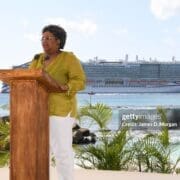
RELATED: Clarion Across The Atlantic: Barbados Mia Mottley’s Third Mandate And The Rise Of Caribbean Moral Leadership

The Caribbean Region – Geography Or Will

By Dr. Isaac Newton

News Americas, NEW YORK, NY, Mon. Mar. 9, 2026: A Caribbean region may speak confidently about peace. The deeper question is whether it has decided what it is willing to protect and what it is prepared to lose.

This quiet dilemma now moves across the Caribbean.

When regional leaders gathered recently in Basseterre, Jamaica’s Prime Minister Andrew Holness offered a reminder about the Caribbean that is both obvious and often overlooked. Diversity in the region is a form of strategic intelligence. Different languages, colonial histories, and cultural traditions allow Caribbean societies to read global power from several perspectives at once.

Yet perspective does not automatically produce direction.

The environment surrounding small states is changing quickly. Assumptions that once appeared settled now feel provisional. The hemispheric outlook shaped by the Monroe Doctrine still influences how the United States interprets developments in the region. At the same time, China’s commercial and diplomatic presence continues to deepen throughout Caribbean economies.

These realities lead to a question that the region can no longer postpone.

Will Caribbean interests be defined within the region or largely outside of it?

For many years the Caribbean cultivated a political culture that valued restraint. Governments preferred dialogue to confrontation. Borders were not militarized against neighbors. Disputes were managed through diplomacy. These choices underscored intentional values practiced by small societies that understood the destructive potential of rivalry.

However, principles endure only when institutions sustain them.

Sovereignty rarely disappears through a single dramatic decision. It more often fades through a pattern in which choices affecting a region are shaped elsewhere while local governments gradually adjust to decisions they did not help design.

The consequences of this pattern reach into ordinary life. When a country depends heavily on imported food, a diplomatic disagreement can quietly affect what appears on supermarket shelves. When highly trained professionals build their careers abroad, the hospitals, laboratories, and engineering firms that remain at home operate with fewer hands and fewer ideas. Geopolitics eventually finds its way into the routines of daily survival.

This is why the strategic choices now facing the Caribbean are practical and ethical.

How should governments cooperate with partners to address security threats such as narcotics trafficking while preserving the freedom to determine domestic priorities? How can states welcome foreign investment while retaining cultural values and authority over long term development decisions? At what point does cooperation begin to narrow independence?

Three broad responses are visible.

Some governments adapt individually to the expectations of larger powers. Others emphasize national autonomy while acting largely alone. A third possibility requires more discipline. It asks Caribbean states to coordinate policy where shared leverage strengthens them.

Evidence that such cooperation is possible already exists.

When hurricanes strike countries such as Dominica or Grenada, emergency aircraft, engineers, and medical personnel from neighboring states often arrive before assistance from distant capitals. When storms threaten Jamaica, regional disaster systems mobilize meteorologists and logistics specialists whose expertise reflects decades of confronting the same weather patterns.

A similar pattern appears in the long partnership between Caribbean states and Cuba. Cuban physicians support clinics that might otherwise struggle to remain open. Trainers have helped develop Caribbean athletes who later compete successfully on the global stage. Engineers and technical specialists have assisted governments working to expand infrastructure and technical capacity.

These examples show that regional cooperation is not an aspiration. It is already part of the region’s experience.

What remains incomplete is the economic foundation capable of sustaining similar collaboration.

The Caribbean imports most of the food consumed by its population. A significant share of its scientific and professional talent builds careers abroad. Universities often conduct research without strong links to regional industries capable of translating knowledge into production.

These patterns limit strategic freedom.

A region dependent on external food supply cannot easily insulate itself from geopolitical pressure. A region that consistently exports its expertise weakens its own capacity to design complex solutions.

Future cooperation therefore requires attention to systems rather than declarations.

Agricultural production in Guyana, Suriname, and Belize could anchor supply networks that provide island populations with more reliable access to food. Caribbean universities could collaborate in applied research focused on energy resilience, climate adaptation, and regional manufacturing. Health partnerships could expand so that specialized treatment becomes more accessible within the region itself.

Diplomacy must also grow more deliberate. Caribbean governments will continue to engage major powers in trade, security, and investment. The challenge lies in approaching those relationships with clearly defined priorities that are understood throughout the region.

Small states preserve autonomy not by withdrawing from the world but by recognizing precisely where cooperation strengthens them and where it quietly limits their choices.

The Caribbean Sea connects societies that share storms, migration histories, music, and economic vulnerability. Geography created this proximity. Geography explains why the region exists.

Geography alone does not explain whether it will matter.

The future of the Caribbean depends on a different force. It depends on whether neighboring states develop the institutional discipline to think together when their long term interests are at stake.

Geography determined where the Caribbean sits in the world.

Only collective will can determine how it stands within it.

Editor’s Note: Dr. Isaac Newton is a strategist and leadership advisor focused on governance, institutional development, and small state strategy. Educated at Harvard, Princeton, and Columbia, he has spent more than three decades working across government, finance, academia, and civil society in the Caribbean and internationally. His work examines leadership, policy design, and regional cooperation in an era of shifting global power.

RELATED: Antigua’s Sir ‘Red’ Robin: Fifty Years of Leadership, Vision And Unmistakable Trust

Wyndham Grand Barbados Highlights How Caribbean Travelers Can Earn Free Stays Through Wyndham Rewards

News Americas, SAINT PHILIP, Barbados, March 06, 2026: As loyalty programs increasingly influence how travelers choose where to stay, Wyndham Grand Barbados Sam Lord’s Castle Resort & Spa is encouraging Caribbean travellers to take advantage of a benefit many may not realize is available to them; earning free hotel stays around the world through Wyndham Rewards, one of the largest hotel loyalty programmes globally.

The program allows guests to earn points for qualifying stays and redeem them at more than 9,000 Wyndham hotels across over 95 countries, meaning a getaway in Barbados can also help travelers build rewards for future trips to destinations across North America, Europe, the Caribbean, and beyond.

For many travelers in the region, however, the ability to earn global rewards from regional travel remains relatively underutilized. The resort is therefore encouraging Barbadians and visitors from across the Caribbean to sign up for Wyndham Rewards and begin building points through their stays.

To help travellers get started, the resort is offering double Wyndham Rewards points on eligible CARICOM and local bookings made through the end of April, allowing guests to accelerate their points while enjoying a luxury all-inclusive experience in Barbados.

General Manager Leroy Browne says the initiative is designed to raise awareness among Caribbean travellers who may not yet realize they can earn global travel rewards through regional stays.

“Many travelers in the Caribbean don’t realize that when they stay with us, they can earn points that can be redeemed at thousands of hotels around the world,” Browne said. “Wyndham Rewards allows our regional guests to enjoy a luxury all-inclusive experience here in Barbados while building points they can use for future travel. The double-points offer simply helps them reach those rewards faster.”

Situated on approximately 29 acres of oceanfront property along Barbados’ southeastern coast, Wyndham Grand Barbados Sam Lord’s Castle Resort & Spa blends the heritage of the historic Sam Lord’s site with a modern all-inclusive resort experience.

The 422-room resort features sweeping Atlantic views, six swimming pools, multiple dining venues, curated entertainment experiences and the island’s only ESPA-branded spa, offering both leisure and regional travellers a luxury escape within easy reach of major Caribbean gateways.

Year-round local and regional offers also make the property accessible to Barbadians and Caribbean nationals seeking a premium staycation experience while participating in Wyndham’s global loyalty ecosystem.

For travelers across the Caribbean, the message is simple, a Barbados getaway today can help unlock free hotel stays around the world tomorrow.

Website: https://www.wyndhamgrandbarbados.com/

The Healing Rhythm: How Reggae Transcends Struggle And Tells Jamaica’s Story

By Nyan Reynolds

News Americas, NEW YORK, NY, Fri. Mar. 6, 2026: Reggae music has always been more than entertainment. It has been memory, resistance, healing, and identity woven into rhythm. From the early days of Jamaican sound systems to the global revival movement of today, reggae has served as both a mirror and a refuge for the people who created it. It tells the story of struggle, faith, and cultural pride while offering something equally important: a moment of relief from the weight of daily life.

FLASHBACK: Chronixx performs onstage during All Points East on August 15, 2025 in London, England. (Photo by Joseph Okpako/WireImage)

To understand reggae is to understand transcendence. The genre has always carried the emotional weight of the past while guiding listeners toward a more hopeful future. Each generation of artists has inherited the sounds and the responsibility of those who came before them. Through rhythm, lyrics, and spiritual reflection, reggae has continuously translated the lived experience of the Caribbean into music that resonates worldwide.

The roots of this journey can be traced back to the pioneers of Jamaican music, including Prince Buster and the early architects of ska and rocksteady. These musicians built the foundation for what would eventually become reggae. Their music emerged during a time when Jamaica was navigating independence, cultural identity, and social change. The energetic horns of ska and the evolving rhythms of rocksteady reflected the pulse of a nation finding its voice.

In those early years, music was deeply tied to community life. Sound systems were not simply entertainment platforms. They were social spaces where people gathered to listen, dance, debate, and escape the pressures of everyday existence. The large speakers, often stacked high in open yards or on street corners, carried music across neighborhoods. When the bass began to vibrate through the air, the atmosphere changed. For a few hours, the hardships of life could be set aside.

Reggae eventually emerged from this environment, carrying with it a deeper spiritual and political consciousness. Few artists embodied that transformation more powerfully than Bob Marley, Jimmy Cliff, and Peter Tosh. Through their music, reggae became a global voice for justice, unity, and liberation.

Marley’s songs carried messages of redemption and spiritual awakening. Cliff told the stories of resilience and perseverance in the face of hardship. Tosh spoke boldly about equality, human rights, and resistance against oppression. Together, their voices elevated reggae beyond national borders, turning it into one of the most recognizable and influential musical movements in the world.

But reggae’s strength has always come from its collective voices. Artists like Marcia Griffiths, Phyllis Dillon, and Bob Andy added emotional depth and cultural richness to the genre. Their music reminded listeners that reggae was not only a vehicle for protest but also a space for love, reflection, and storytelling.

By the 1990s, reggae found renewed spiritual direction through artists such as Garnett Silk and Sizzla. Garnett Silk’s voice remains one of the most cherished in reggae history. His tone was soft yet powerful, carrying a spiritual resonance that seemed to transcend the music itself.

Silk did something particularly unique in his songs. He wove biblical language into the realities of everyday struggle. His music often sounded like a prayer set to rhythm. When he sang lyrics like “Bless me, bless me, Mighty Judge,” listeners did not hear merely a song. They heard a spiritual plea, a reflection of faith amid hardship.

His ability to blend scripture, culture, and social consciousness created a deep emotional connection with audiences. Through his music, Silk reminded listeners that reggae was not just about confronting injustice but also about maintaining hope and spiritual grounding.

Artists like Sizzla continued that tradition by emphasizing cultural pride, moral responsibility, and spiritual awareness. Their music spoke directly to communities navigating social and economic challenges while encouraging listeners to remain rooted in faith and identity.

Today, that lineage continues through the work of artists like Chronixx and members of the Marley family, including Damian Marley. Chronixx, in particular, has emerged as one of the leading voices of the modern reggae revival.

When listening to Chronixx, one cannot help but notice how his music carries echoes of the past. His vocal style, rhythmic phrasing, and lyrical themes reflect the influence of the legends who came before him. Yet his sound also feels contemporary, speaking directly to the challenges and aspirations of a new generation.

Chronixx’s music often reflects themes of healing, cultural awareness, and social reflection. In many ways, his songs feel like a continuation of the spiritual conversations that artists like Garnett Silk began decades earlier. When he chants and serenades through his melodies, listeners can hear the lineage of reggae’s past resonating through the present.

This intergenerational continuity is one of reggae’s greatest strengths. Music evolves, but its core purpose remains the same: to tell the people’s stories.

Reggae has always been a cultural archive. It documents the struggles of communities, the aspirations of youth, the lessons of elders, and the resilience of a society that has faced profound historical challenges. Through rhythm and poetry, reggae captures experiences that might otherwise be forgotten.

But perhaps its most remarkable power lies in its ability to transport listeners beyond their circumstances.

Anyone who grew up in the Caribbean understands the magic of a sound system gathering. When the large speakers were strung up and the music began to play, the entire community seemed to transform. The bass rolled through the streets, people gathered in yards, and the music created a shared atmosphere of celebration.

For a moment, the struggles of daily life faded into the background.

People danced.
They laughed.
They sang along to the lyrics.

In those moments, the pressures of unemployment, economic hardship, and political tension seemed distant. The music created a temporary refuge where people could reconnect with joy and community.

By morning, reality returned. The same social challenges remained. But the memory of those moments carried people forward.

This is one of reggae’s quiet miracles. Music does not eliminate suffering, nor does it erase injustice. What it does is provide psychological and emotional relief. It gives listeners the space to breathe, reflect, and regain the strength needed to face another day.

That power explains why reggae resonates far beyond Jamaica’s shores. Across Africa, Europe, the Americas, and Asia, people have embraced reggae’s rhythms and messages. The music speaks to universal themes of dignity, freedom, and resilience.

For the Caribbean diaspora, reggae carries additional significance. It preserves cultural memory. It connects younger generations to the experiences, struggles, and spiritual perspectives of those who came before them.

Artists like Chronixx carry on that responsibility. Through their music, they are shaping a new generation of cultural storytellers and, in many ways, modern freedom fighters. Their tools are not weapons but words, melodies, and rhythms that challenge listeners to think critically about society while maintaining faith in the possibility of change.

This role has always been central to reggae. From its earliest days, the genre has served as both commentary and comfort. It has exposed social injustice while offering listeners a sense of unity and hope.

Reggae reminds people of who they are.
It reminds them of where they come from.
And it reminds them that their stories matter.

From the foundational rhythms of Prince Buster to the global influence of Bob Marley, from the spiritual voice of Garnett Silk to the modern revival led by Chronixx, reggae’s journey is one of cultural endurance.

It is a music born from struggle but sustained by faith.

And as long as artists continue to raise their voices through rhythm and melody, reggae will remain what it has always been: a powerful reminder that even in the face of hardship, the human spirit can still rise, sing, and dance its way toward healing.

EDITOR’S NOTE: Nyan Reynolds is a U.S. Army veteran and published author whose novels and cultural works draw from his Jamaican heritage, military service, and life experiences. His writing blends storytelling, resilience, and heritage to inspire readers.  

RELATED: Women’s History Month – Caribbean Women Who Shaped The Modern World

Only Three Caribbean Leaders Invited To Donald Trump ‘Shield Of The Americas’ Summit

News Americas, NEW YORK, NY, Fri. Mar. 6, 2026: Just three Caribbean leaders are set to participate in a high-level regional security summit hosted by U.S. President Donald Trump this weekend, highlighting the region’s growing role in hemispheric discussions on migration, security, and organized crime and reinforcing the Monroe Doctrine.

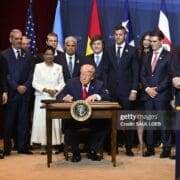
Lionel Messi, a soccer player for Inter Miami CF, from left, US President Donald Trump, and Jorge Mas, owner of Inter Miami CF, during an event with Inter Miami CF in the East Room of the White House in Washington, DC, US, on Thursday, March 5, 2026. Inter Miami CF is visiting the White House to celebrate their 2025 championship win. Photographer: Yuri Gripas/Abaca/Bloomberg via Getty Images

Guyana’s President Dr. Mohamed Irfaan Ali; Trinidad and Tobago’s Prime Minister Kamla Persad-Bissessar and the Dominican Republic’s  Luis Abinader are the only Caribbean heads of government invited to the inaugural “Shield of the Americas” Summit, scheduled for tomorrow, Saturday, March 7th in Doral City, Florida.

The gathering will bring together leaders from 12 countries across Latin America and the Caribbean to discuss coordinated responses on tightening security, curbing mass migration, and dismantling drug cartels across the Western Hemisphere, signaling a shift toward a more focused alliance-based approach to regional security

According to the White House, the summit is designed to strengthen regional cooperation among governments confronting similar security challenges. White House Press Secretary Karoline Leavitt said the meeting will focus on building stronger partnerships to address issues affecting countries across the Americas. Ousted US DHS Secretary, Kristi Noem, has been named Special Envoy for The Shield of the Americas summit. But it is unclear if Noem will be present at the summit.

In addition to Guyana, the DR and Trinidad and Tobago, leaders from Argentina, Bolivia, Chile, Costa Rica, Ecuador, El Salvador, Honduras, Panama and Paraguay are expected to attend the summit.

Ali and Persad-Bissessar are the only two CARICOM leaders invited as the US administration steps up its focus on organized crime, drug trafficking routes, and migration dynamics.

Guyana, one of the fastest-growing economies in the hemisphere due to its rapidly expanding oil sector, has also gained strategic importance in regional geopolitics and energy security. President Ali’s participation reflects the country’s expanding diplomatic profile as it engages more actively in hemispheric dialogue.

Meanwhile, Trinidad and Tobago continues to play a key role in Caribbean security cooperation and regional diplomacy. Prime Minister Persad-Bissessar’s presence at the summit signals the country’s continued involvement in discussions on regional stability and law enforcement collaboration.

The summit comes amid heightened concern across the Americas over the influence of transnational criminal organizations and the need for coordinated strategies to combat drug trafficking and organized crime networks that operate across borders.

U.S. officials say the “Shield of the Americas” Summit aims to strengthen intelligence sharing, security cooperation and policy coordination among participating governments as they confront these evolving threats. Leavitt added at the briefing the meeting aims to “promote freedom, security, and prosperity in our region.”

“President will be speaking with the leaders of this country who have really formed a historic coalition to work together to address criminal, narcoterrorist gangs and cartels and counter illegal and mass migration into not only the United States, but the Western Hemisphere, which remains a key and top priority of this President,” Leavitt said.

For the Caribbean, the participation of three of its leaders places the region within a broader hemispheric conversation on security, migration and economic stability – issues that increasingly connect Caribbean nations with developments across Latin America and the United States.

RELATED: IDB Growth Forecast: How Each Caribbean Economy Is Expected To Perform in 2026

How Strong Compliance Laws Protect Investors And Local Communities

News Americas, NEW YORK, NY, Thurs. Mar. 5, 2026: Strong compliance laws are the glue to building trust in business, whether in the Caribbean, Latin America or globally. They don’t only protect investors; they also shield local communities from corruption, fraud, and reckless corporate conduct. In simple terms, compliance laws ensure that everyone plays by the same rules.

When a company plays by the rules and acts responsibly, everybody wins. Investors are confident, employees feel safe, and communities thrive. Michael Hershman is one of the names that pops up when transparency and governance are discussed. His contributions remind us, yet again, why doing the right thing in business always pays off.

Why Compliance Laws Matter

Compliance laws are rules about how companies should behave. They help ensure that businesses do not take shortcuts or conceal the truth from the public. One can only hope that we never have a world without these laws, as that would cause chaos.

Here’s what these laws accomplish for us:

Protect investors: Compliant businesses maintain honest financial records. Investors can use actual data, rather than false claims, to make decisions.

Protect employees and communities: Vendors who follow compliance laws must care for people, pay fair wages, ensure safe work conditions, and avoid illegal shortcuts.

Prevent corruption: Rules about transparency and anti-bribery help stop powerful people from using money for unfair advantage.

Encourage long-term growth: Ethical companies stay stable. They attract more customers and investors who trust their reputation.

It’s simple: when companies do the right thing, their success lasts longer.

Transparency Builds Investor Confidence

Transparency is one of the strongest pillars of compliance. It’s the open sharing of information so that everyone knows what’s really happening behind closed doors. A transparent company doesn’t merely demonstrate the profits it made, but how it made them.

Investors love that. People tend to invest when reports are accurate and honest. They know that their money isn’t going toward shady deals. This kind of openness also keeps the marketplace fair; it helps prevent sudden crashes or unknown debts that harm people and economies.

Protecting Local Communities

Now let’s talk about the ones closest to local business communities. These are the neighbourhoods and towns where companies operate. Compliance laws act as guardrails to ensure business growth doesn’t harm people living nearby.

For example, environmental compliance laws stop factories from dumping waste into rivers or polluting the air. Labour compliance laws make sure workers are not overworked or unpaid. These laws create balanced profit for the business and safety for the people.

And when companies respect these rules, communities often give back with loyalty and long-term support.

Ethical Business And Corporate Governance

The heart of compliance is ethical business practice. It’s not just about avoiding punishment; it’s about doing what’s morally right. Strong corporate governance systems support this by ensuring that leaders are accountable for their decisions.

In a well-run company, there are checks and balances. It responds to employees, addresses grievances, and speaks honestly to regulators. When leaders know they will be called to account, they hesitate before taking shortcuts. That’s how the roots of corruption are cut off. For years, experts like Michael Hershman have emphasized the necessity of integrity in leadership.

How Companies Can Stay Compliant

Compliance is not just paperwork; it protects your company, your people, and your reputation. When you take it seriously, you avoid trouble and build trust at the same time.

It starts with regular audits; it is a routine checkup. You review your records, systems, and processes to catch small mistakes early. When you fix problems fast, they don’t grow into costly crises. Audits keep you prepared and confident.

Training is just as important. Your team needs to understand company policies and legal rules. When you explain expectations clearly and use real examples, people make better decisions. Over time, good habits form. Everyone moves in the same direction.

You also need safe channels for employees to reveal what’s going on. Strong legal protection for whistleblowers means you may not know sensitive business secrets, but they are crucial because people who have them report problems without prejudice. If employees trust the system, they will blow the whistle early. This avoids loss and preserves good habits and integrity.

Shaping Tomorrow With Ethical Values

Integrity grows from the leadership. When leaders are full of integrity, others will follow suit. Compliance is not an extra burden; it becomes part of regular work. Employees feel good about being part of an organization that emphasizes doing things right.

People like Michael Hershman, who advocate an ethical management spirit, tell us that abstention is also a moral act. However, there is an artistic interest. You invest most effectively in your future by spending it on integrity. Integrity gives your company safety, confidence, and a solid foundation for continued success.

New Caribbean Music: Shaggy Teams With Beres Hammond & Dexta Daps As Fresh Reggae Releases Drop

By NAN Entertainment Editor

News Americas, NEW YORK, NY, Fri. Mar. 6, 2026: Caribbean music fans have a fresh wave of releases to explore as several reggae and dancehall artists roll out new singles, collaborations and videos, keeping the region’s global soundtrack vibrant.

Among the standout releases is “Dancehall Nice,” the latest track from Jamaican Grammy-winning artist Shaggy, featuring reggae legend Beres Hammond and dancehall star Dexta Daps.

Shaggy shares “Dancehall Nice,” featuring Beres Hammond and Dexta Daps, alongside an official music video directed by Jay Will. Co-produced by Shaggy and Lloyd “John John” James Jr., the track marks the first-ever collaboration between all three artists, with the song serving as a tribute to Jamaican music culture.

The track marks the first-ever collaboration between the three Jamaican artists and serves as a tribute to Jamaica’s dancehall culture. The single was co-produced by Shaggy and Lloyd “John John” James Jr., while the official music video was directed by noted Caribbean director Jay Will.

The release comes as Reggae Month celebrations concluded in Jamaica and alongside the Island Music Conference, held in Kingston from February 25–28. The conference brought together artists, producers and music executives to discuss the global business of Jamaican music.

“Dancehall Nice” continues Shaggy’s recent series of collaborative projects following “Til A Mawnin” with Sting and “Boom Body,” featuring Akon and Aidonia.

LISTEN HERE

Vybz Kartel and Shenseea Drop “Panic”

Meanwhile, dancehall heavyweights Vybz Kartel and Shenseea have teamed up on the energetic new track “Panic,” produced by TJ Records.

The collaboration brings together two of the genre’s most influential voices, adding another high-profile release to dancehall’s current momentum.

LISTEN HERE

Lovers Rock Revival With Shauna Shadae, Nigy Boy and Seani B

In the reggae space, Shauna Shadae, Nigy Boy and Grammy-winning producer Seani B have joined forces for “When I Think,” a sultry lovers-rock track blending classic reggae elements with R&B influences.

The trans-Atlantic collaboration highlights Jamaican-born, UK-based singer Shauna Shadae’s fusion style, combining reggae, R&B and Afro-inspired sounds.

Nigy Boy, one of reggae and dancehall’s rising stars, brings a unique story to the project. The artist, who lost his sight at a young age, developed his musical talents while attending The Salvation Army School for the Blind before later studying political science at Stony Brook University in the United States.

The track offers a modern take on traditional lovers rock, arriving at a time when many reggae artists are revisiting the genre’s roots while blending contemporary production styles.

Check it out Here

Anthony Cruz Returns With Reflective Single

Veteran reggae vocalist Anthony Cruz has also returned with a new single, “What’s a Man to Do,” delivering a soulful reinterpretation of a classic song exploring emotional vulnerability and the pressures men face.

The single was produced by Mark Ho-Sang for Bwoyla Room Productions, with the riddim crafted by KashieF Lindo and final mixing and mastering handled by the HeavyBeat Crew.

Cruz’s latest release blends a traditional reggae sound with contemporary production, aiming to appeal to reggae, R&B and adult contemporary audiences. Stream now

Gyptian Releases “Anything 4 U”

Adding to the lineup of new music is Gyptian, who recently unveiled “Anything 4 U,” a melodic, piano-driven love song produced by platinum producer Ricky Blaze.

Known for hits like “Hold Yuh,” Gyptian delivers another heartfelt track, serenading a woman he promises to give everything for. The single, released via FME Recordings, is now streaming across digital platforms worldwide. Stream Now

Reggae and Dancehall Continue Global Influence

The latest releases underscore the continued influence of Caribbean music globally, with artists across generations collaborating and blending traditional reggae sounds with contemporary production and international partnerships.

From dancehall anthems to lovers-rock revival and soulful reggae ballads, the region’s newest tracks highlight the diversity and enduring creativity of Caribbean music.

YOU MAY ALSO LIKE: Caribbean Roots Shine As Delroy Lindo Earns First Oscar Nomination For Sinners

IDB Growth Forecast: How Each Caribbean Economy Is Expected To Perform in 2026

By NAN Staff Writer

News Americas, NEW YORK, NY, Wed. Mar. 4, 2026: Caribbean economies are expected to continue expanding in 2026, although growth across the region will remain uneven, according to the latest Latin American and Caribbean Macroeconomic Report from the Inter-American Development Bank (IDB).

The report says overall economic growth in Latin America and the Caribbean is projected at about 2.1% in 2026, reflecting modest expansion amid global economic uncertainty, high debt levels, and persistent structural challenges. The analysis underscores the resilience of the region’s economies and finds that accelerating inclusive growth will demand sound macroeconomic frameworks and bold structural reforms, alongside efforts to harness opportunities in technology and commodities, amid growing global risks. The projection reflects a gradual slowdown compared to the region’s 2.2% growth in 2025.

Within the Caribbean, however, growth trajectories vary widely depending on energy production, tourism recovery and infrastructure investment.

Oil-producing Guyana remains the region’s fastest-growing economy by a wide margin, while most tourism-driven island economies are expected to expand at moderate rates between two and four percent.

Caribbean GDP Growth Forecasts For 2026

Based on the IDB macroeconomic outlook and regional projections, the expected growth outlook for Caribbean economies includes:

Energy-Driven Economies

Guyana: 10–12% growth, driven by continued offshore oil production expansion.

Trinidad and Tobago: 2–2.5%, supported by energy exports and industrial production.

Suriname: 2–3%, with expected recovery tied to mining and energy investments.

Tourism-Dependent Economies

Dominican Republic: 4–5% growth, supported by tourism and construction.

Bahamas: 1.8–2% expansion as tourism stabilizes.

Barbados: about 3% growth, driven by tourism and services.

Jamaica: about 2–2.1%, reflecting moderate tourism recovery and fiscal discipline.

Belize: around 2–2.5%.

Eastern Caribbean Economies

Grenada: 3–4%.

Saint Lucia: 3–4%.

Saint Vincent and the Grenadines: about 4%.

Antigua and Barbuda: 3–4%.

Dominica: about 3–4%, supported by reconstruction projects.

Saint Kitts and Nevis: roughly 2–3%.

Fragile Economy

Haiti: growth remains negative or near zero due to ongoing political instability and economic disruption.

Tourism and Energy Driving Growth

The IDB report notes that tourism recovery and energy production are the two biggest drivers of Caribbean growth.

Tourism-dependent economies across the region continue to benefit from strong visitor demand from the United States and Europe, while energy exporters such as Guyana and Trinidad and Tobago are benefiting from global energy markets.

At the same time, the bank warns that most Caribbean economies still face structural constraints, including small domestic markets, vulnerability to climate shocks, high debt levels and dependence on a limited number of industries.

Growth Remains Modest for Most Islands

Despite pockets of strong performance, the IDB cautions that long-term growth potential in many Caribbean economies remains around 1–2%, highlighting the need for greater productivity, investment and economic diversification.

The report recommends strengthening institutions, expanding regional integration and improving fiscal management to support sustainable growth.

For the Caribbean, the challenge is clear: maintaining economic resilience while building more diversified and competitive economies capable of sustaining growth beyond tourism and commodities.

The report concludes that policies promoting stronger competition, improved skills formation, deeper regional integration, and the development of more sophisticated regional value chains can significantly boost productivity – and should remain at the center of Latin America and the Caribbean’s policy agendas.

“Latin America and the Caribbean navigated global uncertainty with resilience, supported by fiscal and monetary frameworks that have helped contain inflation and sustain macroeconomic stability,” said Laura Alfaro Maykall, IDB chief economist and economic counselor. “Looking ahead, countries have to accelerate productivity-led growth, strengthen public finances, and seize new opportunities from digitalization, artificial intelligence, and the energy to raise living standards and build more resilient and inclusive economies.” 

RELATED: Oil-Rich CARICOM Nation Guyana Still Faces High Poverty Levels, Data Shows

US Seeks Forfeiture Of Oil Tanker Flying False Guyana Flag

By NAN Staff Writer

News Americas, WASHINGTON, D.C., Wed. Mar. 4, 2026: The United States government is seeking the forfeiture of a crude oil tanker seized on the high seas in December 2025 that authorities say was falsely flying the flag of Guyana while transporting millions of barrels of Venezuelan oil linked to sanctioned networks.

The U.S. Department of Justice said a civil complaint has been filed in the U.S. District Court for the District of Columbia seeking to seize the Motor Tanker Skipper and its cargo of approximately 1.8 million barrels of crude oil supplied by Petróleos de Venezuela, S.A. (PdVSA).

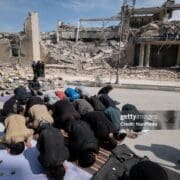
A group of Iranian men prays in an area that is targeted in U.S.-Israeli attacks in Tehran, Iran, on March 4, 2026. (Photo by Morteza Nikoubazl/NurPhoto via Getty Images)

According to the complaint, the vessel was intercepted by U.S. authorities on December 10, 2025, after it was determined the ship was falsely claiming Guyana’s flag, effectively rendering it stateless under international maritime law.

The tanker and its cargo are being targeted for forfeiture because prosecutors allege the operation helped generate revenue and influence for Iran’s Islamic Revolutionary Guard Corps, including its Qods Force, which the United States has designated a foreign terrorist organization.

US Officials Cite Sanctions Enforcement

U.S. Attorney General Pam Bondi said the case demonstrates Washington’s determination to disrupt financial flows to hostile regimes.

“Under President Trump’s leadership, the era of secretly bankrolling regimes that pose clear threats to the United States is over,” Bondi said. “This Department of Justice will deploy every legal authority at our disposal to dismantle operations that defy our laws and fuel chaos across the globe.”

FBI Director Kash Patel said the complaint highlights the agency’s efforts to enforce sanctions and disrupt global networks used to fund militant groups.

“The FBI, working alongside our interagency partners, will continue aggressively identifying, disrupting, and dismantling the financial networks used by foreign adversaries to fund terrorist organizations and destabilize international security,” Patel said.

  “We will aggressively enforce U.S. sanctions against Iran and relentlessly pursue ghost fleet vessels whose illicit oil shipments have served as revenue sources for the IRGC and its terrorist proxies,” said U.S. Attorney Jeanine Ferris Pirro for the District of Columbia. “With the continued seizures and forfeitures of tankers and related profits, we are sending a clear message that there will be no safe harbor for sanctions evasion – and that we will deny Iran the ability to fund terrorism through its shadowy maritime networks.”

Assistant Attorney General A. Tysen Duva added that the case is part of broader efforts to stop millions of dollars from flowing to designated terrorist organizations.

Alleged Global Oil Smuggling Network

According to the DOJ, the forfeiture complaint alleges a scheme dating back to at least 2021 involving the shipment and sale of petroleum products to benefit the IRGC.

Investigators say the Skipper transported crude oil originating in both Iran and Venezuela, using ship-to-ship transfers and other deceptive maritime practices to move cargo around the world.

Authorities say the tanker most recently loaded approximately 1.8 million barrels of Venezuelan crude oil in November 2025 at the José Terminal in Venezuela.

Shipping documents cited in the complaint show that about 1.1 million barrels of the cargo were scheduled for delivery to Cubametales, a Cuban state-run oil importer that has been under U.S. sanctions since 2019.

However, U.S. officials say the vessel changed course before reaching Cuba and was intercepted on the high seas in the Caribbean.

Part of Broader Oil Enforcement Campaign

The seizure of the Skipper is part of a wider U.S. effort to disrupt sanctioned oil trade linked to Venezuela and Iran.

Officials allege the tanker had been operating as part of a so-called “shadow fleet” used to evade sanctions by falsifying locations, changing vessel identities and flying false national flags.

If a federal judge approves the forfeiture request, the U.S. government could take ownership of the tanker and its oil cargo, potentially selling the crude and redirecting the proceeds.

The case remains pending before the court.

RELATED: Caribbean Watch: Anticipation and Uncertainty Ahead of High-Profile Talks With Washington

Women’s History Month – Caribbean Women Who Shaped The Modern World

By Nyan Reynolds

News Americas, NY, NY, Tues. Mar. 3, 2026: Every March, Women’s History Month invites reflection. It asks us to consider who shaped our world, who challenged injustice, who built institutions, and who carried culture across borders. Too often, those narratives center the same global capitals and the same familiar names.

But to understand modern political leadership, diasporic activism, literary authority, and cultural power, we must look to the Caribbean.

Caribbean women have never been confined by geography. From small island states and colonial territories emerged leaders, thinkers, artists, and organizers whose work reshaped the 20th and 21st centuries. Their influence moved across oceans. Their ideas crossed languages. Their leadership challenged assumptions about race, gender, power, and nationhood.

As we begin Women’s History Month, we highlight just a few of the women whose lives demonstrate a larger truth: Caribbean women are not peripheral to global history. They are central to it.

And this list is only a beginning.

Political Power: Rewriting the Image of Leadership

When Eugenia Charles became the first woman prime minister in the Caribbean in 1980, it was a defining moment for the region. Leading Dominica during a period of political instability and economic strain, she earned a reputation for firmness and resolve. Internationally, she stood alongside world leaders at a time when female heads of government were still rare.

Her leadership disrupted long-standing assumptions about who could command authority in post-colonial Caribbean politics. She was not symbolic. She was decisive.

Years later, Portia Simpson-Miller would rise to become Jamaica’s first female prime minister. Her story mattered not only because of her gender, but because of her journey. Coming from working-class roots, she expanded the image of national leadership. She embodied possibility for women who had never seen themselves reflected in the highest office.

Today, Mia Mottley represents a new phase of Caribbean political influence. Under her leadership, Barbados transitioned to a republic, formally removing the British monarch as head of state. Beyond regional milestones, her advocacy on climate justice has positioned her as one of the most respected voices on the global stage. In international forums, she has spoken with urgency about the vulnerabilities of small island developing states, insisting that global financial systems account for historical inequities.

Together, these women illustrate a clear progression. Caribbean women are not merely participating in governance. They are shaping international policy conversations, redefining sovereignty, and expanding what political leadership looks like.

Social Justice and Diasporic Vision

Long before “intersectionality” became common language, Caribbean women were articulating the connections between race, gender, labor, and empire.

Amy Ashwood Garvey, co-founder of the Universal Negro Improvement Association, was instrumental in shaping early 20th-century Pan-African thought. While often overshadowed in popular history, she advocated for women’s leadership within global Black liberation movements and worked to ensure that women were not relegated to supportive roles.

Her activism traveled across continents, from the Caribbean to the United States and the United Kingdom. She understood that Caribbean identity was inseparable from the wider African diaspora.

Similarly, Claudia Jones carried Caribbean radical thought into international spaces. Born in Trinidad and later active in the United States and Britain, she confronted racism, economic inequality, and gender discrimination head-on. She argued that the liberation of Black communities required attention to the unique experiences of women.

Jones also founded what would become the Notting Hill Carnival in London, transforming Caribbean culture into a powerful symbol of resistance and pride in the diaspora. What began as community expression evolved into one of the largest cultural festivals in Europe.

Through activism and institution-building, these women reshaped not only political discourse but cultural memory. They demonstrated that Caribbean women were theorists, strategists, and movement architects.

Literature and Intellectual Authority

If politics shapes policy, literature shapes imagination. Caribbean women have long insisted on telling their own stories.

Maryse Condé confronted colonialism and its aftermath through novels that explored identity, displacement, and womanhood. Her work complicated romanticized images of the Caribbean, revealing the layered histories of slavery, migration, and resistance. In 2018, she received the New Academy Prize in Literature, an acknowledgment of her global literary impact.

Edwidge Danticat has similarly ensured that Haiti’s history and the experiences of Haitian women are preserved in global consciousness. Through fiction and essays, she addresses migration, memory, political violence, and resilience. Her work bridges homeland and diaspora, reminding readers that Caribbean narratives extend far beyond tourism brochures and simplified stereotypes.

These writers expanded intellectual space. They challenged dominant narratives written about the Caribbean and replaced them with narratives written from within it. In doing so, they reshaped how the world understands Caribbean history and womanhood.

Culture as Global Power

Cultural influence is one of the Caribbean’s most visible contributions to the world. And women have been central to that influence.

Rihanna emerged from Barbados to become one of the most recognized entertainers and entrepreneurs in the world. Beyond music, her business ventures in beauty and fashion disrupted industries long criticized for limited representation. When she was declared a National Hero of Barbados, it symbolized more than celebrity recognition. It marked the elevation of cultural entrepreneurship as national pride.

Before and alongside contemporary icons, artists like Celia Cruz carried Afro-Caribbean music onto international stages. Known as the “Queen of Salsa,” her voice became synonymous with joy, defiance, and cultural affirmation. Through performance, she preserved and amplified Afro-Caribbean identity across borders.

Culture, in this context, is not entertainment alone. It is diplomacy. It is economic power. It is narrative control.

Caribbean women have used it to shift perceptions and claim space in industries that once excluded them.

More Than a List

It is important to say clearly: this is not an exhaustive roster. For every internationally recognized figure, there are countless Caribbean women shaping academia, grassroots activism, public health, environmental policy, education, and community development.

Women’s History Month offers an opportunity to widen the lens. To move beyond token recognition and toward deeper acknowledgment of sustained impact.

The Caribbean’s history is one of colonization and resistance, migration and reinvention. Within that history, women have always been central. They organized communities during independence struggles. They preserved language and culture under colonial rule. They built businesses, led classrooms, and carried families across borders in search of opportunity.

The 21st century did not create Caribbean women leaders. It revealed them to a wider audience.

Why This Moment Matters

Beginning Women’s History Month by honoring Caribbean women is not about regional pride alone. It is about correcting perspective.

Global history often flows through powerful nations and dominant narratives. Yet many of the ideas shaping today’s conversations about climate justice, diasporic identity, intersectional activism, cultural entrepreneurship, and post-colonial sovereignty have deep Caribbean roots.

The women highlighted here did not wait for permission to lead. They entered political chambers, literary circles, protest movements, and global industries with clarity about who they were and what they represented.

They shifted the image of the Caribbean woman from background figure to global force.

As this month unfolds, there will be space to explore their stories individually and to highlight many others whose work deserves equal attention. But at the outset, the message is simple.

Caribbean women have shaped the modern world.

Women’s History Month gives us language to celebrate that truth. The Caribbean gives us generations of women who made it undeniable.

 EDITOR’S NOTE: Nyan Reynolds is a U.S. Army veteran and published author whose novels and cultural works draw from his Jamaican heritage, military service, and life experiences. His writing blends storytelling, resilience, and heritage to inspire readers.  

RELATED:  “A” – Alien Registration And The Weight Of The Letter