Canada Slaps Sanctions On 3 Haitian Businessmen

News Americas, TORONTO, Canada, Thurs. Sept. 21, 2023: The Canadian government has enforced sanctions against three Haitian entrepreneurs, alleging their involvement in corruption and “other illicit activities” and their alleged facilitation of armed gang operations that have aggravated a severe social and humanitarian crisis in Haiti.

These sanctions, which target Marc Antoine Acra, Carl Braun, and Jean-Marie Vorbe, effectively bar them from traveling to Canada and prohibit Canadian citizens, entities, or residents from engaging in economic transactions with them.

Marc Antoine Acra is a prominent businessman who previously served as an advisor to former Prime Minister Laurent Lamothe.

Carl Braun serves as vice president on the board of directors of Unibank, the largest Haitian bank, while Jean-Marie Vorbe is the CEO of Sogener, an energy sector company.

Canada contends that these businessmen are contributing to violence and instability in Haiti through corrupt practices and other criminal activities, as well as by enabling illegal actions by armed gangs that are terrorizing the Haitian population.

Canadian Foreign Minister Mélanie Joly emphasized that these sanctions are a crucial element of a comprehensive approach to address Haiti’s political situation.

Canada has actively participated in diplomatic initiatives aimed at establishing a multinational peacekeeping force under the United Nations’ auspices to intervene in Haiti.

Since November 2022, Canada has imposed sanctions on 28 Haitian individuals, described as the country’s “political and economic elite,” due to their alleged involvement in armed gang activities in Haiti.

Earlier this week, Joly appointed André Francois Giroux as Canada’s new ambassador to Haiti, underscoring Canada’s commitment to engaging with the situation in Haiti.

Canada is home to over 165,000 people of Haitian descent.

Cuban Embassy In Washington, D.C. Attacked

News Americas, WASHINGTON, D.C., Fri. Sept. 29, 2023: Cuba’s embassy in the U.S. capital of Washington D.C. was the target of a violent attack late on September 24. In a statement shared on X, the platform formerly known as Twitter, Cuban Foreign Minister Bruno Rodríguez Parrilla said that an individual had thrown two Molotov cocktails at the embassy building.

He added that no personnel had been injured in the attack and the details of the incident were being looked into. He also noted that this was the second such attack against the headquarters of Cuba’s diplomatic mission in the U.S. An individual had fired multiple rounds of bullets from an AK-47 assault rifle at the building in April 2020.

Cuba’s embassy in France was also attacked with Molotov cocktails in July 2021.

“Anti-Cuban groups resort to terrorism because they feel impunity, something Cuba has warned U.S. authorities about,” Rodríguez said.

In a report released in 2020, Cuba’s Center for Historical Investigations of State Security (CIHSE) documented 581 attacks against the country’s diplomatic representations abroad since the Cuban Revolution in 1959. These attacks have led to the deaths of approximately 365 people and injured 721, including foreign nationals.

The September 24 attack took place just hours after President Miguel Díaz-Canel arrived back in Havana after attending the 78th Session of the United Nations General Assembly in New York. Cuba is currently serving as the chairman of the G77+China bloc of countries.

SOURCE: Global News Service

US Salutes Curaçao on Curaçao Day

News Americas, NEW YORK, NY, Tues. Oct. 10, 2023: The US is saluting Curaçao on Curaçao Day – a public holiday that is observed annually on October 10th to celebrate the island’s 10th anniversary of becoming a nation inside the Dutch Kingdom.

“On behalf of the people of the United States of America, I congratulate the people of Curaçao as you celebrate Curaçao Day,” US Secretary of State Anthony Blinken said this morning in a statement. “Our longstanding friendship is a testament to the people-to-people ties, shared history, and common values that bind us. The United States and Curaçao will continue working together to disrupt transnational criminal networks and make life safer for all our citizens. Together, we are expanding economic opportunity by investing our time and resources into education and entrepreneurship. Through regional initiatives such as the U.S.-Caribbean Partnership to Address the Climate Crisis (PACC 2030), we are partnering with Caribbean institutions to improve Caribbean resilience and our ability to face future challenges.”

The celebration comes as the island is set to get a maximum of €66 million in a budget from The Hague for Dutch Caribbean islands. The funds are specifically designated for social initiatives and policy enhancement.

Jamaica MP’s Partner Accused Of Killing His Child And Her Mother

News Americas, MIAMI, FL, Weds. Oct. 18, 2023: In a bizarre twist, the alleged partner of Jamaican Member of Parliament Phillip Paulwell, and a US Navy petty officer stands accused of abducting and murdering his 10-month-old daughter and her mother.

The United States (US) Navy Criminal Investigative Service has become reportedly involved in the inquiry surrounding Leoda Bradshaw, who is in jail in Jamaica for the alleged double murders.

The allegations against Bradshaw were disclosed in a press release from the Jamaica Office of the Director of Public Prosecutions (ODPP) on October 13, following the revelation by the police that 27-year-old Toshyna Patterson and her 10-month-old daughter, Sarayah Paulwell, had been murdered and their bodies disposed of.

It is claimed that Bradshaw was in a relationship with Paulwell, with whom she shares a child and whom she considered her spouse. A US resident, she is alleged to have arrived in Jamaica on September 6, and on that very day, began conspiring with her cousin Roland Balfour, Richard Brown, and Roshane Miller in the alleged kidnapping and murder plot.

“During these conversations until September 9, 2023, there was an agreement orchestrated by Leoda Bradshaw for these men to kidnap and kill Toshyna Patterson and her 10-month-old daughter, Sarayah Paulwell, who was the result of Ms. Patterson’s relationship with Mr. Phillip Paulwell. This plan also included a partial payment, which had been made by Bradshaw to the men for the successful execution of the plan,” the ODPP stated in the release.

It is also alleged that on September 9, Patterson and her 10-month-old daughter were taken from their home at Gilmore Drive in Kingston by Bradshaw in a tinted SUV. The mother and child were then handed over to men, including two of Bradshaw’s co-conspirators in St Andrew.

In addition, Richard Brown, also known as “Richie,” of a Kingston address, Roland Balfour, a 30-year-old assistant graphic designer, also of a Kingston address, and Roshane Miller, a 29-year-old air conditioning technician, are the other three individuals facing kidnapping and murder charges.

The ODPP has indicated that the capital murder charges against Bradshaw are based on allegations of a contract-for-hire arrangement, where she purportedly paid individuals a sum of money to kidnap and murder Patterson and little Sarayah.

On September 9, Paulwell confirmed reports that his 10-month-old daughter Sarayah and her mother were missing.

Paulwell revealed that the two were apparently abducted from their home at Gilmore Drive, Kingston 20, on the morning of September 9 and have not been seen or heard from since.

The Member of Parliament had offered a $500,000 reward for information that could aid in the safe return of the mother and daughter. In his first public comments since Deputy Commissioner of Police Fitz Bailey revealed that the two were shot and killed and their bodies burned after they were kidnapped from their St Andrew home on the morning of Saturday, September 9, Paulwell said his heart is heavy with sadness. In a statement Saturday, the longstanding Member of Parliament for East Kingston and Port Royal stated that he wants those involved “punished to the fullest extent of the law.”

He added: “I cannot comment on the investigations nor matters before the court, but I wish to thank the police for their tireless work.”

Bradshaw is charged with two counts of conspiracy to kidnap, two counts of conspiracy to murder, two counts of kidnapping, and two counts of capital murder. Balfour was charged with two counts of accessory before the fact to kidnapping and two counts of accessory before the fact to murder.

Cubans Rally For Palestine

News Americas, HAVANA, Cuba, Fri. Oct. 20, 2023: Around 300 Cubans and Palestinians came together this week to express their outrage over the bombing of the Al Ahli hospital in Gaza.

Cubans take part in a demonstration in support of the Palestinian people. (Photo by YAMIL LAGE / AFP) (Photo by YAMIL LAGE/AFP via Getty Images)

This rally, held in Havana, was a show of support for the Palestinian people and an outright condemnation of the Israeli regime’s actions. The participants, consisting mainly of state employees, students, and Palestinian residents of Cuba, waved Palestinian flags, passionately chanted “Free Palestine,” and fervently called for an end to what they labeled as a “genocide” against the Palestinian population.

Young Cubans take part in a demonstration in support of the Palestinian people. (Photo by YAMIL LAGE / AFP) (Photo by YAMIL LAGE/AFP via Getty Images)

Cuban President Miguel Diaz-Canel voiced his condemnation of Israel, using his X account (formerly Twitter), stating, “Cuba condemns in the strongest terms the bombing perpetrated by Israel against the Al Ahli Hospital in Gaza, which has caused hundreds of deaths and injuries. We demand an immediate ceasefire and an end to these flagrant violations of international humanitarian law.”

Jamaica Prime Minister Strongly Condemns Barbaric Murder of Schoolboys

News America, KINGSTON, Jamaica, Thurs. Nov. 9, 2023: Jamaica’s Prime Minister Andrew Holness has strongly condemned the “barbaric and merciless” murder of two schoolboys in Jamaica earlier this week, emphasizing that all forms of violence are abhorrent and must be severely punished. The victims, Justin Perry and Nacholive Smith of Chetwood Primary School, were shot and killed by gunmen while traveling in a taxi in the Flower Hill community of the Salt Spring area, which is plagued by an ongoing gang feud.

Holness expressed his heartfelt condolences to the victims’ families and urged all Jamaicans to offer support and comfort during this tragic time. The Prime Minister highlighted the alarming increase in violent crime, with figures showing 1,159 murders in Jamaica as of October 28, compared to 1,301 during the same period the previous year.

He stressed that violence in all its forms should be strongly condemned and punished but emphasized that when it affects innocent children, society must unite and say, “Enough is enough.” Holness referred to the perpetrators as “criminal terrorists” and called for stronger punitive measures to deter such acts of terror.

He underlined his government’s commitment to enhancing the capacity and capabilities of the security forces to combat criminal terrorists, citing recent legislative changes to increase penalties for illegal firearm possession and amendments to the penalty scheme for murder. Holness called on Jamaicans to unite in condemning these heinous acts and to support measures aimed at preventing their recurrence.

The Princess And The Parrots

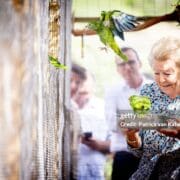
News Americas, ORANJESTAD, ARUBA, Fri. Nov. 10, 2023: On November 10, 2023, Princess Beatrix of the Netherlands extended her Caribbean visit to the picturesque island of Aruba, where she made a significant stop at the renowned National Park Arikok. The visit to this natural sanctuary showcased the Princess’s commitment to environmental conservation and specifically focused on the welfare of rescued lora parrots.

National Park Arikok, known for its stunning landscapes and diverse flora and fauna, welcomed Princess Beatrix as she explored the efforts dedicated to the protection and rehabilitation of Aruba’s native wildlife. The highlight of her visit was an encounter with the rescued lora parrots, underscoring the importance of conservation initiatives for endangered species.

Princess Beatrix visits National Park Arikok for rescued lora parrots on November 10, 2023 in Oranjestad, Aruba. (Photo by Patrick van Katwijk/Getty Images)

The Princess engaged with park officials and conservationists, gaining insights into the challenges faced by the lora parrot population and the ongoing efforts to preserve their habitat. Her presence emphasized the global significance of protecting biodiversity and the integral role individuals, communities, and nations play in ensuring the well-being of our planet’s diverse ecosystems.

ORANJESTAD, ARUBA – NOVEMBER 10: Princess Beatrix visits National Park Arikok for rescued lora parrots on November 10, 2023 in Oranjestad, Aruba. (Photo by Patrick van Katwijk/Getty Images)

Princess Beatrix’s visit to National Park Arikok not only celebrated the natural beauty of Aruba but also served as a reminder of the collective responsibility to safeguard the environment for future generations. As a prominent advocate for environmental causes, the Princess’s engagement highlighted the importance of international cooperation in addressing conservation challenges and promoting sustainable practices.

The tour represents another chapter in Princess Beatrix’s longstanding commitment to environmental awareness and wildlife conservation, aligning with her dedication to fostering a deeper understanding of the delicate balance between humanity and the natural world. Aruba, with its rich biodiversity and conservation efforts, served as a fitting backdrop for this meaningful leg of her Caribbean journey.

The Princess’s visit to National Park Arikok concluded with a positive outlook on the collaborative efforts underway to protect and preserve Aruba’s unique ecosystems, leaving a lasting impression on the local community and reinforcing the global call for environmental stewardship.

Saudi Fund For Development Bolsters Caribbean Resilience With $90 Million in Funding

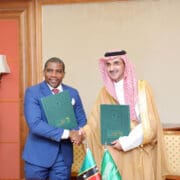
News Americas, RIYADH, Saudi Arabia, Weds. Nov. 22, 2023: In a significant move to boost sustainable development in the Caribbean, the Saudi Fund for Development (SFD) has signed two vital Framework Memorandum of Understandings (MoUs) with the governments of Saint Vincent and the Grenadines, and Saint Kitts and Nevis.

This strategic partnership, led by SFD’s Chief Executive Officer, H.E. Sultan Al-Marshad, was formalized in Riyadh, Kingdom of Saudi Arabia, on the heels of the Saudi – CARICOM Summit held on November 16, 2023.

Under the first MoU, SFD will allocate $50 million USD to Saint Vincent and the Grenadines for the Expansion, Construction, and Rehabilitation of several facilities and buildings impacted by natural disasters. This initiative, signed with Prime Minister Hon. Ralph E. Gonsalves, aimed to bolster the nation’s infrastructure, fostering sustainable development and enhancing economic resilience in the aftermath of environmental challenges.

The second MoU, inked with Prime Minister Hon. Terence Drew of Saint Kitts and Nevis, involves a $40 million USD funding commitment for the expansion of the Needsmust Power Plant Project. This project is pivotal in supporting the nation’s energy needs, contributing to the socio-economic development of Saint Kitts and Nevis.

These agreements highlight SFD’s longstanding commitment to fostering sustainable development in the Caribbean. They underscore the vital role of international cooperation and solidarity in achieving Sustainable Development Goals (SDGs) and promoting social and economic growth, especially in Small Island Developing States (SIDS).

The SFD, with a mission to champion global sustainable development since 1975, has financed over 800 development projects totaling $20 billion in more than 100 countries. Its engagement in CARICOM member states spans nearly four decades, with approximately $670 million allocated to 12 development projects since the beginning of this year alone, marking a new chapter in Caribbean development supported by international collaboration.

Guyana Hydrogen Energy Technology Adoption- Part I

By Dr. Lorraine Sobers

News Americas, PORT OF SPAIN, Trinidad, Weds. Nov. 29, 2023: There are two types of people: those who accept and adopt new technology before it becomes mainstream and those who wait for the hype to die down. The energy sector has its fair share of hype and buzzwords. New technology, born out of years of quiet research and development, can suddenly burst onto the scene at press conferences and market predictions. Venture capitalist, investors, and overnight experts hop on to the hype train seeking that first mover advantage.

Hydrogen fuel is now the current shiny object that is captivating the attention across the Caribbean region. Hydrogen and its promise to transform transportation and energy is being held up as the replacement for fossil fuels. Recently, the Biden Administration announced that it will invest USD 7 billion for “America’s first clean hydrogen hubs, driving clean manufacturing and delivering new economic opportunities nationwide”

Hydrogen could mean big money for Guyana. Deloitte has estimated that demand for global hydrogen will grow six-fold by 2050 making the market for green hydrogen to be worth USD 1.4 trillion supporting 2 million jobs annually worldwide.

At this stage, it is fair to ask, should hydrogen fuel form part of Guyana’s low carbon development strategy? As always, a needle point balance of knowledge and proactivity is needed to avoid buying into empty hype. Whether Guyana undertakes hydrogen production depends on priority for gas usage, alignment with the policy for low carbon development, market conditions and of course profitability. Before I delve into the business end of the hydrogen industry, allow me to first address the foundational elements needed for Guyana’s best interests in hydrogen and in the oil and gas space – safe operations, public awareness and local content.

Hydrogen as a Fuel

The idea of using hydrogen as fuel is not new. Green hydrogen, that is hydrogen produced using renewable energy, can be used to generate energy without carbon emissions.  Hydrogen generated from natural gas paired with CO2 sequestration is known as blue hydrogen. It is possible that Guyana’s offshore gas brought to shore can be put to this use and remain carbon neutral. Cleaner burning natural gas is already a key part of Guyana’s Low Carbon Development Strategy—hydrogen could open up yet another avenue for sustainable use of gas.

Although existing technology for hydrogen fuel needs some modifications to be adapted for large scale present-day application, it promises to replace bunker fuel and natural gas in several applications. Safety concerns about storing and using large volumes of hydrogen come from a knowledge of chemistry and history. Hydrogen is flammable, burning with a near invisible flame, and is much lighter than air. In practice this means that a leak of hydrogen will quickly dissipate but special flame detectors will be needed to detect a hydrogen flame. Hydrogen is non-toxic, unlike most fuels commonly used, but it has a lower ignition energy, that is, it ignites more easily, than gasoline or natural gas.

In the case of the latter, we must pause to recall the Hindenburg disaster. The Hindenburg was a German, hydrogen-fueled blimp which caught fire and failed catastrophically early in its life. The precise cause of the tragedy is unknown. What we know for sure is that the inferno claimed 37 human lives. Public trust in blimps never truly recovered.

It is not uncommon for unfamiliar technologies to be treated with public hesitation and anxiety. Additionally, the excitement of new technological opportunities and the noise of different voices advancing their agendas can cloud decision making. Fear of change and new technology can slow progress, but public awareness and consultations can be used to ensure that all valid concerns are heard and addressed.

Safe Adoption

Industry regulations and standards are not generally intended to obstruct newcomers, but rather to prevent repeats of past calamities. The first step in adopting new technology is a mindset of operating with regard to health, safety and the environment (HSE). In the early days of many industry repercussions are poorly understood. These misunderstandings often lead to costly negative outcomes. So costly are these outcomes that even the most oblivious and profit motivated actors stop and take stock.

The instructions on how to avoid tragedies, wastage and pollution are called ‘best practices’. When the State enforces best practices, they become regulations for industrial applications. Guyana will need to assess, adapt and adopt the best practices of the industry with mechanisms for enforcement to ensure safe operations. Despite Guyana’s nascent arrival in the oil and gas industry, the maturity of that global industry has paved the way for lower HSE risk than there was 50, 70 or 100 years ago. Guyana is well positioned to capitalize on regulations, best practices and policies established in other jurisdictions. In this sense Guyana has the last mover advantage. It will be some time before anyone can boast a similar level of expertise with hydrogen.

Public Awareness

This leads to a critical element of adopting new technology: public awareness. Public perception can make or break the plans for implementing new technology. Bad press, misinformation, protest, sabotage and violence leading to the withdrawal of investors represents the worse-case scenario. No one will be well served by such an outcome. Early involvement, education and collaboration with the public is needed at the outset. It is not enough to have a low carbon output, fiscal and legal frameworks in place, funding and feasibility studies.

With the rapid expansion through foreign direct investment, the Guyanese population must get accustomed to regular participation in stakeholder meetings and responding to calls for comments on plans and strategies. It is not far-fetched to inculcate this form of progressive, not obstructionist, civic mindedness at the primary and secondary school level. Significant spending and effort must be channeled to all forms of media to reach citizens throughout the physical and socio-economic landscape.

Local Content

Going a step further than public awareness is equipping the labor force with the education and training in the operation and maintenance of heavy industry. The intricacies of hydrogen production, storage, and transportation have grabbed current global attention. If Guyana gets their youth well educated in STEM, their position as the last mover strengthens even further. I have advocated for such education in previous articles, but it is worth reiterating that Guyanas’s youth need a strong foundation in Mathematics and English to access the opportunities afforded through new and existing technologies.

Many of the same best practices apply to hydrogen and the oil and gas business already booming in Guyana: developing a robust safety culture, public awareness, and technical capacity building in Guyana. In my next article I will discuss adoption of hydrogen fuel technology in the context of 1) priority for gas usage, 2) alignment with the policy for low carbon development,  3)market conditions and of course, 4) profitability for Guyana.

EDITOR’S NOTE: Dr. Lorraine Sobers is a Fulbright Scholar currently lecturing at the University of the West Indies, St. Augustine. Dr Sobers has a BS in Chemical Engineering and postgraduate degrees, MS and Ph.D., in Petroleum Engineering from Texas Tech and Imperial College, London respectively. She has 20 years’ experience in the energy sector specializing in Carbon Capture and Storage (CCS). Dr Sobers is a Fellow of the Caribbean Policy Consortium.

Guyana’s Economic Transformation: Addressing The Digital Skills Gap

By Meredith Arnold McIntyre

News Americas, NEW YORK, NY, Tues. Nov. 28, 2023: The Guyanese economy continues to grow very rapidly, driven by the booming oil sector and supported by the government’s modernization plans. GDP continues to expand at an unprecedented rate following growth of 62.3 percent in 2022 (the highest in the world) economic growth is expected to be 38 percent in 2023.

Oil production continues to expand rapidly with the coming on stream of a third oil field, while accelerated implementation of a public investment program is supporting strong growth in the non-oil sector. The program is targeted at critical development needs and vital to strengthening economic capacity including transportation, housing, and flood management infrastructure, and raising human capital.

The latter objective of raising human capital is vital to achieving stronger long-term, sustainable growth. The presence of significant skills gaps that could hinder growth and economic transformation has been highlighted by policymakers. The other facet of the challenge is skills mismatches in the labor market where there are workers seeking employment but do not have the skills demanded in the labor market. Taken together this suggests a significant shortage of the labor skills required and recent estimates by public officials put the shortage at about 100,000 persons. Skilled labor shortages have been identified in technical skills – welders, machinists, heavy equipment operators and a range of technical skills needed in the oil industry.

In addition, as the world becomes increasingly digital Guyana like many developing countries faces the challenge of increasing the supply of skilled workers with digital skills. There is a growing need to produce skilled workers with digital skills to support an expanding service sector and the diversification of the economy, reducing the dependence on the rapidly expanding oil sector.  The note looks at the core digital skills Guyana will need to support the process of economic transformation and diversification.

To support the drive for increased digitalization Guyana must significantly expand internet access. The International Telecommunications Union (ITU) estimated in 2021 that only 17 percent of the population had internet access. The low level of internet penetration is  limiting access to online education and digital skills training. Increasing broadband access and internet penetration is an important component of Government’s strategy to support the transformation process.

It is well established that digitalization increases economic efficiency, reduces transactions costs, and increases competitiveness. The Government is preparing and implementing a variety of reforms to increase digitalization of the economy and to boost labor productivity e.g., single window processing of permits, digital ID and digital banking records.

As Guyana pursues an economic transformation strategy what are the core digital skills needed to support digitization and economic transformation? The core digital skills needed to support the development of a modern economy with an efficient services sector are a combination of “hard” and “soft” skills.The “hard” skills include: (i) Online or internet-based research. This requires setting up methods of accumulating data and these include customer surveys, online interviews and metric data gathering. (ii) Social media management. This means establishing methods/processes to gather information from social media audiences and using the information to develop strategies for target audiences, for example, critical in marketing goods/services by companies or promotion of government programs to increase participation. (iii) Data and spreadsheet management. This enhances vital quantitative skills and includes managing databases and spreadsheet software to organize the data ensuring it is easily understood with a wide variety of audiences. (iv) Enhancing digital threat awareness or the risks of using digital devices. This is the area of cyber security that is of growing importance as digitization expands across the world. Cybersecurity training involves acquiring the tools to not only be aware of the digital threats but to protect the individual and the organization. For example, hacking, phishing, privacy violations, and cyberbullying.  (v) Desktop publishing. This is the range of core digital skills needed to ensure Guyana can supply the skilled workers needed to support economic transformation including the economic diversification needed long-term to reduce the dependence on the rapidly expanding oil sector.

In the oil industry digital skills have an increasingly important role to play. A global survey of by Statista[1] found that respondents identified data analytics (60,percent of the respondents) and cyber security (57 percent) as the two most critical digital skills for the oil and gas industry. Other key digital skills identified included engineering (38 percent), data science (37 percent), digital literacy (28 percent) and digital engineering (28 percent). Taken together these skills were seen as crucial to securing the future success of their companies.

Guyana’s government has identified digital skills training as a priority in the program to close skills gaps. Government has clearly stated its intention to pursue a variety of digital literacy initiatives and the private sector can play a key role by investing in upgrading/developing digital skills in the workforce.  Importantly, underpinning these “hard skills” is knowledge of key software in word processing, spreadsheets, and databases.  For example, word processing (Microsoft word, google docs), spreadsheets (Microsoft excel, google sheets, Apple numbers) and database software (Microsoft SQL server, Oracle DBMS).

Developing core digital skills while necessary is not sufficient to enhance the skills of the workers needed for the current economic transformation. The “hard skills” need to be complemented by training in and knowledge of “soft skills”. What are the soft skills?These include (i) Teamwork and collaboration. Working in teams and effective collaboration is increasingly a core part of the modern organization in the public and private sectors. (ii) Interpersonal skills and communication. This is needed in all forms of communication – oral, written, non-verbal and importantly, listening, remains a vital skill for working effectively in a modern organization. (iii) Critical thinking. In the era of fake news, social media bubbles, information overload skilled workers operating in the digital space will need the skill of critical thinking. (iv) emotional intelligence is another soft skill modern organizations in the public and private sectors need to train workers.

Finally, developing digital skills is going to require collaboration between the public and private sectors and cannot be seen exclusively as a function of the state. Businesses will need to invest resources in the digital training of their workforce and government in designing and developing digital skills development programs will need close collaboration with the private sector to identify the sectors/industries where the digital skills shortages are acute. Typically, training staff via online courses with international certification is a common method for private companies. Private sector inputs in training programs are critical to aligning the programs with the needs of the economy as they evolve over time.

EDITOR’S NOTE:  Dr. Meredith Arnold McIntyre has been an economist for over 30 years. He has worked in a variety of Caribbean regional institutions including the Caribbean Development Bank, Organization of Eastern Caribbean States, and the Caribbean Regional Negotiating Machinery in the 1990s. Dr. McIntyre joined the International Monetary Fund (IMF) in February 2001 and worked on countries in Africa and the Caribbean including leading IMF country team missions to Guyana. Dr. McIntyre has published a book and a variety of articles on issues in macroeconomic and trade policy in small states. He is currently an Associate, Manchester Trade Ltd and a Fellow with the Caribbean Policy Consortium. 

 

By Meredith Arnold McIntyre

News Americas, NEW YORK, NY, Tues. Nov. 28, 2023: The Guyanese economy continues to grow very rapidly, driven by the booming oil sector and supported by the government’s modernization plans. GDP continues to expand at an unprecedented rate following growth of 62.3 percent in 2022 (the highest in the world) economic growth is expected to be 38 percent in 2023.

Oil production continues to expand rapidly with the coming on stream of a third oil field, while accelerated implementation of a public investment program is supporting strong growth in the non-oil sector. The program is targeted at critical development needs and vital to strengthening economic capacity including transportation, housing, and flood management infrastructure, and raising human capital.

The latter objective of raising human capital is vital to achieving stronger long-term, sustainable growth. The presence of significant skills gaps that could hinder growth and economic transformation has been highlighted by policymakers. The other facet of the challenge is skills mismatches in the labor market where there are workers seeking employment but do not have the skills demanded in the labor market. Taken together this suggests a significant shortage of the labor skills required and recent estimates by public officials put the shortage at about 100,000 persons. Skilled labor shortages have been identified in technical skills – welders, machinists, heavy equipment operators and a range of technical skills needed in the oil industry.

In addition, as the world becomes increasingly digital Guyana like many developing countries faces the challenge of increasing the supply of skilled workers with digital skills. There is a growing need to produce skilled workers with digital skills to support an expanding service sector and the diversification of the economy, reducing the dependence on the rapidly expanding oil sector.  The note looks at the core digital skills Guyana will need to support the process of economic transformation and diversification.

To support the drive for increased digitalization Guyana must significantly expand internet access. The International Telecommunications Union (ITU) estimated in 2021 that only 17 percent of the population had internet access. The low level of internet penetration is  limiting access to online education and digital skills training. Increasing broadband access and internet penetration is an important component of Government’s strategy to support the transformation process.

It is well established that digitalization increases economic efficiency, reduces transactions costs, and increases competitiveness. The Government is preparing and implementing a variety of reforms to increase digitalization of the economy and to boost labor productivity e.g., single window processing of permits, digital ID and digital banking records.

As Guyana pursues an economic transformation strategy what are the core digital skills needed to support digitization and economic transformation? The core digital skills needed to support the development of a modern economy with an efficient services sector are a combination of “hard” and “soft” skills.The “hard” skills include: (i) Online or internet-based research. This requires setting up methods of accumulating data and these include customer surveys, online interviews and metric data gathering. (ii) Social media management. This means establishing methods/processes to gather information from social media audiences and using the information to develop strategies for target audiences, for example, critical in marketing goods/services by companies or promotion of government programs to increase participation. (iii) Data and spreadsheet management. This enhances vital quantitative skills and includes managing databases and spreadsheet software to organize the data ensuring it is easily understood with a wide variety of audiences. (iv) Enhancing digital threat awareness or the risks of using digital devices. This is the area of cyber security that is of growing importance as digitization expands across the world. Cybersecurity training involves acquiring the tools to not only be aware of the digital threats but to protect the individual and the organization. For example, hacking, phishing, privacy violations, and cyberbullying.  (v) Desktop publishing. This is the range of core digital skills needed to ensure Guyana can supply the skilled workers needed to support economic transformation including the economic diversification needed long-term to reduce the dependence on the rapidly expanding oil sector.

In the oil industry digital skills have an increasingly important role to play. A global survey of by Statista[1] found that respondents identified data analytics (60,percent of the respondents) and cyber security (57 percent) as the two most critical digital skills for the oil and gas industry. Other key digital skills identified included engineering (38 percent), data science (37 percent), digital literacy (28 percent) and digital engineering (28 percent). Taken together these skills were seen as crucial to securing the future success of their companies.

Guyana’s government has identified digital skills training as a priority in the program to close skills gaps. Government has clearly stated its intention to pursue a variety of digital literacy initiatives and the private sector can play a key role by investing in upgrading/developing digital skills in the workforce.  Importantly, underpinning these “hard skills” is knowledge of key software in word processing, spreadsheets, and databases.  For example, word processing (Microsoft word, google docs), spreadsheets (Microsoft excel, google sheets, Apple numbers) and database software (Microsoft SQL server, Oracle DBMS).

Developing core digital skills while necessary is not sufficient to enhance the skills of the workers needed for the current economic transformation. The “hard skills” need to be complemented by training in and knowledge of “soft skills”. What are the soft skills?These include (i) Teamwork and collaboration. Working in teams and effective collaboration is increasingly a core part of the modern organization in the public and private sectors. (ii) Interpersonal skills and communication. This is needed in all forms of communication – oral, written, non-verbal and importantly, listening, remains a vital skill for working effectively in a modern organization. (iii) Critical thinking. In the era of fake news, social media bubbles, information overload skilled workers operating in the digital space will need the skill of critical thinking. (iv) emotional intelligence is another soft skill modern organizations in the public and private sectors need to train workers.

Finally, developing digital skills is going to require collaboration between the public and private sectors and cannot be seen exclusively as a function of the state. Businesses will need to invest resources in the digital training of their workforce and government in designing and developing digital skills development programs will need close collaboration with the private sector to identify the sectors/industries where the digital skills shortages are acute. Typically, training staff via online courses with international certification is a common method for private companies. Private sector inputs in training programs are critical to aligning the programs with the needs of the economy as they evolve over time.

EDITOR’S NOTE:  Dr. Meredith Arnold McIntyre has been an economist for over 30 years. He has worked in a variety of Caribbean regional institutions including the Caribbean Development Bank, Organization of Eastern Caribbean States, and the Caribbean Regional Negotiating Machinery in the 1990s. Dr. McIntyre joined the International Monetary Fund (IMF) in February 2001 and worked on countries in Africa and the Caribbean including leading IMF country team missions to Guyana. Dr. McIntyre has published a book and a variety of articles on issues in macroeconomic and trade policy in small states. He is currently an Associate, Manchester Trade Ltd and a Fellow with the Caribbean Policy Consortium.