
On International Women’s Day, IICA launches virtual entrepreneurship course for rural women

Black Immigrant Daily News

The content originally appeared on: Caribbean News Service
Puno, Peru – circa June 2015: Women singing at Uros floating island and village on Lake Titicaca near Puno, Peru

On International Women’s Day, the Inter-American Institute for Cooperation on Agriculture (IICA) is launching, for the first time ever, an introductory course on entrepreneurship for rural women from Bolivia, Colombia, Ecuador, Peru and Venezuela. The course will be geared towards fostering management and leadership skills among these groups.

The initiative addresses a request made at the Second Forum of Female Ministers, Deputy Ministers and Senior Officials of Agriculture of the Americas in July 2022. At the event convened by IICA, the officials agreed that it would only be possible to achieve food security in the countries through greater participation by women. To that end, they called for exploring the possibility of delivering training to women entrepreneurs in the agrifood sector.

In response to this request, IICA designed and presented a course at the third forum, held in November. Registration is now open for the course, which consists of five learning units and will last two months.

Participants will receive training in entrepreneurial culture, community leadership, marketing, business scale-up and how to access business loans. They will also be offered funding and marketing tools for their entrepreneurial ideas.

The Forum of Female Ministers, Deputy Ministers and Senior Officials of Agriculture of the Americas was established in 2021 by IICA, following a request by its member countries to establish a forum that would give greater visibility to and highlight the importance of rural women’s contributions, as well as drive policymaking aimed at reducing gender gaps and inequalities.

Approximately 58 million women live in rural areas of the Americas. Their work is often underreported and they face difficulties in accessing credit and technical assistance programs.

“The entrepreneurship course for rural women seeks to contribute to greater equity in agricultural and rural development processes, as well as shifting paradigms in rural areas, so that they become areas of progress, opportunities and well-being for everyone”, said IICA Director General Manuel Otero.

“We are launching a training proposal to provide rural women of the Americas with practical tools, contribute to their empowerment and strengthen their leadership as entrepreneurs. The course is aimed at enhancing their capabilities and, in turn, improving their quality of life and economic status”, remarked Priscila Z??iga Villalobos, Manager of IICA’s Gender Equality and Youth Program.

Participants in IICA’s virtual course must be nationals or residents of Bolivia, Colombia, Ecuador, Peru or Venezuela, live in a rural area, have basic schooling and have an entrepreneurial idea or one that is in its early stages.

On this occasion, only nine participants from each country will be able to enroll. Registration will begin on March 8 and the course, which will be delivered in Spanish, will begin on March 22. To participate in the selection process, please access this link.

Donate At Caribbean News Service, we do not charge for our content and we want to keep it that way. We are seeking support from individuals and organisations so we can continue our work & develop CNS further.


NewsAmericasNow.com

CTO reports promising outlook for the region in 2023

Black Immigrant Daily News

The content originally appeared on: Caribbean News Service

Despite global pressures such as high inflation, the war in Ukraine, the ensuing energy crisis, and an impending economic recession, the outlook for Caribbean travel and tourism is favorable, according to the Barbados-based Caribbean Tourism Organization (CTO).

Delivering the region’s 2022 “Tourism Performance and Outlook Report” in Bridgetown today, Neil Walters, Acting Secretary General of the CTO, confirmed that the Caribbean had one of the quickest recovery rates globally in 2022, with 28.3 million registered tourist visits in 2022. This represents 88.6 percent of the visitors who arrived in 2019, which served as the baseline year for typical tourism activity before the pandemic.

He reported that international travel is expected to contribute to the region’s substantial gains already registered thanks to the robust United States market, which continues to drive the region’s recovery.

There was an estimated 28.1 percent increase in visitors coming from the U.S. market in 2022. At the end of the year, 14.6 million American tourists visited the region, 3.2 million more than the 11.4 million in 2021.

Arrivals from the European market increased by 81 percent in 2022 when compared to 2021. The 5.2 million tourists from this market were almost double the 2.8 million in 2021. This represented 18.3 percent of all arrivals in 2022.

Due to travel restrictions in early 2022, the Canadian market has recovered more slowly at 60 percent, while the lack of availability of intra-regional airlift has negatively impacted regional connectivity.

“Nearly 90 percent of the region’s travel demand for 2019 has already been recovered,” reported Walters, with destinations such as Cura?ao, the Dominican Republic, Puerto Rico, St. Maarten, Turks and Caicos, and the U.S. Virgin Islands already surpassing their pre-pandemic levels.

Caribbean destinations can expect this recovery to continue into 2023, albeit at a slower rate, Walters explained, predicting that growth will be uneven among the destinations, with additional countries and territories exceeding their 2019 levels.

According to STR, the average daily rate at hotels increased by 21.7 percent to US$290.60 in 2022. The revenue per available room surged by 66.4 percent to $176.46, and the number of available rooms (up 4.4 percent) as well as room income (up 73.6 percent) increased. After two challenging years for the aviation industry, global air passenger traffic recovered significantly in 2022.

It is estimated that visitors to the Caribbean region spent between $36.5 and $37.5 billion in 2022, an increase of 70 to 75 percent compared to 2021.

It is expected that overall arrivals to the region will increase by between 10 and 15 percent when compared to 2022, with 31.2 to 32.6 million tourists visiting the region this year. The cruise industry is also anticipated to continue recovering and expanding to meet increasing demand, with 32 to 33 million cruise passenger visits expected – a five to 10 percent increase over the pre-COVID baseline figure.

Chairman of the Caribbean Tourism Organization’s Council of Ministers and Commissioners of Tourism, Kenneth Bryan, who also serves as the Cayman Islands’ Minister of Tourism and Transport, summarized that in the face of the devastating blows delivered by the pandemic, “as a region, we have responded with hope, strength and the determination to prevail.”

Minister Bryan reiterated that great strides have been made in Caribbean tourism, a clear indication that the sector is bouncing back, and hopes are high that the robust pace of recovery will continue into 2023 and beyond. “So, although we have not yet surpassed 2019’s numbers across the board in every jurisdiction, the needle is certainly moving in the right direction,” he commented.

The chairman envisioned 2023 as a period of growth and development for the CTO, and he and his team were laser-focused on growing the membership, including countries, territories as well as allied partners. “It is also my intention to strengthen the relationships with other organizations, such as the United Nations World Travel Organization, the World Travel and Tourism Council, and even the Central American Tourism Promotion Agency (CATA), to foster greater collaboration,” said Minister Bryan. Consideration is being given to the restructuring of the organization and reforming its strategic vision and direction for the next five years, which includes the appointment of a new Secretary-General, he confirmed.

Minister Bryan announced the return of CTO’s Caribbean Week in New York, to be held in “The Big Apple,” from June 5 to 8 this year, and disclosed that his team was committed to addressing the nagging issue of air connectivity, a complex one that has been exacerbated by the reevaluation of airline business structures and the global pilot shortage. “It would be illogical for me to promise a solution to this issue during my tenure as chairman. But what I can and will commit to is getting the players around the table to forensically examine what we need to do as a unified region to improve this scenario and start the ball rolling towards the solution.”

Donate At Caribbean News Service, we do not charge for our content and we want to keep it that way. We are seeking support from individuals and organisations so we can continue our work & develop CNS further.


NewsAmericasNow.com
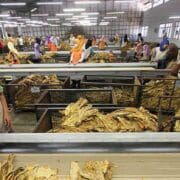
Cuba tobacco farmers recuperate after ruinous Hurricane Ian

Black Immigrant Daily News

The content originally appeared on: Caribbean News Service

A neighbor lent him a house to dry leaves, and he had a little fertilizer saved, so he plucked up the courage to plant. Now, Hirochi Robaina can hardly believe the resulting miracle.

Robaina, one of the most recognized tobacco producers in Cuba, marvels as he walks through the intense green of plants that have grown more than a meter (three feet) high in the Pinar del Rio region.

Six months after Hurricane Ian devastated 80% of the region’s tobacco infrastructure, farmers are trying to recuperate from the disaster. And though they’ll produce less than in past seasons, they say they’ll still be able to harvest the leaves for premium hand-rolled cigars, one of the Caribbean nation’s key exports.

“Not a single tobacco house was left standing. There were no warehouses, there was no tree left,” Robaino told The Associated Press, remembering how the storm left the region at the end of September. “Everything broke and at that moment I did not believe it was possible to plant.”

Robaina, 46, is heir to a grandfather’s estate that is so famous that a cigar brand bears his name: Vegas Robaina. At the beginning of October, Robaiana was resigned to planting only beans and vegetables — something, at least, but a waste for land that can produce some of the finest export tobacco.

But then he changed his mind and decided to try planting tobacco “to maintain the family tradition of a century,” he said, showing his tobacco over two hectares (about 5 acres) — or about 30% of what he had at this time in 2022.

Ian’s impact added to an already intense economic crisis in Cuba, where the Gross Domestic Product (GDP) dropped 11% in 2020.

Many farmers don’t remember ever having lived through the kind of destruction brought by the hurricane. In the fall, they had doubted they would even be able to plant any tobacco this season. It requires special care, application of fertilizers at precise moments, irrigation, cloth to cover the plants and drying houses for the leaves.

With winds of more than 200 kilometers per hour (125 miles per hour), Ian crossed the island from south to north to the west, devastating the Pinar del Rio region where 80% of the island’s tobacco is produced including almost all of its tobacco for export.

Five people in Cuba died overall and 30,000 were evacuated. Thousands of utility poles fell. Entire communities were without electricity, water, and telephones for weeks. Rice, corn, sweet potato and fruit crops were destroyed.

Some 10,000 tobacco drying houses were toppled. About 33,000 tons of stored leaves were lost, according to authorities.

Private tobacco producers have been meeting with authorities since last fall to secure commitments for the state to help settle debts and pay for materials to rebuild tobacco drying houses. Help also has come from fellow tobacco producing nations Nicaragua andthe Dominican Republic, and producers also chipped in to help each other.

Reiniel Rojas, a 33-year-old farmer who has been cultivating premium tobacco for ten years, planted 13 hectares (about 30 acres) around La Coloma thanks to the fact that he was able to finish his drying houses.

“The recovery was quick,” Rojas said.

Rojas got seeds from a colleague to plant. Robaina received four chainsaws from producer friends from other countries and his cousin lent him the drying house, while he loaned some fertile land to two other farmers.

Nature also helped by withholding plagues of caterpillars or fungi, so demand for pesticides was low.

A tobacco house costs a producer around $20,000 at the official exchange rate. A good harvest, with the delicate work of a whole year, can pay a farming family up to $50,000 dollars, farmers told the AP.

The figure is not small for Cuba, where a state salary in the city amounts to about $200 a month at the official rate in the limited official economy, but would be only about $29 in practical terms for most Cubans in the broader, informal economy.

Enrique Blanco, agricultural director of Tabacuba, part of the state-owned Cubatabaco company that regulates and manages tobacco, told the AP that this year’s plan for tobacco planting already is down to about 9,500 hectares (23,000 acres) — down from an initiallyplanned 15,000 (37,000).

There will be some 2,100 hectares (5,200 acres) of premium leaves grown under the cover of fabric, with which the country hopes to cover the coming export demand, Blanco said.

Donate At Caribbean News Service, we do not charge for our content and we want to keep it that way. We are seeking support from individuals and organisations so we can continue our work & develop CNS further.


NewsAmericasNow.com

Aid group shutters hospital in Haiti amid spike in violence

Black Immigrant Daily News

The content originally appeared on: Caribbean News Service

Doctors Without Borders announced Wednesday that it was forced to temporarily close its hospital in Cite Soleil given a sharp rise in gang violence that has left dozens dead in recent weeks.

The slum — one of the largest in the capital of Port-au-Prince — has been the site of repeated clashes between gangs.

“We are looking at a war scene just meters from our hospital,” said Vincent Harris, the aid group’s adviser.

Officials noted that large numbers of stray bullets have hit the hospital compound, and that it’s nearly impossible for the sick and injured to reach the institution for care.

The organization added that in recent days, staff members at another nearby hospital have admitted up to 10 times the usual number of people with gunshot wounds.

Human rights activists have said that from Feb. 24 to March 4, more than 60 people have been killed in one area of the capital alone, with dozens of others kidnapped.

Gangs continue to fight over more territory and are wielding more power since the July 2021 assassination of President Jovenel Moise.

Prime Minister Ariel Henry has repeatedly asked the international community for the eployment of foreign troops, a request that has gone unanswered since October.

Instead, various countries have imposed sanctions and have sent military equipment to help Haiti’s National Police, which is severely under-resourced and understaffed. More than a dozen police officers have been killed so far this year.

On Monday, Maarten Boute, the chairman of Digicel in Haiti, tweeted that the situation has grown “increasingly desperate” in Port-au-Prince.

“Armed gangs now roam freely across the entire capital city,” he wrote. “Nobody is safe. Desperation is kicking in. We need help!”

Donate At Caribbean News Service, we do not charge for our content and we want to keep it that way. We are seeking support from individuals and organisations so we can continue our work & develop CNS further.


NewsAmericasNow.com

Eastern Caribbean Green Entrepreneurship Initiative Opens Applications for Third Cohort of Incubator Program

Black Immigrant Daily News

The content originally appeared on: Caribbean News Service

The Eastern Caribbean Green Entrepreneurship Initiative (EC Greenpreneurs) is proud to announce the launch and call for applications for the third cohort of its Incubator program, aimed at supporting green entrepreneurs in the Eastern Caribbean region.

Following the success of the first two cohorts in 2021 and 2022, the program once again seeks to help early-stage businesses with environmentally and socially sustainable business models to grow and scale their enterprises.

Through the program, the Global Green Growth Institute (GGGI), in partnership with the Organisation of the Eastern Caribbean States (OECS) Commission, provides 12 weeks of virtual training, mentorship, coaching, and networking opportunities to green entrepreneurs in 6 OECS countries (including Antigua & Barbuda, the Commonwealth of Dominica, Grenada, Saint Lucia, St. Kitts and Nevis, and St. Vincent and the Grenadines). The selected individuals and/or teams also have a chance to secure USD $10,000 in seed funding through a Business Plan Competition to further develop their potential and showcase innovative solutions to tackle climate change while enhancing sustainability in the region.

The Eastern Caribbean Greenpreneurs program is funded by the Qatar Fund for Development (QFFD) and branches off from GGGI’s Global Greenpreneurs Program. This crucial regional program aims to foster the development of local green businesses and bring additional benefits of creating inclusive green jobs, improving sustainability, and helping the Eastern Caribbean countries achieve the global Sustainable Development (SDGs) and their national climate action goals.

“We are very excited to launch and receive applications for the third cohort of the Eastern Caribbean Greenpreneurs Incubator program and to welcome a new group of innovative and dedicated green entrepreneurs,” said Dr. Kristin Deason, GGGI’s Caribbean Representative. “This program has a proven track record of helping green startups overcome challenges, develop their business models, and increase their growth potential. We look forward to seeing the continued positive impact that these businesses will have on our environment and the economy in the region”.

In the first and second rounds of the program, 36 teams benefitted from weekly mentoring sessions, networking events, and virtual training webinars which enabled their ideas to scale and grow. 9 teams so far have been awarded USD $10,000 each in seed grants after their successful completion of the Business Plan Competition to further boost their progress. (see bit.ly/ecgreenpreneurs)

“The program helped our business really network and see what other people across the Caribbean are doing. It’s good to see other blue/green entrepreneurs, people doing things with great impact, and it has been such a pleasure to be part of this program,” commented Lavern King from Grenadines Gold, a company providing authentic island experiences and eco-friendly products that are made from ethically grown sea moss in St. Vincent, and the Grenadines, and a participant in the second cohort of the Incubator program. (see www.grenadinesgold.com)

The application period for the third cohort of the EC Greenpreneurs Incubator program is NOW OPEN and will close on April 9th, 2023. Interested green entrepreneurs can apply online at bit.ly/ApplyECIncubator.

Donate At Caribbean News Service, we do not charge for our content and we want to keep it that way. We are seeking support from individuals and organisations so we can continue our work & develop CNS further.


NewsAmericasNow.com

OAS Advances Women’s Economic Empowerment in the Caribbean

Black Immigrant Daily News

The content originally appeared on: Caribbean News Service

The Organization of American States (OAS), through its Executive Secretariat for Integral Development (SEDI), pursues the empowerment of women to actively participate in and benefit from the digital economy through the Economically Empowered Women for Equitable and Resilient Societies” (Women’s Economic Empowerment-WEE) project in Antigua and Barbuda, Dominica, Grenada, Saint Kitts and Nevis, Saint Lucia, and Saint Vincent and the Grenadines.

In addition to the six Organization of Eastern Caribbean States countries, the WEE Project is also being implemented in the three countries of the Northern Triangle of Central America (El Salvador, Guatemala, and Honduras) and aims to build sustainable livelihoods of small-scale women entrepreneurs as well as increase their capacity to digitize, build an online presence, and access financial services and international markets through e-commerce.

OAS Executive Secretary for Integral Development, Kim Osborne said “The OAS is committed to working with member states to harness the power, energy, dedication, determination, diligence, and hard work of women to help them get to a place where they are driving their economic future.”

In recognition of the 2023 International Women’s Day, Executive Secretary Osborne further stated, “We take the opportunity to wish all women across the Caribbean Happy International Women’s Day as we strive to build equitable and resilient societies. The contribution of women to the socio-economic development of our countries cannot be overstated and must be acknowledged recognized and embraced. When we operate within an equitable society, families, communities, livelihoods and economies are more sustainable.”

The Caribbean Project Manager, Lizra Fabien shared, “I join Executive Secretary Osborne in wishing our women Happy IWD2023! In furthering our commitment to the women of the region, we are advancing this initiative through regional and national teams of institutions that work specifically towards the sustainable development of Micro Small and Medium Enterprises (MSMEs) and that support women’s economic empowerment. There are several objectives that we are working towards in this initiative; however, this year we are concentrating on building the capacity of our local institutions and MSMEs, supporting women MSMEs in becoming market-ready and taking these market-ready women to the international commerce space through our partnerships while leveraging our relationship with the diaspora.”

Fabien further shared, “We are also building an online clearinghouse which will provide women with information on tools for financial literacy and links to access financial products and services, as well as online training materials, best practices, and other online resources aimed at bridging the gap for women in the digital economy.”

Women’s economic empowerment benefits the wider economy by reducing income inequality and promoting diversity and economic resilience. Economically empowered women can be powerful agents of change–driving stronger, sustainable economic growth, encouraging greater peace and security, and fostering cooperation. The potential of women to help build stronger and truly representative democracies by eliminating the barriers facing them cannot be overstated. Addressing these barriers for women in the Caribbean is critical to ensuring that the region can reach its full economic potential and recover from the impact of increasingly complex multi-hazards.

Donate At Caribbean News Service, we do not charge for our content and we want to keep it that way. We are seeking support from individuals and organisations so we can continue our work & develop CNS further.


NewsAmericasNow.com

ECLAC Seeks to Bring More Women into STEM, Close the Digital Gap and Eradicate Gender Cyberviolence

Black Immigrant Daily News

The content originally appeared on: Caribbean News Service

The Economic Commission for Latin America and the Caribbean (ECLAC) is calling to guarantee women’s access to digital technology, increase the number of women majoring in science, technology, engineering and mathematics (STEM) and eradicate gender cyber violence as part of its observance of International Women’s Day. This year’s theme is “DigitALL: Innovation and technology for gender equality.”

In Latin America and the Caribbean, Internet benefits are not distributed equally: an estimated 244 million inhabitants do not have access to these services. Differences in access to digital technology are especially alarming when urban and rural communities are compared: while 68% of urban homes in the region had an Internet connection in 2018, the same held true for only 23% of households in rural areas.

According to a report by ECLAC, the United Nations Entity for Gender Equality and the Empowerment of Women (UN Women), and the United Nations Educational, Scientific and Cultural Organization (UNESCO), Gender Equality and Women’s and Girls’ Autonomy in the Digital Era: Contributions of Education and Digital Transformation in Latin America and the Caribbean, women’s access to the Internet is more precarious.

An estimated four out of 10 women in the region are not connected to the Internet. The reasons vary: access may not be available, they cannot afford it, do not have a compatible device, or lack the basic skills to connect.

“The cost of mobile and fixed broadband service for the population in the first income quintile in the region averages 14% and 12% of their income, respectively, which explains why a high percentage of this low-income population does not have access to the Internet. Given that women are overrepresented in lower-income households in the region, this explains why there are more women in households that are not connected,” states the document.

“ECLAC recognizes the talent, strength and creativity of women and girls in the region. However, we note the structural persistence of gender inequality. The data speak volumes and call us to action,” notes ECLAC Executive Secretary Jos? Manuel Salazar-Xirinachs, in a video message released in observance of International Women’s Day 2023.

“This 8 March, we are calling for: A narrowing of the gender digital divide and the full participation of women in technological development and knowledge. And also, for a transition to a care society, a development model that puts equality and sustainability of life at the centre and leaves no one behind,” announced the head of ECLAC.

Women in the region have achieved much in terms of education, surpassing men by 6.1 percentage points in high school completion. Despite these achievements, women are not equally represented in academic disciplines, as shown in the ECLAC report. These inequalities widen over the course of primary and secondary education and later at the university level.

In most countries of the region, women account for no more than 40% of graduates in STEM careers. The areas where women are least represented are engineering, industry and construction (where women’s college enrollment stood at 30.8% in 2019) and information and communications technology (ICT), where only 18% of college students were women in 2019.

When women do earn college degrees, these do not necessarily translate into better jobs or salaries once they enter the labor force. Women’s job market participation stands at just 50% and women spend almost triple the amount of time on unpaid housework and caregiving than men (19.6% of their time versus 7.3% for men).

Women who remain in STEM careers do not achieve the same as men in terms of scientific production or academia: on average, less than 30% of patents list at least one woman on the team of inventors in the region. Women’s authorship in physical and chemical science publications stands at 38% and engineering, 30%.

Another finding from the ECLAC report is the different types of violence girls and women suffer on digital media. This gendered violence, which includes cybercrimes such as threats, hate speech, sexual harassment, invasion of privacy and the non-consensual sharing of images, among others, is generally sexual and sexist.

According to the commission’s report, women who are human rights activists, politicians, communicators and journalists, and public leaders are often particular targets of this gender-based cyber violence.

ECLAC is encouraging the countries of the region to uphold the regionals accords designed to close the digital gender gap and guarantee the participation of all girls and women in development and technological knowledge. These are included in the Buenos Aires Commitment, the Digital Agenda for Latin America and the Caribbean (eLAC 2024) (both approved in November 2022) and in the Declaration by the ministers and authorities of the mechanisms for gender equality and empowerment of women in Latin America and the Caribbean, signed in February of this year.

ECLAC is calling on countries to make progress simultaneously in different priority areas. Its proposals include incorporating a gender perspective in the processes and policies related to the transformation of production and the digital transformation of the most dynamic sectors of the economy; fostering gender and social equity in caregiving; and promoting integral caregiving systems that rely on technology solutions to give girls and women more time for learning and greater access to education and digital technologies.

Another need the report notes is that of supporting inclusive digital transformation processes (like the digital market basket) to ensure household Internet access across the region. Career and technical education (CTE) should be promoted to increase the number of girls and women in STEM and eliminate gender stereotypes in education. Women must be fully involved in the creation of digital technologies and innovation processes, and safe spaces free of digital violence need to be created. Finally, governance must be strengthened along with the multisector partnerships needed to achieve the 2030 Agenda for Sustainable Development Goals.

Donate At Caribbean News Service, we do not charge for our content and we want to keep it that way. We are seeking support from individuals and organisations so we can continue our work & develop CNS further.


NewsAmericasNow.com

Bounty Killer Clash With Police At Angel Doolas Son’s Funeral

Black Immigrant Daily News

The content originally appeared on: Urban Islandz

Bounty Killer had choice words for police officers during the funeral ceremony for his godson’s youngest child on Sunday. The artist did not hold back as

NewsAmericasNow.com

Drake and Shenseea Rumored Collab Leaked, What Their Fans Saying

Black Immigrant Daily News

The content originally appeared on: Urban Islandz

Drake and Shenseea’s long-rumored collaboration leaked online, leaving some fans disappointed.

Urban Islandz first reported in June 2021 that the dancehall singer and the Toronto rapper got a collaboration in the works. At the time, her musical nemesis Spice also spilled the beans on the collab during one of her Instagram Live sessions. Since then, the rumors have died down, and Shenseea has since shared she is open to collaborating with Drake but iced the age-old allegations she was in a relationship with him.

Fast forward to today, a snippet of a song purported to be a collaboration with Shenseea and Drake is making the rounds online. The audio clip features the two artists in their distinct flow trading bars over a trippy beat.

“I come first…wet up, wet up, mek it slide in quicker,” Shenseea sings with Drake coming through singing, “slide through, come get this good, good love I provide you / You first then me / I wanna give you plenty.”

Shenseea and Drake

Neither Shenseea nor Drake reacted to the alleged leak, but some fans are already questioning its authenticity. Others are sounding off, saying it’s not what they expected to hear from the two suggesting that it’s underwhelming.

“This very mid, as a ShenYeng this is not what I was expected on a big collab with Drake, no surprise someone leak it,” one female fan said. Another fan added, “this explains why this never see the light of day not ready for prime time. Big artist like Drake yo affi go hard Shenseea we know you got what it takes.”

Shenseea is riding high off her performance at the 2023 Rolling Loud California music festival last weekend. She is also currently working on her sophomore album, due sometime this year. The project is the follow-up to her debut Alpha, released last March.

Drake has not announced any new music, and recently he revealed that he thought about hanging up his mic and retiring gracefully from music. He is also an actor, so perhaps he will go back to acting following an impressive decade run in music that saw him shattering countless records.

NewsAmericasNow.com

Tyga and Avril Lavigne Goes Instagram Official After Locking Lips In Paris

Black Immigrant Daily News

The content originally appeared on: Urban Islandz

Rapper Tyga has confirmed that he and pop artist Avril Lavigne are in a relationship. This comes after the couple was spotted out and about together,

NewsAmericasNow.com