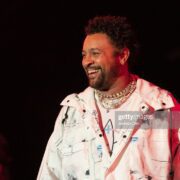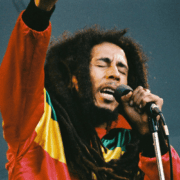

Bob Marley And The Wailers’ ‘Could You Be Loved’ Certified Triple Platinum In The UK

Bob Marley & The Wailers’ 1980 hit Could You Be Loved has been certified 3X Platinum in the United Kingdom, matching Three Little Birds as the reggae group’s highest-certified song in the country.

From Georgetown To Nasdaq: How One Guyana Born Immigrant Is Solving The Caribbean’s Capital Access Crisis

By News Americas Business News Writer

News Americas, NEW YORK, NY, Fri. May 1, 2026:  When Felicia J. Persaud left Georgetown, Guyana, in 1996 to build a new life in the United States, she carried with her something no immigration officer could stamp out – an unwavering belief that the Caribbean deserved better access to the global economy.

Nearly three decades later, that belief has become a platform, a portfolio of companies, and now, a Nasdaq graduation.

On April 30, 2026, Persaud – founder and CEO of ICN Group and the newly launched AI Capital Exchange – graduated with honors from the Nasdaq Entrepreneurial Center’s Milestone Circles program, an intensive 12-week initiative that has supported over 6,300 entrepreneurs since its founding five years ago.

“This program pushed me into answering my why, and my why remains solving the problem of lack of access to capital in emerging markets like the Caribbean and Latin America,” Persaud said.

Persaud was part of Cohort Group 32: Circles 513, 514 & 515, alongside 28 fellow entrepreneurs from across the United States. The program, run by the Nasdaq Entrepreneurial Center – which has accelerated resilient growth for under-resourced founders worldwide since 2015 – focuses on helping founders build, scale, and lead with purpose.

Building a Bridge to $5.7 Trillion

During the 12-week program, Persaud used the mentorship and structure to sharpen her investor pitch for AI Capital Exchange – a platform she built herself, as a non-technical founder, in just over four months, using artificial intelligence.

The platform is already live. AI Capital Exchange pre-qualifies borrowers and connects them to institutional investors, lenders, and investment agencies globally. To date, it has filtered over $200 million in deals – what Persaud calls “whale filtering” – serving as a bridge to the U.S. $5.7 trillion capital market.

It is, by her own description, the world’s first AI-powered debt capital platform of its kind.

Persaud is now seeking a minimum seed round of USD $500,000 to fuel the platform’s next phase of growth. The platform has already gained international recognition, having been accepted into the HICool competition after participating in the India AI Challenge in January 2026.

Paying It Forward to the Caribbean

True to her roots as an advocate for Caribbean communities, Persaud is not keeping the lessons of Nasdaq’s Milestone Circles to herself.

In conjunction with her graduation, she is releasing a free list of Caribbean accelerators currently open for Caribbean entrepreneurs – available at investcaribbeannow.com/caribbean-accelerators.

“I am now paying it forward,” she said.

Decade Plus Journey Built On The Caribbean

Persaud’s journey from Georgetown to Nasdaq is the kind of immigrant story that defines Caribbean America.

A former journalist and advocate, she went on to found NewsAmericasNow.com – the Caribbean diaspora’s leading daily news source- along with CaribPR Wire, Hard Beat Communications, and Invest Caribbean, all under her ICN Group umbrella.

She is listed in the U.S. State Department Speakers Database as a Caribbean expert, has been quoted by AP, CNN, BBC, the New York Times, Reuters, the Washington Post, Forbes, and dozens of other global outlets, and holds a weekly immigration column in the New York Amsterdam News – one of America’s oldest African American newspapers.

She is also the founder of the Hard to Beat podcast.

For a woman who arrived in the United States 30 years ago with a journalist’s instinct and an entrepreneur’s hunger, the Nasdaq milestone is not an endpoint. It is, as her platform suggests, a pre-qualification for what comes next. Caribbean entrepreneurs can access the free Caribbean accelerator list at investcaribbeannow.com/caribbean-accelerators. Learn more about AI Capital Exchange at aicapitalexchange.c

King Charles III Makes History With First Ever Royal Visit To Bermuda

By Staff Reporter | NewsAmericasNow.com

News Americas, HAMILTON, Bermuda, Fri. May 1, 2026: King Charles III has made history as the first Sovereign to visit Bermuda from May 1st to 2nd. The landmark two-day Royal Visit will take him from St. George’s in the East to the Royal Naval Dockyard in the West.

The visit comes days after His Majesty’s US state visit and marks his first official trip to a British Overseas Territory as Sovereign – a milestone moment for the island nation and its people. Governor His Excellency Andrew Murdoch, CMG, has invited Bermudians to join in welcoming The King at multiple public viewing points across the island.  While some anti-monarchy sentiment exists, the visit is largely framed as a routine, diplomatic engagement to a British Overseas Territory.

Friday May 1st – East To West

The Royal Visit begins today at King’s Square in St. George’s, where His Majesty will be received by the Royal Bermuda Regiment and dignitaries before proceeding to the historic St. Peter’s Church.

The King will then travel to the Bermuda Aquarium, Museum and Zoo – which celebrates its 100th anniversary this year – and to Trunk Island in Harrington Sound, where he will learn about local wildlife conservation efforts.

In the afternoon, His Majesty moves to City Hall and Arts Centre in Hamilton, where he will meet dignitaries and some of Bermuda’s most celebrated artists and artisans. He will then proceed to Albuoy’s Point before heading to the Royal Naval Dockyard.

At The Keep at the National Museum of Bermuda, The King will be greeted by the National Gombey Troupe – one of Bermuda’s most iconic cultural traditions – before visiting the Queen’s Exhibition Hall and 1850 Ordinance House.

His Majesty will close the day by meeting Commonwealth athletes preparing for the upcoming 2026 Glasgow Commonwealth Games, as well as members of youth organizations from across the island.

Saturday May 2nd – Closing With History

On Saturday morning The King returns East to formally open the Great Bay Coast Guard Station in St. David’s before concluding his visit at Cooper’s Island, where he will learn about a groundbreaking new telescope project aimed at mitigating space debris.

What Bermudians Need To Know

Members of the public are encouraged to come out and welcome The King at three key public locations — King’s Square in St. George’s, City Hall in Hamilton, and the Royal Naval Dockyard.

Road restrictions and temporary traffic controls are expected across parts of Hamilton, St. George’s, and Dockyard during the visit. King’s Square will be closed from 7am to noon on Friday. Residents are advised to allow extra travel time and follow the instructions of police and traffic marshals. Parking for the BAMZ visit is available at Flatts Cricket Field, with a public viewing area in the parking lot across from the aquarium.

The BAMZ will be closed for part of Friday during the Royal Visit and will reopen to the public at 2pm.

A Special Commemorative Stamp

The Bermuda Post Office has released a limited-edition commemorative overprint stamp to mark the occasion – available for $35 and functioning as both a postal item and collector’s keepsake. Orders may be prepaid for collection or mailing at the BPO and all sub-post offices. Details are available at the Bermuda Philatelic Bureau online.

King’s Baton Relay

The Royal Visit also coincides with a significant cultural moment – the unveiling of Bermuda’s King’s Baton as part of the King’s Baton Relay ahead of the 2026 Commonwealth Games. The baton, designed by local artist Chyna Talbot, reflects Bermuda’s culture, natural beauty, and sporting spirit and will ultimately be presented at the Opening Ceremony this July.

Minister of Tourism and Transport Owen Darrell called the moment a proud milestone for the island. The baton forms part of a global relay connecting Commonwealth nations in the lead-up to the Games.

A Visit That Celebrates Bermuda’s People

Beyond the ceremonial, the visit is designed to highlight the contributions Bermudians make to their communities, the wider British family, and beyond – with a particular focus on connecting The King with younger generations and their creativity in tackling both local and global challenges.

For a small island nation with an outsized place in the Commonwealth, the visit represents a moment of genuine historic significance – one Bermudians are being encouraged to witness firsthand.

Full details on viewing locations and road restrictions are available through the Government of Bermuda.

RELATED: Caribbean Nationals Honored On King Charles New Year Honors List 2026

Brooch Diplomacy And Strained Unity: How U.S. Pressure Is Seeding Fractures In CARICOM

By Ron Cheong

News Americas, TORONTO, Canada, Weds. April 29, 2026: CARICOM’s founding promise can be characterized as: One Region, One People, One Future – something it would be helpful to refocus on in moments like this.

The bloc began as a regional integration project grounded in shared history, collective resilience, and a unified diplomatic voice – that is now being tested by a sharper, more transactional global order. At the center of that strain lies a consequential shift: The United States has moved away from partnership toward influence through pressure. That shift is no longer abstract – it is playing out in symbols, alliances, and fractures across the globe including the Caribbean, which is our focus.

Few episodes capture this better than the recent “brooch diplomacy” controversy involving Delcy Rodríguez. Her decision to wear a brooch depicting Venezuela’s claim over Guyana’s Essequibo region during engagements with CARICOM leaders in Barbados and Grenada was more than a symbolic gesture – it was a calculated assertion of territorial ambition in a regional diplomatic space that is supposed to prioritize neutrality and cohesion.

For Guyana, the implications are stark. In the midst of navigating a volatile border controversy with Venezuela, this uncomfortable foray raises the possibility that elements within the CARICOM community could be somewhat open, directly or indirectly, to Venezuelan influence.

But to understand how CARICOM arrived at this moment, one must look beyond the region to Washington.

Pressure Over Partnership

For decades, U.S. – Caribbean relations were built on a mix of development assistance, trade access, and institutional cooperation. While never perfectly balanced, the relationship carried some sense of predictability. That is no longer the case.

Today, U.S. policy toward the Caribbean increasingly emphasizes sanctions, geopolitical alignment, and strategic compliance. Whether through its hardline stance on Cuba, military action in Venezuela, or sweeping tariff regimes, Washington’s posture has become more conditional and less collaborative.

The consequences are cumulative.

The long-running embargo on Cuba, now intensified into a de facto oil blockade, has forced Caribbean states into agonising choices between principle and survival. Cuban medical missions, long a backbone of regional healthcare systems, are now being unwound or restructured under pressure. Even Guyana, once deeply aligned with Havana, had been forced by imperatives of its security and survival to recalibrate this alignment and historical friendship.

In addition, rather than contributing to Guyana’s security, the recent U.S. military intervention in Venezuela, and arrest of Nicolas Maduro, culminated in an unstable paradox. Instead of ushering in a democratic transition led by opposition figures – and greater regional stability, the US chose to let power effectively remain within the existing governing structure, now fronted more prominently by Rodríguez herself.

If anything, this outcome has strengthened a figure who is arguably more diplomatically agile and legally sophisticated than Maduro, enabling Venezuela to engage the region with renewed effectiveness.

Oil, Influence, And Divergence

Energy politics further complicate the picture.

Venezuela’s oil industry remains state-controlled, giving Caracas a powerful tool of foreign policy: the ability to cultivate alliances through preferential energy arrangements. Historically, initiatives like Petrocaribe allowed Venezuela to build goodwill across the Caribbean by supplying oil on concessional terms.

Guyana, by contrast, sits on vast high quality oil reserves but operates within a very different model. Its sector is dominated by foreign firms, most notably ExxonMobil. While this has accelerated production and revenues, it limits Georgetown’s ability to deploy oil as a direct instrument of regional diplomacy. This divergence matters.

Where Venezuela can translate energy into influence, Guyana must rely more heavily on formal alliances – chief among them, its alignment with the United States for security backing against Venezuelan territorial claims. That alignment, however, comes at a cost.

A Hornet’s Nest of Contradictions

Guyana faces tough strategic options. There was little choice other than leaning toward Washington for protection in the face of the Venezuelan threat. But the U.S. influence in the region has not lead to more stabilization as would have been hoped.  Their approach, marked by coercion rather than consensus, has heightened tensions, disrupted economic flows, and placed CARICOM states under competing pressures. It also undermined the ties between some longstanding regional and ideological partners, and Cuba in particular.  

This weakens the very CARICOM unity that Guyana seeks to champion. The “broochgate” episode underscores the dilemma. Georgetown has protested that CARICOM members should not entertain Venezuelan symbolism which challenges its sovereignty.  But even as it did so – the political opposition in Guyana chimed in that: Guyana itself has shown selective solidarity in its actions.

The claim was that Although Cuba is not a CARICOM member it has long had ties with its members.  When Cuba faced intensified U.S. pressure, Guyana’s response was measured, even muted. And when regional states were forced to reconsider Cuban medical cooperation, Georgetown adjusted its position rather than seeking a unified defense. Notwithstanding Guyana has since sent humanitarian rice shipments to Cuba, the point was that these the actions are not consistent with mutual support.

CARICOM At A Crossroads

The deeper issue is not any single incident, but the fragmentation of strategic alignment within CARICOM.

External powers are no longer offering partnership frameworks – they are presenting choices, often framed as zero-sum. The United States demands alignment on security and geopolitics. China offers targeted economic engagement. Venezuela leverages energy diplomacy and regional familiarity. Cuba, despite its constraints, remains a vital social partner.

Each relationship pulls CARICOM states in different directions. Without a coordinated regional strategy, these pressures risk turning CARICOM from a unified bloc into a collection of individually managed relationships – precisely the kind of fragmentation its founders sought to avoid.

The Path Forward

For Guyana, the immediate priority is clear: defend its territorial integrity. But doing so effectively requires more than bilateral security guarantees – it requires regional legitimacy.

That, in turn, demands consistency. Guyana’s call for unwavering CARICOM support on Essequibo, should be supported by the same level of commitment on issues that matter to its community, whether related to Cuba, economic sovereignty, or external pressure.

More broadly, CARICOM must confront a hard truth: the era of comfortable alignment is over. The region is operating in a fluid, contested geopolitical space where influence is increasingly exercised through leverage rather than loyalty.

In that environment, unity is not just an aspiration – it is a necessity. Because if the Caribbean cannot hold a coherent center, others will define it from the outside.

EDITOR’S NOTE: Ron Cheong is a frequent political commentator and columnist whose recent work focuses on international relations, economic resilience, and Caribbean-American affairs. He is a community activist and dedicated volunteer with extensive international banking experience. Now residing in Toronto, Canada, he is a fellow of the Institute of Canadian Bankers and holds a Bachelor of Science degree from the University of Toronto.

RELATED:

CARICOM News: How U.S. And China Are Shaping Caribbean Energy

The Long Siege Of Cuba: CARICOM At Last Begins Pooling Cash For Cuba Relief Supplies

The Long Siege Of Cuba & Caribbean Geopolitics: The Prequel To King Kong And The Island

King Kong And The Island: America’s Moral Collapse And Cuba

Powertranz Partners With 1Money To Enable Stablecoin Payments

News Americas, Hamilton, Bermuda, Weds. April 29, 2026: Powertranz, a leading payment gateway in the Caribbean and Central America, today announced a strategic partnership with 1Money, the first vertically integrated financial stack. The collaboration enables Powertranz clients to settle invoices and pay for Powertranz services using stablecoins, offering a faster, more flexible alternative to traditional international cross-border payment methods.

With over 27 years of experience, Powertranz is at the forefront of payment innovation in the region. This new partnership represents a further step in that journey – one that recognises the growing role of digital assets in the global payments landscape and the evolving expectations of modern merchants.

By integrating 1Money’s platform, Powertranz clients can now settle Powertranz invoices faster and more efficiently than traditional cross-border transactions. The integration eliminates many of the inefficiencies associated with traditional international transfers, including delays and high conversion costs, while remaining fully compliant with applicable regulations. This is the first phase of a wider stablecoin payments strategy.

“At Powertranz, we are committed to giving our clients more choice in how they do business with us. By enabling stablecoin payments for our services, we are making it easier for clients to pay us in a way that is modern, efficient, and aligned with the evolving global payments landscape. We are pleased to be working with 1Money, whose platform is built to support compliant stablecoin and fiat flows with global bank on- and off-ramps.”

— Chris Burns, Powertranz CEO

Key Client Benefits

•  Enhanced flexibility: Stablecoins are now available as an additional payment option, giving clients greater freedom in how they settle invoices with Powertranz.

•  Improved payment efficiency: Stablecoin settlements are faster and more streamlined than traditional methods, particularly for cross-border payments where delays and currency conversion costs have historically posed challenges.

•  Continued innovation: This partnership underscores Powertranz’s commitment to evolving alongside the needs of merchants and the broader global payments ecosystem, ensuring clients always have access to best-in-class solutions.

About Powertranz

Powertranz is a leading payment gateway powering online and in-store payments for merchants across the Caribbean and Central America. With over 25 years of experience, PCI DSS Level-1 certification, and integrations with banks and shopping carts across the region, Powertranz provides secure, multi-currency payment solutions, tokenization services, and fraud management solutions to more than 10,000 businesses – processing more than 60 million transactions annually. Powertranz is headquartered in Hamilton, Bermuda.

Website: www.powertranz.com

About 1Money

1Money is the first vertically integrated, full-stack infrastructure company providing a unified technology layer across the lifecycle of stablecoins and real-world assets (RWAs). The 1Money ecosystem consists of three synergistic pillars:

1Money Network, a patent-pending Layer-1 blockchain purpose-built to be the fastest, cheapest, and most scalable network for compliant stablecoin and RWA transactions

1Money.com, a licensed and regulated orchestration platform that enables users to receive, buy, sell, convert, send, and custody both stablecoins and fiat currencies domestically and globally; and

1Money Issuance, an institutional-grade “Issuance-as-a-Service” solution that allows partners to launch white-labelled stablecoins for their own customers.

Operating through fully regulated entities and holding more U.S. money-transmitter licenses than most major stablecoin competitors, 1Money combines the rigor of traditional finance with the always-on speed and efficiency of Web3. This foundation enables faster settlement, lower costs, and enterprise-grade compliance, making 1Money the trusted infrastructure layer for global money movement.

Website: www.1money.com

YOU MAY ALSO LIKE: One Wallet Across The Caribbean: Rethinking Payments For Growth And Connection

IShowSpeed Draws Over 16 Million Viewers In Caribbean Tour To Date – And Tourist Boards Are Getting A Free Ride

By Staff Reporter | NewsAmericasNow.com

News Americas, NEW YORK, NY, Weds. April 29, 2026: He arrives by Expedia Gulfstream and gets millions watching. IShowSpeed, the American internet phenomenon whose real name is Darren Jason Watkins Jr., has so far racked up more than 16 million cumulative live stream viewers across five Caribbean islands, turning what would have cost governments millions in tourism advertising into a free, real-time global showcase.

The 19-year-old African American streamer kicked off his Caribbean run in Trinidad and Tobago before hitting Grenada, Barbados, St. Lucia, and St. Vincent and the Grenadines yesterday. His highest single-stream viewership so far has come from Trinidad and Tobago at 4.7 million. Even his lowest – 2.9 million from Barbados – rivals the audience of a major cable news broadcast.

Why Caribbean Tourism Boards Should Be Paying Attention

Speed’s visits aren’t scripted tourism campaigns. They are chaotic, unfiltered, deeply human encounters with local culture – and that is precisely why they work. When millions of Gen Z viewers watch him eat doubles in Port of Spain, react to a fish market in Barbados, or get mobbed by fans on a St. Lucia street, they aren’t watching an ad. They’re experiencing a place.

Tourism economists have a term for this: earned media. What Speed is generating for the Caribbean is essentially the same visibility that agencies spend tens of millions of dollars trying to manufacture – delivered organically to a global audience that trusts him.

During a recent Africa tour spanning 20 countries in under a month, Speed gained more than 3.7 million YouTube subscribers and pushed past the 50 million subscriber milestone. The pattern is consistent: he visits, the world watches, and destinations trend.

The Tour Isn’t Over

While no official schedule has been confirmed, the broader Caribbean leg is expected to include Jamaica, the Dominican Republic, the Bahamas, Puerto Rico, Antigua and Barbuda, Dominica, Guadeloupe, Sint Maarten, St. Kitts and Nevis, and the U.S. Virgin Islands.

For islands still on the itinerary, the calculus is straightforward: millions of eyeballs, zero cost, and the kind of youth-market penetration that no tourism board has reliably cracked.

The Bigger Picture

Speed has taken his cameras across Africa, Europe, Asia, South America, and Australia and New Zealand. His Caribbean run follows that same model: arrive with a massive platform, engage authentically with locals, and let the algorithm do the rest.

What is new is the regional concentration. Five islands in rapid succession means the Caribbean as a whole – not just individual destinations – is getting a sustained moment in front of one of the internet’s largest audiences.

For a region that has long struggled to compete with better-funded tourism markets for global attention, Speed’s tour is a reminder that the rules of visibility are changing. And the Caribbean, for once, is on the right side of the algorithm.

ABOUT ISHOWSPEED

Speed, whose real name is Darren Jason Watkins Jr., was born in Ohio. He reportedly became a millionaire by age 16 or 17 – one of the fastest wealth accumulations in streaming history. By the end of 2023, he had firmly established himself as a multi-millionaire, with his net worth growing well beyond early estimates, driven by YouTube ad revenue, brand deals, merchandise, and his massive live-streaming audience. His net worth ranges from $10 million to $30 million.

IShowSpeed’s Caribbean tour is ongoing. NewsAmericasNow.com will continue tracking viewership data and island visits as they are confirmed.

Guyana Protests Delcy Rodríguez Brooch Showing Claim To Essequibo

News Americas, GEORGETOWN, Guyana, Tues. April 28, 2026: Guyana’s President, Irfaan Ali, has expressed “grave concern” over what he described as a provocative display by Venezuela during recent engagements with Caribbean leaders, as tensions continue over the long-running Essequibo territorial dispute.

In a letter to Caribbean Community (CARICOM) Chairman Terrance Drew, Ali criticized the public display of a brooch worn by Acting President of Venezuela, Delcy Rodríguez, that depicted a map of Venezuela, including Guyana’s Essequibo region. The Guyanese president said that while Georgetown respects the right of CARICOM member states to engage with Venezuela, it was “deeply regrettable” that such meetings were accompanied by symbols asserting a territorial claim against Guyana.

Rodríguez recently met with Grenada’s Prime Minister Dickon Mitchell and Barbados Prime Minister Mia Mottley during visits aimed at strengthening Venezuela’s ties with the Caribbean.

Ali warned that the use of regional platforms to promote claims currently before the International Court of Justice could be interpreted as tolerance or acquiescence. “This is not a matter of symbolism alone,” Ali said, describing the display as a “calculated and provocative assertion” of Venezuela’s claim to the resource-rich Essequibo region.

The dispute between the two South American nations dates back more than a century and is currently before the ICJ, which is set to begin oral hearings in early May. Guyana is seeking affirmation of the 1899 Arbitral Award that established the boundary between the two countries.

The court has already ruled that it has jurisdiction over the matter, paving the way for a full hearing on the merits. Ali reiterated that Guyana remains committed to a peaceful resolution under international law but expects all parties to respect the judicial process and refrain from actions that could escalate tensions.

“Guyana expects all states… to act consistently with the principles of the United Nations Charter, refrain from provocation, and respect the ongoing judicial process,” he said.

Rodríguez arrived in Barbados late Sunday, marking her second official visit to a Caribbean island in recent weeks after visiting Grenada on April 9.

Mottley and Rodríguez met in the capital of Bridgetown for bilateral talks that centered on topics including energy sector cooperation, according to the two leaders who held a joint press conference but did not take questions. Venezuela invited Barbados to invest in oil and gas exploration, Rodríguez said, adding via a translator: “To join strengths, to increase the production of hydrocarbons in Venezuela.”

The partnership also would help Venezuela provide energy security for the people of Barbados, Rodríguez asserted. She has been acting as Venezuela’s president after the U.S. military captured and removed former President Nicolás Maduro in early January.

FLASHBACK: US Reaffirms Land Boundary Between Venezuela And Guyana Should Be Respected Amid Meeting Between Ally, Maduro

IShowSpeed Hits Barbados As Caribbean Tour Continues

News Americas, NEW YORK, NY, Mon. April 27, 2026: YouTube sensation IShowSpeed, one of the world’s most popular online streamers, is continuing his high-energy Caribbean tour, with his latest stop bringing him to Barbados Monday, after earlier visits to Trinidad and Tobago and Grenada.

Speed, whose real name is Darren Jason Watkins Jr., is an American influencer and live-streamer known globally for his dramatic, fast-paced broadcasts and real-life travel streams that attract millions of viewers. He has emerged as a major digital figure, often acting as a cultural ambassador by showcasing countries and local experiences to global audiences in real time.

The global livestream star, known for his unpredictable and viral content, has been drawing attention across the region as he moves from island to island, blending entertainment with cultural immersion. After kicking off in Trinidad and Tobago, Speed traveled to Grenada, where he explored local culture, including scuba diving and participating in traditional Jab Jab celebrations. He then arrived in Barbados, where he made a stop at a local school, further fueling excitement among fans and even received a rock as a gift.

Barbados is often referred to as a “rock” due to its unique geological formation: a coral limestone island formed by tectonic plate collision, unlike many of its neighbors. The island, particularly on the east coast, features dramatic rock formations, including the famous Bathsheba Rock and Mushroom Rock, carved by Atlantic erosion.

While his exact next stop has not been officially confirmed, the broader Caribbean tour is expected to include Antigua and Barbuda, the Bahamas, Dominica, the Dominican Republic, Guadeloupe, Jamaica, Puerto Rico, Sint Maarten, St. Kitts and Nevis, St. Lucia, St. Vincent and the Grenadines, and the United States Virgin Islands.

Speed is widely regarded as one of the internet’s most-watched travel streamers, known for turning everyday interactions into viral moments through live broadcasts that attract massive global audiences.

His Caribbean run follows a series of global tours that have taken him across Africa, Europe, Asia, South America, and Australia/New Zealand. During a recent Africa tour spanning 20 countries in under a month, he gained more than 3.7 million YouTube subscribers and surpassed 50 million total subscribers, highlighting his growing global influence.

With streams often showcasing local culture, landmarks, and spontaneous fan interactions, Speed’s visits have proven to significantly boost online visibility for destinations featured.

This Caribbean leg also includes a personal touch. Speed has his younger brother Jamal joining him on the tour, adding to the energy and unpredictability that define his content.

Known for his high-energy personality and real-time engagement with fans, Speed’s presence is already generating buzz across the region, with crowds gathering and social media lighting up at each stop. As the tour continues, Caribbean audiences – and millions watching online – are tuning in to see where he lands next.

RELATED: No Caribbean Beaches In World’s Top 10 – But Here Are The Top 10 Best Caribbean Beaches For 2026

One Wallet Across The Caribbean: Rethinking Payments For Growth And Connection

By Dr. Isaac Newton 

News Americas, NEW YORK, NY, Mon. April 27, 2026: Imagine stepping off a plane in Port of Spain, paying for a taxi with your Jamaican wallet, grabbing lunch in Barbados, and settling a hotel bill in Guyana, all instantly, securely, and in your own currency – one wallet. No delays, no conversions, no uncertainty. This is not a dream. Ghana has already made it real by transforming its national ID into a full-featured payment tool. Citizens can link bank accounts, send and receive money, and pay for goods through a single platform. It works alongside global networks such as Visa and Mastercard while providing a faster, simpler, and more affordable way to move money. Systems must serve the people who use them first and connect seamlessly to the wider world.

Other countries provide valuable lessons. In Nigeria, mobile transfers and instant bank payments make moving money fast and accessible for everyone. In India, the Unified Payments Interface allows anyone to send money instantly using a phone number or a QR code, whether paying a street vendor or a utility company. In China, applications such as Alipay and WeChat Pay integrate payments into daily life, from ordering food to taking public transportation. These systems succeed because they prioritize the user experience, eliminate friction, and make transactions predictable and reliable.

The Caribbean faces a similar challenge. Countries including Guyana, Trinidad and Tobago, Jamaica, Barbados, Suriname, and the members of the Eastern Caribbean Currency Union operate across multiple currencies and fragmented systems. Travel and trade are slowed by delays, inconsistent acceptance, and unnecessary complexity. Citizens and visitors face obstacles that make simple transactions frustrating and time-consuming.

The solution is a regional digital payments layer that works across local currencies. Citizens and visitors could pay anywhere in the Caribbean while the system converts automatically. Transactions would be immediate, transparent, and consistent, whether in Nassau, Castries, or Georgetown. The region could function as a single connected marketplace while each country retains its own currency.

Achieving this requires three strategic steps. Governments must establish secure digital identity systems that authenticate users across borders. Central banks and regulators must build a real-time network connecting banks, mobile wallets, and fintech platforms. Global providers such as Visa and Mastercard should integrate as gateways for international transactions rather than as the foundation of the system. These steps create a structure that is robust, inclusive, and adaptable.

The impact would be profound. A vendor in Kingston could receive payment from a visitor in Port of Spain instantly. A supplier in Bridgetown could receive funds from Georgetown without delay. Commerce, tourism, and daily transactions would become faster, simpler, and more reliable. The Caribbean could strengthen financial independence, expand inclusion, and operate efficiently within the global economy.

This is more than a payment system. It is a foundation for growth, opportunity, and trust. By designing solutions that serve local people first and connect to the world, the Caribbean can become a leader in digital finance while making life easier and more predictable for every citizen and visitor.

Editor’s Note: Dr. Isaac Newton is a leadership strategist and change management expert specializing in governance and ethical leadership. Educated at Harvard, Princeton, and Columbia, he is co-author of Steps to Good Governance and has advised boards, educators, and public leaders across the Caribbean and internationally, integrating policy, psychology, and ethics to strengthen institutional performance.

RELATED: When Loyalty Becomes A Leadership Risk In Small States

Caribbean-Roots Actors Star In Michael Jackson Movie

By NAN ET EDITOR

News Americas, NEW YORK, NY, Sat. April 25, 2026: Caribbean-rooted actors are taking center stage in the Michael Jackson movie, Michael, bringing depth and cultural nuance to the story of one of music’s most iconic families.

Award-winning actor Colman Domingo portrays Joe Jackson, the complex and often controversial patriarch of the Jackson family, while Nia Long takes on the role of Katherine Jackson, the matriarch whose quiet strength helped anchor the family through fame and pressure.

The film, which opened in theaters on Friday, April 24th, stars Jaafar Jackson, the nephew of Michael Jackson, as his uncle. Juliano Krue Valdi, a 12-year-old actor and dancer, plays the young Michael. The movie traces the singer’s rise from childhood in Gary, Indiana to stardom with The Jackson 5 and on to solo global superstardom. The story focuses on the period from the 1960s through 1988, stopping before the later controversies that surrounded the artist.

In an interview with Black Girl Nerds, Long, whose roots extend to Trinidad and Tobago, Barbados and Grenada, spoke about approaching the role of Katherine Jackson with empathy rather than judgment.

“I wouldn’t say judgment,” she explained. “I would definitely say empathy, and I would say that I have more in common with her than I ever thought I did.”

Long said portraying Katherine required tapping into her own experiences as a mother, emphasizing the protective instinct that defines the role. “Once you’re a mother and you’re connected to the wellness of your family and the wellbeing of your children, there’s an energy of protection that supersedes everything,” she said. “That was her job, that was her mission, that was her heart.”

She described Katherine Jackson as a steady, grounding force during the family’s rise to global fame. “When you look at what the Jackson family had to manage, the level of stardom, there had to be a quiet force leading the way,” Long said. “That’s what makes her such a beautiful woman.”

Domingo, whose heritage traces back to Belize and Guatemala, also highlighted the importance of portraying Joe Jackson with complexity rather than one-dimensional judgment.

“We started by having great conversations about men that we know, that we’re raised by, men of a certain generation,” Domingo said, noting that Joe Jackson represented a generation shaped by responsibility, discipline, and survival.

He emphasized that the role required acknowledging both strength and vulnerability. “Sometimes people think that they’re just hard in some ways, but we know their softness, we know their vulnerabilities,” he said. “And we care about these men deeply, and so we wanted to make sure that we really looked at Joe Jackson… with as much complexity as possible.”

Directed by Antoine Fuqua, Michael offers audiences an intimate look at the family dynamics, sacrifices, and pressures that shaped the King of Pop’s early life and career.

The film also leaves room for a potential continuation, with Domingo hinting at the possibility of a second installment exploring later chapters of Jackson’s life.

Michael Jackson, who rose to fame with The Jackson 5 before becoming a global superstar, died in 2009 at age 50. He was acquitted in a 2005 criminal trial and consistently maintained his innocence against allegations made during and after his lifetime.

 His nephew does a great job of channeling Michael’s signature look, executing his iconic choreography, embodying his voice, recreating his mannerisms, and getting into his headspace.

When it comes to the music, featuring hits from across Jackson’s early career, does Jaafar provide the vocals in the musical movie? The answer is both yes and no. When asked if he lent his voice to the project, Jaafar replied, “When I was doing all the performances, I was actually singing out live in the microphone on top of Michael’s track.”

He went on to explain that the final product is “a blend” of his vocals and Michael’s together. But there are a few key moments that saw Jaafar on his own in front of a microphone. On more than one occasion, Michael takes its audience into the studio to watch the titular star record a few of his biggest hits. We then cut between Michael singing with and without a backing track. In those instances, the audience is hearing pure Jaafar without his uncle’s blended-in vocals.

“It’s actually me singing acapella,” the actor shared. “Which was really fun to do.”

With its focus on family, legacy, and the human stories behind global fame, Michael delivers not only a portrait of an icon, but also a deeper exploration of the people who helped shape his journey.

Projected Opening: $85M – $95M+ domestically.

Preview Earnings: $12.6 million total (including Wednesday previews and Thursday).

International Start: $18.5 million in 82 markets.

Total Initial Gross: Already topped $44 million worldwide within its first couple of days.

Records: It set records for the biggest opening day for a musical biopic in several markets, including the UK, France, and Australia.

Audience Response: Early data indicates strong, positive audience reception with 5 stars on PostTrak and high, 96% rating on Rotten Tomatoes.

Get a peak at the movie here