Bounty Killer Clash With Police At Angel Doolas Son’s Funeral

Black Immigrant Daily News

The content originally appeared on: Urban Islandz

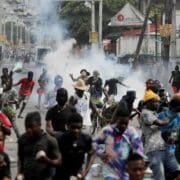
Bounty Killer had choice words for police officers during the funeral ceremony for his godson’s youngest child on Sunday. The artist did not hold back as

NewsAmericasNow.com

Drake and Shenseea Rumored Collab Leaked, What Their Fans Saying

Black Immigrant Daily News

The content originally appeared on: Urban Islandz

Drake and Shenseea’s long-rumored collaboration leaked online, leaving some fans disappointed.

Urban Islandz first reported in June 2021 that the dancehall singer and the Toronto rapper got a collaboration in the works. At the time, her musical nemesis Spice also spilled the beans on the collab during one of her Instagram Live sessions. Since then, the rumors have died down, and Shenseea has since shared she is open to collaborating with Drake but iced the age-old allegations she was in a relationship with him.

Fast forward to today, a snippet of a song purported to be a collaboration with Shenseea and Drake is making the rounds online. The audio clip features the two artists in their distinct flow trading bars over a trippy beat.

“I come first…wet up, wet up, mek it slide in quicker,” Shenseea sings with Drake coming through singing, “slide through, come get this good, good love I provide you / You first then me / I wanna give you plenty.”

Shenseea and Drake

Neither Shenseea nor Drake reacted to the alleged leak, but some fans are already questioning its authenticity. Others are sounding off, saying it’s not what they expected to hear from the two suggesting that it’s underwhelming.

“This very mid, as a ShenYeng this is not what I was expected on a big collab with Drake, no surprise someone leak it,” one female fan said. Another fan added, “this explains why this never see the light of day not ready for prime time. Big artist like Drake yo affi go hard Shenseea we know you got what it takes.”

Shenseea is riding high off her performance at the 2023 Rolling Loud California music festival last weekend. She is also currently working on her sophomore album, due sometime this year. The project is the follow-up to her debut Alpha, released last March.

Drake has not announced any new music, and recently he revealed that he thought about hanging up his mic and retiring gracefully from music. He is also an actor, so perhaps he will go back to acting following an impressive decade run in music that saw him shattering countless records.

NewsAmericasNow.com

Tyga and Avril Lavigne Goes Instagram Official After Locking Lips In Paris

Black Immigrant Daily News

The content originally appeared on: Urban Islandz

Rapper Tyga has confirmed that he and pop artist Avril Lavigne are in a relationship. This comes after the couple was spotted out and about together,

NewsAmericasNow.com

Valiant Gets Rastafarian Support For New Song “Rasta”

Black Immigrant Daily News

The content originally appeared on: Urban Islandz

Valiant continues to maintain his growing presence on dancehall airwaves with new music. The young deejay drops his new song “Rasta” with an accompanying

NewsAmericasNow.com

IICA launches second edition of Digital Agriculture Week

Black Immigrant Daily News

The content originally appeared on: Caribbean News Service

The Inter-American Institute for Cooperation on Agriculture (IICA), together with Microsoft, Bayer, The Yield Lab, The International Fund for Agricultural Development (IFAD) and CAF-Development Bank of Latin America, launched the second edition of Digital Agriculture Week, a forum where AgTechs and key stakeholders will put forward ideas and coordinate actions to drive agrifood digitalization in Latin America and the Caribbean (LAC).

The event will be held from 29 May to 1 June and will have a hybrid format, in person at IICA headquarters in San Jos?, Costa Rica, and online.

The official launch came with a specific invitation to AgTechs in the Americas with digital solutions available for use in agriculture to apply to be part of this event, consolidated in its second consecutive year as a crucial space in the hemisphere for leaders in agrifood digitalization.

AgTechs interested in participating must register before 10 April via the form on the website https://www.semanaad.iica.int/.

A panel of specialists featuring leaders in the field invited by IICA will choose fifteen candidates to participate in person in Digital Agriculture Week, where they will have an opportunity to show their technological innovations, attend lectures by leading figures and roundtables, and exchange ideas with international organizations for digital transformation.

A new feature of the 2023 edition is that all the AgTechs that apply will be able to participate in the event online. The winners will be chosen based on the potential of their digital solutions to improve production, sustainability and inclusion in agrifood systems.

At the launch event, it was announced that particular value will be given to those AgTechs that contribute to food security, to preventing and mitigating the impact of extreme weather events, especially droughts and water management, and those led by women.

Applicant AgTechs will be connected to the network of such companies created by the Institute after the 2022 edition, and will participate in various activities taking place after the event.

Present at the initial launch event were Herbert Lewy, General Manager of Microsoft Smart Agriculture and Bioeconomy for Latin America; Beatriz Arrieta, Bayer’s Regional Manager for Food Value Chains; Teresita di Marco, The Yield Lab Latam Director of Ecosystem Development; Fabrizio Bresciani, IFAD Lead Regional Economist for Latin America and the Caribbean; and ?lvaro Pereira, CAF Principal Executive for Regional Management of Mexico and Central America.

Also present were representatives of three AgTechs that participated in the 2022 edition, as well as IICA Technical Cooperation Director Federico Villarreal and Federico Bert, Manager of IICA’s Digitalization of Agrifood Systems Program.

At the launch event, Herbert Lewy, General Manager of Microsoft Smart Agriculture and Bioeconomy for Latin America said, “We at Microsoft are helping with technology and resources to make that digital transformation happen fast. There is a combination of multiple technologies that allow us to advance exponentially: artificial intelligence and advanced analytics, the Internet of Things, blockchain, and tech companies with a focus on agriculture. We have seen how they’re attending to the needs of the digital age in the region”.

Teresita Di Marco of The Yield Lab added, “For years we have seen the increase in [AgTech] startups in the region that seek to develop solutions to drive the sector. We have mapped over 1600 and this is very significant because it means startups have grown 100 percent in the last five years. Since 2010 over 500 business roundtables have been carried out, meaning that financial support is being provided to the sector and to entrepreneurs so that they can develop these technologies”.

?lvaro Pereira of CAF stressed that “digitalization is a key tool for reactivating the region’s economy and to meet the 2030 Agenda goals […] Along with innovation, they are essential to ensure that agrifood systems are more productive, sustainable and inclusive. We want these initiatives to favor family farming in resilient settings and in harmony with the environment”.

Beatriz Arrieta of Bayer said that “Small-scale farmers are responsible for a third of food production and it is they who have the most limited access to these technologies; we want to help farmers to improve their productivity and profitability; this is why it is so important to develop initiatives like this. The future definitely lies in digital transformation and for this reason we are working with IICA”.

Fabrizio Bresciani of IFAD emphasized the importance of generating synergies and partnerships among different stakeholders and organizations, because “promoting the identification, implementation and scaling-up of successful digital technologies and the services that these enable is too much for one single institution […] A sustainable and inclusive transformation of the region’s food systems is essential so that we can eliminate poverty and hunger globally”.

About Digital Agriculture Week

With Digital Agriculture Week 2023, IICA hopes AgTechs and other stakeholders of the tech and agriculture sectors submit, put forward and coordinate ideas in this space for the digital transformation of agrifood systems, sharing technology solutions and driving their use in agriculture.

The event will feature the participation of international leading figures and representatives of organizations working directly with these types of companies, representatives of public and private multinational organizations interested in the digitalization of agriculture, and leading government officials from agriculture ministries.

Issues to be covered include digital transformation; opportunities and challenges; the digitalization of agriculture; barriers, impacts and perspectives; roles and synergies of public and private stakeholders in the digital age; and other topics.

The initiative is part of the actions of the hemispheric Digitalization of Agrifood Systems Program that IICA created in its Medium-term Plan for the period 2022-2026, which reflects the priority of the issue and IICA’s commitment to it.

The manager of the program, Federico Bert, said that “digitalization is inevitable and cannot be postponed; the time has come to drive digitalization and capture its benefits, and at the same time prevent risks so that there are positive results in terms of production, the environment and society. At IICA this is a priority, and we are working together wherever we can to drive the dynamic and sustainable digitalization of agriculture”.

The 2022 edition featured the participation of 15 leading AgTechs from Argentina, Brazil, Chile, Colombia, Guatemala, Mexico and Peru. Over 56 presentations were made, enabling over 30 hours of exchanges among the different stakeholders and strategic partners (Bayer, Microsoft and the World Bank), high-ranking decision-makers from the agriculture sector of the Americas, leading academic figures, national agricultural research institutes, multilateral agencies, funds and investment accelerators.

Mar?a del Carmen Garc?a of the AgTech Appi.ar by Beemore of Argentina concluded that “the experience at the 2022 edition allowed us to generate a network of AgTechs with whom we share common goals. It gave visibility to our startups and gave motivation to continue to strengthen our projects, confirming that technologies renew the local and zonal models of production development”.

Donate At Caribbean News Service, we do not charge for our content and we want to keep it that way. We are seeking support from individuals and organisations so we can continue our work & develop CNS further.


NewsAmericasNow.com

67th Session of the Commission on the Status of Women Opens at the UN

Black Immigrant Daily News

The content originally appeared on: Caribbean News Service

“The world needs more women and girls in Tech.” This was the rallying cry during the opening segment of the Commission on the Status of Women that convened today at the United Nations and ends on March 17th.

“Innovation and technological change, and education in the digital age for achieving gender equality and the empowerment of all women and girls” is the priority theme guiding the next two weeks of Ministerial round tables, interactive dialogues, and general discussions as thousands of delegates from all regions of the world, NGOs, UN entities and youth representatives take the stage to advance the cause of women’s empowerment and women’s rights in the digital age.

Nerys Dockery headed the all-female delegation representing the Federation which also includes, Asha Desuza, First Secretary in the Permanent Mission of St. Kitts and Nevis to the United Nations and was also joined by Dr. Christine Walwyn and Dawne Williams of the International Federation of Business and Professional Women who are attending as civil society observers. The delegation will soon be joined by Senator Isalean Phillip, Junior Minister in the Ministry of Social Development, Youth Empowerment, Gender Affairs, Aging and Disabilities, who arrives in New York on Friday.

“This year’s convening of the CSW is taking place at a critical juncture,” says St. Kitts and Nevis’ UN diplomat, Ambassador Nerys Dockery. “Today delegates, especially delegates from small states like St. Kitts and Nevis, are here to draw global attention to the unequal pace of digital transformation within and across countries, This digital divide has been magnified because of multiple crises including COVID-19, conflict, the growing cost of living, and climate change. As a result of these challenges, the digital divide has become the new face of gender inequality.”

“Globally, only one in three positions in the technology sector are occupied by women. Also, for women and girls the digital revolution represents both an opportunity and a threat. CSW67 represents a unique chance to address the gender gaps in technology and innovation, transform social norms, and empower women and girls. St. Kitts and Nevis, along with our CARICOM counterparts, have been very active in the negotiations on the draft outcome document to ensure that it spurs concrete action to remove barriers that prevent women and girls from accessing the digital world and inspires a global pact committing to new approaches to technology and innovation financing tailored to women’s and girls’ needs,” Ambassador Dockery concluded.

CSW67 is the first in its history to include young people in the dialogues with Ministers and other decision-makers, opening a space for their voices to be heard at the highest level and for their inputs to influence the outcome. St. Kitts and Nevis is proud that it will be represented at the highest level by its youngest Minister and Cabinet member in the person of Minister Phillip.

Donate At Caribbean News Service, we do not charge for our content and we want to keep it that way. We are seeking support from individuals and organisations so we can continue our work & develop CNS further.


NewsAmericasNow.com

Injunction discharged to prevent repatriation of Haitian nationals from St. Kitts and Nevis

Black Immigrant Daily News

The content originally appeared on: Caribbean News Service

Resident High Court Judge Justice Patrick Thompson, on March 6, discharged the injunction granted on February 25, to prevent the repatriation of Haitian Nationals who entered St Kitts and Nevis from Dominica by boat on February 3.

The Ministry of National Security has undertaken to process the asylum requests tendered by local attorney-at-law, Craig Tuckett.

The 14 Haitian nationals, who Tuckett claims to represent, two of whom are minors, are currently being detained pursuant to provisions of the Immigration Act.

The Ministry of National Security is currently making swift arrangements for the asylum requests to be heard and determined.

Prime Minister Dr. Terrance Drew recently addressed the matter generally at his Special Interview on Thursday, and said “[if] you send a message out there that [our Federation is] a safe haven, [our Federation would be] easily overrun … You also cannot participate in human trafficking. It is a difficult question.”

“This is not the first [arrival of Haitian nationals by boat into the Federation]; this is the second one that I know of since I have been the Prime Minister, and so we treat them with respect. You have to treat them humanely. These are our brothers and sisters from the region,” said the Prime Minister.

Further details about the court matter cannot be provided at this time as the matter is sub judice, under judicial consideration, and prohibited from public discussion. The Ministry of National Security is, therefore, concerned that numerous commentaries and publications about the details of this important matter have been circulating on social media and in the local and regional press.

The Ministry of National Security has assured the general public that this matter is being dealt with expeditiously and that, at the conclusion of the processing of the asylum requests, an update will be provided.

Donate At Caribbean News Service, we do not charge for our content and we want to keep it that way. We are seeking support from individuals and organisations so we can continue our work & develop CNS further.


NewsAmericasNow.com

DG Okonjo-Iweala: Delivering meaningful outcomes at MC13 ‘not beyond our reach’

Black Immigrant Daily News

The content originally appeared on: Caribbean News Service
Ngozi Okonjo-Iweala

Speaking at a meeting of the General Council on 6 March, Director-General Ngozi Okonjo-Iweala welcomed the constructive spirit demonstrated by members in preparations for the WTO’s 13th Ministerial Conference (MC13) in February 2024 and said delivering meaningful and quality outcomes at MC13 is “not beyond our reach”.

In addressing the first General Council meeting of 2023, the Director-General said leaders, ministers and other stakeholders she met during her recent outreach appealed to the WTO to “work towards delivering further results for the benefit of people around the world — with MC13 being a key opportunity to do so”.

The Director-General also said she was very encouraged by the support expressed by India and other members of the Group of 20 leading economies for the WTO’s work during recent meetings in India of G20 finance and foreign affairs ministers.

The chair statement issued by the Indian G20 presidency after the meeting of foreign affairs ministers on 1-2 March in Delhi was an “unprecedented acknowledgement of the work of the WTO,” she said.

“Excellencies, one thing was very clear at this meeting. Expectations are now that we will get results at MC13. A new results-oriented WTO that is producing for people is what is being expected of us and that means that we have a lot of hard work ahead of us in Geneva to build trust to work hard to have a results focus and to deliver.”

The Director-General also noted the discussions which took place at the 28 February meeting of the Trade Negotiations Committee, where several members cited the need to avoid overloading ministers’ plates with outstanding issues at the last minute.

“This means we must now prioritize a few issues and build as much convergence on them as possible,” she said. “If we sustain the positive spirit from last week’s meeting over the next 10 months, then delivering meaningful, quality outcomes is not beyond our reach.”

Ambassador Didier Chambovey, the chair of the General Council, reported to members on the outcome of the 2-3 February informal meeting on WTO reform, which focused on development. Ambassador Chambovey said he was encouraged by the support from all members to make progress on the organization’s development work and proposed that the reform discussions on development take place under the aegis of the WTO’s Committee on Trade and Development.

The General Council chair also noted other issues on the WTO reform agenda, including dispute settlement, the negotiating function, the deliberative and monitoring functions, and institutional issues, among others. He noted that the informal discussions on dispute settlement have now entered the next stage and expressed hope that members would continue to constructively engage in this process.

“I am heartened that we have continued our WTO reform process on a good footing,” Ambassador Chambovey said. “We have made small but concrete steps forward in a short period of time.”

The Director-General also welcomed the announcement by the United Arab Emirates at the General Council meeting that its government has officially adopted the Agreement on Fisheries Subsidies and would soon submit its instrument of acceptance to the WTO.

Donate At Caribbean News Service, we do not charge for our content and we want to keep it that way. We are seeking support from individuals and organisations so we can continue our work & develop CNS further.


NewsAmericasNow.com
New Draft BBNJ Treaty closes Decades of Negotiations on Ocean Health

Black Immigrant Daily News

The content originally appeared on: Caribbean News Service
After almost two decades of negotiations, the UN membership finally concluded the UN Convention on the conservation and sustainable use of marine biological diversity of areas beyond national jurisdiction (BBNJ).

The Treaty is the international legal regime aimed at the conservation and sustainable use of the biodiversity in the oceans beyond the exclusive economic zone (EEZ) and continental shelves of states, commonly referred to as the High Seas. The High Seas, or the area beyond national jurisdiction, make up two-thirds of the Earth’s oceans.

“This is a real win for small island developing states like St. Kitts and Nevis,” says H.E. Nerys Dockery, St. Kitts and Nevis Ambassador to the UN. “It is hoped that once Member States begin implementation of the Convention, the international effort can result in greater ocean health. Collective action is required to tackle overfishing, and polluting, amongst other issues, while ensuring that everyone, everywhere in countries large or small, high or low income, enjoys the benefits of the resources contained in the high seas.”

“The negotiations ended at around 9:30 pm Sunday night to rousing applause. Our CARICOM negotiators from Barbados, Belize, Jamaica, Trinidad and Tobago and Guyana are to be highly commended for working non-stop during the final session which ran from 10 am on Friday until Sunday night,” Ambassador Dockery stated.

They were able to advance critical priorities for the Caribbean region in the following areas:

Ensuring fairness and equity in the access and benefits sharing of the marine genetic resources discovered in the High Seas.
Ensuring developing countries have access to capacity building and transfer of marine technology.
Ensuring consistent monitoring of the activities in the High Seas, including through conducting environmental impact assessments.
Ensuring adequate funding for the implementation of the agreement, including through access to these funds for the State Parties that will ratify and eventually implement the Convention.

Underpinning the draft Convention as a fundamental principle is the “common heritage of mankind”, amongst others, which for small countries is essential to address the concerns in the areas beyond their jurisdiction.

The Group of 77 and China as well as the Alliance of Small Island States (AOSIS) played exceptional roles in advocating the interests of developing countries as well as small island developing states.

The Treaty draft will be adopted officially and then will be open for signatures/ratifications by different Member States.

Donate At Caribbean News Service, we do not charge for our content and we want to keep it that way. We are seeking support from individuals and organisations so we can continue our work & develop CNS further.


NewsAmericasNow.com
Caribbean food security at risk from the impact of disaster-related events

Black Immigrant Daily News

The content originally appeared on: Caribbean News Service

By Chalsey Gill Anthony

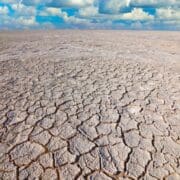
On an ordinary day, you get in, start your vehicle, turn on your favourite radio station, and drive to work. While bopping your head and humming to a catchy tune, you hear “We interrupt this segment for an important broadcast…” As you try to settle in at your desk, the notifications on your phone are going off from the calls and messages coming in. You open your social app, and the newsfeed is plastered with posts about the same thing – A tropical storm or hurricane or flood warning has been issued and is in effect. An ordinary day just accelerated into preparation for a weather event. Of course, this is not unlikely but expected to happen any day because climate change contributes to changing weather patterns with more intense and frequent weather events.

On November 2, 2022, Hurricane Lisa made landfall in Belize and affected the lives of many. “My first priorities were food, water, documentation, and shelter. When I calculated the estimated cost to prepare, especially with the current price increases on goods and services, I was worried for my kids,” says a single mother of two young children as she anxiously recounts her feelings. “Even though I got paid just a few days ago, it was not in my budget, and I could not prepare the way I wanted.”

Yes, the issues of food and water security are among the most critical in disaster preparedness and management. Additionally, the connections between climate change, food security, water, and health come to the fore when examining the threat of any extreme weather event. And as people living in the Caribbean, especially in low-lying coastal communities, we are all too familiar with their impacts.

Last year, Suriname experienced persistent heavy rainfall causing an overflow of rivers and severe flooding. His Excellency Chandrikapersad Santokhi, President of Suriname made an appeal for international support after he declared seven of ten districts as disaster areas. In his address to the United Nations 77th Session, President Santokhi shared that “fertile agricultural lands were adversely affected causing economic loss and impacting food security and rural livelihoods.” The floods affected several businesses, schools, healthcare facilities and more than 3000 households, causing many farmers to lose their crops and families to be cut off without any source of income.

The direct and indirect impacts of the devastation were felt across the country. “Companies in the coastal areas that were receiving agricultural products from those communities had shortages of produce and juices in the store because they couldn’t provide the fruits to make the juices,” says Ms. Stephanie Cheuk-Alam, Suriname’s Head of the Environmental Inspectorate at the Bureau of Public Health and first cohort graduate of the University of the West Indies, Climate Change and Health Leaders Fellowship Training programme.

The Caribbean’s food security is severely vulnerable to the impacts of disaster-related events exacerbated by climate change which can lead to humanitarian crises and national security concerns. The Caribbean Public Health Agency (CARPHA)’s Executive Director, Dr. Joy St. John emphasizes that food insecurity is of major concern to the region. “The climate crisis causes disruptions or damage to food value chains which in turn negatively impacts all four (4) pillars of food security: availability; accessibility; utilization; and stability.”

A disaster event can lead to sudden power outages, a cut-off from water supplies, and perishable goods can quickly become contaminated. Damage to crops impacts access to nutritious food and increases dependence on canned and non-perishable foods with high sodium and sugar content. Disaster-related events can also influence the drivers of food-, water-, and vector-borne illnesses such as dengue, cholera, and malaria.

Climate change is a risk multiplier; it worsens existing vulnerabilities and disproportionately affects the most vulnerable, including women, children, the elderly and the differently abled. “The region must ensure that it builds resilience to these threats to safeguard food security as well as strengthen supply chains within the Region to allow rapid recovery and availability of food after a disaster,” expressed Dr. Colin Young, Executive Director of the Caribbean Community Climate Change Centre (CCCCC). Even with concerted efforts among Caribbean countries, we are still constrained. “Ultimately, it is necessary for large emitters to cut their emissions to prevent an overshoot of 1.5?C;” says Dr. Young, “otherwise, there is a limit to our preparedness over which the losses and damages will invariably occur leading to a food security crisis in the region.”

The State of Food Security and Nutrition in the World 2022 reports that “the triple crises of climate, conflict and the COVID-19 pandemic continue to challenge efforts to improve food security, nutrition, health and livelihoods which affected the affordability of a healthy diet for 3.1 billion people including those in many low-income countries such as found in Latin America and the Caribbean.”

Like the communities in Suriname, there are still communities across the Caribbean who live off the land and depend on agriculture to feed their families and the river for their livelihood, even to shower and wash their dishes and their clothes. They build their houses as close as possible to the river, so they don’t have to walk too far to get water. And reflecting on the challenges imposed by climate change and the resulting health implications to those communities, Ms. Cheuk-Alam empathetically acknowledges, “it may be easy for people in some areas to say just move, but if the area where you’re living has cultural and historical value to you and your family, it’s not as easy to just pack up and leave and just build somewhere else.”

Over the last few years, the region has made significant efforts to strengthen the adaptive capacity of climate and health systems. Under the European Union-funded ‘Strengthening Climate Resilient Health Systems in the Caribbean’ project, CARPHA, the Pan American Health Organization (PAHO) and the Caribbean Institute for Meteorology and Hydrology (CIMH) are working to increase regional collaboration between the climate and health sectors and to develop tools that will support science-based planning for public health climate adaptation and mitigation. “We need an integrated approach to adaptation comprising the implementation of early warning systems and strengthening surveillance systems for climate-sensitive diseases and conditions as well as developing climate resilient food and water/sanitation safety plans for CARIFORUM countries,” says Dr. St. John. “We are also supporting the implementation of policies to promote healthier food environments and food security along with improving the local availability and acceptability of healthy foods in emergency and non-emergency settings.”

While we do our best to ‘soften the blows’ of these extreme weather and disaster-related events on the Caribbean’s food, water and health systems, the demand for transformative climate action from major polluters and contributors to climate change has been echoed across the globe. Most people see the Caribbean as destinations with inviting beaches, and breath-taking getaways. But for the Caribbean people, climate change poses the biggest threat to our food and water security, health and even our right to live. And on an ‘ordinary day,’ we are fighting to survive.

Donate At Caribbean News Service, we do not charge for our content and we want to keep it that way. We are seeking support from individuals and organisations so we can continue our work & develop CNS further.


NewsAmericasNow.com