

War for control of Haiti’s capital targets women’s bodies

Black Immigrant Daily News

The content originally appeared on: Caribbean News Service
A woman who did not want to give her name for fear of retaliation poses for a photo during an interview at a clinic near Port-au-Prince, Haiti, Friday, Jan. 20, 2023. The 36-year-old sent her two children to live with family in another part of the city after her husband was kidnapped and killed. Later, the men gang-raped her and forced her to flee her home. (AP Photo/Odelyn Joseph) (ASSOCIATED PRESS)

Nadia hushes the crying 3-month-old baby swaddled in her arms, gently planting kisses on her forehead.

She was 19, not ready to be a mother. But the young Haitian’s life changed when she was walking home from class on the dusty streets of a gang-controlled area of Haiti’s capital last year.

She was dragged into a car by a group of men, blindfolded and kidnapped. For three days, she was beaten, starved and gang-raped.

Months later, she learned that she was pregnant. In an instant, her dreams of studying and economically lifting her family dissolved.

As Haiti’s toxic slate of gangs continue to plunder the crisis-stricken Caribbean nation, kidnapping, displacing and extorting civilians with nothing left to give, they are increasinglyweaponizing women’s bodies in their war for control.

Women like Nadia live with the consequences.

“The most difficult part is that I have nothing to give her,” Nadia said of her daughter. “I’m scared because as she gets older to ask about her father, I won’t know what to tell her. … But I will have to explain to her that I was raped.”

The woman offered only the name of Nadia, which is not her real one, to The Associated Press, which does not identify survivors of sexual violence.

Long plagued by crisis — natural disasters, political turmoil, deep poverty and waves of cholera — Haiti spiraled into chaos after the 2021 assassination of President Jovenel Moise.

Sexual violence has long been used as an instrument of war around the world, a barbaric way to sow terror in communities and assert control.

“They’re running out of tools to control people,” said Renata Segura, deputy director for Latin America and the Caribbean for International Crisis Group. “They extort, but there’s only so much money that can be extorted from people that are really poor. This is the one thing they have they can inflict on the population.”

That fear has rippled across Port-au-Prince. Parents hesitate to send their children to school, worried they could be kidnapped or raped by gangs. By night, the buzzing streets of the city empty.

For women especially, going outside the house is a risk. So is fleeing: Gangs use the threat of rape to stop communities from abandoning the areas they control.

Helen La Lime, U.N. special envoy in Haiti, told the Security Council in late January that the gangs employ sexual violence to “destroy the social fabric of communities,” particularly in zones controlled by rival gangs.

They rape girls and boys as young as 10, she said.

Compounding that is severe underreporting, making it difficult for any authority to grasp the full extent of the damage. Women fear gangs will seek revenge on them and trust Haitian police just about as much.

The country’s current government, which many view as illegitimate, declined to comment on what it is doing to address the issue.

The U.N. documented 2,645 cases of sexual violence in 2022, a 45% increase from the year before. That figure is just a fraction of the real number of assaults.

Nadia was among those who did not report.

She struggled over if she would keep the baby when she learned that she was pregnant, but decided to give her daughter the best life that she could. In Port-au-Prince, a place already lacking in opportunity with high levels of poverty, it became impossible for the new mother to work or continue her studies.

Meanwhile doctors like Jovania Michel are trying to fill in the gaps.

Michel works in one of the only hospitals in Cite Soleil, the epicenter of the gang wars in Port-au-Prince. There, she sees mothers who were gang-raped after their husbands were killed; sexual violence survivors living on the streets, unable to return home out of fear that it could happen again; and survivors suffering from sexually transmitted infections.

“Sexual violence is a way to paralyze, to scare people. The minute there’s an increase in sexual violence, everyone stops moving, people don’t go to work because they’re scared,” Michel said. “It’s a weapon, it’s a way to send a message.”

That was the case for one 36-year-old woman, who spoke with the AP dressed in a shirt with bright red roses, her hair pulled back carefully in braids. She asked to remain unnamed for fear of retaliation.

The woman once ran a boutique with her husband in Haiti’s capital to put her two daughters and son through school. In July, a group of armed men, members of the gang G-Pep, showed up on their doorstep and told them they needed money for bullets.

Unable to get the cash, the men took her husband away at 8 p.m.

The next day, she found his body in a gutter. She fled the neighborhood, sending her children to live with friends and family in other parts of the city. Meanwhile, she slept alone on the streets, joining at least 155,000 other Haitians forcibly displaced by violence.

In December, when she tried to return home, the gangsters raped and beat her.

“I’m a professional, and out of nowhere these bandits come and made me lose everything. I’m not good. I’m not okay. It all makes me really angry. I got to a point that I wanted to kill myself,” the woman said.

Standing straight with a firm jaw and her head tilted upward, she brushed tears from her face.

When she tried to report the rape to police, they told her that they didn’t handle gang cases.

Today, sleeping in a park with other forcibly displaced Haitians, the one thing that brings her hope is that her children, whom she rarely sees, may still live a better life.

But she worries what deep instability and rising gang control in Haiti will mean.

“I’m not living in a good country,” she said.

Donate At Caribbean News Service, we do not charge for our content and we want to keep it that way. We are seeking support from individuals and organisations so we can continue our work & develop CNS further.


NewsAmericasNow.com
Rihanna Pregnant With 2nd Child Show Baby Bump At Super Bowl Halftime Show

Black Immigrant Daily News

The content originally appeared on: Urban Islandz

Rihanna is pregnant with her second child with boyfriend A$AP Rocky and revealed her baby bump during her Super Bowl Halftime Show performance on Sunday.

The Bajan pop singer’s Super Bowl outfit left fans wondering if she is pregnant as she appeared to rub her stomach during the last song she performed on Sunday night. Rihanna’s anticipated return to the Super Bowl finally came, and it seems that the artist has delivered more than her performance, as many felt that she might be announcing her second pregnancy to the intuitive fan.

A representative for Rihanna has since confirmed that she is pregnant with her second child with A$AP Rocky and had planned to reveal her baby bump during her performance. RiRi came out on stage in what looks like a red body suit and an oversized red jacket as she belted out “B*tch Better Have My Money,” followed by “Where Have You Been” and “Only Girl (In the World)” as well as several hit songs that spanned her 17-year career.

While there are mixed reviews of her 12-minute performance, it was her protruding stomach that sparked the most interest and commentary as fans have concluded that the Bajan National Hero is carrying her second child.

On Twitter, “She Pregnant,” “ASAP Rocky,” and “Rihanna” all trended simultaneously, with fans musing about the possible pregnancy. “Me realizing Rihanna is pregnant again, and we’re never getting another album,” one fan wrote.

Some fans also questioned if it was rude to make assumptions about Rihanna’s body, given that she recently had a baby boy. “The whole timeline afraid to ask if Rihanna is pregnant,” one person wrote on Twitter.

Meanwhile, another fan shared a snippet from RiRi’s recent Total Access interview to promote the Super Bowl, where she appeared to give a hint that she might be bringing “someone,” but it would be a surprise.

“I’m thinking about bringing someone,” she replied when asked ‘will there be a surprise?’ “I’m not sure. We’ll see,” the singer added.

One fan wrote, “When Rihanna said she was thinking about bringing a guest, she was referring to her pregnancy and we didn’t even catch it. Rihanna is PREGNANT!”

Some fans also tried to do the math as Rihanna gave birth back in May 2022 to a bouncing baby boy. Neither RiRi nor A$AP Rocky has given any indication that they are expanding their family, but the couple is thought to have been married after Rocky released his track “DMB,” showing them wearing “I do” grills last year.

Meanwhile, quite a few celebrities also reacted to her performance. “Go Girl,” Chris Brown wrote with the heart emojis. City Girls rapper JT also wrote, “Congratulations,” on Instagram.

The Prime Minister of Barbados, Mia Mottley, has also congratulate Rihanna, who is a national hero in her birth country. “Shining bright like a diamond atop the world! Our National Hero – Keep making all #Bajans proud!” Mottley wrote.

NewsAmericasNow.com

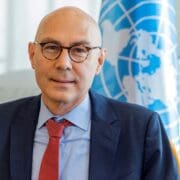
UN High Commissioner for Human Rights Volker T?rk concludes his official visit to Haiti

Black Immigrant Daily News

The content originally appeared on: Caribbean News Service

Mesye dam bonjou (Good morning all). Thank you for coming and let me begin by thanking the Government of Haiti for its invitation to visit, and for the frank discussions we have had over the past two days.

At a time when multiple crises around the world are competing for attention, I fear that the situation in Haiti is not receiving the urgent spotlight that it deserves. As the UN’s High Commissioner for Human Rights, I am here to cast that spotlight and to help spur action for Haitians.

The world needs to hear what I have borne witness to and what my colleagues document every day from some of the poorest, most frightening situations in the world – a capital city where, in many areas, predatory armed gangs control access to water, food, healthcare and fuel, where kidnappings are rampant, children are prevented from going to school, recruited to perpetrate violence and subjected to it. A country where one out of every two people faces hunger, lives in extreme poverty and does not have regular access to clean drinking water. Where prisoners are dying of malnutrition, cholera and more. Let’s not forget the vulnerability of the country to natural disasters.

The issues are vast and overwhelming.

But I am also here to caution against writing off the situation in Haiti as insurmountable and hopeless. Haiti and Haitians must not be defined by the reductionist view of them as victims.

Many speak of a country that lurches from crisis to crisis. I see a people with a long history of resilience and grit in the face of a series of crises, from natural disasters to man-made ones imposed from the outside and from within. This is, after all, a country born out of the fight for dignity and human rights against colonialism, slavery, systemic racism and oppression.

I also sensed, however, the exhaustion that comes from shouldering these burdens day after day, and I heard a plea for help. An SOS cry from the much-beleaguered communities.

The way out of these multiple human rights crises must be owned and led by the people of Haiti, but the magnitude of the problems is such that they need the international community’s active attention and targeted support.

Today, I am issuing a report* by my Office that sets out the debilitating impact of gang violence in several parts of the Cit? Soleil region of Port-au-Prince. In just one neighbourhood of Brooklyn – in the grip of gang violence – at least 263 people were killed, 285 injured and four disappeared between 8 July and 31 December 2022. We have documented rapes and gang rapes of women and girls, destruction and pillage of houses and displacement of people from their homes. Since July, gangs have been perpetrating a near permanent climate of terror, including by employing snipers to shoot at people indiscriminately. Movement of individuals is restricted and access to basic needs blocked, including water, food and sanitation services – creating an environment ripe for the spread of infectious diseases, including most recently, cholera.

With entire communities effectively held hostage by gangs, State social services are largely absent. While non-governmental organisations and UN agencies are working to provide much needed aid, so-called “foundations” in these neighbourhoods are often used by gangs to exert control.

These gangs possess a range of weapons and sow fear and violence into the communities they control. Sources have informed us that members of the gangs distributed machetes to relatives of people killed by a rival gang coalition calling on them to take revenge.

It is estimated that some 200 gangs operate around Haiti, in the capital but also spreading in the centre and northern regions of the country, such as the Artibonite and North departments. More than 500,000 children living in gang-controlled neighbourhoods are struggling to access education. Many have suffered grave violence.

I met a 12-year-old girl who survived being shot in the head by gang members. And another young girl who had been gang raped. Such depraved violence against the children, women and men of Haiti is met largely with impunity.

State authorities have not been able to respond adequately and at least 18 police officers have been killed since the beginning of this year due to gang violence.

The lack of resources and personnel in the police force, coupled with chronic corruption and a weak judicial system mean that impunity has been a core problem for decades now.

This must not continue.

In my discussion with senior officials, civil society, my UN colleagues and the international community here in Haiti, I have emphasized that measures to re-establish security will need to focus on accountability, prevention and protection to be successful and sustainable. There is an urgent need to strengthen the criminal justice system, improve the penitentiary system – notably with 80 percent of the prison population in pre-trial detention – and to address corruption and impunity.

Rampant corruption is a barrier to the realization of economic, social rights, further undermines already fragile institutions, including the judiciary and the police, and is deeply corrosive in every aspect of the daily lives of the Haitian people.

The prevailing security crisis has of course deepened the economic plight of Haitians. More than half of the 11.8 million people in Haiti live below the poverty line. In October last year, year-on-year inflation reached 47.2 percent. Some 4.7 million people are acutely food-insecure and a shocking 19,200 people are estimated to be in a catastrophic situation, living in famine-like conditions. In 2022, it is estimated that only one in two people (48%) had regular access to clean drinking water. The situation in prisons is particularly precarious, with ever-worsening shortages of food, medication and water.

Gang violence has displaced large numbers of people. As of November, there are 155,139 internally displaced people across the metropolitan area of Port-au-Prince. About a quarter of these displaced people live in spontaneous sites, most without access to basic services such as treated water, adequate hygiene and sanitation. The other 75 percent live within host communities, sharing already scarce resources. It is urgent for the authorities to respond to their particular situation.

In my discussions with civil society, the plight of vulnerable communities came out strongly, including women, LGBTI people, people with disabilities, young people and children. And what also came across strongly is the need for civil society organisations – and for that matter, every actor who can help shape events in the country – to play an active and constructive role in the political dialogue process and other platforms to identify solutions – small-scale and large-scale, short-, medium-, and long-term.

The situation in Haiti is desperate. But there is a wellspring of potential to turn the corner. To unleash the potential for profound change, political and economic elites must overcome their indifference to the suffering of the majority. They must ensure that it is the Haitian people who wield the power. I have called on the authorities to pursue an inclusive dialogue, building on the 21 December national consensus agreement, to find lasting solutions to the multidimensional crisis that Haiti is undergoing, particularly through the organization of prompt, free and transparent elections for the restoration of democratic institutions.

I have also urged the international community to ensure that Haiti features high on its agenda. The Haitian National Police needs immediate coordinated international support commensurate to the challenges to strengthen its capacity to respond to the security situation in a manner consistent with its human rights obligations. I also call on the international community to urgently consider the deployment of a time-bound specialized support force under conditions that conform with international human rights laws and norms, with a comprehensive and precise action plan. This must be accompanied by rapid and sustainable re-establishment of State institutions in gang-free zones, as well as a profound reform of the judicial and penitentiary system. The sanctions regime is an important first step. It needs to be accompanied by bringing perpetrators to justice in Haiti.

Equally important is strengthened international cooperation for increased border controls to stop the illicit arms trade and trafficking.

Given the history of international involvement in Haiti, there are lots of lessons to be learned. International involvement needs to be approached with humility, with the consistent, active participation of the people of Haiti and with a constant eye on the most vulnerable.

And until the dire situation in the country is resolved, it is clear that the systematic violations and abuses of human rights do not currently allow for the safe, dignified and sustainable return of Haitians to Haiti.

Even so, 176,777 Haitian migrants were repatriated last year. In my visit to the Ouanaminthe in the northeast of the country, I heard terrible stories of the humiliating treatment to which many migrants are subjected to, including pregnant women and unaccompanied or separated children.

Let me stress this again: international human rights law prohibits refoulement and collective expulsions without an individual assessment of all protection needs prior to return.

I leave Haiti shortly, but of course the important work of the human rights team within the UN presence here will continue. I welcome the openness of the Government of Haiti to strengthening the UN human rights presence in the country. There is much scope for us to support the Haitian people and work alongside them to strengthen their institutions, help strengthen civic space, to continue to monitor and report on human rights violations and abuses, encourage survivor-centred approaches to combatting sexual violence, support to judicial authorities and Haitian National Police and more. I commit to reinforce my Office’s support to confront these challenges.

A profound transformation is needed in Haiti and human rights need to be at the centre of envisioning a better future for all. I am hopeful that with the active involvement and wisdom of its people, coupled with international support and assistance, Haitians can bring out the incredible richness of this country. Despite all the problems, progress is possible. On our part, we pledge to stand with the Haitians who are taking great risks, every day, to protect human rights in the most trying of circumstances.

Mysion mwen an fini men travay la ap kontinye. M?si anpil. (My mission ends but the work continues. Thank you very much.)

Donate At Caribbean News Service, we do not charge for our content and we want to keep it that way. We are seeking support from individuals and organisations so we can continue our work & develop CNS further.


NewsAmericasNow.com

Rubi Rose Exposes DDG Sliding In Her DM After Argument With Halle Bailey

Black Immigrant Daily News

The content originally appeared on: Urban Islandz

Rubi Rose has released messages DDG sent to her recently as she called out the rapper for being a hypocrite.

On Saturday, Rubi shared a cryptic tweet claiming that her ex had allegedly given her clothing to his new girl. Fans later deduced that the tweet might be directed at Halle Bailey as they dug up an old photo of Rubi in the same shirt. Rubi appeared to confirm that she was talking about DDG and Halle.

“Having a b*tch where my clothes is crazy lol,” she said in the first tweet. She also added another tweet, “I like Halle. DDG a weird tho fasho,” she added.

On Sunday, the two artists also exchanged posts insulting each other as Rubi exposed DDG for jumping into her Twitter DMs and trying to link up after he and Halle argued.

“[You] still in LA?” DDG asked Rubi from his verified account on Tuesday, February 7, the day speculations rose that he and Halle had broken up after he posted a tweet and deleted her photos from his Instagram account.

“Yeah,” Rubi responded.

Followed by a message from DDG asking, “wbu,” and Rubi said, “Getting ready, hbu?”

Rubi also called out DDG for trying to link up after the breakup rumors swirled. “[You] hitting me the day y’all argue is so [you] lol.” DDG added, “Lol [you] right, lemme go heal first.”

Rubi also fired off several tweets bashing DDG. “All boys are the same,” she wrote.

DDG also responded, “ik [I know] it looks bad but it ain’t what it seem stg [laughing emoji] that b*tch just evil.”

Rubi also responded to the Epic Records artist and even said DDG approached her before to cheat on Halle.

“[You] so f***ing sassy wtf lol,” Rubi clowned him. “He mad I wouldn’t go home with him after Caresha’s party.”

https://twitter.com/RubiRose/status/162486342943259852

DDG also denied the accusation.

“Superrr [cap]. N—as is not pressed over you.”

DDG, who was live online, also reacted to the entire thing by shouting, “I hate this bi–h.”

In a follow-up tweet, DDG also seemed to hint that everything was fine with him and Halle.

“Everything good internally. This whole situation was foreshadowed. I know everybody want me to be the bad guy but I’m really not,” he said.

Rubi also shared a screen recording of the chat with DDG to clear speculations that the screenshots were real, but DDG implied she was lying, calling it “CGI.”

The two also exchanged messages accusing each other of being hung up on the other.

“Don’t believe nun she say. She been stuck on me for 2 years. She hurt,” DDG said.

“She’s weird and been trynna get back wit me every since I moved on. Hence she ain’t got another n***a since,” another tweet read.

He also announced that he and Halle ‘hashed’ out their situation.

“To start. Yo chin fat as hell. And secondly, Halle is fine. She knows what’s real. We been hashed this situation out days ago. Rubi just clout chasing,” another tweet read.

Rubi also threatened to release more receipts to back up her claim as she wrote that DDG would call her every time she began to talk to a new man and tell her things about them to turn her off.

In all of this, fans of Halle shared second-hand embarrassment for the Little Mermaid actress.

Halle Bailey has since reacted on Twitter telling her boyfriend not to feed into the lies. “the devil is working lol please don’t feed into the lies, especially from a third party stay blessed everyone,” she tweeted.

NewsAmericasNow.com

Potential measles outbreaks in the Caribbean

Black Immigrant Daily News

The content originally appeared on: Caribbean News Service

Caribbean islands have been warned by the Pan American Health Organizations to update their response plans to prevent the re-establishment of endemic transmission of the measles virus.

This PAHO says follows a reduction in childhood vaccination coverage, increasing the possibility for outbreaks of this disease.

An alert from PAHO said “vaccination and epidemiological surveillance of vaccine-preventable diseases are essential health services and should not be interrupted”.

PAHO’s Technical Advisory Group (TAG) on vaccines said that the risk of outbreaks of vaccine-preventable diseases in the region is at its highest point in the last 30 years.

According to PAHO, in 2021 more than 1.7 million children in 28 countries and territories of the Americas did not receive an initial dose of measles vaccine by their first birthday and regional coverage for the first dose of measles, mumps and rubella vaccine (MMR) was 85 per cent.

PAHO said only six countries reached the recommended level of 95 per cent or more needed to sustain the elimination of these diseases, and 10 countries reported coverage of less than 80 per cent.

Donate At Caribbean News Service, we do not charge for our content and we want to keep it that way. We are seeking support from individuals and organisations so we can continue our work & develop CNS further.


NewsAmericasNow.com

Support for Haiti to dominate talks at CARICOM heads meeting in Nassau

Black Immigrant Daily News

The content originally appeared on: Caribbean News Service

Antigua and Barbuda will be represented at the 44th Meeting of the Conference of Heads of Government of CARICOM on February 15 and 16 and continued support for Haiti will form an integral part of the talks.

The high-level meeting is taking place in Nassau and Canada’s Prime Minister Justin Trudeau has announced that he will travel to the Bahamas, to attend the meeting

Trudeau will drive progress on shared priorities, including continued support for the Haitian people.

The meeting will provide an opportunity for the leaders to consider further regional political, security, and humanitarian assistance in support of the Haitian people and Haitian-led solutions to the ongoing situation in Haiti, which is having a devastating impact on the Haitian people.

Discussions and bilateral meetings will also be held among CARICOM leaders and Trudeau is expected to work to strengthen Canada’s partnership with countries in the Caribbean region, including by advancing democracy, human rights, economic growth that benefits everyone, and developing clean energy.

Trudeau says he will also work with CARICOM leaders to “increase trade and investment between Canada and the Caribbean to create jobs and growth, and advocate for climate action and resilience for the region, which is particularly vulnerable to climate change and natural disasters”

“Canada and the Caribbean Community share strong ties between our peoples, common values, and a strong commitment to fighting climate change. I look forward to meeting with the leaders of CARICOM to discuss how we can continue to work together to support the people of Haiti, strengthen the Caribbean region, and build a better future for people and businesses in Canada, the Caribbean, and around the world,” Trudeau explained

Donate At Caribbean News Service, we do not charge for our content and we want to keep it that way. We are seeking support from individuals and organisations so we can continue our work & develop CNS further.


NewsAmericasNow.com

Sinach appointed as Global Ambassador of Dominica

Black Immigrant Daily News

The content originally appeared on: Caribbean News Service

Nigerian gospel singer Sinach has been reportedly appointed as a global ambassador to Dominica.

Sinach, whose real name is Osinachi Egbu, shared the news via her verified Instagram and Facebook page on Thursday night, February 9, 2023.

Sinach, known for her popular renditions like “I know who I am” and Way Makeer”, reposted an article from Business Today on her appointment which she revealed was contained in a letter signed by Roosevelt Skerrit, Prime Minister of the Commonwealth of Dominica, and presented by Janet Charles, the Acting High Commissioner of the Commonwealth of Dominica in the UK.

The role was established, to rebrand and reposition Dominica as a prime tourist and investment destination.

“Given your international reach with a following of over 1.8 million and having demography listeners and followership cutting across over 100 countries, your assignment will be to assist in the promotion of the Commonwealth of Dominican’s national interest in various fields and more specifically to use your global influence to promote the Commonwealth of Dominica as an attractive destination for tourism and investment,” Skerrit stated.

In 2022, Sinach traveled to Dominica with a group of over 20 people to celebrate her 50th birthday at the Kempinski Spa and Resort.

Donate At Caribbean News Service, we do not charge for our content and we want to keep it that way. We are seeking support from individuals and organisations so we can continue our work & develop CNS further.


NewsAmericasNow.com

Convicted child molester sentenced to 18 years in prison

Black Immigrant Daily News

The content originally appeared on: Caribbean News Service

A man in Jamaica who sexually assaulted seven children has been sentenced to almost 18 years in prison. The man’s name is Sheridan Shepherd and he was sentenced on Friday.

The man pleaded guilty to six counts of buggery, five counts of indecent assault, and one count of grievous sexual assault.

He was arrested and charged in June 2021, after claims that sexually assaulted several minors between six- and 12-years-old.

According to reports, residents attacked and severely beat him before he was taken into custody.

Shepherd’s attorney told the court that his client had expressed fear of being incarcerated. He is worried that his client could be abused behind bars, because of the nature of his crime.

Donate At Caribbean News Service, we do not charge for our content and we want to keep it that way. We are seeking support from individuals and organisations so we can continue our work & develop CNS further.


NewsAmericasNow.com

Barbadian Youth To Benefit From Expanded UNICEF Partnership

Black Immigrant Daily News

The content originally appeared on: Caribbean News Service
From left to right – Minister of Youth, Sports and Community Empowerment, Charles Griffith; UNICEF representative for the Eastern Caribbean, Pieter Bult; Permanent Secretary, Ministry of Youth, Sports and Community Empowerment, Yolande Howard; and Principle Youth Development Officer, Andrea Titus, pose for a photograph following the recent meeting. (F. Belgrave/BGIS)

The Government of Barbados is seeking to scale up community level youth programmes with assistance from the United Nations Children’s Fund (UNICEF).

Minister of Youth, Sports and Community Empowerment, Charles Griffith, and UNICEF Representative for the Eastern Caribbean, Pieter Bult, met recently at the Ministry’s headquarters and discussed broadening existing programmes to extend the age range of youth engagement to children under ten years old.

Bult noted: “This is a critical age group that requires special attention and support as they transition from primary to secondary education and face various challenges and opportunities in life.”

Griffith indicated that the Ministry had developed a new programme that targeted a younger demographic. “We have just launched a national mentorship programme and we’re targeting mentees 13 to 17…and another to come on stream called “Moving On”, the Youth Minister stated.

The two officials also discussed mobilising the youth; building a base within the adolescent demographic; empowering the disabled community; climate change; augmenting the National Summer Camps, and UNICEF’s new online programme, YOMO, a gamify, interactive learning tool.

Donate At Caribbean News Service, we do not charge for our content and we want to keep it that way. We are seeking support from individuals and organisations so we can continue our work & develop CNS further.


NewsAmericasNow.com

UWI Professor among key drivers of UN declared Global Tourism Resilience Day

Black Immigrant Daily News

The content originally appeared on: Caribbean News Service

The United Nations General Assembly has adopted a resolution to designate February 17 annually as Global Tourism Resilience Day. The resolution was initiated by Professor Lloyd Waller from The University of the West Indies (The UWI) who also serves as Executive Director of the Global Tourism Resilience and Crisis Management Centre (GTRCMC), which is hosted at The UWI Mona Campus.

Global Tourism Resilience Day (February 17) aims to emphasize the need to foster resilient tourism development to deal with shocks, taking into account the vulnerability of the tourism sector to emergencies.

Professor Waller worked on drafting the initial concept paper, which became resolution A/77/L.43 at the seventy-seventh session of the United Nations General Assembly. The declaration is an outcome of a GTRCMC event held on February 17, 2022, at the World Expo, which was supported by the World Travel Awards, Sandals Resorts and Royal Jordanian Airlines, and the International Tourism & Investment Conference (ITIC).

According to Professor Waller, “The resolution can be considered a monumental triumph for Jamaica and The UWI, and a significant contribution to the future of the global tourism industry. The resolution has set a benchmark for awareness about the crucial role of tourism resilience in preparing for, managing and recovering from various crises and disruptions. In light of the COVID-19 pandemic, which further emphasized the significance of tourism to the world economy and human wellbeing, all parties involved in the realisation of this resolution deserve commendation for their substantial contribution towards the sustainability of the planet and the future of humanity.”

The resolution, presented by Edmund Bartlett, Minister of Tourism for Jamaica and Co-Chair for the GTRCMC, received full support from 94 nations at the United Nations General Assembly. The presentation followed an address made by The Most Honourable Andrew Holness, Prime Minister of Jamaica, who also served as one of the Honorary Chairs of the GTRCMC, at the United Nations General Assembly in September 2022.

Prime Minister Holness described the day as “a historic accomplishment for the planet and a means of promoting a sustainable and research-driven approach to tourism resilience through knowledge and awareness.”

In addition to his role in driving the resolution, Professor Waller has been working on methodology for building resilience. Recognising the need for practical guidance on this topic, he is developing a convergence of various tactics, strategies, and methodologies such as business continuity management, project management, crisis management/communication, risk management, mixed-methods research, and operations management. This ‘Resilience Methodology’ is expected to be released in Professor Waller’s newest book later this year.

Donate At Caribbean News Service, we do not charge for our content and we want to keep it that way. We are seeking support from individuals and organisations so we can continue our work & develop CNS further.


NewsAmericasNow.com